
THE MING DYNASTY By Maliyah reed Kena Sparkman
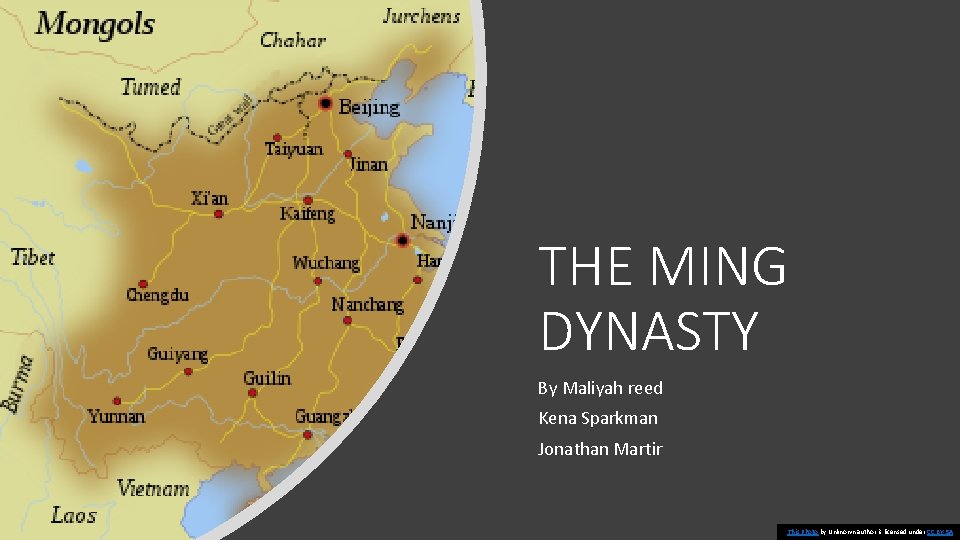
THE MING DYNASTY By Maliyah reed Kena Sparkman Jonathan Martir This Photo by Unknown author is licensed under CC BY-SA.
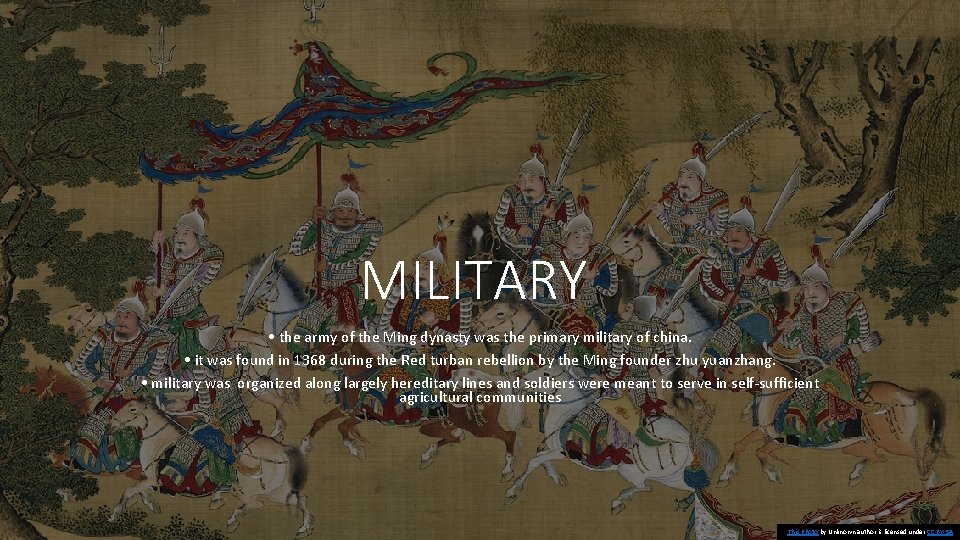
MILITARY • the army of the Ming dynasty was the primary military of china. • it was found in 1368 during the Red turban rebellion by the Ming founder zhu yuanzhang. • military was organized along largely hereditary lines and soldiers were meant to serve in self-sufficient agricultural communities This Photo by Unknown author is licensed under CC BY-SA.
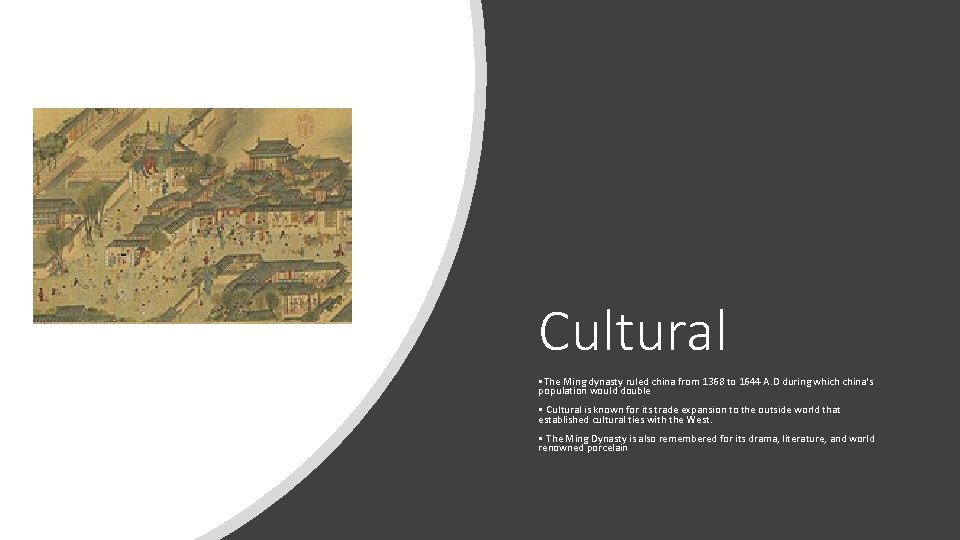
Cultural • The Ming dynasty ruled china from 1368 to 1644 A. D during which china's population would double • Cultural is known for its trade expansion to the outside world that established cultural ties with the West. • The Ming Dynasty is also remembered for its drama, literature, and world renowned porcelain
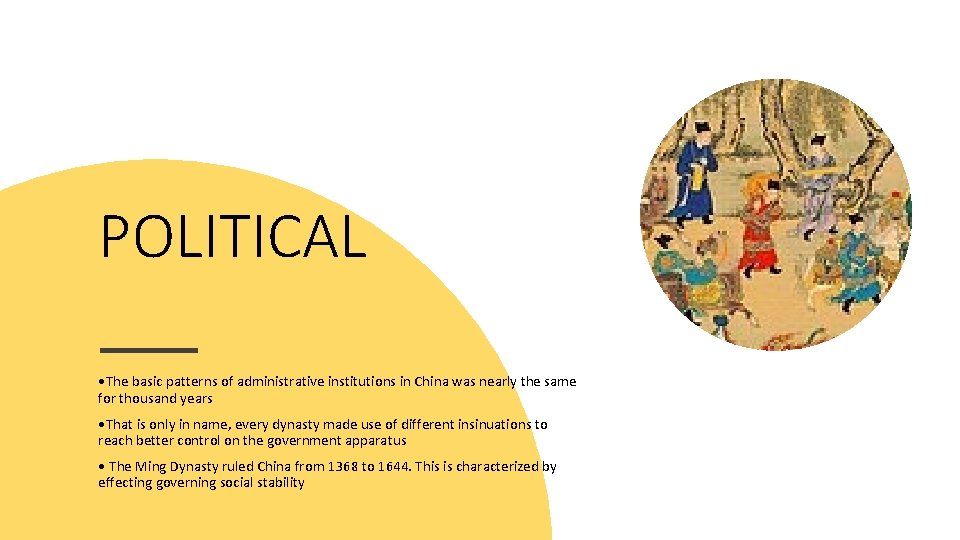
POLITICAL • The basic patterns of administrative institutions in China was nearly the same for thousand years • That is only in name, every dynasty made use of different insinuations to reach better control on the government apparatus • The Ming Dynasty ruled China from 1368 to 1644. This is characterized by effecting governing social stability
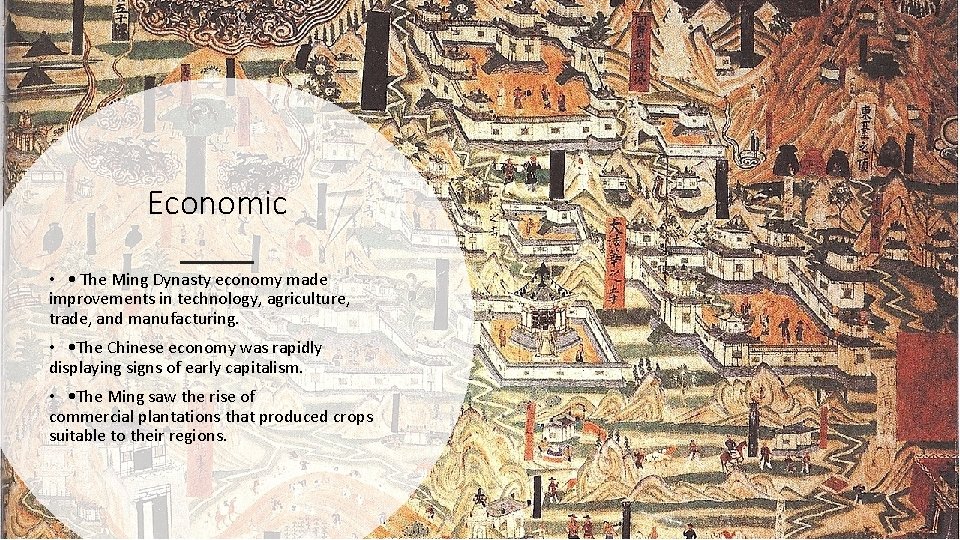
Economic • • The Ming Dynasty economy made improvements in technology, agriculture, trade, and manufacturing. • • The Chinese economy was rapidly displaying signs of early capitalism. • • The Ming saw the rise of commercial plantations that produced crops suitable to their regions.
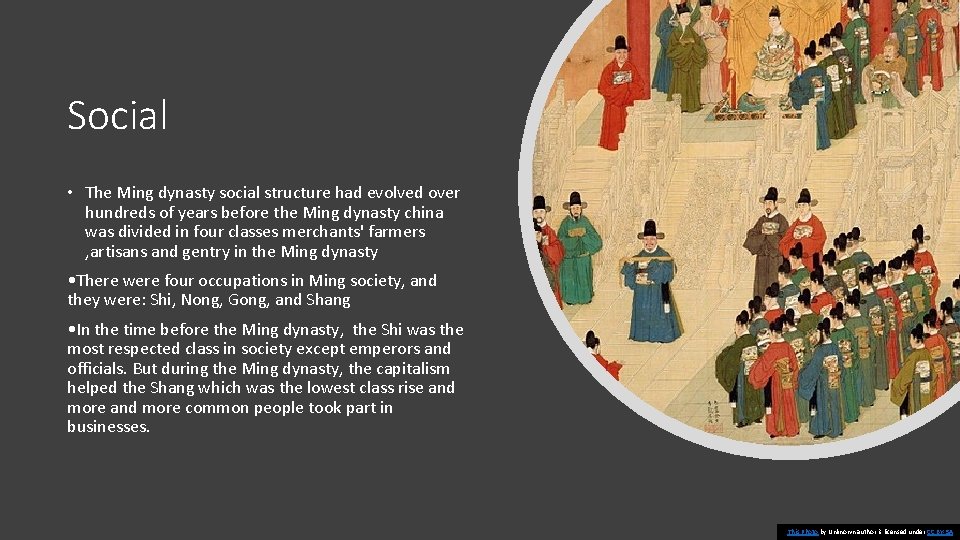
Social • The Ming dynasty social structure had evolved over hundreds of years before the Ming dynasty china was divided in four classes merchants' farmers , artisans and gentry in the Ming dynasty • There were four occupations in Ming society, and they were: Shi, Nong, Gong, and Shang • In the time before the Ming dynasty, the Shi was the most respected class in society except emperors and officials. But during the Ming dynasty, the capitalism helped the Shang which was the lowest class rise and more common people took part in businesses. This Photo by Unknown author is licensed under CC BY-SA.
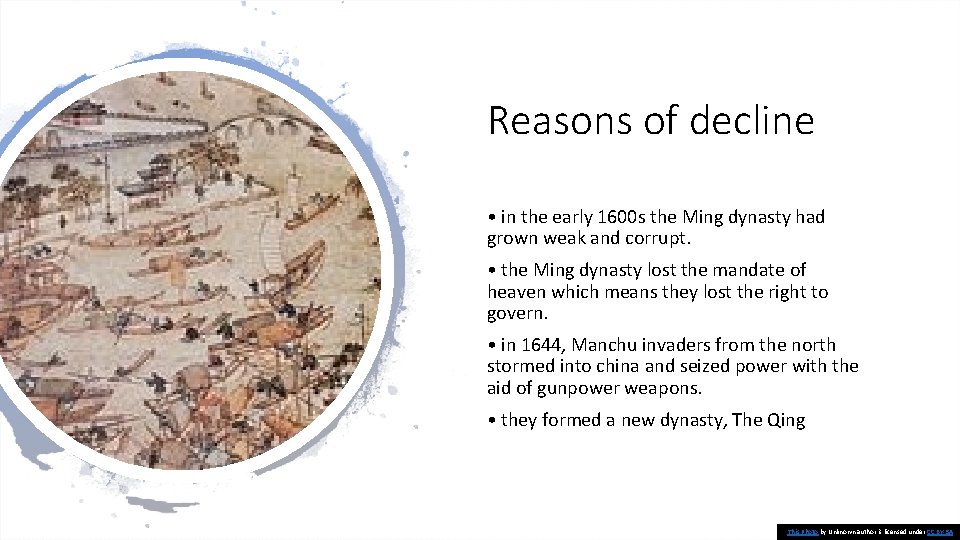
Reasons of decline • in the early 1600 s the Ming dynasty had grown weak and corrupt. • the Ming dynasty lost the mandate of heaven which means they lost the right to govern. • in 1644, Manchu invaders from the north stormed into china and seized power with the aid of gunpower weapons. • they formed a new dynasty, The Qing This Photo by Unknown author is licensed under CC BY-SA.
- Slides: 7