
The Milky Way Galaxy Greeks called the hazy

- Slides: 19
The Milky Way Galaxy
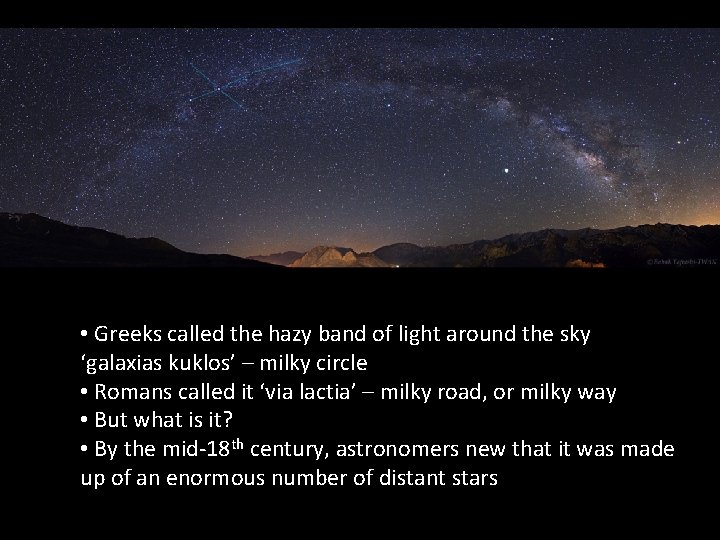
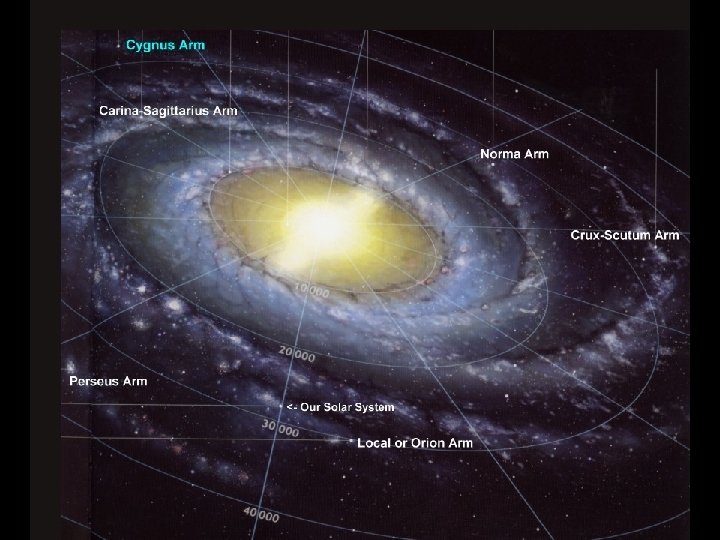
• Greeks called the hazy band of light around the sky ‘galaxias kuklos’ – milky circle • Romans called it ‘via lactia’ – milky road, or milky way • But what is it? • By the mid-18 th century, astronomers new that it was made up of an enormous number of distant stars
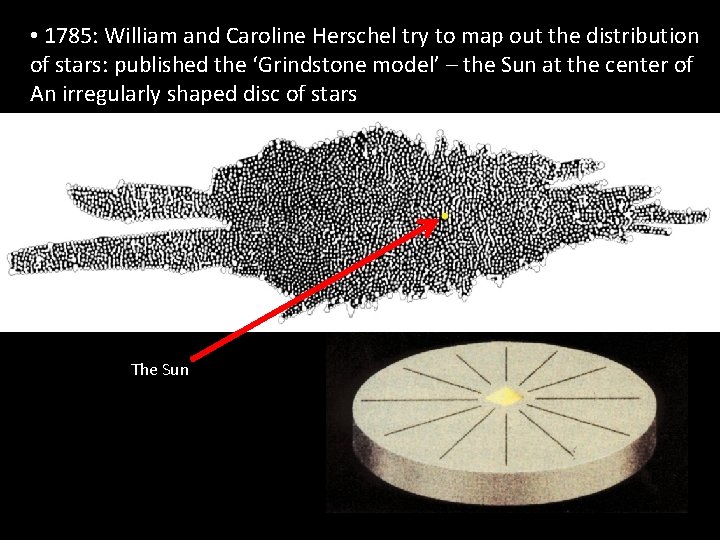
• 1785: William and Caroline Herschel try to map out the distribution of stars: published the ‘Grindstone model’ – the Sun at the center of An irregularly shaped disc of stars The Sun
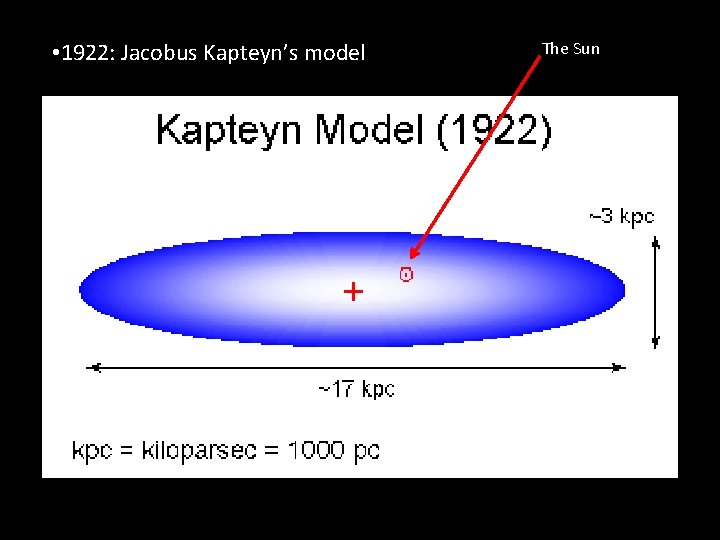
• 1922: Jacobus Kapteyn’s model The Sun
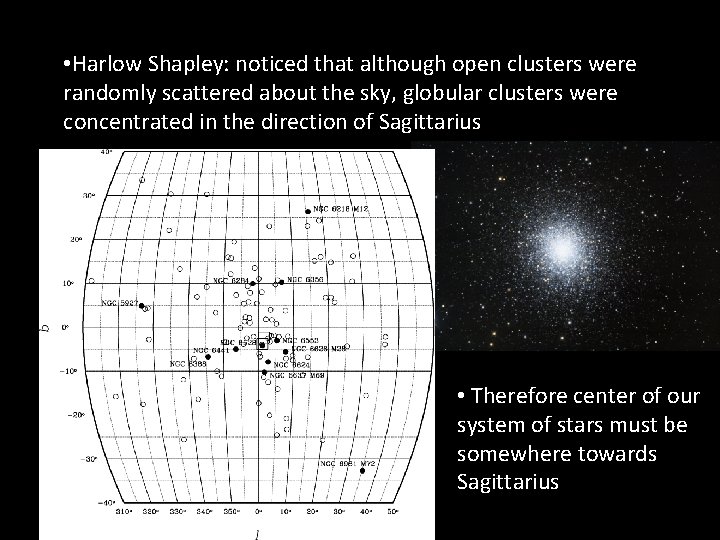
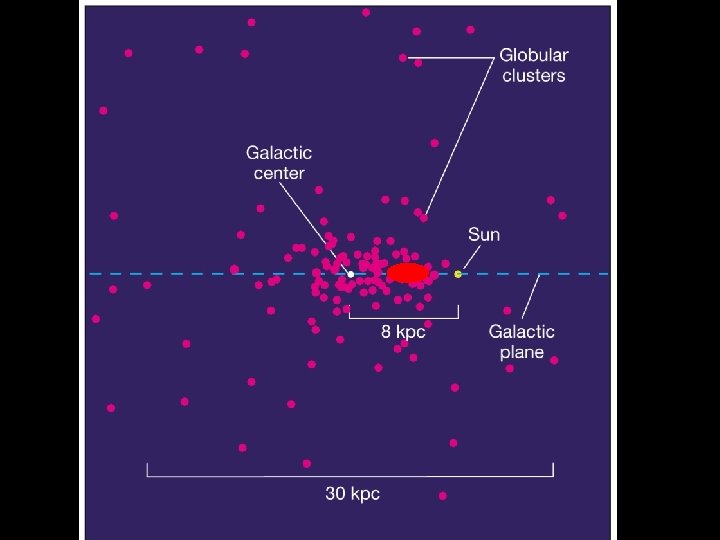
• Harlow Shapley: noticed that although open clusters were randomly scattered about the sky, globular clusters were concentrated in the direction of Sagittarius • Therefore center of our system of stars must be somewhere towards Sagittarius
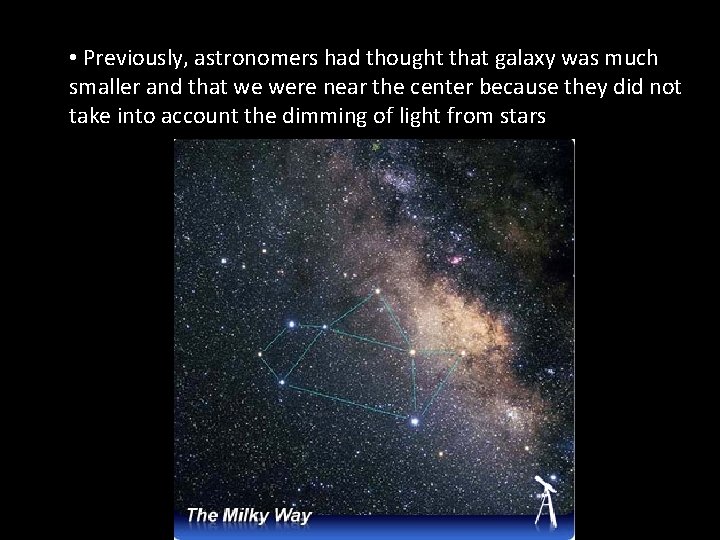
• Previously, astronomers had thought that galaxy was much smaller and that we were near the center because they did not take into account the dimming of light from stars
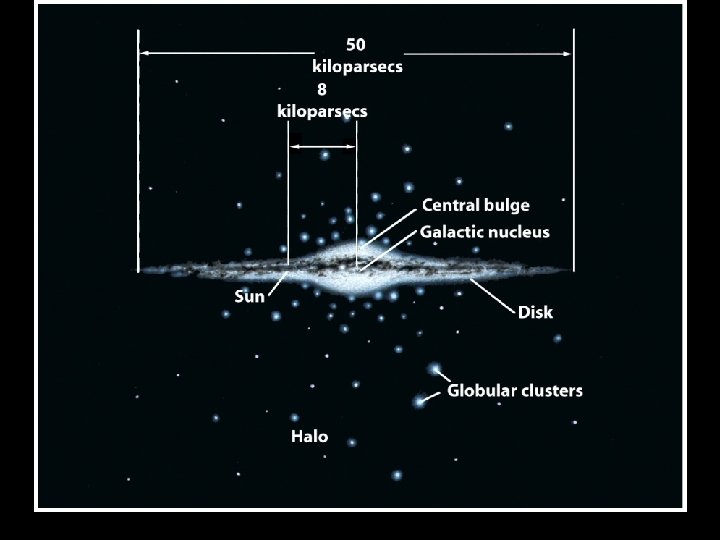
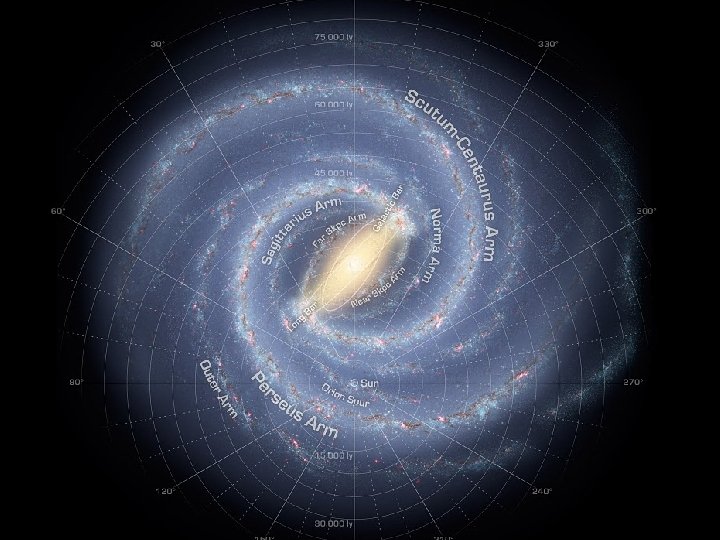
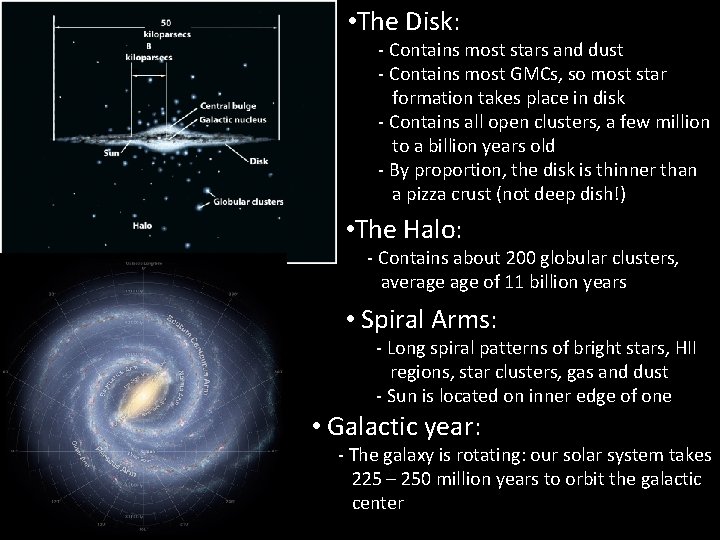
• The Disk: - Contains most stars and dust - Contains most GMCs, so most star formation takes place in disk - Contains all open clusters, a few million to a billion years old - By proportion, the disk is thinner than a pizza crust (not deep dish!) • The Halo: - Contains about 200 globular clusters, average of 11 billion years • Spiral Arms: - Long spiral patterns of bright stars, HII regions, star clusters, gas and dust - Sun is located on inner edge of one • Galactic year: - The galaxy is rotating: our solar system takes 225 – 250 million years to orbit the galactic center
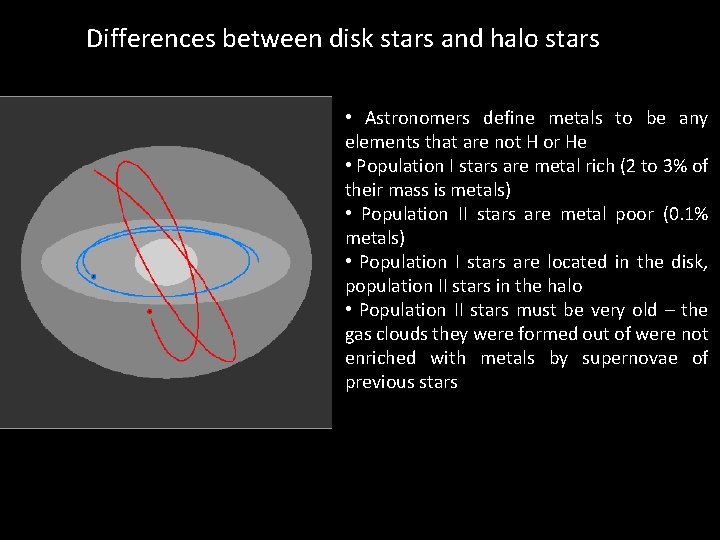
Differences between disk stars and halo stars • Astronomers define metals to be any elements that are not H or He • Population I stars are metal rich (2 to 3% of their mass is metals) • Population II stars are metal poor (0. 1% metals) • Population I stars are located in the disk, population II stars in the halo • Population II stars must be very old – the gas clouds they were formed out of were not enriched with metals by supernovae of previous stars
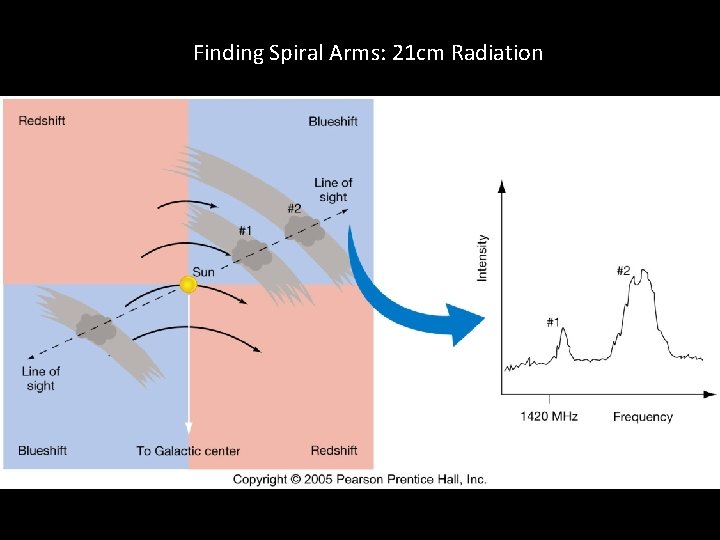
Finding Spiral Arms: 21 cm Radiation
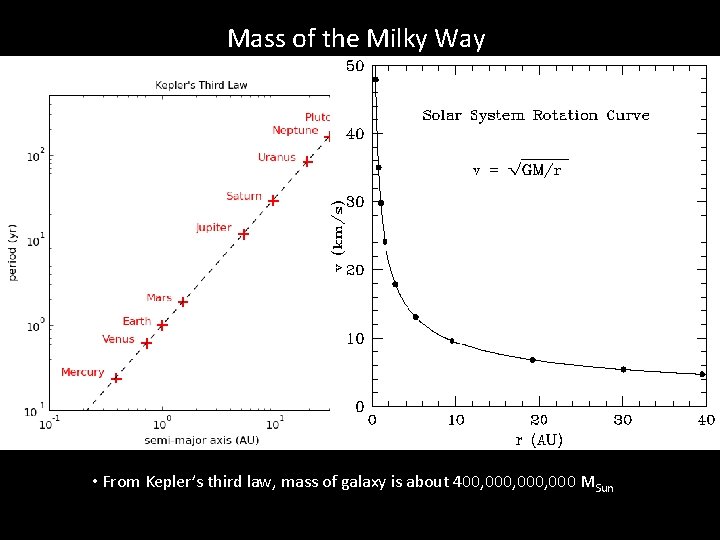
Mass of the Milky Way • From Kepler’s third law, mass of galaxy is about 400, 000, 000 MSun
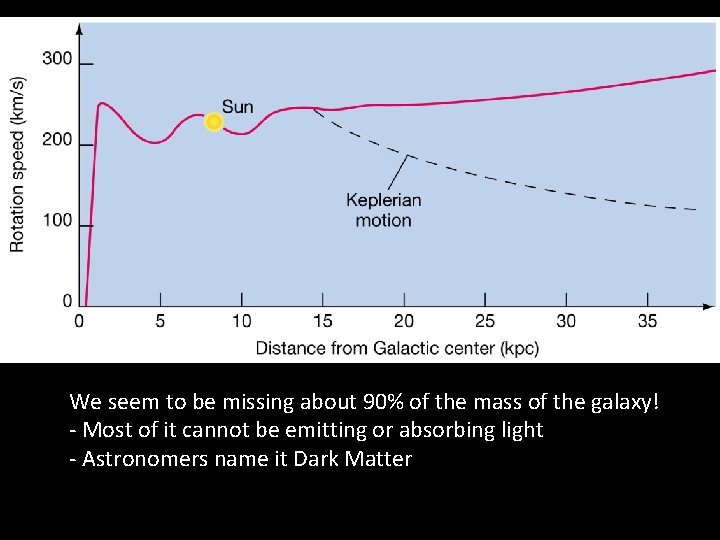
We seem to be missing about 90% of the mass of the galaxy! - Most of it cannot be emitting or absorbing light - Astronomers name it Dark Matter
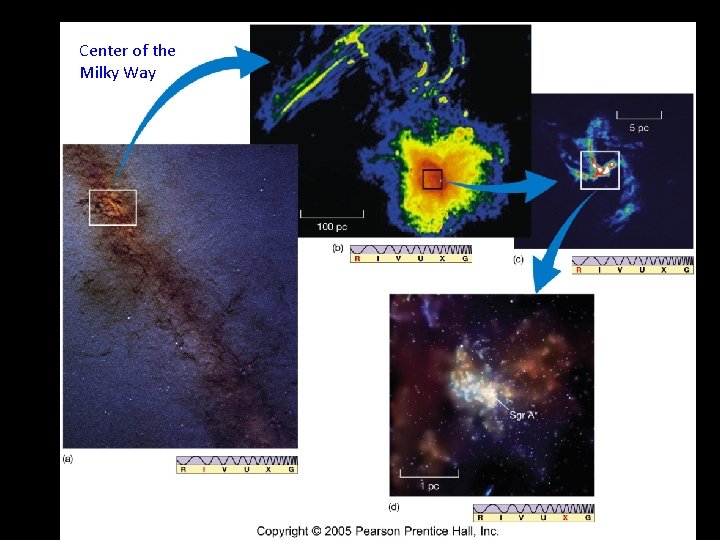
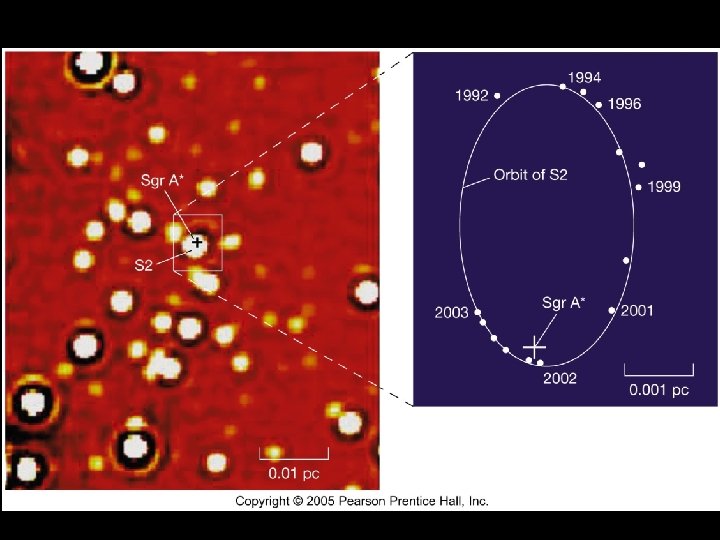
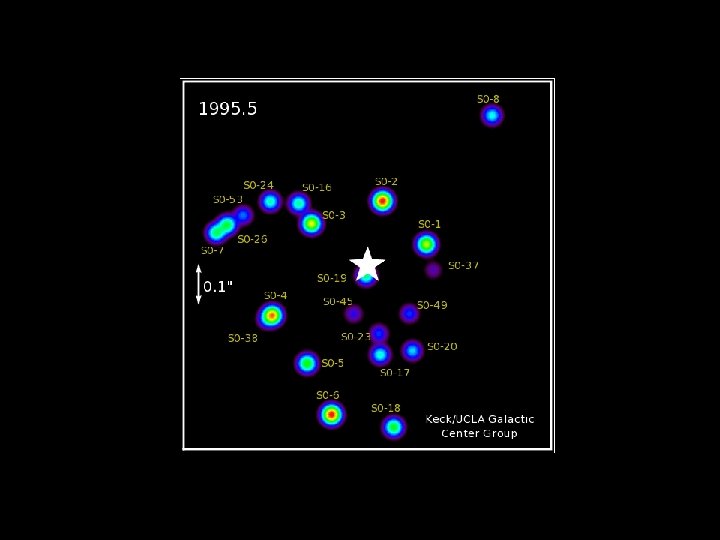
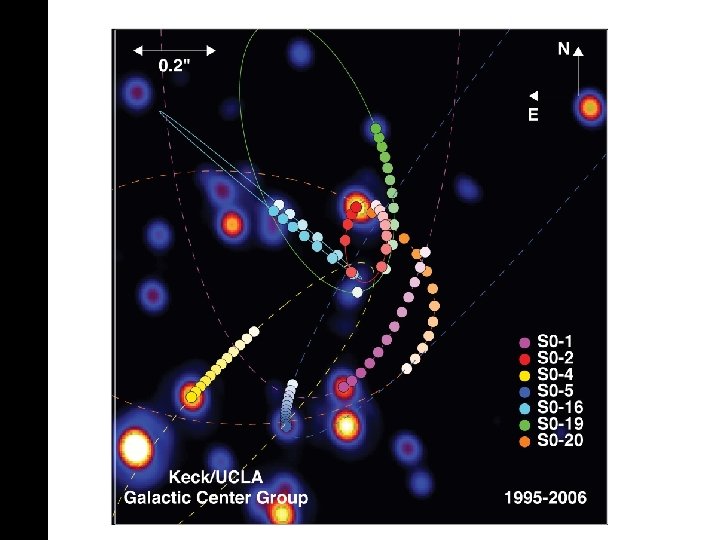
Center of the Milky Way