
The Middle English 1066 1500 The outline Introduction
![Orthography U and v : represent both the vowel [u] and the consonant [v]:](https://slidetodoc.com/presentation_image_h2/20d2e3347777ba4e8a33f1f8962971db/image-7.jpg "Orthography U and v : represent both the vowel [u] and the consonant [v]:")
- Slides: 11
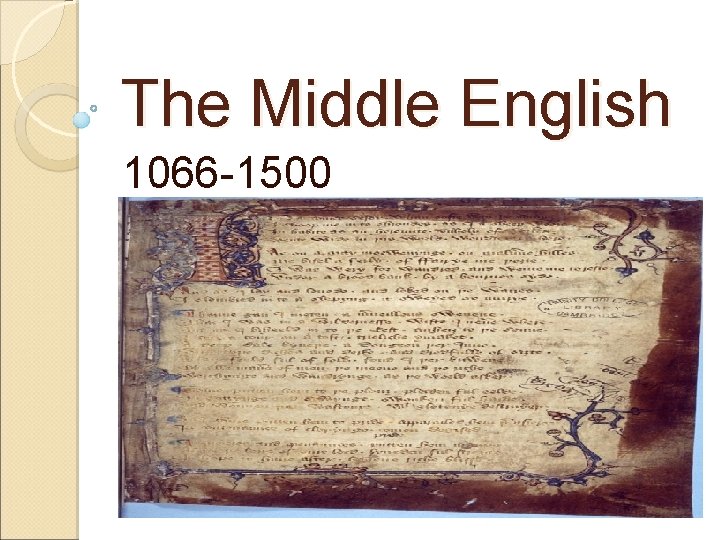
The Middle English 1066 -1500
The outline Introduction The period Historical events Some linguistic aspects § pronunciation § Orthography § Lexicon Chancery standard conclusion
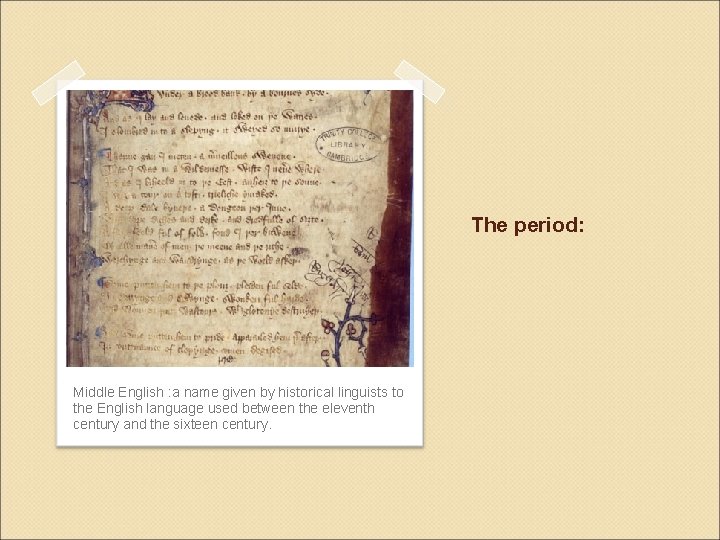
The period: Middle English : a name given by historical linguists to the English language used between the eleventh century and the sixteen century.
Historical Events 1066: The Normans led by William the Conqueror attacked and defeated the Britains at the battle of Hastings. A third language is introduced: French. Linguistic class division: ◦ Latin: church , school. ◦ French: court, castle. ◦ English: commoners. 1200 forward: French began to lose its prestige. Henry the 5 th : A great impact on national language policy. 14 th century: English became dominant again.
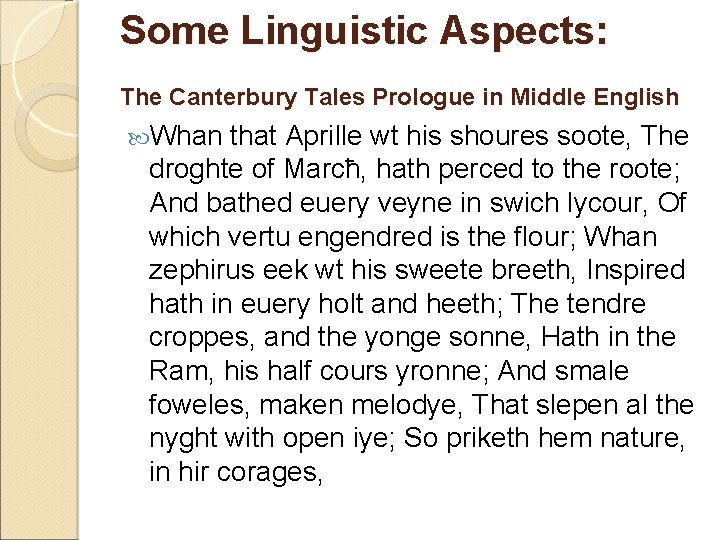
Some Linguistic Aspects: The Canterbury Tales Prologue in Middle English Whan that Aprille wt his shoures soote, The droghte of Marcħ, hath perced to the roote; And bathed euery veyne in swich lycour, Of which vertu engendred is the flour; Whan zephirus eek wt his sweete breeth, Inspired hath in euery holt and heeth; The tendre croppes, and the yonge sonne, Hath in the Ram, his half cours yronne; And smale foweles, maken melodye, That slepen al the nyght with open iye; So priketh hem nature, in hir corages,
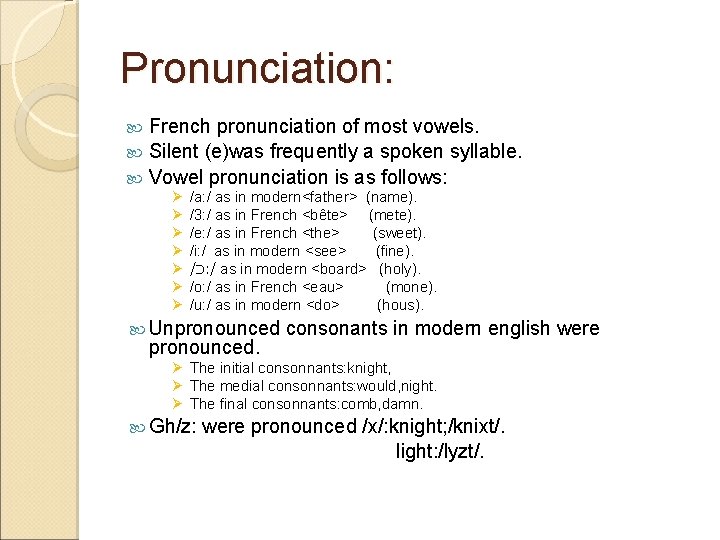
Pronunciation: French pronunciation of most vowels. Silent (e)was frequently a spoken syllable. Vowel pronunciation is as follows: Ø Ø Ø Ø /a: / as in modern<father> (name). /3: / as in French <bête> (mete). /e: / as in French <the> (sweet). /i: / as in modern <see> (fine). / כ : / as in modern <board> (holy). /o: / as in French <eau> (mone). /u: / as in modern <do> (hous). Unpronounced. consonants in modern english were Ø The initial consonnants: knight, Ø The medial consonnants: would, night. Ø The final consonnants: comb, damn. Gh/z: were pronounced /x/: knight; /knixt/. light: /lyzt/.
Orthography U and v : represent both the vowel [u] and the consonant [v]: (vpon) and (ouer). Long vowel /ou/ used for /u: /: grounde. (3) the yogh was used where modern english has (gh)medially or (y) initially: ly 3 tly; lightly. The Eth [ð] and the Thorn [θ] were replaced by [th]and sometimes with [y]as in ye meaning the.
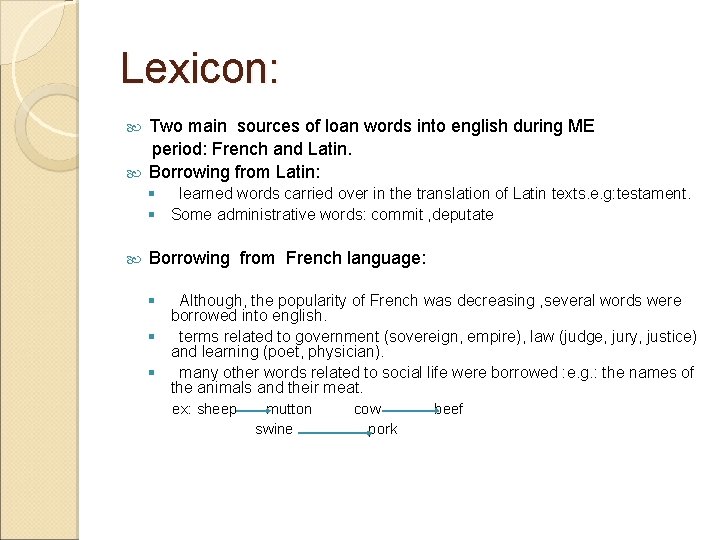
Lexicon: Two main sources of loan words into english during ME period: French and Latin. Borrowing from Latin: § learned words carried over in the translation of Latin texts. e. g: testament. § Some administrative words: commit , deputate Borrowing from French language: § Although, the popularity of French was decreasing , several words were borrowed into english. § terms related to government (sovereign, empire), law (judge, jury, justice) and learning (poet, physician). § many other words related to social life were borrowed : e. g. : the names of the animals and their meat. ex: sheep mutton swine cow pork beef
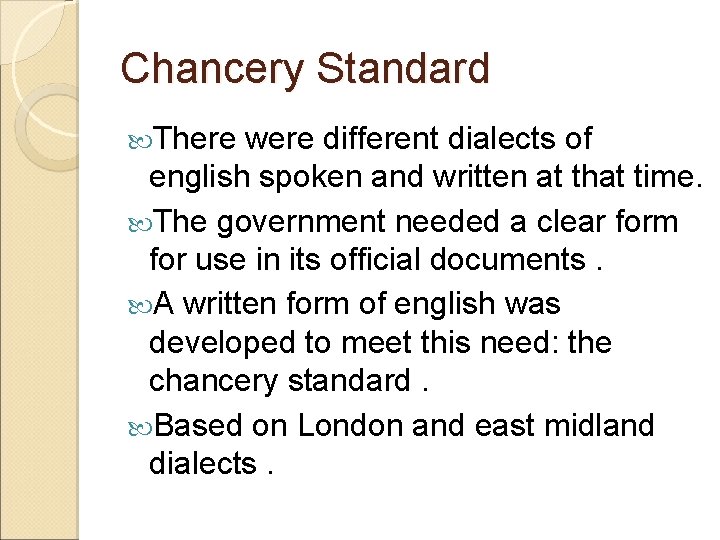
Chancery Standard There were different dialects of english spoken and written at that time. The government needed a clear form for use in its official documents. A written form of english was developed to meet this need: the chancery standard. Based on London and east midland dialects.
Conclusion: Middle english is one of the different stages through which english language has undergone. the change is recognized in the various linguistic aspects. Many dialects were recognized at that time.
Thank you for your attention