
The Middle Ages Study Guide Geography What are
- Slides: 13
The Middle Ages Study Guide
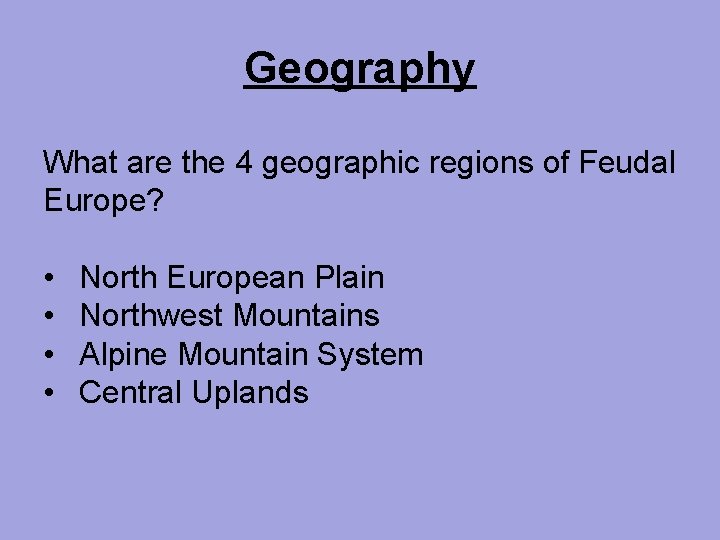
Geography What are the 4 geographic regions of Feudal Europe? • • North European Plain Northwest Mountains Alpine Mountain System Central Uplands
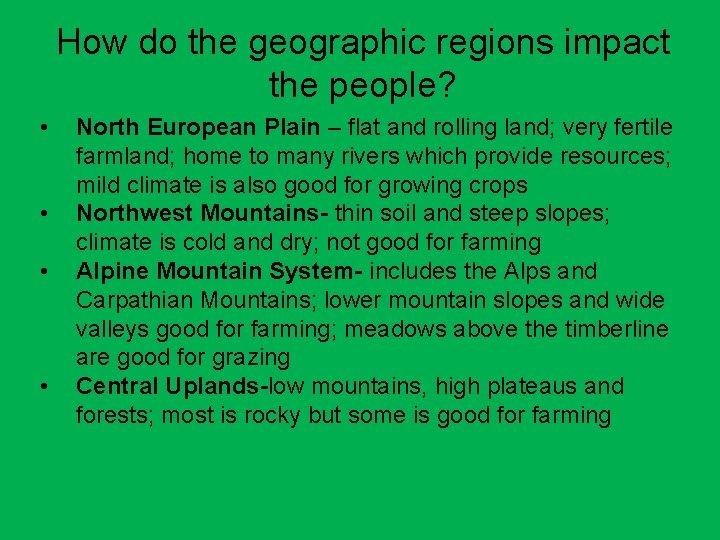
How do the geographic regions impact the people? • • North European Plain – flat and rolling land; very fertile farmland; home to many rivers which provide resources; mild climate is also good for growing crops Northwest Mountains- thin soil and steep slopes; climate is cold and dry; not good for farming Alpine Mountain System- includes the Alps and Carpathian Mountains; lower mountain slopes and wide valleys good for farming; meadows above the timberline are good for grazing Central Uplands-low mountains, high plateaus and forests; most is rocky but some is good for farming
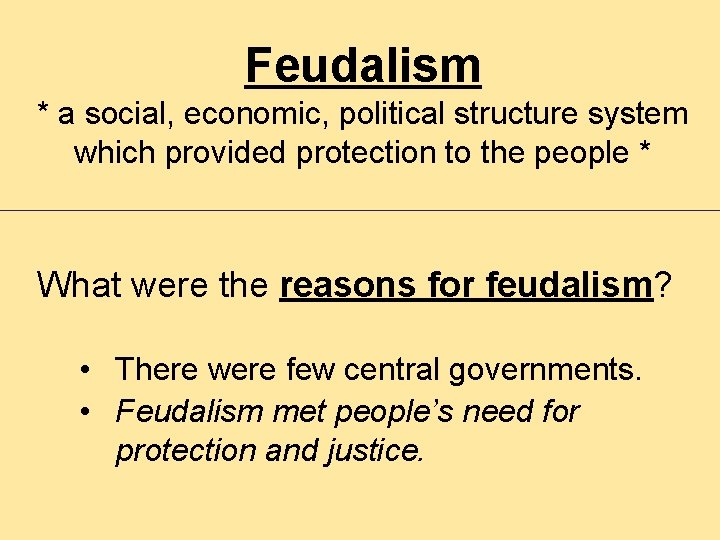
Feudalism * a social, economic, political structure system which provided protection to the people * What were the reasons for feudalism? • There were few central governments. • Feudalism met people’s need for protection and justice.
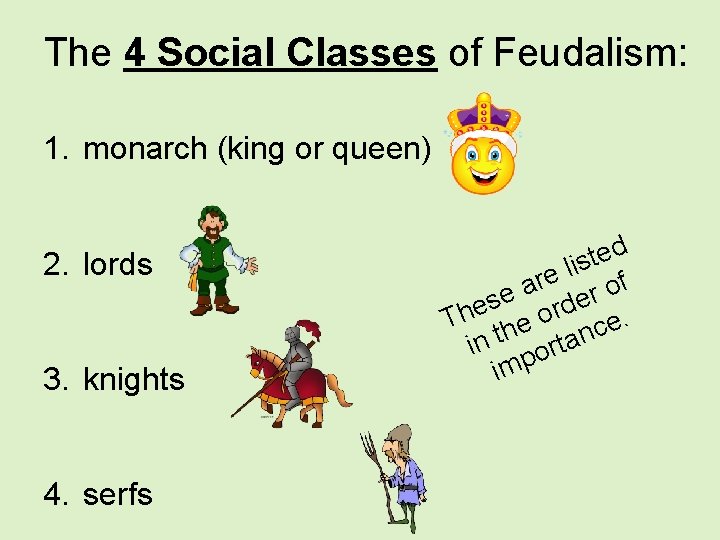
The 4 Social Classes of Feudalism: 1. monarch (king or queen) 2. lords 3. knights 4. serfs d e t is l e r f a o r e e s d e r h o ce. T e h in t ortan imp
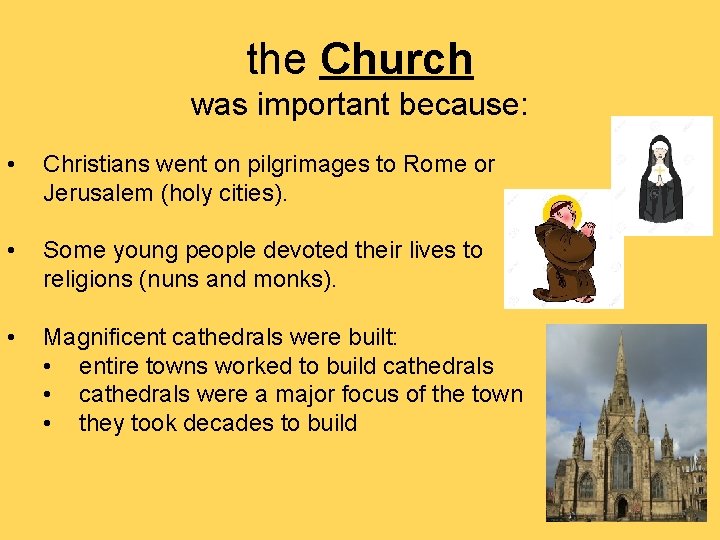
the Church was important because: • Christians went on pilgrimages to Rome or Jerusalem (holy cities). • Some young people devoted their lives to religions (nuns and monks). • Magnificent cathedrals were built: • entire towns worked to build cathedrals • cathedrals were a major focus of the town • they took decades to build
the Church influenced the life of the people: • It offered hope and peace to the hardworking serfs. • It controlled nonreligious life (Catholics had to follow God’s law – no stealing or harming others). • The Church was the highest authority (the Pope) and guardian of God’s truth. • The Church controlled land wealth.
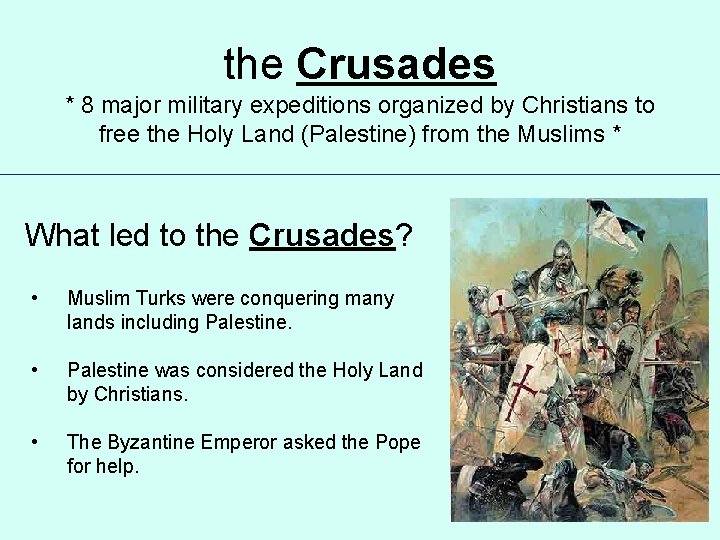
the Crusades * 8 major military expeditions organized by Christians to free the Holy Land (Palestine) from the Muslims * What led to the Crusades? • Muslim Turks were conquering many lands including Palestine. • Palestine was considered the Holy Land by Christians. • The Byzantine Emperor asked the Pope for help.
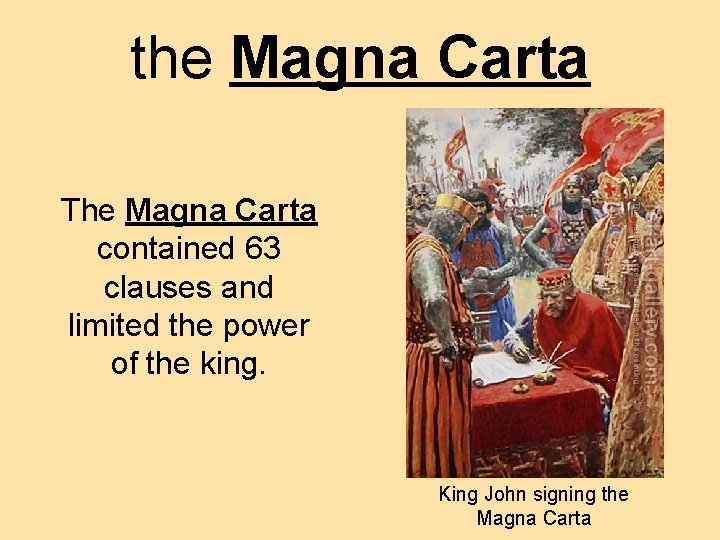
the Magna Carta The Magna Carta contained 63 clauses and limited the power of the king. King John signing the Magna Carta
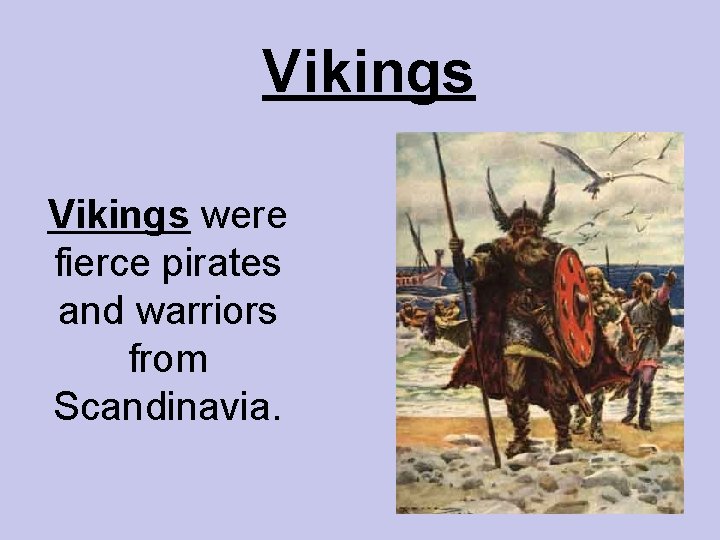
Vikings were fierce pirates and warriors from Scandinavia.
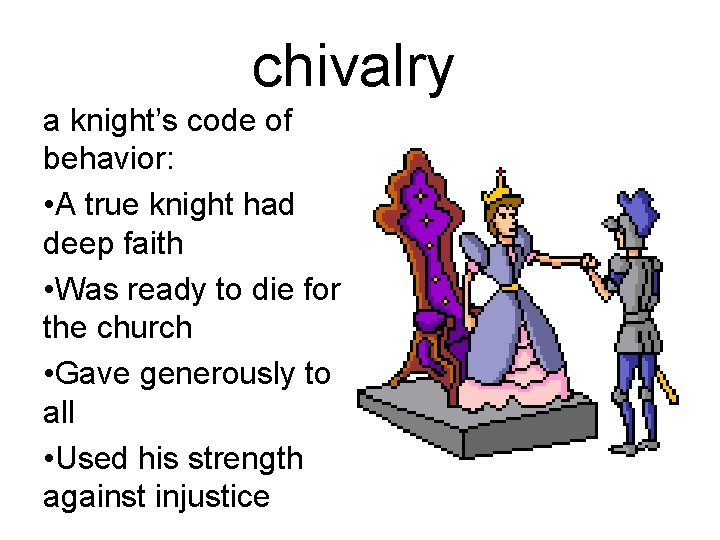
chivalry a knight’s code of behavior: • A true knight had deep faith • Was ready to die for the church • Gave generously to all • Used his strength against injustice
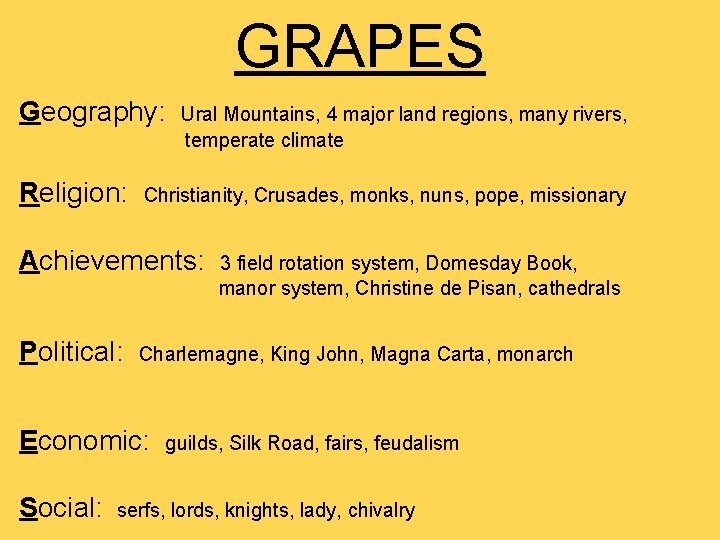
GRAPES Geography: Religion: Ural Mountains, 4 major land regions, many rivers, temperate climate Christianity, Crusades, monks, nuns, pope, missionary Achievements: Political: Charlemagne, King John, Magna Carta, monarch Economic: Social: 3 field rotation system, Domesday Book, manor system, Christine de Pisan, cathedrals guilds, Silk Road, fairs, feudalism serfs, lords, knights, lady, chivalry
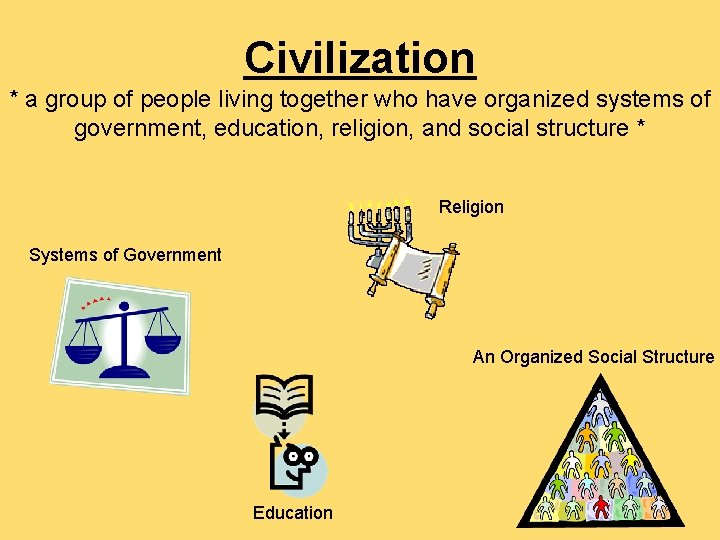
Civilization * a group of people living together who have organized systems of government, education, religion, and social structure * Religion Systems of Government An Organized Social Structure Education