
The Middle Ages Outcome CausesEffects of the Middle

- Slides: 9
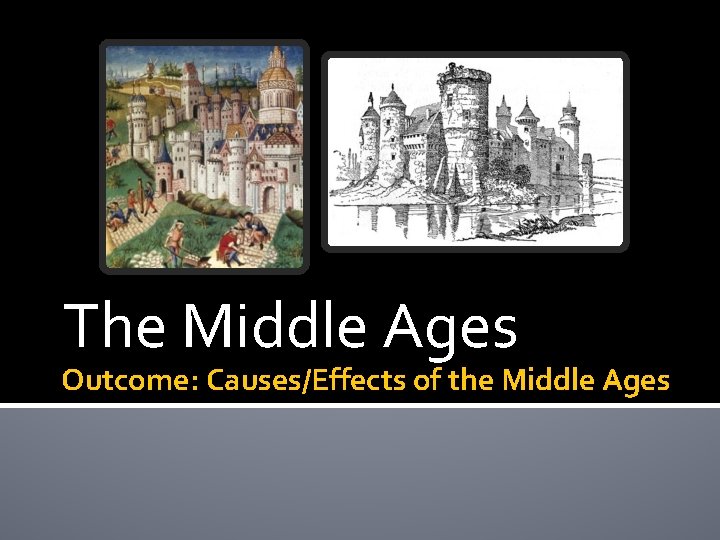
The Middle Ages Outcome: Causes/Effects of the Middle Ages
Causes/Effects of the Middle Ages The Middle Ages: What is it? 1. a. Name given to the time period after the gradual decline of the Roman Empire. b. Lasts roughly 1000 years, 500 -1500 c. Sometimes called The Dark Ages or medieval period. d. Often seen as a very bleak and dangerous period e. Had roots in: i. The classical heritage of Rome ii. The beliefs of the Roman Catholic Church iii. The customs of various Germanic tribes
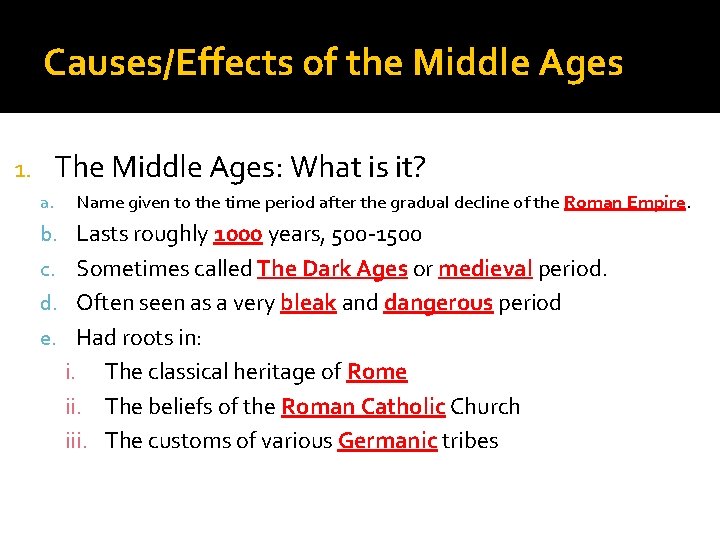
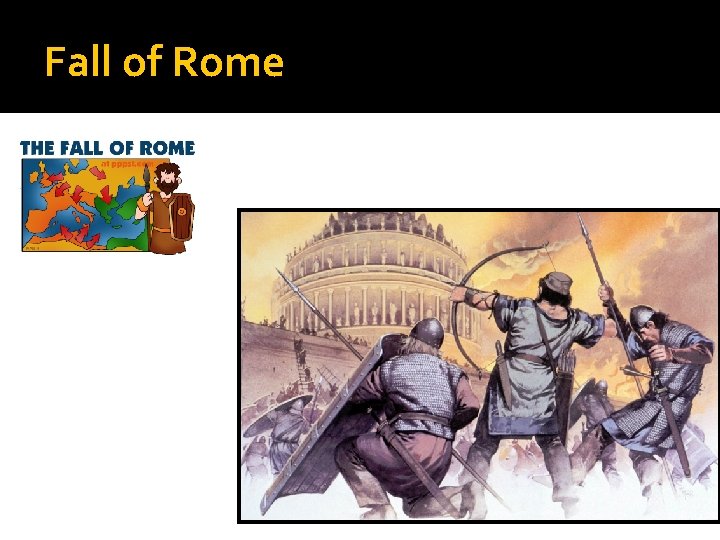
Fall of Rome
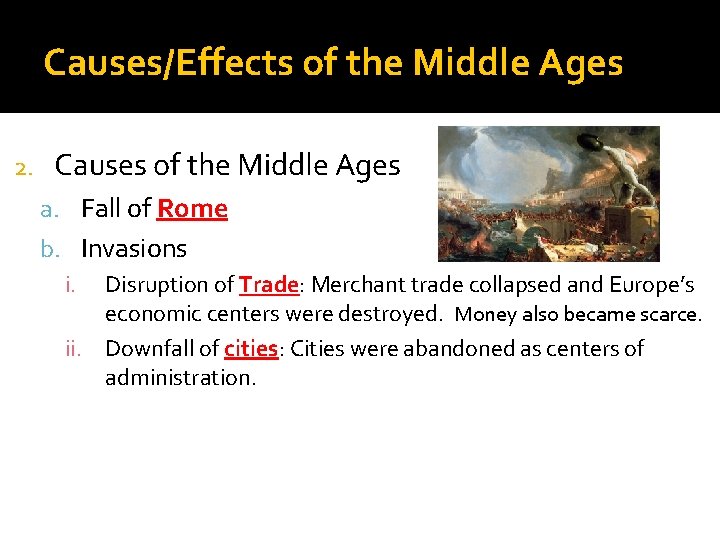
Causes/Effects of the Middle Ages 2. Causes of the Middle Ages a. Fall of Rome b. Invasions i. Disruption of Trade: Merchant trade collapsed and Europe’s economic centers were destroyed. Money also became scarce. ii. Downfall of cities: Cities were abandoned as centers of administration.
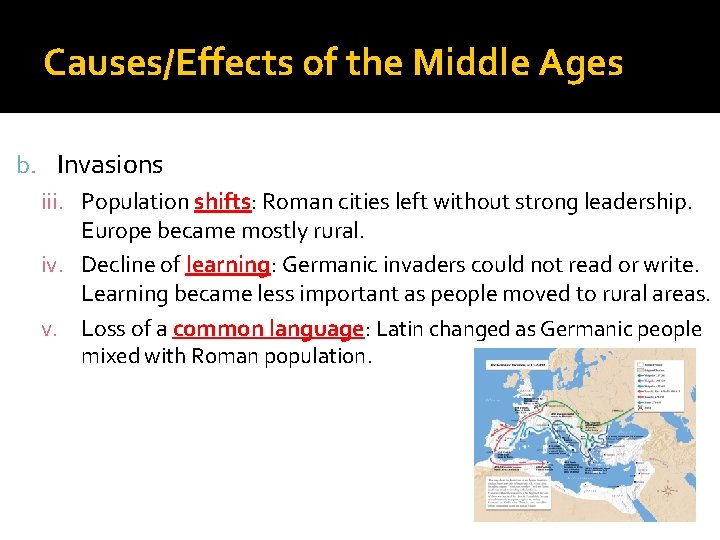
Causes/Effects of the Middle Ages b. Invasions iii. Population shifts: Roman cities left without strong leadership. Europe became mostly rural. iv. Decline of learning: Germanic invaders could not read or write. Learning became less important as people moved to rural areas. v. Loss of a common language: Latin changed as Germanic people mixed with Roman population.
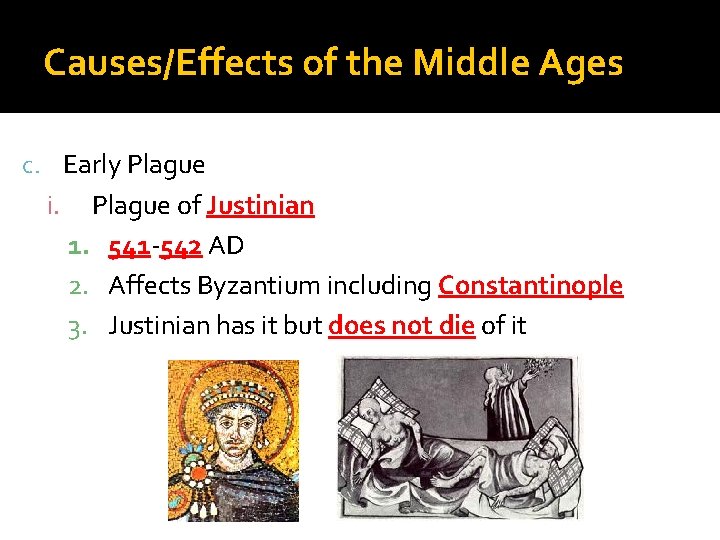
Causes/Effects of the Middle Ages c. Early Plague i. Plague of Justinian 1. 541 -542 AD 2. Affects Byzantium including Constantinople 3. Justinian has it but does not die of it
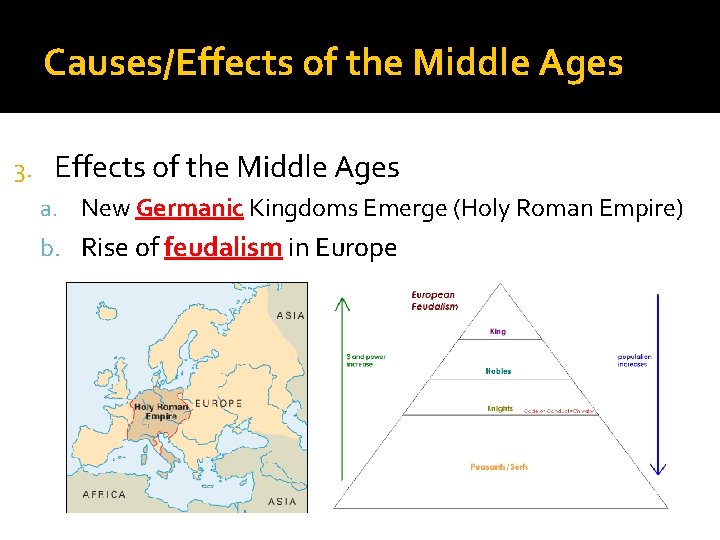
Causes/Effects of the Middle Ages 3. Effects of the Middle Ages a. New Germanic Kingdoms Emerge (Holy Roman Empire) b. Rise of feudalism in Europe
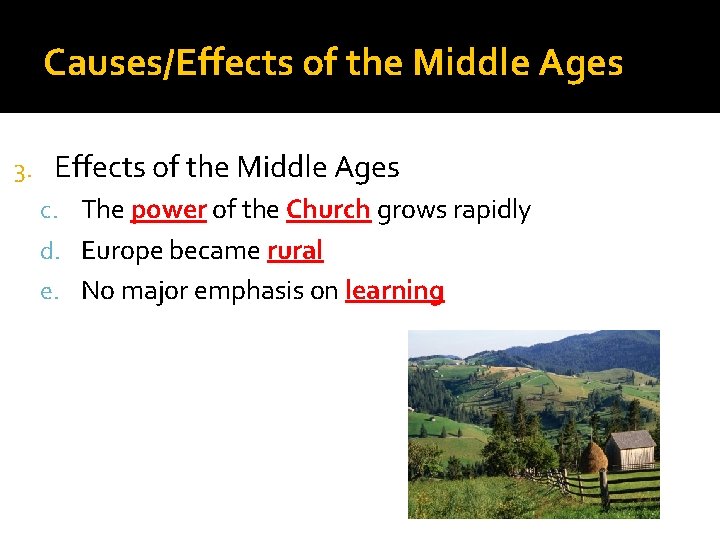
Causes/Effects of the Middle Ages 3. Effects of the Middle Ages c. The power of the Church grows rapidly d. Europe became rural e. No major emphasis on learning
Causes/Effects of the Middle Ages 3. f. New languages replace Latin g. Early signs of modern European countries start to appear (England & France)