
THE MIDDLE AGES HOW ADVANCED WERE PEOPLE DURING
- Slides: 8
THE MIDDLE AGES HOW ADVANCED WERE PEOPLE DURING THE MEDIEVAL TIME PERIOD?
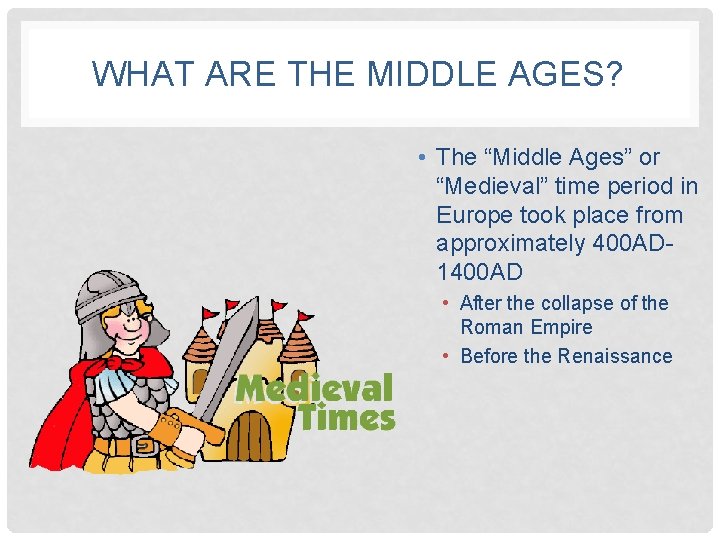
WHAT ARE THE MIDDLE AGES? • The “Middle Ages” or “Medieval” time period in Europe took place from approximately 400 AD 1400 AD • After the collapse of the Roman Empire • Before the Renaissance
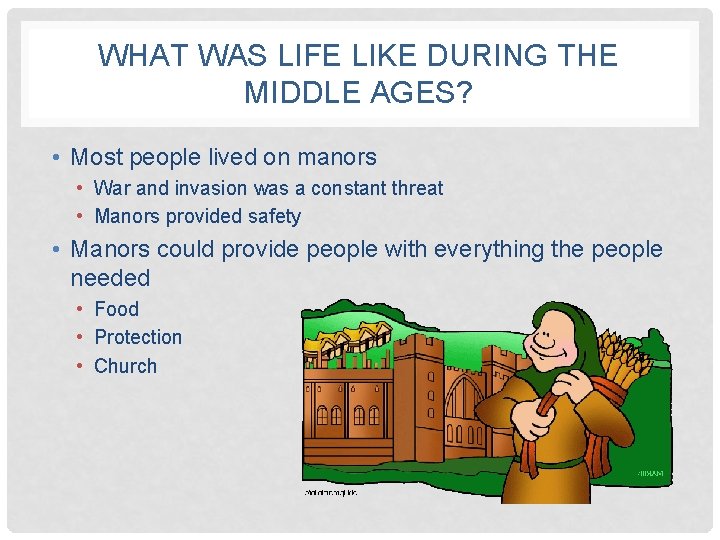
WHAT WAS LIFE LIKE DURING THE MIDDLE AGES? • Most people lived on manors • War and invasion was a constant threat • Manors provided safety • Manors could provide people with everything the people needed • Food • Protection • Church
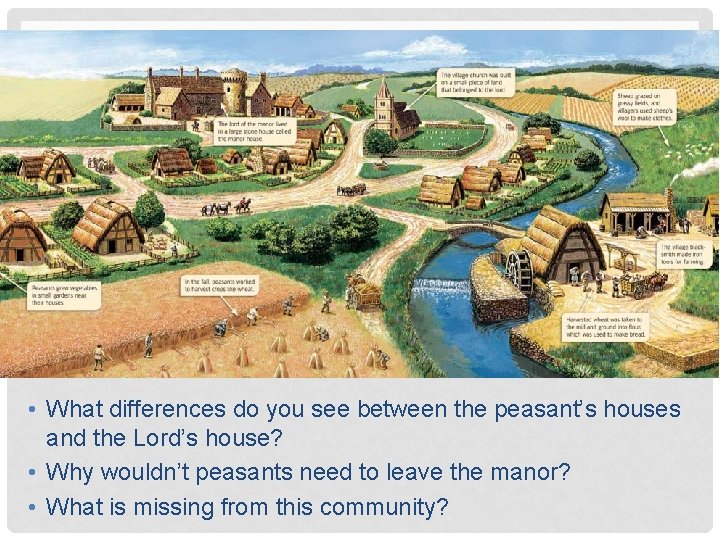
• What differences do you see between the peasant’s houses and the Lord’s house? • Why wouldn’t peasants need to leave the manor? • What is missing from this community?
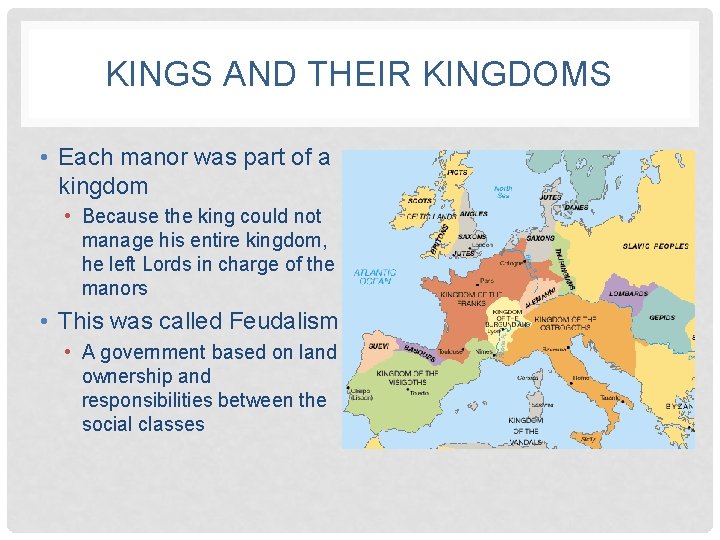
KINGS AND THEIR KINGDOMS • Each manor was part of a kingdom • Because the king could not manage his entire kingdom, he left Lords in charge of the manors • This was called Feudalism • A government based on land ownership and responsibilities between the social classes
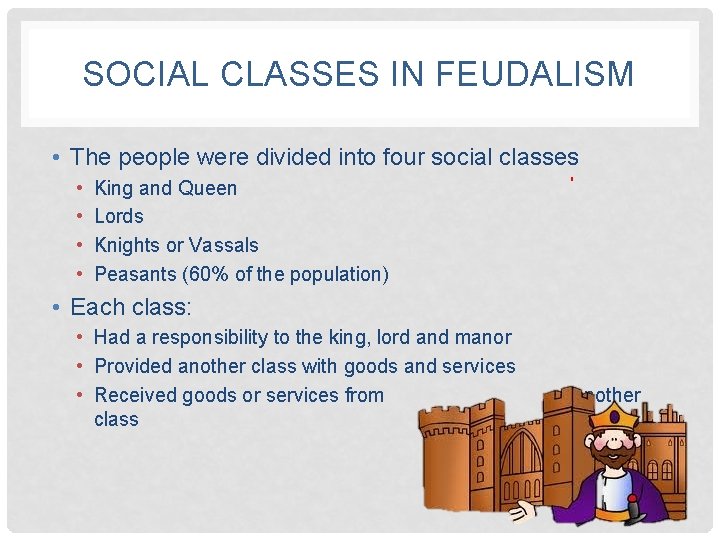
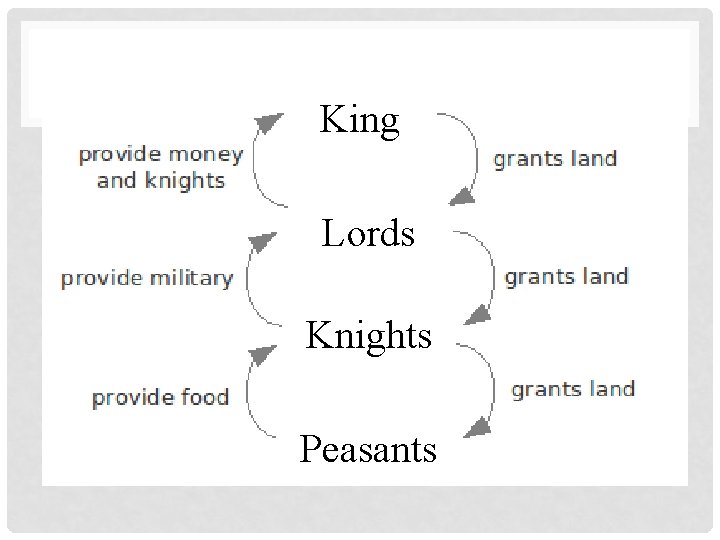
SOCIAL CLASSES IN FEUDALISM • The people were divided into four social classes • • King and Queen Lords Knights or Vassals Peasants (60% of the population) • Each class: • Had a responsibility to the king, lord and manor • Provided another class with goods and services • Received goods or services from class another
King Lords Knights Peasants
IMPACT ON THE PEOPLE • Manors were isolated from one another • Ideas were unable to spread • Difficult for peasants to move up the social hierarchy • No education, no land ownership • Peasants and knights had no voice in the government • King was unaware of what occurred on the manors • Lords had direct control over the manors