
The Middle Ages 500 1500 HTTPS WWW YOUTUBE

The Middle Ages 500 -1500 HTTPS: //WWW. YOUTUBE. COM/WATCH? V=6 EAMQKUIMR 8
Decline of the Roman Empire Disruption of trade – Warfare and invasions caused businesses to collapse. The breakdown of trade destroyed cities and money became scarce. Downfall of Cities – Cities were abandoned and nobles retreated to rural areas. Population Shifts – Cities were left without strong leadership and people fled to the countryside. Decline of Learning – The level of learning sank sharply. Few people, except priests and other church officials were literate.
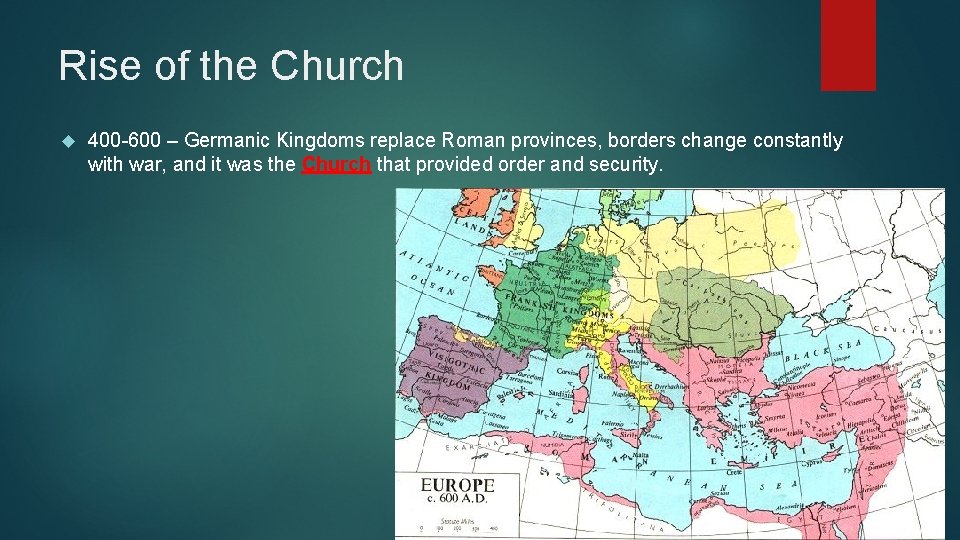
Rise of the Church 400 -600 – Germanic Kingdoms replace Roman provinces, borders change constantly with war, and it was the Church that provided order and security.
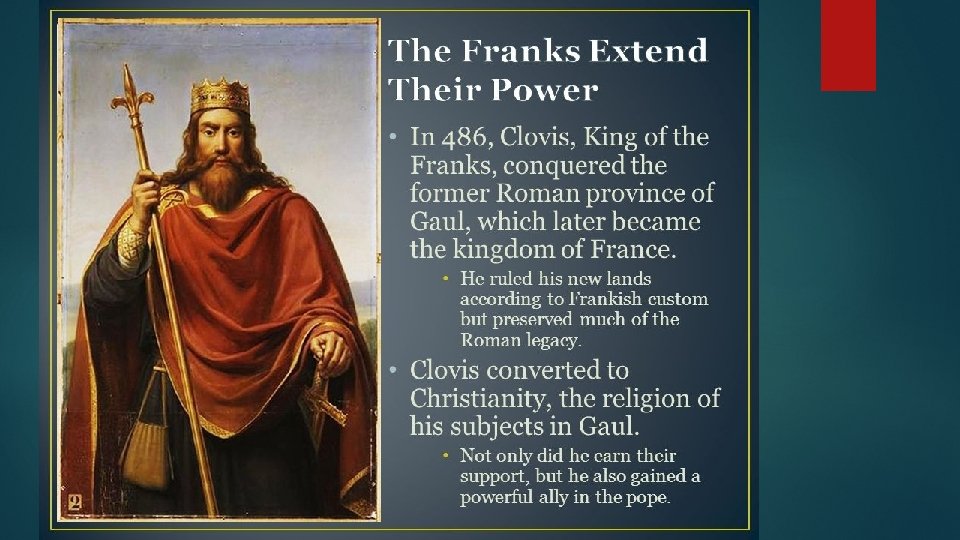
Clovis Rules the Franks Converts to Christianity. By 511 Clovis had united the Franks into one kingdom. Formed an alliance with the church, marking the start of a partnership between two powerful forces.
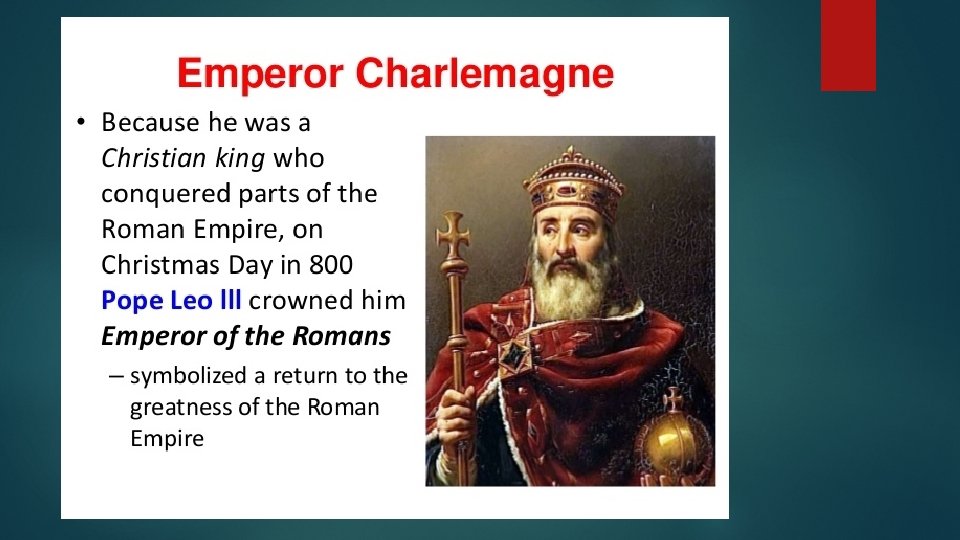
Charlemagne After assisting the Pope in an attack, Charlemagne was crowned Holy Roman Emperor by Pope Leo III on Christmas day in 800 AD Strengthened his own power by limiting the power of the nobles Where He he conquered, he spread Christianity encouraged learning by building schools
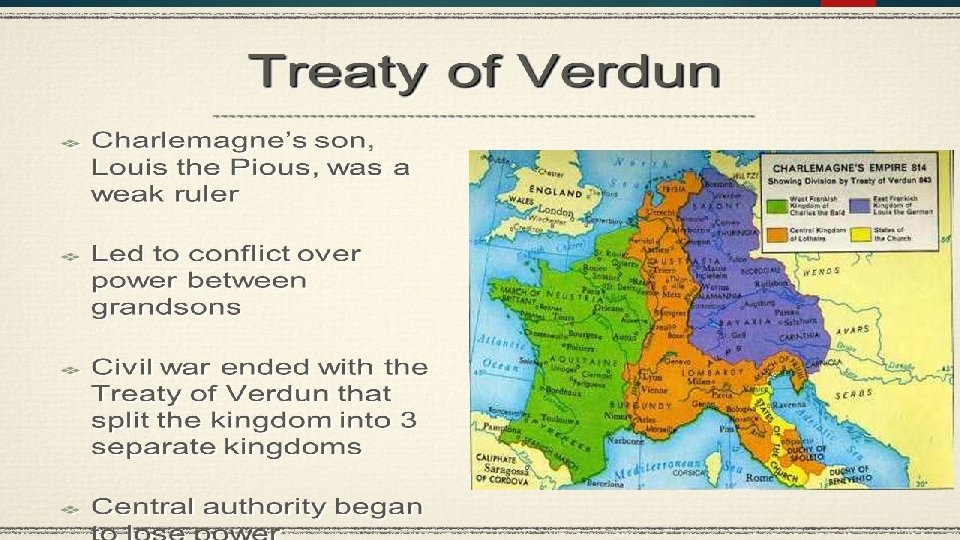
Treaty of Verdun 843 AD – Divided Charlemagne’s empire into tree parts Central Authority broke down Lack of strong rulers led to Feudalism
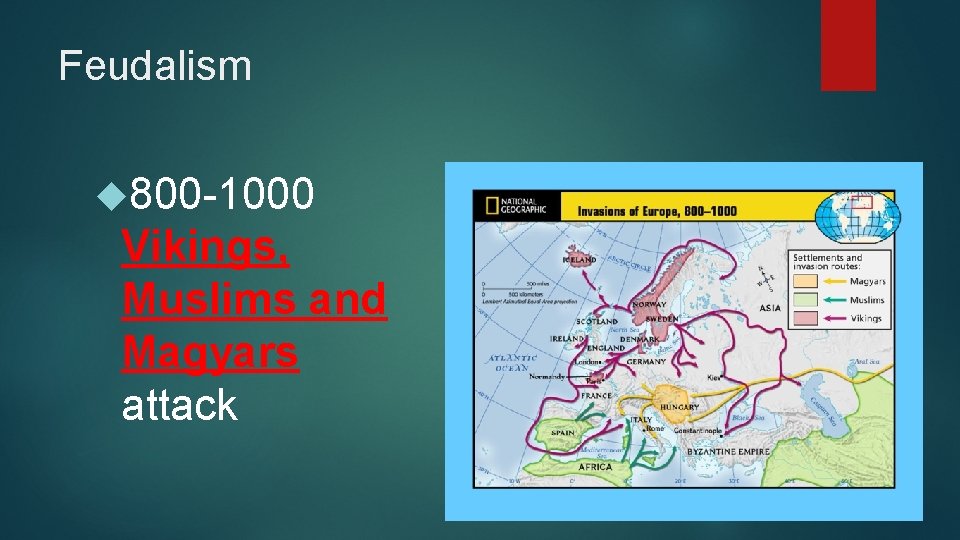
Feudalism 800 -1000 Vikings, Muslims and Magyars attack
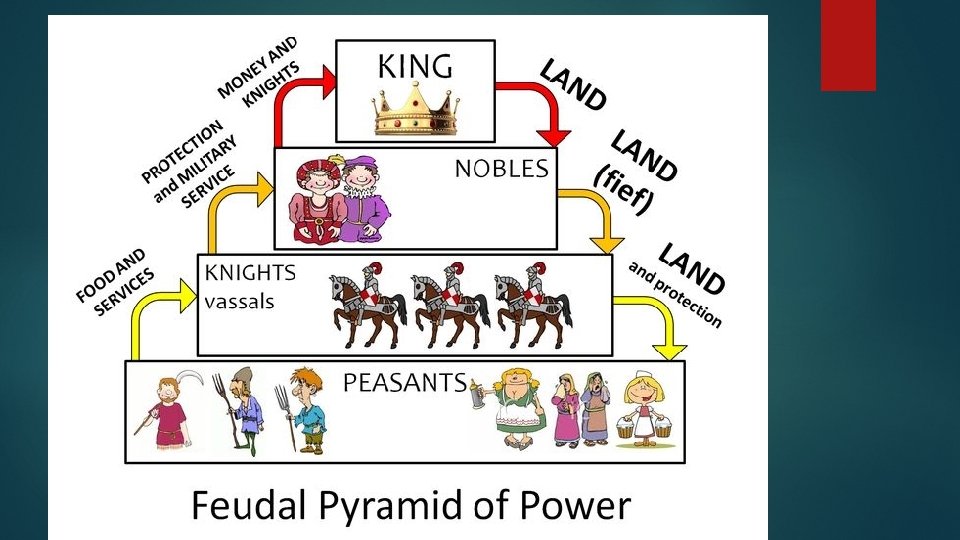
Feudalism Develops The invasions of Vikings, Magyars and Muslims caused widespread disorder and suffering. Most western Europeans lived in constant danger. Kings could not effectively defend their lands from invaders. As a result, people no longer looked to a central ruler for security. Instead, many turned to local rulers who had their own armies. Feudalism is based on rights and obligations. In exchange for military protection and other services, a lord granted a fief to a vassal.
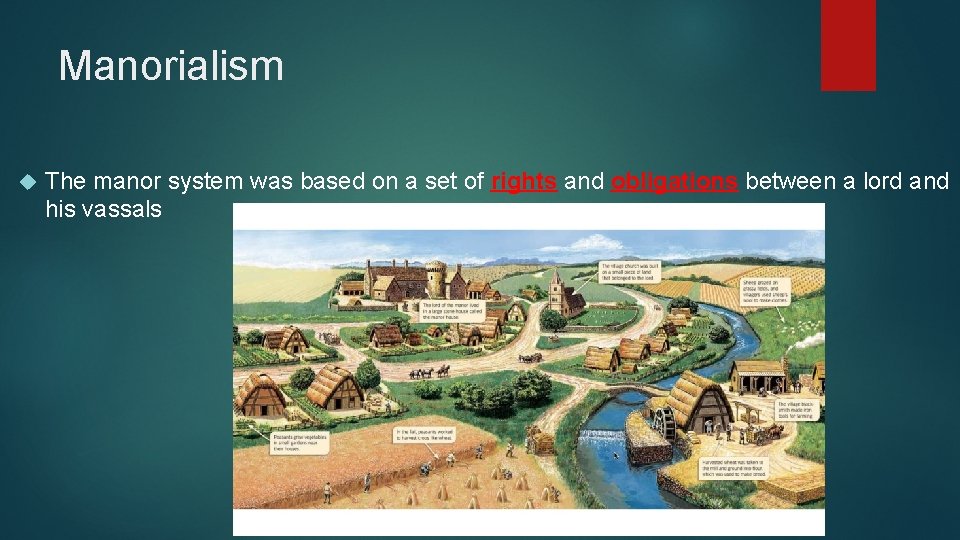
Manorialism The manor system was based on a set of rights and obligations between a lord and his vassals
Peasants were taxed on all grain, on marriage, which required the lord’s consent, and they owed the church a tithe which was a tax of 1/10 of their income. Life was hard work revolving around raising crops and livestock and taking care of the home and family. Many children did not survive to adulthood. Illness and malnutrition were constant afflictions. Average life expectancy was 35 years.
Nobles constantly fought one another, fragmenting Europe for centuries. Lords defended their estates, seized new territories, and increased their wealth. Lords and their armies lived in a violent society that prized combat skills.
Life of a Knight In exchange for military service, lords rewards knights with a fief. Wealth from a fief allowed knights to devote their lives to war. Leather saddles kept a warrior firmly seated on his horse. Stirrups enabled him to ride and handle heavier weapons. According to the code of Chivalry, the knight was loyal, brave and courteous. He protected the weak and poor. At 7 he was a page for another lord. At 14 he was a squire or servant to a knight. At 21 he could become a full fledged knight.
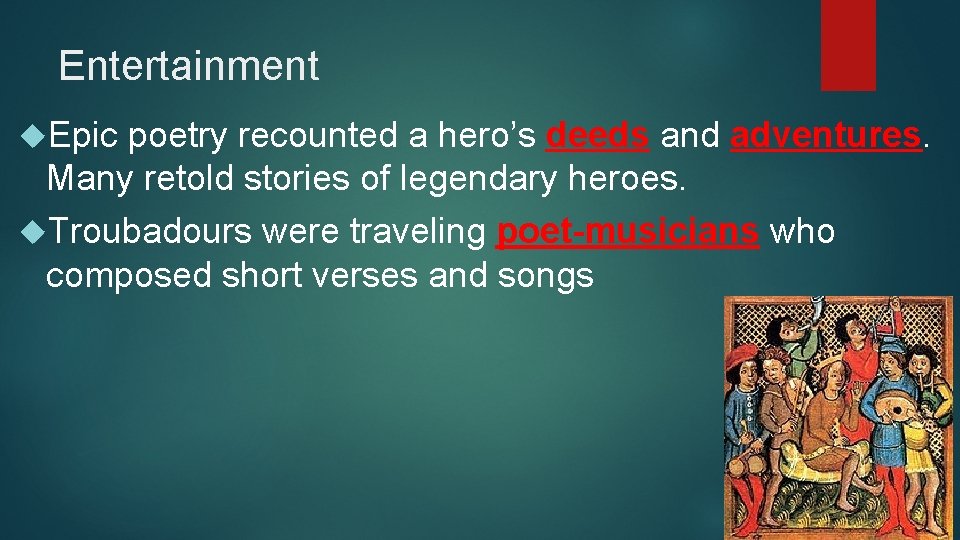
Entertainment Epic poetry recounted a hero’s deeds and adventures. Many retold stories of legendary heroes. Troubadours were traveling poet-musicians who composed short verses and songs
Women in Feudal Society Noble women could inherit an estate or act as military commander when her husband was off, but most were confined to activities in the home Peasant women performed endless labor in the home and often in fields, bore children and took care of their families.
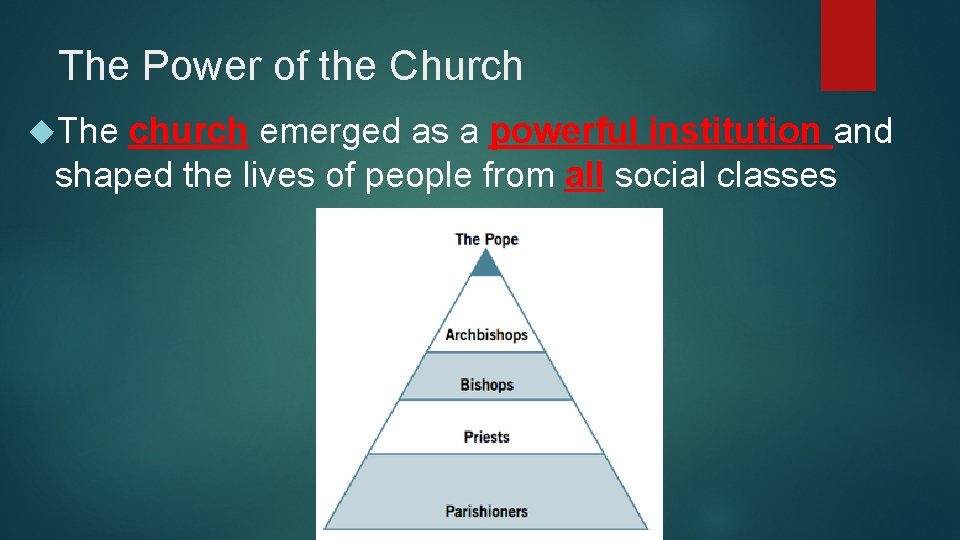
The Power of the Church The church emerged as a powerful institution and shaped the lives of people from all social classes
The Power of the Church The shared beliefs bonded people together and it was a stable force during an era of constant warfare and political turmoil. Priests administered the sacraments which paved the way to salvation. In a world without hospitals, public schools or social programs, monks and nuns provided basic social services. Monasteries and convents also performed a vital cultural function by preserving the writings of the ancient world. All Christians, Kings and peasants alike, were subject to Canon Law, or church law.
Canon Law Excommunication Interdict Not The allowed membership in the church Denied the sacraments of the church sacraments and religious services could not be performed in the King’s lands Jews in Western Europe – After the Romans expelled them from Palestine, the Jews had scattered all around the Mediterranean
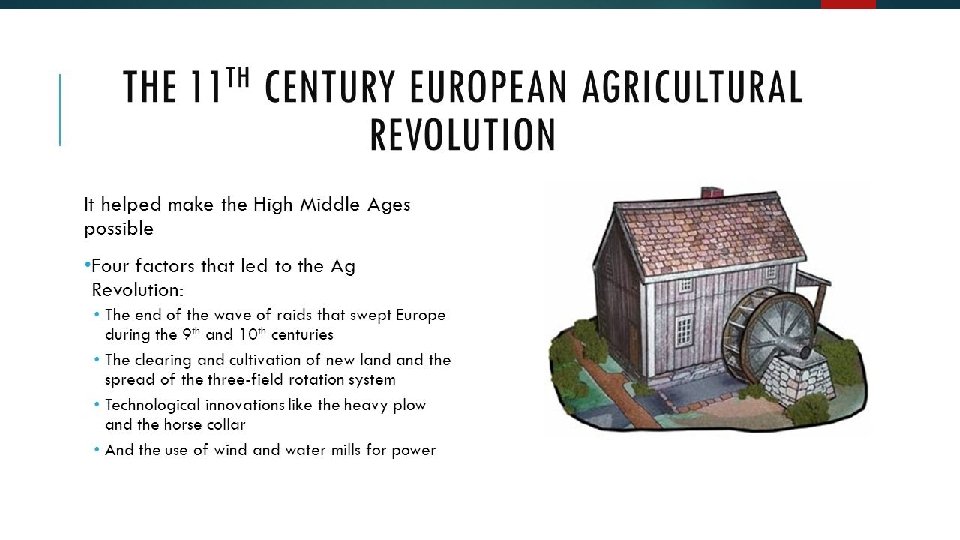
The Agricultural Revolution New Technologies Iron Plows New kind of harness Windmills All of these improvements let farmers produce more food, which allowed the population of Europe to double from 1000 -1300.
Trade Revives Trade fairs took place near navigable rivers or where trade routes met. Trade fairs closed in the fall and merchants waited out the winter near a castle. Slowly these small centers of trade developed into the first real medieval cities.
A Commercial Revolution As trade revived, money reappeared. The need for capital, or money for investment spurred the growth of banking houses
Social Changes These new ways of doing business slowly reshaped medieval society Money undermined serfdom A new middle class emerged Merchant guilds dominated medieval towns. Artisans formed craft guilds, regulating hours, prices and training Apprentice -- Trainee
City Life Medieval cities were a jumble of narrow streets lined with tall houses. Even a rich town had no garbage collection or sewer system

The High Middle Ages
England In 1066, William of Normandy sailed from France, across the English Channel with his army. At the Battle of Hastings William defeated King Harold and was crowned King of England. Domesday Book – listed all the lands in England helped to create an efficient system of tax collecting. Henry II – strengthened finances by creating the royal Exchequer (treasury) and broadened royal justice with English Common Law and juries.
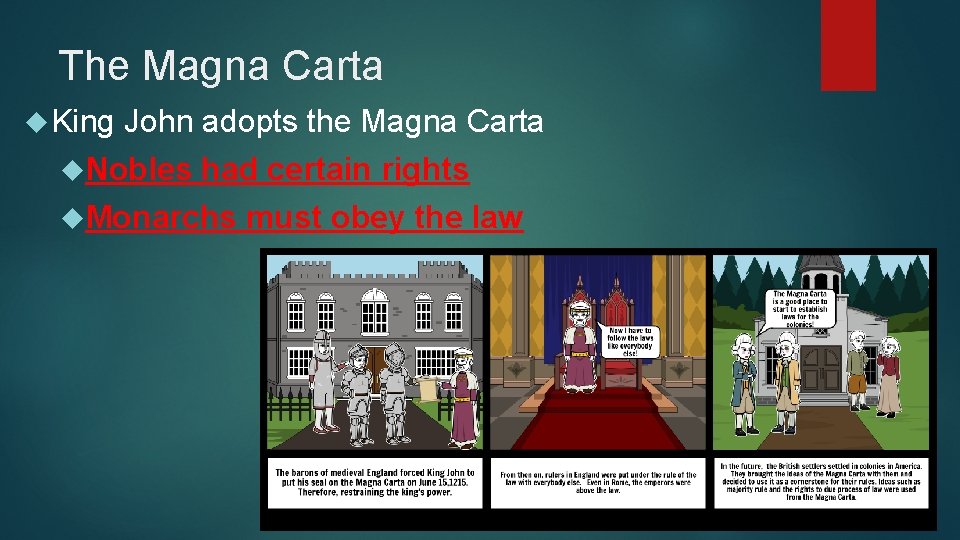
The Magna Carta King John adopts the Magna Carta Nobles had certain rights Monarchs must obey the law
France Philip II – strengthened royal government by appointing middle class to fill government positions and paid them. He also built a standing army and instituted a national tax. Louis IX – Outlawed private wars and ended serfdom Philip IV – Tried to collect new taxes from the clergy and clashed with the pope.
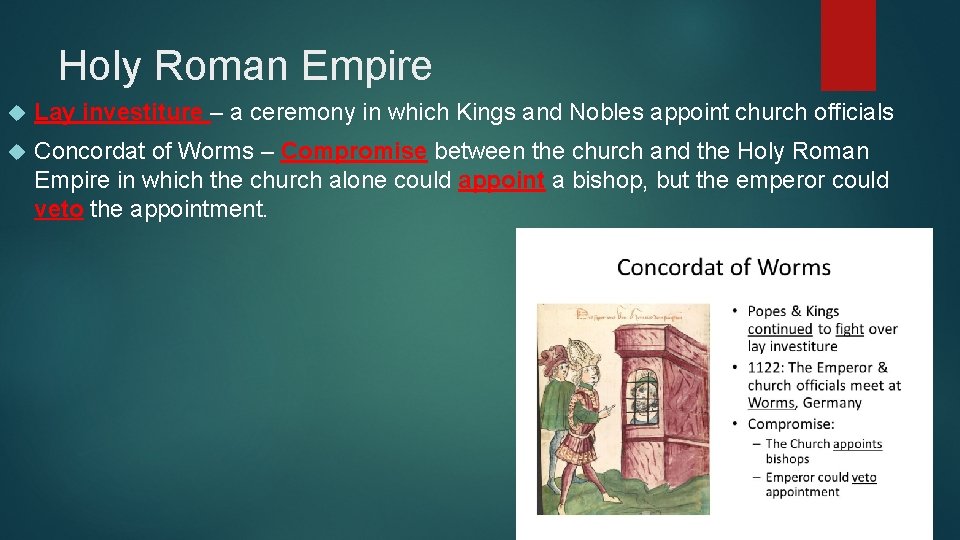
Holy Roman Empire Lay investiture – a ceremony in which Kings and Nobles appoint church officials Concordat of Worms – Compromise between the church and the Holy Roman Empire in which the church alone could appoint a bishop, but the emperor could veto the appointment.
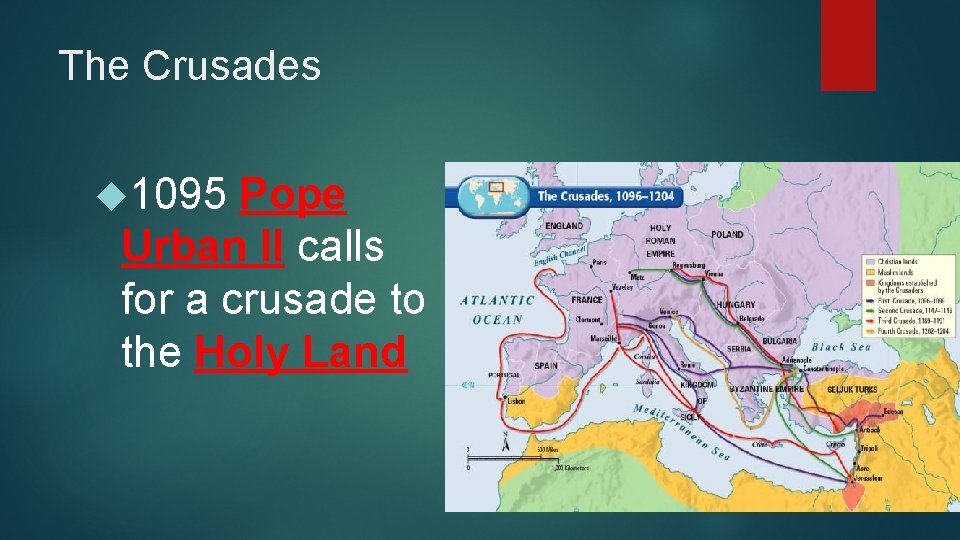
The Crusades 1095 Pope Urban II calls for a crusade to the Holy Land
Impact of the Crusades Increased trade Increased the power of the monarchs Encouraged the growth of a monetary economy Cultural diffusion
The Revival of Learning Universities – arithmetic, geometry, astronomy, music, grammar, rhetoric and logic. New ideas reached Europe from the Middle East Scholasticism- Used reason to support Christian beliefs In Science- little real progress because of the belief that all knowledge must fit with church teachings In Math—adopted Arabic numerals Literature—books were written in the everyday languages of ordinary people.

Gothic Architecture Flying Buttress allowed builders to construct higher walls and leave space for huge stained glass windows.
The Black Death The bubonic plague came to Europe in 1347 on ships from the Black Sea. Victims suffered swelling, black bruises, heavy sweats and convulsive coughing. They spat blood, stank terribly and died in agony. Effects from the Black Death Social upheaval Economic Divisions turmoil within the Catholic Church
- Slides: 37