
The Microscope The Microscope There are 2 types
- Slides: 18
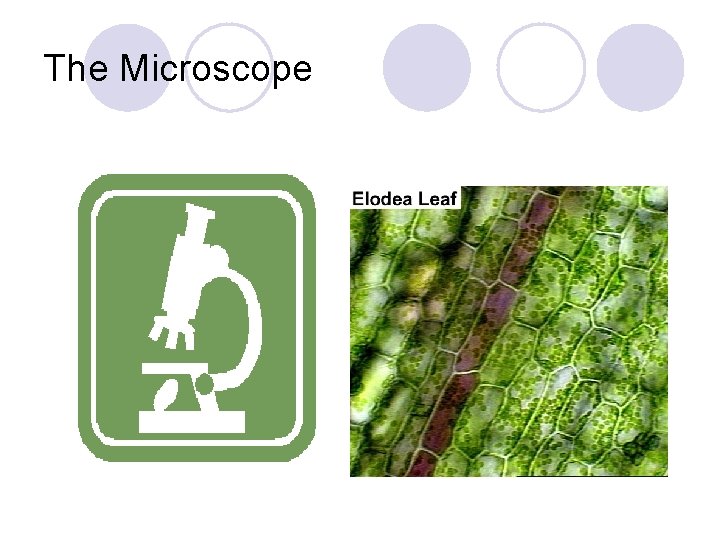
The Microscope
The Microscope There are 2 types of microscopes: l 1. Simple- contains one lens l 2. Compound- contains 2 or more lenses
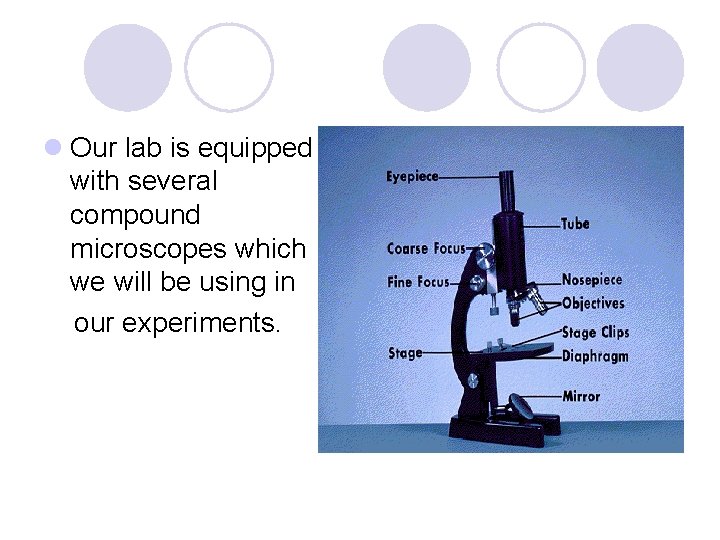
l Our lab is equipped with several compound microscopes which we will be using in our experiments.
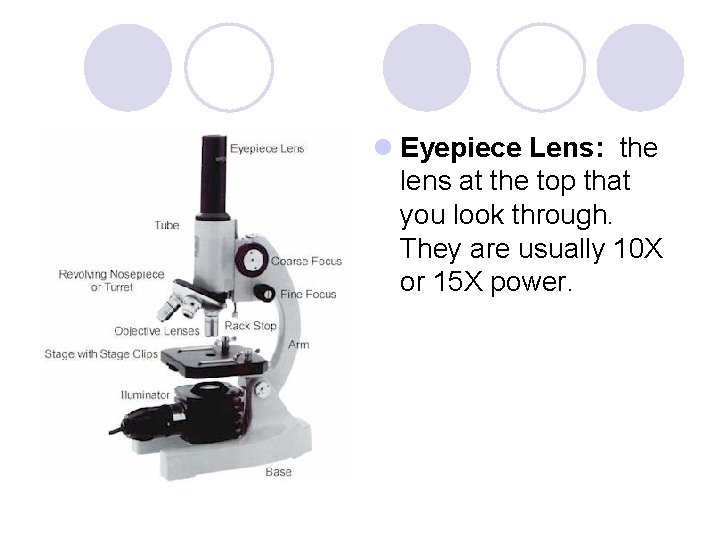
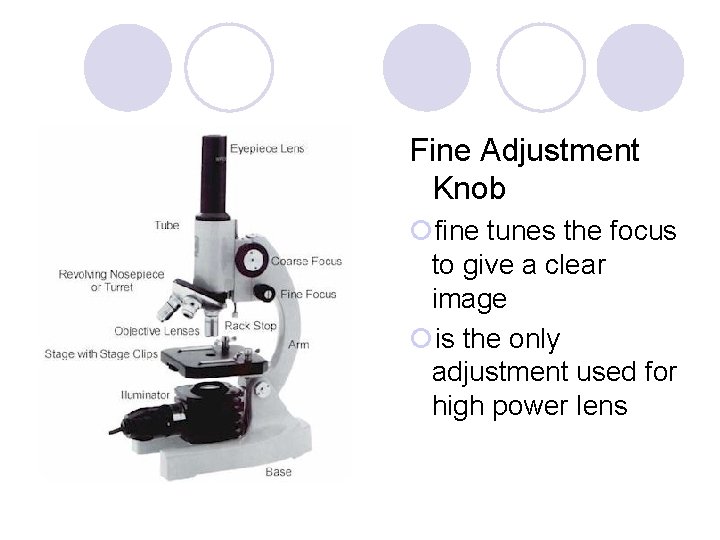
l Eyepiece Lens: the lens at the top that you look through. They are usually 10 X or 15 X power.
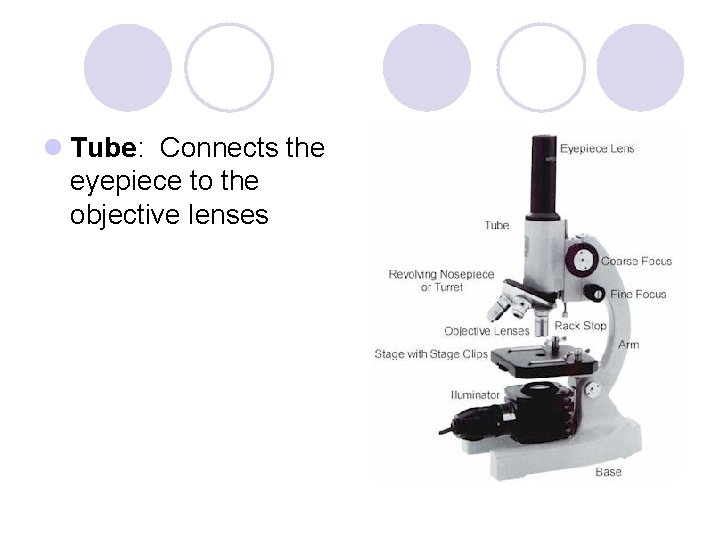
l Tube: Connects the eyepiece to the objective lenses
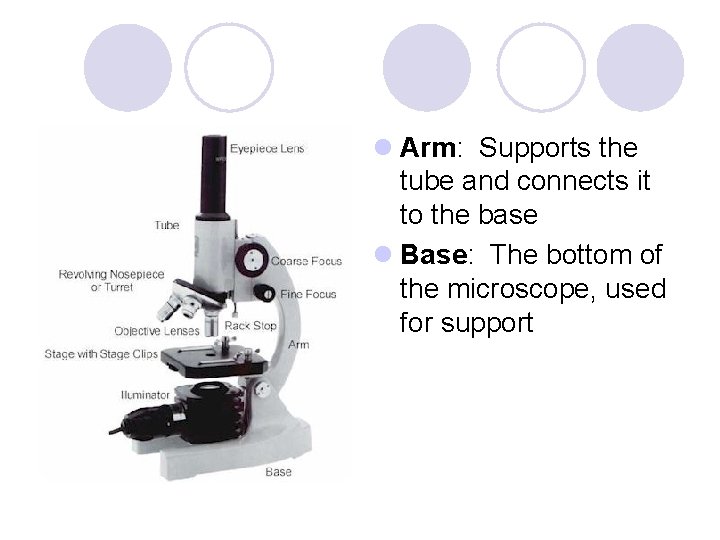
l Arm: Supports the tube and connects it to the base l Base: The bottom of the microscope, used for support
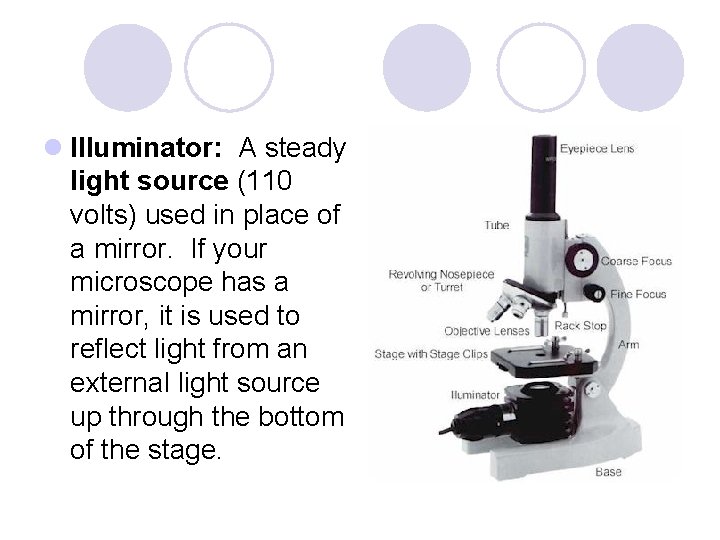
l Illuminator: A steady light source (110 volts) used in place of a mirror. If your microscope has a mirror, it is used to reflect light from an external light source up through the bottom of the stage.
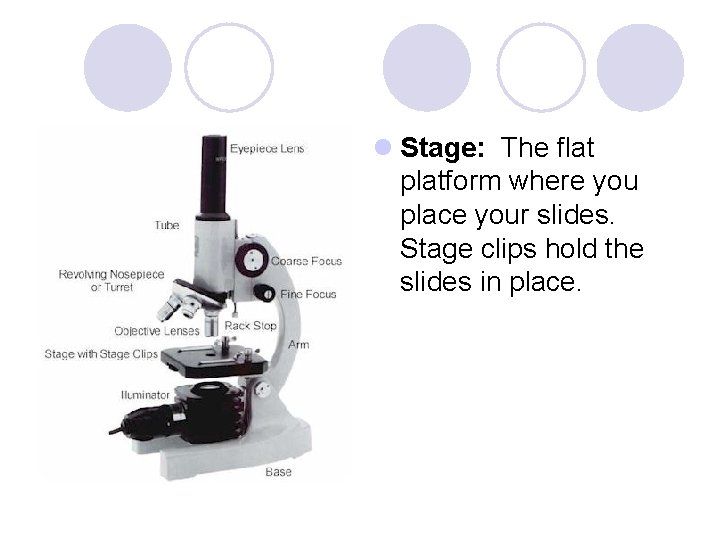
l Stage: The flat platform where you place your slides. Stage clips hold the slides in place.
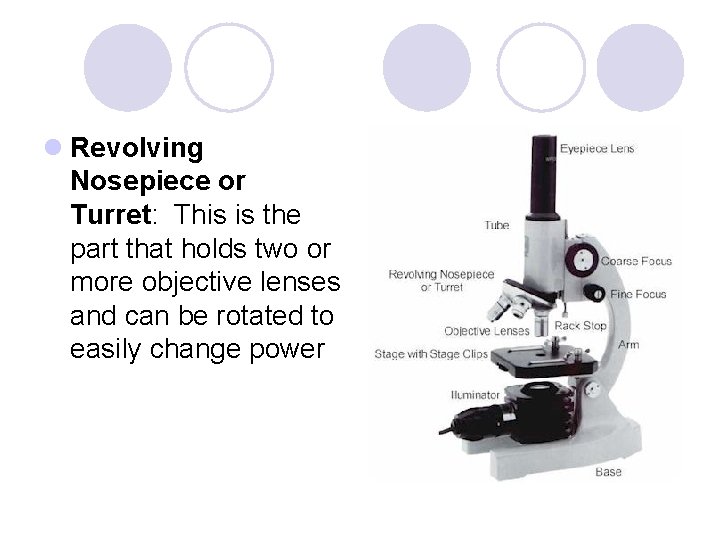
l Revolving Nosepiece or Turret: This is the part that holds two or more objective lenses and can be rotated to easily change power
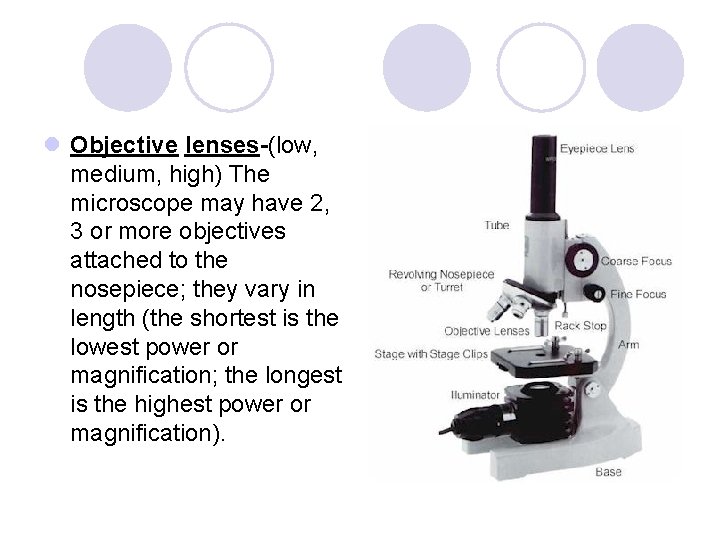
l Objective lenses-(low, medium, high) The microscope may have 2, 3 or more objectives attached to the nosepiece; they vary in length (the shortest is the lowest power or magnification; the longest is the highest power or magnification).
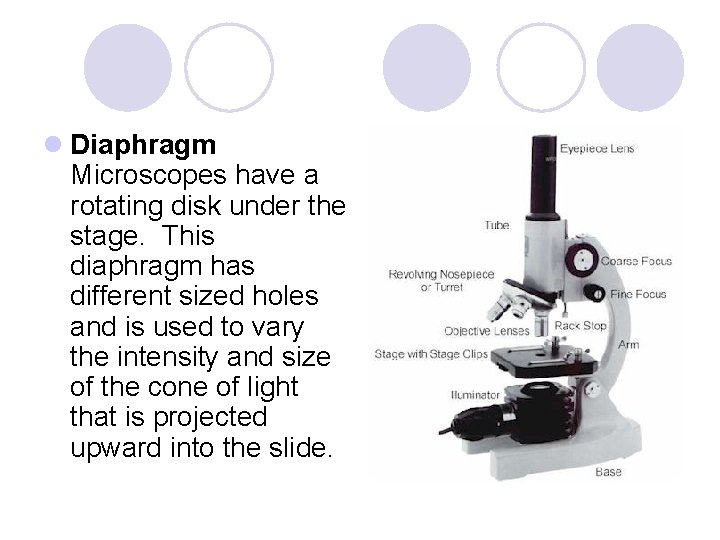
l Diaphragm Microscopes have a rotating disk under the stage. This diaphragm has different sized holes and is used to vary the intensity and size of the cone of light that is projected upward into the slide.
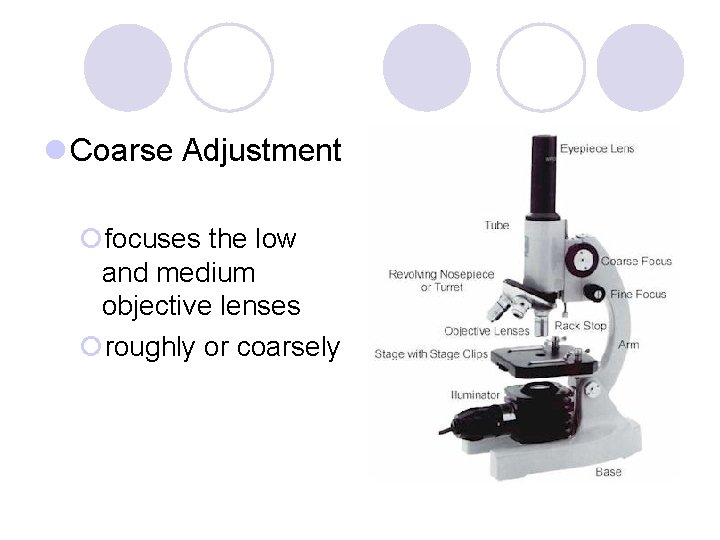
l Coarse Adjustment ¡focuses the low and medium objective lenses ¡roughly or coarsely
Fine Adjustment Knob ¡fine tunes the focus to give a clear image ¡is the only adjustment used for high power lens
TEST TIME l http: //science. nhmccd. edu/biol/dropdrag/m icroscope 2. htm
How to Handle the Microscope l 1. Use 2 hands to carry; one on the base; one on the arm. l 2. Place on clean surface. Away from edge. l 3. Check plug before you start. l 4. Keep clean. l 5. Begin to focus using low power first. l 6. Cover after use.
l wet mount- a glass slide that uses water and a cover slip- prepared to use under a microscope; A wet mount slide is the most common type of slide preparation for microscope work. Wet mount slides are used to view living organisms, as well as liquid substances of all kinds. l stain- a chemical that is used to make parts stand out
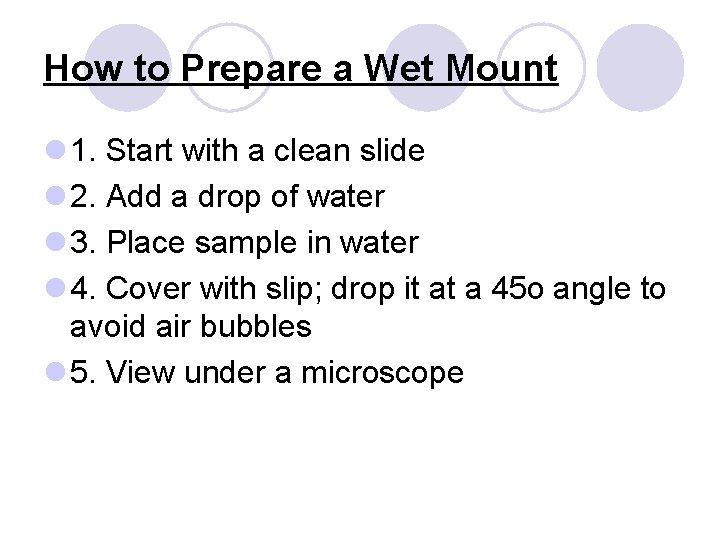
How to Prepare a Wet Mount l 1. Start with a clean slide l 2. Add a drop of water l 3. Place sample in water l 4. Cover with slip; drop it at a 45 o angle to avoid air bubbles l 5. View under a microscope
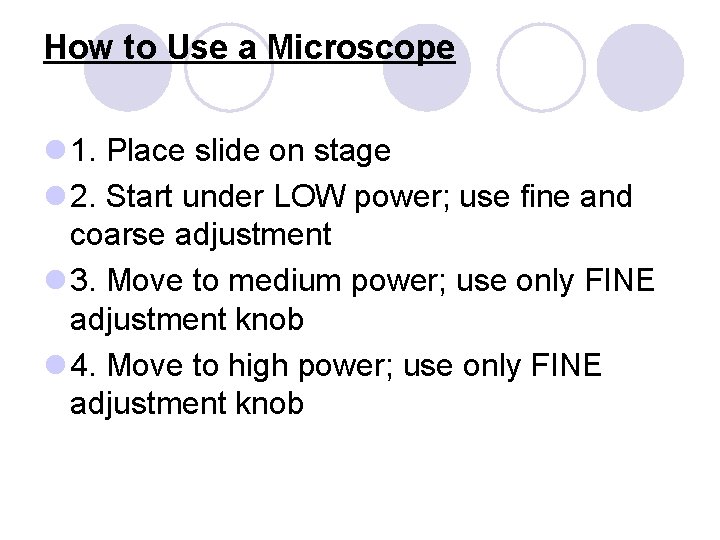
How to Use a Microscope l 1. Place slide on stage l 2. Start under LOW power; use fine and coarse adjustment l 3. Move to medium power; use only FINE adjustment knob l 4. Move to high power; use only FINE adjustment knob