
The Microscope By Cheryl Nix Mc Niel Jr
The Microscope By: Cheryl Nix Mc. Niel Jr. High
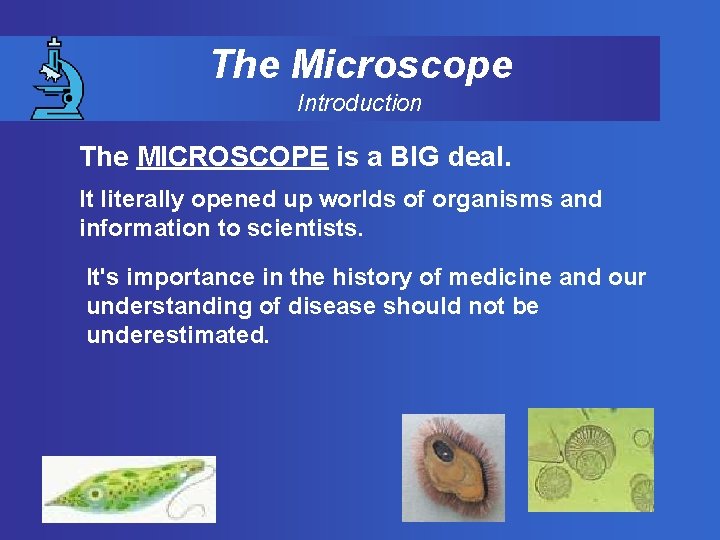
The Microscope Introduction The MICROSCOPE is a BIG deal. It literally opened up worlds of organisms and information to scientists. It's importance in the history of medicine and our understanding of disease should not be underestimated.
The Microscope Introduction To use a microscope properly, you must first learn the different parts of the instrument and what their functions are. You will be learning 14 different parts of the microscope.
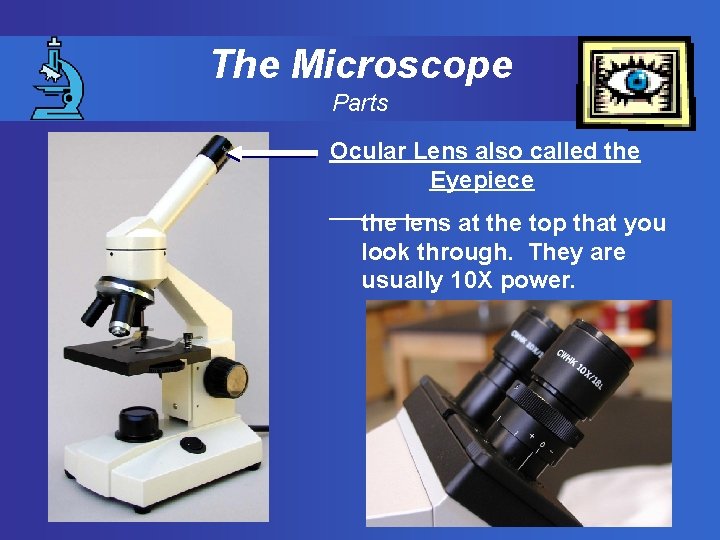
The Microscope Parts Ocular Lens also called the Eyepiece the lens at the top that you look through. They are usually 10 X power.

The Microscope Parts Body Tube also called the Barrel Connects the eyepiece to the objective lenses. Draws the light into the eyepiece for viewing.
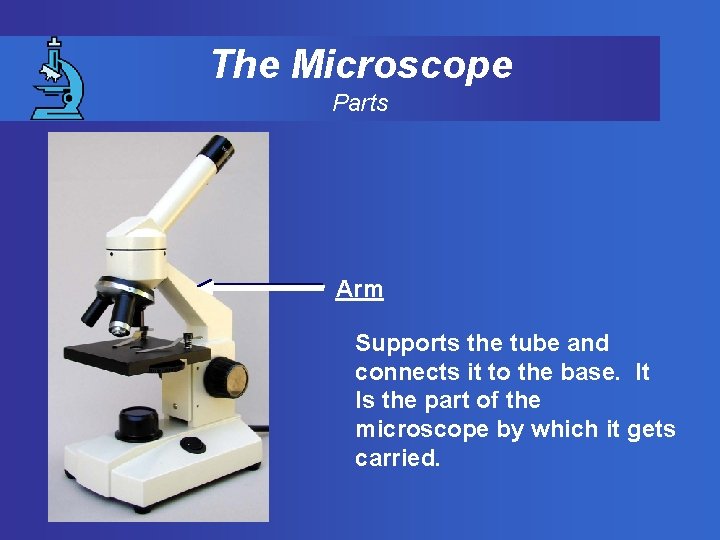
The Microscope Parts Arm Supports the tube and connects it to the base. It Is the part of the microscope by which it gets carried.
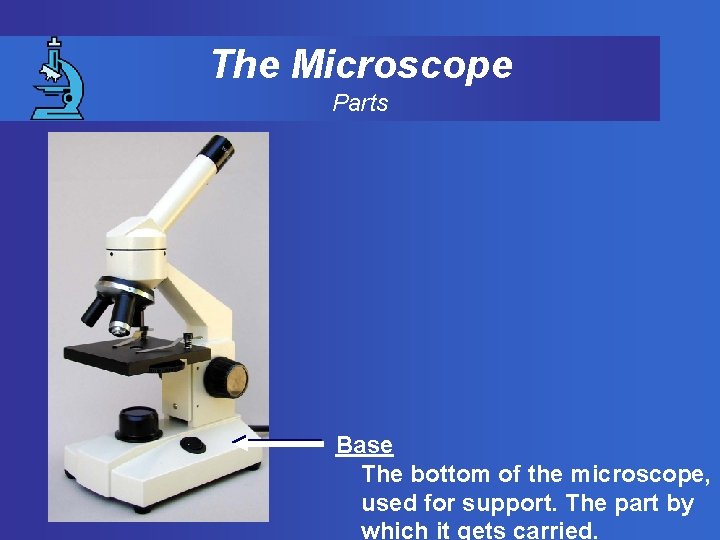
The Microscope Parts Base The bottom of the microscope, used for support. The part by which it gets carried.
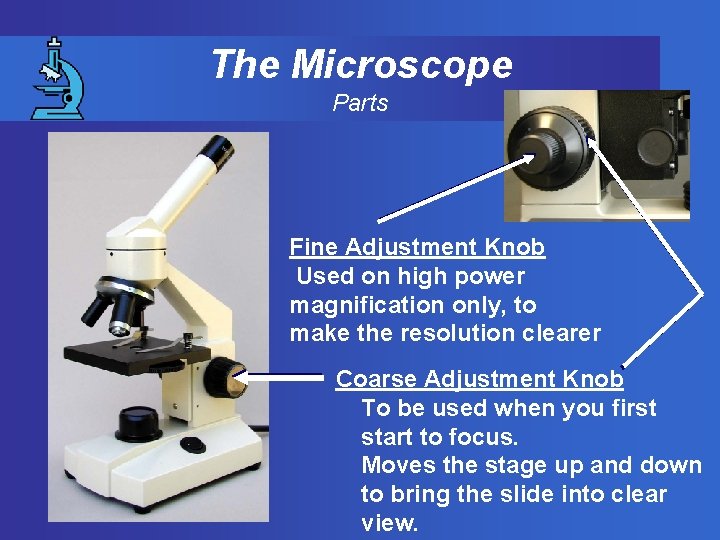
The Microscope Parts Fine Adjustment Knob Used on high power magnification only, to make the resolution clearer Coarse Adjustment Knob To be used when you first start to focus. Moves the stage up and down to bring the slide into clear view.
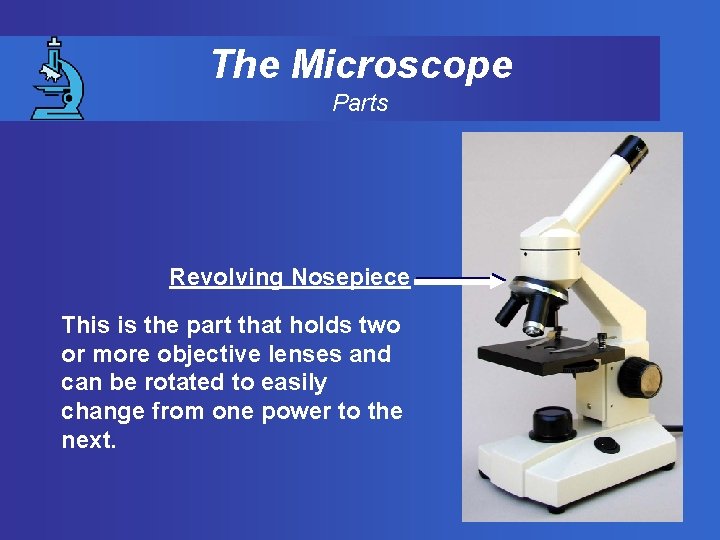
The Microscope Parts Revolving Nosepiece This is the part that holds two or more objective lenses and can be rotated to easily change from one power to the next.
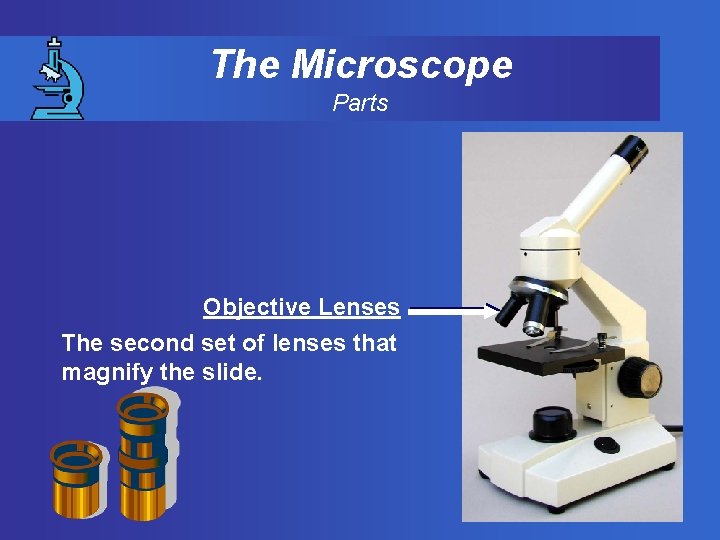
The Microscope Parts Objective Lenses The second set of lenses that magnify the slide.
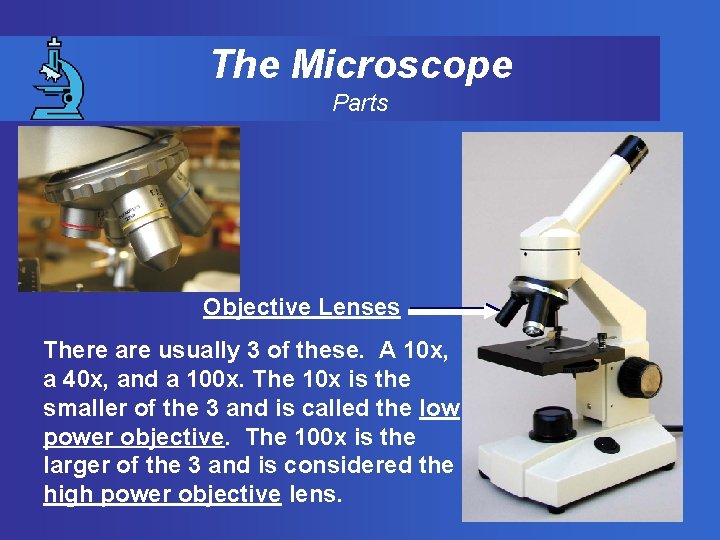
The Microscope Parts Objective Lenses There are usually 3 of these. A 10 x, a 40 x, and a 100 x. The 10 x is the smaller of the 3 and is called the low power objective. The 100 x is the larger of the 3 and is considered the high power objective lens.
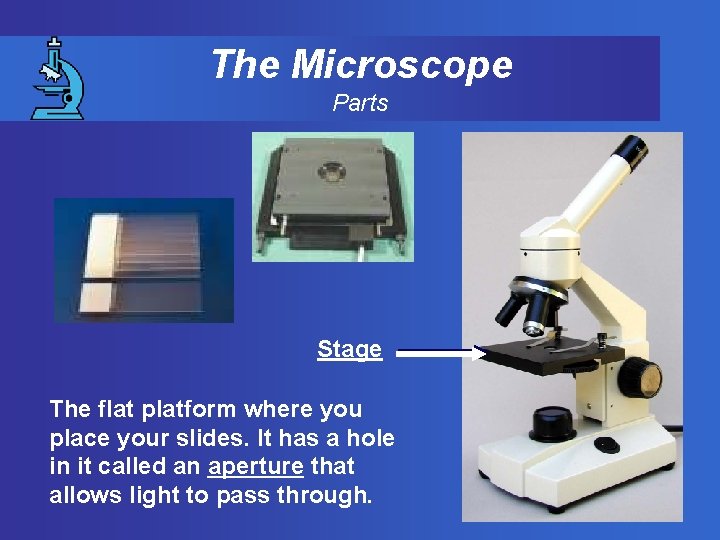
The Microscope Parts Stage The flat platform where you place your slides. It has a hole in it called an aperture that allows light to pass through.
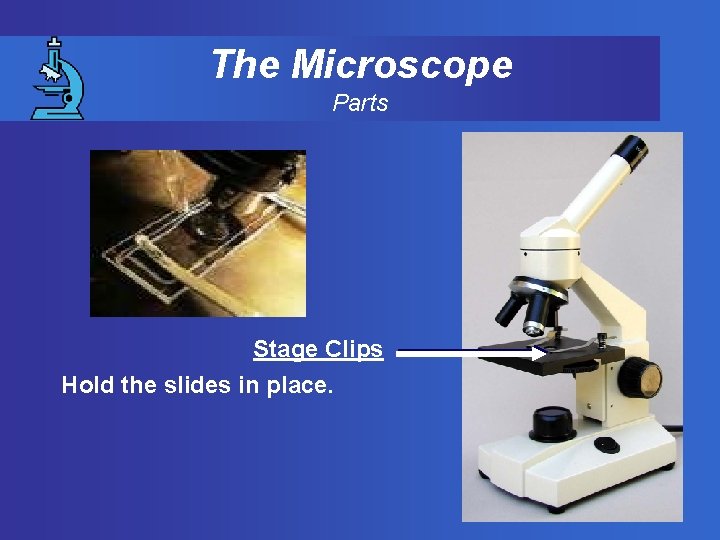
The Microscope Parts Stage Clips Hold the slides in place.
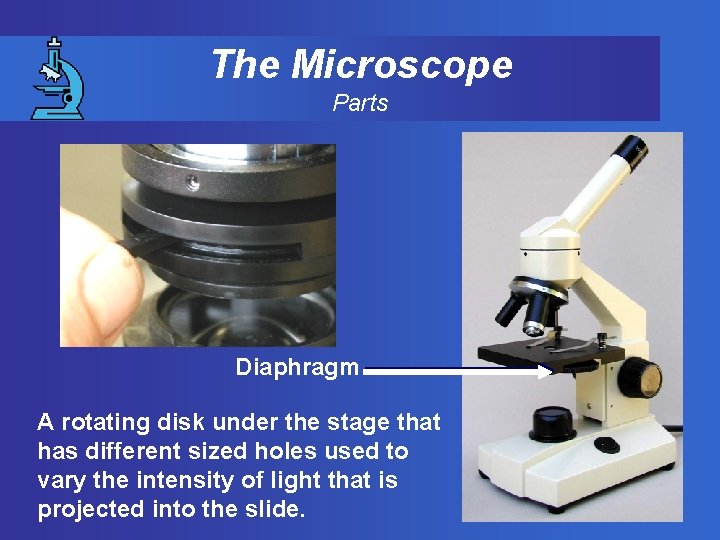
The Microscope Parts Diaphragm A rotating disk under the stage that has different sized holes used to vary the intensity of light that is projected into the slide.
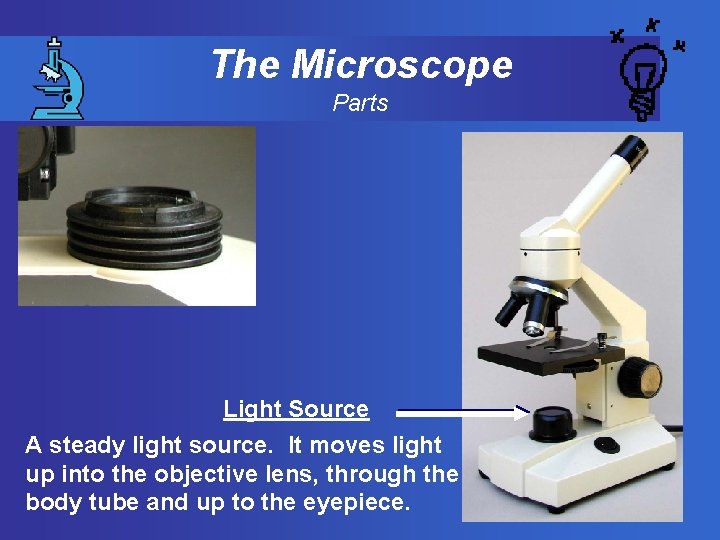
The Microscope Parts Light Source A steady light source. It moves light up into the objective lens, through the body tube and up to the eyepiece.
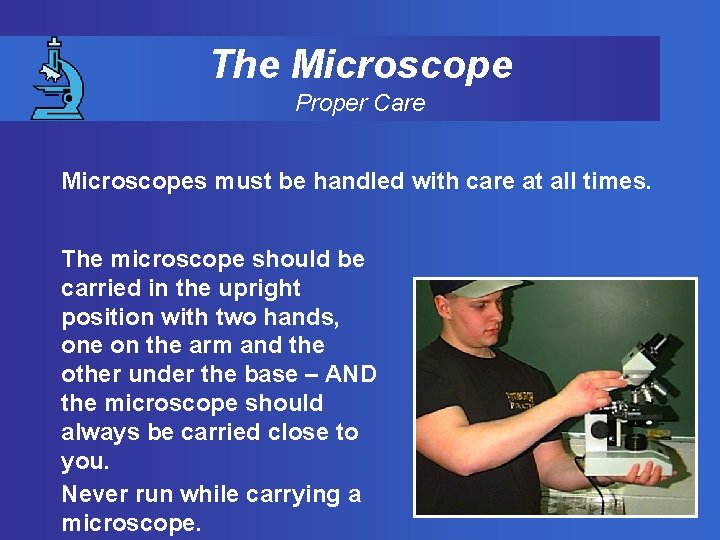
The Microscope Proper Care Microscopes must be handled with care at all times. The microscope should be carried in the upright position with two hands, one on the arm and the other under the base – AND the microscope should always be carried close to you. Never run while carrying a microscope.
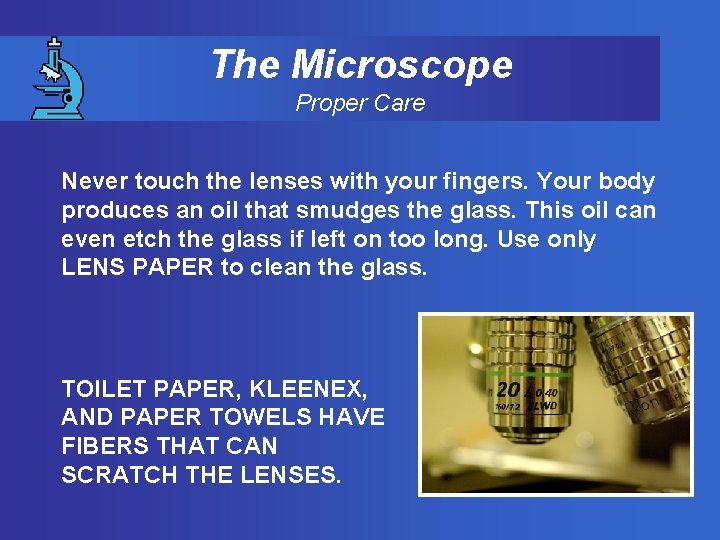
The Microscope Proper Care Never touch the lenses with your fingers. Your body produces an oil that smudges the glass. This oil can even etch the glass if left on too long. Use only LENS PAPER to clean the glass. TOILET PAPER, KLEENEX, AND PAPER TOWELS HAVE FIBERS THAT CAN SCRATCH THE LENSES.
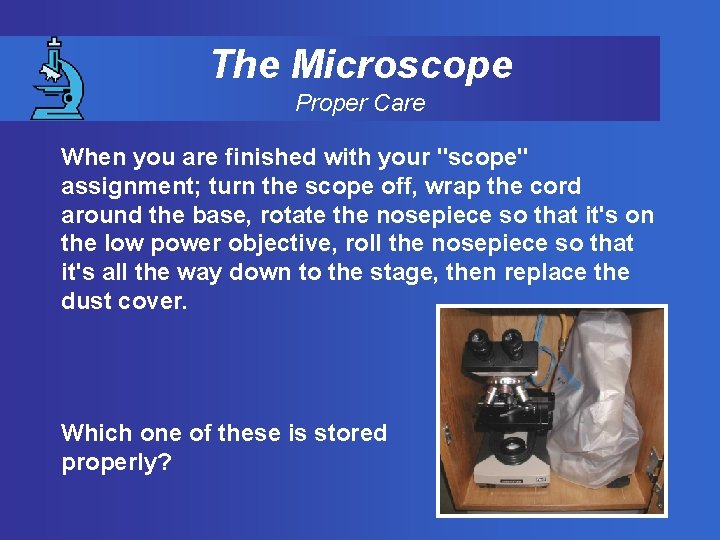
The Microscope Proper Care When you are finished with your "scope" assignment; turn the scope off, wrap the cord around the base, rotate the nosepiece so that it's on the low power objective, roll the nosepiece so that it's all the way down to the stage, then replace the dust cover. Which one of these is stored properly?
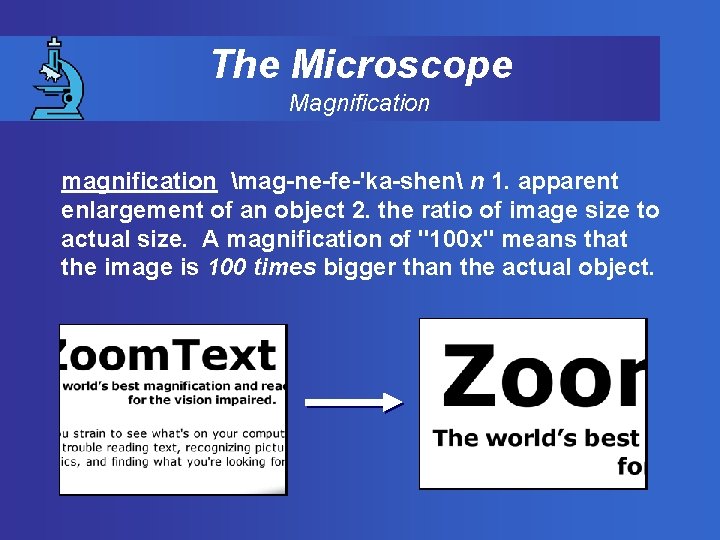
The Microscope Magnification magnification mag-ne-fe-'ka-shen n 1. apparent enlargement of an object 2. the ratio of image size to actual size. A magnification of "100 x" means that the image is 100 times bigger than the actual object.
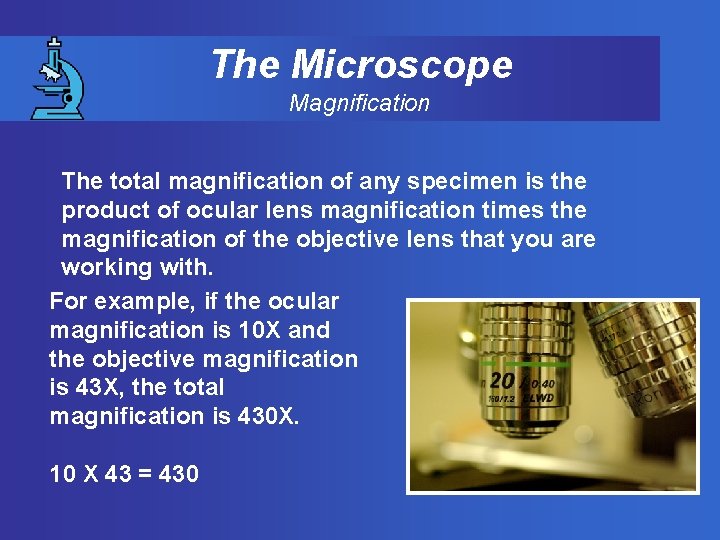
The Microscope Magnification The total magnification of any specimen is the product of ocular lens magnification times the magnification of the objective lens that you are working with. For example, if the ocular magnification is 10 X and the objective magnification is 43 X, the total magnification is 430 X. 10 X 43 = 430
The Microscope Using the microscope Always observe the specimen or object using the lowest power objective first. Focus using the Coarse Adjustment Knob to bring the object into focus. Bring the object into fine focus by using the fine adjustment knob. Focus, then move to a higher power objective if needed. Use only the Fine Adjustment Knob when using The Highest ( longest ) Power Objective.
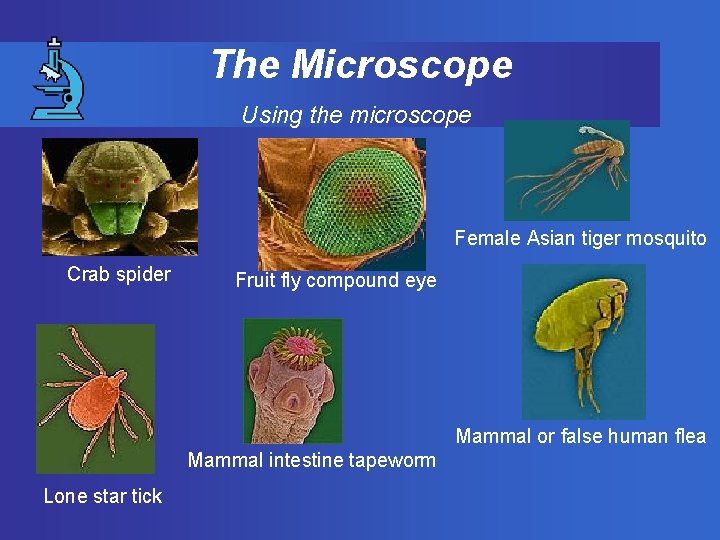
The Microscope Using the microscope Female Asian tiger mosquito Crab spider Fruit fly compound eye Mammal or false human flea Mammal intestine tapeworm Lone star tick
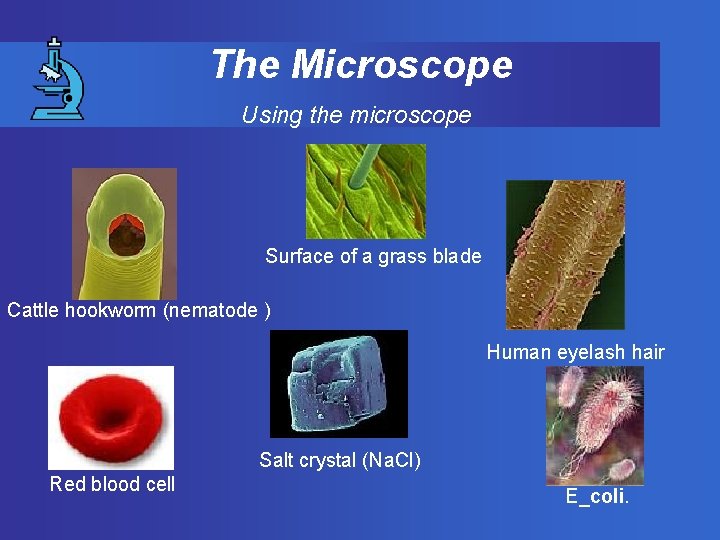
The Microscope Using the microscope Surface of a grass blade Cattle hookworm (nematode ) Human eyelash hair Salt crystal (Na. Cl) Red blood cell E_coli.
The Microscope Conclusion Questions & Answers
- Slides: 24