
The Microbial World Tree of Life Phylogeny based
The Microbial World
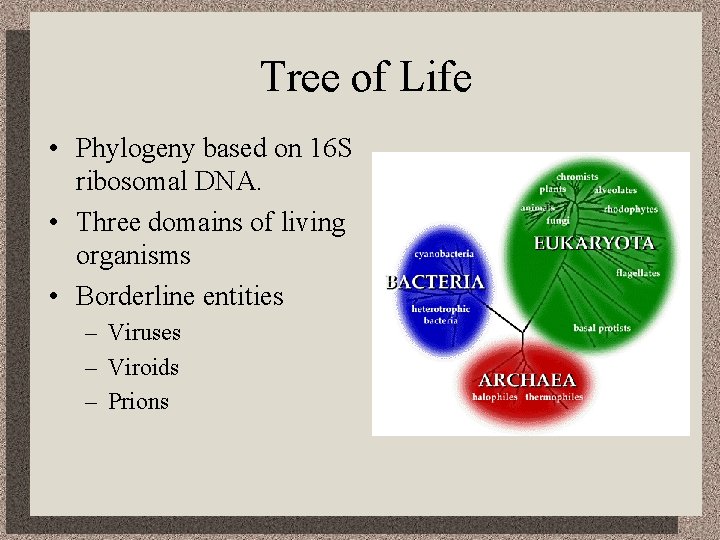
Tree of Life • Phylogeny based on 16 S ribosomal DNA. • Three domains of living organisms • Borderline entities – Viruses – Viroids – Prions
Characteristics of Living Organisms • Metabolism • Growth • Reproduction
Characteristics of Cells • • Cell membrane separates cell from outside DNA as genetic material Ribosomes Basic structural macromolecules Regulate flow of materials in and out Reproduce and are the result of reproduction Require energy
Types of Cells • Prokaryotes • Eukaryotes
Generally eukaryotic cells are morphologically complex and biochemically simple; prokaryotic cells are morphologically simple and biochemically complex
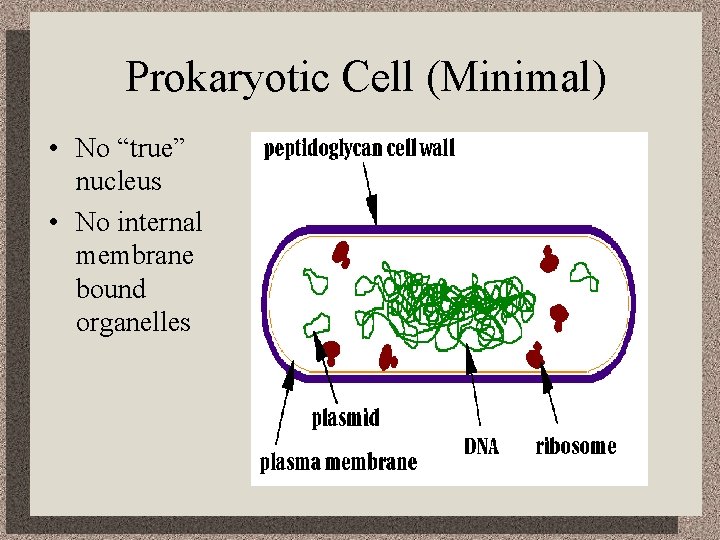
Prokaryotic Cell (Minimal) • No “true” nucleus • No internal membrane bound organelles
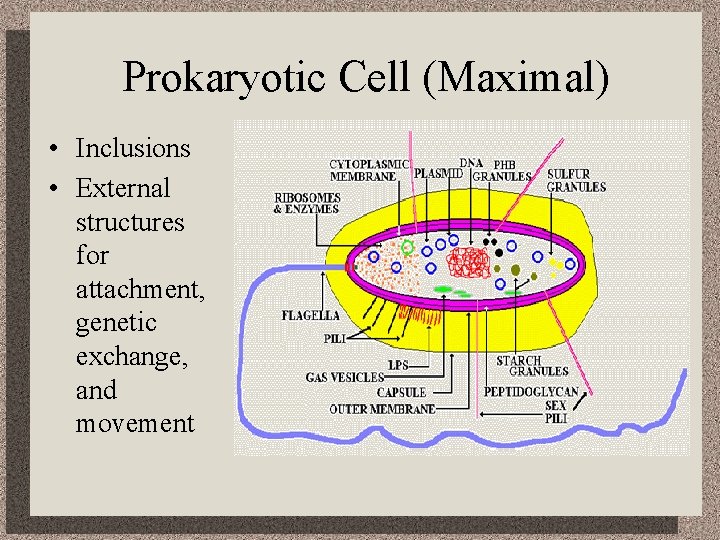
Prokaryotic Cell (Maximal) • Inclusions • External structures for attachment, genetic exchange, and movement
Prokaryotic Cell Wall • Unique chemical composition • Protects cell from osmotic lysis • Two major types – Gram positive – Gram negative
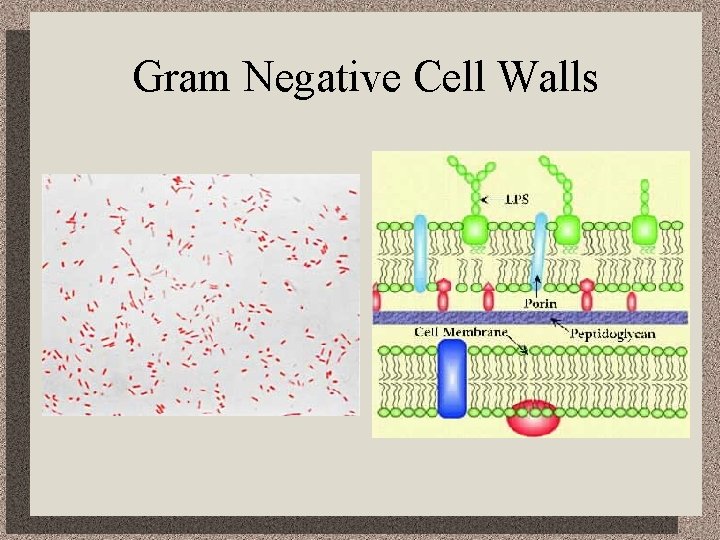
Gram Negative Cell Walls
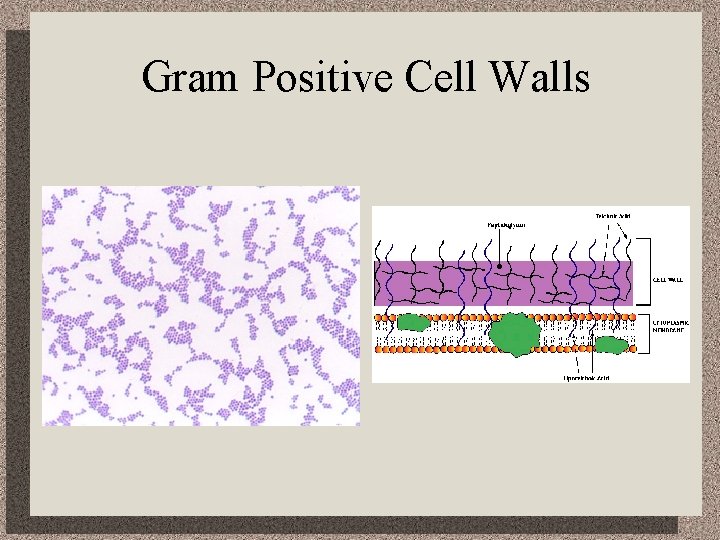
Gram Positive Cell Walls

Structures Exterior to the Wall
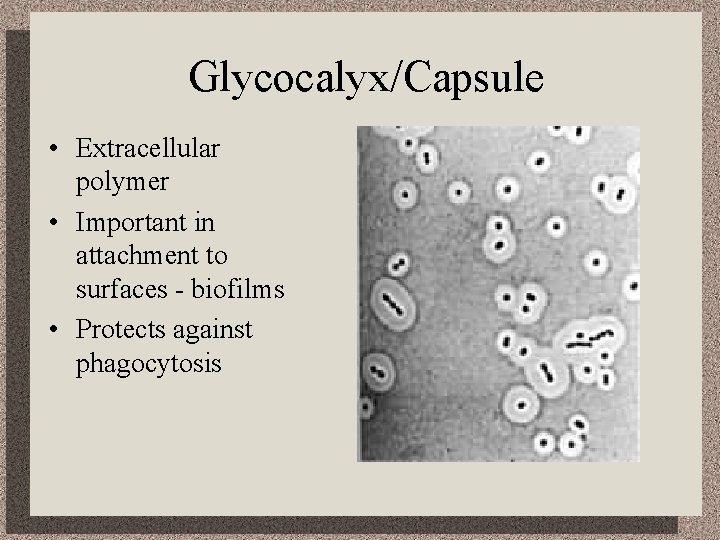
Glycocalyx/Capsule • Extracellular polymer • Important in attachment to surfaces - biofilms • Protects against phagocytosis
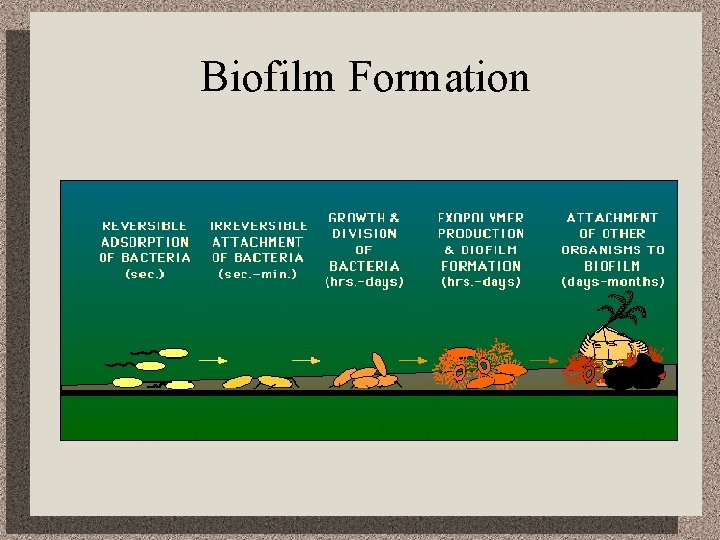
Biofilm Formation
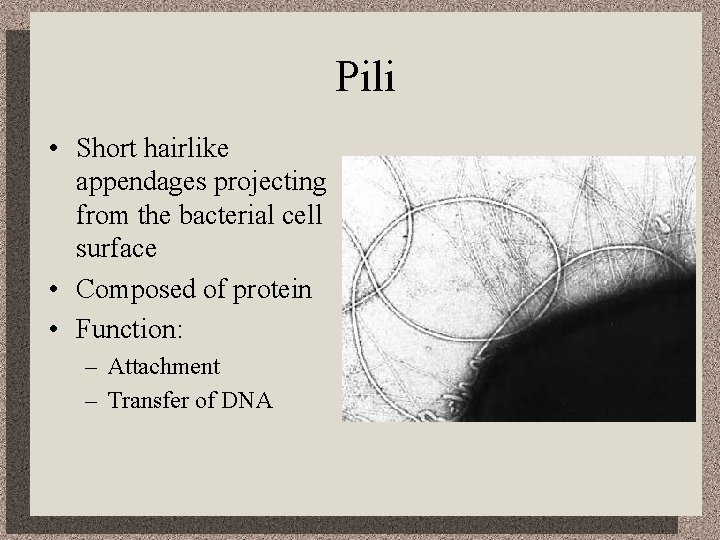
Pili • Short hairlike appendages projecting from the bacterial cell surface • Composed of protein • Function: – Attachment – Transfer of DNA
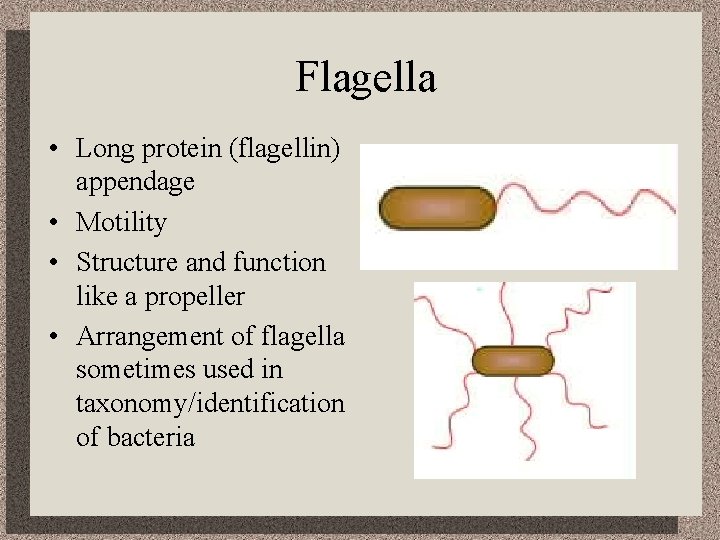
Flagella • Long protein (flagellin) appendage • Motility • Structure and function like a propeller • Arrangement of flagella sometimes used in taxonomy/identification of bacteria
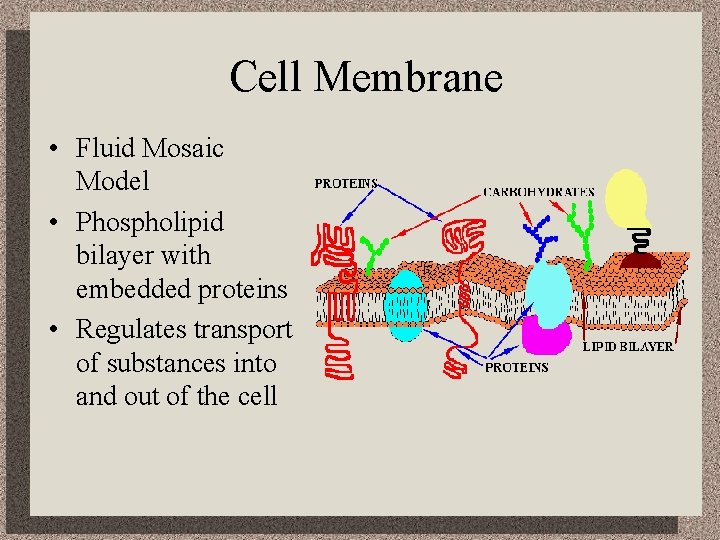
Cell Membrane • Fluid Mosaic Model • Phospholipid bilayer with embedded proteins • Regulates transport of substances into and out of the cell
Membrane Transport • • Diffusion Passive/Facilitated Transport Group Translocation Active Transport
Internal Structures
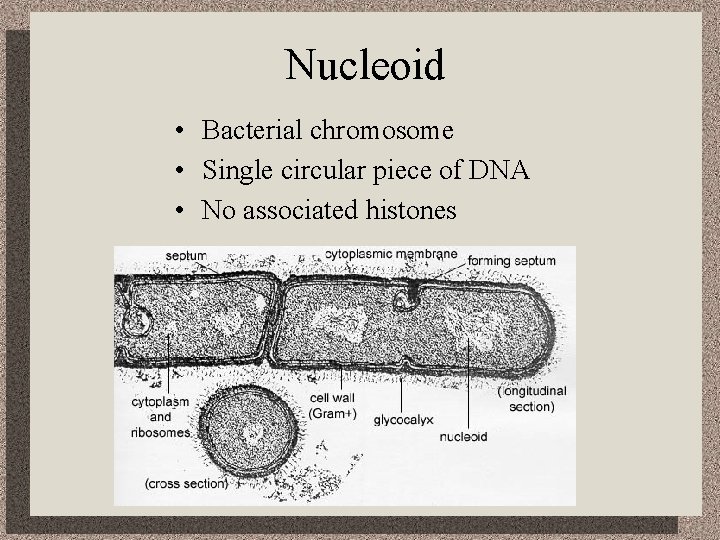
Nucleoid • Bacterial chromosome • Single circular piece of DNA • No associated histones
Plasmids • Extrachromosomal small piece of DNA • Independent of chromosome • Code of ancillary functions – Antibiotic resistance – Metal resistance – Catabolic pathways • Self-replicating • Used in genetic engineering
Ribosomes • Combinations of protein and RNA • Essential structures • Function – Protein synthesis – Expression of genetic information • Size differs between prokaryotes and eukaryotes • Prokaryotes: 70 S
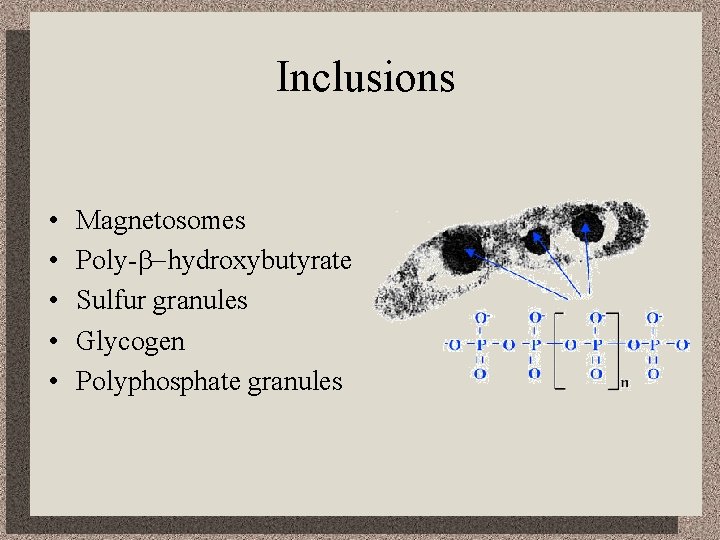
Inclusions • • • Magnetosomes Poly-b-hydroxybutyrate Sulfur granules Glycogen Polyphosphate granules
- Slides: 23