
The Microbial World Objectives Main divisions and classification
The Microbial World Objectives • Main divisions and classification of microorganisms • Differences between bacteria, viruses, fungi, protozoa, helminthes, viroids and prions • Examples of diseases caused by the divisions of the microbial world • Simple classification and naming of bacteria 1 Dina M. Bitar Ph. D. • Bacterial structures
The Microbial World Major categories of micro-organisms and subcellular particles Bacteria- prokaryotes Fungi - eukaryotes Protozoa - eukaryotes Helminthes - eukaryotes subcellular Viruses Viroids Prions 2 Dina M. Bitar Ph. D.
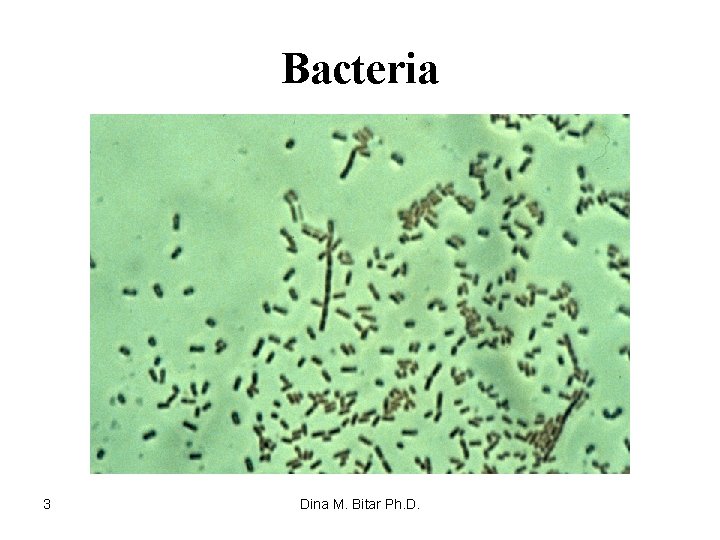
Bacteria 3 Dina M. Bitar Ph. D.
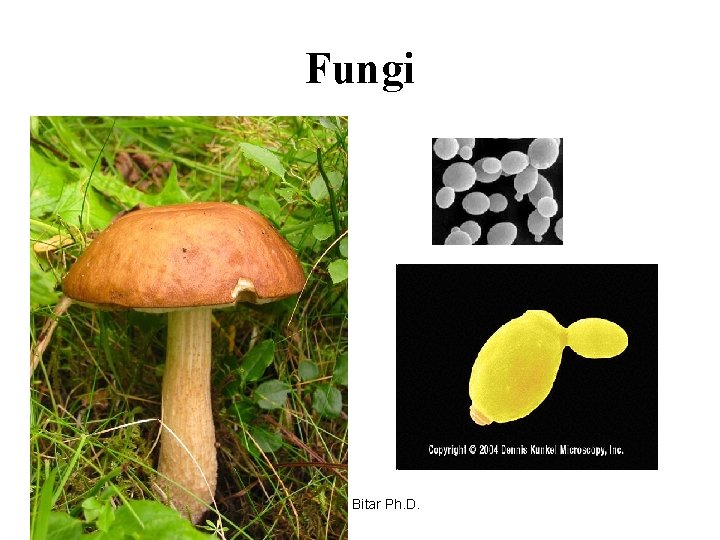
Fungi 4 Dina M. Bitar Ph. D.
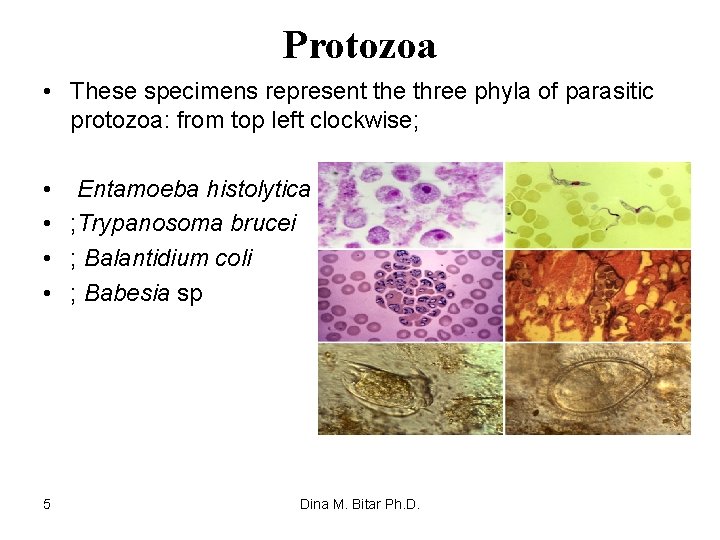
Protozoa • These specimens represent the three phyla of parasitic protozoa: from top left clockwise; • Entamoeba histolytica • ; Trypanosoma brucei • ; Balantidium coli • ; Babesia sp 5 Dina M. Bitar Ph. D.
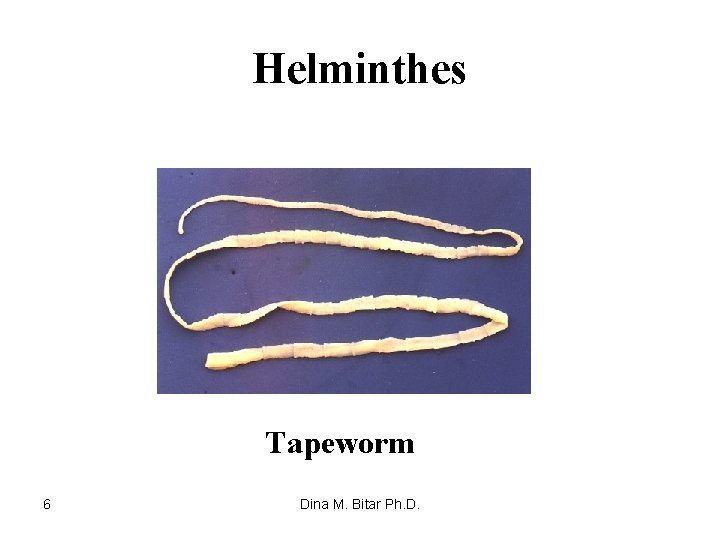
Helminthes Tapeworm 6 Dina M. Bitar Ph. D.
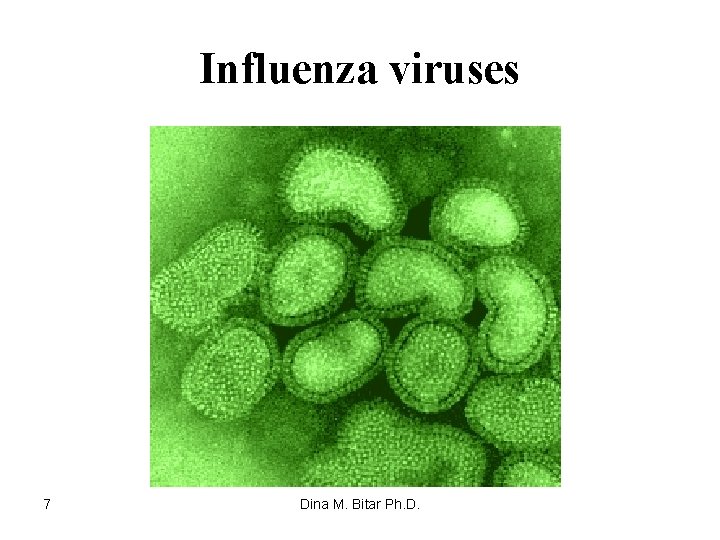
Influenza viruses 7 Dina M. Bitar Ph. D.
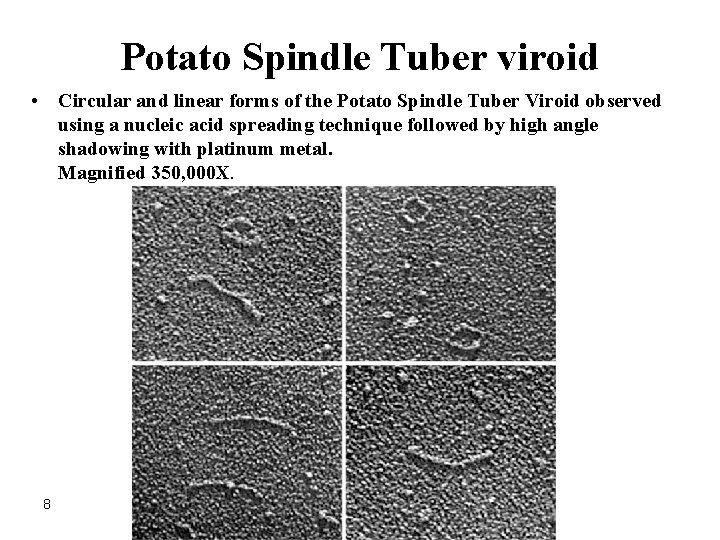
Potato Spindle Tuber viroid • Circular and linear forms of the Potato Spindle Tuber Viroid observed using a nucleic acid spreading technique followed by high angle shadowing with platinum metal. Magnified 350, 000 X. 8 Dina M. Bitar Ph. D.
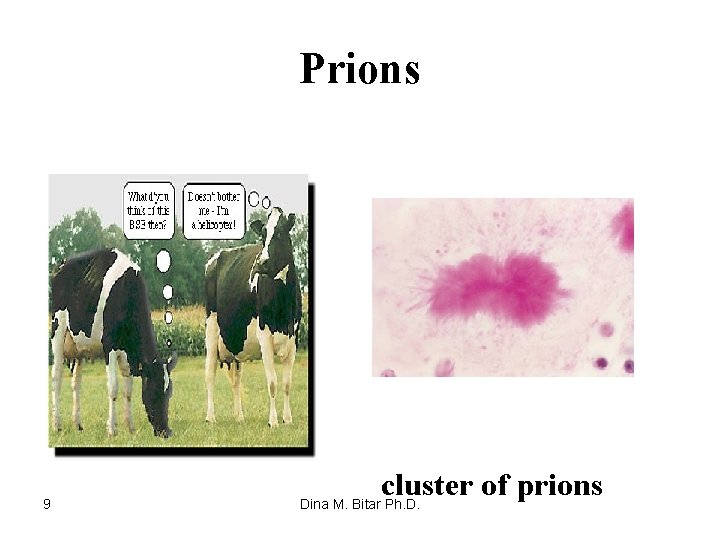
Prions 9 cluster of prions Dina M. Bitar Ph. D.
Bacteria- Prokaryotes • Distinct nucleus absent • Single circular chromosome ( extrachromosomal DNA in plasmids) • Transcription and translation simultaneous • Ribosomes 70 S • No membrane bound organelles 10 Dina M. Bitar Ph. D.
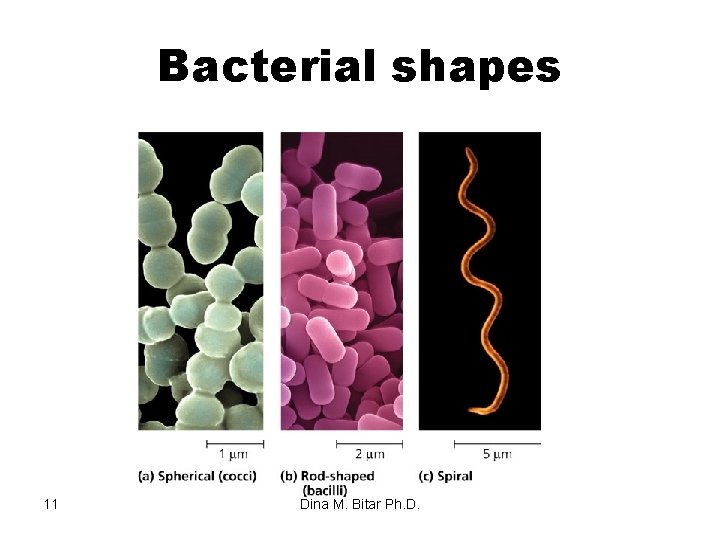
Bacterial shapes 11 Dina M. Bitar Ph. D.
Bacterial structures • Cell Wall Peptidoglycan Murein Mucopeptide v. Determines shape v Resists changes in osmotic pressure 12 Dina M. Bitar Ph. D.
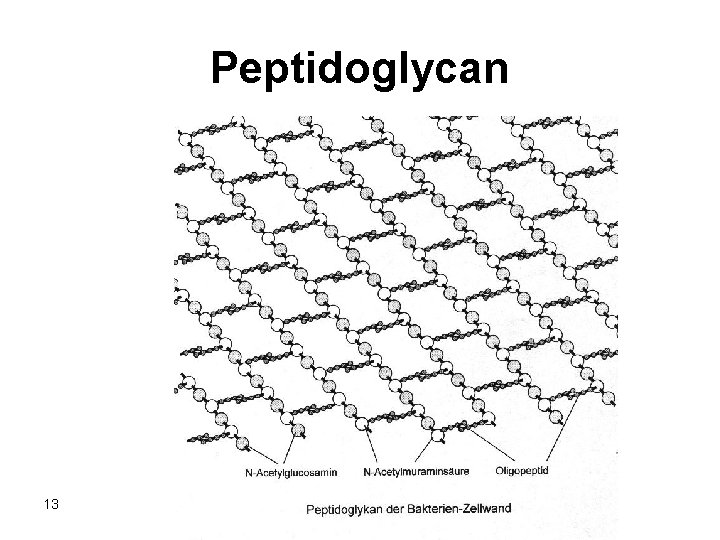
Peptidoglycan 13 Dina M. Bitar Ph. D.
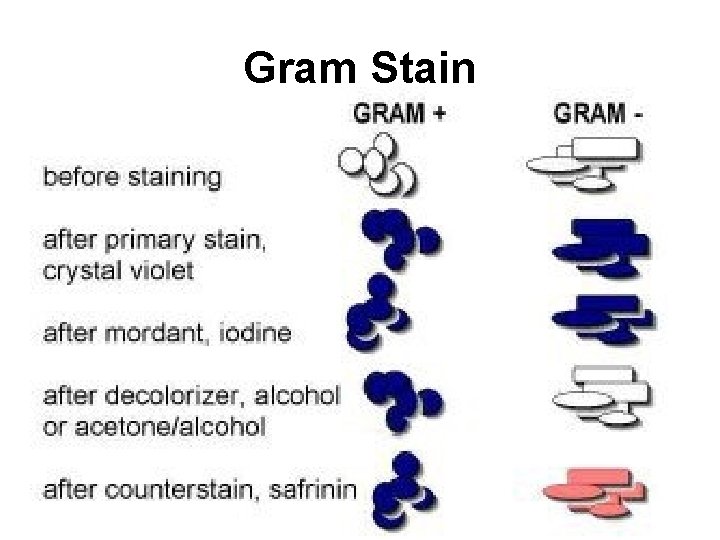
Gram Stain 14 Dina M. Bitar Ph. D.
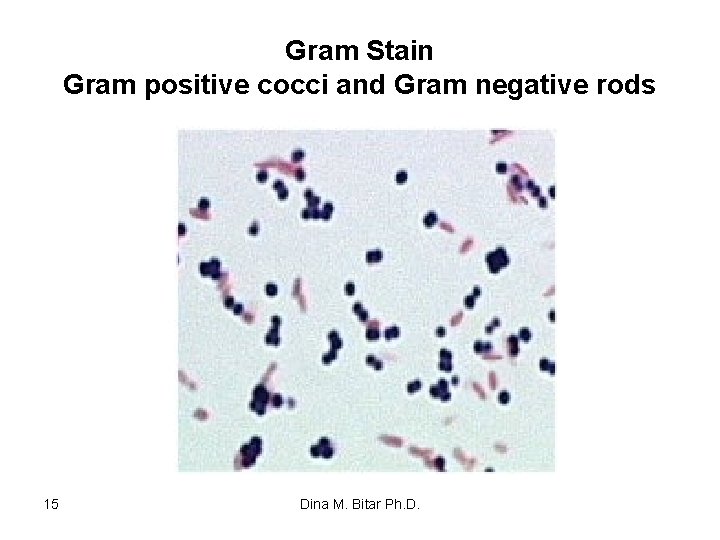
Gram Stain Gram positive cocci and Gram negative rods 15 Dina M. Bitar Ph. D.
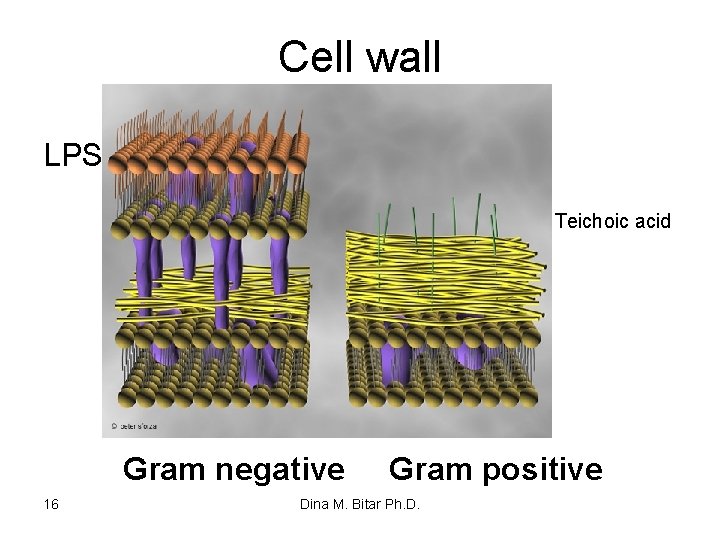
Cell wall LPS Teichoic acid Gram negative 16 Gram positive Dina M. Bitar Ph. D.
• Teichoic acids : • polymers of glycerol or ribitol linked via phosphodiester bonds. • can be found in the cell wall of gram-positive bacteria (such as Staphylococci, Streptococci, Bacillus, Clostridium, Corynebacterium, and Listeria) and appear to extend to the surface of the peptidoglycan layer. • Teichoic acids are not found in the gram-negative bacteria. • They can be either covalently bonded to Nacetylmuramic acid of the peptidoglycan layer or linked to the plasma membrane lipids found in the cytoplasmic membrane. • The combined units comprised of teichoic acids and lipids are referred to as lipoteichoic acids. • Teichoic acids are negatively charged and therefore contribute to the negative charge of the grampositive cell wall. • They may also provide structural support for the cell 17 Dina M. Bitar Ph. D. wall.
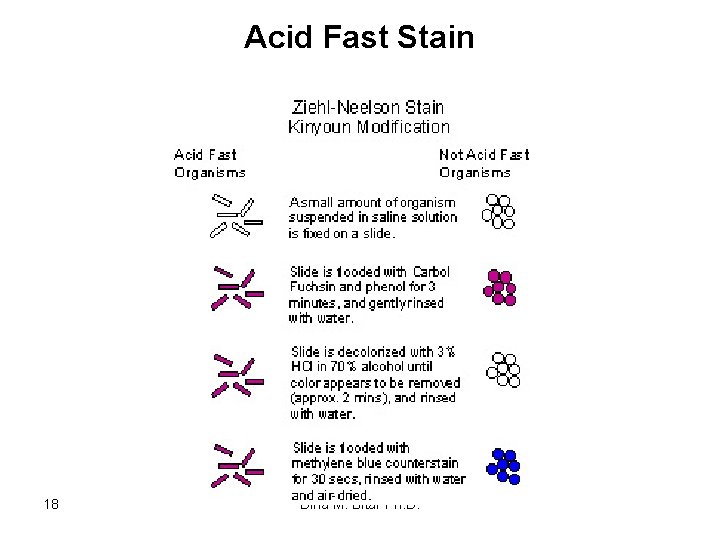
Acid Fast Stain 18 Dina M. Bitar Ph. D.
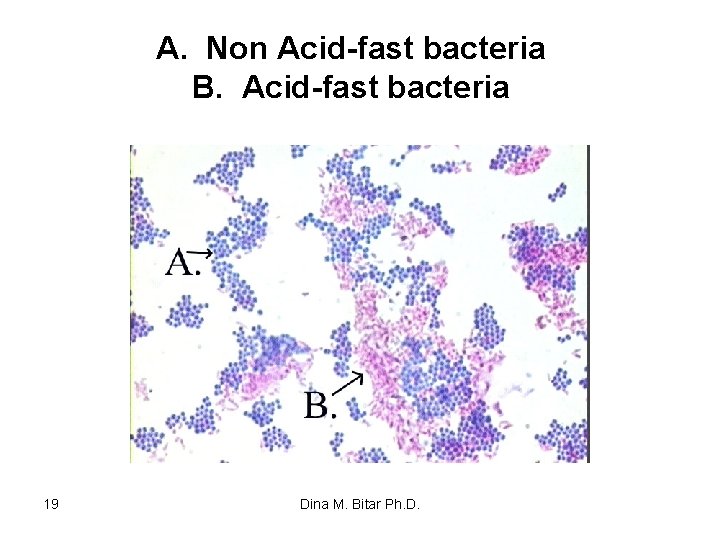
A. Non Acid-fast bacteria B. Acid-fast bacteria 19 Dina M. Bitar Ph. D.
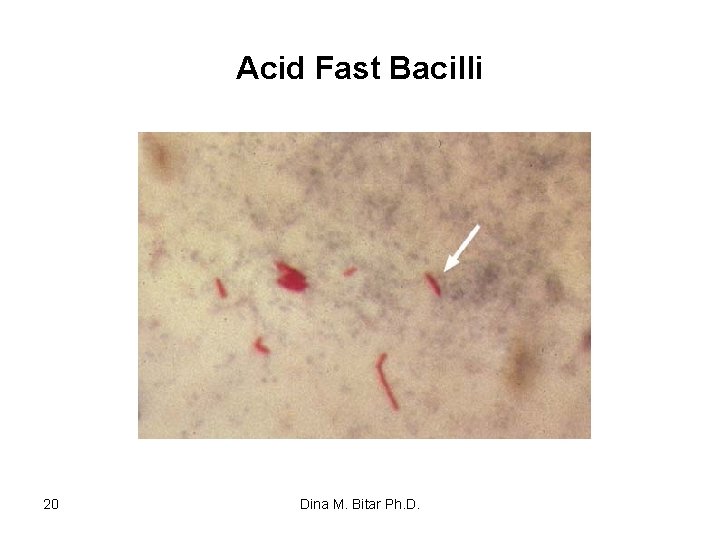
Acid Fast Bacilli 20 Dina M. Bitar Ph. D.
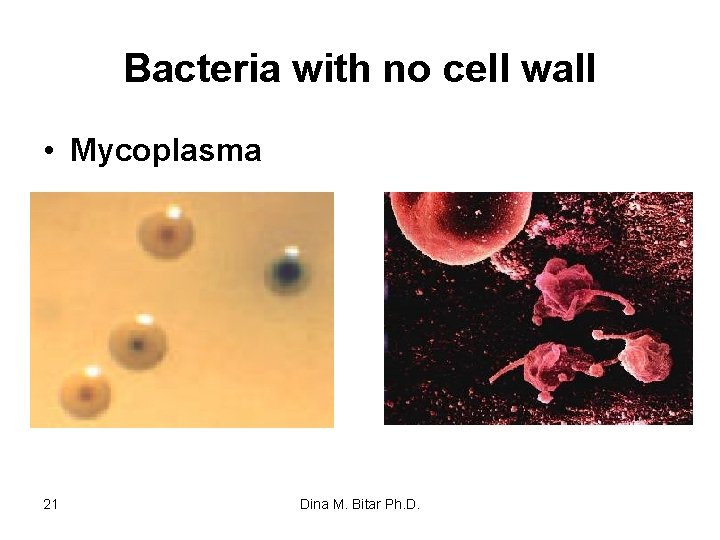
Bacteria with no cell wall • Mycoplasma 21 Dina M. Bitar Ph. D.
Bacteria with deficient cell wall L- forms • bacteria include phases where they transform into small forms that lose their cell walls. • This means that they can no longer be killed by many commonly used antibiotics. These bacteria are called cell wall deficient (CWD) or L-form bacteria. 22 Dina M. Bitar Ph. D.
• many L- form bacteria have not been detected in tissue and blood samples because they are very difficult to culture. • However an increasing body of research has shown that these bacteria are responsible for causing a wide array of chronic diseases including rheumatoid arthritis, Chronic Fatigue Syndrome, Lyme disease, sarcoidosis, and Crohn’s disease. 23 Dina M. Bitar Ph. D.
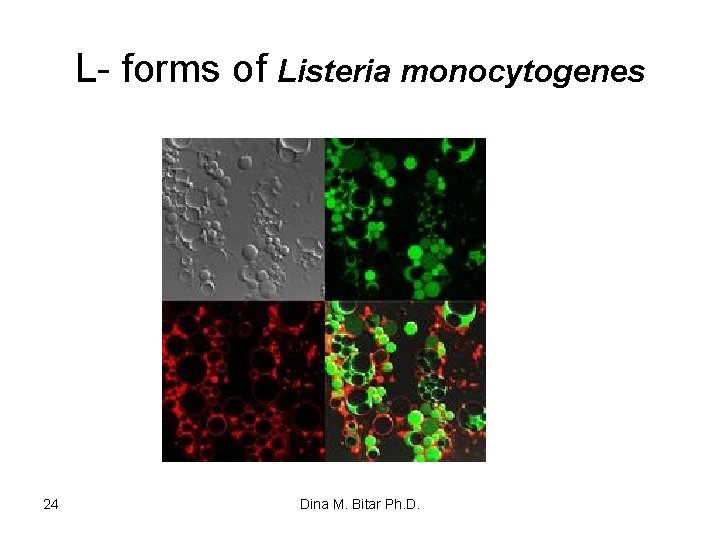
L- forms of Listeria monocytogenes 24 Dina M. Bitar Ph. D.
Bacteria with deficient cell wall • Spheroplasts: Gram negative bacteria with residual cell wall material • Protoplasts: Gram positive bacteria without cell wall 25 Dina M. Bitar Ph. D.
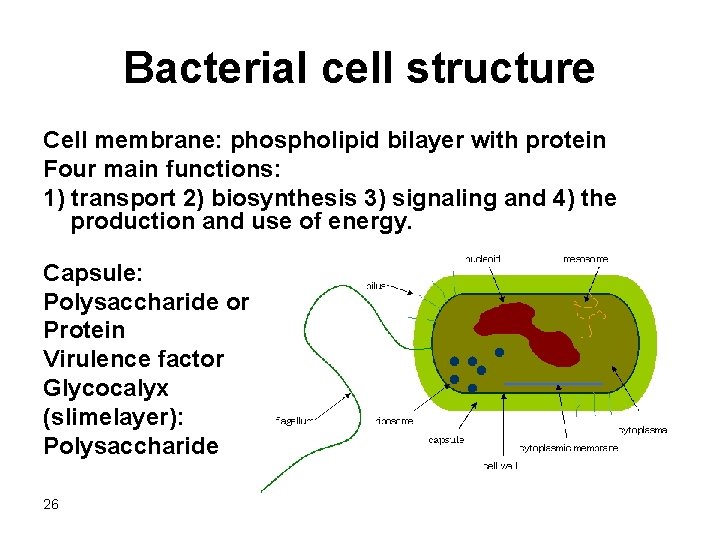
Bacterial cell structure Cell membrane: phospholipid bilayer with protein Four main functions: 1) transport 2) biosynthesis 3) signaling and 4) the production and use of energy. Capsule: Polysaccharide or Protein Virulence factor Glycocalyx (slimelayer): Polysaccharide 26 Dina M. Bitar Ph. D.

Bacterial cell structure • Flagella: filaments for motility composed of flagellin A. monotrichous B. lophotrichous C. amphitrichous D. peritrichous 27 Dina M. Bitar Ph. D.
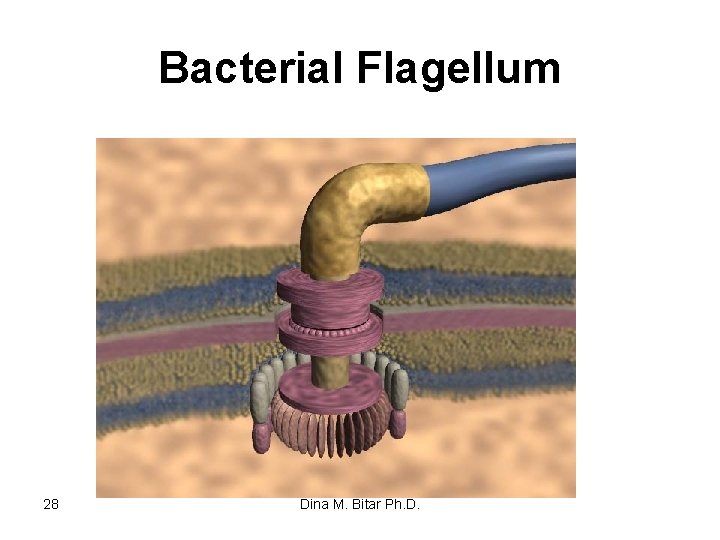
Bacterial Flagellum 28 Dina M. Bitar Ph. D.

Bacterial cell structure • Fimbriae or pili Finer shorter filaments Composed of pilin Types: v Common pili- adhesion v Sex pili- conjugation 29 Dina M. Bitar Ph. D.
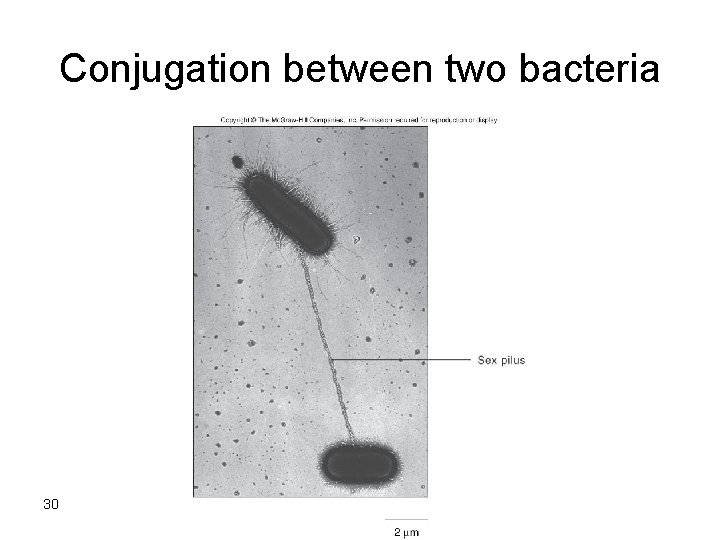
Conjugation between two bacteria 30 Dina M. Bitar Ph. D.
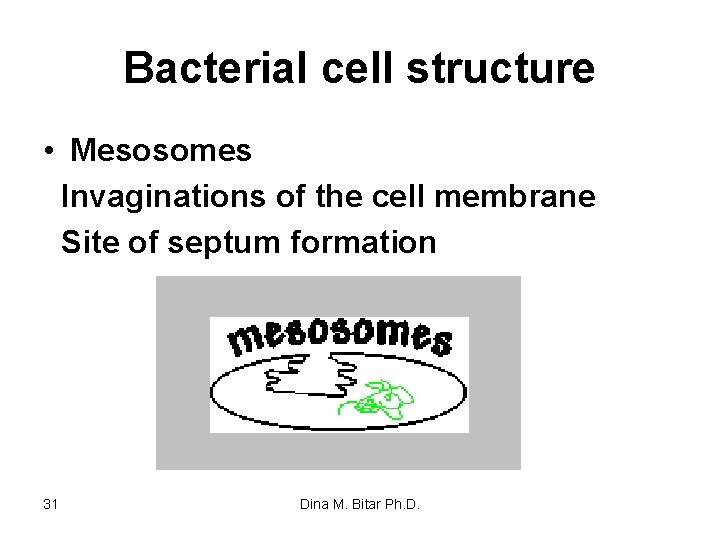
Bacterial cell structure • Mesosomes Invaginations of the cell membrane Site of septum formation 31 Dina M. Bitar Ph. D.
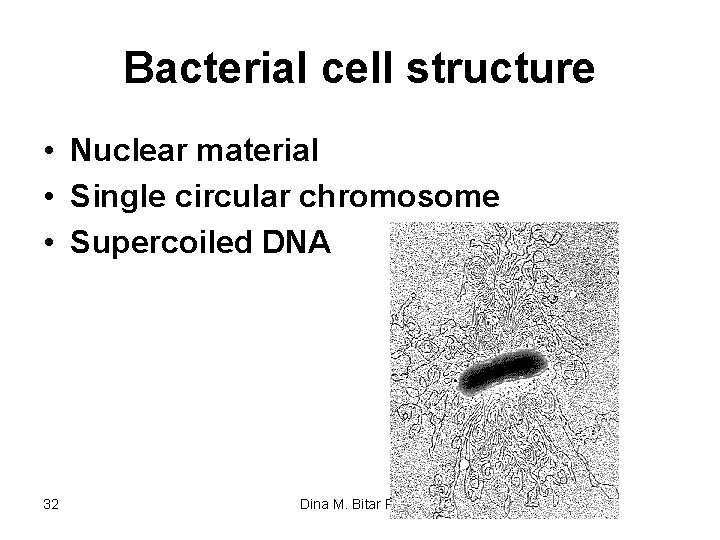
Bacterial cell structure • Nuclear material • Single circular chromosome • Supercoiled DNA 32 Dina M. Bitar Ph. D.
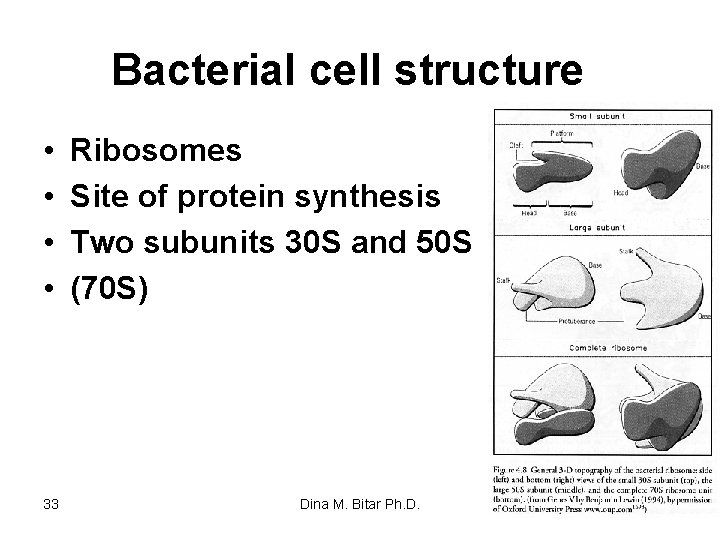
Bacterial cell structure • • 33 Ribosomes Site of protein synthesis Two subunits 30 S and 50 S (70 S) Dina M. Bitar Ph. D.
Bacterial cell structure • Cytoplasmic inclusions v Volutin- polymetaphosphate v Lipid- poly Beta hydroxybuterate v Polysaccharide- starch or glycogen • Spores v Resistant forms (heat, desiccation, disinfectants) v Resting cell 34 Dina M. Bitar Ph. D. v Location; terminal or subterminal

Bacterial spores 35 Dina M. Bitar Ph. D.
Classification scheme of medically important bacteria • Based on Gram’s stain Gram positive bacteria Gram negative bacteria • Based on Morphology Cocci Bacilli • Based on oxygen requirement Aerobic Anaerobic growth 36 Dina M. Bitar Ph. D.
Classification scheme of medically important bacteria • Based on shape/ spore forming ability Clusters Chains/pairs Spore forming Non- spore forming 37 Dina M. Bitar Ph. D.
Naming of Bacteria • Staphylococcus aureus Genus name: Staphylococcus Species name: aureus • S. aureus • Staphylococci group name • Staphylococcus sp. 38 Dina M. Bitar Ph. D.
Diseases caused by bacteria • Diphtheria- Corynebacterium diphtheriae • Whooping cough- (pertussis) Bordetella pertussis • Tetanus- Clostridium tetani 39 Dina M. Bitar Ph. D.
Viruses • Nucleic acid core- DNA or RNA • N. A. either double stranded or single stranded, mostly linear • Protein coat (capsid) • Nucleocapsid • Some have lipid envelop • Obligate intracellular parasites (OIP) 40 Dina M. Bitar Ph. D.
Diseases caused by viruses • Polio- poliomyelitis virus • Measles- measles virus • Mumps- mumps virus • AIDS- Human Immunodeficiency virus (HIV) 41 Dina M. Bitar Ph. D.
Viroids • Viroids are infectious agents composed exclusively of a single piece of circular single stranded RNA which has some double-stranded regions. • Because of their simplified structures both prions and viroids are sometimes called subviral particles. • Viroids mainly cause plant diseases but have recently been reported to cause a human disease. 42 Dina M. Bitar Ph. D.
The only human disease known to be caused by a viroid is hepatitis D • the delta agent is a viroid enclosed in a hepatitis B virus capsid. • There is extensive sequence complementarity between the hepatitis D viroid RNA and human liver cell 7 S RNA • The hepatitis D viroid causes liver cell death via sequestering this 7 S RNA and/or cleaving it. 43 Dina M. Bitar Ph. D.
Prions • Prions are proteinaciuos infectious agents composed exclusively of a single sialoglycoprotein called Pr. P 27 -30 • Cause certain “ slow diseases” “ transmissible spongiform encephalopathies” v v v 44 Creutzfeldt Jakob disease CJD Gertsmann Straussler Scheinker syndrome Familial fatal insomnia in humans Scrapie in sheep Bovine spongiform encephalopathy in cows Dina M. Bitar Ph. D.
Fungi • Eukaryotes • Cell wall contains chitin v Yeasts e. g. Candida sp. Causes oral thrush v. Molds e. g. Aspergillus sp. Causes opportunistic infections 45 Dina M. Bitar Ph. D.
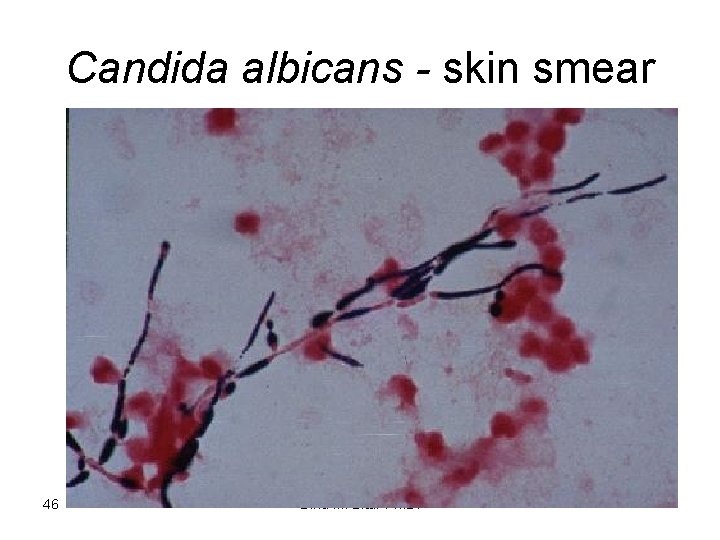
Candida albicans - skin smear 46 Dina M. Bitar Ph. D.
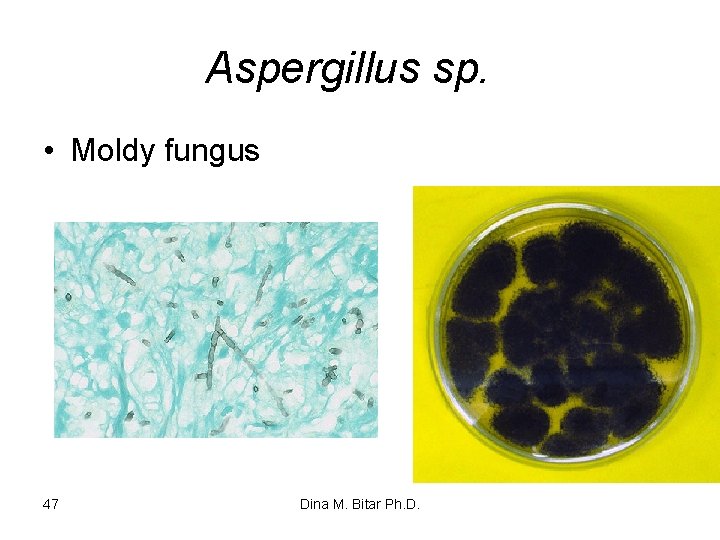
Aspergillus sp. • Moldy fungus 47 Dina M. Bitar Ph. D.
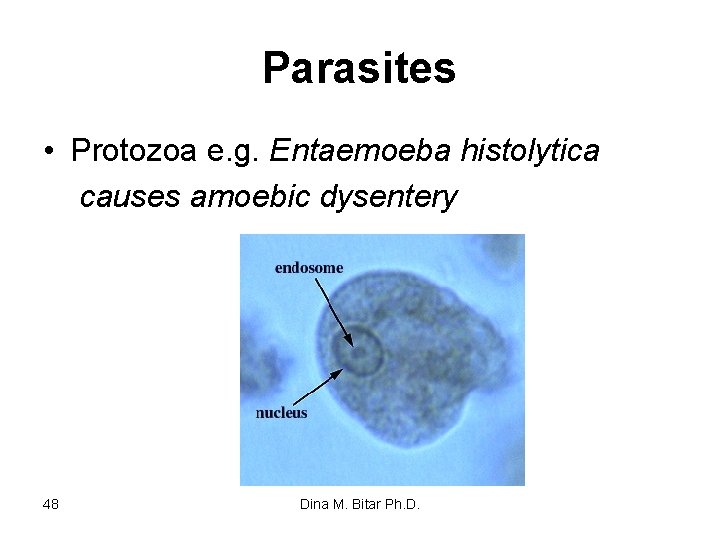
Parasites • Protozoa e. g. Entaemoeba histolytica causes amoebic dysentery 48 Dina M. Bitar Ph. D.
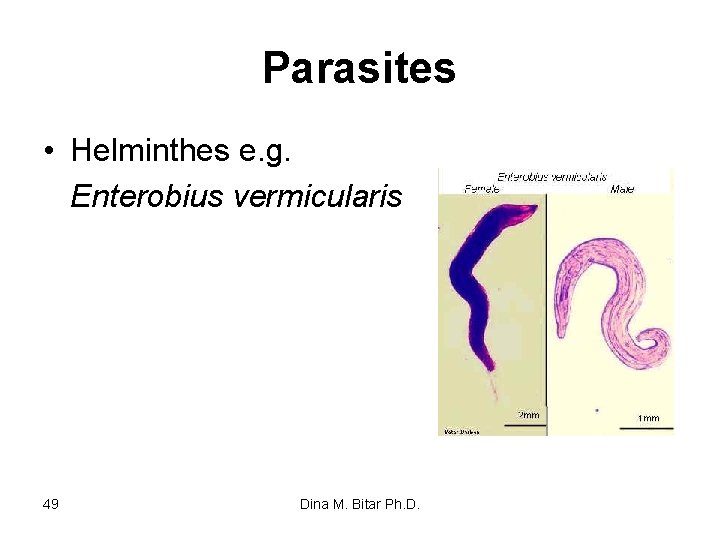
Parasites • Helminthes e. g. Enterobius vermicularis 49 Dina M. Bitar Ph. D.
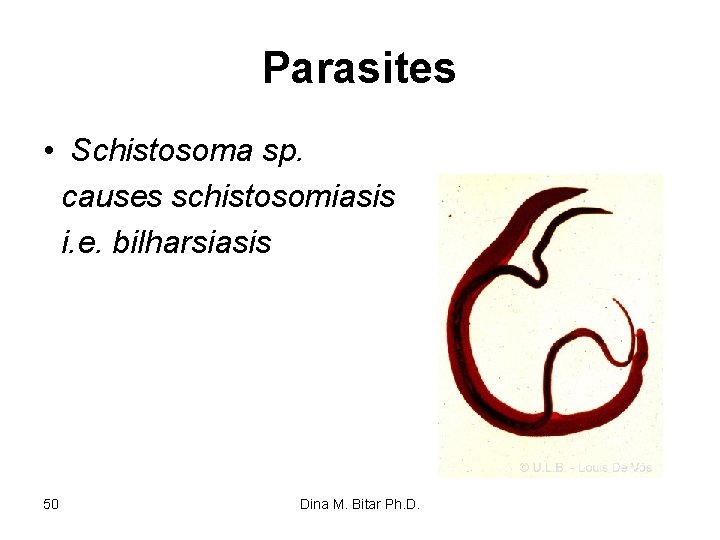
Parasites • Schistosoma sp. causes schistosomiasis i. e. bilharsiasis 50 Dina M. Bitar Ph. D.
- Slides: 50