
The Micmacs Mikmaq The Micmac lived in what

- Slides: 19
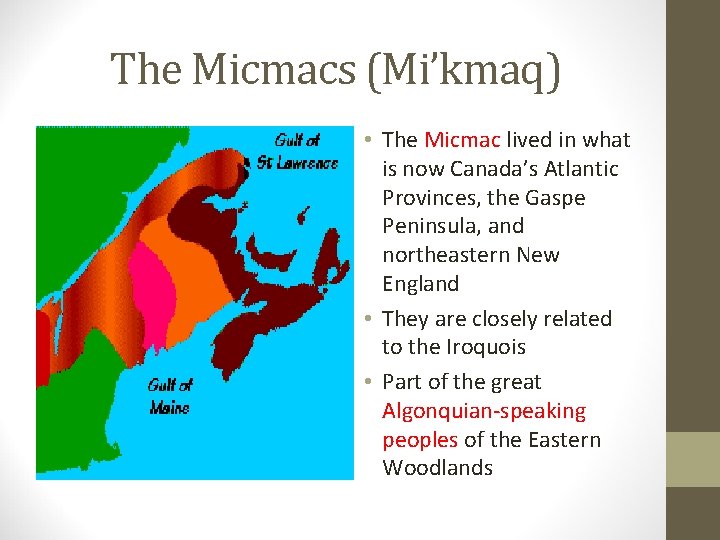
The Micmacs (Mi’kmaq) • The Micmac lived in what is now Canada’s Atlantic Provinces, the Gaspe Peninsula, and northeastern New England • They are closely related to the Iroquois • Part of the great Algonquian-speaking peoples of the Eastern Woodlands
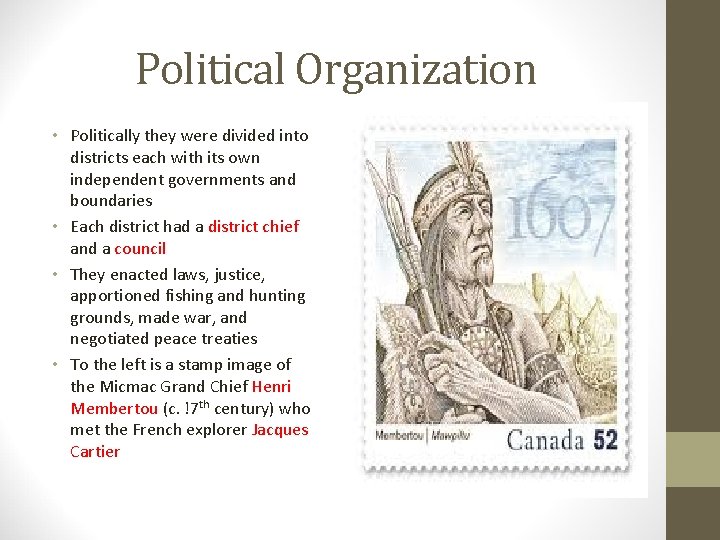
Political Organization • Politically they were divided into districts each with its own independent governments and boundaries • Each district had a district chief and a council • They enacted laws, justice, apportioned fishing and hunting grounds, made war, and negotiated peace treaties • To the left is a stamp image of the Micmac Grand Chief Henri Membertou (c. !7 th century) who met the French explorer Jacques Cartier
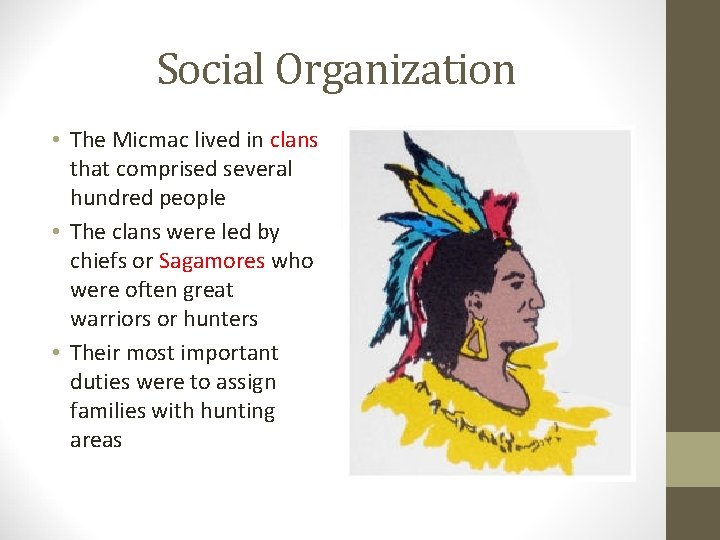
Social Organization • The Micmac lived in clans that comprised several hundred people • The clans were led by chiefs or Sagamores who were often great warriors or hunters • Their most important duties were to assign families with hunting areas
Lifestyle • Their life style was seminomadic • They moved from place to place in search of food Summer • They spent most of their time near the coast harvesting seafood Winter • They moved inland to hunt a variety of animals, particularly moose
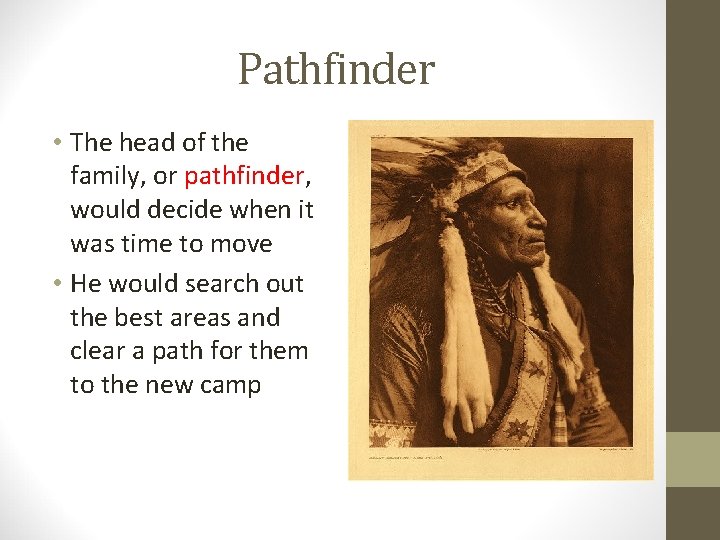
Pathfinder • The head of the family, or pathfinder, would decide when it was time to move • He would search out the best areas and clear a path for them to the new camp
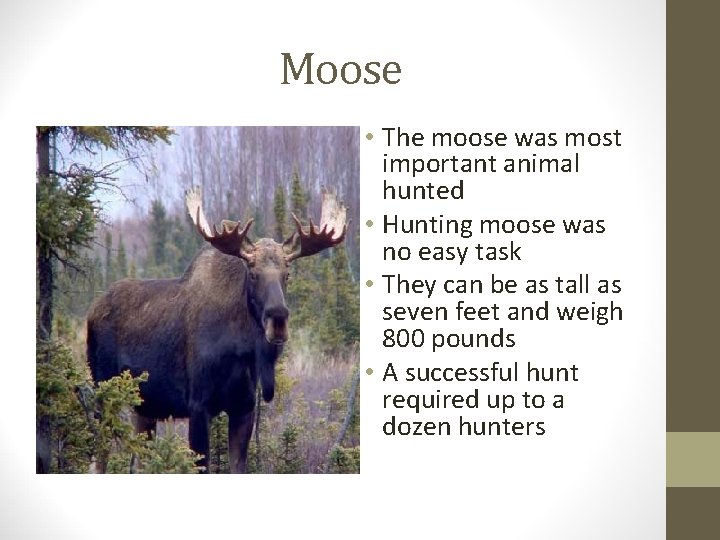
Moose • The moose was most important animal hunted • Hunting moose was no easy task • They can be as tall as seven feet and weigh 800 pounds • A successful hunt required up to a dozen hunters
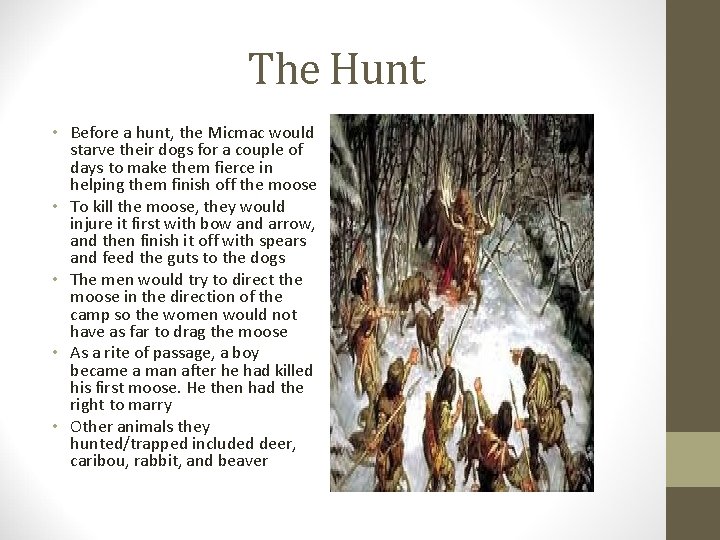
The Hunt • Before a hunt, the Micmac would starve their dogs for a couple of days to make them fierce in helping them finish off the moose • To kill the moose, they would injure it first with bow and arrow, and then finish it off with spears and feed the guts to the dogs • The men would try to direct the moose in the direction of the camp so the women would not have as far to drag the moose • As a rite of passage, a boy became a man after he had killed his first moose. He then had the right to marry • Other animals they hunted/trapped included deer, caribou, rabbit, and beaver
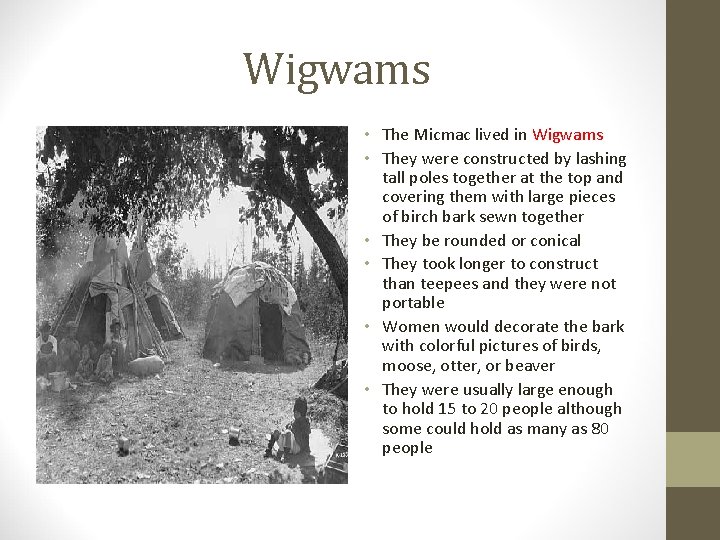
Wigwams • The Micmac lived in Wigwams • They were constructed by lashing tall poles together at the top and covering them with large pieces of birch bark sewn together • They be rounded or conical • They took longer to construct than teepees and they were not portable • Women would decorate the bark with colorful pictures of birds, moose, otter, or beaver • They were usually large enough to hold 15 to 20 people although some could hold as many as 80 people
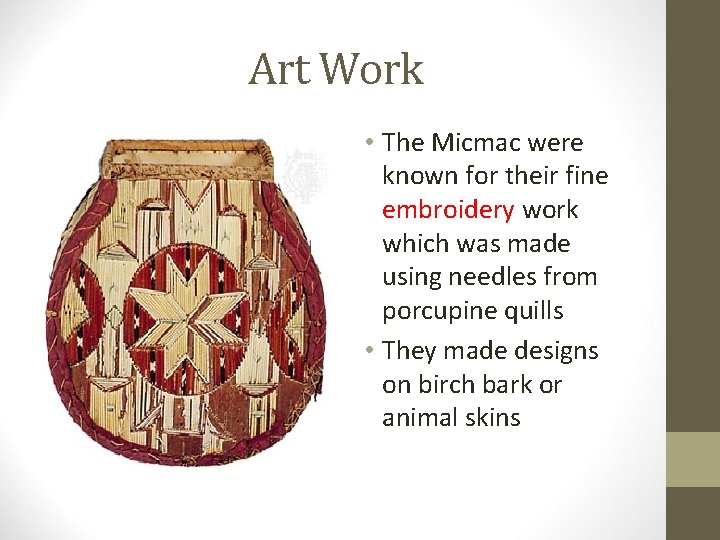
Art Work • The Micmac were known for their fine embroidery work which was made using needles from porcupine quills • They made designs on birch bark or animal skins
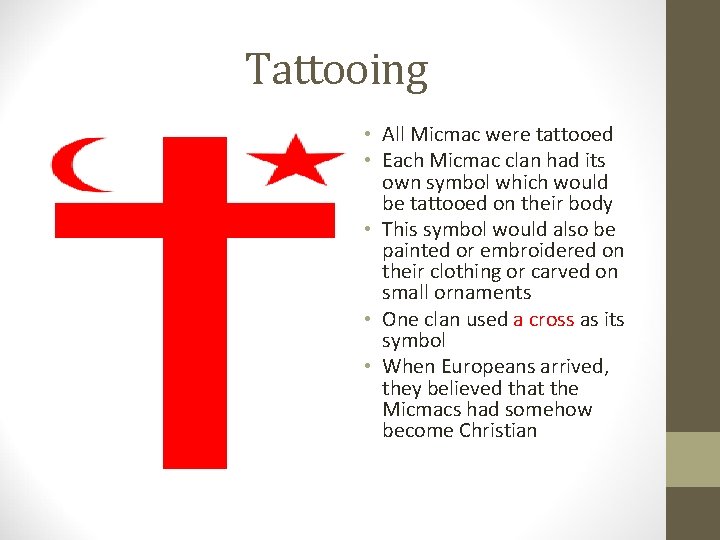
Tattooing • All Micmac were tattooed • Each Micmac clan had its own symbol which would be tattooed on their body • This symbol would also be painted or embroidered on their clothing or carved on small ornaments • One clan used a cross as its symbol • When Europeans arrived, they believed that the Micmacs had somehow become Christian
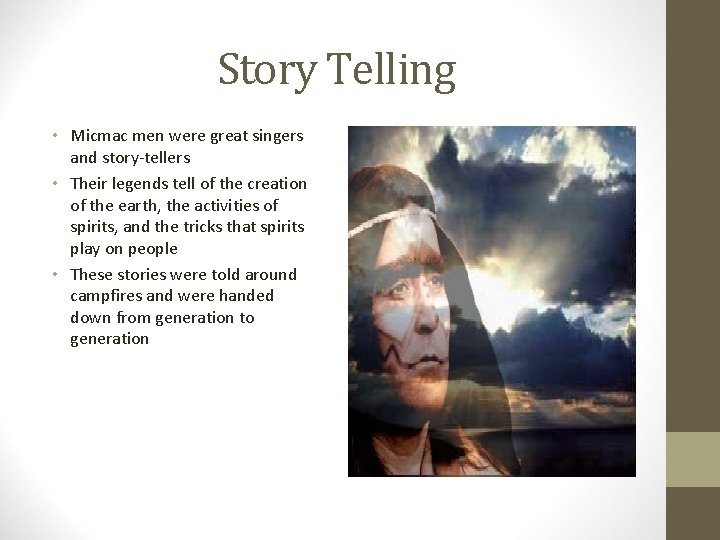
Story Telling • Micmac men were great singers and story-tellers • Their legends tell of the creation of the earth, the activities of spirits, and the tricks that spirits play on people • These stories were told around campfires and were handed down from generation to generation
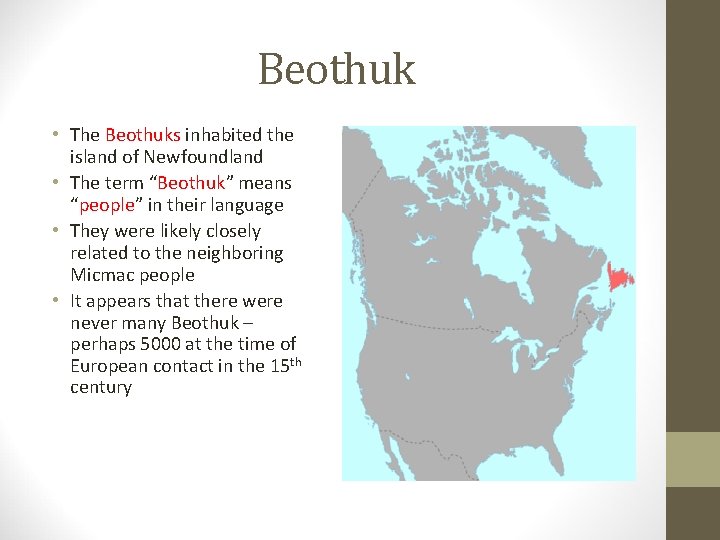
Beothuk • The Beothuks inhabited the island of Newfoundland • The term “Beothuk” means “people” in their language • They were likely closely related to the neighboring Micmac people • It appears that there were never many Beothuk – perhaps 5000 at the time of European contact in the 15 th century
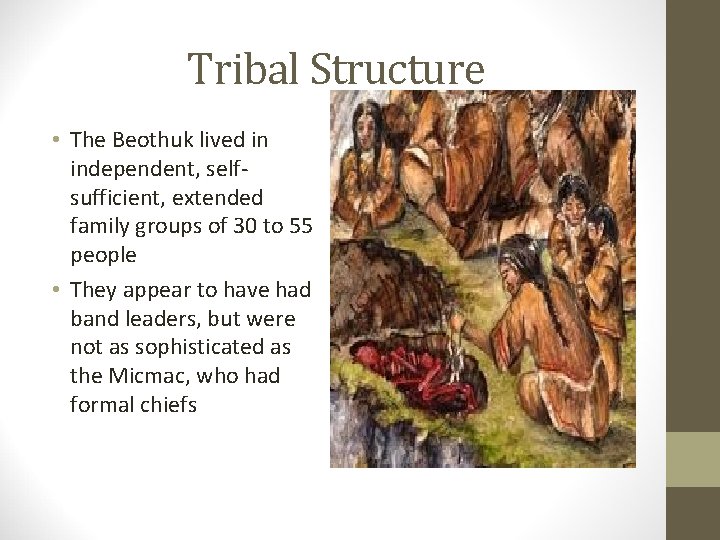
Tribal Structure • The Beothuk lived in independent, selfsufficient, extended family groups of 30 to 55 people • They appear to have had band leaders, but were not as sophisticated as the Micmac, who had formal chiefs
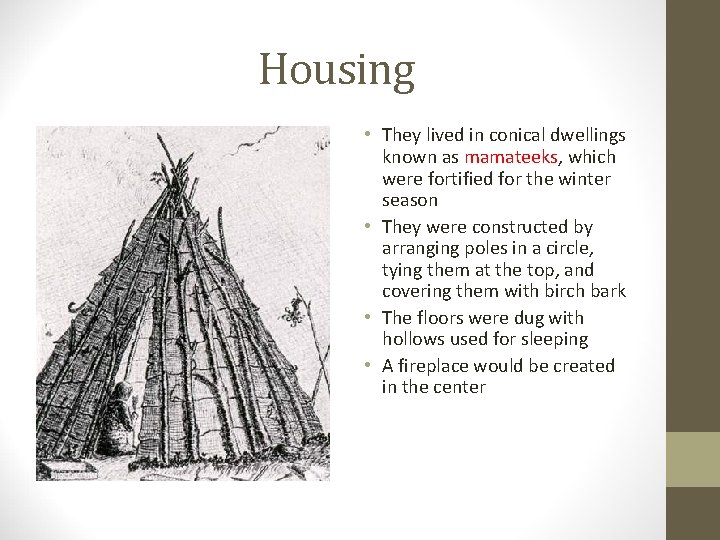
Housing • They lived in conical dwellings known as mamateeks, which were fortified for the winter season • They were constructed by arranging poles in a circle, tying them at the top, and covering them with birch bark • The floors were dug with hollows used for sleeping • A fireplace would be created in the center
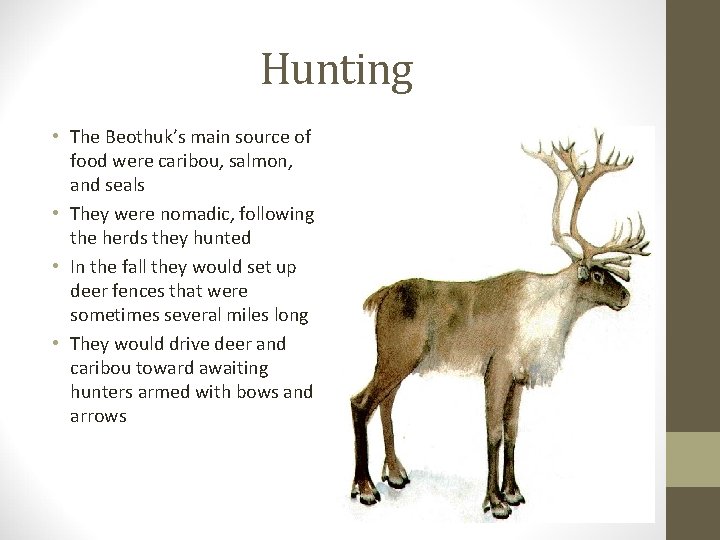
Hunting • The Beothuk’s main source of food were caribou, salmon, and seals • They were nomadic, following the herds they hunted • In the fall they would set up deer fences that were sometimes several miles long • They would drive deer and caribou toward awaiting hunters armed with bows and arrows
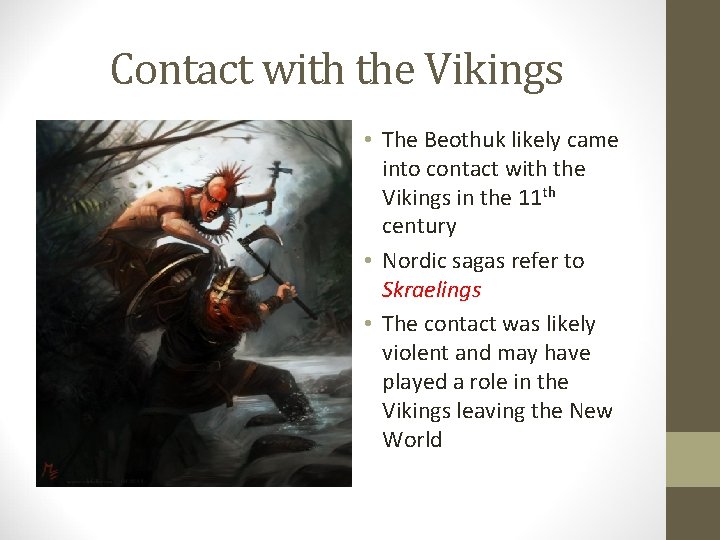
Contact with the Vikings • The Beothuk likely came into contact with the Vikings in the 11 th century • Nordic sagas refer to Skraelings • The contact was likely violent and may have played a role in the Vikings leaving the New World
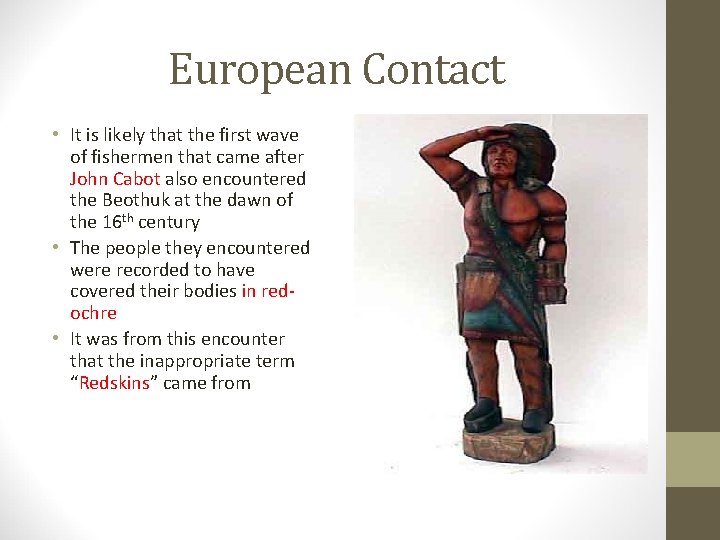
European Contact • It is likely that the first wave of fishermen that came after John Cabot also encountered the Beothuk at the dawn of the 16 th century • The people they encountered were recorded to have covered their bodies in redochre • It was from this encounter that the inappropriate term “Redskins” came from
Extinction/Genocide • Some estimates indicate that there may have been less than 1000 Beothuks left by 1810 • Today they no longer exist Reasons for their Extinction • Violence between them and migrating Inuit and Micmac peoples • Loss of food sources due to competition from the above tribes • Infectious diseases introduced by Europeans from which they had no immunity e. g. smallpox and tuberculosis • Violent encounters with European settlers
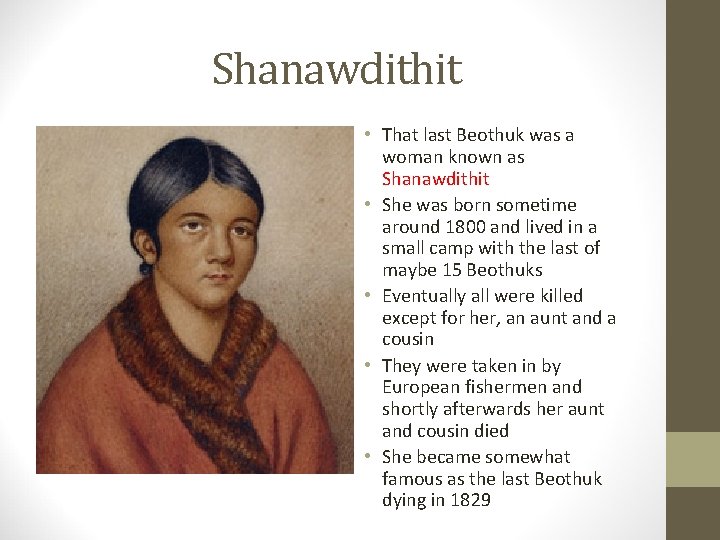
Shanawdithit • That last Beothuk was a woman known as Shanawdithit • She was born sometime around 1800 and lived in a small camp with the last of maybe 15 Beothuks • Eventually all were killed except for her, an aunt and a cousin • They were taken in by European fishermen and shortly afterwards her aunt and cousin died • She became somewhat famous as the last Beothuk dying in 1829