
The Metric System The Metric System is also
- Slides: 17
The Metric System
The Metric System is also known as SI units It is a decimal-based system based on multiples of ten
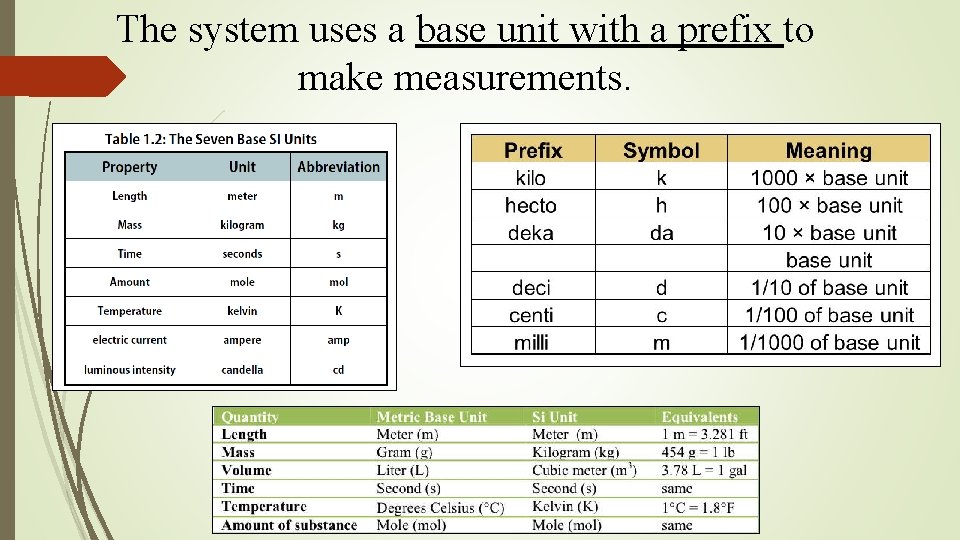
The system uses a base unit with a prefix to make measurements. 2/1/2022
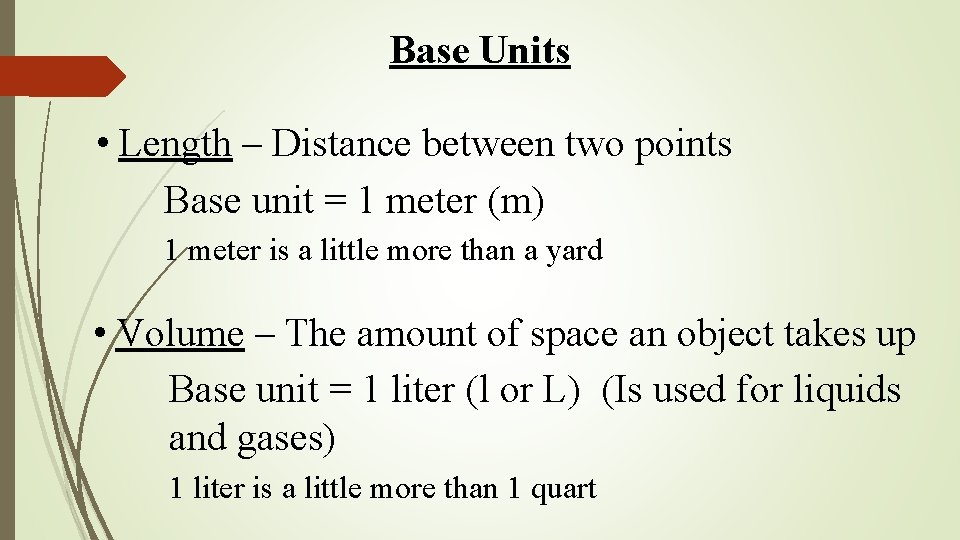
Base Units • Length – Distance between two points Base unit = 1 meter (m) 1 meter is a little more than a yard • Volume – The amount of space an object takes up Base unit = 1 liter (l or L) (Is used for liquids and gases) 1 liter is a little more than 1 quart
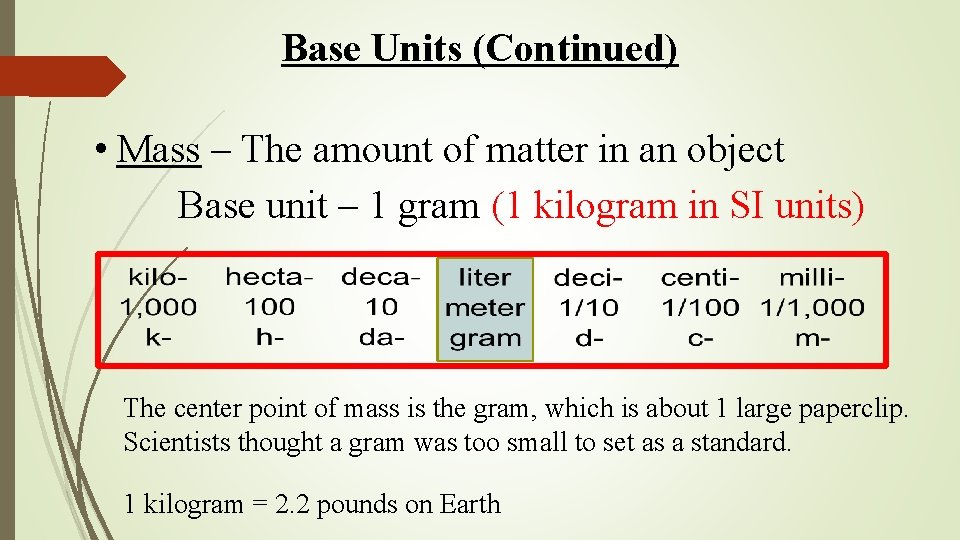
Base Units (Continued) • Mass – The amount of matter in an object Base unit – 1 gram (1 kilogram in SI units) The center point of mass is the gram, which is about 1 large paperclip. Scientists thought a gram was too small to set as a standard. 1 kilogram = 2. 2 pounds on Earth
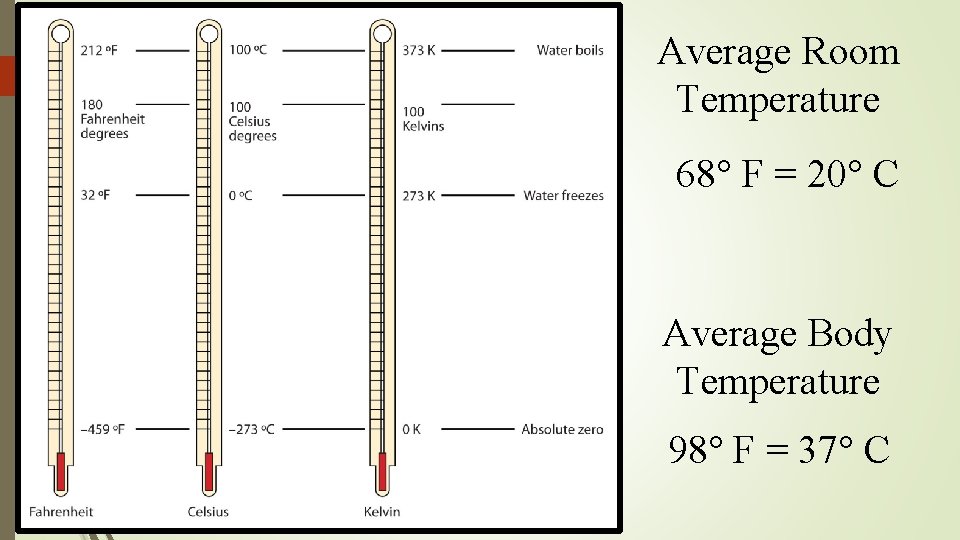
Base Units (Continued) • Temperature – a measurement of the kinetic energy or heat energy contained in a substance Base unit = 1 degree Celsius (C°) or (1 Kelvin in SI units) 1 degree Celsius (C°) or 1 Kelvin = 1. 8°F
Average Room Temperature 68° F = 20° C Average Body Temperature 98° F = 37° C
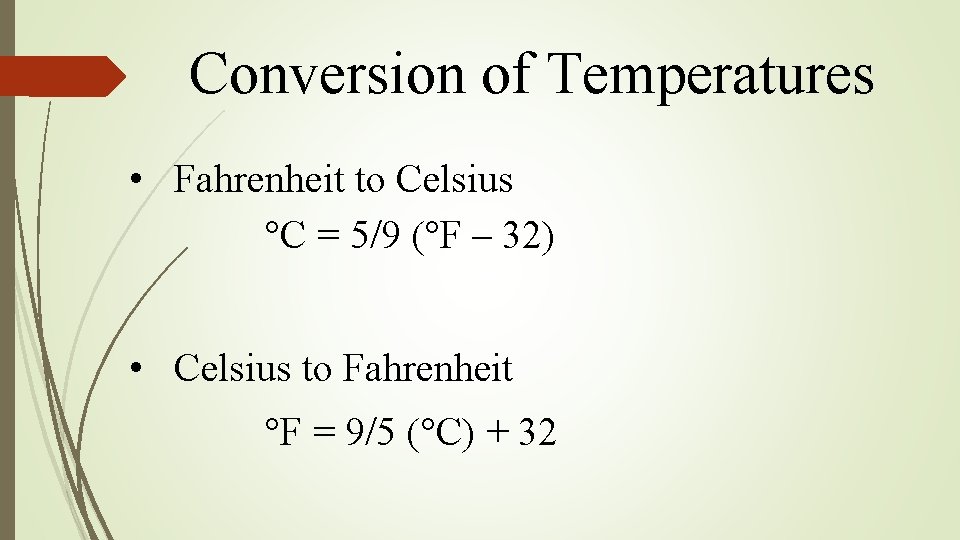
Conversion of Temperatures • Fahrenheit to Celsius °C = 5/9 (°F – 32) • Celsius to Fahrenheit °F = 9/5 (°C) + 32
Base Units (Continued) • Time Base unit = 1 second
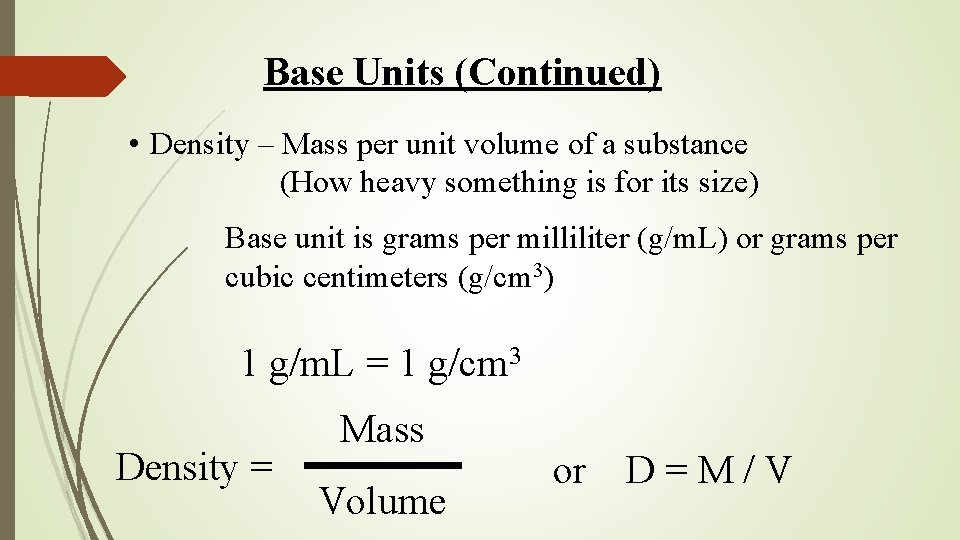
Base Units (Continued) • Density – Mass per unit volume of a substance (How heavy something is for its size) Base unit is grams per milliliter (g/m. L) or grams per cubic centimeters (g/cm 3) 1 g/m. L = 1 g/cm 3 Density = Mass Volume or D=M/V
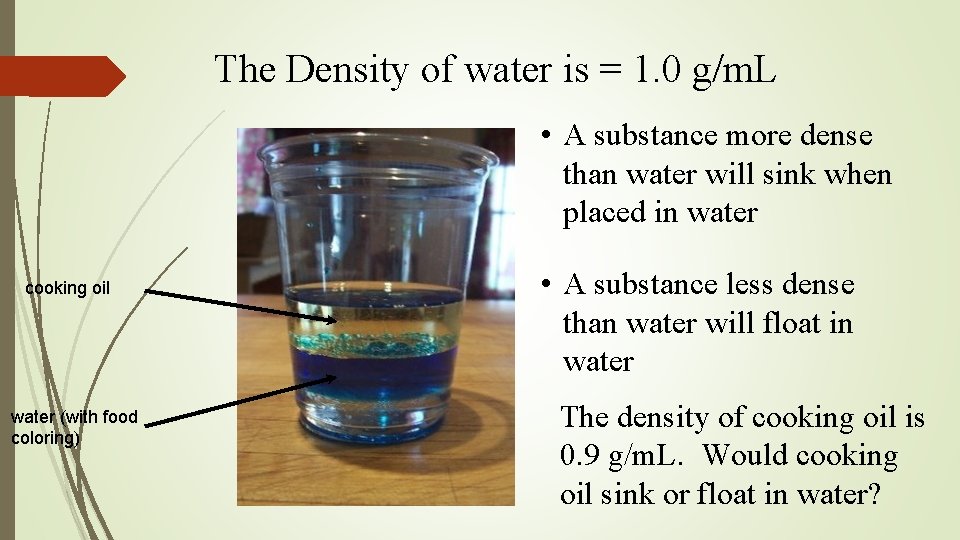
The Density of water is = 1. 0 g/m. L • A substance more dense than water will sink when placed in water cooking oil water (with food coloring) • A substance less dense than water will float in water The density of cooking oil is 0. 9 g/m. L. Would cooking oil sink or float in water?
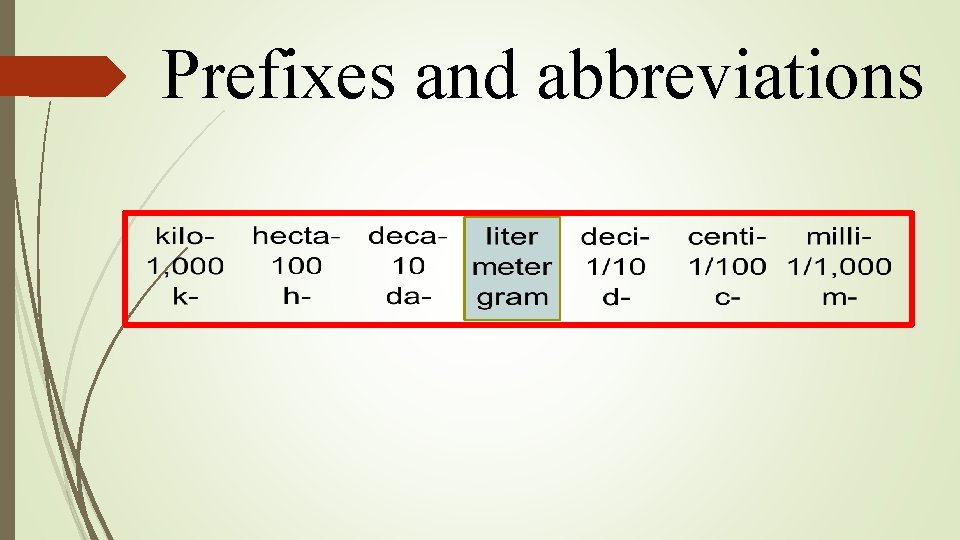
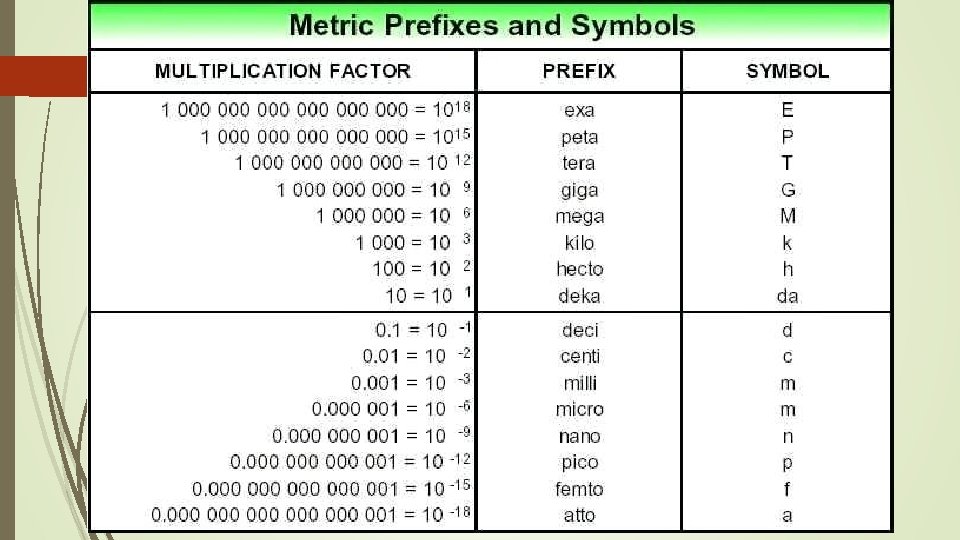
Prefixes and abbreviations
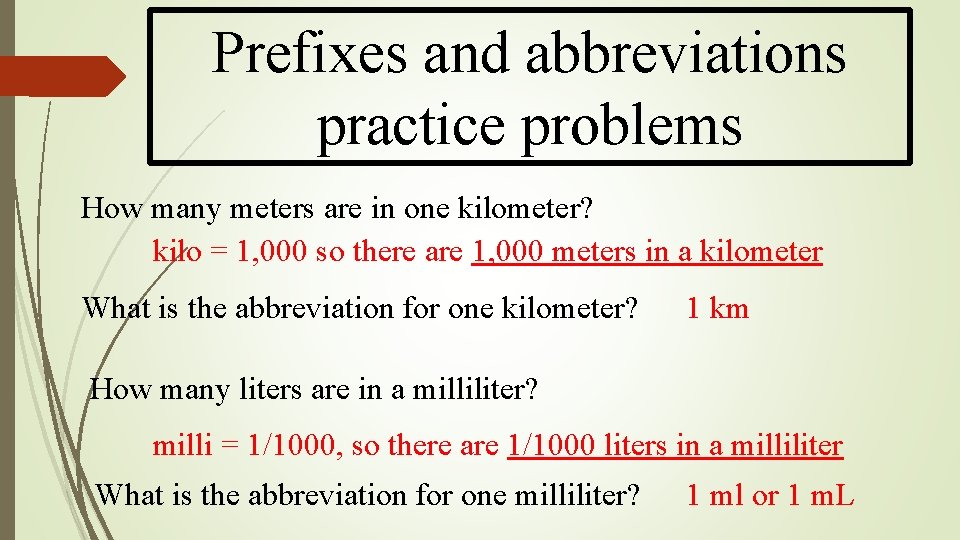
Prefixes and abbreviations practice problems How many meters are in one kilometer? kilo = 1, 000 so there are 1, 000 meters in a kilometer What is the abbreviation for one kilometer? 1 km How many liters are in a milliliter? milli = 1/1000, so there are 1/1000 liters in a milliliter What is the abbreviation for one milliliter? 1 ml or 1 m. L
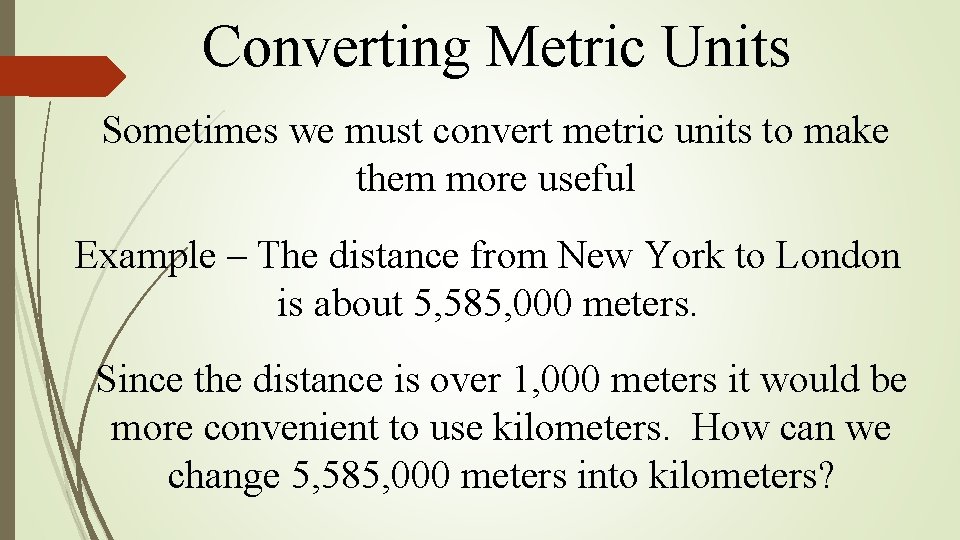
Converting Metric Units Sometimes we must convert metric units to make them more useful Example – The distance from New York to London is about 5, 585, 000 meters. Since the distance is over 1, 000 meters it would be more convenient to use kilometers. How can we change 5, 585, 000 meters into kilometers?
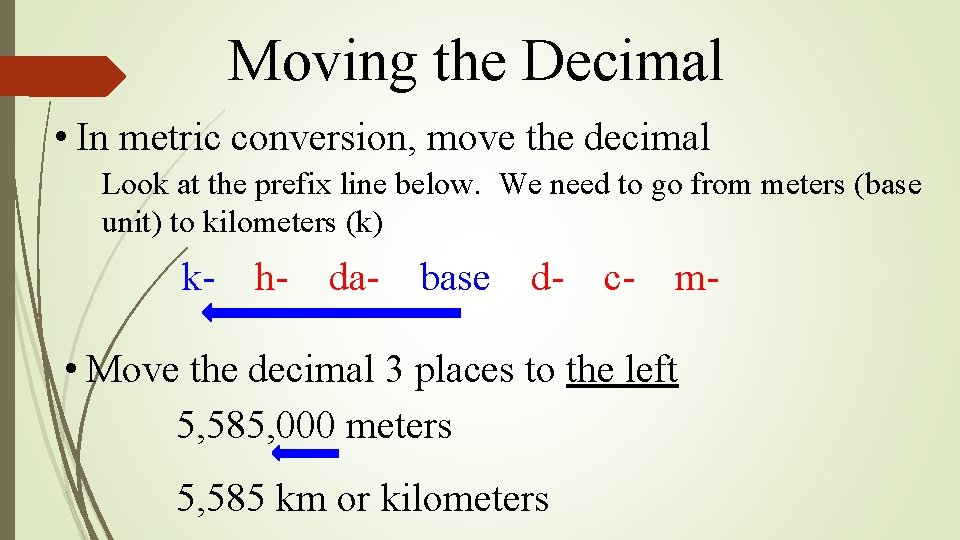
Moving the Decimal • In metric conversion, move the decimal Look at the prefix line below. We need to go from meters (base unit) to kilometers (k) k- h- da- base d- c- m- • Move the decimal 3 places to the left 5, 585, 000 meters 5, 585 km or kilometers
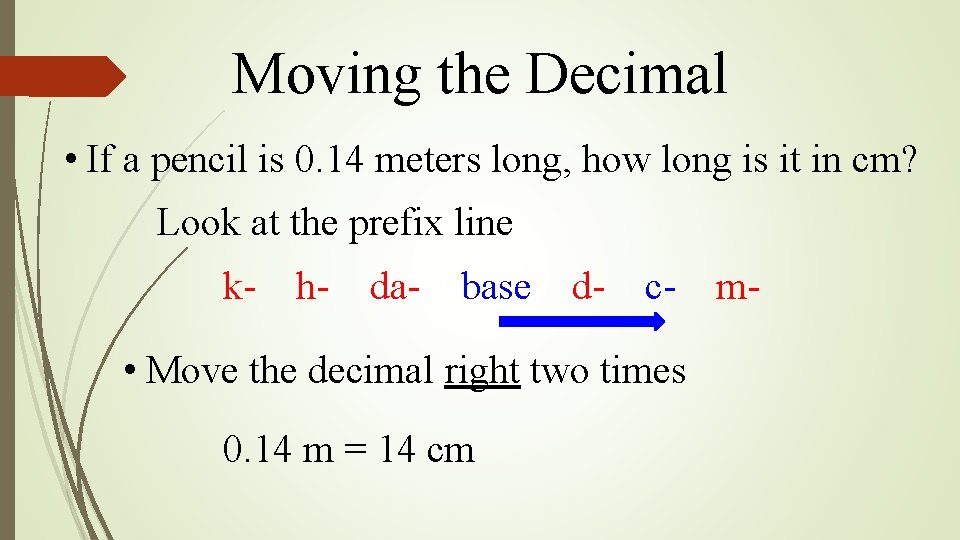
Moving the Decimal • If a pencil is 0. 14 meters long, how long is it in cm? Look at the prefix line k- h- da- base d- c- • Move the decimal right two times 0. 14 m = 14 cm m-