
The Methods for Coronary Stent Development Chuck Simonton
- Slides: 37
The Methods for Coronary Stent Development Chuck Simonton, MD, FACC Chief Medical Officer Divisional Vice President, Global Medical Affairs Abbott Vascular Santa Clara, USA ISCTR Symposium September 21, 2018 San Diego, CA See important Safety Information referenced within. © 2018 Abbott. All rights reserved. SE 2946837 Rev A Not to be reproduced, redistributed or excerpted. 1 of 40
Disclosure Statement of Financial Interest Chief Medical Officer Divisional Vice President Global Medical Affairs Abbott Vascular Santa Clara, CA, USA All TCT 2018 faculty disclosures are listed online and on the App.
The Methods for Coronary Stent Development 1. 2. 3. 4. 5. 6. Drug-Eluting Stent (DES) Design Preclinical Evidence Clinical and Regulatory Considerations Reimbursement Challenges Unmet Clinical Needs of DES Future of DES See important Safety Information referenced within. © 2018 Abbott. All rights reserved. SE 2946837 Rev A Not to be reproduced, redistributed or excerpted. 3 of 40
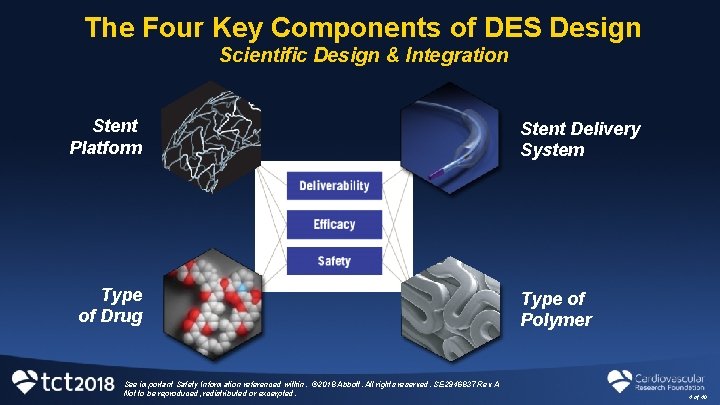
The Four Key Components of DES Design Scientific Design & Integration Stent Platform Type of Drug See important Safety Information referenced within. © 2018 Abbott. All rights reserved. SE 2946837 Rev A Not to be reproduced, redistributed or excerpted. Stent Delivery System Type of Polymer 4 of 40
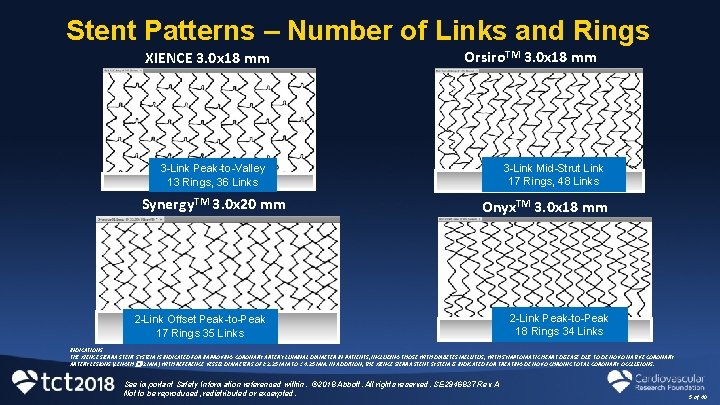
Stent Patterns – Number of Links and Rings XIENCE 3. 0 x 18 mm Orsiro. TM 3. 0 x 18 mm 3 -Link Mid-Strut Link 17 Rings, 48 Links 3 -Link Peak-to-Valley 13 Rings, 36 Links Synergy. TM 3. 0 x 20 mm Onyx. TM 3. 0 x 18 mm 2 -Link Offset Peak-to-Peak 17 Rings 35 Links 2 -Link Peak-to-Peak 18 Rings 34 Links INDICATIONS THE XIENCE SIERRA STENT SYSTEM IS INDICATED FOR IMPROVING CORONARY ARTERY LUMINAL DIAMETER IN PATIENTS, INCLUDING THOSE WITH DIABETES MELLITUS, WITH SYMPTOMATIC HEART DISEASE DUE TO DE NOVO NATIVE CORONARY ARTERY LESIONS (LENGTH � 32 MM) WITH REFERENCE VESSEL DIAMETERS OF ≥ 2. 25 MM TO ≤ 4. 25 MM. IN ADDITION, THE XIENCE SIERRA STENT SYSTEM IS INDICATED FOR TREATING DE NOVO CHRONIC TOTAL CORONARY OCCLUSIONS. See important Safety Information referenced within. © 2018 Abbott. All rights reserved. SE 2946837 Rev A Not to be reproduced, redistributed or excerpted. 5 of 40
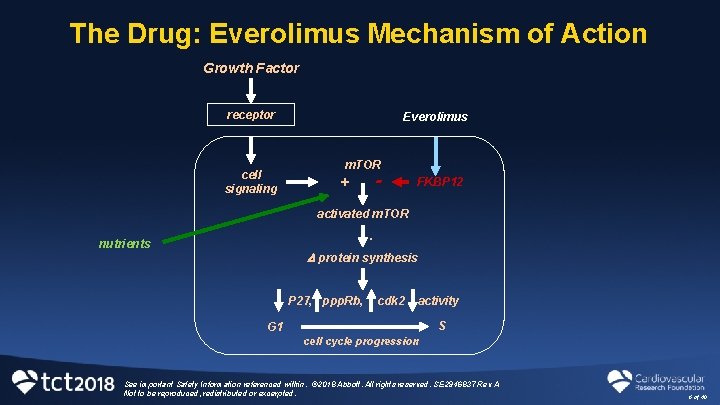
The Drug: Everolimus Mechanism of Action Growth Factor receptor cell signaling Everolimus m. TOR - + FKBP 12 activated m. TOR. nutrients D protein synthesis P 27, ppp. Rb, cdk 2 activity G 1 S cell cycle progression See important Safety Information referenced within. © 2018 Abbott. All rights reserved. SE 2946837 Rev A Not to be reproduced, redistributed or excerpted. 6 of 40
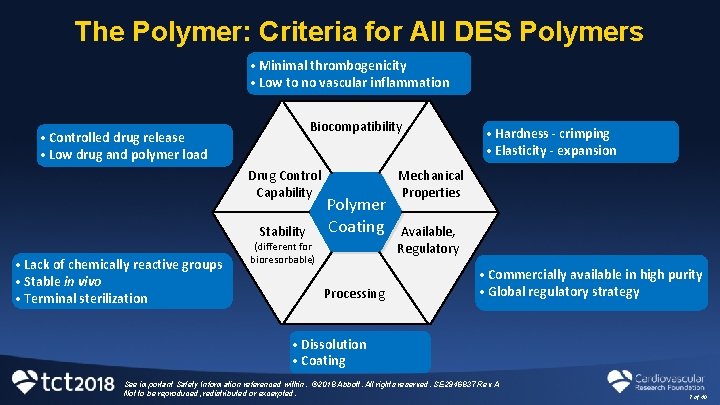
The Polymer: Criteria for All DES Polymers • Minimal thrombogenicity • Low to no vascular inflammation Biocompatibility • Controlled drug release • Low drug and polymer load Drug Control Capability Stability • Lack of chemically reactive groups • Stable in vivo • Terminal sterilization Polymer Coating (different for bioresorbable) Processing • Hardness - crimping • Elasticity - expansion Mechanical Properties Available, Regulatory • Commercially available in high purity • Global regulatory strategy • Dissolution • Coating See important Safety Information referenced within. © 2018 Abbott. All rights reserved. SE 2946837 Rev A Not to be reproduced, redistributed or excerpted. 7 of 40
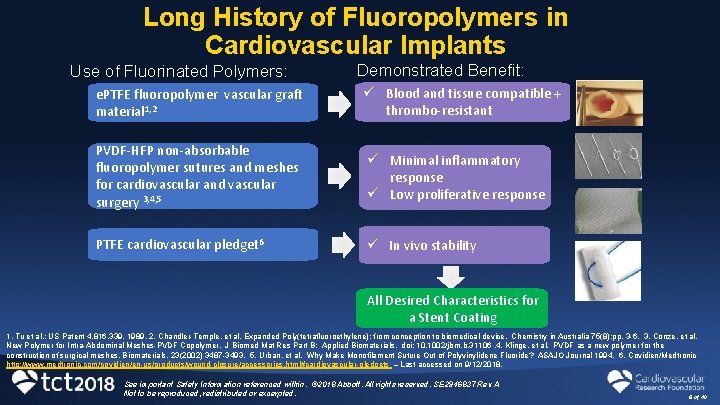
Long History of Fluoropolymers in Cardiovascular Implants Use of Fluorinated Polymers: Demonstrated Benefit: e. PTFE fluoropolymer vascular graft material 1, 2 ü Blood and tissue compatible + thrombo-resistant PVDF-HFP non-absorbable fluoropolymer sutures and meshes for cardiovascular and vascular surgery 3, 4, 5 ü Minimal inflammatory response ü Low proliferative response PTFE cardiovascular pledget 6 ü In vivo stability All Desired Characteristics for a Stent Coating 1. Tu et al. ; US Patent 4, 816, 339, 1989. 2. Chandler-Temple, et al. Expanded Poly(tetrafluoroethylene): from conception to biomedical device. Chemistry in Australia 75(8): pp. 3 -6. 3. Conze, et al. New Polymer for Intra-Abdominal Meshes-PVDF Copolymer, J Biomed Mat Res Part B: Applied Biomaterials. doi: 10. 1002/jbm. b. 31106. 4. Klinge, et al. PVDF as a new polymer for the construction of surgical meshes. Biomaterials. 23(2002) 3487 -3493. 5. Urban, et al. Why Make Monofilament Suture Out of Polyvinylidene Fluoride? ASAJO Journal 1994. 6. Covidien/Medtronic http: //www. medtronic. com/covidien/en-us/products/wound-closure/accessories. html#cardiovascular-pledgets – Last accessed on 9/12/2018. See important Safety Information referenced within. © 2018 Abbott. All rights reserved. SE 2946837 Rev A Not to be reproduced, redistributed or excerpted. 8 of 40
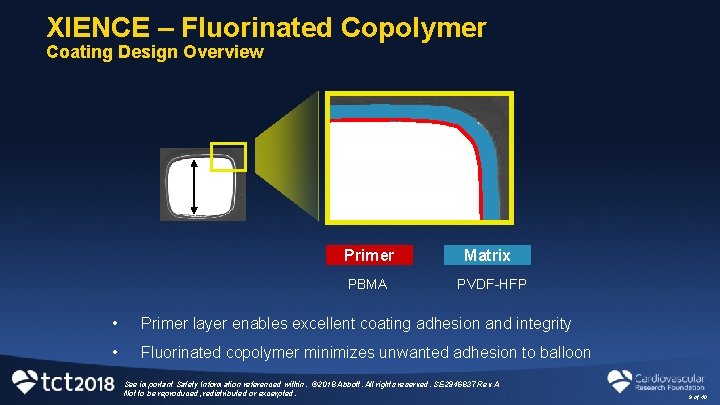
XIENCE – Fluorinated Copolymer Coating Design Overview 81 mm Primer PBMA Matrix PVDF-HFP • Primer layer enables excellent coating adhesion and integrity • Fluorinated copolymer minimizes unwanted adhesion to balloon See important Safety Information referenced within. © 2018 Abbott. All rights reserved. SE 2946837 Rev A Not to be reproduced, redistributed or excerpted. 9 of 40
The Methods for Coronary Stent Development 1. 2. 3. 4. 5. 6. Drug-Eluting Stent (DES) Design Preclinical Evidence Clinical and Regulatory Considerations Reimbursement Challenges Unmet Clinical Needs of DES Future of DES See important Safety Information referenced within. © 2018 Abbott. All rights reserved. SE 2946837 Rev A Not to be reproduced, redistributed or excerpted. 10 of 40
Coronary DES In Vivo Assessment: Models and Objectives • Animal Models. . . though none are perfect Standard models: porcine coronary, rabbit iliac arteries ¡ Other models: rodents, ovine, canine, non-human primates ¡ • Objectives of In Vivo Evaluation Proof-of-Concept / Dosing ¡ Characterization (pharmacokinetics, degradation) ¡ Safety ¡ Potential Clinical Efficacy ¡ Pathogenesis: vessel healing, restenosis, and other risks specific to coronary stents ¡ See important Safety Information referenced within. © 2018 Abbott. All rights reserved. SE 2946837 Rev A Not to be reproduced, redistributed or excerpted. 11 of 40
Coronary DES In Vivo Characterization: Pharmacokinetics and Degradation • Pharmacokinetics (PK): drug release, time to complete drug elution; drug levels in artery, myocardium, blood, and peripheral organs • Degradation: intervallic sampling from implant to complete healing (or tissue quiescence) • PK and degradation profiles guide the selection of time points for safety assessment See important Safety Information referenced within. © 2018 Abbott. All rights reserved. SE 2946837 Rev A Not to be reproduced, redistributed or excerpted. 12 of 40
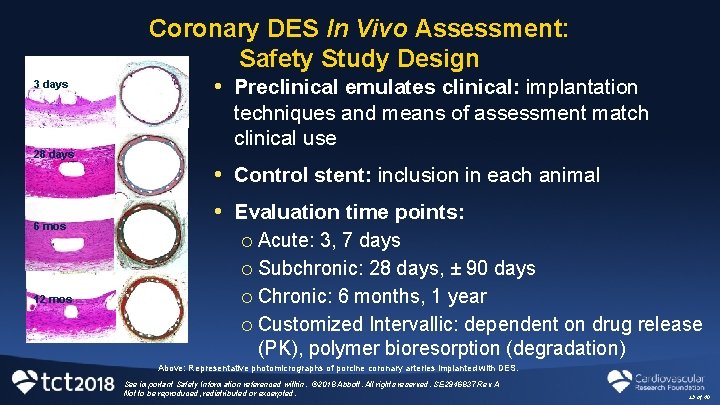
Coronary DES In Vivo Assessment: Safety Study Design 3 days 28 days 6 mos 12 mos • Preclinical emulates clinical: implantation techniques and means of assessment match clinical use • Control stent: inclusion in each animal • Evaluation time points: ¡ Acute: 3, 7 days ¡ Subchronic: 28 days, ± 90 days ¡ Chronic: 6 months, 1 year ¡ Customized Intervallic: dependent on drug release (PK), polymer bioresorption (degradation) Above: Representative photomicrographs of porcine coronary arteries implanted with DES. See important Safety Information referenced within. © 2018 Abbott. All rights reserved. SE 2946837 Rev A Not to be reproduced, redistributed or excerpted. 13 of 40
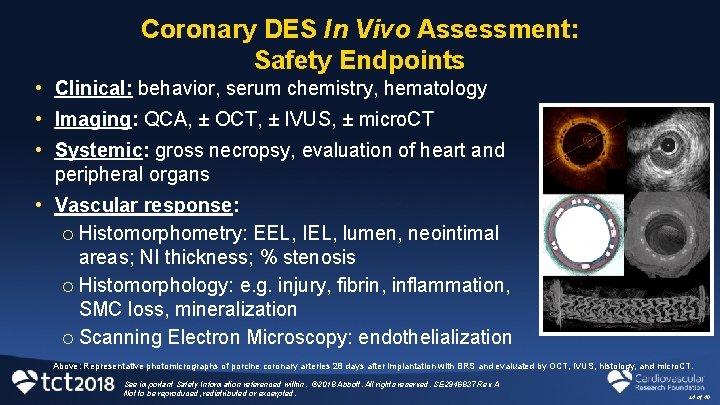
Coronary DES In Vivo Assessment: Safety Endpoints • Clinical: behavior, serum chemistry, hematology • Imaging: QCA, ± OCT, ± IVUS, ± micro. CT • Systemic: gross necropsy, evaluation of heart and peripheral organs • Vascular response: ¡ Histomorphometry: EEL, IEL, lumen, neointimal areas; NI thickness; % stenosis ¡ Histomorphology: e. g. injury, fibrin, inflammation, SMC loss, mineralization ¡ Scanning Electron Microscopy: endothelialization Above: Representative photomicrographs of porcine coronary arteries 28 days after implantation with BRS and evaluated by OCT, IVUS, histology, and micro. CT. See important Safety Information referenced within. © 2018 Abbott. All rights reserved. SE 2946837 Rev A Not to be reproduced, redistributed or excerpted. 14 of 40
The Methods for Coronary Stent Development 1. 2. 3. 4. 5. 6. Drug-Eluting Stent (DES) Design Preclinical Evidence Clinical and Regulatory Considerations Reimbursement Challenges Unmet Clinical Needs of DES Future of DES See important Safety Information referenced within. © 2018 Abbott. All rights reserved. SE 2946837 Rev A Not to be reproduced, redistributed or excerpted. 15 of 40
Regulatory Approval Requirements – DES • The global regulatory landscape continues to evolve and result in increased complexity to obtain product approvals • Approvals in Tier 1 countries, such as the US and EU (and others), are often used to support approvals in other regions • While the US FDA is opening up options for manufacturers, the EU is becoming stricter • Cost and agency review timing are also considerations See important Safety Information referenced within. © 2018 Abbott. All rights reserved. SE 2946837 Rev A Not to be reproduced, redistributed or excerpted. 16 of 40
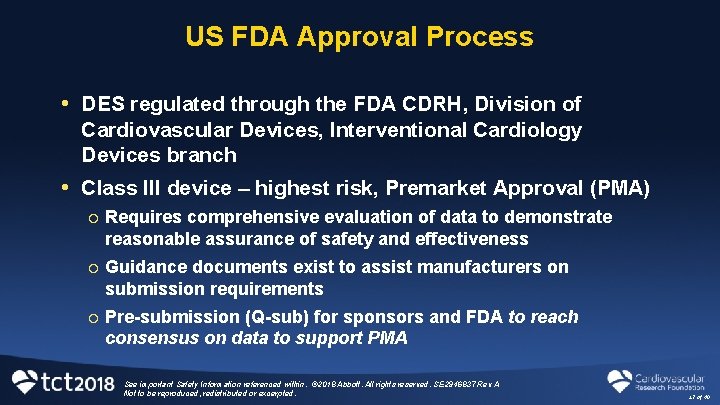
US FDA Approval Process • DES regulated through the FDA CDRH, Division of Cardiovascular Devices, Interventional Cardiology Devices branch • Class III device – highest risk, Premarket Approval (PMA) ¡ Requires comprehensive evaluation of data to demonstrate reasonable assurance of safety and effectiveness ¡ Guidance documents exist to assist manufacturers on submission requirements ¡ Pre-submission (Q-sub) for sponsors and FDA to reach consensus on data to support PMA See important Safety Information referenced within. © 2018 Abbott. All rights reserved. SE 2946837 Rev A Not to be reproduced, redistributed or excerpted. 17 of 40
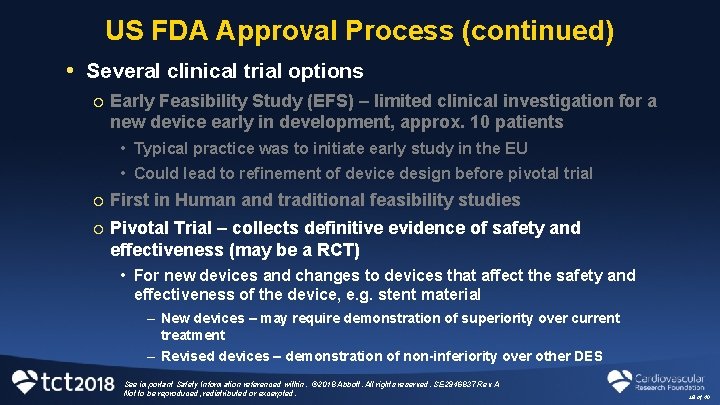
US FDA Approval Process (continued) • Several clinical trial options ¡ Early Feasibility Study (EFS) – limited clinical investigation for a new device early in development, approx. 10 patients • Typical practice was to initiate early study in the EU • Could lead to refinement of device design before pivotal trial ¡ First in Human and traditional feasibility studies ¡ Pivotal Trial – collects definitive evidence of safety and effectiveness (may be a RCT) • For new devices and changes to devices that affect the safety and effectiveness of the device, e. g. stent material – New devices – may require demonstration of superiority over current treatment – Revised devices – demonstration of non-inferiority over other DES See important Safety Information referenced within. © 2018 Abbott. All rights reserved. SE 2946837 Rev A Not to be reproduced, redistributed or excerpted. 18 of 40
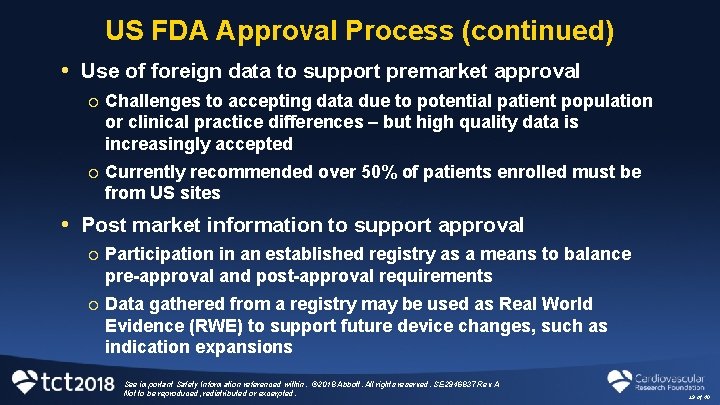
US FDA Approval Process (continued) • Use of foreign data to support premarket approval ¡ Challenges to accepting data due to potential patient population or clinical practice differences – but high quality data is increasingly accepted ¡ Currently recommended over 50% of patients enrolled must be from US sites • Post market information to support approval ¡ Participation in an established registry as a means to balance pre-approval and post-approval requirements ¡ Data gathered from a registry may be used as Real World Evidence (RWE) to support future device changes, such as indication expansions See important Safety Information referenced within. © 2018 Abbott. All rights reserved. SE 2946837 Rev A Not to be reproduced, redistributed or excerpted. 19 of 40
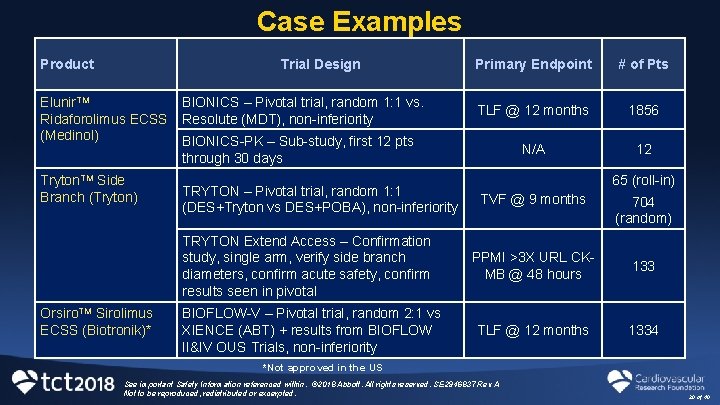
Case Examples Product Trial Design Elunir. TM Ridaforolimus ECSS (Medinol) Tryton. TM Side Branch (Tryton) BIONICS – Pivotal trial, random 1: 1 vs. Resolute (MDT), non-inferiority # of Pts TLF @ 12 months 1856 N/A 12 BIONICS-PK – Sub-study, first 12 pts through 30 days TRYTON – Pivotal trial, random 1: 1 (DES+Tryton vs DES+POBA), non-inferiority TRYTON Extend Access – Confirmation study, single arm, verify side branch diameters, confirm acute safety, confirm results seen in pivotal Orsiro. TM Sirolimus ECSS (Biotronik)* Primary Endpoint BIOFLOW-V – Pivotal trial, random 2: 1 vs XIENCE (ABT) + results from BIOFLOW II&IV OUS Trials, non-inferiority 65 (roll-in) TVF @ 9 months 704 (random) PPMI >3 X URL CKMB @ 48 hours 133 TLF @ 12 months 1334 *Not approved in the US See important Safety Information referenced within. © 2018 Abbott. All rights reserved. SE 2946837 Rev A Not to be reproduced, redistributed or excerpted. 20 of 40
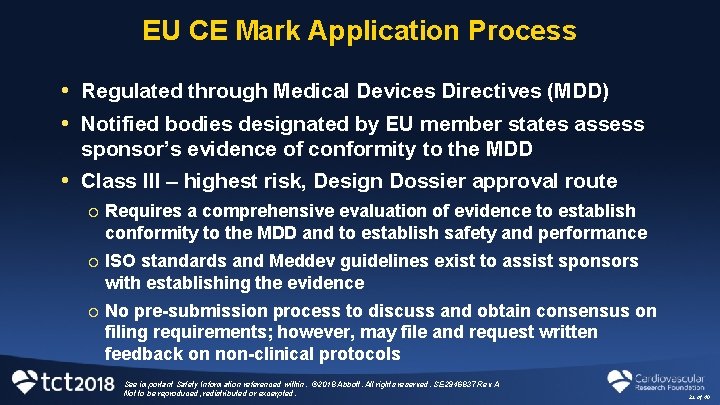
EU CE Mark Application Process • Regulated through Medical Devices Directives (MDD) • Notified bodies designated by EU member states assess sponsor’s evidence of conformity to the MDD • Class III – highest risk, Design Dossier approval route ¡ Requires a comprehensive evaluation of evidence to establish conformity to the MDD and to establish safety and performance ¡ ISO standards and Meddev guidelines exist to assist sponsors with establishing the evidence ¡ No pre-submission process to discuss and obtain consensus on filing requirements; however, may file and request written feedback on non-clinical protocols See important Safety Information referenced within. © 2018 Abbott. All rights reserved. SE 2946837 Rev A Not to be reproduced, redistributed or excerpted. 21 of 40
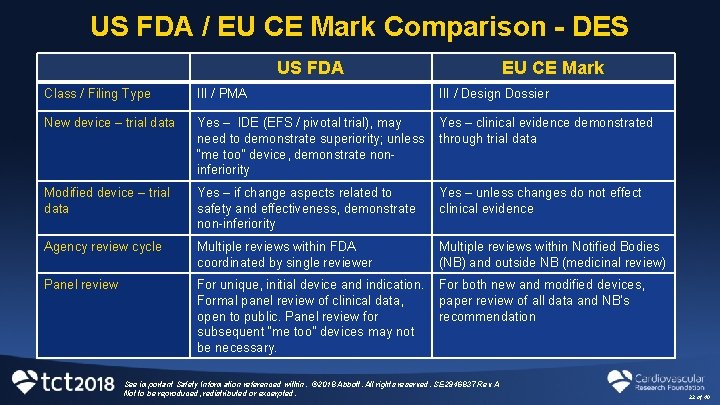
US FDA / EU CE Mark Comparison - DES US FDA EU CE Mark Class / Filing Type III / PMA III / Design Dossier New device – trial data Yes – IDE (EFS / pivotal trial), may need to demonstrate superiority; unless “me too” device, demonstrate noninferiority Yes – clinical evidence demonstrated through trial data Modified device – trial data Yes – if change aspects related to safety and effectiveness, demonstrate non-inferiority Yes – unless changes do not effect clinical evidence Agency review cycle Multiple reviews within FDA coordinated by single reviewer Multiple reviews within Notified Bodies (NB) and outside NB (medicinal review) Panel review For unique, initial device and indication. Formal panel review of clinical data, open to public. Panel review for subsequent “me too” devices may not be necessary. For both new and modified devices, paper review of all data and NB’s recommendation See important Safety Information referenced within. © 2018 Abbott. All rights reserved. SE 2946837 Rev A Not to be reproduced, redistributed or excerpted. 22 of 40
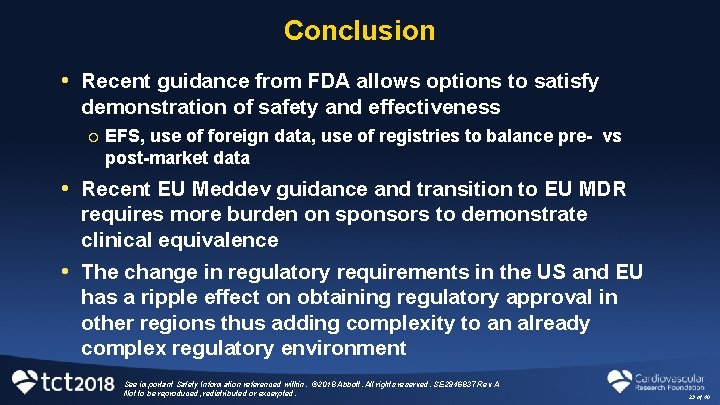
Conclusion • Recent guidance from FDA allows options to satisfy demonstration of safety and effectiveness ¡ EFS, use of foreign data, use of registries to balance pre- vs post-market data • Recent EU Meddev guidance and transition to EU MDR requires more burden on sponsors to demonstrate clinical equivalence • The change in regulatory requirements in the US and EU has a ripple effect on obtaining regulatory approval in other regions thus adding complexity to an already complex regulatory environment See important Safety Information referenced within. © 2018 Abbott. All rights reserved. SE 2946837 Rev A Not to be reproduced, redistributed or excerpted. 23 of 40
Clinical Data for Expanded DES Indications is Now the Name of the Game in This Mature Device Category See important Safety Information referenced within. © 2018 Abbott. All rights reserved. SE 2946837 Rev A Not to be reproduced, redistributed or excerpted. 24 of 40
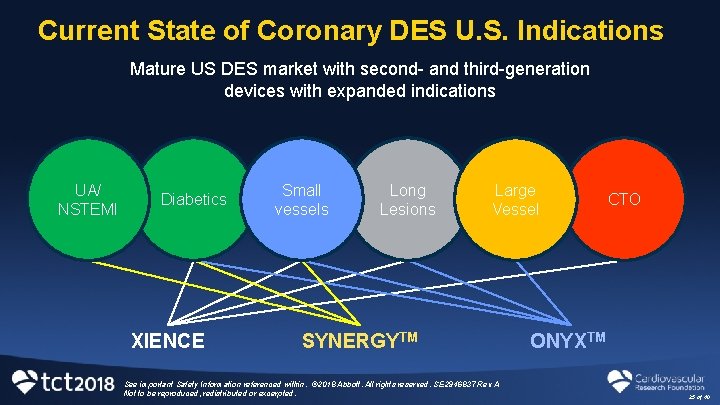
Current State of Coronary DES U. S. Indications Mature US DES market with second- and third-generation devices with expanded indications UA/ NSTEMI Diabetics XIENCE Small vessels Long Lesions Large Vessel SYNERGYTM See important Safety Information referenced within. © 2018 Abbott. All rights reserved. SE 2946837 Rev A Not to be reproduced, redistributed or excerpted. CTO ONYXTM 25 of 40
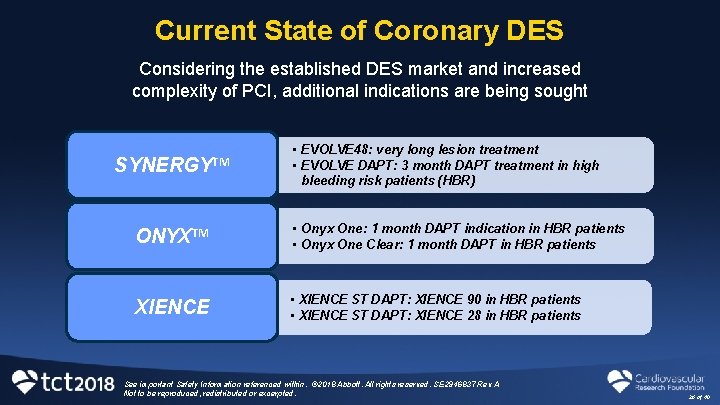
Current State of Coronary DES Considering the established DES market and increased complexity of PCI, additional indications are being sought SYNERGYTM • EVOLVE 48: very long lesion treatment • EVOLVE DAPT: 3 month DAPT treatment in high bleeding risk patients (HBR) ONYXTM • Onyx One: 1 month DAPT indication in HBR patients • Onyx One Clear: 1 month DAPT in HBR patients XIENCE • XIENCE ST DAPT: XIENCE 90 in HBR patients • XIENCE ST DAPT: XIENCE 28 in HBR patients See important Safety Information referenced within. © 2018 Abbott. All rights reserved. SE 2946837 Rev A Not to be reproduced, redistributed or excerpted. 26 of 40
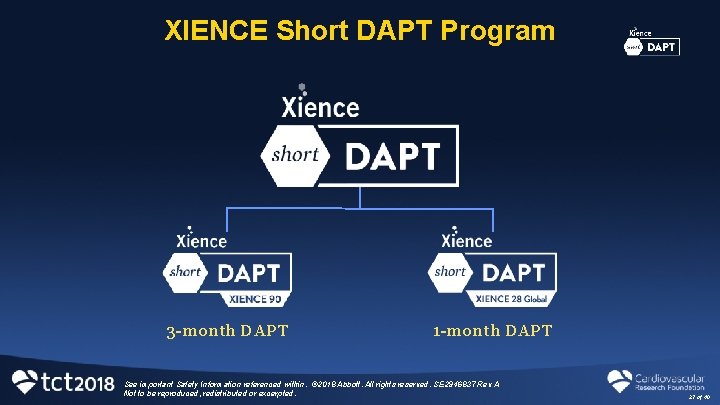
XIENCE Short DAPT Program 3 -month DAPT 1 -month DAPT See important Safety Information referenced within. © 2018 Abbott. All rights reserved. SE 2946837 Rev A Not to be reproduced, redistributed or excerpted. 27 of 40
The Methods for Coronary Stent Development 1. 2. 3. 4. 5. 6. Drug-Eluting Stent (DES) Design Preclinical Evidence Clinical and Regulatory Considerations Reimbursement Challenges Unmet Clinical Needs of DES Future of DES See important Safety Information referenced within. © 2018 Abbott. All rights reserved. SE 2946837 Rev A Not to be reproduced, redistributed or excerpted. 28 of 40
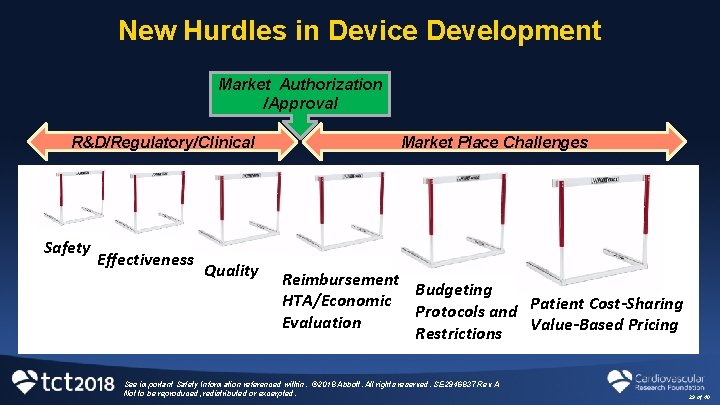
New Hurdles in Device Development Market Authorization /Approval R&D/Regulatory/Clinical Safety Effectiveness Quality Market Place Challenges Reimbursement Budgeting HTA/Economic Protocols and Patient Cost-Sharing Evaluation Value-Based Pricing Restrictions See important Safety Information referenced within. © 2018 Abbott. All rights reserved. SE 2946837 Rev A Not to be reproduced, redistributed or excerpted. 29 of 40
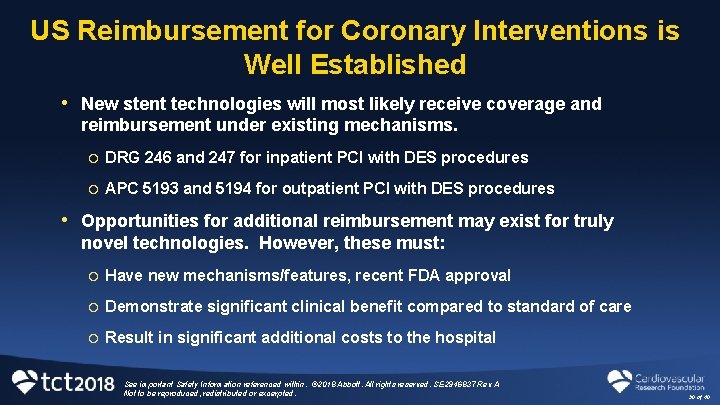
US Reimbursement for Coronary Interventions is Well Established • New stent technologies will most likely receive coverage and reimbursement under existing mechanisms. ¡ DRG 246 and 247 for inpatient PCI with DES procedures ¡ APC 5193 and 5194 for outpatient PCI with DES procedures • Opportunities for additional reimbursement may exist for truly novel technologies. However, these must: ¡ Have new mechanisms/features, recent FDA approval ¡ Demonstrate significant clinical benefit compared to standard of care ¡ Result in significant additional costs to the hospital See important Safety Information referenced within. © 2018 Abbott. All rights reserved. SE 2946837 Rev A Not to be reproduced, redistributed or excerpted. 30 of 40
The Methods for Coronary Stent Development 1. 2. 3. 4. 5. 6. Drug-Eluting Stent (DES) Design Preclinical Evidence Clinical and Regulatory Considerations Reimbursement Challenges Unmet Clinical Needs of DES Future of DES See important Safety Information referenced within. © 2018 Abbott. All rights reserved. SE 2946837 Rev A Not to be reproduced, redistributed or excerpted. 31 of 40
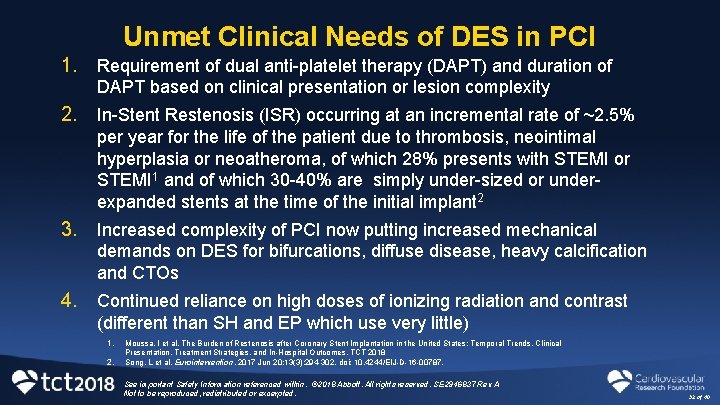
Unmet Clinical Needs of DES in PCI 1. Requirement of dual anti-platelet therapy (DAPT) and duration of DAPT based on clinical presentation or lesion complexity 2. In-Stent Restenosis (ISR) occurring at an incremental rate of ~2. 5% per year for the life of the patient due to thrombosis, neointimal hyperplasia or neoatheroma, of which 28% presents with STEMI or STEMI 1 and of which 30 -40% are simply under-sized or underexpanded stents at the time of the initial implant 2 3. Increased complexity of PCI now putting increased mechanical demands on DES for bifurcations, diffuse disease, heavy calcification and CTOs 4. Continued reliance on high doses of ionizing radiation and contrast (different than SH and EP which use very little) 1. 2. Moussa, I et al. The Burden of Restenosis after Coronary Stent Implantation in the United States: Temporal Trends, Clinical Presentation, Treatment Strategies, and In-Hospital Outcomes, TCT 2018 Song, L et al, Eurointervention, 2017 Jun 20; 13(3): 294 -302. doi: 10. 4244/EIJ-D-16 -00787. See important Safety Information referenced within. © 2018 Abbott. All rights reserved. SE 2946837 Rev A Not to be reproduced, redistributed or excerpted. 32 of 40
The Methods for Coronary Stent Development 1. 2. 3. 4. 5. 6. Drug-Eluting Stent (DES) Design Preclinical Evidence Clinical and Regulatory Considerations Reimbursement Challenges Unmet Clinical Needs of DES Future of DES See important Safety Information referenced within. © 2018 Abbott. All rights reserved. SE 2946837 Rev A Not to be reproduced, redistributed or excerpted. 33 of 40
Future of DES in PCI 1. Clinical data that supports the best duration of DAPT for different patient/lesion subsets 2. Improved deployment of DES implants to reduce the risk of ISR using intravascular imaging (OCT, IVUS) to ensure proper lesion prep, stent sizing and final expansion 3. Fully bioresorbable scaffolds that can match DES early outcomes but remove the permanent metallic implant and reduce long-term stent-related events 4. New imaging technologies that can provide a roadmap for DES implantation reducing the need for ionizing radiation and contrast See important Safety Information referenced within. © 2018 Abbott. All rights reserved. SE 2946837 Rev A Not to be reproduced, redistributed or excerpted. 34 of 40
IMPORTANT SAFETY INFORMATION The XIENCE V®, XIENCE nano®, XIENCE PRIME® LL, XIENCE Xpedition® SV and XIENCE Xpedition® LL , XIENCE Alpine®, and XIENCE Sierra. TM (XIENCE Family) of Everolimus Eluting Coronary Stents on the MULTI-LINK VISION® or MULTI-LINK MINI VISION® Delivery System INDICATIONS The XIENCE Sierra stent system is indicated for improving coronary artery luminal diameter in patients, including those with diabetes mellitus, with symptomatic heart disease due to de novo native coronary artery lesions (length 32 mm) with reference vessel diameters of ≥ 2. 25 mm to ≤ 4. 25 mm. In addition, the XIENCE Sierra stent system is indicated for treating de novo chronic total coronary occlusions. CONTRAINDICATIONS The XIENCE Sierra stent system is contraindicated for use in: • Patients who cannot tolerate, including allergy or hypersensitivity to, procedural anticoagulation or the post-procedural antiplatelet regimen. • Patients with hypersensitivity or contraindication to everolimus or structurally related compounds, or known hypersensitivity to stent components (cobalt, chromium, nickel, tungsten, acrylic, fluoropolymers), or with contrast sensitivity. WARNINGS • It is not recommended to treat patients having a lesion that prevent complete inflation of an angioplasty balloon. • Judicious patient selection is necessary because the use of this device carries the associated risk of stent thrombosis, vascular complications, and/or bleeding events. • This product should not be used in patients who are not likely to comply with the recommended antiplatelet therapy. PRECAUTIONS • Ensure that the inner package sterile barrier has not been opened or damaged prior to use. • Stent implantation should only be performed by physicians who have received appropriate training. • Stent placement should be performed at hospitals where emergency coronary artery bypass graft surgery (CABG) is accessible. • Subsequent restenosis may require repeat dilatation of the arterial segment containing the stent. • Care should be taken to control the guiding catheter tip during stent delivery, deployment and balloon • • • Long-term outcomes following repeat dilatation of the stent are presently unknown. • withdrawal. Before withdrawing the stent delivery system, visually confirm complete balloon deflation by fluoroscopy to avoid guiding catheter movement into the vessel and subsequent arterial damage. When DES are used outside the specified Indications for Use, patient outcomes may differ from the results observed in the SPIRIT family of trials. Compared to use within the specified Indications for Use, the use of DES in patients and lesions outside of the labeled indications may have an increased risk of adverse events, including stent thrombosis, stent embolization, MI, or death. Orally administered everolimus combined with cyclosporine is associated with increased serum cholesterol and triglycerides levels. A patient’s exposure to drug and polymer is proportional to the number and total length of implanted stents. See Instructions for Use for current data on multiple stent implantation. Safety and effectiveness of the XIENCE Family of stents have not been established for subject populations with the following clinical settings: • Patients with prior brachytherapy of the target lesion or the use of brachytherapy for treated site restenosis, patients in whom mechanical atherectomy devices or laser angioplasty catheters are used in conjunction with XIENCE Family stents, women who are pregnant or lactating, men intending to father children, pediatric patients, unresolved vessel thrombus at the lesion site, coronary artery reference vessel diameters < 2. 25 mm or > 4. 25 mm or lesion length > 32 mm, lesions located in saphenous vein grafts, unprotected left main coronary artery, ostial lesions, lesions located at a bifurcation or previously stented lesions, diffuse disease or poor flow (TIMI < 1) distal to the identified lesions, excessive tortuosity proximal to or within the lesion, recent Acute Myocardial Infarction (AMI) or evidence of thrombus in target vessel, multivessel disease, and instent restenosis. Everolimus has been shown to reduce the clearance of some prescription medications when administered orally along with cyclosporine (Cs. A). Formal drug interaction studies have not been performed with the XIENCE Family of stents because of limited systemic exposure to everolimus eluted from the stent. Everolimus is an immunosuppressive agent. Consideration should be given to patients taking other immunosuppressive agents or who are at risk for immune suppression. Oral everolimus use in renal transplant patients and advanced renal cell carcinoma patients was associated with increased serum cholesterol and triglycerides, which in some cases required treatment. Non-clinical testing has demonstrated that the XIENCE Sierra stent, in single and in overlapped configurations up to 71 mm in length, is MR Conditional. It can be scanned safely under the conditions in the Instructions for Use. The XIENCE Family of stents should be handled, placed, implanted, and removed according to the Instructions for Use. Caution: This product is intended for use by or under the direction of a physician. Prior to use, reference the Instructions for Use provided inside the product carton (when available), at eifu. abbottvascular. com or at Manuals. sjm. com for more detailed information on Indications, Contraindications, Warnings, Precautions and Adverse Events. See important Safety Information referenced within. © 2018 Abbott. All rights reserved. SE 2946837 Rev A Not to be reproduced, redistributed or excerpted. 35 of 40
IMPORTANT SAFETY INFORMATION (CONTINUED) The XIENCE V®, XIENCE nano®, XIENCE PRIME® LL, XIENCE Xpedition®, XIENCE Xpedition® SV an-d XIENCE Xpedition® LL , XIENCE Alpine®, and XIENCE Sierra. TM (XIENCE Family) of Everolimus Eluting Coronary Stents on the MULTI-LINK VISION® or MULTI-LINK MINI VISION® Delivery System POTENTIAL ADVERSE EVENTS Adverse events (in alphabetical order) which may be associated with percutaneous coronary intervention treatment procedures and the use of a coronary stent in native coronary arteries include, but are not limited to, the following: • Abrupt closure, hematoma, or hemorrhage, Acute myocardial infarction, Allergic reaction or hypersensitivity to latex, contrast agent, anesthesia, device materials (platinum, polymer, cobalt, chromium, nickel, tungsten, acrylic, fluoropolymers), and drug reactions to everolimus, anticoagulation, or antiplatelet drugs, Arterial rupture, Arteriovenous fistula, Arrhythmias, atrial and ventricular, Bleeding complications, which may require transfusion, Cardiac tamponade, Coronary artery spasm, Coronary or stent embolism, Coronary or stent thrombosis, Death, Dissection of the coronary artery, Fever, Hypotension and/or hypertension, Ischemia (myocardial), Myocardial infarction (MI), Nausea and vomiting, Palpitations, Peripheral ischemia, Pseudoaneurysm, Renal Failure, Restenosis, Shock/pulmonary edema, Stroke/cerebrovascular accident (CVA), Total occlusion of coronary artery, Unstable or stable angina pectoris, Vascular access complications which may require vessel repair, Vessel dissection The risks described below include, but are not limited to, the anticipated adverse events relevant for the cardiac population referenced in the contraindications, warnings, and precautions sections of the everolimus labels. • Abdominal pain; Anemia; Angioedema; Constipation; Cough; Diarrhea; Dyslipidemia (including hyperlipidemia and hypercholesterolemia); Dyspnea; Edema (peripheral); Headache; Hyperglycemia; Hypertension; Hypokalemia; Elevations of serum creatinine; Infections: bacterial, viral, fungal, and protozoan infections (may include opportunistic infections); Lymphoma and skin cancer; Male infertility; Oral ulcerations; Nausea; Non-infectious pneumonitis; Pain; Proteinuria; Pyrexia; Rash; Thrombotic microangiopathy (TMA)/Thrombotic thrombocytopenic purpura (TTP)/Hemolytic uremic syndrome (HUS); Urinary tract infection; Upper respiratory tract infection; Vomiting Live vaccines should be avoided and close contact with those that have had live vaccines should be avoided. Fetal harm can occur when administered to a pregnant woman. There may be other potential adverse events that are unforeseen at this time. Caution: This product is intended for use by or under the direction of a physician. Prior to use, reference the Instructions for Use provided inside the product carton (when available), at eifu. abbottvascular. com or at Manuals. sjm. com for more detailed information on Indications, Contraindications, Warnings, Precautions and Adverse Events. See important Safety Information referenced within. © 2018 Abbott. All rights reserved. SE 2946837 Rev A Not to be reproduced, redistributed or excerpted. 36 of 40
Caution: This product is intended for use by or under the direction of a physician. Prior to use, reference the Instructions for Use provided inside the product carton (when available), at eifu. abbottvascular. com or at Manuals. sjm. com for more detailed information on Indications, Contraindications, Warnings, Precautions and Adverse Events Tests performed by and data on file at Abbott. Illustrations are artist’s representations only and should not be considered as engineering drawings or photographs. Photos on file at Abbott 3200 Lakeside Dr. , Santa Clara, CA. 95054 USA, Tel: 1. 800. 227. 9902 Resolute Onyx is a trademark of Medtronic. Synergy is a trademark of Boston Scientific. Orsiro is a trademark of Biotronik. Elunir is a trademark of Cordis Corporation. Tryton is a trademark of Tryton Medical, Inc. www. Vascular. Abbott © 2018 Abbott. All rights reserved. SE 2946837 Rev A 37 of 40