
The Menopause and Management Dr Caroline Marfleet MB
The Menopause and Management Dr Caroline Marfleet MB, BS FFSRH Consultant in SRH September 2018

What is NICE? National Institute of Clinical Excellence Menopause Diagnosis and Management NG 23 2015
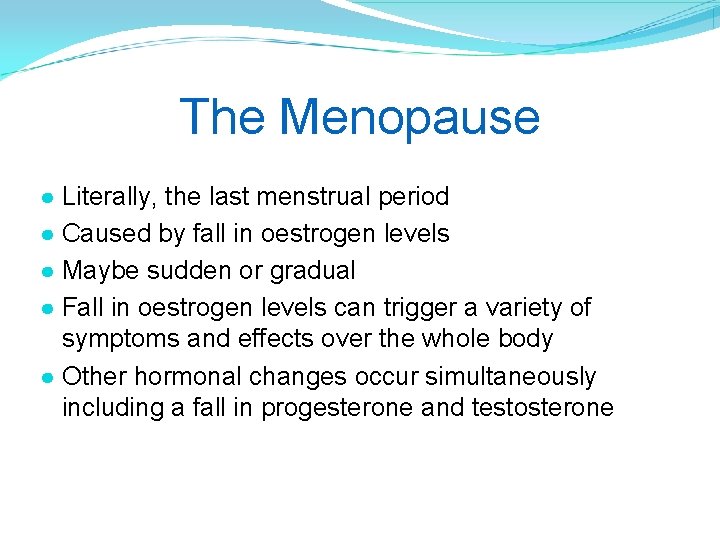
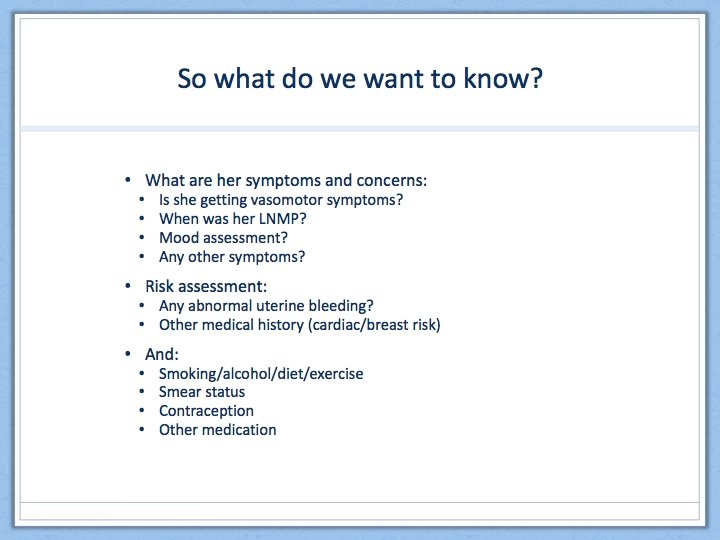
The Menopause ● Literally, the last menstrual period ● Caused by fall in oestrogen levels ● Maybe sudden or gradual ● Fall in oestrogen levels can trigger a variety of symptoms and effects over the whole body ● Other hormonal changes occur simultaneously including a fall in progesterone and testosterone
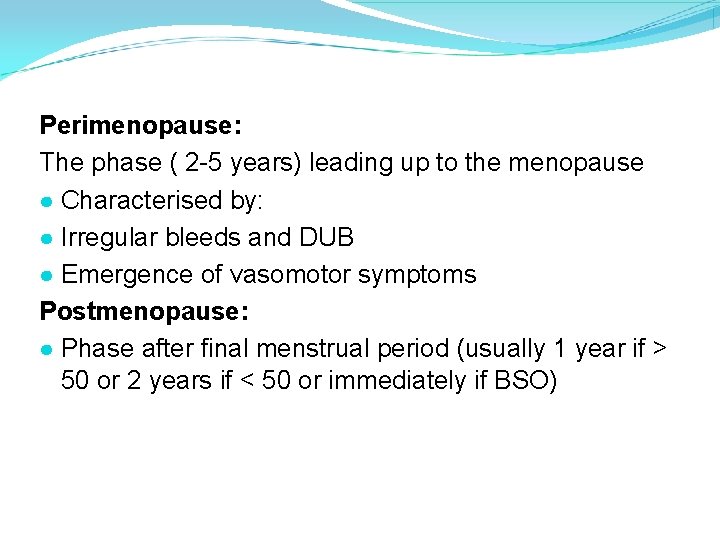
Perimenopause: The phase ( 2 -5 years) leading up to the menopause ● Characterised by: ● Irregular bleeds and DUB ● Emergence of vasomotor symptoms Postmenopause: ● Phase after final menstrual period (usually 1 year if > 50 or 2 years if < 50 or immediately if BSO)
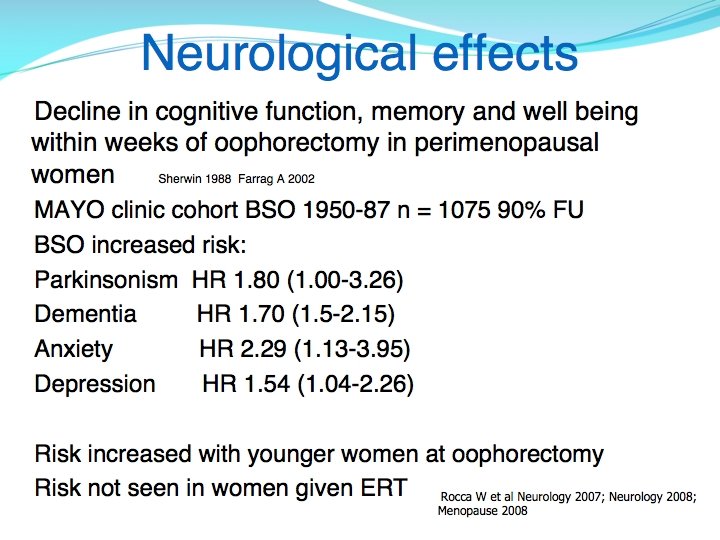
Premature menopause ● POF – premature ovarian failure ● POI – Premature ovarian insufficiency ● Before age 45 years ● 1% of women under 40 ● 0. 1% of women under 30 ● Importance of diagnosis, appropriate investigation and management Women with untreated premature menopause are at increased risk of O/P & CVD, dementia and Parkinsons disease but have a lower risk of breast cancer ● Women who have a premature menopause are encouraged to have HRT until the age of the natural menopause ie: 51 years
POI - aetiology Primary: ● Chromosome e. g. Fragile X, Turner’s ● Enzyme deficiencies e. g. Galactorrhoea ● Autoimmune disease e. g. hypothyroidism, Addison’s ● FSH gene polymorphism (very rare) Secondary: ● Chemotherapy, radiotherapy ● Surgical BSO ● Infection ● Post hysterectomy/Uterine artery embolisation
Diagnosis History ● Oligomenorrhoea, amenorrhoea ● Symptomatic ● A symptomatic woman in her late 40’s/early 50’s is most likely menopausal and investigations (blood tests) are not required for diagnosis (NICE Guidance) Investigations may be useful in: ● Indeterminate symptoms ● Previous hysterectomy/ UAE ● Suspected POI ● High risk e. g. osteoporosis
Diagnosis - may be necessary if POI suspected Investigations ● FSH/LH – 2 measurements > 30 at least 3 months apart] ● Thyroid function tests ● Autoimmune screen ● Chromosome analysis ● Bone Mineral Density (DEXA) ● Ultrasound ● Cardiovascular profile
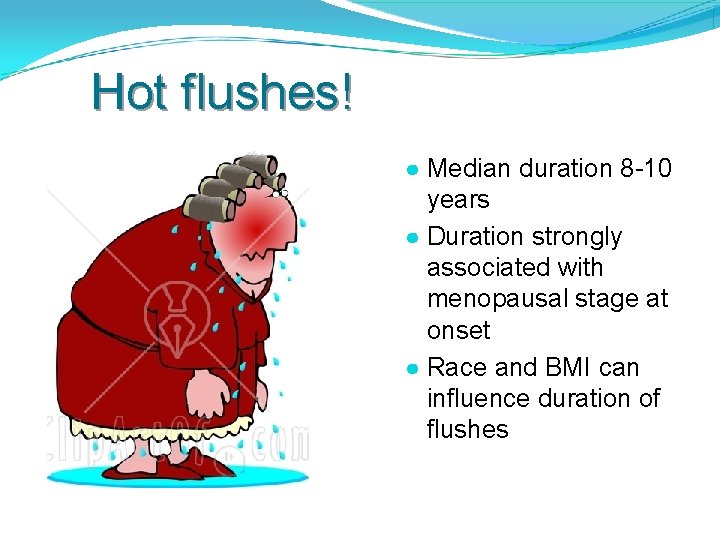
Hot flushes! ● Median duration 8 -10 years ● Duration strongly associated with menopausal stage at onset ● Race and BMI can influence duration of flushes
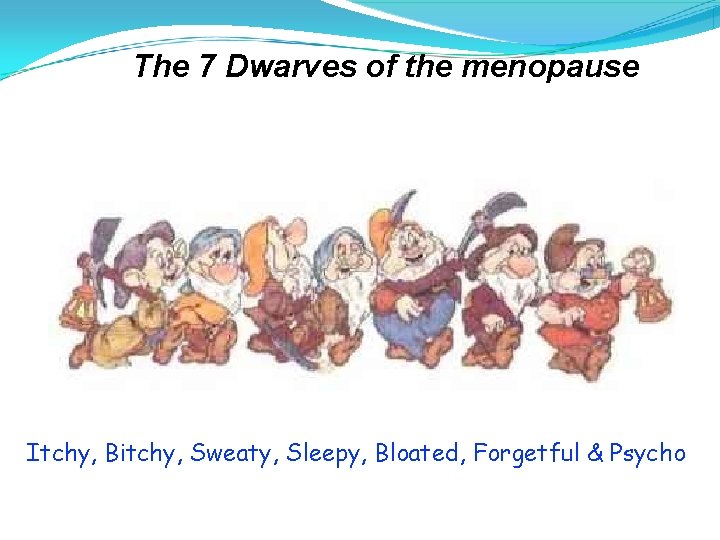
The 7 Dwarves of the menopause Itchy, Bitchy, Sweaty, Sleepy, Bloated, Forgetful & Psycho
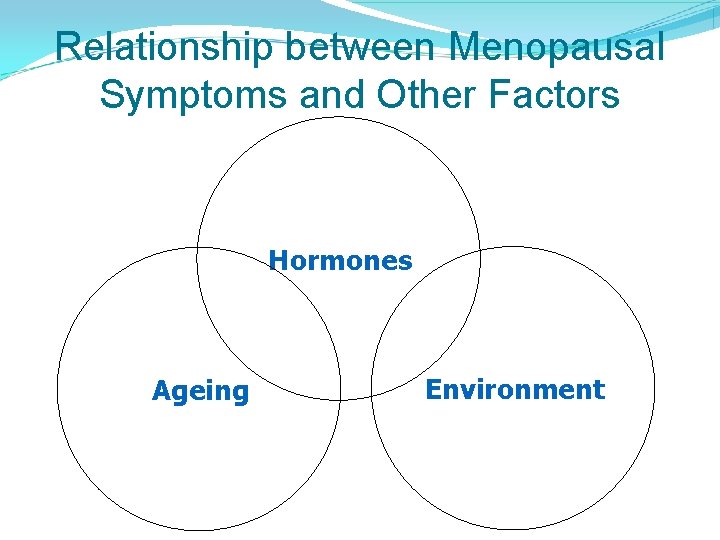
Relationship between Menopausal Symptoms and Other Factors Hormones Ageing Environment
A mid-life event
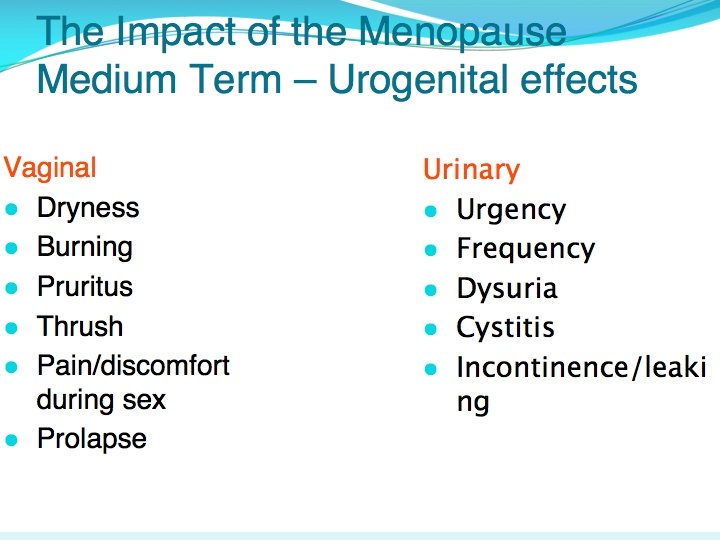
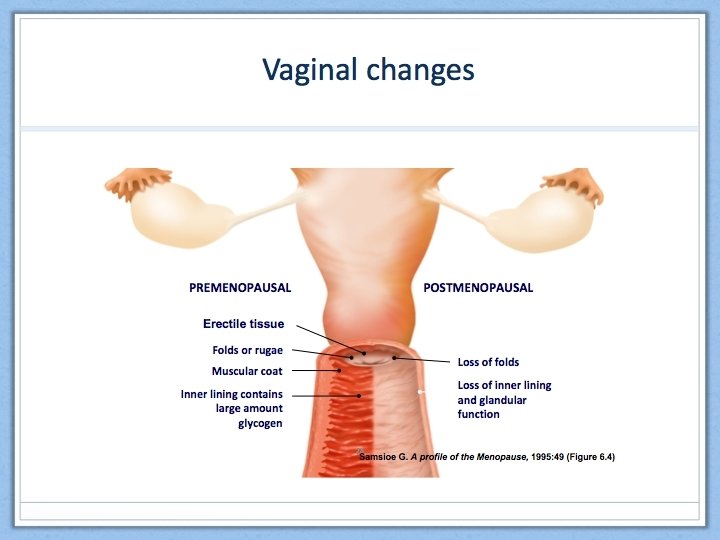
The Impact of the Menopause Medium Term – Urogenital effects Vaginal ● Dryness ● Burning ● Pruritus ● Thrush ● Pain/discomfort during sex ● Prolapse Urinary ● Urgency ● Frequency ● Dysuria ● Cystitis ● Incontinence/leaking
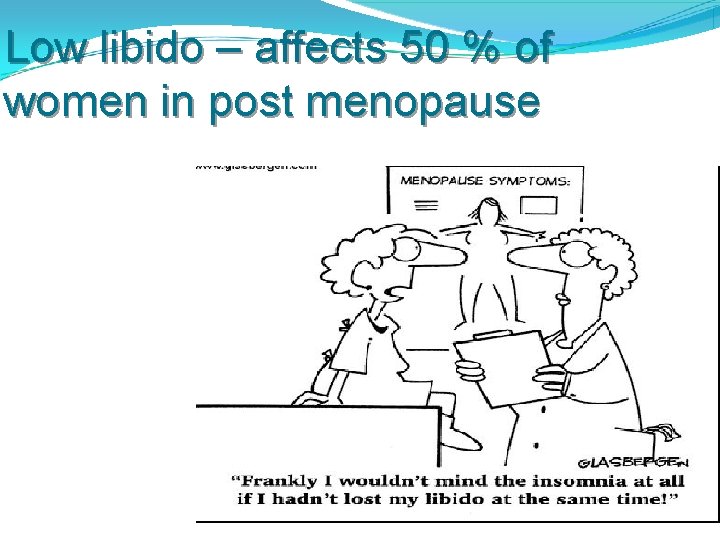
Low libido – affects 50 % of women in post menopause
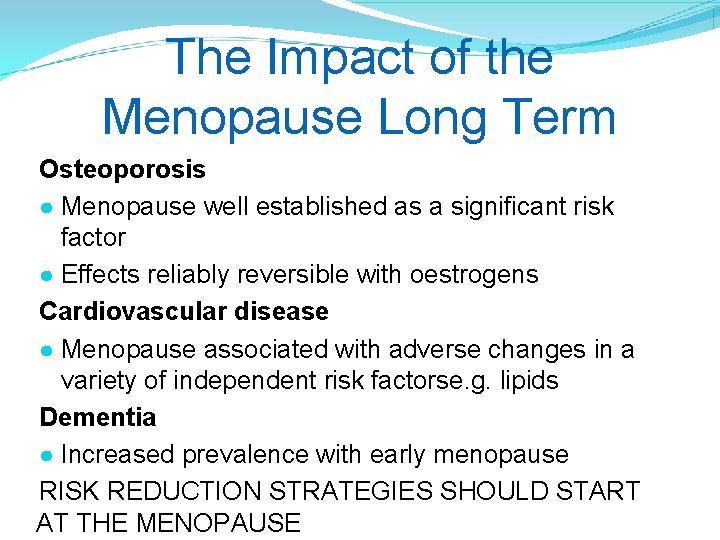
The Impact of the Menopause Long Term Osteoporosis ● Menopause well established as a significant risk factor ● Effects reliably reversible with oestrogens Cardiovascular disease ● Menopause associated with adverse changes in a variety of independent risk factorse. g. lipids Dementia ● Increased prevalence with early menopause RISK REDUCTION STRATEGIES SHOULD START AT THE MENOPAUSE
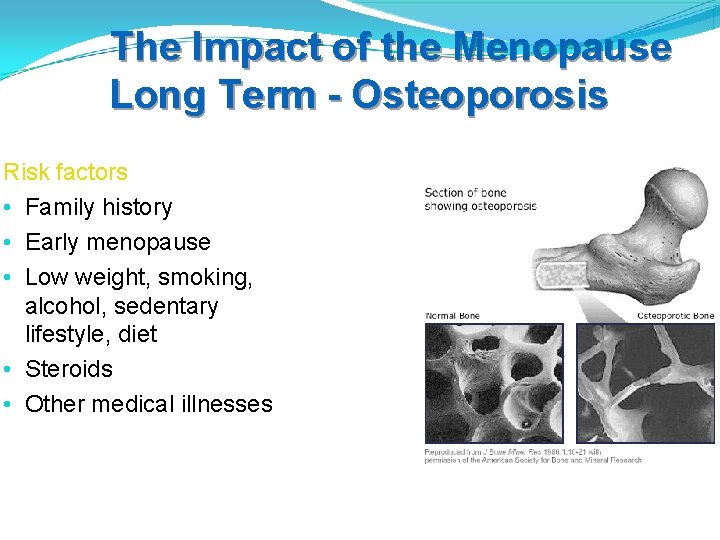
The Impact of the Menopause Long Term - Osteoporosis Risk factors • Family history • Early menopause • Low weight, smoking, alcohol, sedentary lifestyle, diet • Steroids • Other medical illnesses
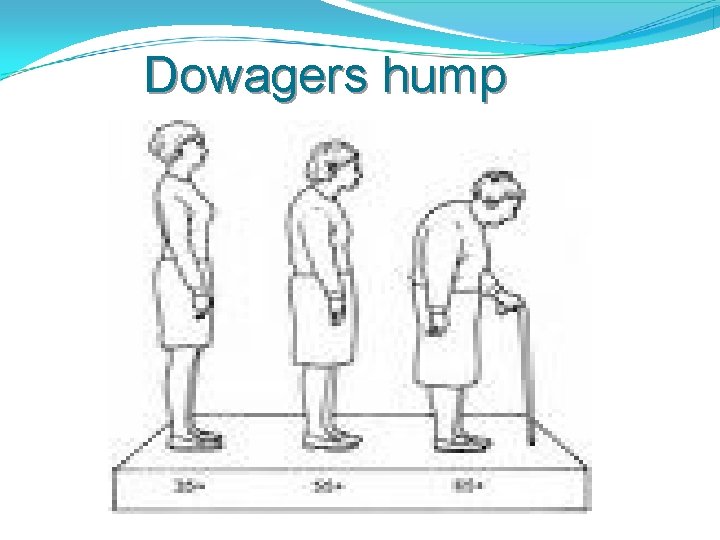
Dowagers hump
Cardiovascular disease ● Is the leading cause of death in women over 50 years ● Oestrogens have a beneficial effect on cholesterol and ‘sugar handling’ in the body premenopausally ● The menopause adversely affects lipids, clotting, weight, insulin and arterial function ● Increased risk of C-V disease if hysterectomy before age 50 ● No association if hysterectomy after age 50 ● Risk further increased if BSO as well (2 -3 fold increase) ● Increased risk if untreated natural premature menopause
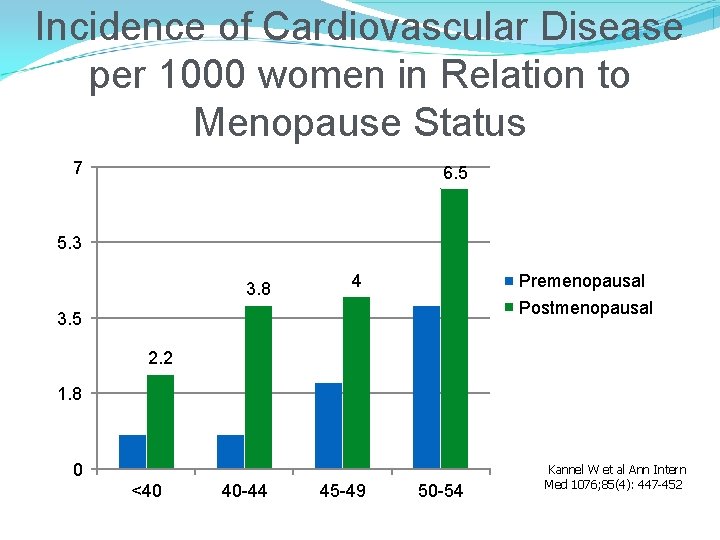
Incidence of Cardiovascular Disease per 1000 women in Relation to Menopause Status 7 6. 5 5. 3 3. 8 4 Premenopausal Postmenopausal 3. 5 2. 2 1. 8 0 <40 40 -44 45 -49 50 -54 Kannel W et al Ann Intern Med 1076; 85(4): 447 -452
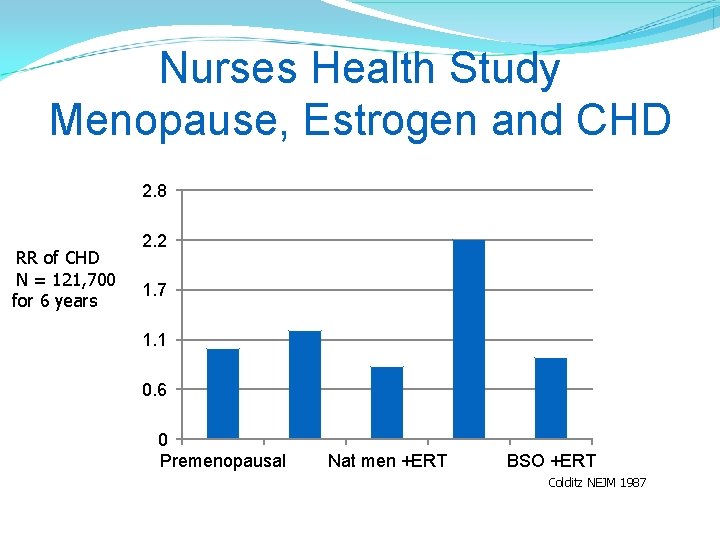
Nurses Health Study Menopause, Estrogen and CHD 2. 8 RR of CHD N = 121, 700 for 6 years 2. 2 1. 7 1. 1 0. 6 0 Premenopausal Nat men +ERT BSO +ERT Colditz NEJM 1987
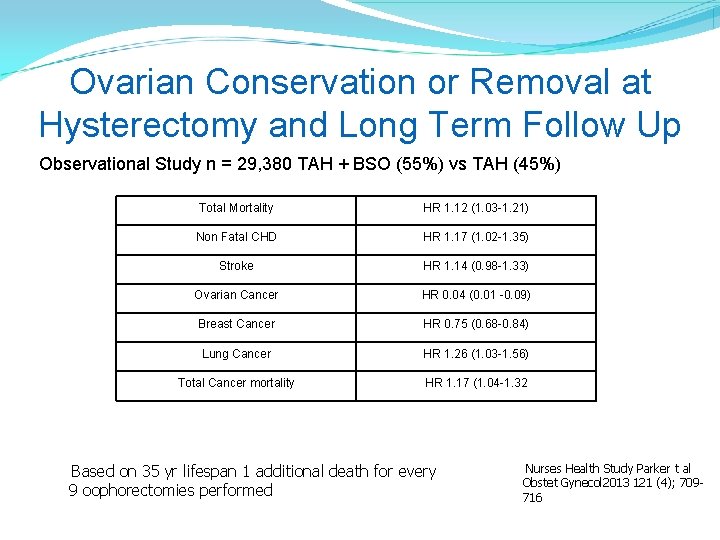
Ovarian Conservation or Removal at Hysterectomy and Long Term Follow Up Observational Study n = 29, 380 TAH + BSO (55%) vs TAH (45%) Total Mortality HR 1. 12 (1. 03 -1. 21) Non Fatal CHD HR 1. 17 (1. 02 -1. 35) Stroke HR 1. 14 (0. 98 -1. 33) Ovarian Cancer HR 0. 04 (0. 01 -0. 09) Breast Cancer HR 0. 75 (0. 68 -0. 84) Lung Cancer HR 1. 26 (1. 03 -1. 56) Total Cancer mortality HR 1. 17 (1. 04 -1. 32 Based on 35 yr lifespan 1 additional death for every 9 oophorectomies performed Nurses Health Study Parker t al Obstet Gynecol 2013 121 (4); 709716
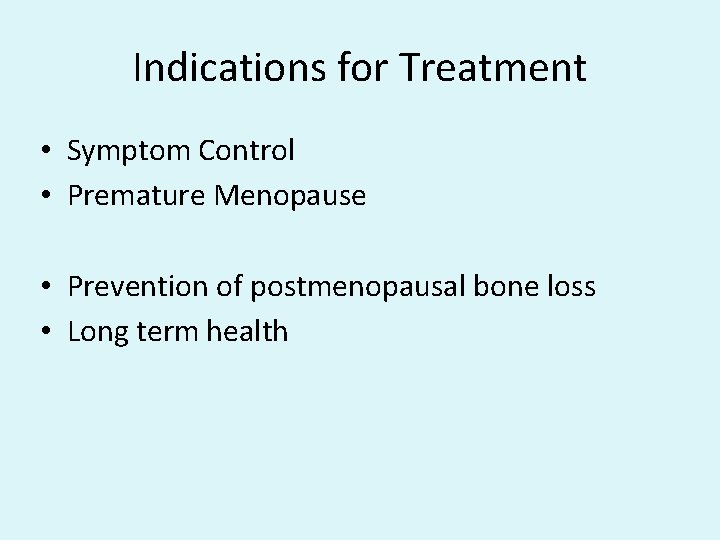
Indications for Treatment • Symptom Control • Premature Menopause • Prevention of postmenopausal bone loss • Long term health
Neurological effects Decline in cognitive function, memory and well being within weeks of oophorectomy in perimenopausal women Sherwin 1988 Farrag A 2002 MAYO clinic cohort BSO 1950 -87 n = 1075 90% FU BSO increased risk: Parkinsonism HR 1. 80 (1. 00 -3. 26) Dementia HR 1. 70 (1. 5 -2. 15) Anxiety HR 2. 29 (1. 13 -3. 95) Depression HR 1. 54 (1. 04 -2. 26) Risk increased with younger women at oophorectomy Risk not seen in women given ERT Rocca W et al Neurology 2007; Neurology 2008; Menopause 2008
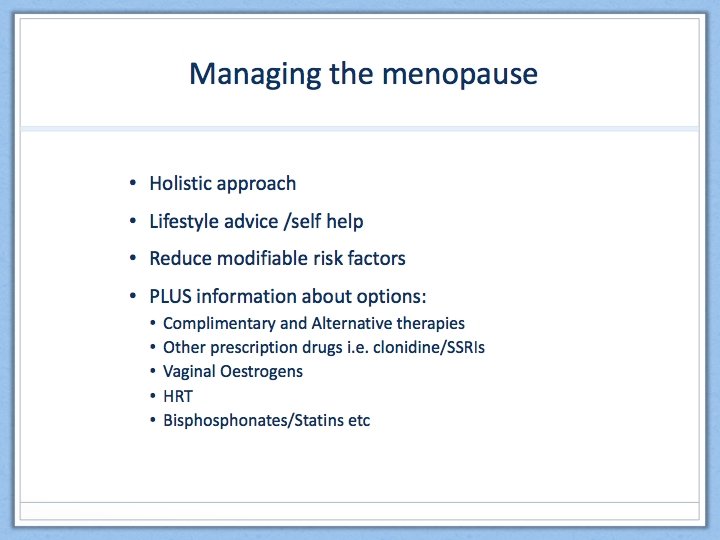
Women’ Choices • • Diet and Lifestyle Alternative therapies and techniques Prescribable non HRT
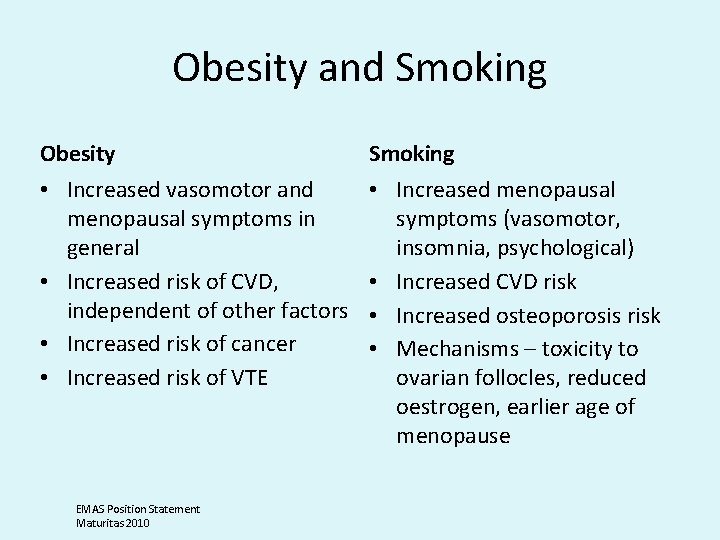
Obesity and Smoking Obesity • Increased vasomotor and menopausal symptoms in general • Increased risk of CVD, independent of other factors • Increased risk of cancer • Increased risk of VTE EMAS Position Statement Maturitas 2010 Smoking • Increased menopausal symptoms (vasomotor, insomnia, psychological) • Increased CVD risk • Increased osteoporosis risk • Mechanisms – toxicity to ovarian follocles, reduced oestrogen, earlier age of menopause
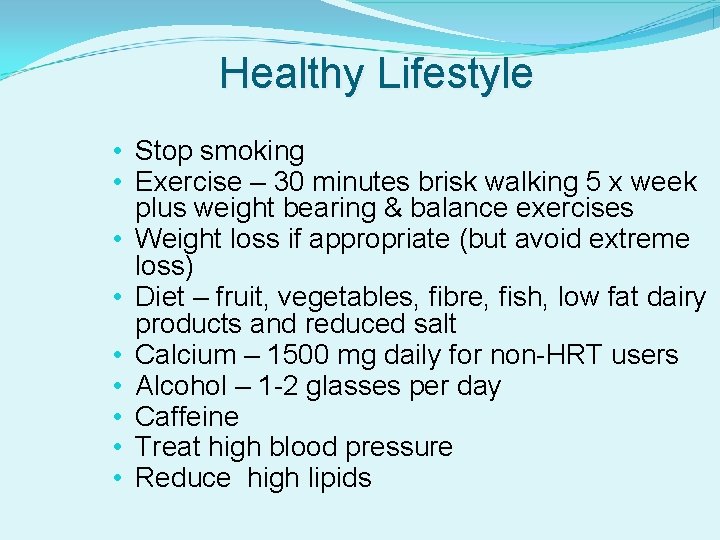
Healthy Lifestyle • Stop smoking • Exercise – 30 minutes brisk walking 5 x week plus weight bearing & balance exercises • Weight loss if appropriate (but avoid extreme loss) • Diet – fruit, vegetables, fibre, fish, low fat dairy products and reduced salt • Calcium – 1500 mg daily for non-HRT users • Alcohol – 1 -2 glasses per day • Caffeine • Treat high blood pressure • Reduce high lipids
OTC Products NICE Recommendation Lacks Evidence • Isoflavones • Black Cohosh • • Check Quality and standardisation Look for THR logo Beware interactions Remember natural does not mean ‘safer’ Natural progesterone Sage Magnets EPO
Techniques • • Yoga helpful Homeopathy not effective Acupuncture may be helpful NICE recommends CBT for low mood Effect of Yoga on menopausal symptoms Joshi S et al Menopause International 2011
Prescribable non-HRT • SSRIs – Do NOT use Fluoxetine or Paroxetine with Tamoxifen • SNRIs – Venlafaxine; can be used with Tamoxifen. Start with 37. 5 mg daily • Gabapentin, slow titration of dose • Clonidine 25 mcg 2 -3 x daily • Progestogens – NETA, MPA Non-estrogen-based treatments for menopausal symptoms 2014. Woyka and Tanner, BMS Consensus statemenst www. thebms. org. uk

However…. . for managing flushes and sweats…. . NICE does NOT recommend: • SSRIs • SNRIs • Gabapentin • Clonidine
Bio-identicals • Compounding pharmacies • Combinations of estrogen, progesterone, testosterone • Not standardised or regulated • Not recommended Body Identical hormone replacement Panay N Post Reproductive Health 2014 Vol 2 (2); 69 -72
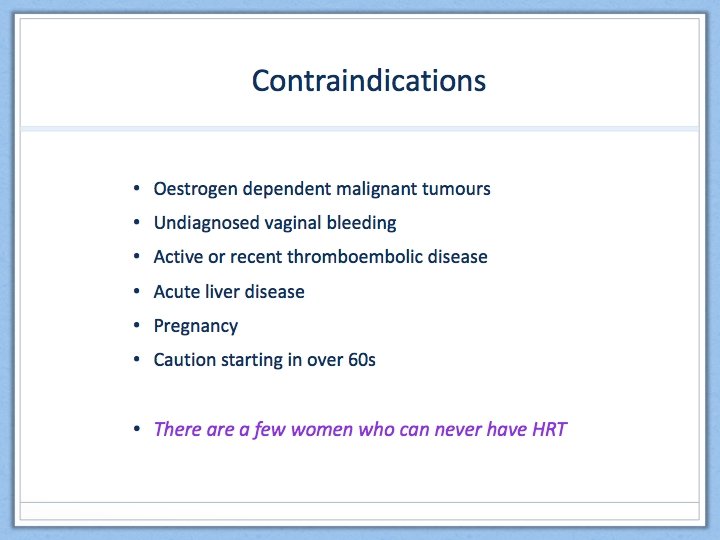
Absolute contraindications to HRT • Current myocardial infarction, pulmonary embolism or DVT • Current endometrial or breast cancer • Pregnancy • Undiagnosed breast lump • Undiagnosed abnormal vaginal bleeding • Severe active liver disease with abnormal LFTs (although a transdermal route could be considered if symptoms are severe)
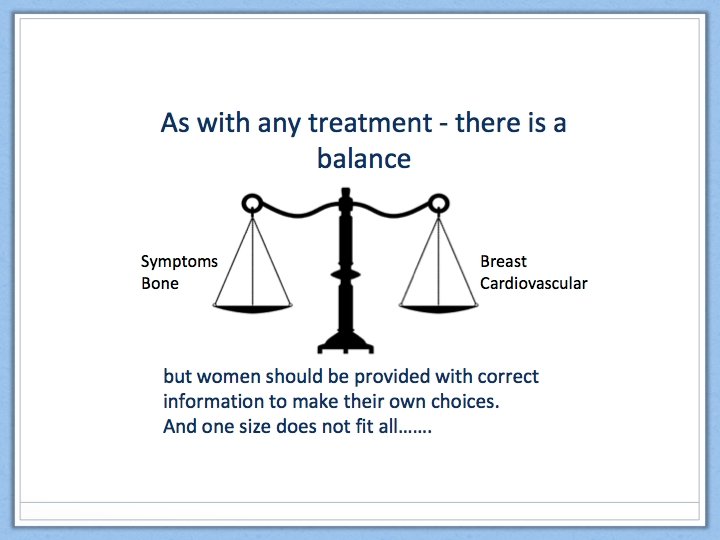
Benefits Symptom control Quality of life Osteoporotic fracture Large bowel cancer AGE UNDER 50 AGE 50 -60 AND HAVING SYMPTOMS Risks VTE (blood clots) Breast cancer Stroke Gall bladder disease AGE 60 + AGE OVER 70 PAST HISTORY OF HEART DISEASE AND STROKE
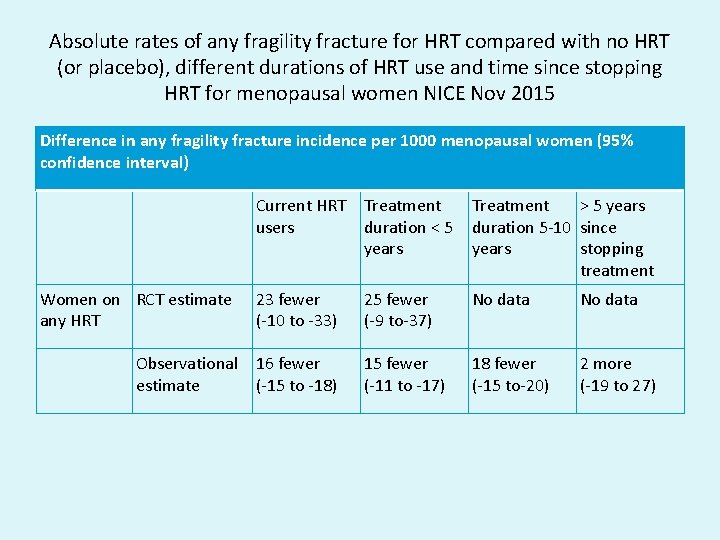
Absolute rates of any fragility fracture for HRT compared with no HRT (or placebo), different durations of HRT use and time since stopping HRT for menopausal women NICE Nov 2015 Difference in any fragility fracture incidence per 1000 menopausal women (95% confidence interval) Current HRT Treatment > 5 years users duration < 5 duration 5 -10 since years stopping treatment Women on RCT estimate any HRT 23 fewer (-10 to -33) Observational 16 fewer estimate (-15 to -18) 25 fewer (-9 to-37) No data 15 fewer (-11 to -17) 18 fewer (-15 to-20) 2 more (-19 to 27)
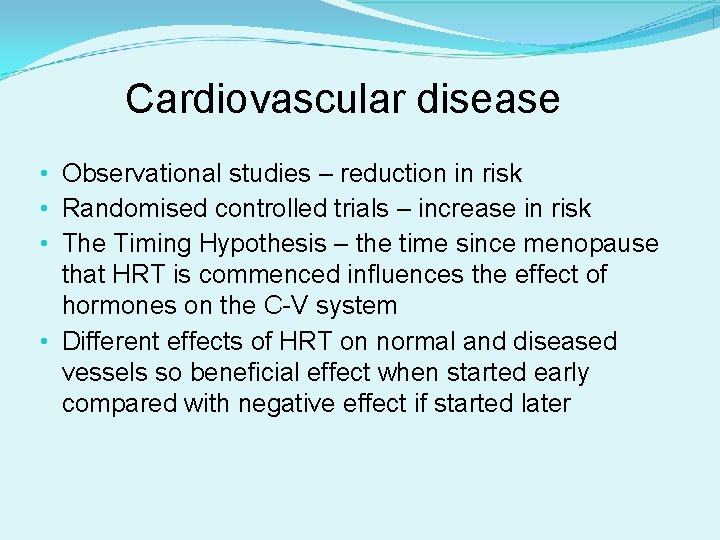
Cardiovascular disease • Observational studies – reduction in risk • Randomised controlled trials – increase in risk • The Timing Hypothesis – the time since menopause that HRT is commenced influences the effect of hormones on the C-V system • Different effects of HRT on normal and diseased vessels so beneficial effect when started early compared with negative effect if started later
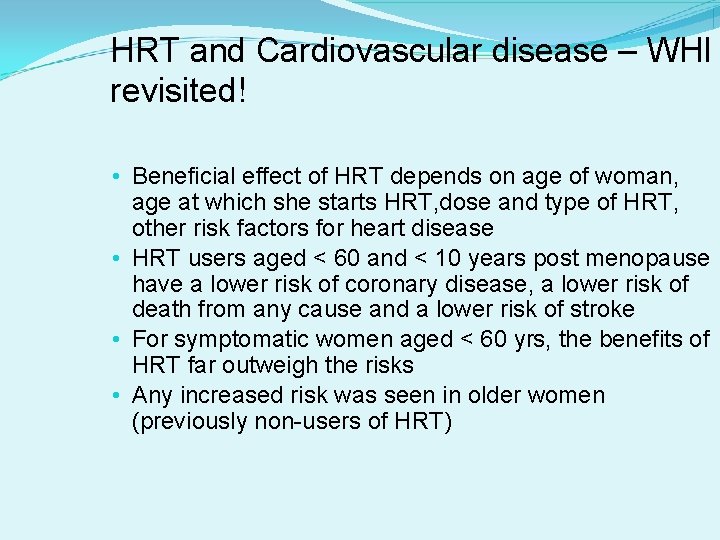
HRT and Cardiovascular disease – WHI revisited! • Beneficial effect of HRT depends on age of woman, age at which she starts HRT, dose and type of HRT, other risk factors for heart disease • HRT users aged < 60 and < 10 years post menopause have a lower risk of coronary disease, a lower risk of death from any cause and a lower risk of stroke • For symptomatic women aged < 60 yrs, the benefits of HRT far outweigh the risks • Any increased risk was seen in older women (previously non-users of HRT)
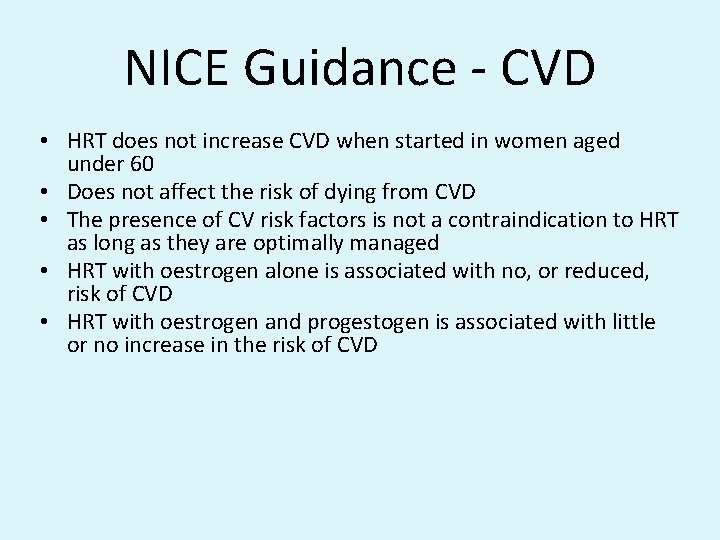
NICE Guidance - CVD • HRT does not increase CVD when started in women aged under 60 • Does not affect the risk of dying from CVD • The presence of CV risk factors is not a contraindication to HRT as long as they are optimally managed • HRT with oestrogen alone is associated with no, or reduced, risk of CVD • HRT with oestrogen and progestogen is associated with little or no increase in the risk of CVD
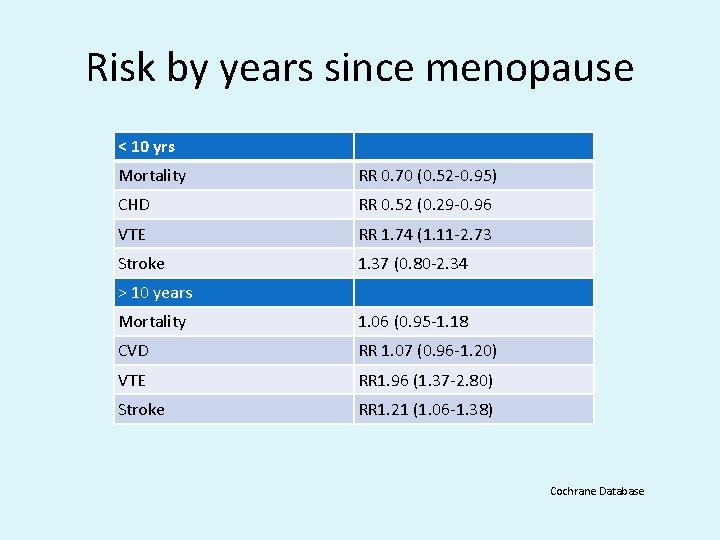
Risk by years since menopause < 10 yrs Mortality RR 0. 70 (0. 52 -0. 95) CHD RR 0. 52 (0. 29 -0. 96 VTE RR 1. 74 (1. 11 -2. 73 Stroke 1. 37 (0. 80 -2. 34 > 10 years Mortality 1. 06 (0. 95 -1. 18 CVD RR 1. 07 (0. 96 -1. 20) VTE RR 1. 96 (1. 37 -2. 80) Stroke RR 1. 21 (1. 06 -1. 38) Cochrane Database
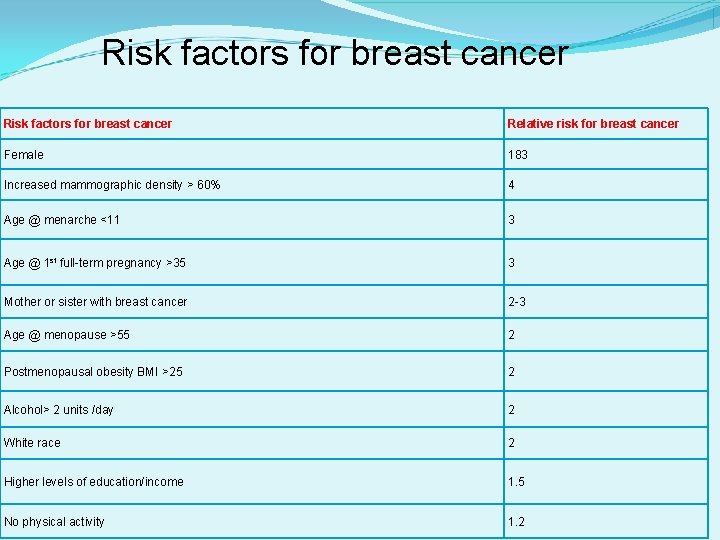
Risk factors for breast cancer Relative risk for breast cancer Female 183 Increased mammographic density > 60% 4 Age @ menarche <11 3 Age @ 1 st full-term pregnancy >35 3 Mother or sister with breast cancer 2 -3 Age @ menopause >55 2 Postmenopausal obesity BMI >25 2 Alcohol> 2 units /day 2 White race 2 Higher levels of education/income 1. 5 No physical activity 1. 2
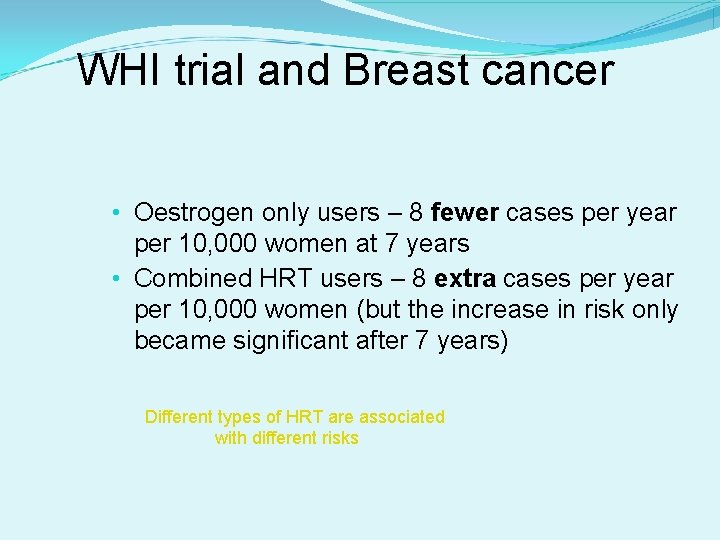
WHI trial and Breast cancer • Oestrogen only users – 8 fewer cases per year per 10, 000 women at 7 years • Combined HRT users – 8 extra cases per year per 10, 000 women (but the increase in risk only became significant after 7 years) Different types of HRT are associated with different risks
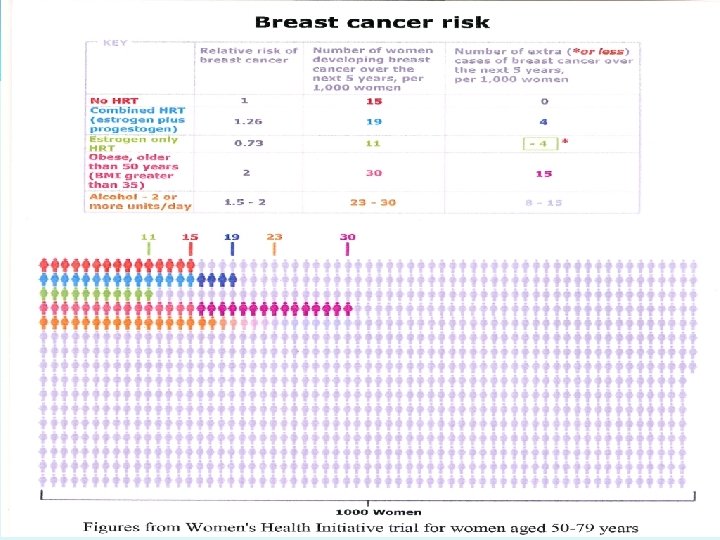
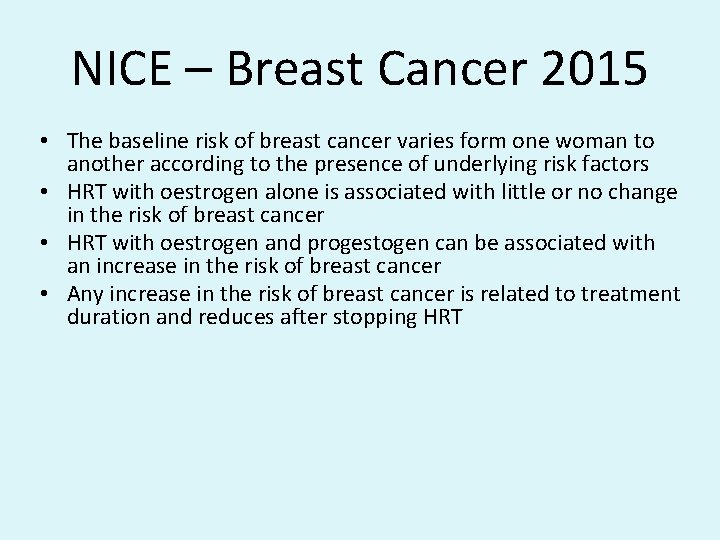
NICE – Breast Cancer 2015 • The baseline risk of breast cancer varies form one woman to another according to the presence of underlying risk factors • HRT with oestrogen alone is associated with little or no change in the risk of breast cancer • HRT with oestrogen and progestogen can be associated with an increase in the risk of breast cancer • Any increase in the risk of breast cancer is related to treatment duration and reduces after stopping HRT
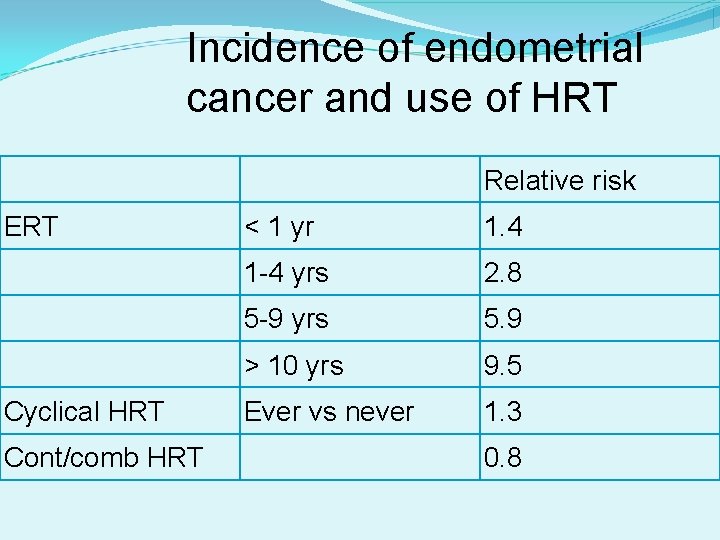
Incidence of endometrial cancer and use of HRT Relative risk ERT Cyclical HRT Cont/comb HRT < 1 yr 1. 4 1 -4 yrs 2. 8 5 -9 yrs 5. 9 > 10 yrs 9. 5 Ever vs never 1. 3 0. 8
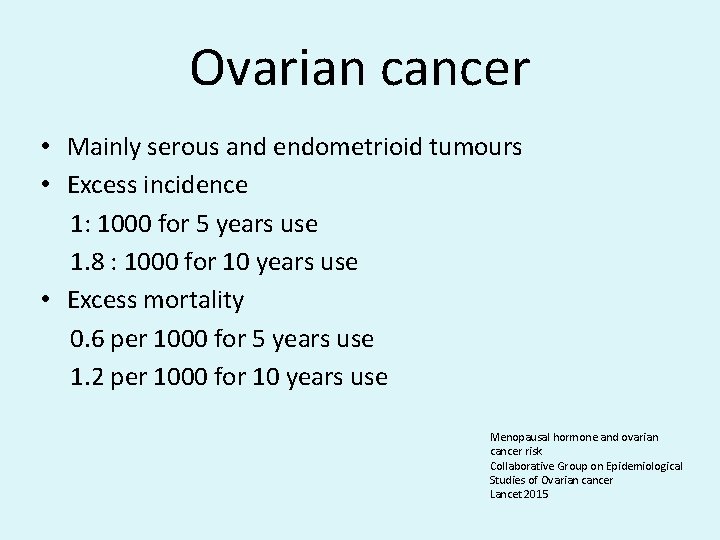
Ovarian cancer • Mainly serous and endometrioid tumours • Excess incidence 1: 1000 for 5 years use 1. 8 : 1000 for 10 years use • Excess mortality 0. 6 per 1000 for 5 years use 1. 2 per 1000 for 10 years use Menopausal hormone and ovarian cancer risk Collaborative Group on Epidemiological Studies of Ovarian cancer Lancet 2015
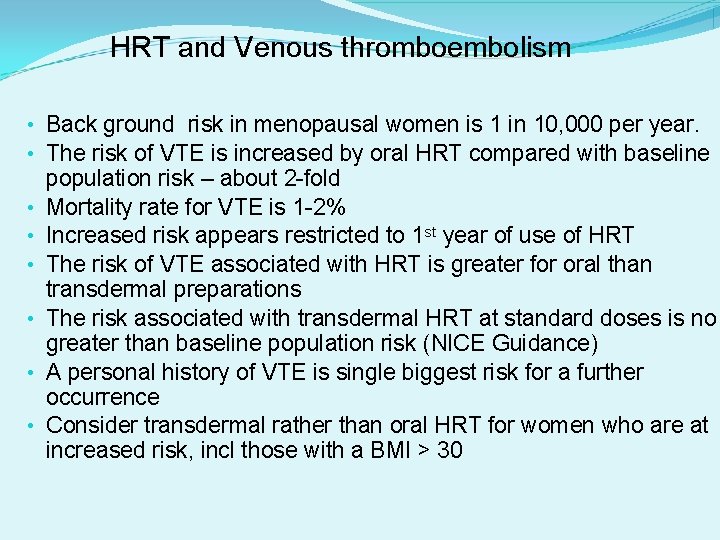
HRT and Venous thromboembolism • Back ground risk in menopausal women is 1 in 10, 000 per year. • The risk of VTE is increased by oral HRT compared with baseline population risk – about 2 -fold • Mortality rate for VTE is 1 -2% • Increased risk appears restricted to 1 st year of use of HRT • The risk of VTE associated with HRT is greater for oral than transdermal preparations • The risk associated with transdermal HRT at standard doses is no greater than baseline population risk (NICE Guidance) • A personal history of VTE is single biggest risk for a further occurrence • Consider transdermal rather than oral HRT for women who are at increased risk, incl those with a BMI > 30
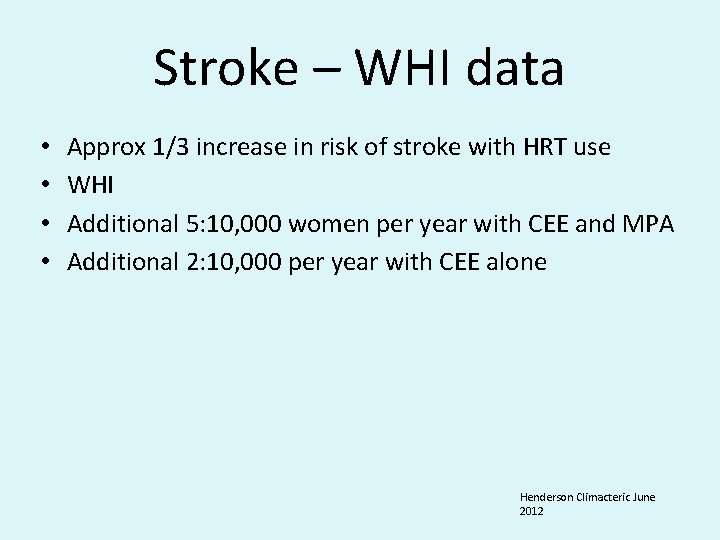
Stroke – WHI data • • Approx 1/3 increase in risk of stroke with HRT use WHI Additional 5: 10, 000 women per year with CEE and MPA Additional 2: 10, 000 per year with CEE alone Henderson Climacteric June 2012
Issues to Consider • Perimenopause • Menopause Transition • Postmenopause and problems
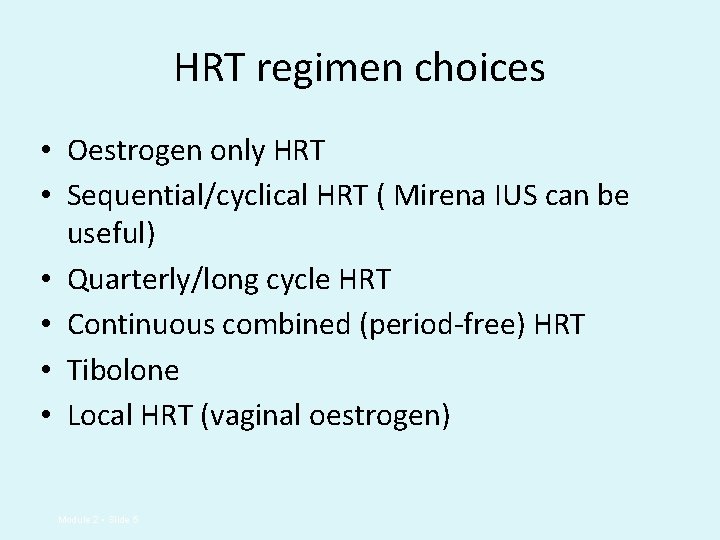
HRT regimen choices • Oestrogen only HRT • Sequential/cyclical HRT ( Mirena IUS can be useful) • Quarterly/long cycle HRT • Continuous combined (period-free) HRT • Tibolone • Local HRT (vaginal oestrogen) Module 2 • Slide 5
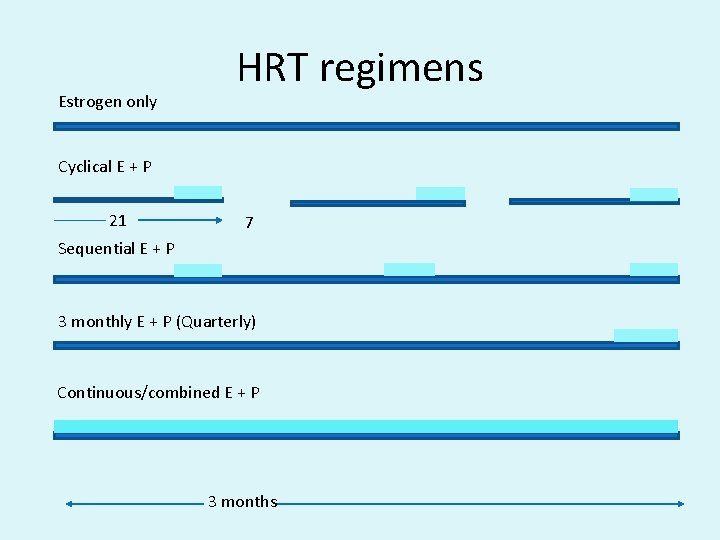
Estrogen only HRT regimens Cyclical E + P 21 7 Sequential E + P 3 monthly E + P (Quarterly) Continuous/combined E + P 3 months
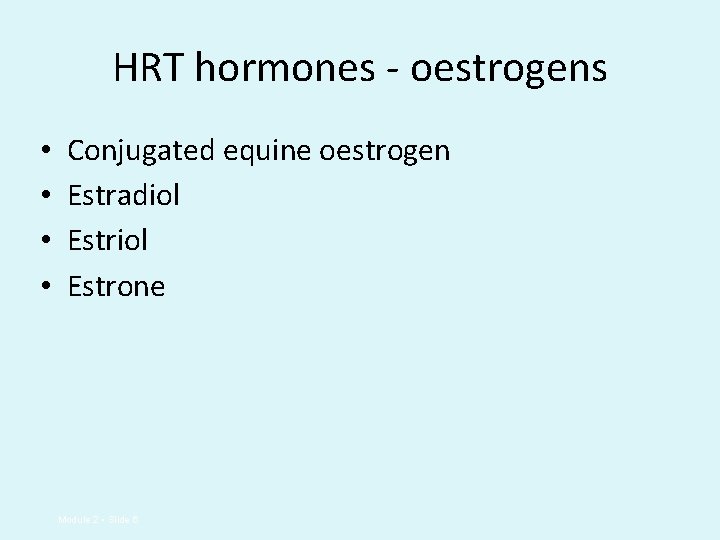
HRT hormones - oestrogens • • Conjugated equine oestrogen Estradiol Estrone Module 2 • Slide 6
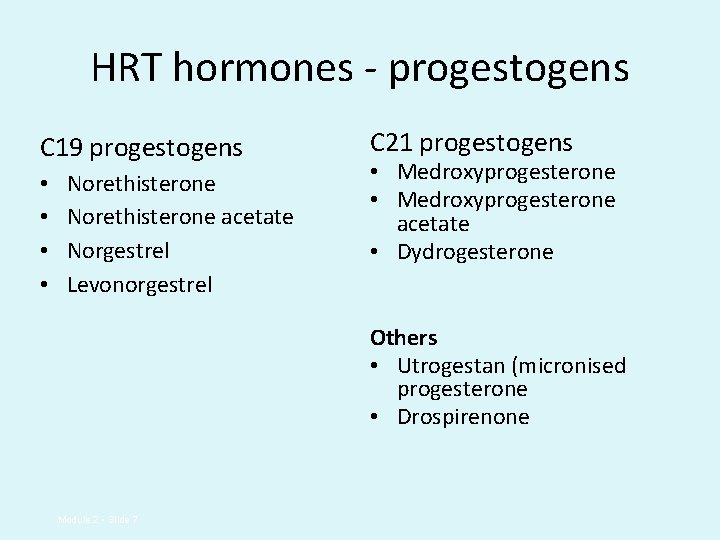
HRT hormones - progestogens C 19 progestogens • • Norethisterone acetate Norgestrel Levonorgestrel C 21 progestogens • Medroxyprogesterone acetate • Dydrogesterone Others • Utrogestan (micronised progesterone • Drospirenone Module 2 • Slide 7
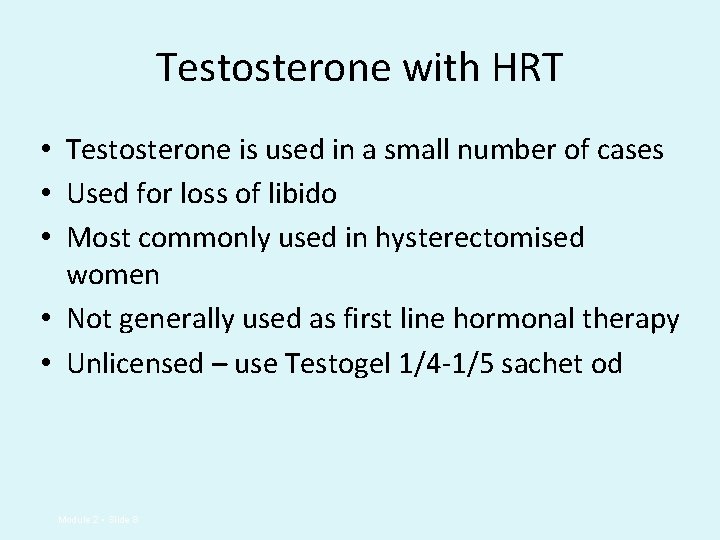
Testosterone with HRT • Testosterone is used in a small number of cases • Used for loss of libido • Most commonly used in hysterectomised women • Not generally used as first line hormonal therapy • Unlicensed – use Testogel 1/4 -1/5 sachet od Module 2 • Slide 8
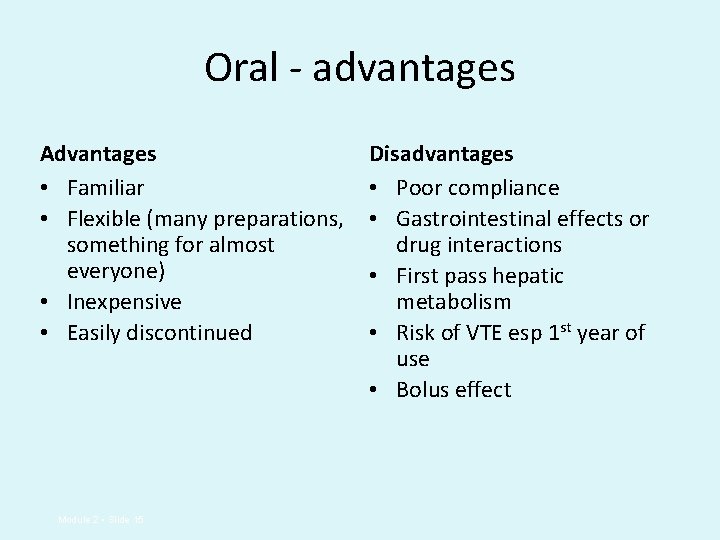
Oral - advantages Advantages • Familiar • Flexible (many preparations, something for almost everyone) • Inexpensive • Easily discontinued Module 2 • Slide 15 Disadvantages • Poor compliance • Gastrointestinal effects or drug interactions • First pass hepatic metabolism • Risk of VTE esp 1 st year of use • Bolus effect
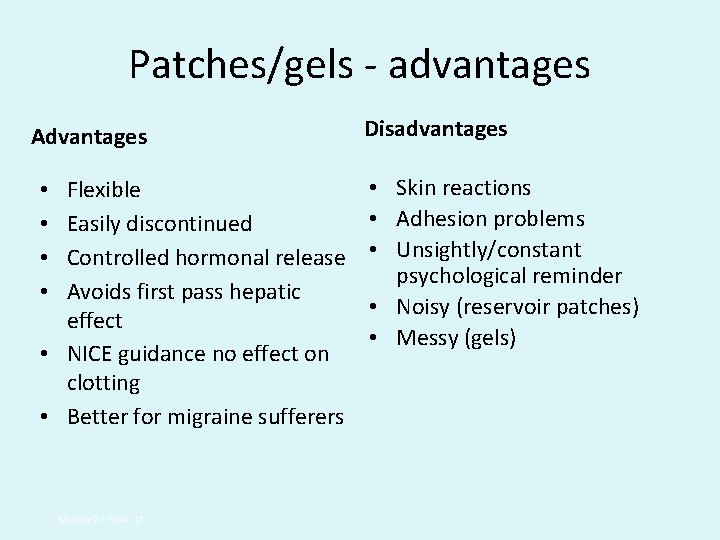
Patches/gels - advantages Advantages Flexible Easily discontinued Controlled hormonal release Avoids first pass hepatic effect • NICE guidance no effect on clotting • Better for migraine sufferers • • Module 2 • Slide 17 Disadvantages • Skin reactions • Adhesion problems • Unsightly/constant psychological reminder • Noisy (reservoir patches) • Messy (gels)
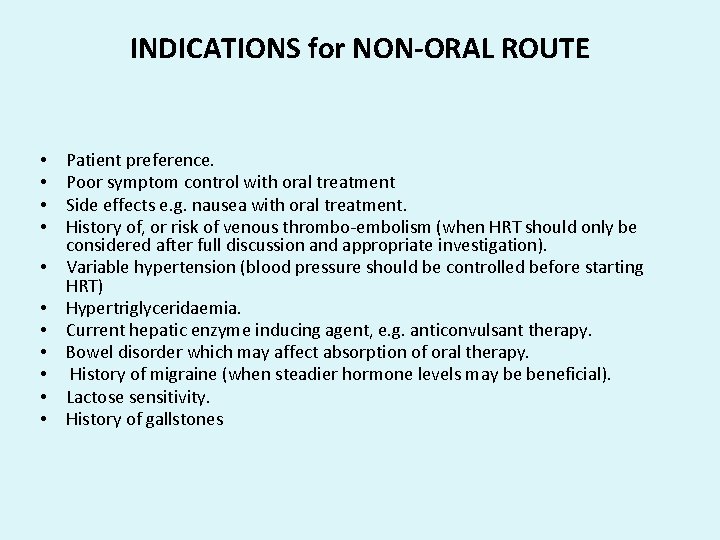
INDICATIONS for NON-ORAL ROUTE • • • Patient preference. Poor symptom control with oral treatment Side effects e. g. nausea with oral treatment. History of, or risk of venous thrombo-embolism (when HRT should only be considered after full discussion and appropriate investigation). Variable hypertension (blood pressure should be controlled before starting HRT) Hypertriglyceridaemia. Current hepatic enzyme inducing agent, e. g. anticonvulsant therapy. Bowel disorder which may affect absorption of oral therapy. History of migraine (when steadier hormone levels may be beneficial). Lactose sensitivity. History of gallstones
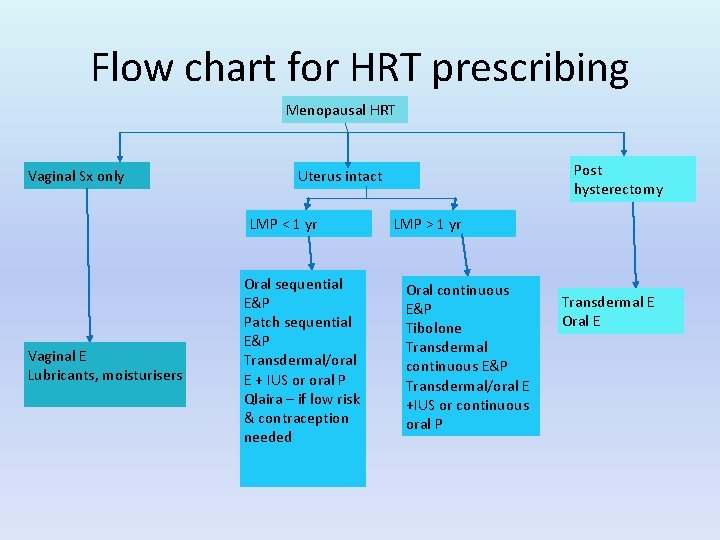
Flow chart for HRT prescribing Menopausal HRT Vaginal Sx only LMP < 1 yr Vaginal E Lubricants, moisturisers Post hysterectomy Uterus intact Oral sequential E&P Patch sequential E&P Transdermal/oral E + IUS or oral P Qlaira – if low risk & contraception needed LMP > 1 yr Oral continuous E&P Tibolone Transdermal continuous E&P Transdermal/oral E +IUS or continuous oral P Transdermal E Oral E

Vaginal Oestrogens NB: The following may damage latex condoms and diaphragms • Gynest cream – estriol 0. 1% • Ovestin cream - estriol 0. 1% • Orthogynest pessaries – estriol 500 mcg No evidence of damage to latex condoms and diaphragms • Vagifem vaginal tablets – estradiol 10 mcg • Estring vaginal ring - estradiol 7. 5 mcg/24 hrs; replace ring every 3 months
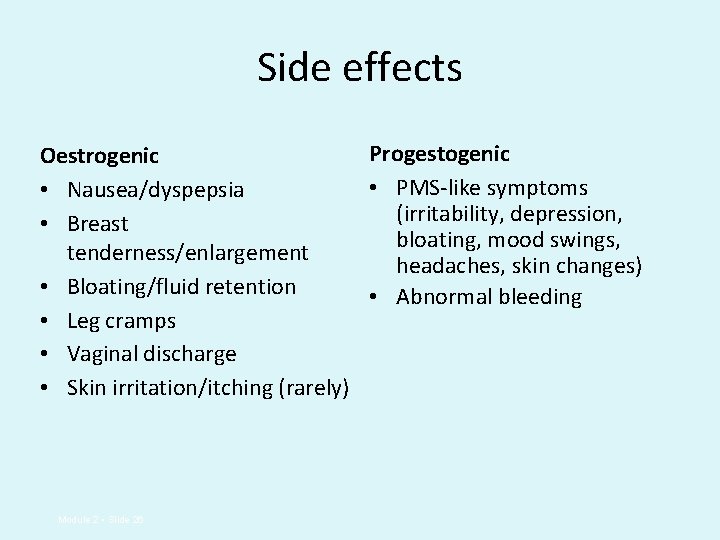
Side effects Progestogenic Oestrogenic • PMS-like symptoms • Nausea/dyspepsia (irritability, depression, • Breast bloating, mood swings, tenderness/enlargement headaches, skin changes) • Bloating/fluid retention • Abnormal bleeding • Leg cramps • Vaginal discharge • Skin irritation/itching (rarely) Module 2 • Slide 26
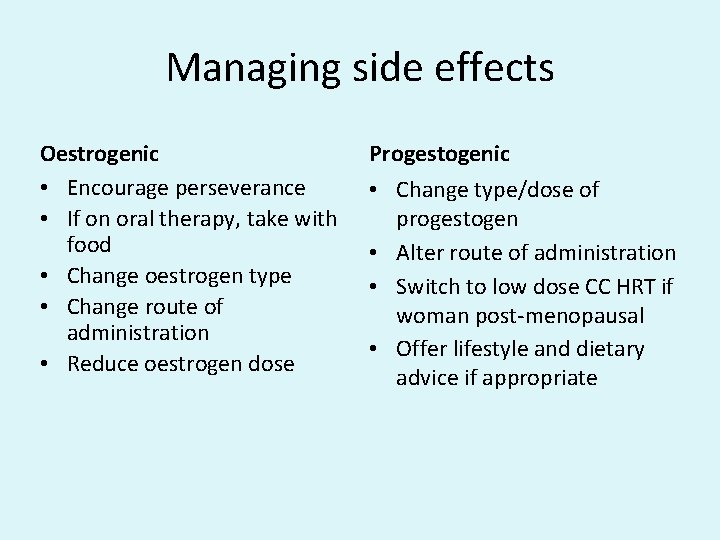
Managing side effects Oestrogenic • Encourage perseverance • If on oral therapy, take with food • Change oestrogen type • Change route of administration • Reduce oestrogen dose Progestogenic • Change type/dose of progestogen • Alter route of administration • Switch to low dose CC HRT if woman post-menopausal • Offer lifestyle and dietary advice if appropriate
Abnormal bleeding • Withdrawal bleed at wrong time (on cyclical HRT) • Bleeding between periods (on cyclical HRT) • Exceptionally heavy bleeding • Persistent bleeding after 3 -6 months on CC HRT • Spotting/bleeding on CC HRT after 6 months of amenorrhoea Module 3 • Slide 24
Establishing the cause of abnormal bleeding Lack of compliance Poor synchronisation with own cycle Poor absorption/GI upset Drug interactions HRT dose too high/too low Gynaecological problems (e. g. polyps, fibroids, cancer) • Other pathologies (e. g. thyroid disease) • • • Module 3 • Slide 25
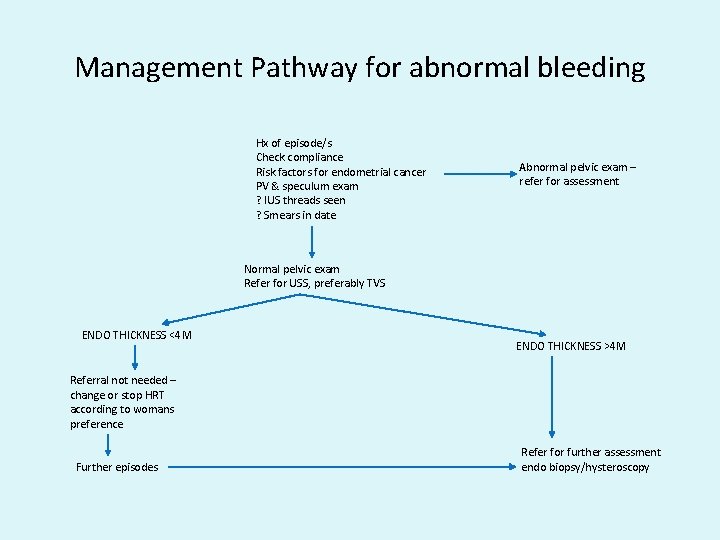
Management Pathway for abnormal bleeding Hx of episode/s Check compliance Risk factors for endometrial cancer PV & speculum exam ? IUS threads seen ? Smears in date Abnormal pelvic exam – refer for assessment Normal pelvic exam Refer for USS, preferably TVS ENDO THICKNESS <4 M ENDO THICKNESS >4 M Referral not needed – change or stop HRT according to womans preference Further episodes Refer for further assessment endo biopsy/hysteroscopy
Top Ten Tips - NICE NG 23 2015 1. Do not use FSH blood test for diagnosis in women > 45 years; remember contraception will be needed until infertility is certain 2. Offer women HRT as first line treatment for vasomotor symptoms and low mood/anxiety related to menopause after discussing the short term and longer term risks and benefits 3. Consider CBT to alleviate low mood/anxiety that arise as a result of the menopause 4. Offer vaginal oestrogen to women with urogenital atrophy and continue treatment for as long as needed to relieve symptoms 5. Offer women who are stopping HRT a choice of gradually reducing or immediately stopping treatment (no arbitrary limits)
Top Ten Tips 6. Women with POI should be advised to continue h. RT until at least the age of natural menopause 7. Consider transdermal rather than oral HRT for women who are at increased risk of blood clots or who have migraines 8. HRT does not increase cardiovascular disease risk when started in women < 60 years 9. Any increase in risk of breast cancer is related to treatment duration and reduces after stopping HRT 10. Women should be referred to a Healthcare specialist with expertise in menopause if: they have troublesome side effects; contraindication to HRT; there is uncertainty about the most suitable treatment for their symptoms 6 Consider transdermal
Summary • Most women ask for HRT for relief of symptoms, use it for a short time (< 5 years), find it effective and that it improves their QOL • Women with a premature menopause should take HRT until age 52 years • Women with a uterus should be given O and P to protect the endometrium • Given appropriately, the benefits outweigh the risks and its use should not be restricted • Local oestrogen replacement may be required long term to reverse urogenital atrophy. There is no evidence that local vaginal treatment is associated with any significant risks
Conclusions • • • Every woman is unique! A very dynamic area Need to keep up to date NICE Guidance provides solid evidence based advice Still more research needed!
- Slides: 70