
The Meiji Restoration Japan 1868 The EDO Tokugawa
- Slides: 16
The Meiji Restoration Japan 1868
The EDO (Tokugawa) Period (1603 -1867) During this time period Japan was ruled by the military or “Shogunate” A Political Revolution in 1868 removed the Shogunate from power and returned control to the Emperor.
EMPEROR Mutsuhito Meiji : After power was established within the emperor’s hands, Meiji presided over a period of modernization and westernization called the: MEIJI RESTORATION
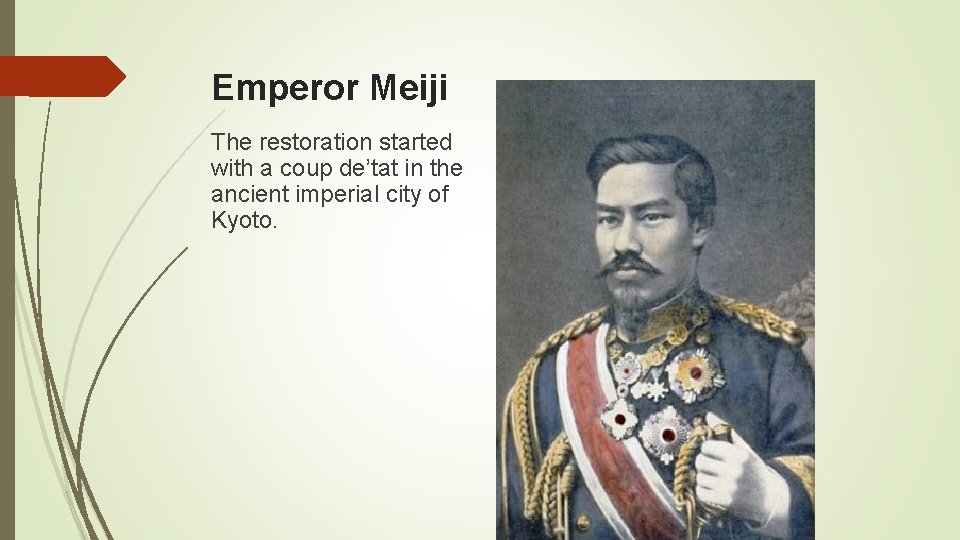
Emperor Meiji The restoration started with a coup de’tat in the ancient imperial city of Kyoto.
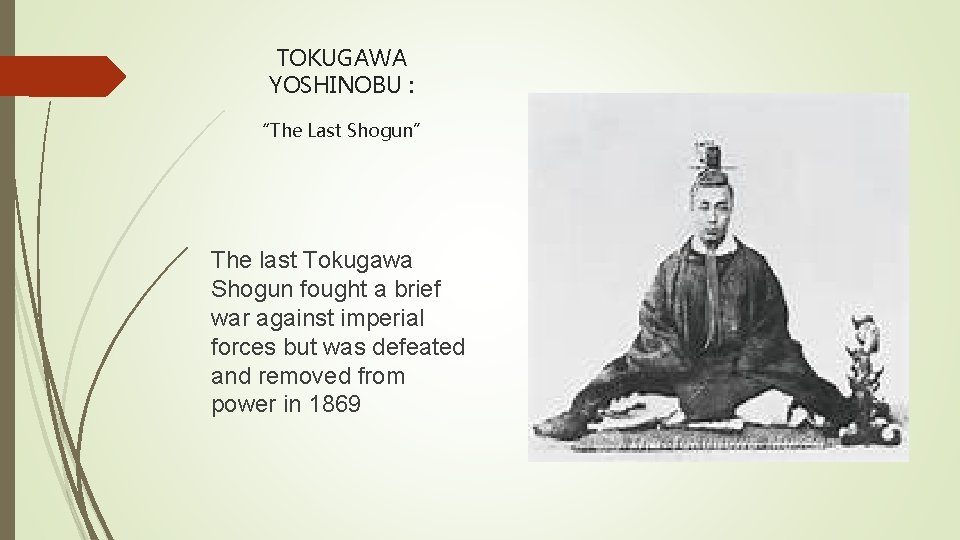
TOKUGAWA YOSHINOBU : “The Last Shogun” The last Tokugawa Shogun fought a brief war against imperial forces but was defeated and removed from power in 1869
REASONS for the Coup de’tat : 1) Foreign powers were threatening to forcibly open Japan up to western influence 2) Japanese citizens, witnessing what happened to nearby China, wanted to “enrich the country and strengthen the army” (quote from the Meiji Emperor)
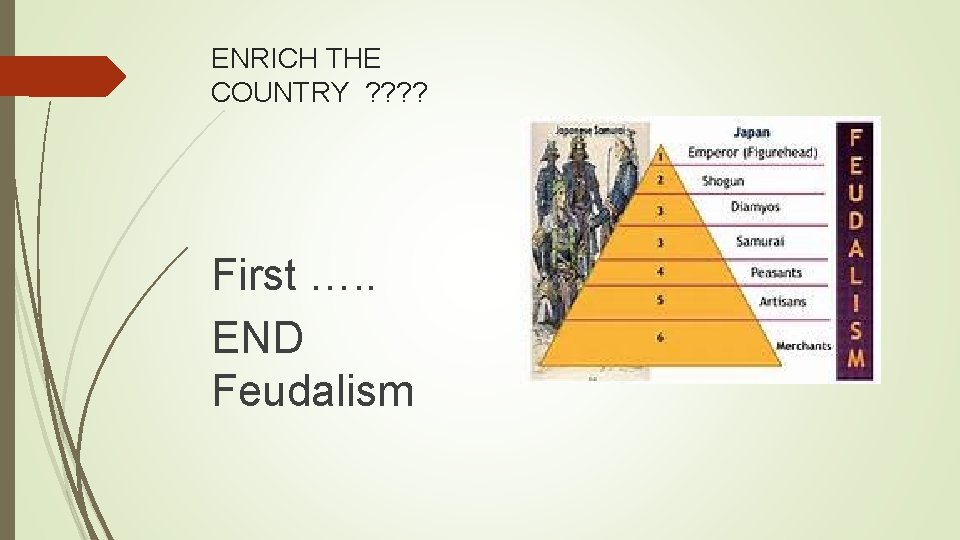
ENRICH THE COUNTRY ? ? First …. . END Feudalism
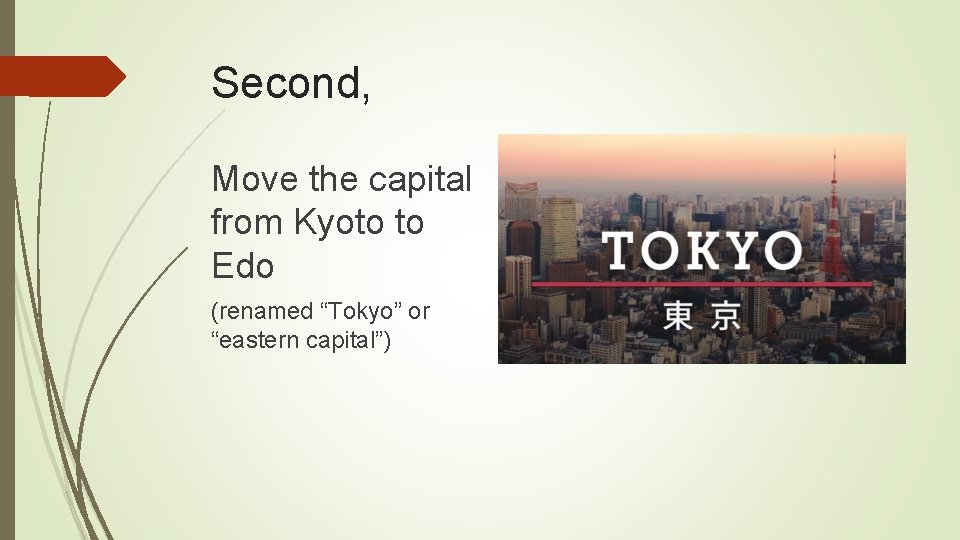
Second, Move the capital from Kyoto to Edo (renamed “Tokyo” or “eastern capital”)
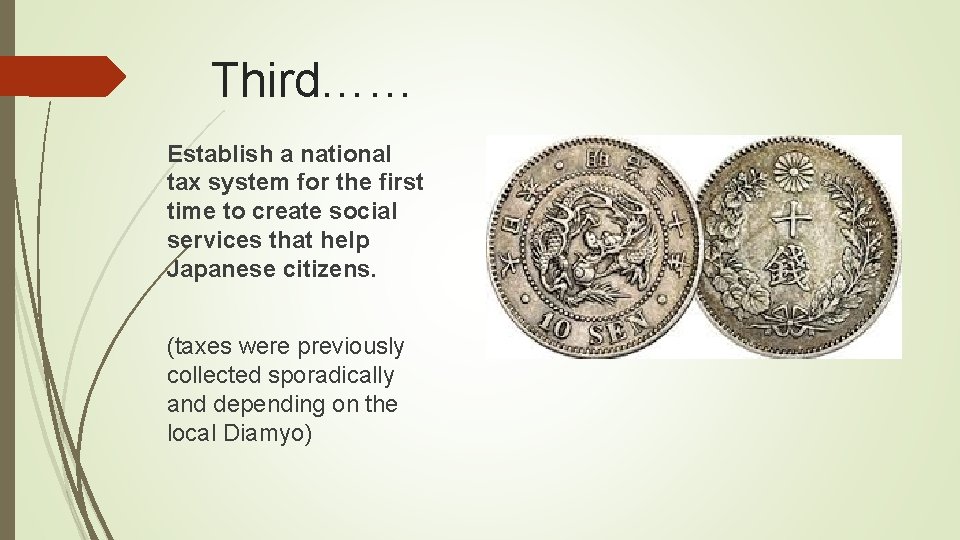
Third…… Establish a national tax system for the first time to create social services that help Japanese citizens. (taxes were previously collected sporadically and depending on the local Diamyo)
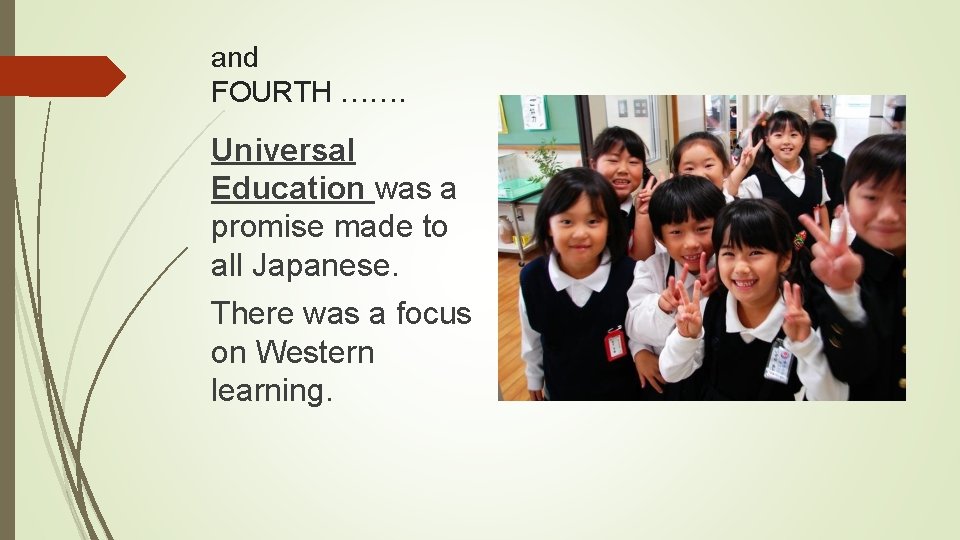
and FOURTH ……. Universal Education was a promise made to all Japanese. There was a focus on Western learning.
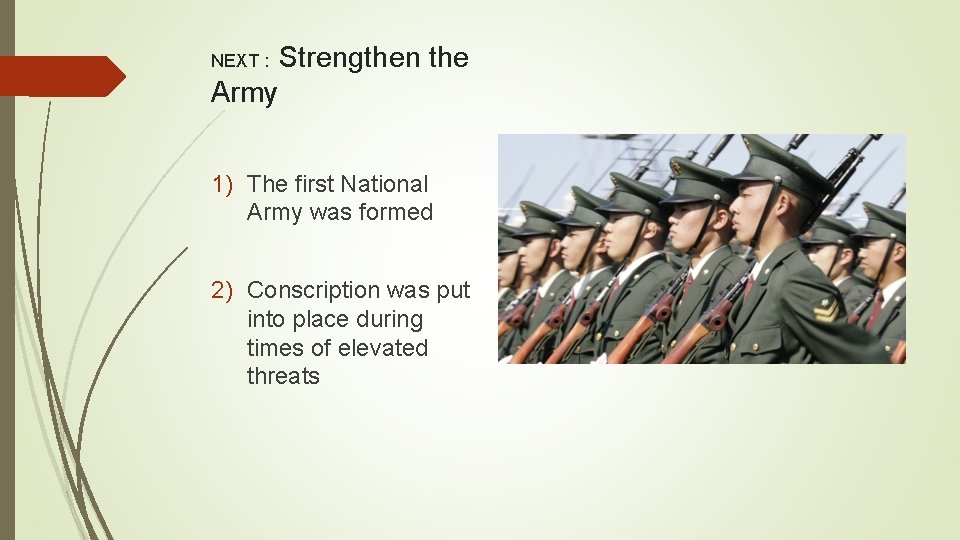
NEXT : Strengthen the Army 1) The first National Army was formed 2) Conscription was put into place during times of elevated threats
So… What did the Meiji Restoration accomplish ? 1. 1890 - Japan had a constitution * The Meiji Emperor became the spiritual leader of Japan * A Bi-Cameral Parliament called the “Imperial Diet” handled the day to day governance * Voting rights existed, but were limited. * An elected Assembly counseled the government
Japan grew in strength : Taking some ideas from the west to compliment traditional Japanese culture, Japan began to industrialize, modernize, educate their society : * 1894, State-Sponsored Industrialization begins * they form the Anglo-Japanese Alliance in 1902
Military victories followed : 1895 - Japan defeats China in a war for access to Manchuria 1905 - Japan defeats Russia in the Russo-Japanese War also over access to the mainland 1905 - 1912 Japan begins its expansion and controls a large empire with continental holdings and control over many islands in the Pacific
By 1914 …. . Japan is a formidable, expansionist power in Asia, with a strong economy. By the beginning of World War I (and Japan’s entry into the war) the period called the MEIJI RESTORATION is over.
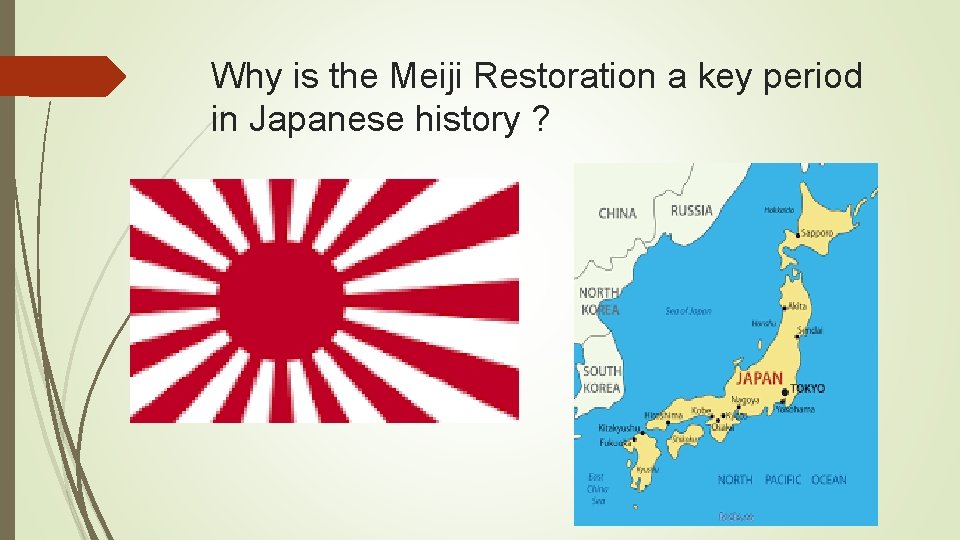
Why is the Meiji Restoration a key period in Japanese history ?