
THE MEDITERRANEAN AND MIDDLE EAST 2000 500 BCE
THE MEDITERRANEAN AND MIDDLE EAST 2000 -500 BCE
MIDDLE EAST WESTERN ASIA AND EGYPT
COSMOPOLITAN MIDDLE EAST • Iron Age • Use of iron instead of bronze for weapons and tools • Iron tools were harder and sharper than bronze ones • Mesopotamia and Egypt subjected to many invaders and new peoples • Creation of a diversity of cultures
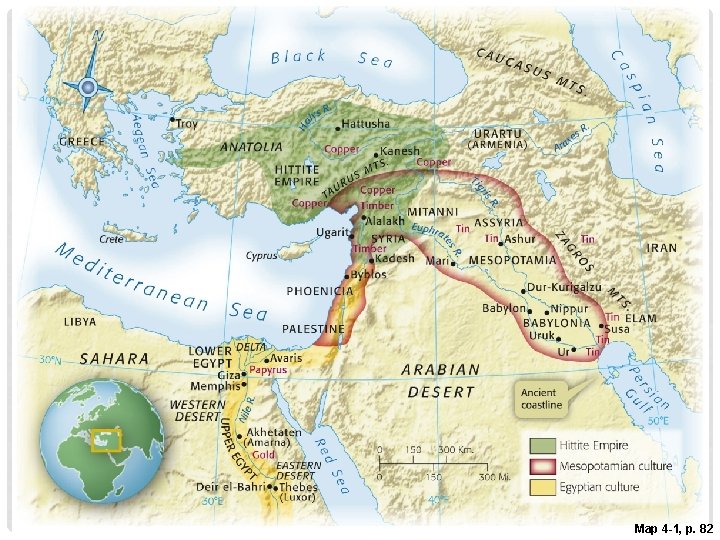
Map 4 -1, p. 82
WESTERN ASIA • Mesopotamia • Divided in half by 1500 BCE • Babylonia (south) • Assyria (north) • Hittites • • State that emerged on the outskirts of Mesopotamia Became THE power in Anatolia (Turkey) Horse drawn chariots used in warfare First developed iron working for tools/weapons
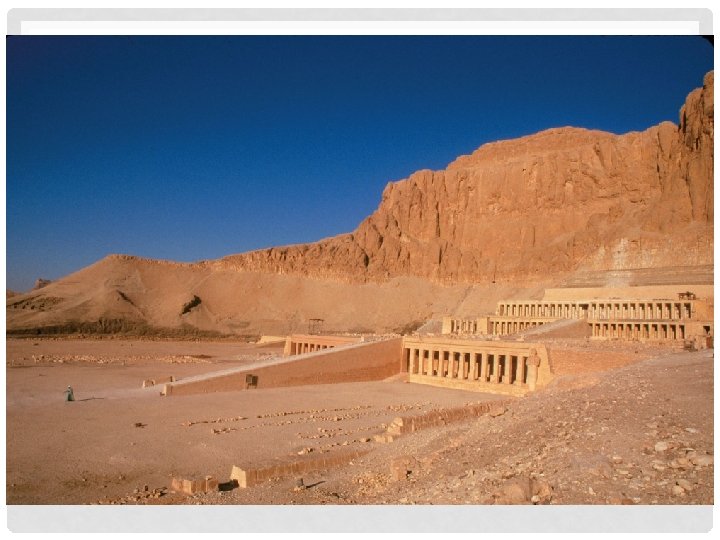
EGYPT • Hyksos conquered Egypt in 1640 BCE • Introduced hors drawn chariots, composite bow • Expelled in 1532 after 30 years of war • New Kingdom (1532 -1070 BCE) • Expanded territory into Palestine and Nubia • Hatshepsut • Only female ruler of the New Kingdom • Successful expeditions for luxury items • After death, all references to Hatshepsut were eliminated
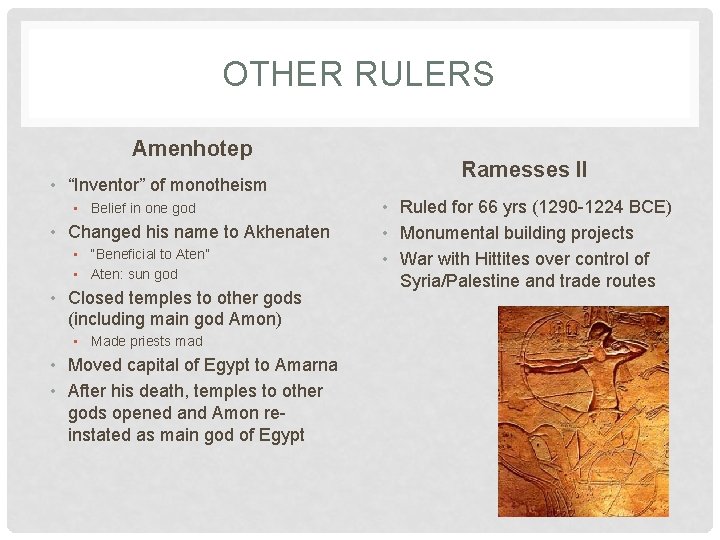
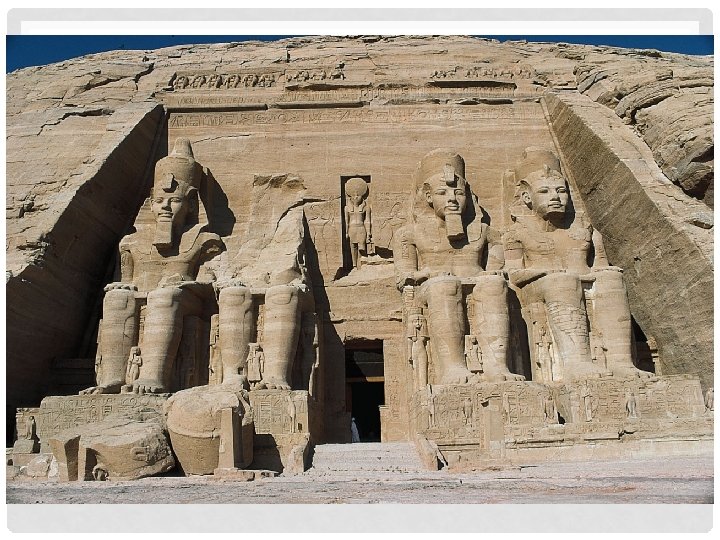
OTHER RULERS Amenhotep • “Inventor” of monotheism • Belief in one god • Changed his name to Akhenaten • “Beneficial to Aten” • Aten: sun god • Closed temples to other gods (including main god Amon) • Made priests mad • Moved capital of Egypt to Amarna • After his death, temples to other gods opened and Amon reinstated as main god of Egypt Ramesses II • Ruled for 66 yrs (1290 -1224 BCE) • Monumental building projects • War with Hittites over control of Syria/Palestine and trade routes
NEW MODES OF TRANSPORTATION • Allowed for more trade and better communication • Horses • • • Domesticated in Central Asia 2000 BCE: Mesopotamia 1600 BCE: Egypt Helped create large states/empires due to ability to travel quickly Allowed for horse drawn chariots and • Camels • 1500 BCE: Western Asia • Travel long distances without water • Led to emergence of desert trade routes
AEGEAN WORLD MINOAN CRETE AND MYCENAEAN GREECE
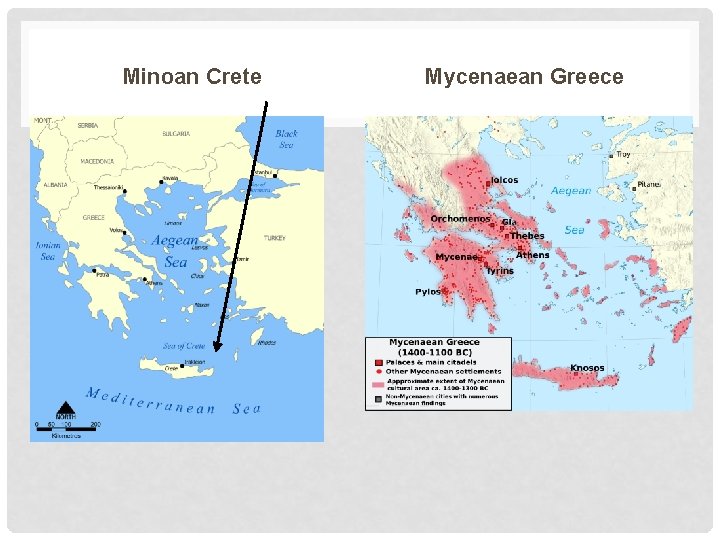
Minoan Crete Mycenaean Greece

MINOAN CRETE • First European civilization with complex political and social structures • Un-deciphered writing • Wide spread trade documented by discovery of Minoan artifacts around the Middle East and Mediterranean • Colorful frescoes
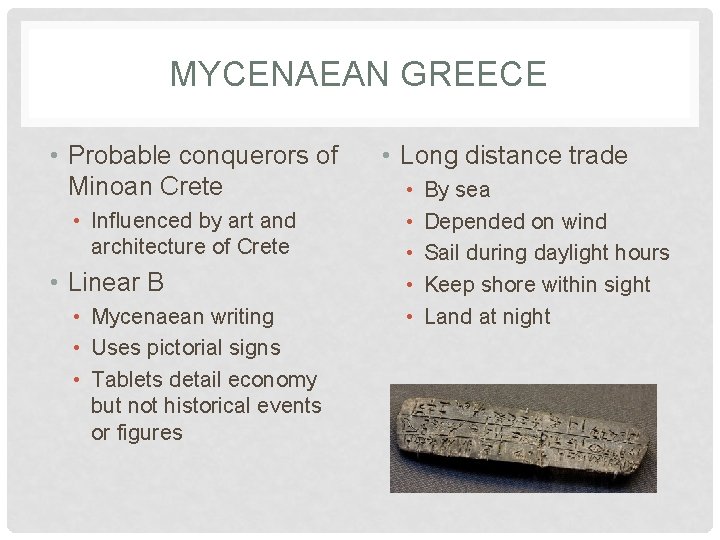
MYCENAEAN GREECE • Probable conquerors of Minoan Crete • Influenced by art and architecture of Crete • Linear B • Mycenaean writing • Uses pictorial signs • Tablets detail economy but not historical events or figures • Long distance trade • • • By sea Depended on wind Sail during daylight hours Keep shore within sight Land at night
(NEO) ASSYRIAN EMPIRE 911 -612 BCE
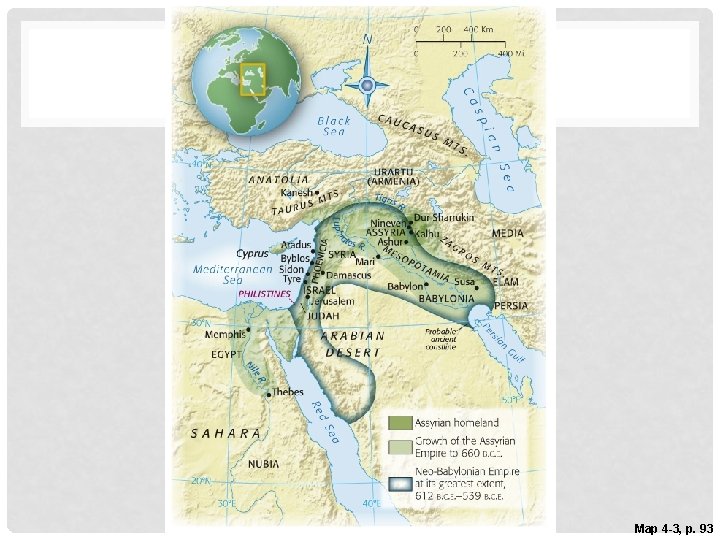
Map 4 -3, p. 93
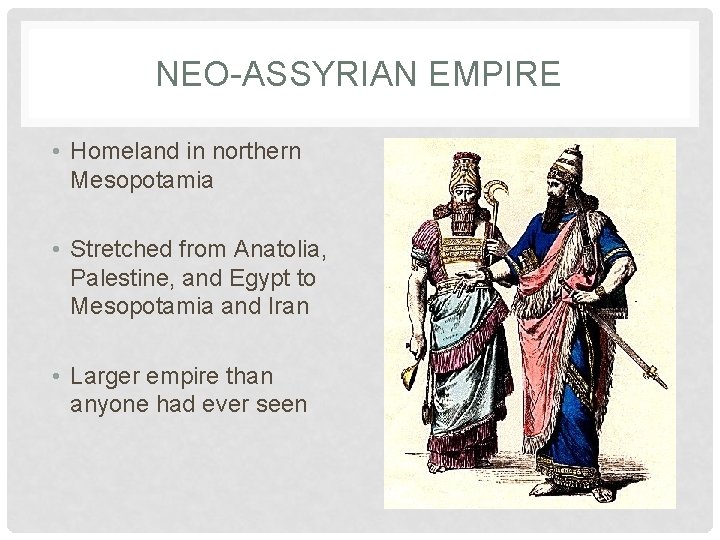
NEO-ASSYRIAN EMPIRE • Homeland in northern Mesopotamia • Stretched from Anatolia, Palestine, and Egypt to Mesopotamia and Iran • Larger empire than anyone had ever seen
RELIGION AND POLITICS • King was the center of the Assyrian world • Chosen by the gods to represent them on Earth • Kings’ decisions had to be approved by the gods through divination • Superior military • Professional soldiers • ½ million soldiers could be mobilized at a time • Bowmen, cavalry, spearmen, 4 man chariots • Iron weapons • Battering rams, signal fires, spies • Mass deportation • Forced move of entire communities/peoples • Up to 4 million people displaced during the empire • Deportees worked estates of the elite • Empire funded by the spoils of war • Size of the empire made it hard to control administratively • Tight control near the capital and loose control on the edges of the empire
ISRAEL 2000 -500 BCE
ISRAEL • Historical information comes from archaeological digs and the Hebrew Bible (Old Testament) • Abraham rejects the idol worship of his home and leaves to follow Yahweh • His descendants (Isaac, Jacob)become leaders of the nomadic group that would become Israel • Famine and drought cause the Israelites to move to Egypt • Eventually enslaved and forced to work on royal building projects • New Kingdom projects? ? • Led out of Egypt by Moses • Eventually led by Joshua into the Promised Land of Canaan (modern Palestine)
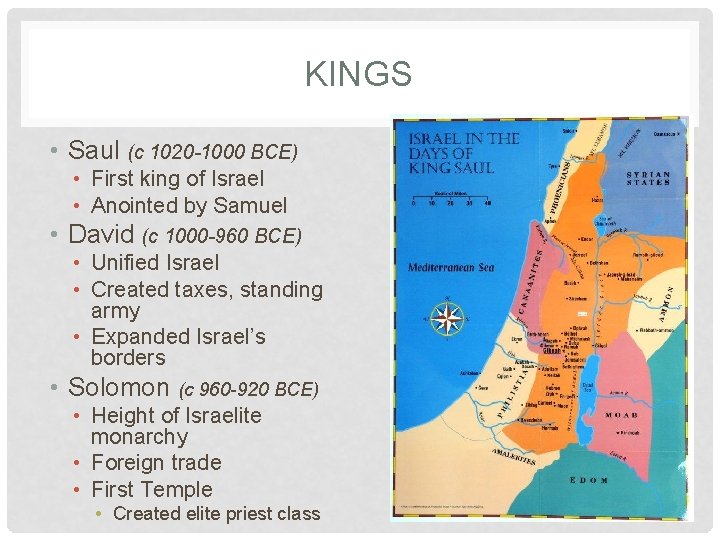
KINGS • Saul (c 1020 -1000 BCE) • First king of Israel • Anointed by Samuel • David (c 1000 -960 BCE) • Unified Israel • Created taxes, standing army • Expanded Israel’s borders • Solomon (c 960 -920 BCE) • Height of Israelite monarchy • Foreign trade • First Temple • Created elite priest class
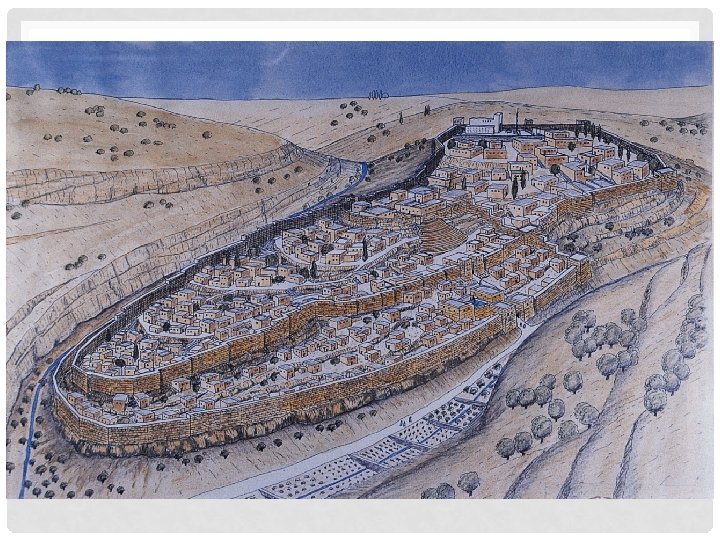
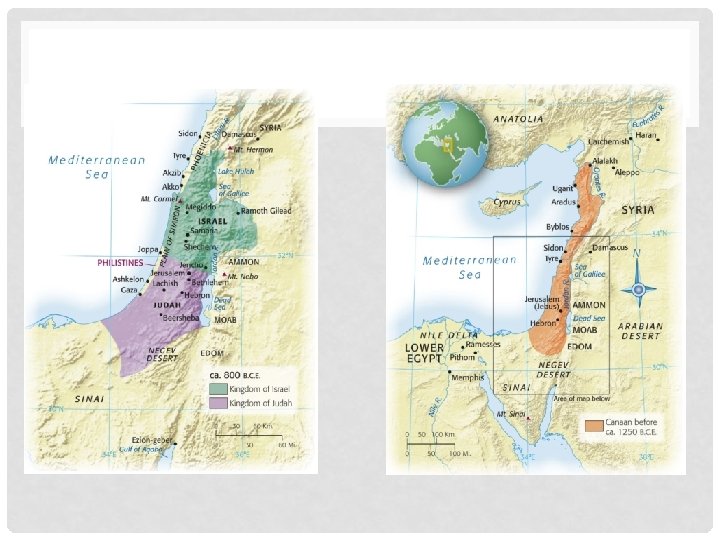
ISRAEL AND JUDAH • Solomon’s death splits Israel in two • Israel (north) • Judah (south) • Israel destroyed by Assyrians in 721 BCE • Population is deported to the east and Persia • “Diaspora” dispersion outside the homeland of the Jews • Given the chance to return under the rule of Persian king Cyrus, but many decide to stay • Solomon’s Temple destroyed by Nebuchadnezzar in 587 BCE with the capture of Jerusalem • Some Diasporic communities eventually return to Judah and rebuild the temple
PHOENICIA AND THE MEDITERRANEAN
PHOENICIANS • Mediterranean coast • Referred to themselves as Can’ani • (Canaanites-see Israel) • 1200 BCE: Canaanite settlements destroyed • Remaining city-states: Byblos, Berytus, Sidon, Tyre • 1000 BCE: Byblos = most important • Cedar distribution center • 969 BCE: Tyre replaces Byblos as dominant city-state • Alliance with Solomon – materials for Temple • Began emphasis on trade of woods, metals, food, and luxury goods (including purple cloth from Tyre) • Developed a 24 consonant “alphabet” from early Canaanite script
PHOENICIAN COLONIES • 900 BCE: Tyre begins expanding it’s territory • Cyprus • More known about colonies than Phoenician homeland • Phoenician triangle • • Libya and Morocco Spain (Iberia) Strait of Gibraltar Sardinia, Sicily, Malta • Trading network across entire Mediterranean
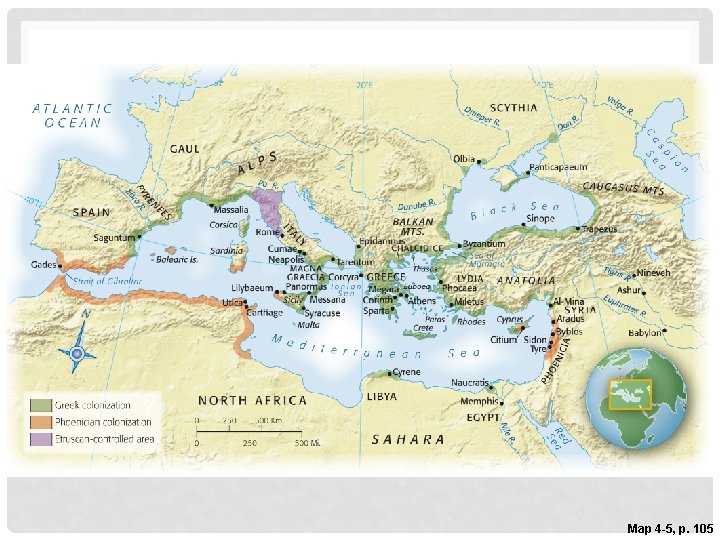
Map 4 -5, p. 105
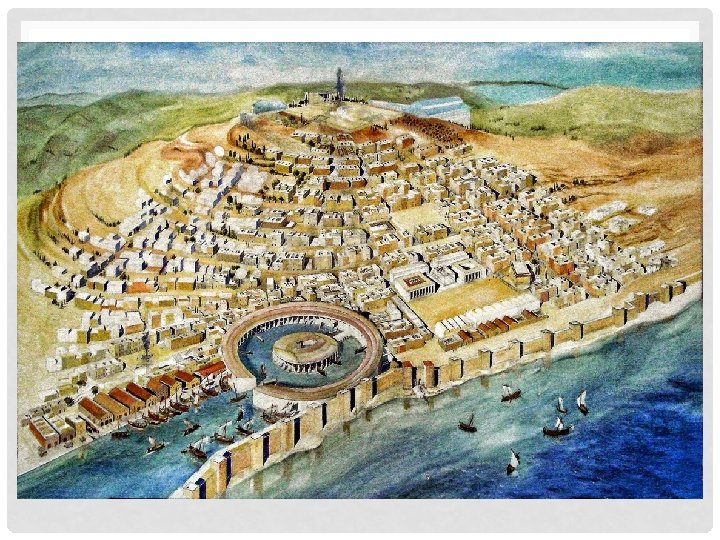
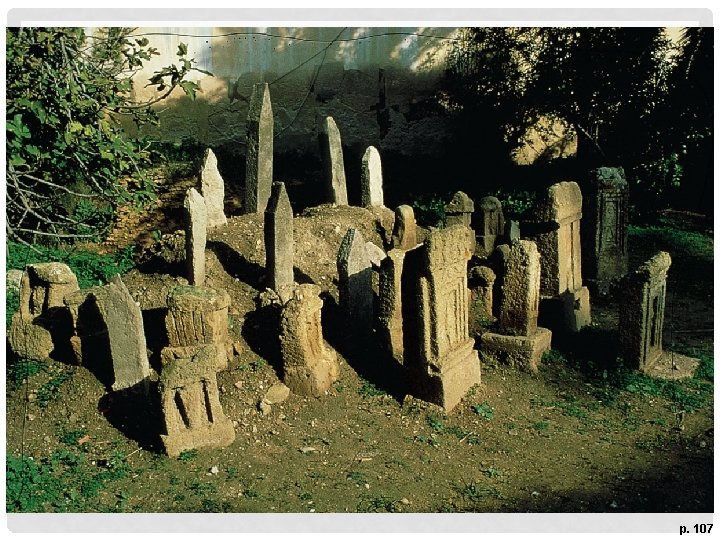
CARTHAGE • Modern day Tunisia • Inner and outer harbor • Inner: 220 warships • Outer: merchant ships • 22 mile long wall that circled the entire city • 400, 000 population • One of largest cities in the world by 500 BCE • Navy • Military power of Carthage • Galleys • Propelled by rows of oars • Up to 170 rowers • Evidence of trade with Sub-Saharan Africa • Child Sacrifice
p. 107
- Slides: 31