
The Medieval Period Old English and Middle English


- Slides: 22
The Medieval Period (Old English and Middle English)
What are the Middle Ages? � � A period in European history marked by the fall of the Western Roman Empire and lasting until the beginning of the Renaissance. (roughly 500 – 1500 AD) Divided into three periods: Early, High, and Late “Medieval” is an adjective used to describe things associated with the Middle Ages. Some scholars, especially those during the Renaissance and Enlightenment periods, viewed the Middle Ages as the Dark Ages, a time when civilization was mired in superstition and ignorance
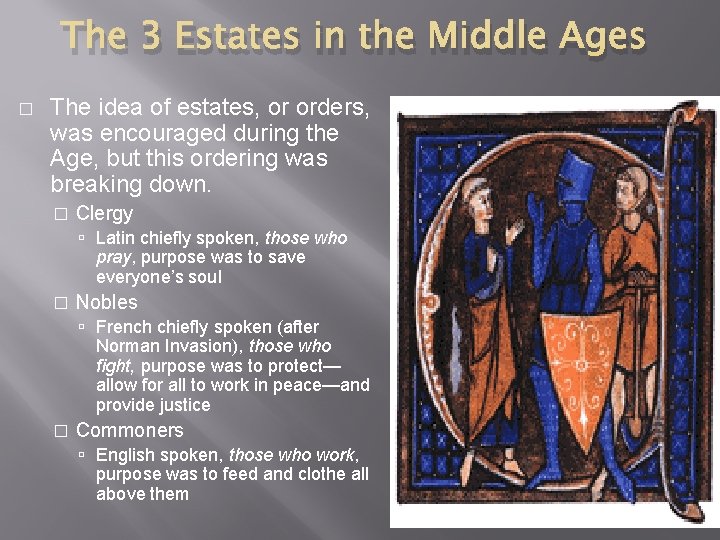
The 3 Estates in the Middle Ages � The idea of estates, or orders, was encouraged during the Age, but this ordering was breaking down. � Clergy Latin chiefly spoken, those who pray, purpose was to save everyone’s soul � Nobles French chiefly spoken (after Norman Invasion), those who fight, purpose was to protect— allow for all to work in peace—and provide justice � Commoners English spoken, those who work, purpose was to feed and clothe all above them
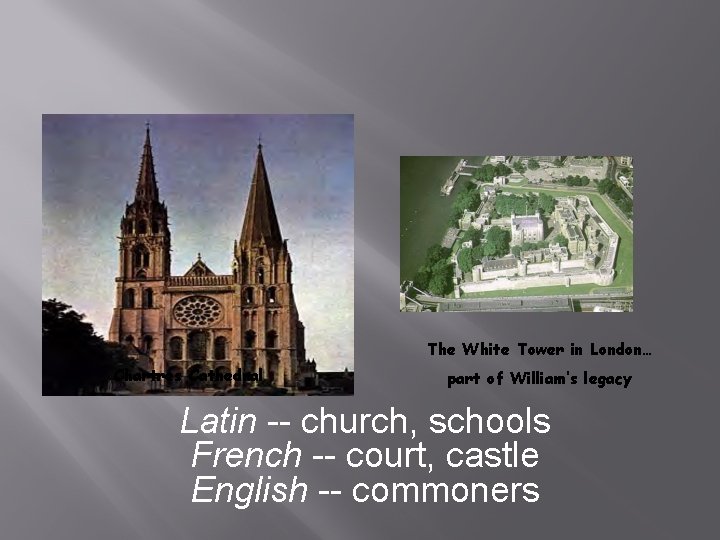
The White Tower in London… Chartres Cathedral part of William’s legacy Latin -- church, schools French -- court, castle English -- commoners
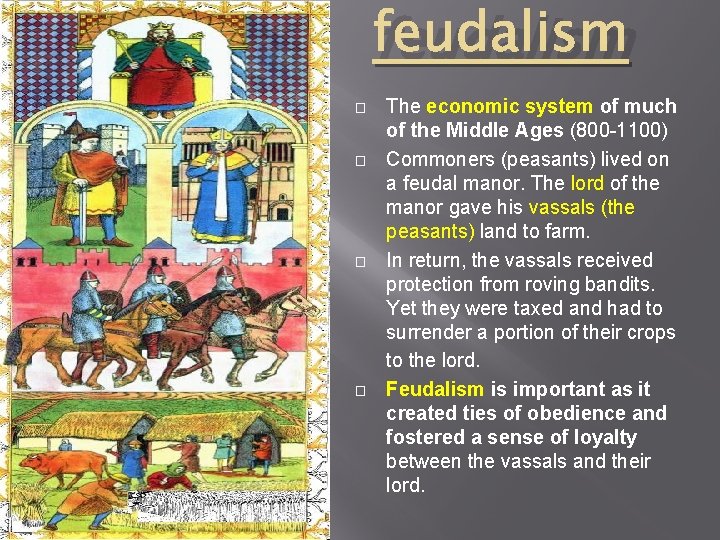
feudalism � � The economic system of much of the Middle Ages (800 -1100) Commoners (peasants) lived on a feudal manor. The lord of the manor gave his vassals (the peasants) land to farm. In return, the vassals received protection from roving bandits. Yet they were taxed and had to surrender a portion of their crops to the lord. Feudalism is important as it created ties of obedience and fostered a sense of loyalty between the vassals and their lord.
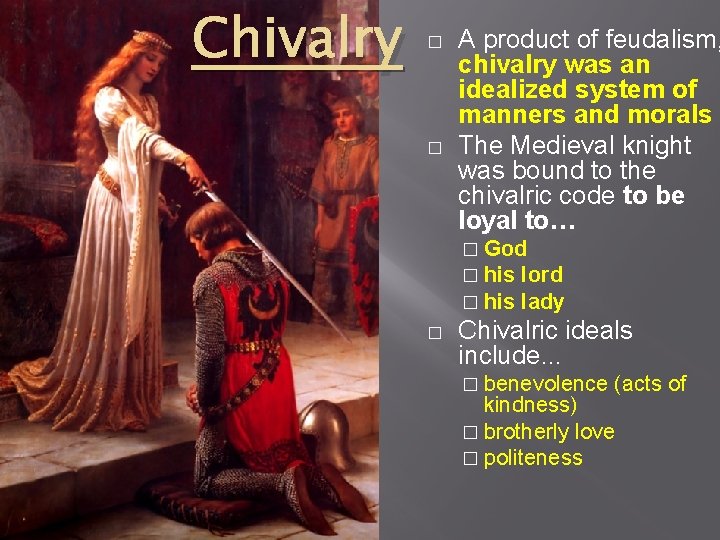
Chivalry � � A product of feudalism, chivalry was an idealized system of manners and morals The Medieval knight was bound to the chivalric code to be loyal to… � God � his lord � his lady � Chivalric ideals include. . . � benevolence (acts of kindness) � brotherly love � politeness
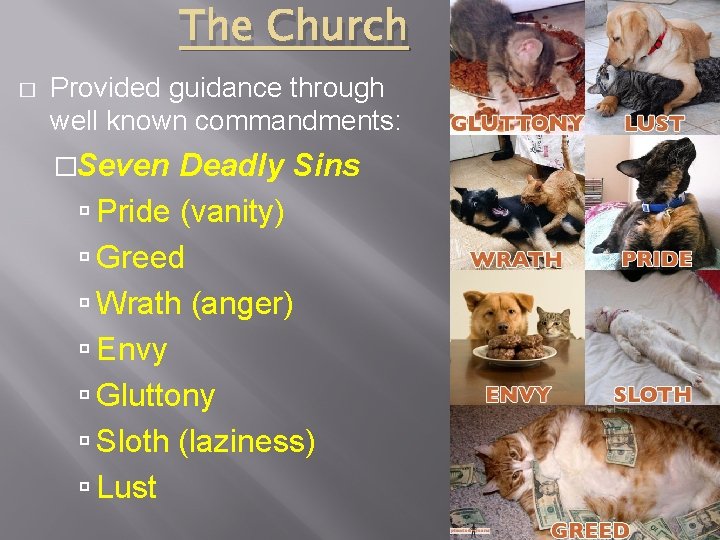
The Church � Provided guidance through well known commandments: �Seven Deadly Sins Pride (vanity) Greed Wrath (anger) Envy Gluttony Sloth (laziness) Lust
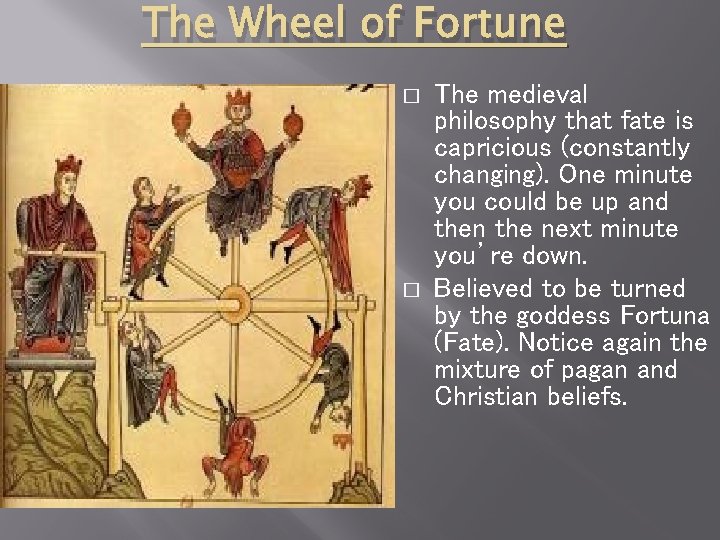
The Wheel of Fortune � � The medieval philosophy that fate is capricious (constantly changing). One minute you could be up and then the next minute you’re down. Believed to be turned by the goddess Fortuna (Fate). Notice again the mixture of pagan and Christian beliefs.
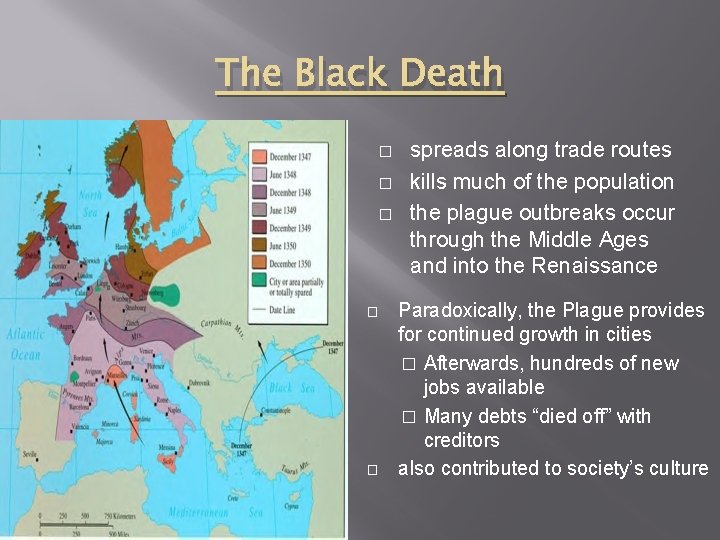
The Black Death � � � spreads along trade routes kills much of the population the plague outbreaks occur through the Middle Ages and into the Renaissance Paradoxically, the Plague provides for continued growth in cities � Afterwards, hundreds of new jobs available � Many debts “died off” with creditors also contributed to society’s culture
LITERATURE DURING THE MEDIEVAL PERIOD
Languages Latin was the language of the Roman Catholic Church, which dominated Europe � The Church was the only source of education � Thus, Latin was a common language for Medieval writings. �
Authors � � Catholic clerics were the intellectual center of society in the Middle Ages, and it is their literature that was produced in the greatest quantity. A notable amount of Medieval literature is anonymous. Medieval authors often tended to re-tell and embellish stories they heard or read rather than invent new stories.
Use of Allegory � An allegory is a figurative mode of representation conveying a meaning other than the literal. (example: Animal Farm where the animals represent the Communist Party) � Much of Medieval literature relied on allegory to convey the morals the author had in mind while writing--representations of abstract qualities, events, and institutions are thick in much of the literature of this time.
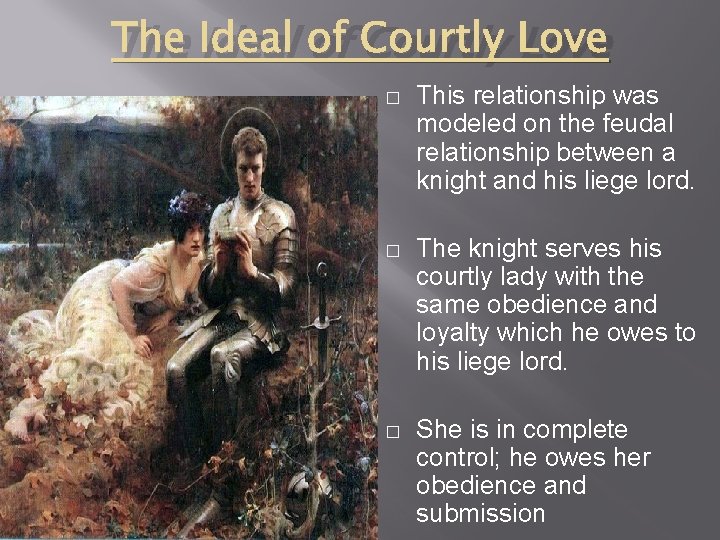
The Ideal of Courtly Love � This relationship was modeled on the feudal relationship between a knight and his liege lord. � The knight serves his courtly lady with the same obedience and loyalty which he owes to his liege lord. � She is in complete control; he owes her obedience and submission
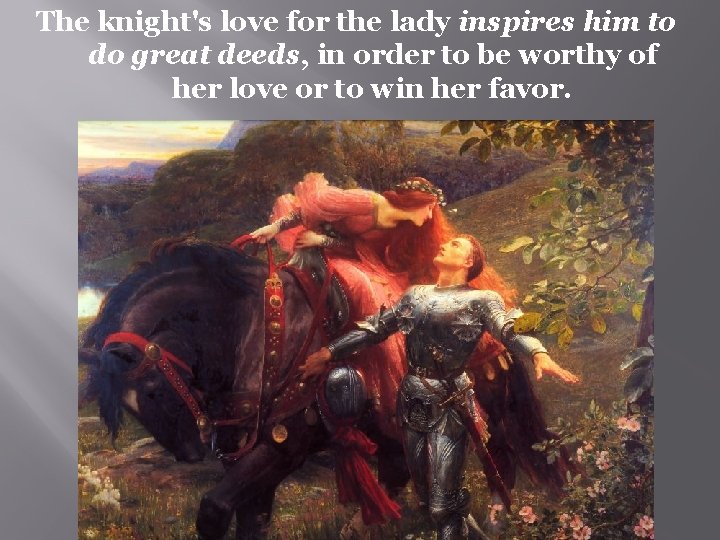
The knight's love for the lady inspires him to do great deeds, in order to be worthy of her love or to win her favor.
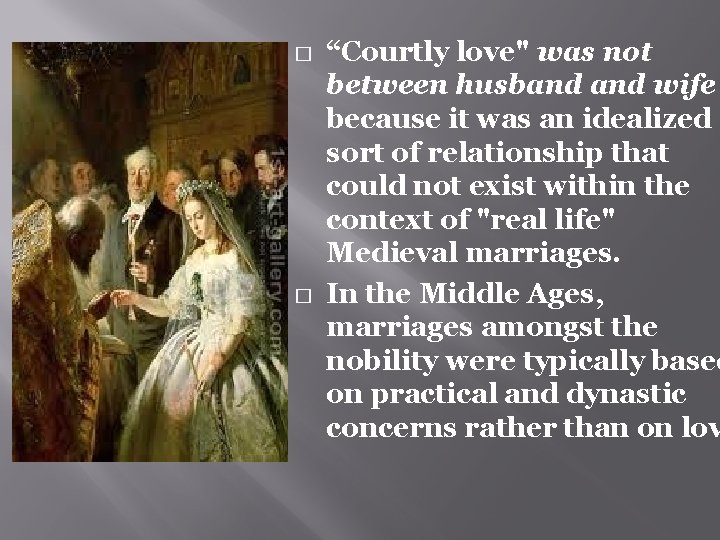
� � “Courtly love" was not between husband wife because it was an idealized sort of relationship that could not exist within the context of "real life" Medieval marriages. In the Middle Ages, marriages amongst the nobility were typically based on practical and dynastic concerns rather than on lov
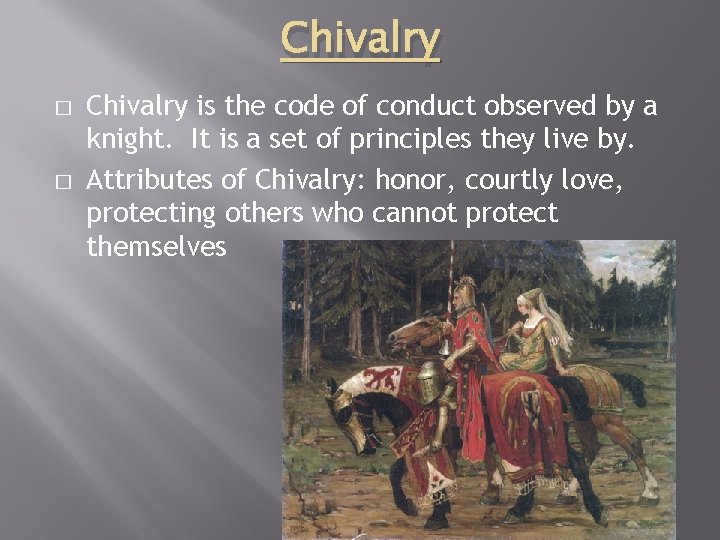
Chivalry � � Chivalry is the code of conduct observed by a knight. It is a set of principles they live by. Attributes of Chivalry: honor, courtly love, protecting others who cannot protect themselves
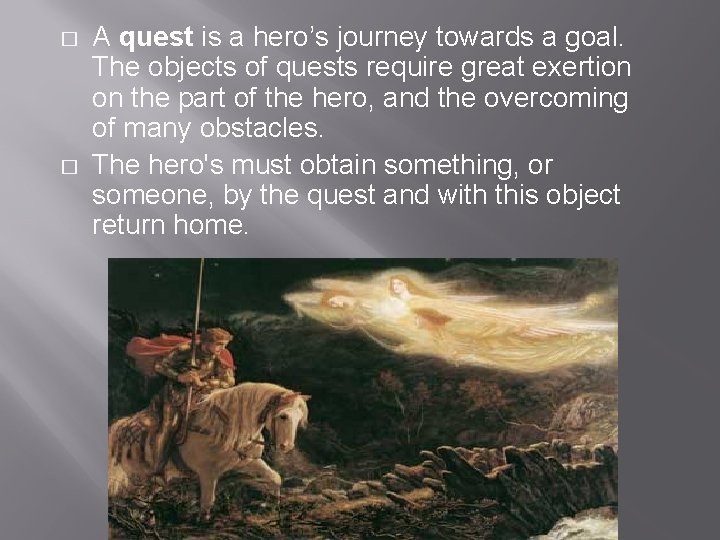
� � A quest is a hero’s journey towards a goal. The objects of quests require great exertion on the part of the hero, and the overcoming of many obstacles. The hero's must obtain something, or someone, by the quest and with this object return home.
Characteristics of Medieval Literature � Heroism � from both Germanic and Christian traditions, sometimes mingled � Divine decent or accomplished � Presentations of idealized behavior � literature as moral lesson loyalty to king chivalry � use of kennings (especially in Beowulf) �A figurative, usually compound expression used in place of a name or noun. Example, storm of swords is a kenning for battle.
Characteristics of Medieval Literature � Romance � Knights/Chivalry �A narrative in prose or verse that tells of the adventures and heroic exploits of chivalric heroes exploits of knights often a supernatural element involved � Christian message � concern with salvation and the � no interest in social change world to come until the late 14 th century Chaucer signals new thinking, up-ending social order