
The Medieval Church ORIGINS AND EARLY BELIEFS Up
The Medieval Church ORIGINS AND EARLY BELIEFS
Up From the Dark Ages Learning and literacy suffered in the western half of the Roman Empire: - Germanic invaders destroyed great libraries and centers of knowledge - Christian Zealots, a person of excessive belief, destroyed any book other than the bible and considered them as a dangerous work of the devil libraries destroyed, non-Christian philosophers lostlittle was left to stimulate reason and debate. Superstition reigned
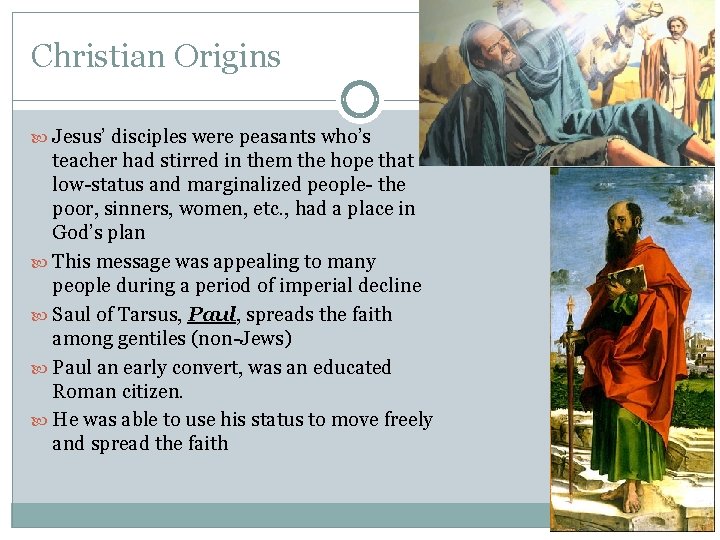
Christian Origins Jesus’ disciples were peasants who’s teacher had stirred in them the hope that low-status and marginalized people- the poor, sinners, women, etc. , had a place in God’s plan This message was appealing to many people during a period of imperial decline Saul of Tarsus, Paul, spreads the faith among gentiles (non-Jews) Paul an early convert, was an educated Roman citizen. He was able to use his status to move freely and spread the faith
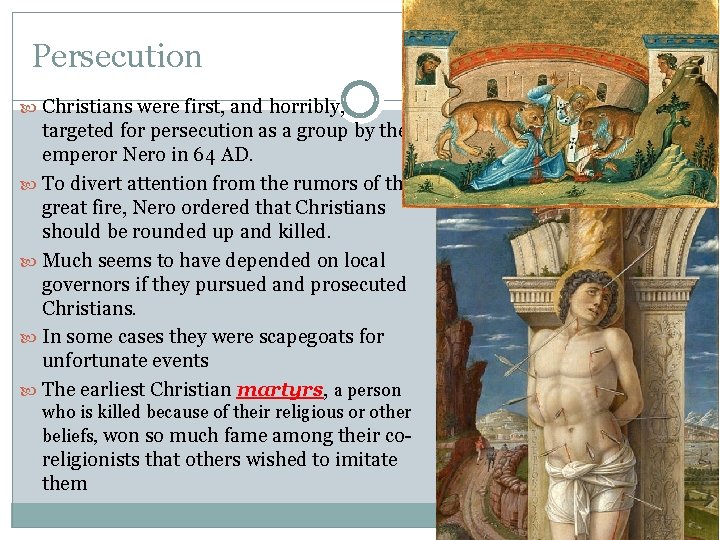
Persecution Christians were first, and horribly, targeted for persecution as a group by the emperor Nero in 64 AD. To divert attention from the rumors of the great fire, Nero ordered that Christians should be rounded up and killed. Much seems to have depended on local governors if they pursued and prosecuted Christians. In some cases they were scapegoats for unfortunate events The earliest Christian martyrs, a person who is killed because of their religious or other beliefs, won so much fame among their co- religionists that others wished to imitate them
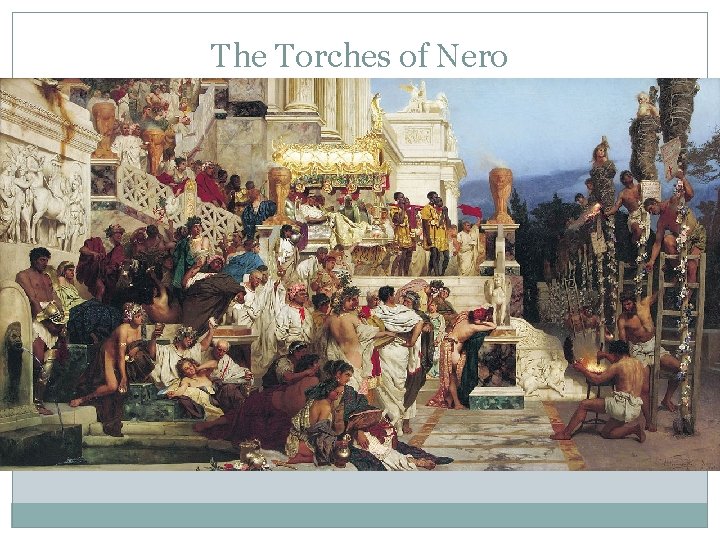
The Torches of Nero
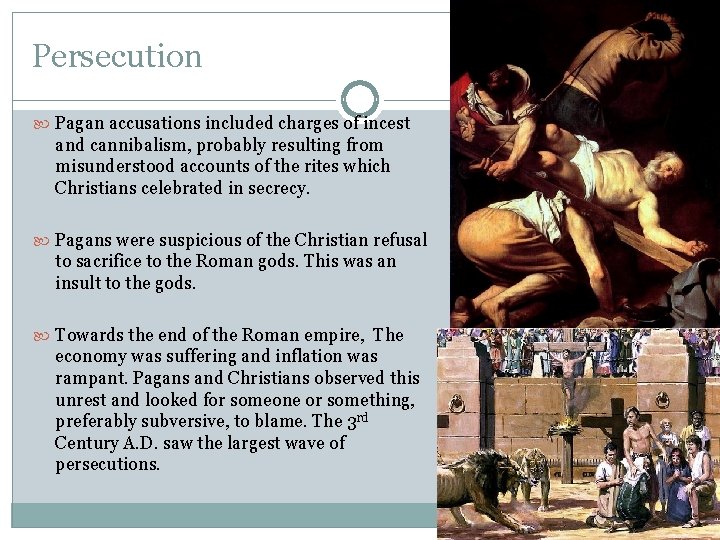
Persecution Pagan accusations included charges of incest and cannibalism, probably resulting from misunderstood accounts of the rites which Christians celebrated in secrecy. Pagans were suspicious of the Christian refusal to sacrifice to the Roman gods. This was an insult to the gods. Towards the end of the Roman empire, The economy was suffering and inflation was rampant. Pagans and Christians observed this unrest and looked for someone or something, preferably subversive, to blame. The 3 rd Century A. D. saw the largest wave of persecutions.
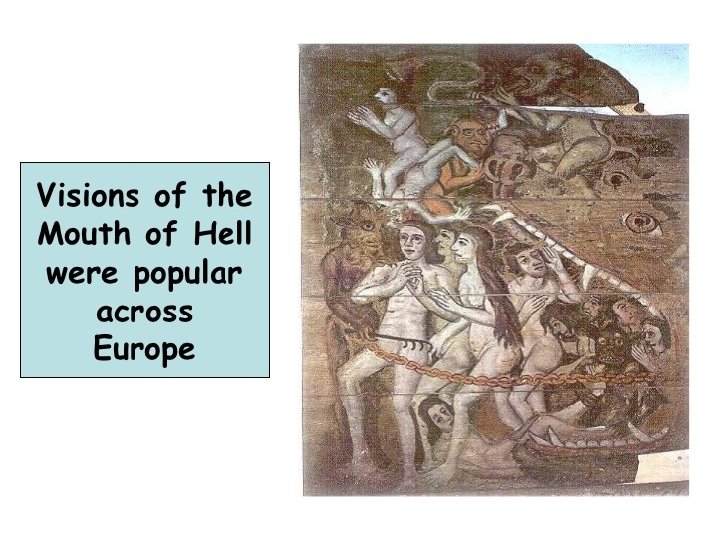
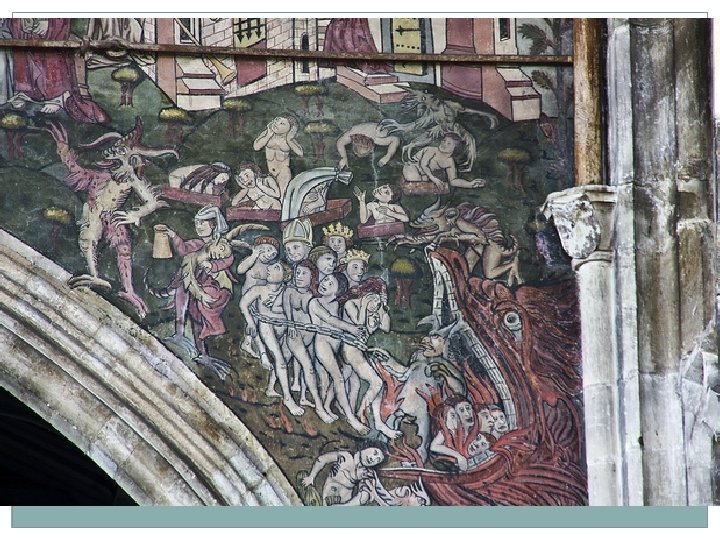
Struggles with Evil In the Medieval period: Belief in evil spirits was universal Angels, good spirits protect/ Demons seduce Lucifer, the devil started out as an angel, but fell because of his arrogance and selfishness Hell for medieval people is a real and gory place where they will be punished for their sins
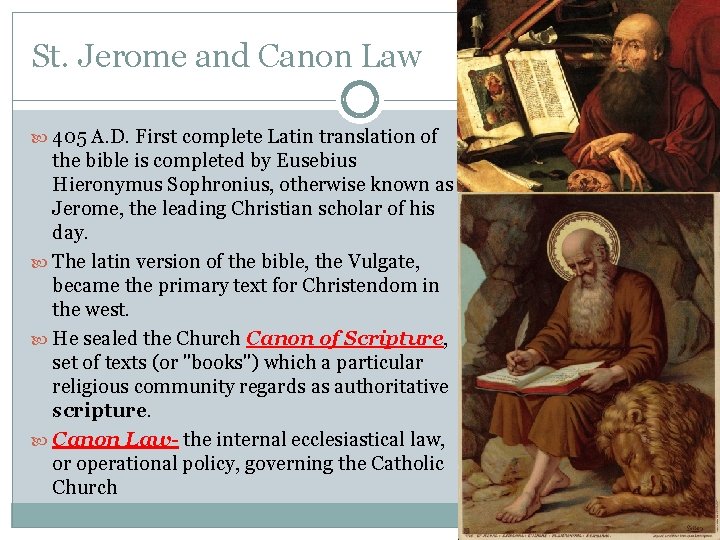
St. Jerome and Canon Law 405 A. D. First complete Latin translation of the bible is completed by Eusebius Hieronymus Sophronius, otherwise known as Jerome, the leading Christian scholar of his day. The latin version of the bible, the Vulgate, became the primary text for Christendom in the west. He sealed the Church Canon of Scripture, set of texts (or "books") which a particular religious community regards as authoritative scripture. Canon Law- the internal ecclesiastical law, or operational policy, governing the Catholic Church
Defining Sin and Heresy Medieval people were obsessed with the idea of sin Humans are considered sinful because of their pride and will According to the bible, sin entered through Adam. It is considered nothing more than disobedience to God. In 7 th Century, Pope Gregory I outlined Seven deadly sins: -Pride, covetousness, lust, lechery, envy, gluttony, anger or wrath, and sloth Church outlined Seven Virtues: -Wisdom, courage, temperance, justice, love, faith, and hope By 12 th century, medieval church prescribed penalties of expulsion, imprisonment, confiscation of property, or execution for anyone who did not conform to the rules.
St. Augustine and Original Sin St Augustine was Bishop of Hippo, in what is now Algeria, from 396 to 430. one of the greatest theologians in history and his ideas still influence Christian thought today Original sin is an Augustine Christian doctrine that says that everyone is born sinful. Born with a built-in urge to do bad things and to disobey God. It is an important doctrine within the Roman Catholic Church First Council of Ephesus (431 A. D. ), Original Sin is considered part of canon law, anyone who disagrees with decision were excommunicated from the church - this meeting also established guidelines for heresy
St. Augustine and Original Sin Augustine did not invent the doctrine of original sin It provides an explanation for human suffering and guilt by teaching that those human beings somehow deserved these things. Human beings deserve to suffer because the first parents sinned. And since humanity deserves the bad things it gets, humanity can comfort itself with the idea that it has a just rather than an unjust God. This made the presence of evil in the world easier to understand
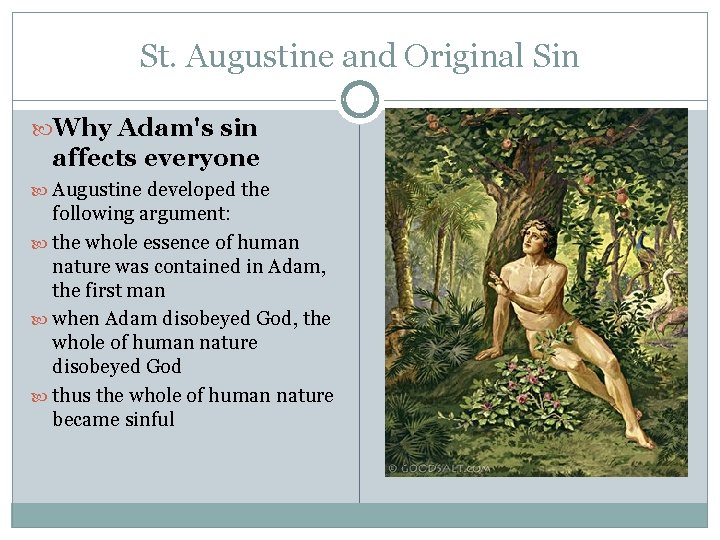
St. Augustine and Original Sin Why Adam's sin affects everyone Augustine developed the following argument: the whole essence of human nature was contained in Adam, the first man when Adam disobeyed God, the whole of human nature disobeyed God thus the whole of human nature became sinful
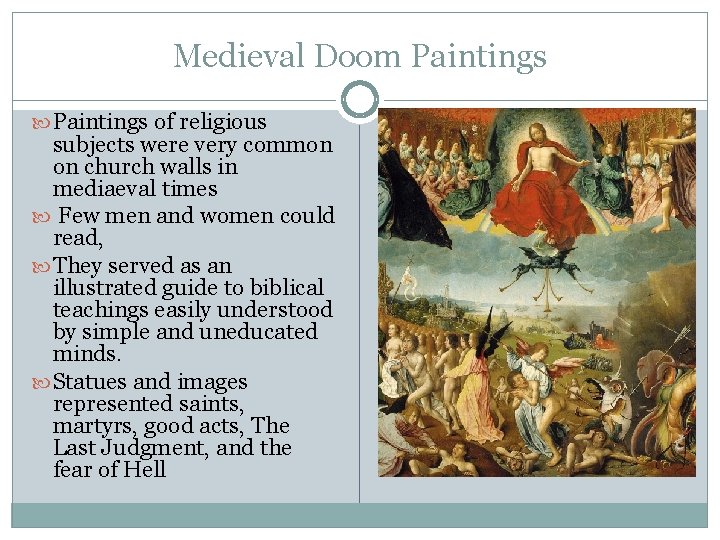
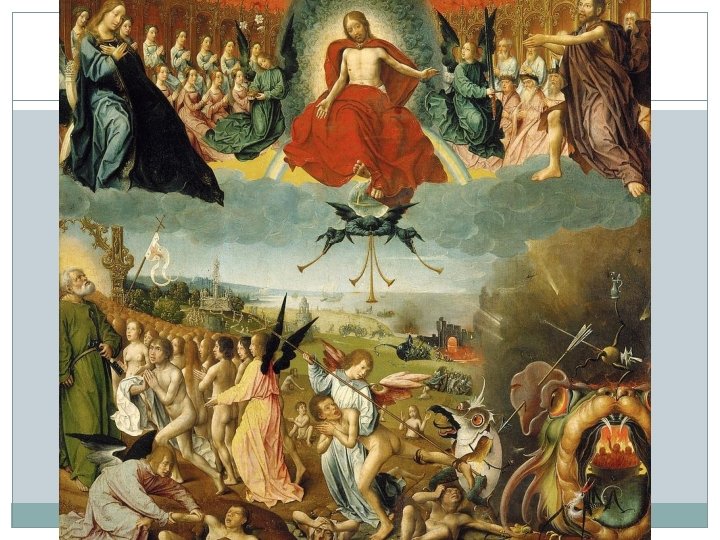
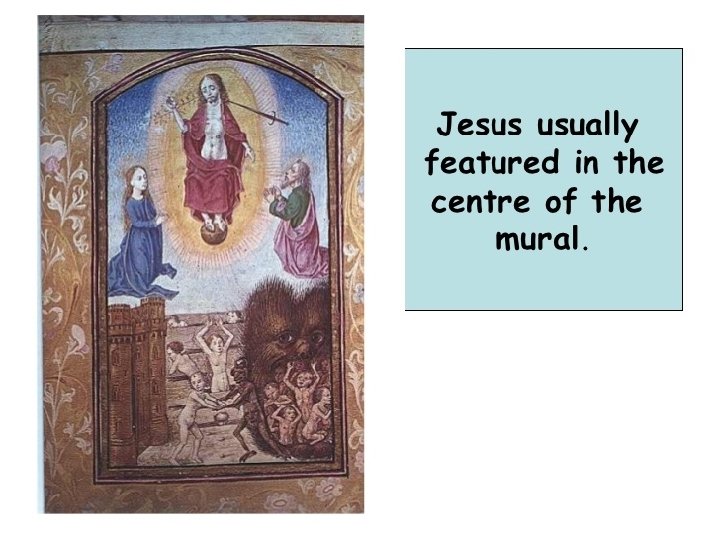
Medieval Doom Paintings of religious subjects were very common on church walls in mediaeval times Few men and women could read, They served as an illustrated guide to biblical teachings easily understood by simple and uneducated minds. Statues and images represented saints, martyrs, good acts, The Last Judgment, and the fear of Hell
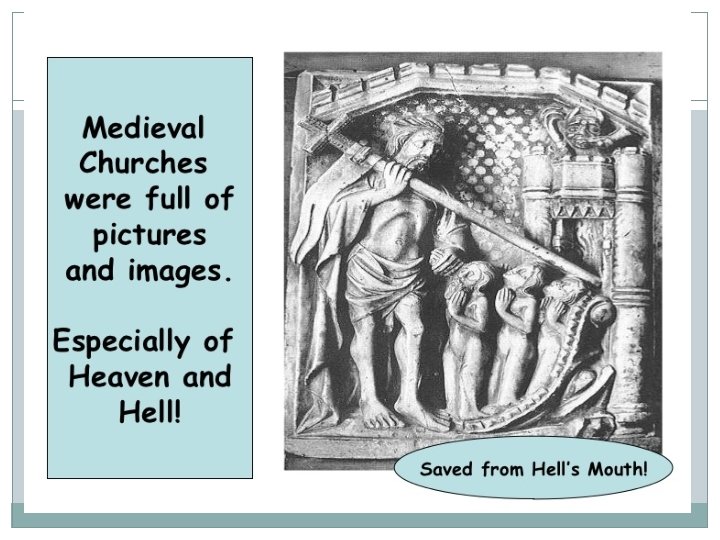
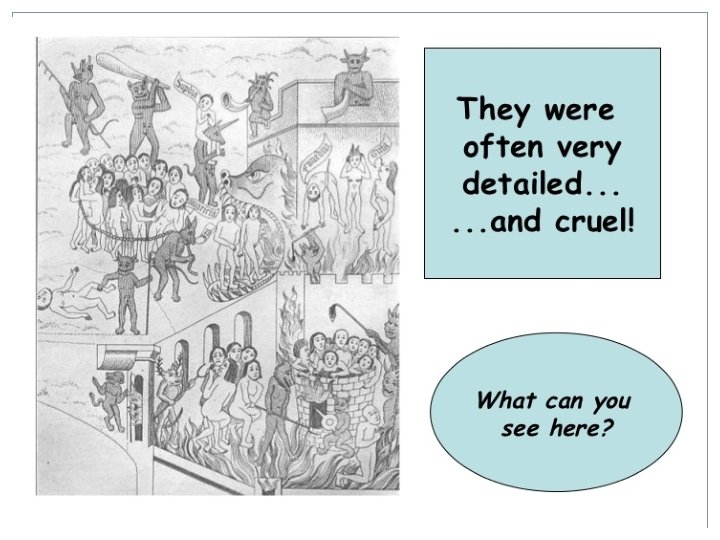
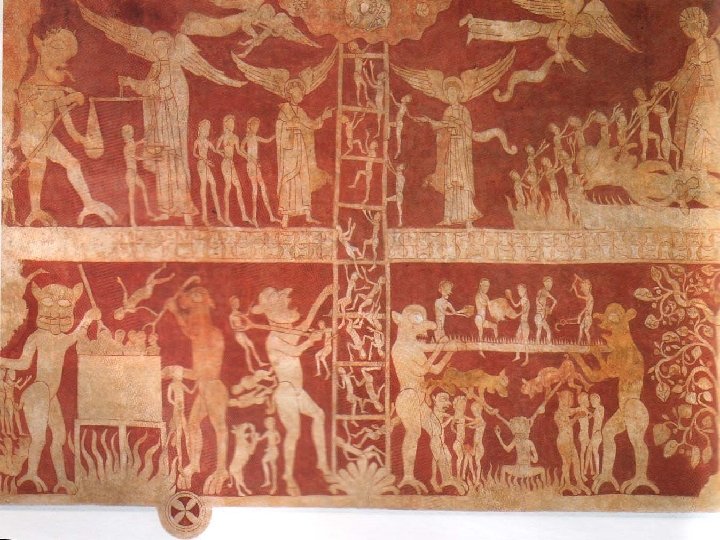
starter activity Describe the picture or source here.
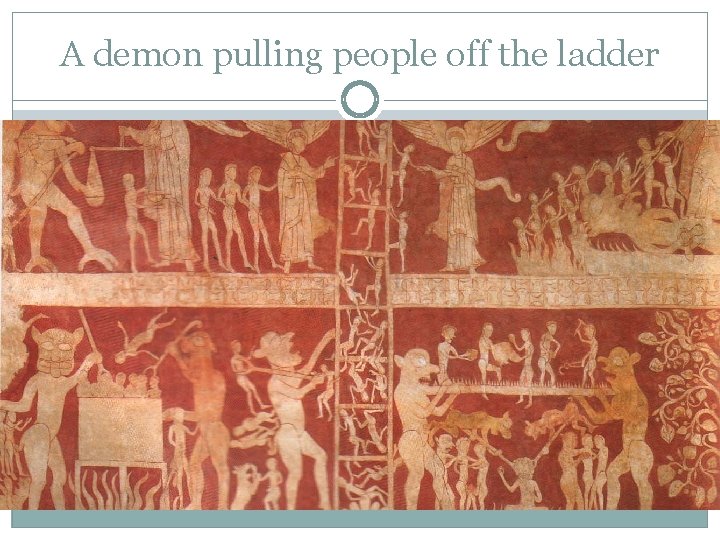
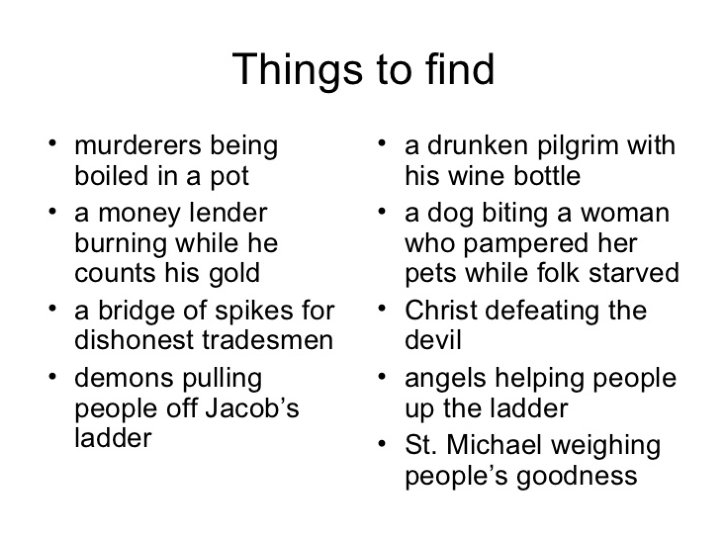
A demon pulling people off the ladder
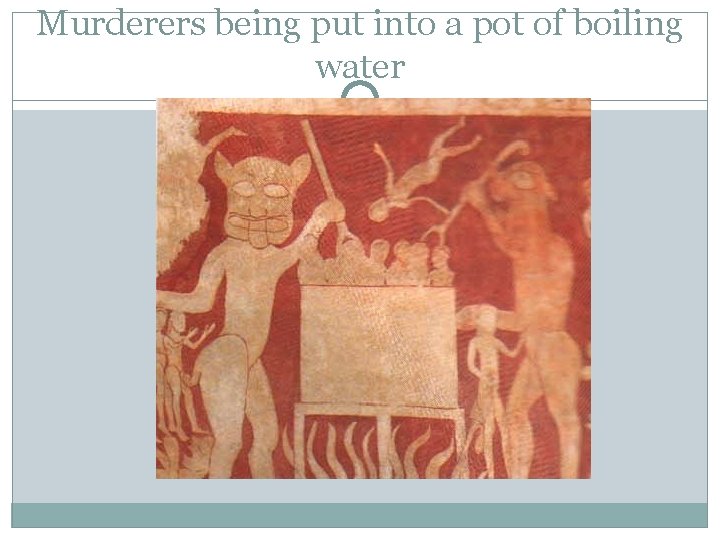
Murderers being put into a pot of boiling water
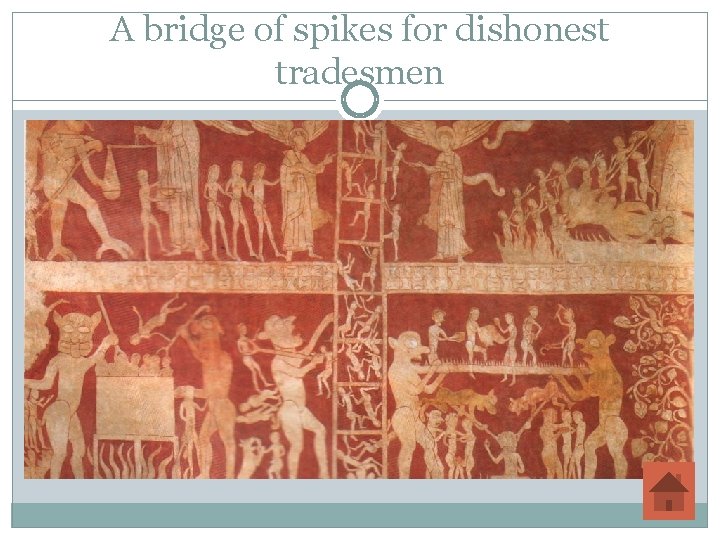
A bridge of spikes for dishonest tradesmen
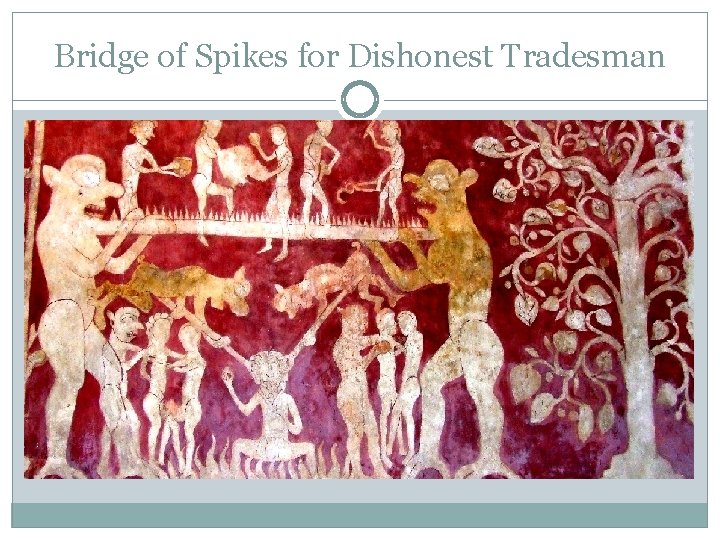
Bridge of Spikes for Dishonest Tradesman
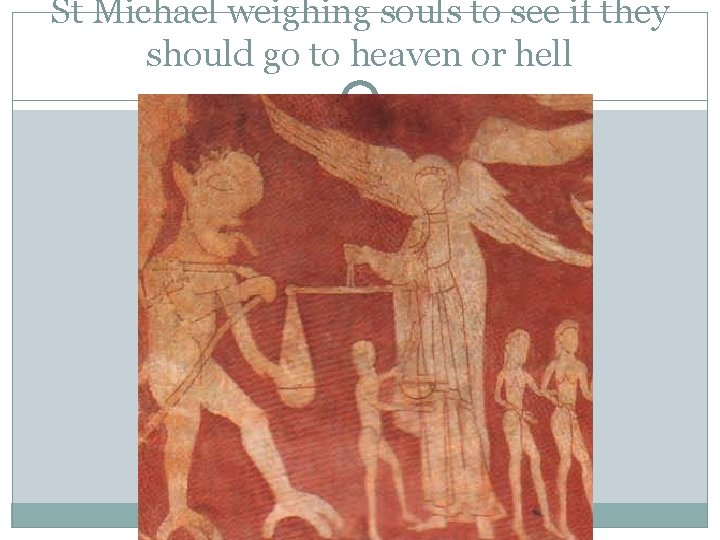
St Michael weighing souls to see if they should go to heaven or hell
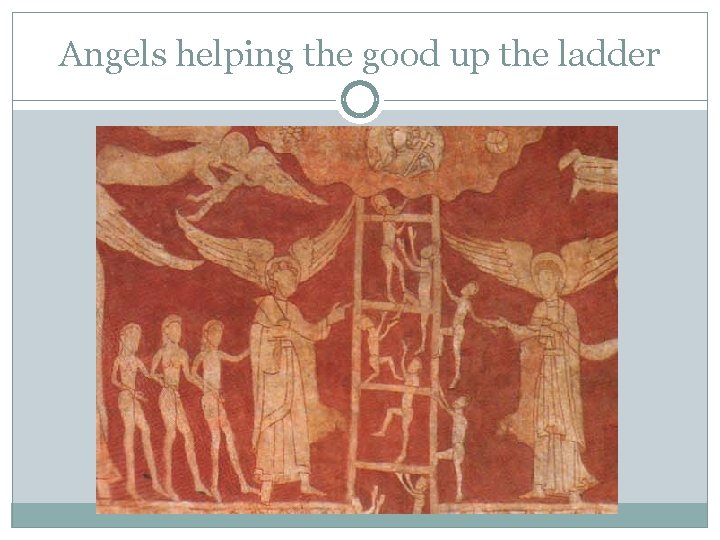
Angels helping the good up the ladder
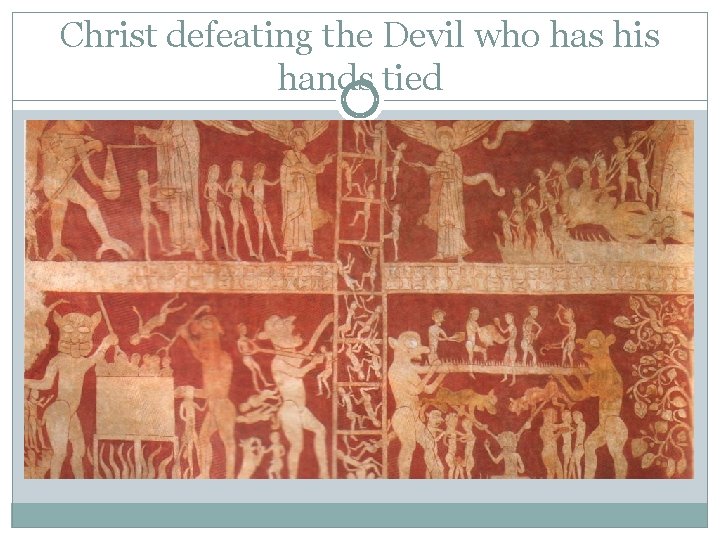
Christ defeating the Devil who has his hands tied
- Slides: 28