
The medical service quality discrepancy between different districts
The medical service quality discrepancy between different districts: a study based on a hospital in Taichung. Group leader: LIN, PEI-WEN Group members: YANG, PIE-YU / SHI, ZHEN-CHANG Li, YA-LI / HUANG, CIAO-YUAN HUANG, LI-HUEI/ LIU, YI-Xuan 1
Table of Contents Introduction Literature Review Methodology Research Result Conclusion and Recommendations 2
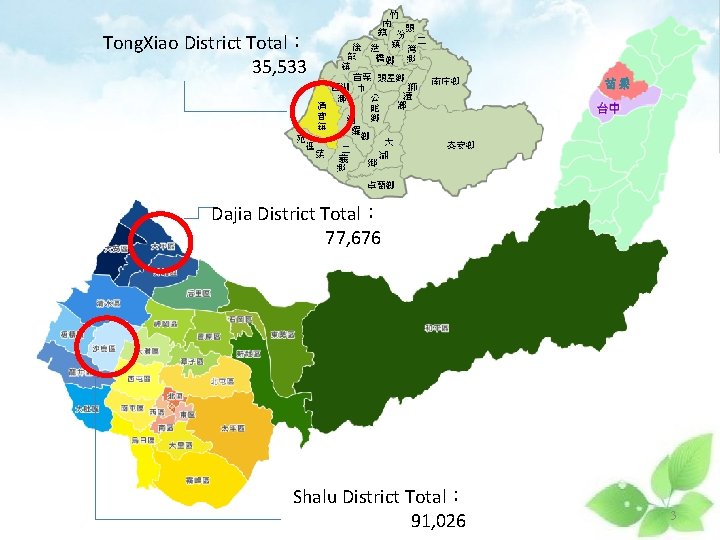
Tong. Xiao District Total: 35, 533 苗栗 Dajia District Total: 77, 676 Shalu District Total: 91, 026 3
On account of people’s rising awareness to their own health, patients’ demands for medical care gradually change from the passive treatment, to take the initiative to choose medical services. • the hospitals put an emphasis In the past on their medical profession. Nowadays • the hospitals value customers’ satisfaction. Research Purpose: We hope to explore the factors influencing the satisfaction of the medical services through the survey of patients’ satisfaction toward a hospital, and give them some specific suggestion for improvements according to the survey. 4
Introduction Literature Review Methodology research Result Conclusion and Recommendations 5
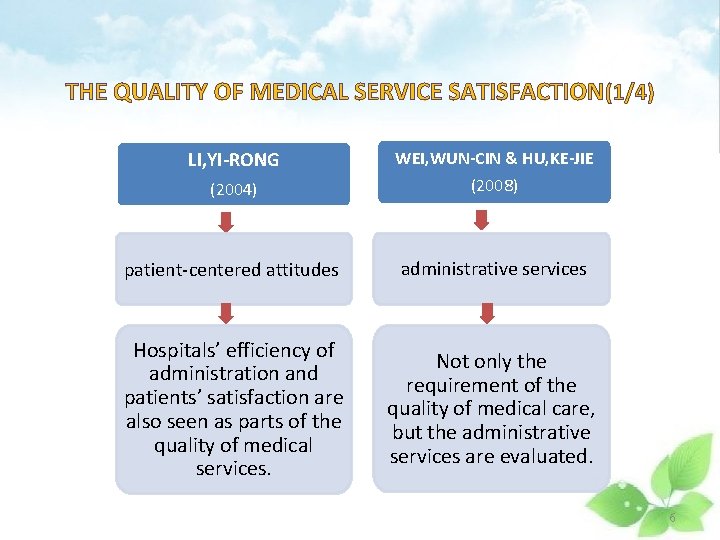
THE QUALITY OF MEDICAL SERVICE SATISFACTION(1/4) (2004) WEI, WUN-CIN & HU, KE-JIE (2008) patient-centered attitudes administrative services Hospitals’ efficiency of administration and patients’ satisfaction are also seen as parts of the quality of medical services. Not only the requirement of the quality of medical care, but the administrative services are evaluated. LI, YI-RONG 6
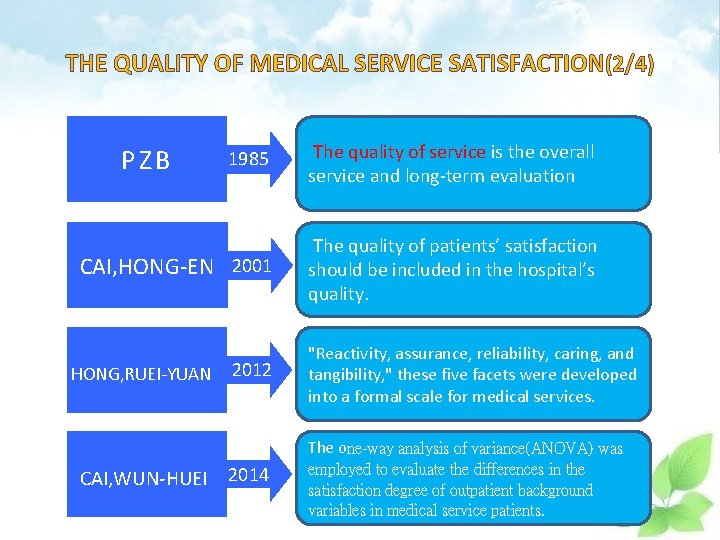
THE QUALITY OF MEDICAL SERVICE SATISFACTION(2/4) 1985 The quality of service is the overall service and long-term evaluation CAI, HONG-EN 2001 The quality of patients’ satisfaction should be included in the hospital’s quality. PZB HONG, RUEI-YUAN 2012 CAI, WUN-HUEI 2014 "Reactivity, assurance, reliability, caring, and tangibility, " these five facets were developed into a formal scale for medical services. The one-way analysis of variance(ANOVA) was employed to evaluate the differences in the satisfaction degree of outpatient background variables in medical service patients.
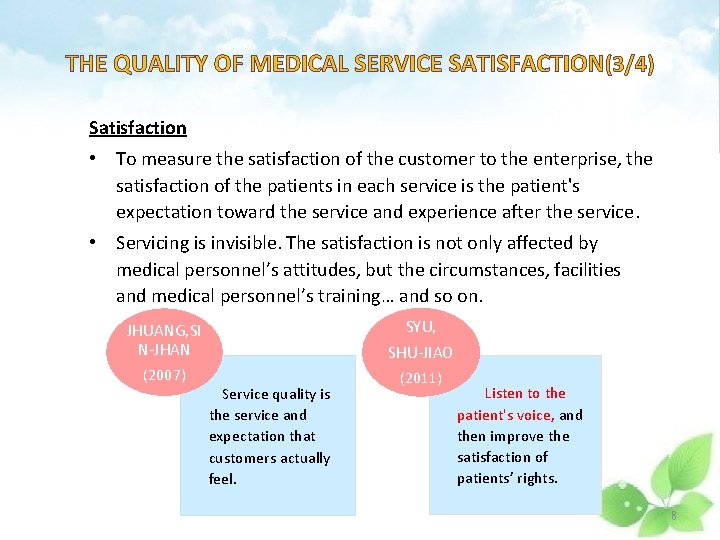
THE QUALITY OF MEDICAL SERVICE SATISFACTION(3/4) Satisfaction • To measure the satisfaction of the customer to the enterprise, the satisfaction of the patients in each service is the patient's expectation toward the service and experience after the service. • Servicing is invisible. The satisfaction is not only affected by medical personnel’s attitudes, but the circumstances, facilities and medical personnel’s training… and so on. JHUANG, SI N-JHAN SYU, SHU-JIAO (2007) (2011) Service quality is the service and expectation that customers actually feel. Listen to the patient's voice, and then improve the satisfaction of patients’ rights. 8
THE QUALITY OF MEDICAL SERVICE SATISFACTION(4/4) Satisfaction of patients in each service is the gap between the patient's expectations of medical services and services after the cognitive experience, which expresses the degree of the satisfaction or dissatisfaction When the experience is not up to the expectation, it is not satisfied. When the experience exceeds expectation, it is satisfied. The eager to improve the satisfaction from the service process to the results is an important of service satisfaction. 9
Introduction Literature Review Methodology Research Result Conclusion and Recommendations 10
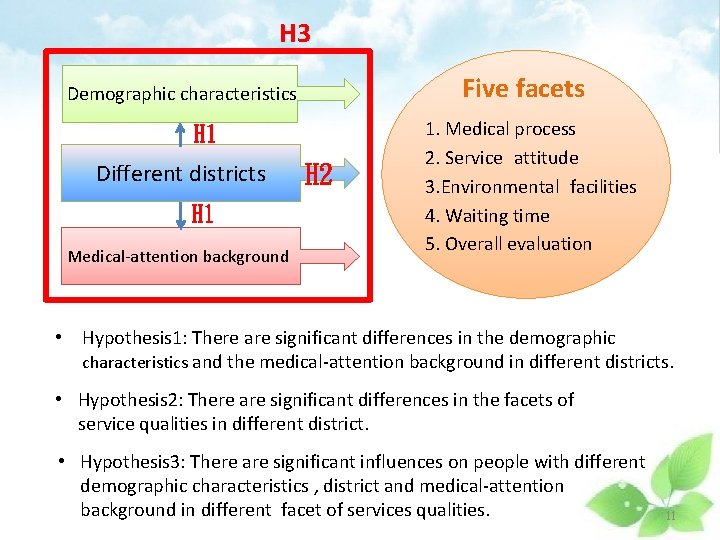
H 3 Five facets Demographic characteristics H 1 Different districts H 1 Medical-attention background H 2 1. Medical process 2. Service attitude 3. Environmental facilities 4. Waiting time 5. Overall evaluation • Hypothesis 1: There are significant differences in the demographic characteristics and the medical-attention background in different districts. • Hypothesis 2: There are significant differences in the facets of service qualities in different district. • Hypothesis 3: There are significant influences on people with different demographic characteristics , district and medical-attention background in different facet of services qualities. 11
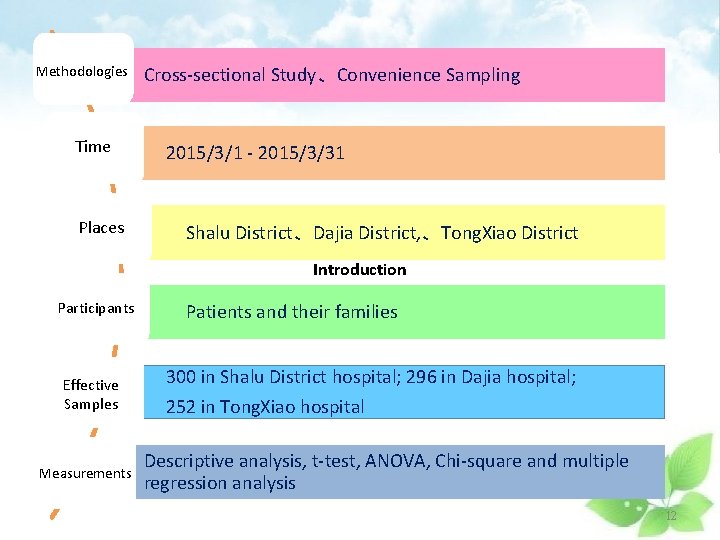
Methodologies Time Places Cross-sectional Study、Convenience Sampling 2015/3/1 - 2015/3/31 Shalu District、Dajia District, 、Tong. Xiao District Introduction Participants Effective Samples Measurements Patients and their families 300 in Shalu District hospital; 296 in Dajia hospital; 252 in Tong. Xiao hospital Descriptive analysis, t-test, ANOVA, Chi-square and multiple regression analysis 12
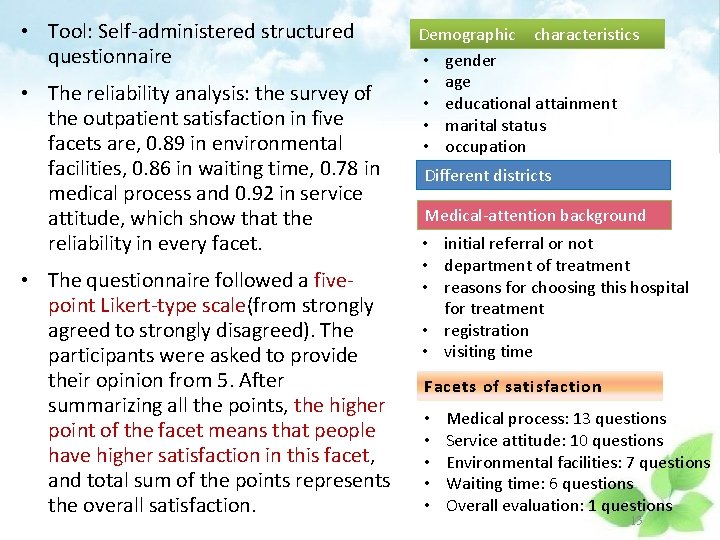
• Tool: Self-administered structured questionnaire • The reliability analysis: the survey of the outpatient satisfaction in five facets are, 0. 89 in environmental facilities, 0. 86 in waiting time, 0. 78 in medical process and 0. 92 in service attitude, which show that the reliability in every facet. • The questionnaire followed a fivepoint Likert-type scale(from strongly agreed to strongly disagreed). The participants were asked to provide their opinion from 5. After summarizing all the points, the higher point of the facet means that people have higher satisfaction in this facet, and total sum of the points represents the overall satisfaction. Demographic characteristics • gender • age • educational attainment • marital status • occupation Different districts Medical-attention background • initial referral or not • department of treatment • reasons for choosing this hospital for treatment • registration • visiting time Facets of satisfaction • • • Medical process: 13 questions Service attitude: 10 questions Environmental facilities: 7 questions Waiting time: 6 questions Overall evaluation: 1 questions 13
Introduction Literature Review Methodology Research Result Conclusion and Recommendations 14
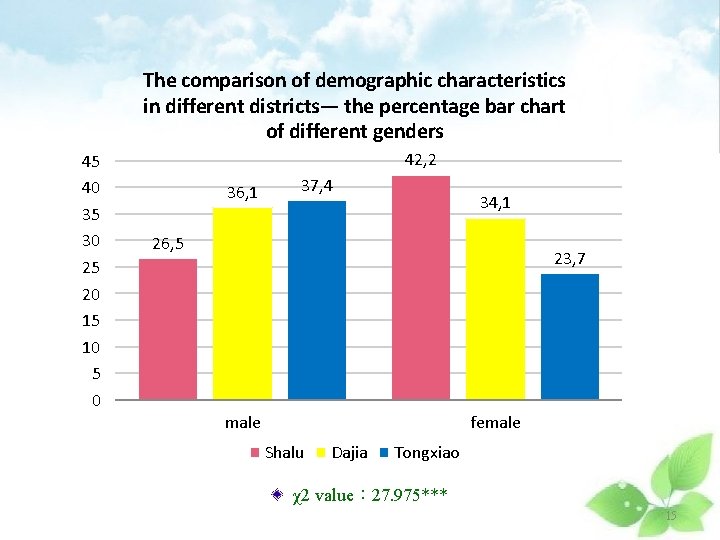
The comparison of demographic characteristics in different districts— the percentage bar chart of different genders 45 40 35 30 25 20 15 10 5 0 42, 2 36, 1 37, 4 34, 1 26, 5 23, 7 male female Shalu Dajia Tongxiao χ2 value: 27. 975*** 15
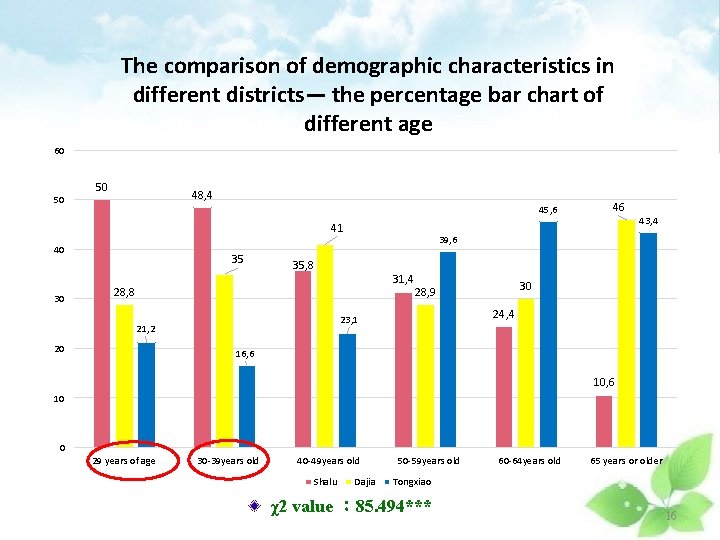
The comparison of demographic characteristics in different districts— the percentage bar chart of different age 60 50 50 48, 4 45, 6 41 40 30 35 31, 4 28, 8 20 43, 4 39, 6 35, 8 30 28, 9 24, 4 23, 1 21, 2 46 16, 6 10 0 29 years of age 30 -39 years old 40 -49 years old Shalu Dajia 50 -59 years old 60 -64 years old 65 years or older Tongxiao χ2 value : 85. 494*** 16
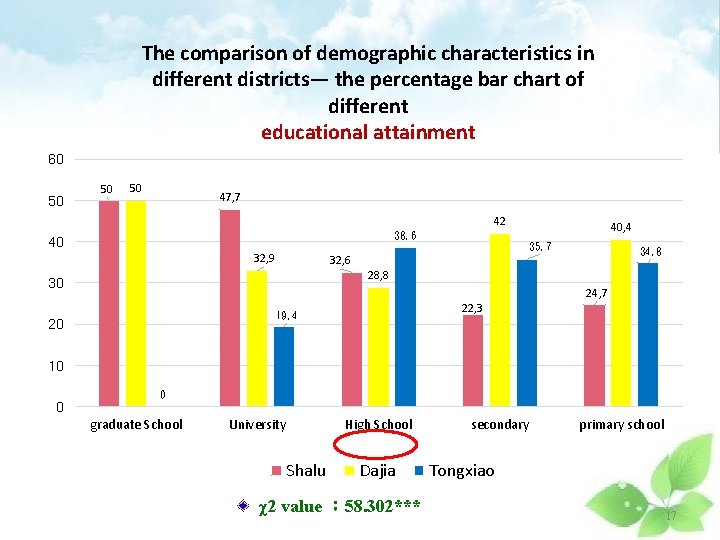
The comparison of demographic characteristics in different districts— the percentage bar chart of different educational attainment 60 50 50 50 47, 7 42 38, 6 40 32, 9 40, 4 35, 7 34, 8 32, 6 28, 8 30 24, 7 22, 3 19, 4 20 10 0 0 graduate School University High School Shalu Dajia χ2 value : 58. 302*** secondary primary school Tongxiao 17
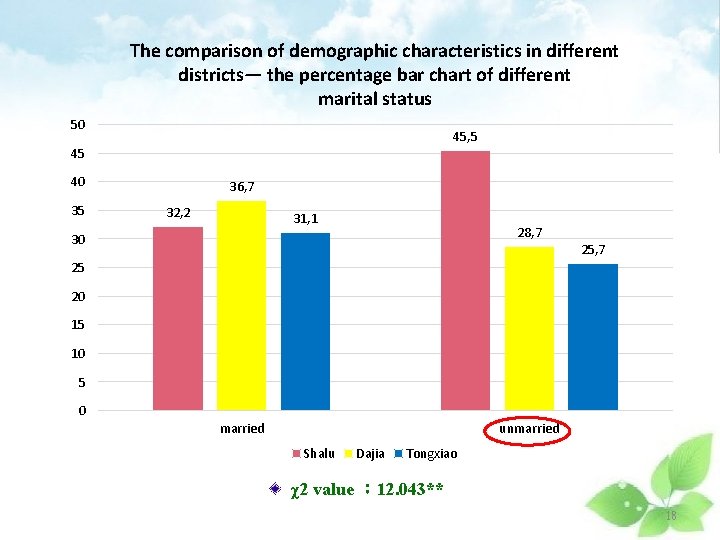
The comparison of demographic characteristics in different districts— the percentage bar chart of different marital status 50 45, 5 45 40 35 36, 7 32, 2 31, 1 28, 7 30 25, 7 25 20 15 10 5 0 married unmarried Shalu Dajia Tongxiao χ2 value : 12. 043** 18
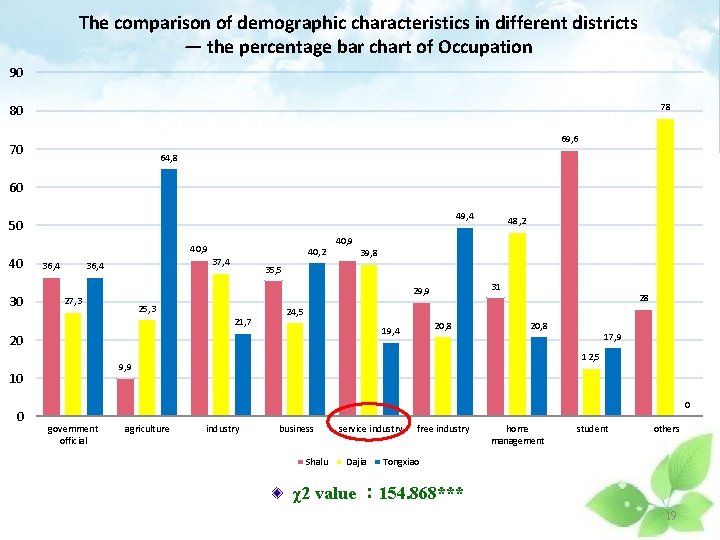
The comparison of demographic characteristics in different districts — the percentage bar chart of Occupation 90 78 80 69, 6 70 64, 8 60 49, 4 50 40, 9 40 30 36, 4 40, 2 37, 4 36, 4 40, 9 39, 8 35, 5 25, 3 21, 7 28 24, 5 20, 8 19, 4 20 20, 8 17, 9 12, 5 9, 9 10 0 31 29, 9 27, 3 48, 2 0 government official agriculture industry business Shalu service industry Dajia free industry home management student others Tongxiao χ2 value : 154. 868*** 19
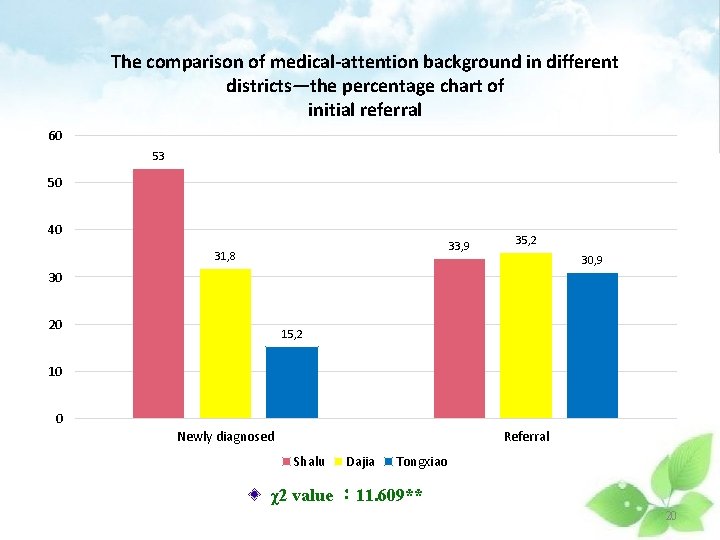
The comparison of medical-attention background in different districts—the percentage chart of initial referral 60 53 50 40 33, 9 31, 8 35, 2 30, 9 30 20 15, 2 10 0 Newly diagnosed Referral Shalu Dajia Tongxiao χ2 value : 11. 609** 20
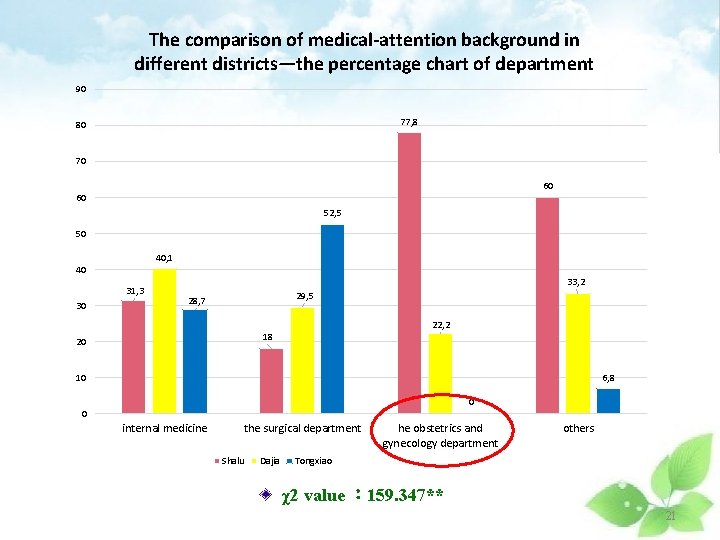
The comparison of medical-attention background in different districts—the percentage chart of department 90 77, 8 80 70 60 60 52, 5 50 40, 1 40 31, 3 30 33, 2 29, 5 28, 7 22, 2 18 20 10 6, 8 0 0 internal medicine the surgical department Shalu Dajia he obstetrics and gynecology department others Tongxiao χ2 value : 159. 347** 21
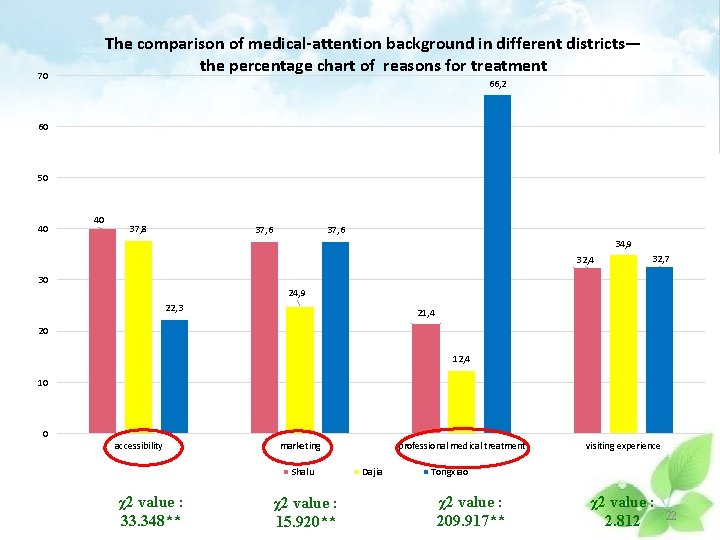
The comparison of medical-attention background in different districts— the percentage chart of reasons for treatment 70 66, 2 60 50 40 40 37, 8 37, 6 34, 9 32, 4 32, 7 30 24, 9 22, 3 21, 4 20 12, 4 10 0 accessibility marketing Shalu χ2 value : 33. 348** χ2 value : 15. 920** professional medical treatment Dajia visiting experience Tongxiao χ2 value : 209. 917** χ2 value : 2. 812 22
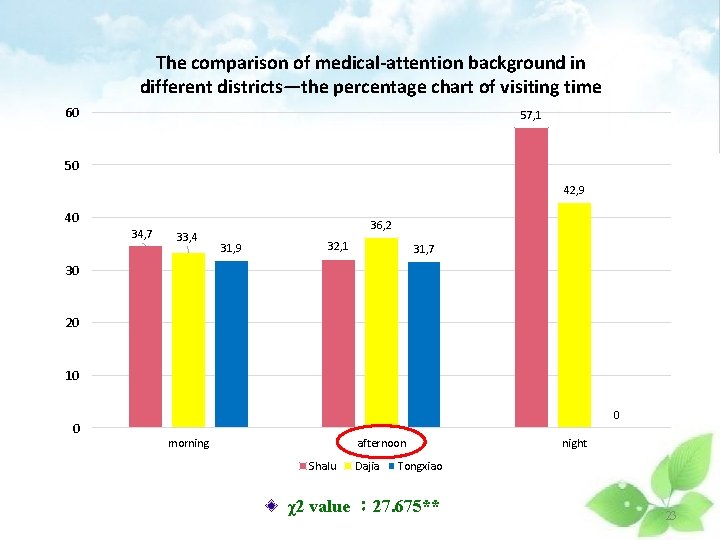
The comparison of medical-attention background in different districts—the percentage chart of visiting time 60 57, 1 50 42, 9 40 34, 7 33, 4 36, 2 31, 9 32, 1 31, 7 30 20 10 0 0 morning afternoon Shalu Dajia night Tongxiao χ2 value : 27. 675** 23
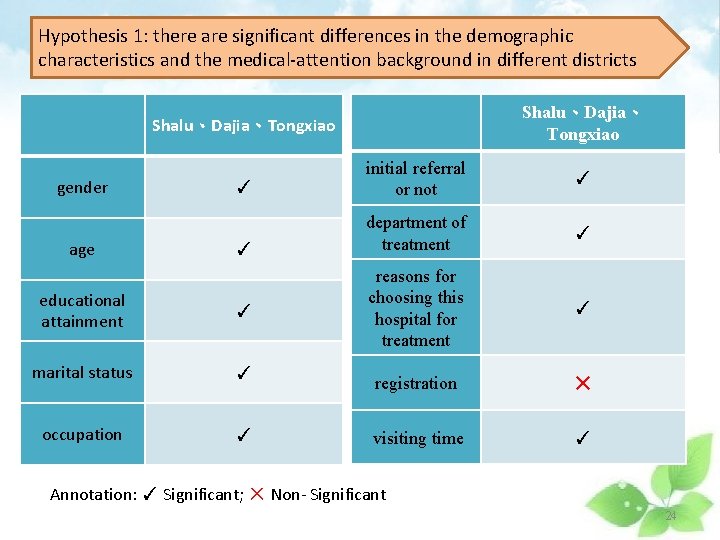
Hypothesis 1: there are significant differences in the demographic characteristics and the medical-attention background in different districts Shalu、Dajia、 Tongxiao Shalu、Dajia、Tongxiao gender age ✓ initial referral or not ✓ ✓ department of treatment ✓ reasons for choosing this hospital for treatment ✓ registration ✕ visiting time ✓ educational attainment ✓ marital status ✓ occupation ✓ Annotation: ✓ Significant; ✕ Non- Significant 24
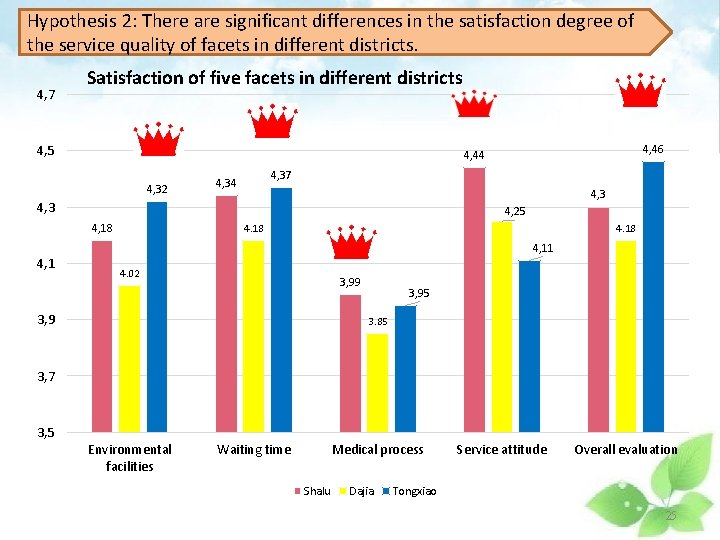
Hypothesis 2: There are significant differences in the satisfaction degree of the service quality of facets in different districts. 4, 7 Satisfaction of five facets in different districts 4, 5 4, 32 4, 37 4, 34 4, 3 4, 25 4, 18 4, 1 4, 46 4, 44 4. 18 4, 11 4. 02 3, 99 3, 95 3. 85 3, 7 3, 5 Environmental facilities Waiting time Medical process Shalu Dajia Service attitude Overall evaluation Tongxiao 25
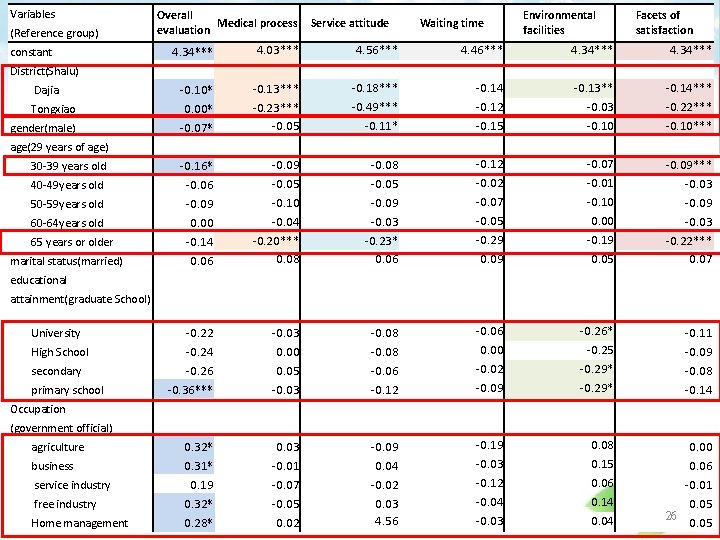
Variables (Reference group) constant Overall Medical process evaluation Service attitude Waiting time Environmental facilities Facets of satisfaction 4. 34*** 4. 03*** 4. 56*** 4. 46*** 4. 34*** -0. 10* 0. 00* -0. 07* -0. 13*** -0. 23*** -0. 05 -0. 18*** -0. 49*** -0. 11* -0. 14 -0. 12 -0. 15 -0. 13** -0. 03 -0. 10 -0. 14*** -0. 22*** -0. 10*** -0. 16* -0. 06 -0. 09 0. 00 -0. 14 0. 06 -0. 09 -0. 05 -0. 10 -0. 04 -0. 20*** 0. 08 -0. 05 -0. 09 -0. 03 -0. 23* 0. 06 -0. 12 -0. 07 -0. 05 -0. 29 0. 09 -0. 07 -0. 01 -0. 10 0. 00 -0. 19 0. 05 -0. 09*** -0. 03 -0. 09 -0. 03 -0. 22*** 0. 07 -0. 22 -0. 24 -0. 26 -0. 36*** -0. 03 0. 00 0. 05 -0. 03 -0. 08 -0. 06 -0. 12 -0. 06 0. 00 -0. 02 -0. 09 -0. 26* -0. 25 -0. 29* -0. 11 -0. 09 -0. 08 -0. 14 0. 32* 0. 31* 0. 19 0. 32* 0. 28* 0. 03 -0. 01 -0. 07 -0. 05 0. 02 -0. 09 0. 04 -0. 02 0. 03 4. 56 -0. 19 -0. 03 -0. 12 -0. 04 -0. 03 0. 08 0. 15 0. 06 0. 14 0. 00 0. 06 -0. 01 0. 05 26 0. 05 District(Shalu) Dajia Tongxiao gender(male) age(29 years of age) 30 -39 years old 40 -49 years old 50 -59 years old 60 -64 years old 65 years or older marital status(married) educational attainment(graduate School) University High School secondary primary school Occupation (government official) agriculture business service industry free industry Home management
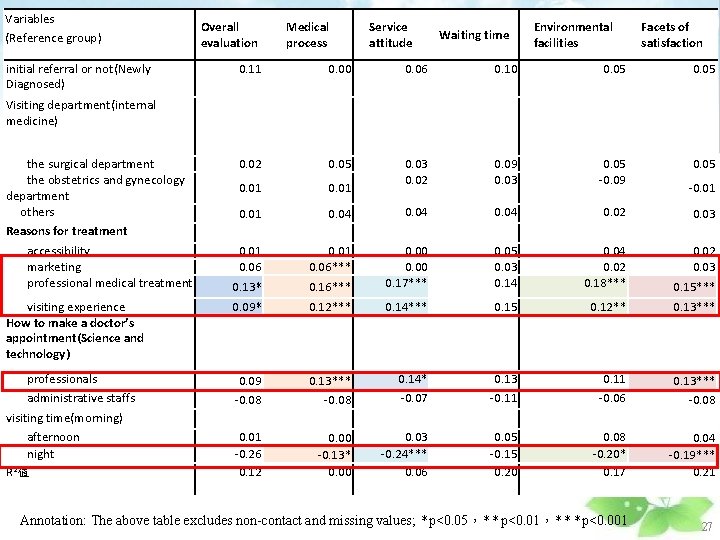
Variables (Reference group) initial referral or not(Newly Diagnosed) Overall evaluation Medical process Service attitude Waiting time Environmental facilities Facets of satisfaction 0. 11 0. 00 0. 06 0. 10 0. 05 0. 02 0. 05 0. 01 0. 09 0. 03 0. 05 -0. 09 0. 05 0. 01 0. 03 0. 02 0. 01 0. 04 0. 02 0. 03 0. 01 0. 06*** 0. 16*** 0. 05 0. 03 0. 14 0. 02 0. 18*** 0. 02 0. 03 0. 13* 0. 00 0. 17*** 0. 15*** visiting experience How to make a doctor’s appointment(Science and technology) 0. 09* 0. 12*** 0. 14*** 0. 15 0. 12** 0. 13*** professionals administrative staffs visiting time(morning) afternoon night 2 R值 0. 09 -0. 08 0. 13*** -0. 08 0. 14* -0. 07 0. 13 -0. 11 -0. 06 0. 13*** -0. 08 0. 01 -0. 26 0. 12 0. 00 -0. 13* 0. 00 0. 03 -0. 24*** 0. 06 0. 05 -0. 15 0. 20 0. 08 -0. 20* 0. 17 0. 04 -0. 19*** 0. 21 Annotation: The above table excludes non-contact and missing values; *p<0. 05,**p<0. 01,***p<0. 001 27 Visiting department(internal medicine) the surgical department the obstetrics and gynecology department others Reasons for treatment accessibility marketing professional medical treatment -0. 01
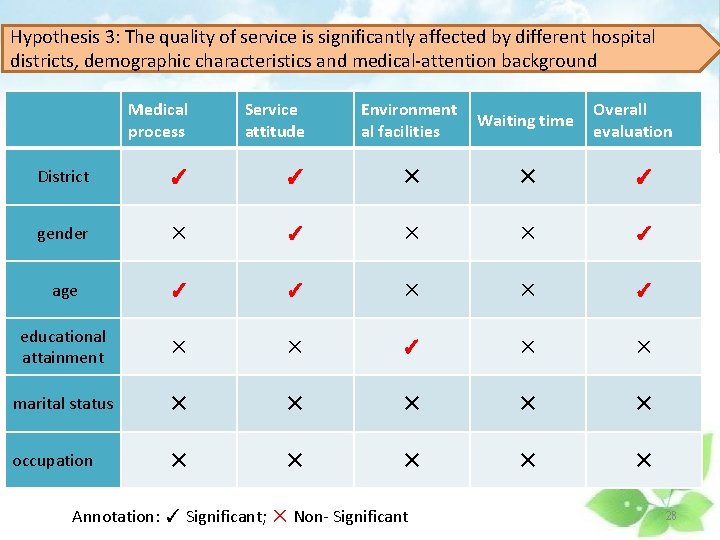
Hypothesis 3: The quality of service is significantly affected by different hospital districts, demographic characteristics and medical-attention background Medical process Service attitude Environment al facilities Waiting time District ✓ gender ✓ ✕ ✕ ✓ age ✓ ✓ ✕ ✕ ✓ educational attainment ✕ ✕ ✓ ✕ ✕ marital status ✕ ✕ ✕ occupation ✕ ✕ ✕ Annotation: ✓ Significant; ✕ Non- Significant Overall evaluation 28
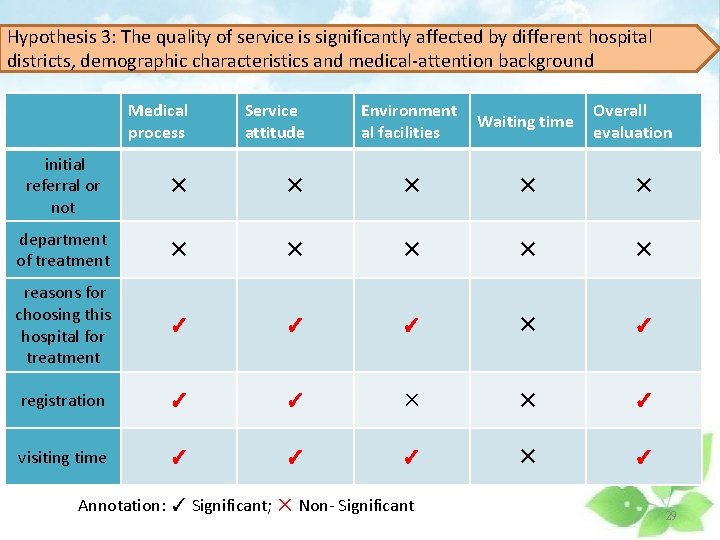
Hypothesis 3: The quality of service is significantly affected by different hospital districts, demographic characteristics and medical-attention background Medical process Service attitude Environment al facilities Waiting time initial referral or not ✕ department of treatment ✕ ✕ ✕ ✕ ✕ reasons for choosing this hospital for treatment ✓ ✓ ✓ ✕ ✓ registration ✓ ✓ ✕ ✕ ✓ visiting time ✓ ✓ ✓ ✕ ✓ Annotation: ✓ Significant; ✕ Non- Significant Overall evaluation 29
Introduction Literature Review Methodology Research Result Conclusion and Recommendations 30
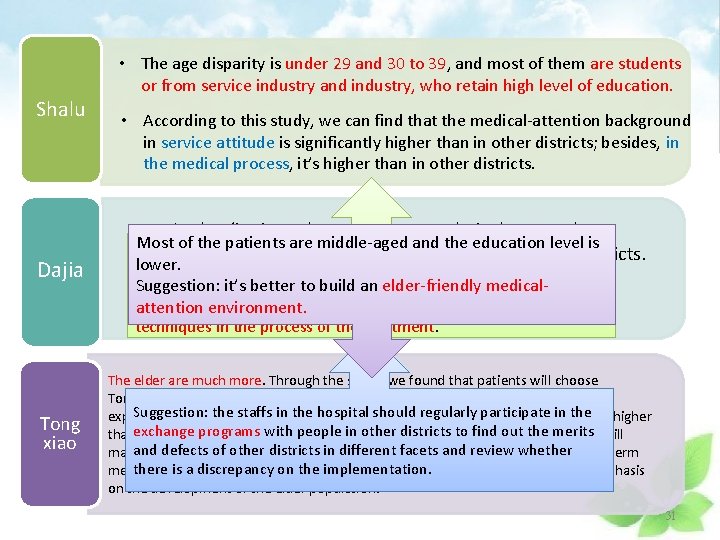
Shalu Dajia Tong xiao • The age disparity is under 29 and 30 to 39, and most of them are students or from service industry and industry, who retain high level of education. • According to this study, we can find that the medical-attention background in service attitude is significantly higher than in other districts; besides, in the medical process, it’s higher than in other districts. • In the districts whose scores are relatively even, the Most of theofpatients are middle-aged and the education On account the growing number of the young and peoplelevel withis scores of medical process are lower than in other districts. lower. high education level, establishing a sense of identification becomes relatively important. Toto lead thean hospital to a higher level, the Suggestion: it’s better build elder-friendly medical staffs should perform their professional competence and attention environment. techniques in the process of the treatment. The elder are much more. Through the study, we found that patients will choose Tongxiao District due to the marketing, professional medical treatment and visiting Suggestion: the of staffs in the hospital should participate in the higher experience. The way making appointment by theregularly professional staffs is obviously programs withexplains peoplethat in other districtswho to find the merits thanexchange in other districts, which the patients haveout chronic disease will and of at other districts different facets and review whether make thedefects next visit the end of theintreatment. The overall evaluation of the long-term there is a discrepancy on the implementation. medical conditions is also higher in relative to other districts, which can put an emphasis on the development of the elder population. 31
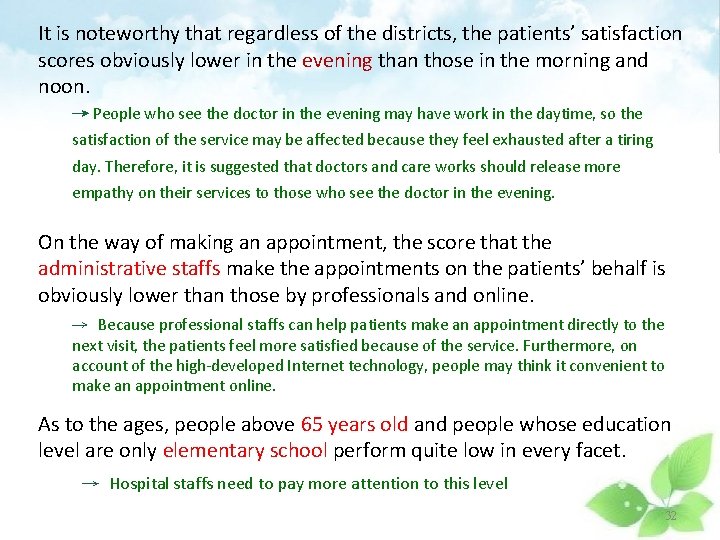
It is noteworthy that regardless of the districts, the patients’ satisfaction scores obviously lower in the evening than those in the morning and noon. → People who see the doctor in the evening may have work in the daytime, so the satisfaction of the service may be affected because they feel exhausted after a tiring day. Therefore, it is suggested that doctors and care works should release more empathy on their services to those who see the doctor in the evening. On the way of making an appointment, the score that the administrative staffs make the appointments on the patients’ behalf is obviously lower than those by professionals and online. → Because professional staffs can help patients make an appointment directly to the next visit, the patients feel more satisfied because of the service. Furthermore, on account of the high-developed Internet technology, people may think it convenient to make an appointment online. As to the ages, people above 65 years old and people whose education level are only elementary school perform quite low in every facet. → Hospital staffs need to pay more attention to this level 32
Limitations 1 This study is a cross-sectional; therefore, it is difficult to determine the timing of the occurrence of the factors and satisfaction. 2 Due to the limitation of manual labor, financial resources and time, we collected the data only in the first half of 2016; however, the demand for medical treatment may vary due to different seasons. Therefore, the research object is not comprehensive enough. 3 This study was conducted only in one hospital, so the extrapolation of the results should be carefully considered. 33

34
- Slides: 34