
The Meaning and Value of Work Chapter Five



- Slides: 17
The Meaning and Value of Work Chapter Five Jerry Estenson
Some question to start our thinking about work • Is work simply a means to an end? • Is work itself possibly an end rather than a means? • What responsibilities does an employer have in this discussion?
For what it is worth • There is a calculus related to freedom, work and debt • Low debt = greater degrees of freedom
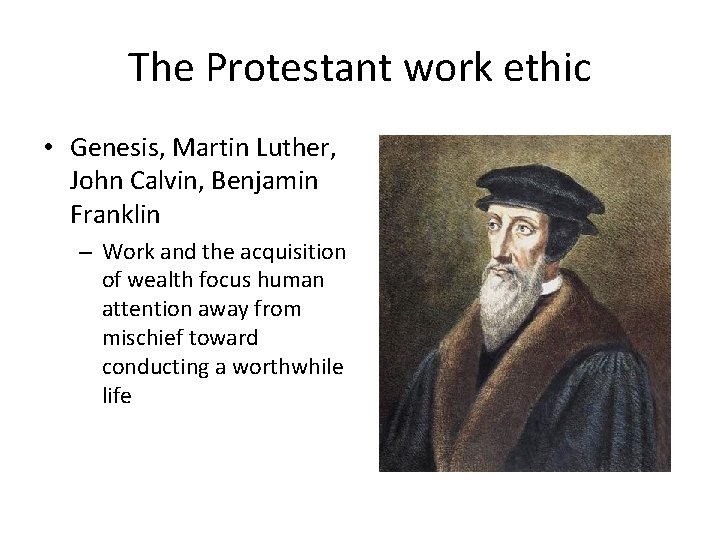
The Protestant work ethic • Genesis, Martin Luther, John Calvin, Benjamin Franklin – Work and the acquisition of wealth focus human attention away from mischief toward conducting a worthwhile life
The Meaning of Work • How we think about work shapes our understanding of work. (Attitude counts big time) • Work defined: Perseverance, discipline, toil, serious, concentration. (add to the list) • Is work only an exchange for wages?
Different views • Job – a role one steps into • Career – a path for development • Calling – Who you are is determined fully by what you do. Not morally inseperable
Value of Work
Instrumental value of work • Attain income • Psychic good – personal satisfaction, selfworth, happiness, achievement • Social good – We are social beings (Aristotle and need: social status, honor, respect, companionship, and camaraderie • Importance to community
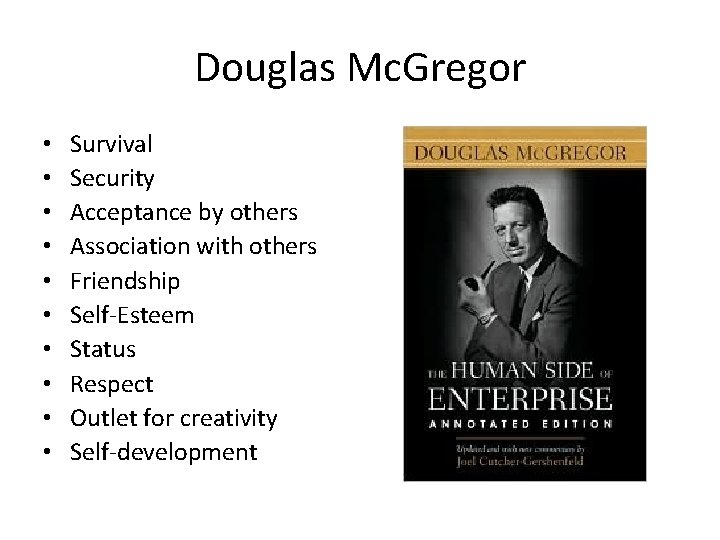
Douglas Mc. Gregor • • • Survival Security Acceptance by others Association with others Friendship Self-Esteem Status Respect Outlet for creativity Self-development
Do people have a moral and legal right to a job?
Views of Work • Conventional - Classic – Work does violence to the human spirit (Stud Terkel) – Greek’s work should be avoided so that people pursue a life contemplation, art, politics, and culture – Human’s are intellectual being but work is physical – Work is glorified reducing human vitality
Conventional - Hedonistic • Work is the price we pay to get the things that make life enjoyable • Work allows us to get what we want • Work is a means to our individually defined ends
Human Fulfillment • Telos (Human Potential) • Teleological ethics – Life is to be spent developing and fulfilling our potential • What is lost if we do not work – Perseverance – Diligence – Concentration
When people do not work Lazy Careless Apathetic Destruction of community Valliant’s study (willingness and capacity to work childhood is a strong predictor of good mental health as an adult) • Big question revolves around the worker shaping work and work shaping worker • • •
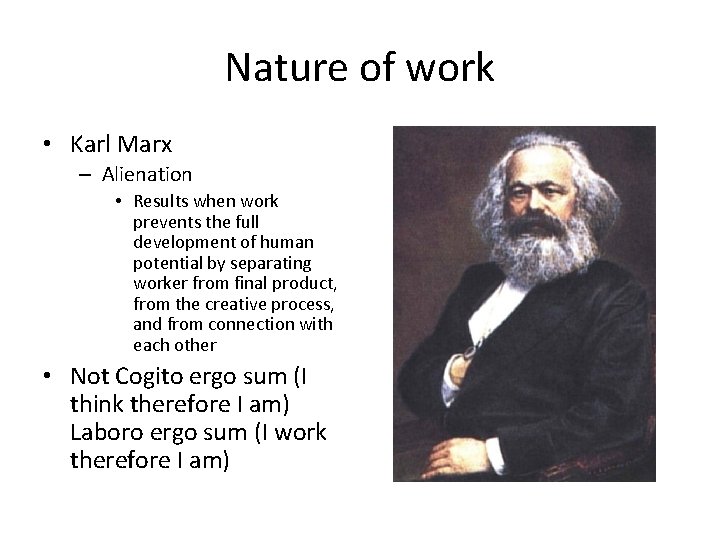
Nature of work • Karl Marx – Alienation • Results when work prevents the full development of human potential by separating worker from final product, from the creative process, and from connection with each other • Not Cogito ergo sum (I think therefore I am) Laboro ergo sum (I work therefore I am)
Liberal Model • Relationship between work and the workers ability to make free and autonomous choices about work • Bowie (If people are compelled to work the greater the employers responsibility to ensure that workplaces are humane as possible) • Primary goods required in the workplace to provide rights related to: – Autonomy – Rationality – Physical and mental health
In Sum • Employer obligation to: – Allow for participation – Provide due process – Provide Healthy and safe working conditions – Fair wages – Fair benefits – Training and education – Privacy • Highly routinized work is OK if people choose the work free of external constraints