
The Mass of an Atom Atomic Mass Units
- Slides: 8
The Mass of an Atom
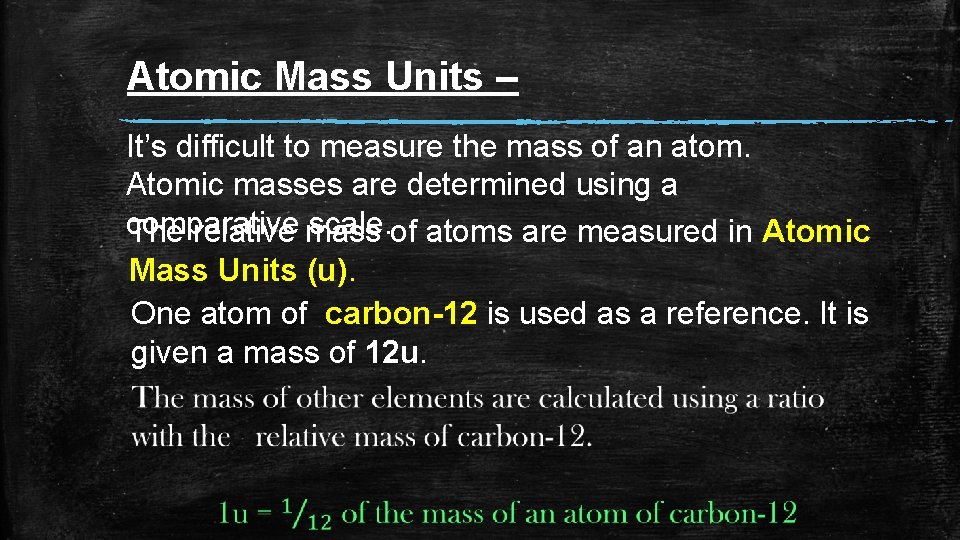
Atomic Mass Units – It’s difficult to measure the mass of an atom. Atomic masses are determined using a comparative scale. of atoms are measured in Atomic The relative mass Mass Units (u). One atom of carbon-12 is used as a reference. It is given a mass of 12 u.
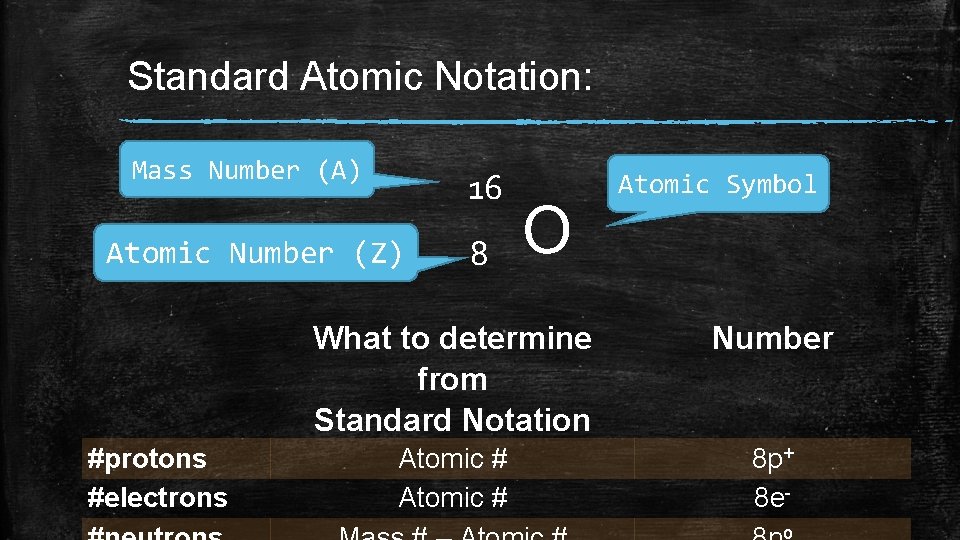
Standard Atomic Notation: Mass Number (A) 16 Atomic Number (Z) #protons #electrons 8 O Atomic Symbol What to determine from Standard Notation Number Atomic # 8 p+ 8 eo
When theory and reality collide Look at the relative atomic mass of chlorine (Cl) in your periodic table. What’s its value? 35. 45 u
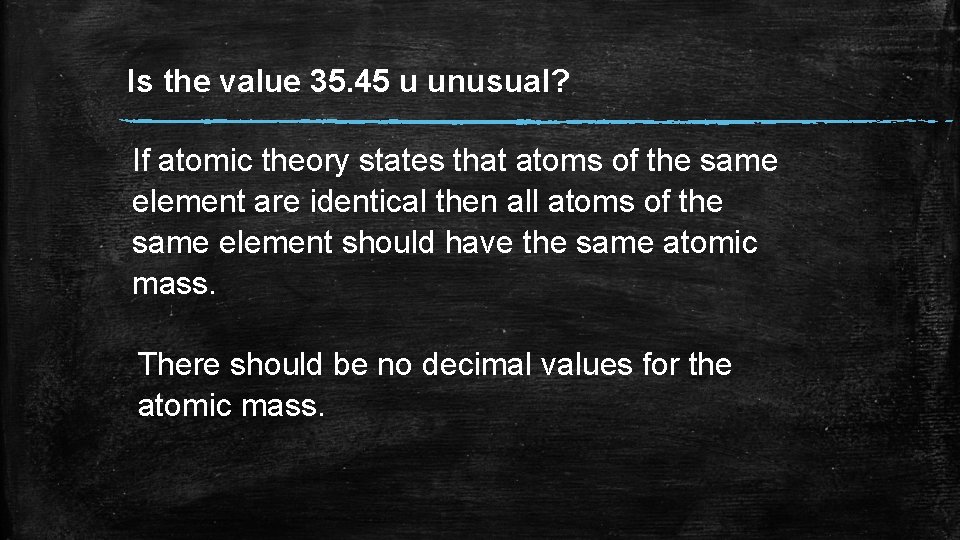
Is the value 35. 45 u unusual? If atomic theory states that atoms of the same element are identical then all atoms of the same element should have the same atomic mass. There should be no decimal values for the atomic mass.
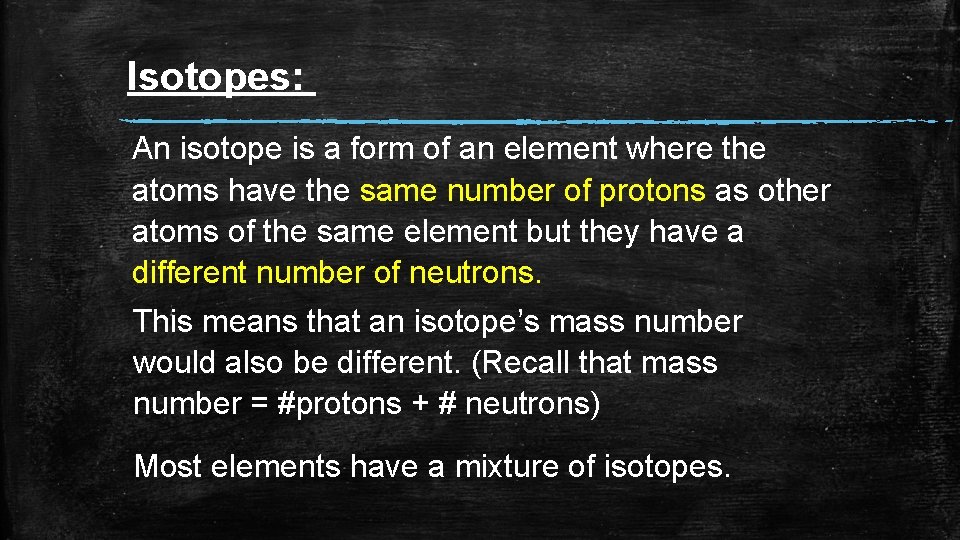
Isotopes: An isotope is a form of an element where the atoms have the same number of protons as other atoms of the same element but they have a different number of neutrons. This means that an isotope’s mass number would also be different. (Recall that mass number = #protons + # neutrons) Most elements have a mixture of isotopes.
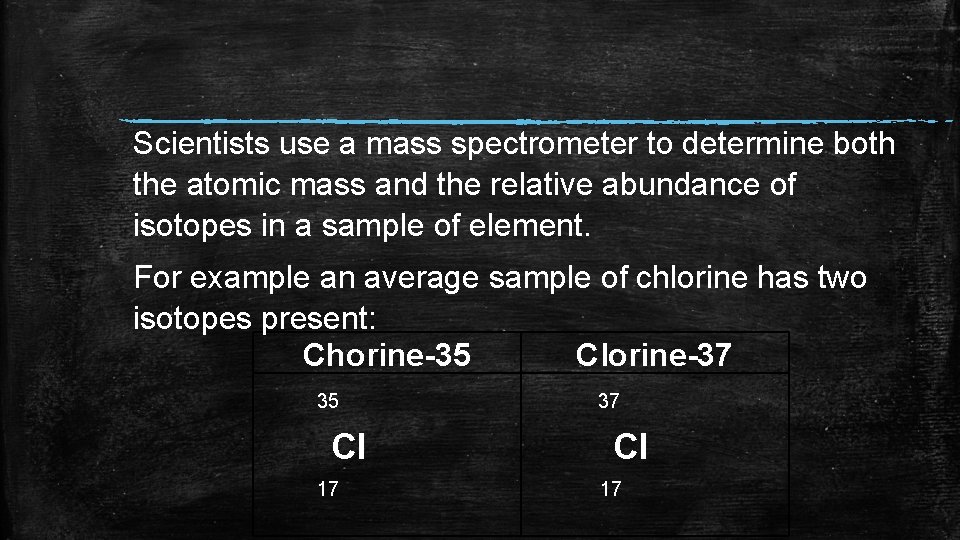
Scientists use a mass spectrometer to determine both the atomic mass and the relative abundance of isotopes in a sample of element. For example an average sample of chlorine has two isotopes present: Chorine-35 Clorine-37 35 Cl 17 37 Cl 17
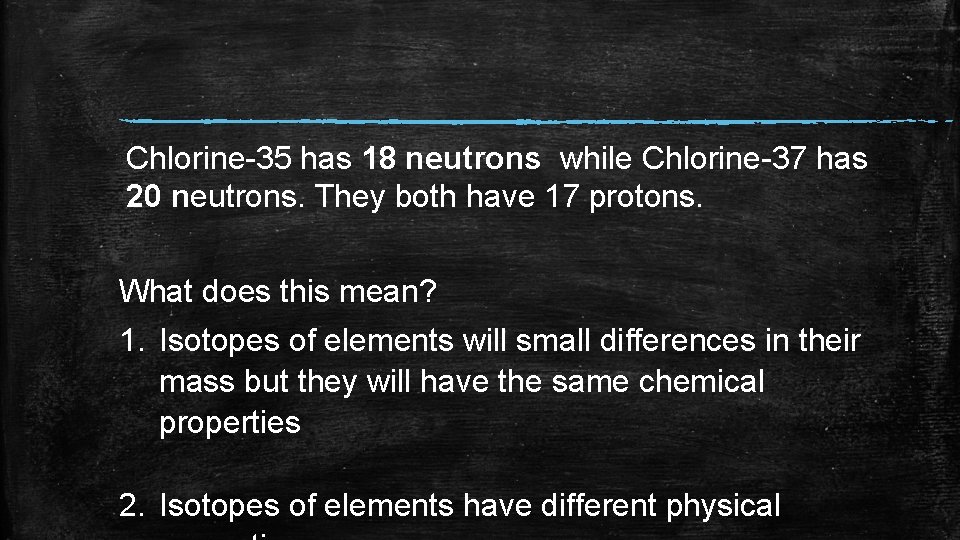
Chlorine-35 has 18 neutrons while Chlorine-37 has 20 neutrons. They both have 17 protons. What does this mean? 1. Isotopes of elements will small differences in their mass but they will have the same chemical properties 2. Isotopes of elements have different physical