
The Mass Media and the Political Agenda Chapter

- Slides: 33
The Mass Media and the Political Agenda Chapter 8 “The 4 th Branch of Government”
Mass Media l Mass Media: l Television, radio, newspapers, magazines, the Internet and other means of popular communication. l High-tech politics: l. A politics in which the behavior of citizens and policymakers and the political agenda itself are increasingly shaped by technology.
Structure of Media l Print media – newspaper, magazine, etc. l Oldest, l Electronic Media – radio, TV l being steadily replaced now is the primary source of news Internet – instant information, any time l Replacing print and electronic media l Blogs (short for Web Log) l 527’s – groups that independently raise money and campaign for and against people
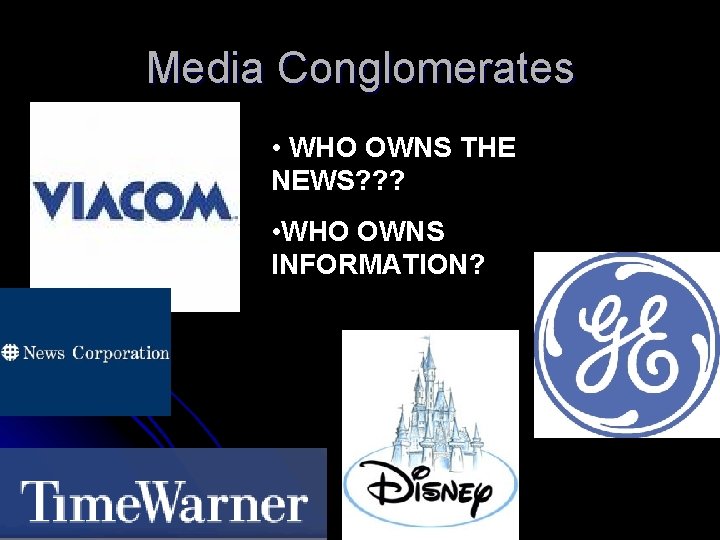
Media Conglomerates • WHO OWNS THE NEWS? ? ? • WHO OWNS INFORMATION?
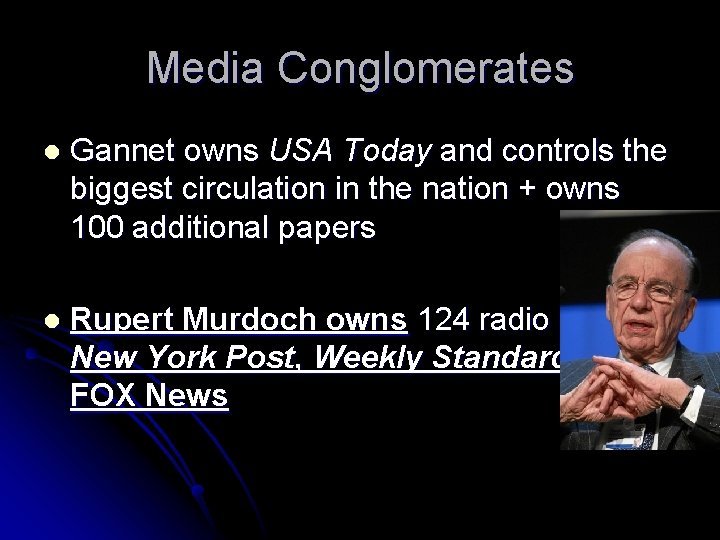
Media Conglomerates l Gannet owns USA Today and controls the biggest circulation in the nation + owns 100 additional papers l Rupert Murdoch owns 124 radio stations, New York Post, Weekly Standard, and FOX News
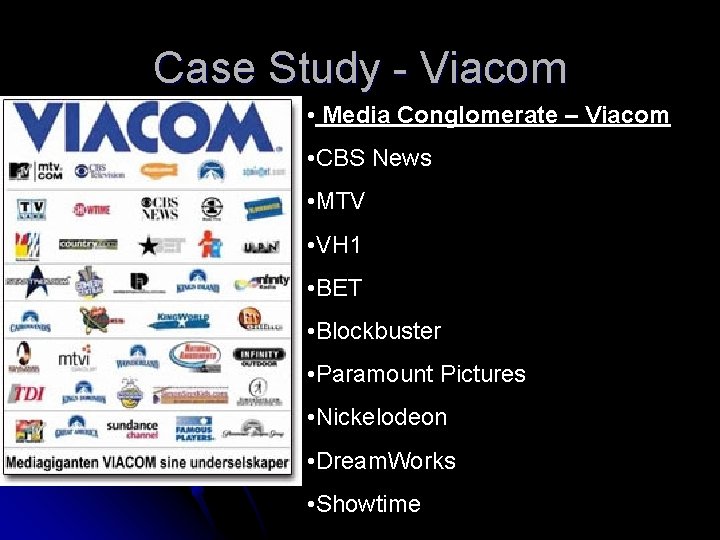
Case Study - Viacom • Media Conglomerate – Viacom • CBS News • MTV • VH 1 • BET • Blockbuster • Paramount Pictures • Nickelodeon • Dream. Works • Showtime
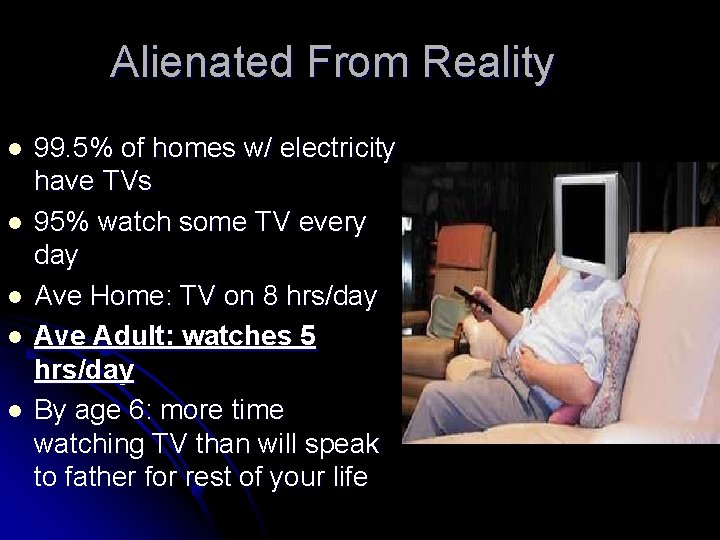
Alienated From Reality l l l 99. 5% of homes w/ electricity have TVs 95% watch some TV every day Ave Home: TV on 8 hrs/day Ave Adult: watches 5 hrs/day By age 6: more time watching TV than will speak to father for rest of your life
Importance of Television l l l l “Television news is news that matters” This is the primary source of political information in the U. S. For 60% -70% of the population it is the sole source Shapes the public’s conception of political life in pervasive ways Primary source of political information Incredible power to shape public thinking Are a number of “gatekeeping” concerns that determine what will become news
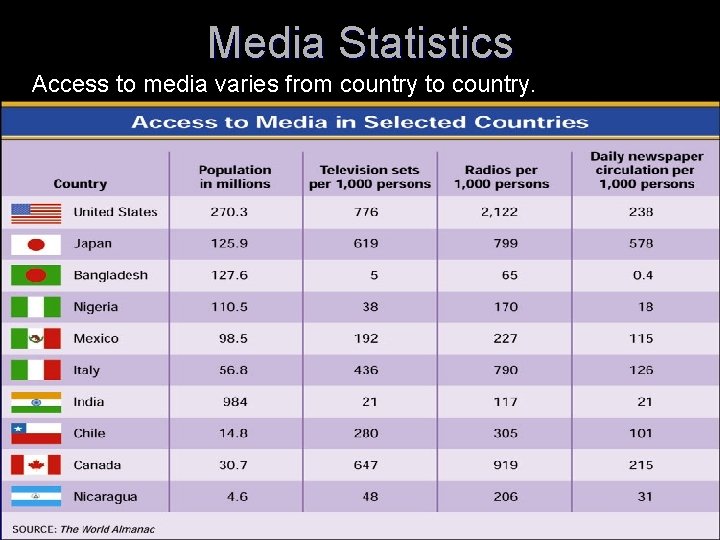
Media Statistics Access to media varies from country to country. Chapter 8, Section 3
Functions of the Media Entertainment l News l Agenda setting – ability of the media to draw public attention to certain issues and to ignore other issues l l Political forum – place to make announcements or advertise government
The Mass Media Today l Media Events: l Events purposely staged for the media that nonetheless look spontaneous. Media events can be staged by almost anybody. l Other items to consider: l 60% presidential campaign spending is TV ads l Image making / news management is important, especially for presidents
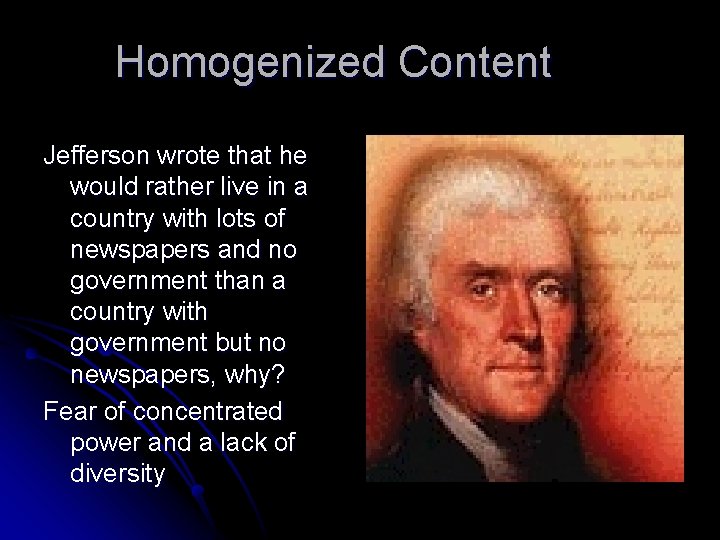
Homogenized Content Jefferson wrote that he would rather live in a country with lots of newspapers and no government than a country with government but no newspapers, why? Fear of concentrated power and a lack of diversity
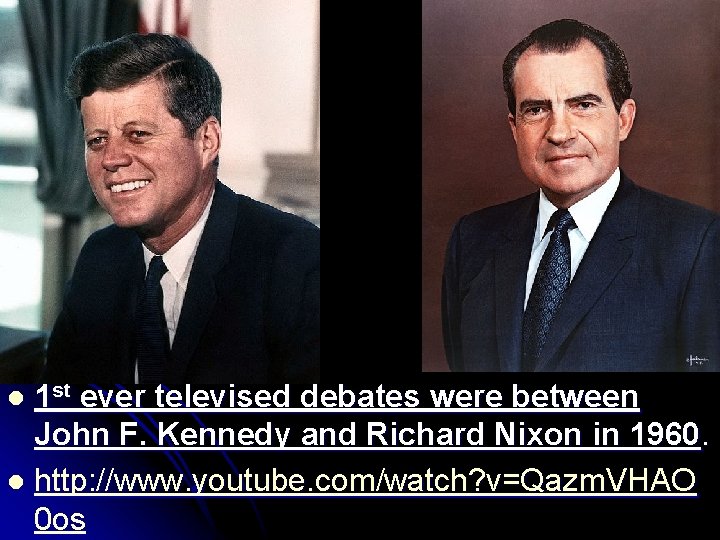
1 st ever televised debates were between John F. Kennedy and Richard Nixon in 1960. l http: //www. youtube. com/watch? v=Qazm. VHAO 0 os l
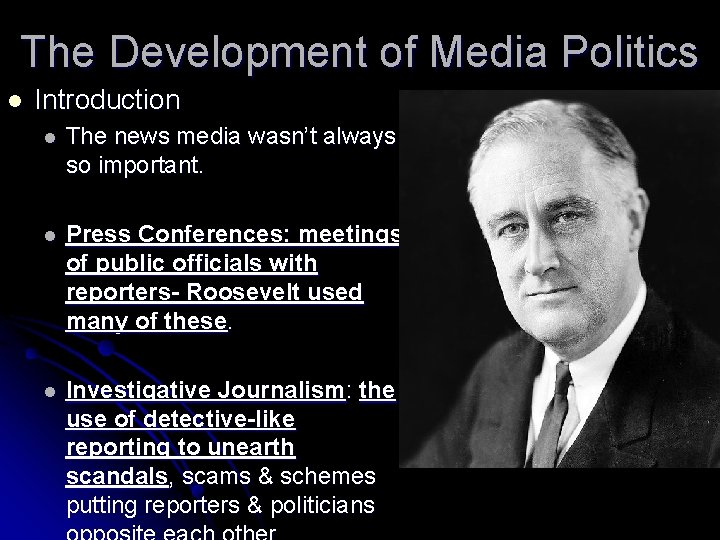
The Development of Media Politics l Introduction l The news media wasn’t always so important. l Press Conferences: meetings of public officials with reporters- Roosevelt used many of these. l Investigative Journalism: the use of detective-like reporting to unearth scandals, scams & schemes putting reporters & politicians
The Development of Media Politics l A muckraker is an individual who seeks to expose or reveal the real or apparent corruption of businesses or governments to the public. l The muckrakers were the “original” investigative journalists. l The term originates from members of the Progressive Movement in America during the early 1900’s, who wanted to expose the corruption and scandals in government and business.
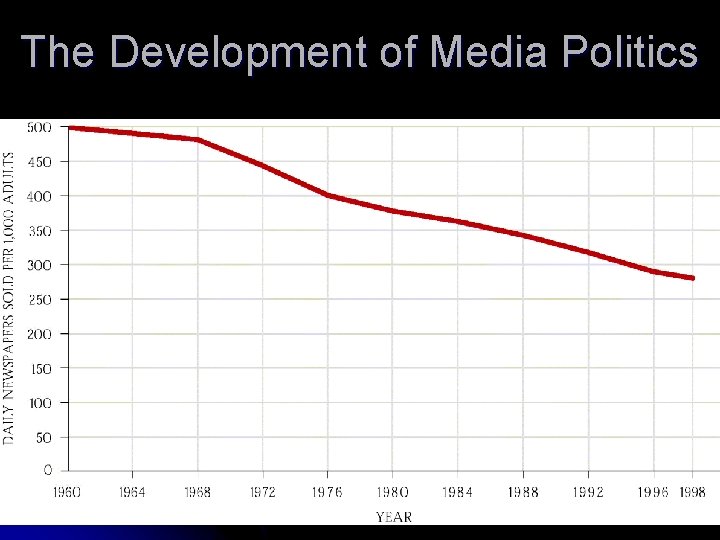
The Development of Media Politics l The Print Media l Newspapers and magazines l Rapid printing & cheap paper, along with telegraph technology grew the industry l As it grew, the companies were consolidated into chains l Now major corporations control most of the print media to compete with other news media
The Development of Media Politics Figure 7. 1
The Development of Media Politics l The Broadcast Media l Television l Brought (not cable or satellite) and radio government and politics into people’s homes l Made the politicians more aware of their appearance and mannerisms l Generally the top source of news for most Americans, and most believable l http: //www. youtube. com/watch? v=AFAm. TGGLi 8 s
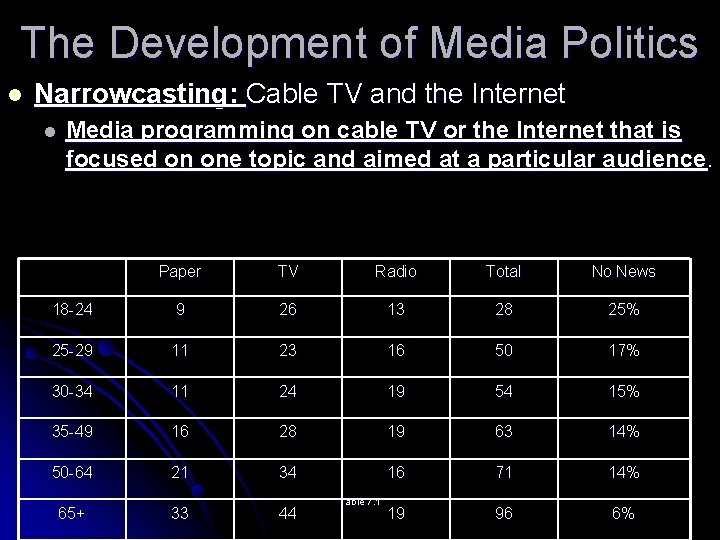
The Development of Media Politics l Narrowcasting: Cable TV and the Internet l Media programming on cable TV or the Internet that is focused on one topic and aimed at a particular audience. Paper TV Radio Total No News 18 -24 9 26 13 28 25% 25 -29 11 23 16 50 17% 30 -34 11 24 19 54 15% 35 -49 16 28 19 63 14% 50 -64 21 34 16 71 14% 65+ 33 44 19 96 6% Table 7. 1
Reporting the News l Finding the News l Beats: Specific locations from which news frequently emanates, such as Congress or the White House. l Trial Balloons: An intentional news leak for the purpose of assessing the political reaction. l Reporters and their sources depend on each otherone for stories, the other to get them out
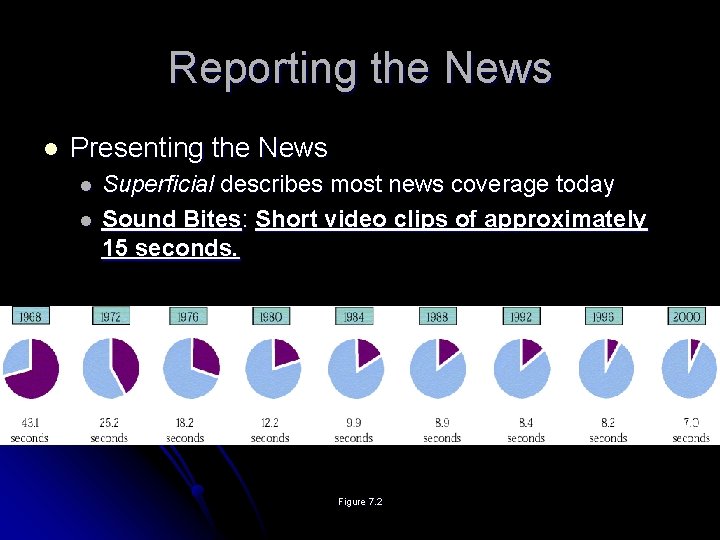
Reporting the News l Presenting the News l l Superficial describes most news coverage today Sound Bites: Short video clips of approximately 15 seconds. Figure 7. 2
Ideology and Public Opinion Political Ideology effects how an individual approaches issues in public policy. l Liberal—believes gov’t should actively promote health, education, and justice l Conservative—believes in limiting the role of gov’t except in supporting traditional moral values l Moderates—fall somewhere in the middle l
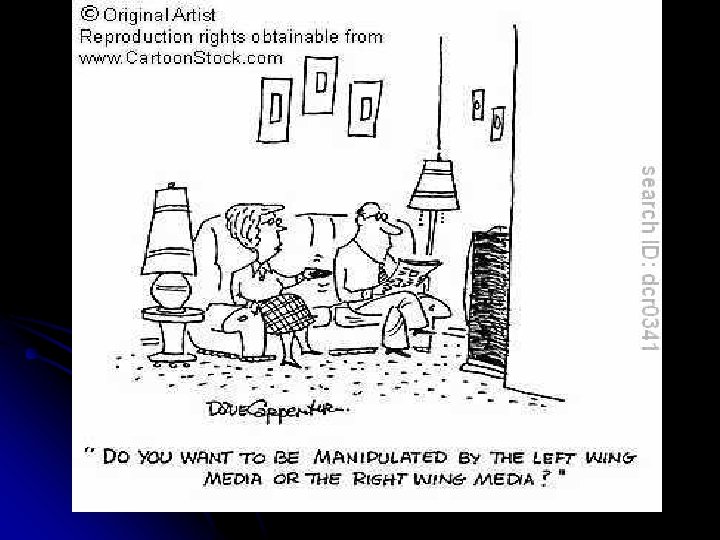
Reporting the News l Bias in the News l Many people believe the news favors one point of view over another. l Generally not very biased along liberal / conservative lines. l But, generally are biased towards what will draw the largest audience.
The News and Public Opinion l Television news can affect what people think is important. l Some policies can be made more important, others will be less important, depending on their coverage. l News commentators have the strongest effect.
The Media’s Agenda-Setting Function l Policy Agenda: l The issues that attract the serious attention of public officials and other people actively involved in politics at the time. l Policy Entrepreneurs: l People who invest their political “capital” in an issue. l All depend on good images and good will.
Understanding the Mass Media l The Media and the Scope of Government l The media as watchdog restricts politicians. l New proposals are met with skepticism- so that restricts what the government can do. l But, if the media identify a problem, they ask what the government is going to do to fix it.
Understanding the Mass Media l Individualism and the Media l Candidates can now run on their own. l Easier to focus on one person like the President, than Congress or the courts. l Democracy and the Media l “Information l But, is the fuel of democracy. ” is the news more entertainment than information? Is this what the people want?
Government Regulation l 1 st Amendment – freedom of press l Gov’t can’t place “prior restraint” on news (can’t censor news before it is released) l The press is not entirely free
FCC l Federal Communications Commission l Controls the media, no one may operate radio or TV stations without their license l Who are they? – 5 members (no more than 3 from the same political party) nominated by US President for 5 years.
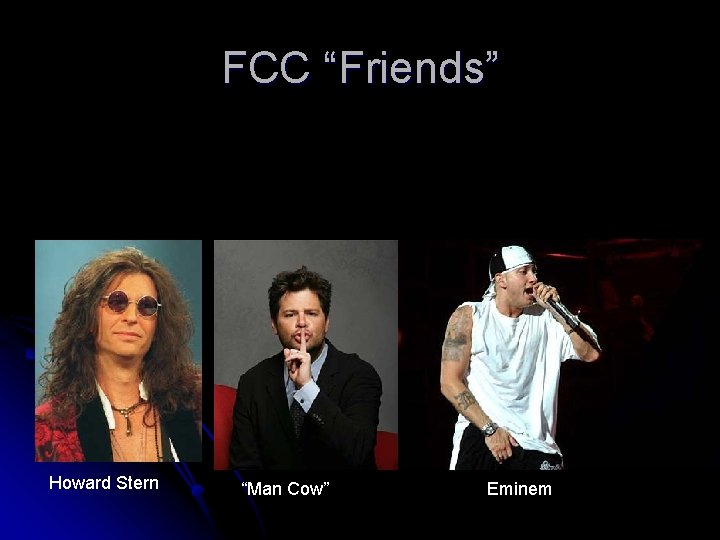
FCC “Friends” Howard Stern “Man Cow” Eminem
Media and Political Campaigns l Advertising – very expensive on TV, way to reach many voters, raising campaign costs l News coverage – “free” coverage, politicians will attempt to create events where media will attend for free publicity l l Spin doctor – one who tries to influence journalists with interpretations of events that are favorable to the candidate Presidential Debates
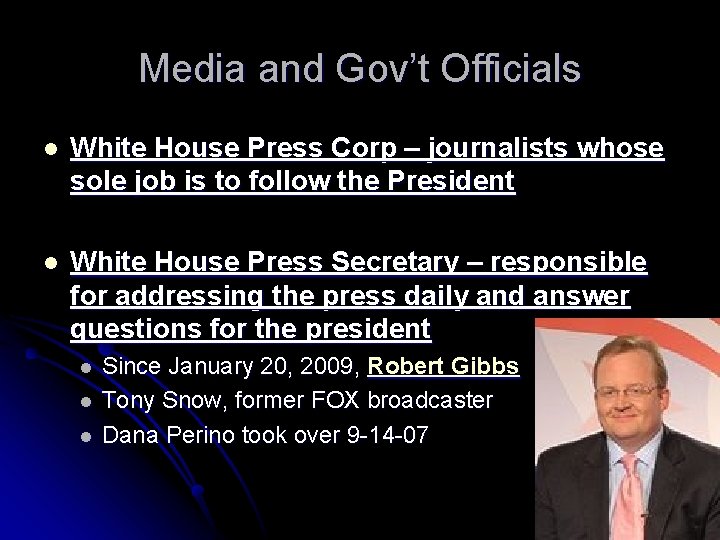
Media and Gov’t Officials l White House Press Corp – journalists whose sole job is to follow the President l White House Press Secretary – responsible for addressing the press daily and answer questions for the president l l l Since January 20, 2009, Robert Gibbs Tony Snow, former FOX broadcaster Dana Perino took over 9 -14 -07