
The Martian Ionosphere in Regions of Crustal Magnetic

- Slides: 16
The Martian Ionosphere in Regions of Crustal Magnetic Fields Paul Withers, Michael Mendillo, Dave Hinson (withers@bu. edu) DPS 2004, Louisville, Kentucky, 2004. 11 • Abnormal electron density profiles are found over crustal magnetic anomalies in the southern hemisphere • How does the martian magnetic field affect the ionosphere?
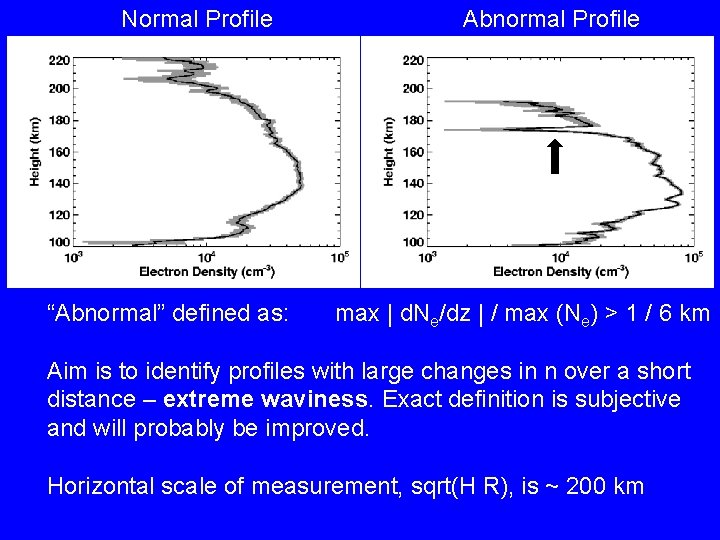
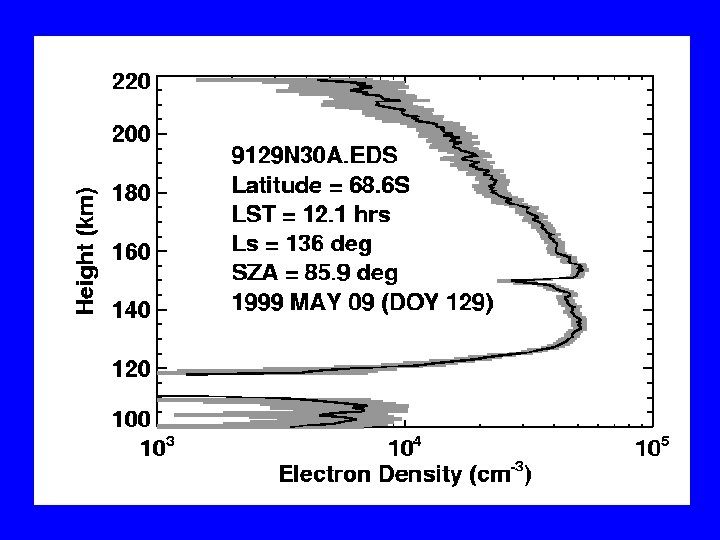
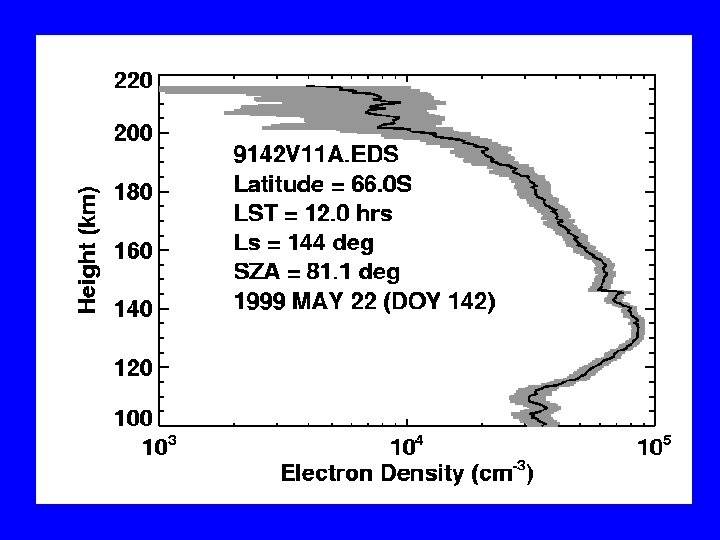
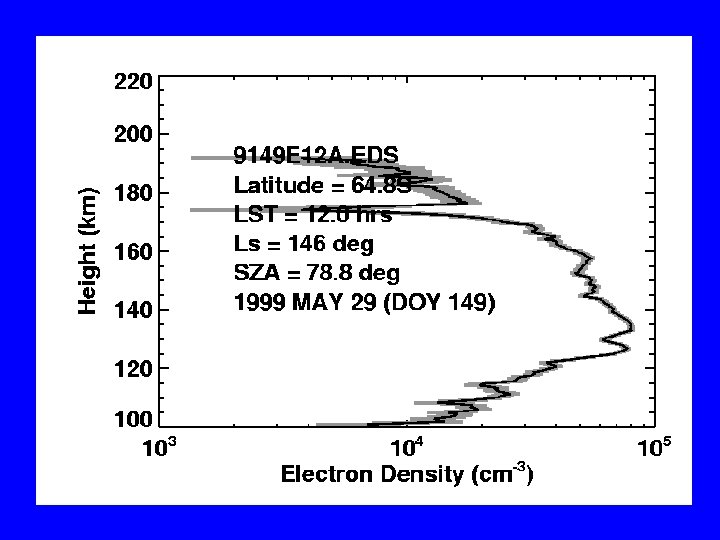
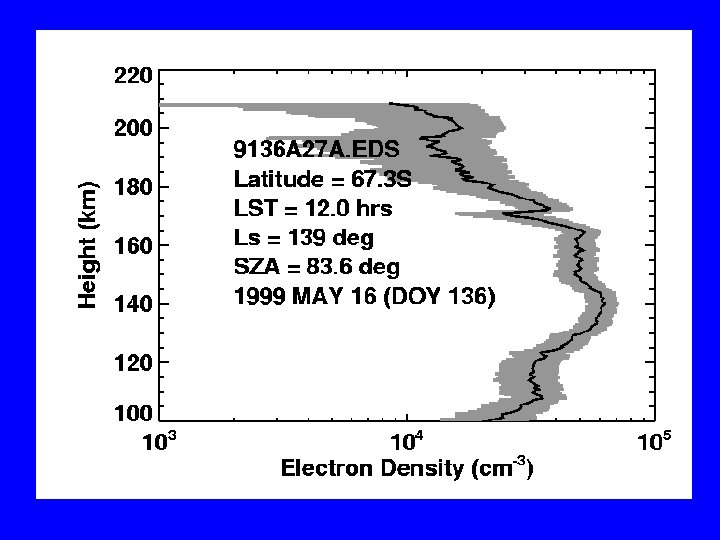
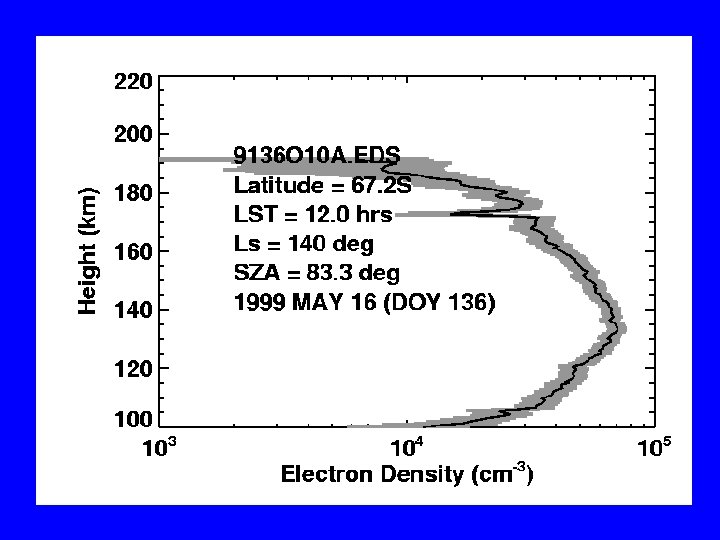
Normal Profile “Abnormal” defined as: Abnormal Profile max | d. Ne/dz | / max (Ne) > 1 / 6 km Aim is to identify profiles with large changes in n over a short distance – extreme waviness. Exact definition is subjective and will probably be improved. Horizontal scale of measurement, sqrt(H R), is ~ 200 km
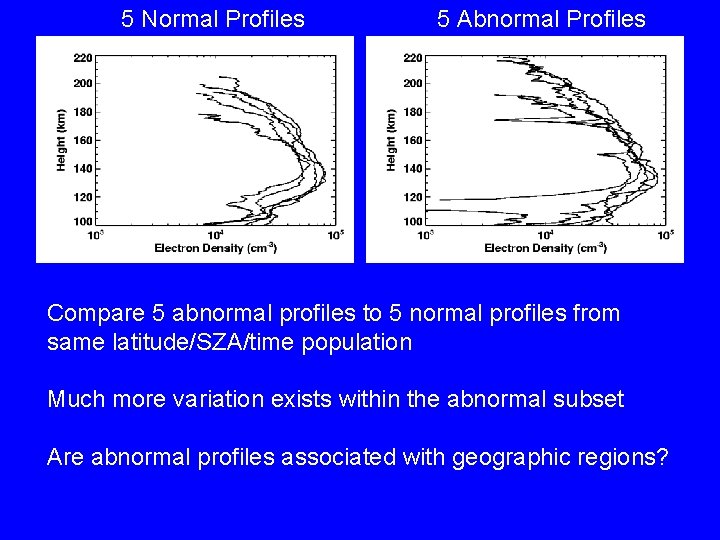
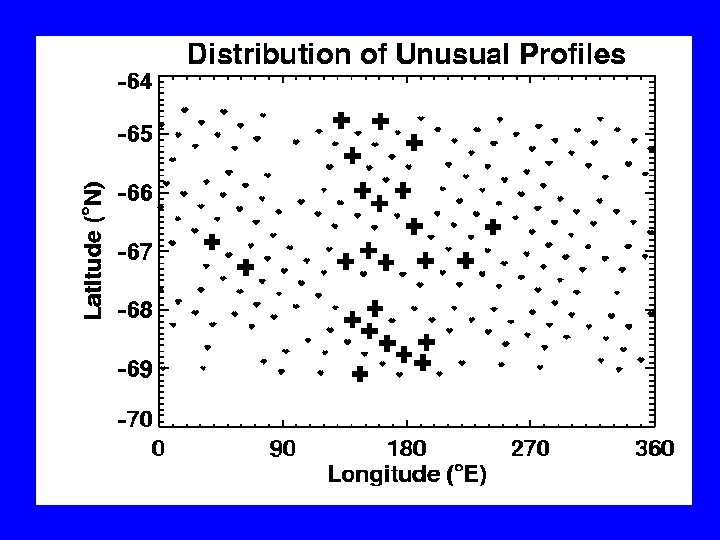
5 Normal Profiles 5 Abnormal Profiles Compare 5 abnormal profiles to 5 normal profiles from same latitude/SZA/time population Much more variation exists within the abnormal subset Are abnormal profiles associated with geographic regions?
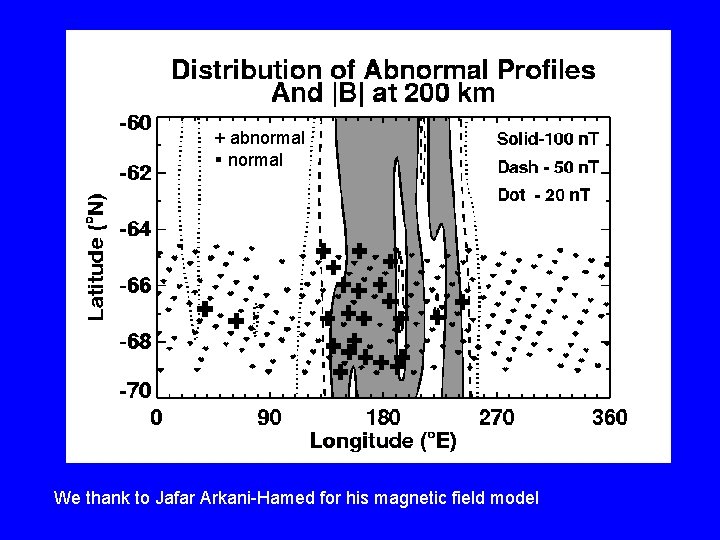
+ abnormal § normal We thank to Jafar Arkani-Hamed for his magnetic field model
Magnetic Fields Can … • Modify influx of energetic particles • Modify plasma diffusion due to gravity, pressure • Modify plasma transport by winds • Relative size of ion-neutral collision frequency and ion gyrofrequency is critical – e. B/minin • What happens when e. B/mnin is ~ 1? • We are developing models to simulate these interactions
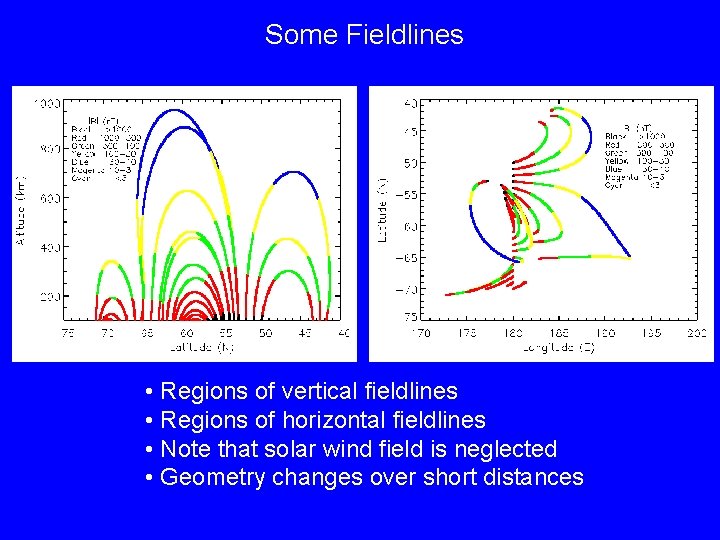
Some Fieldlines • Regions of vertical fieldlines • Regions of horizontal fieldlines • Note that solar wind field is neglected • Geometry changes over short distances
Conclusions • Some ionospheric profiles over crustal magnetic anomalies are abnormal due to their extreme waviness • It is important to understand interactions between the ionosphere and magnetic field because – The topology of the magnetic field of Mars is unique, having a small characteristic length scale – How have interactions between the ionosphere and magnetic field affected the loss of volatiles? – Do these interactions affect the energy and momentum balances of the neutral atmosphere?
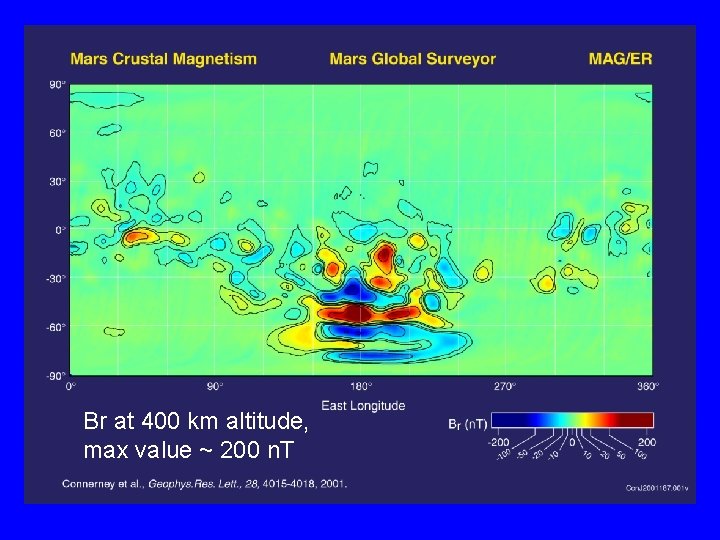
Br at 400 km altitude, max value ~ 200 n. T
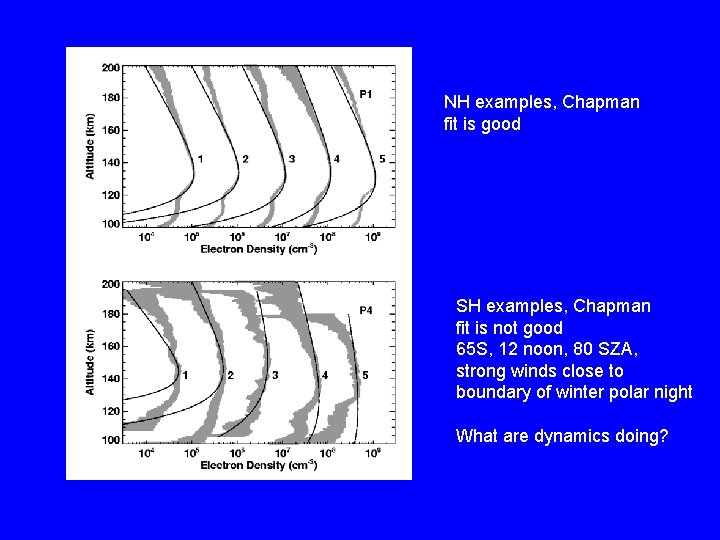
NH examples, Chapman fit is good SH examples, Chapman fit is not good 65 S, 12 noon, 80 SZA, strong winds close to boundary of winter polar night What are dynamics doing?