
THE MARKETING MIX PRODUCT Year 10 Business Studies
THE MARKETING MIX PRODUCT Year 10 Business Studies
Learning Objectives • To be able to identify the 4 different aspects of the marketing mix • To be able to recognise that different businesses will place different emphasis on the elements of the mix • To be able to see how the marketing mix can be changed to meet consumer needs
Customer focus • A business must have enough customers willing to pay a high enough price for it to cover its costs and make a profit • Customer focus is essential to make the business a success • Entrepreneurs may think they have a good idea but there has to be customers willing to pay for it
Customer Needs A business must: Identify customer needs Businesses must understand what their customers want from a product and who their customers are Anticipate customer needs A successful business must understand what its customers want in advance to be ahead of changes Meet customer needs Not enough to identify and anticipate, also need to meet these needs
Marketing is…… The process of ANTICIPATING IDENTIFYING, And SATISFIYING Customer NEEDS profitably
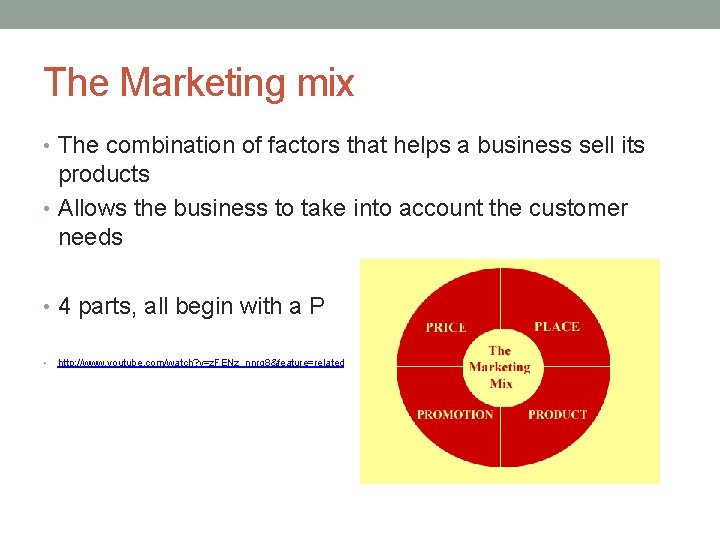
The Marketing mix • The combination of factors that helps a business sell its products • Allows the business to take into account the customer needs • 4 parts, all begin with a P • http: //www. youtube. com/watch? v=z. FENz_nnrq 8&feature=related
PRODUCT • The product sold must meet customer • The product must do needs what it says it will do
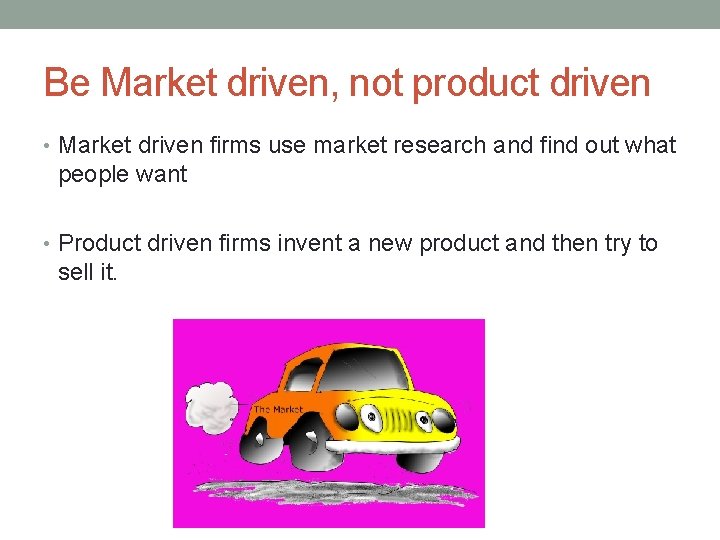
Be Market driven, not product driven • Market driven firms use market research and find out what people want • Product driven firms invent a new product and then try to sell it.
Product differentiation • Differentiation is something that makes your product stand out over the competitors • Quality, design, packaging or advertising
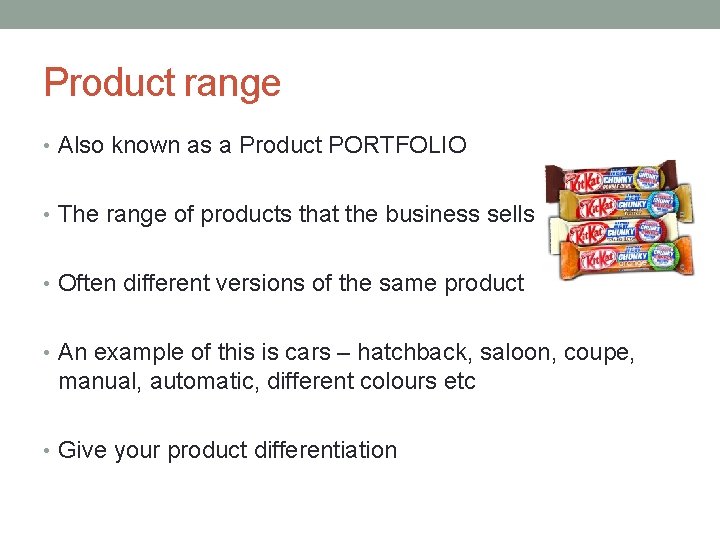
Product range • Also known as a Product PORTFOLIO • The range of products that the business sells • Often different versions of the same product • An example of this is cars – hatchback, saloon, coupe, manual, automatic, different colours etc • Give your product differentiation
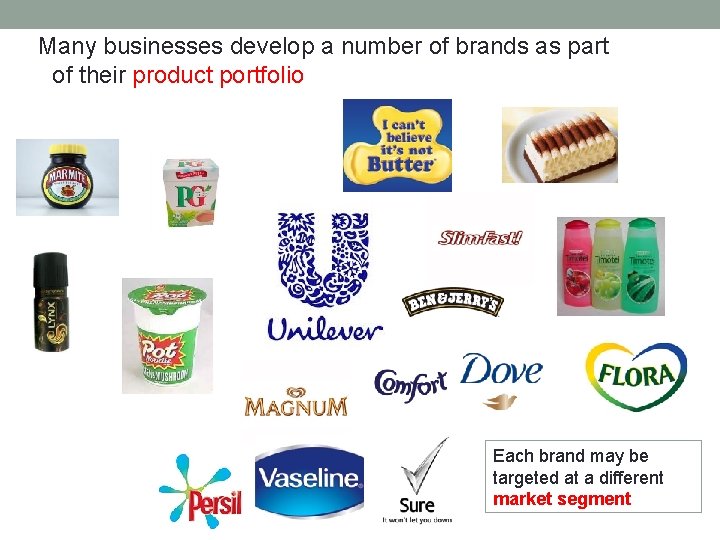
Many businesses develop a number of brands as part of their product portfolio Each brand may be targeted at a different market segment
Branding A named product which consumers see as being different from other products that they can associate and identify with.
A brand…. Has an identity that triggers: Images Thoughts Emotions Attachments As a result is more likely to be purchased over a rival if they are all positive Can include name, logos, colours, images, sounds http: //www. youtube. com/watch? v=k 5016 fh 7 Tg. Q&feature=related https: //www. youtube. com/watch? v=qjbtjubbv 5 s
• Brands can also develop from things that are not physical goods, • Star wars • Harry Potter • Doctor Who • James Bond • http: //www. youtube. com/watch? v=eay. Rcpik. GSk
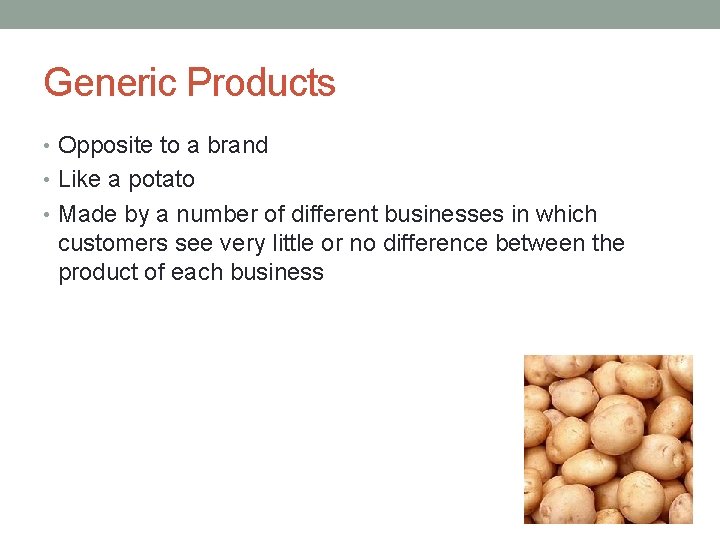
Generic Products • Opposite to a brand • Like a potato • Made by a number of different businesses in which customers see very little or no difference between the product of each business
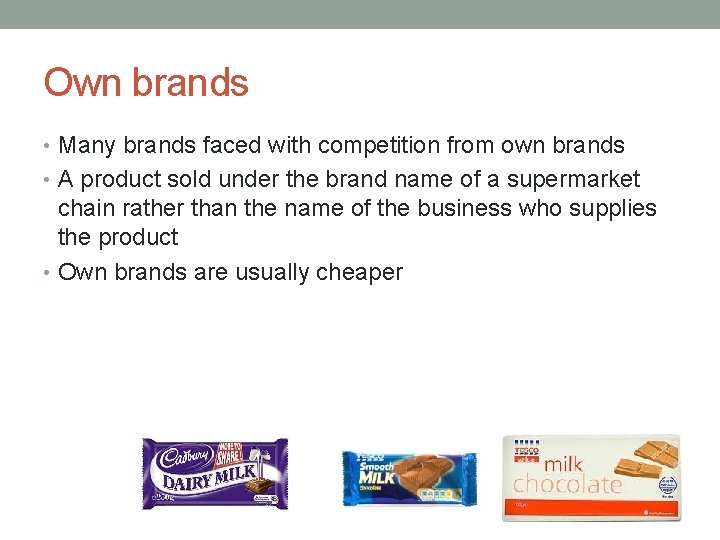
Own brands • Many brands faced with competition from own brands • A product sold under the brand name of a supermarket chain rather than the name of the business who supplies the product • Own brands are usually cheaper
task Superbrands - food
- Slides: 17