
The Marketing Mix Keys to developing effective marketing




- Slides: 36
The Marketing Mix Keys to developing effective marketing strategy • Maintain right marketing mix • Satisfy target market • Long-term customer relationships Successful companies have at least one dimension of value that surpasses all others 13 -1
Product [ A good, service, or idea that has tangible and intangible attributes that provide satisfaction and benefit to consumers The most visible variable of the marketing mix ] FHF 13 -2
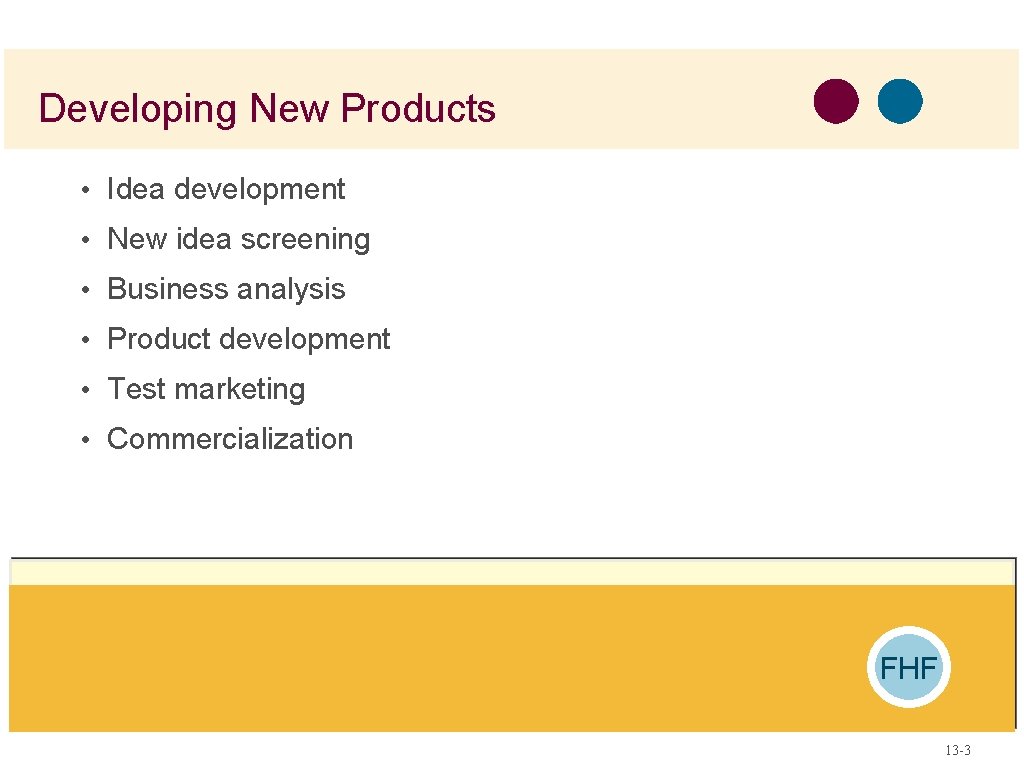
Developing New Products • Idea development • New idea screening • Business analysis • Product development • Test marketing • Commercialization FHF 13 -3
Consumer Products Convenience products • Purchased without doing research into price • Widely available • Often for immediate consumption ✴ example: a gallon of milk FHF 13 -4
Shopping products • Consumer has compared competitors’ prices and has shopped around done • Price, features, quality, style, service and image all influence the decision to buy ✴ example: clothing, furniture Consumer Products (continued) FHF 13 -5
Consumer Products (continued) Specialty products • Require the greatest level of research and shopping effort. • Not willing to accept substitutes • Consumers know exactly what they want and go out of their way to find it. • Price not the strongest consideration ✴ example: designer clothing, art, antiques FHF 13 -6
Business Products Used directly or indirectly in the operation or manufacturing processes of a business • Raw materials • Major equipment • Accessory equipment • Component parts • Processed materials • Industrial services FHF 13 -7
Products and Product Mix Product line • Group of closely related products that are treated as a unit because of a similar marketing strategy, production, or end-use Product Mix • All the products offered by the company FHF 13 -8
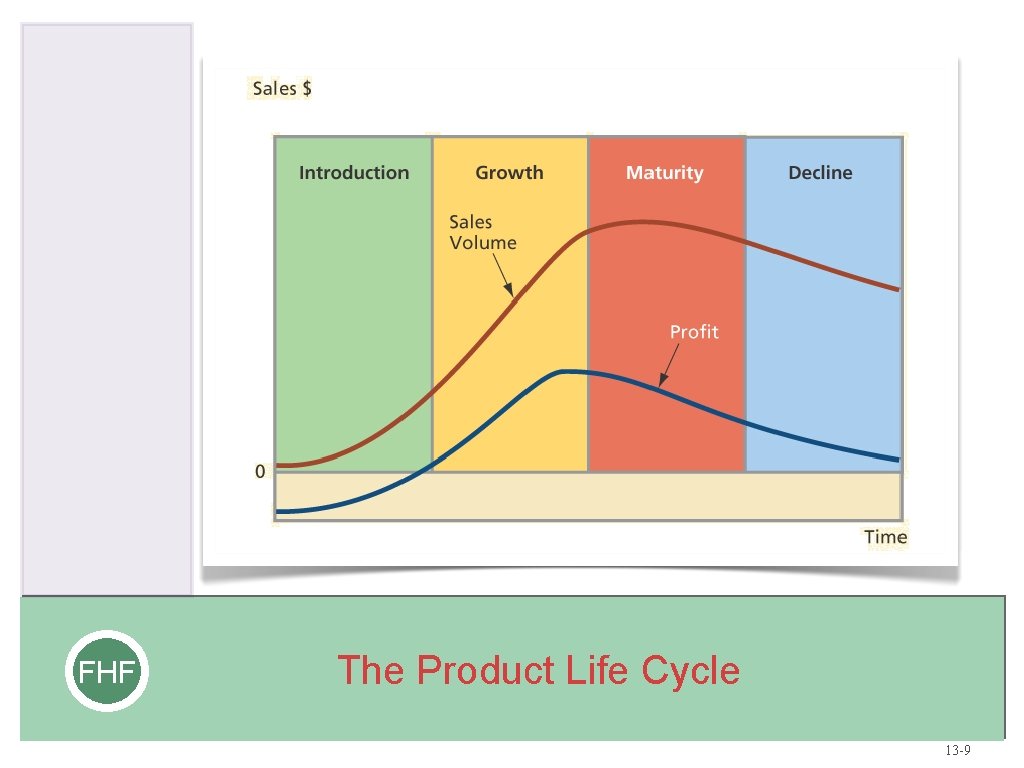
FHF The Product Life Cycle 13 -9
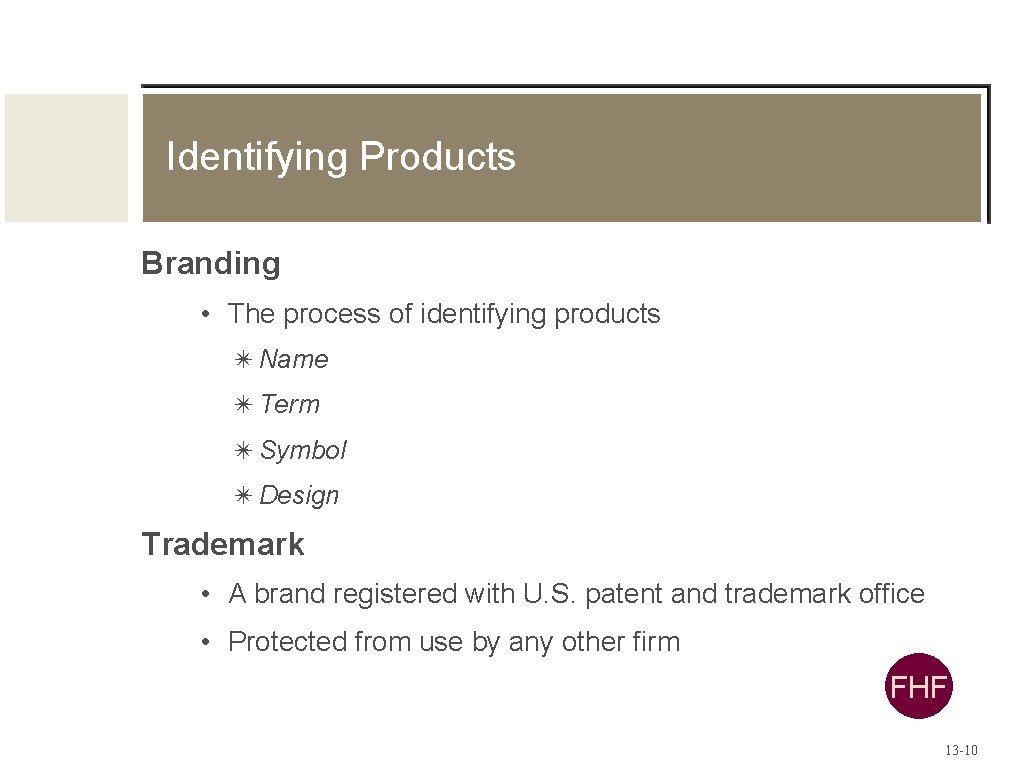
Identifying Products Branding • The process of identifying products ✴ Name ✴ Term ✴ Symbol ✴ Design Trademark • A brand registered with U. S. patent and trademark office • Protected from use by any other firm FHF 13 -10
13 -11
13 -12
13 -13
13 -14
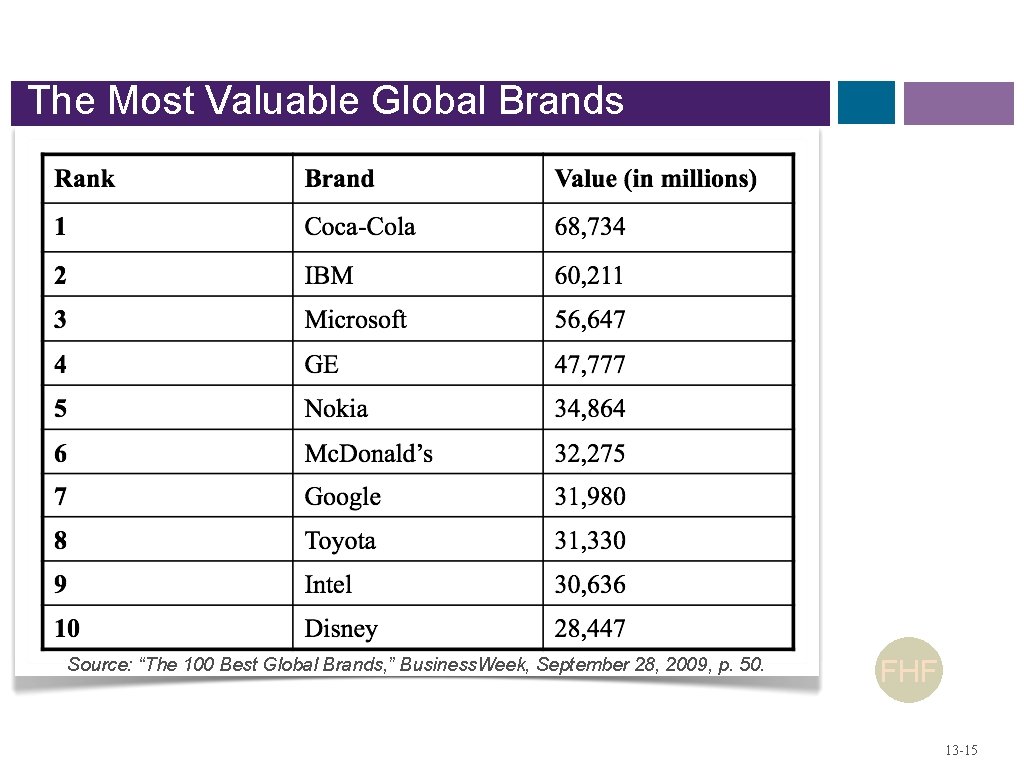
The Most Valuable Global Brands Source: “The 100 Best Global Brands, ” Business. Week, September 28, 2009, p. 50. FHF 13 -15
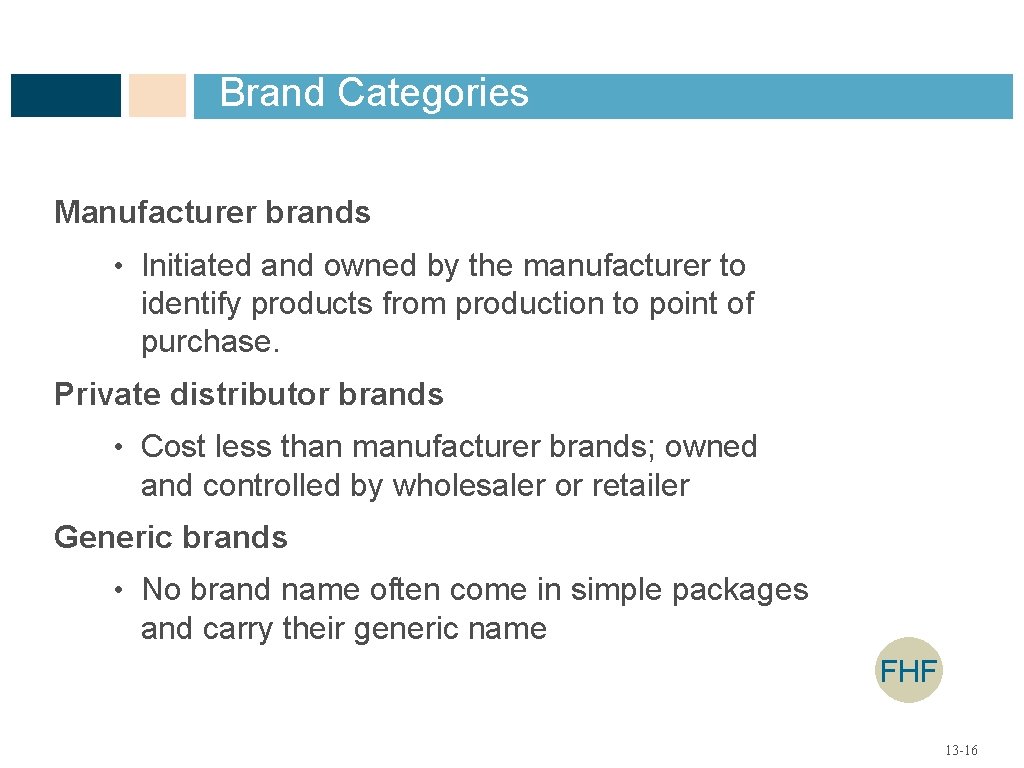
Brand Categories Manufacturer brands • Initiated and owned by the manufacturer to identify products from production to point of purchase. Private distributor brands • Cost less than manufacturer brands; owned and controlled by wholesaler or retailer Generic brands • No brand name often come in simple packages and carry their generic name FHF 13 -16
Packaging External container that holds & describes the product • Protection • Economy • Convenience • Promotion FHF 13 -17
Labeling The presentation of important information on the package (often by law) • Ingredients or content • Nutrition facts (calories, fat, etc. ) • Care instructions • Suggestions or use (such as recipes) • The manufacturer’s address and toll-free number • Web site Other useful information FHF 13 -18
Product Quality [ The degree to which a good, service, or idea meets the demands and requirements of customers ] FHF 13 -19
Pricing Strategy Four Common Pricing Objectives • Maximize profits and sales • Boost market share • Maintain the status quo • Survival FHF 13 -20
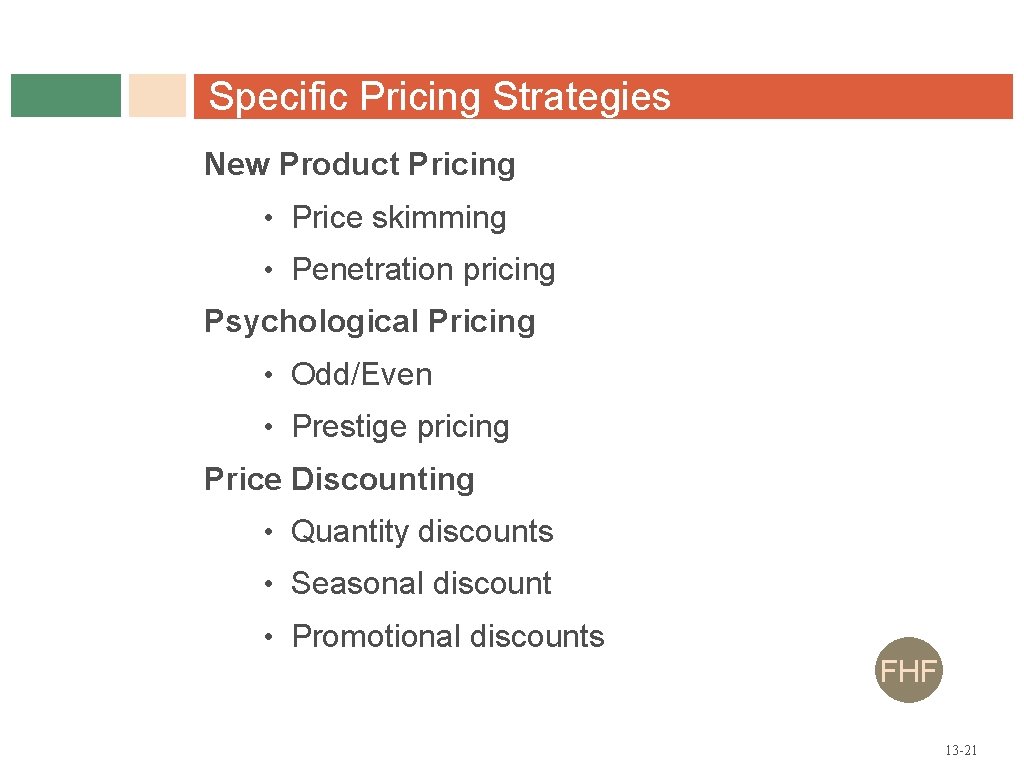
Specific Pricing Strategies New Product Pricing • Price skimming • Penetration pricing Psychological Pricing • Odd/Even • Prestige pricing Price Discounting • Quantity discounts • Seasonal discount • Promotional discounts FHF 13 -21
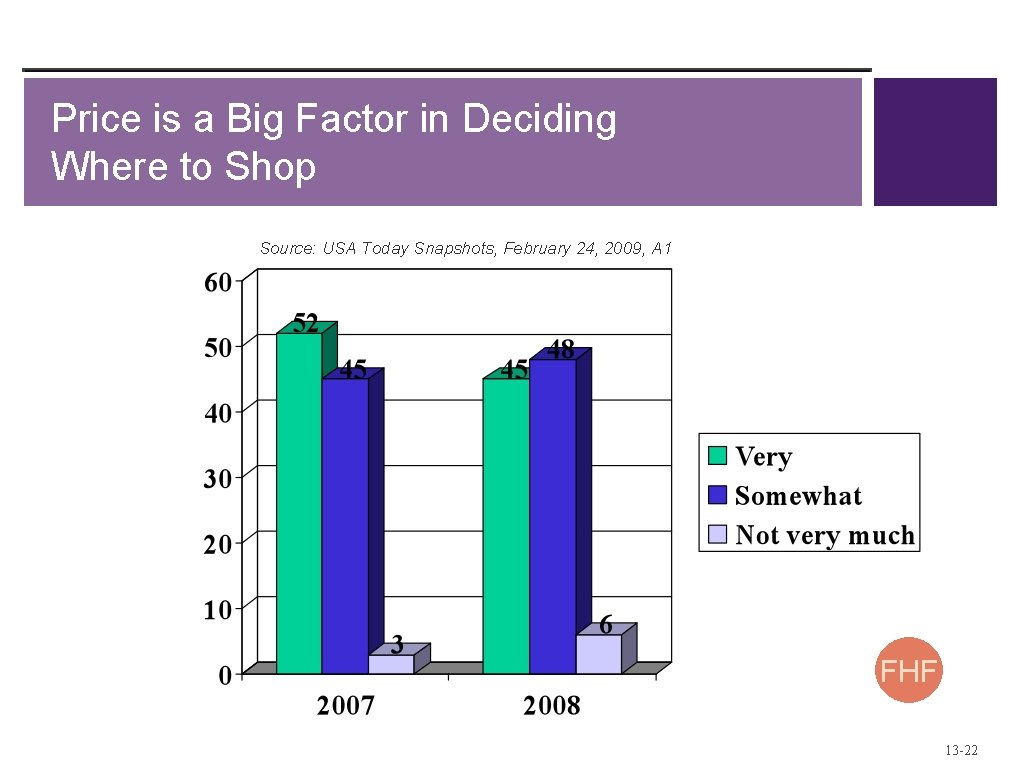
Price is a Big Factor in Deciding Where to Shop Source: USA Today Snapshots, February 24, 2009, A 1 FHF 13 -22
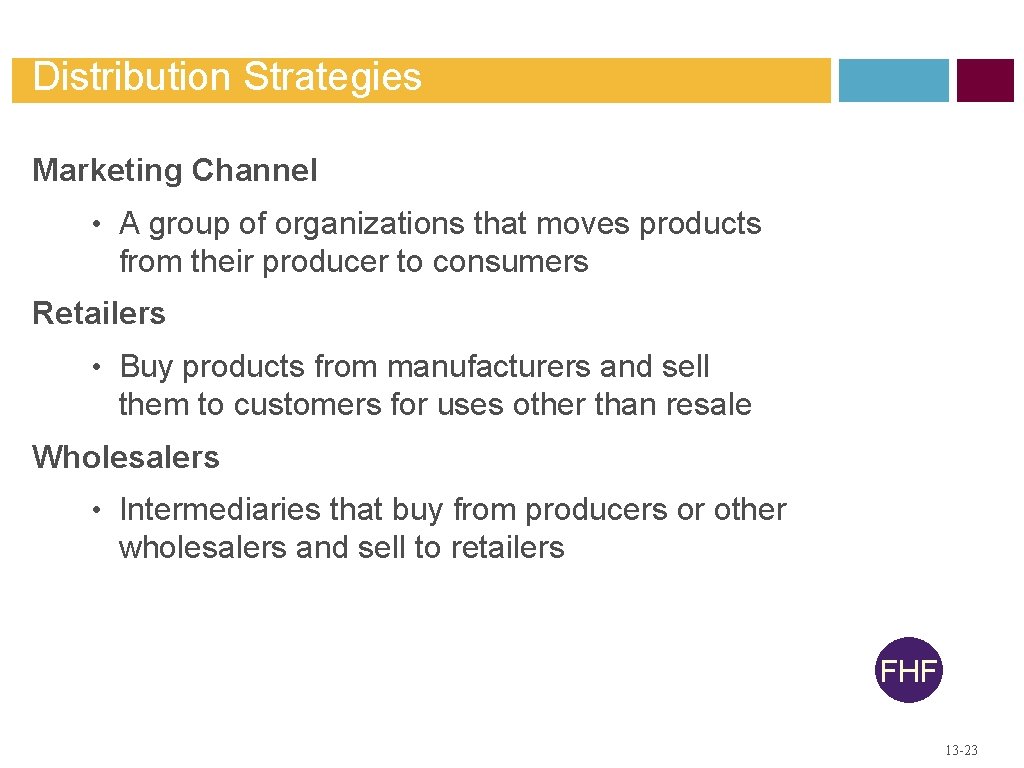
Distribution Strategies Marketing Channel • A group of organizations that moves products from their producer to consumers Retailers • Buy products from manufacturers and sell them to customers for uses other than resale Wholesalers • Intermediaries that buy from producers or other wholesalers and sell to retailers FHF 13 -23
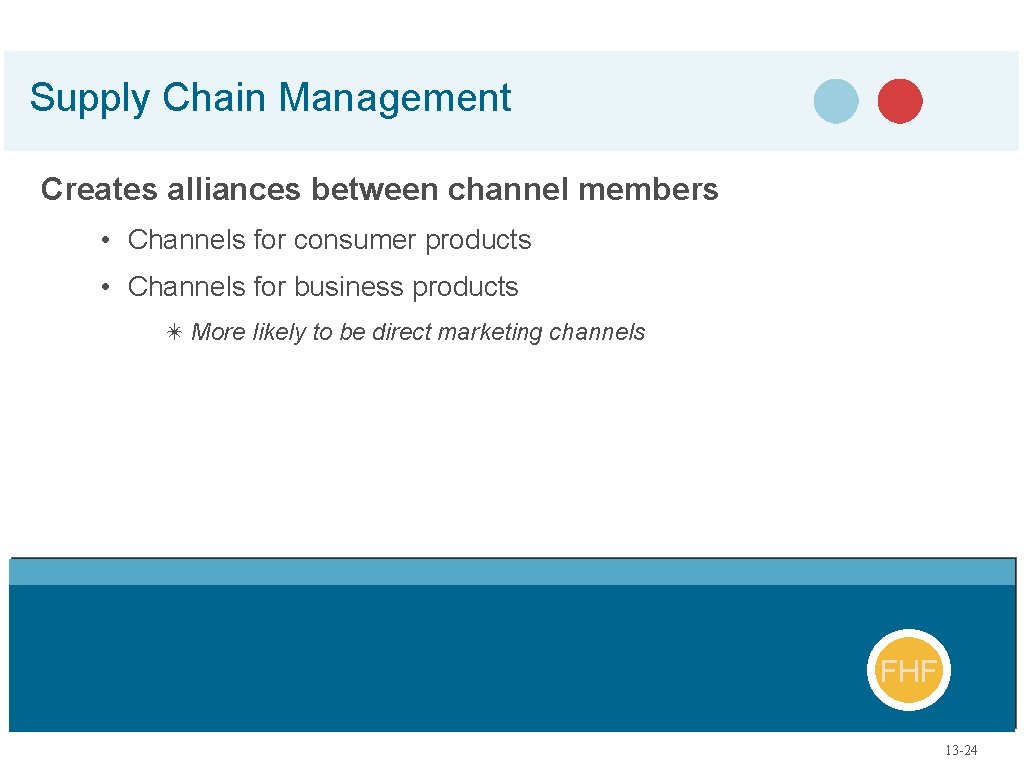
Supply Chain Management Creates alliances between channel members • Channels for consumer products • Channels for business products ✴ More likely to be direct marketing channels FHF 13 -24
Intensity of Market Coverage Depends on buyer behavior, the nature of the target market and competition • Intensive ✴ Makes a product available in as many outlets as possible • Selective ✴ Uses only a small proportion of all available outlets to expose products • Exclusive ✴ Exists when a manufacturer gives a middleman the sole right to sell a product in a defined geographic territory FHF 13 -25
Physical Distraction Includes all the activities necessary to move products from producers to customers • Inventory control • Transportation • Warehousing • Materials handling FHF 13 -26
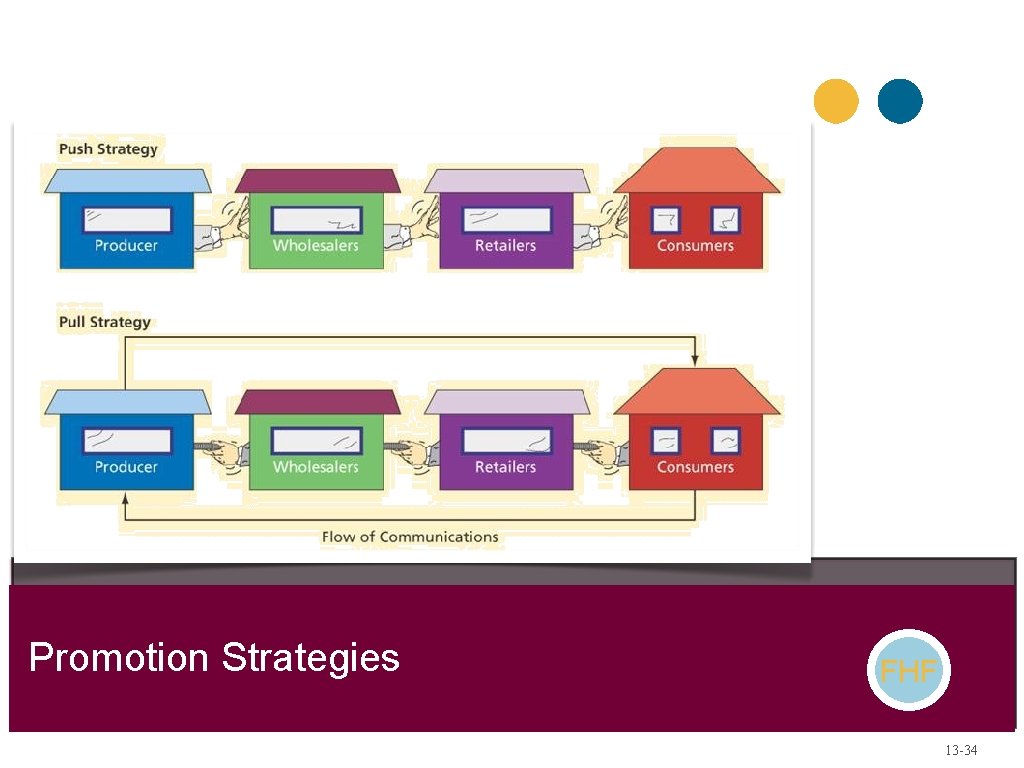
Promotion Strategy Goal is to communicate with individuals, groups and organizations • Encourages marketing exchanges • Used to influence opinions and attitudes toward organizations, people, or causes FHF 13 -27
Promotion Strategy • Advertising • Personal selling • Publicity • Sales promotion FHF 13 -28
Integrated Marketing Communication [ The process of coordinating the promotion mix elements and synchronizing promotion as a unified effort ] FHF 13 -29
Integrated Marketing Communication A paid non-personal communication communicated through mass media • Advertising campaign involves designing a series of advertisements and positioning them to reach a target audience • Online advertising is increasing FHF 13 -30
Personal Selling Direct two-way communication with buyers/potential buyers Avon uses personal selling • Targets women as customers and salespeople • Personal interaction with customers • Salespeople earn commissions • Flexible hours • The internet is an increasingly important component FHF 13 -31
Publicity A non-paid, non-personal communication through mass media channels • Mainly informative or descriptive • Can be extremely important for a company • Buzz marketing: marketers attempt to create a trend through publicity FHF 13 -32
Sales Promotion Uses such items as coupons, contests, and free samples to persuade buyers to purchase products • Stimulates customer purchasing • Enhances other promotional efforts • Generally less expensive than advertising FHF 13 -33
Promotion Strategies FHF 13 -34
Objectives of Promotion is only one element of the marketing strategy • Must be tied to goals of firm • Stimulate demand • Stabilize sales • Inform • Remind • Reinforce customers Promotional positioning • To create and maintain an image of a product in buyer’s minds FHF 13 -35
FHF 13 -36