
The Market Revolution Women Work Transformation of the

- Slides: 16
The Market Revolution, Women, & Work
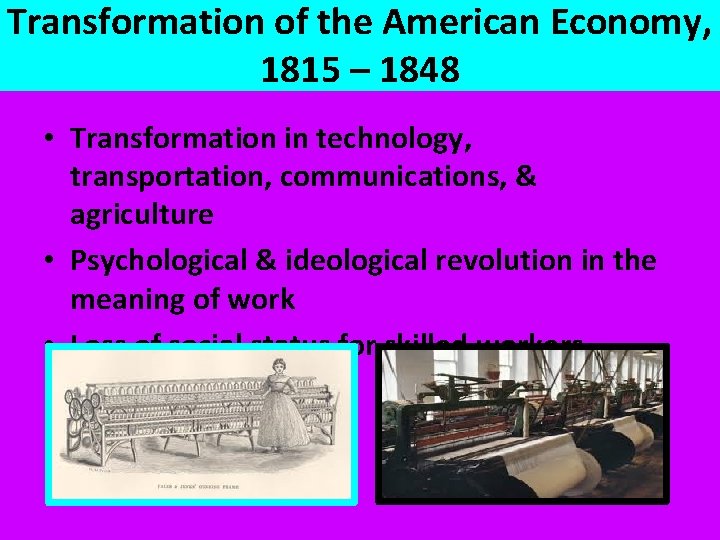
Transformation of the American Economy, 1815 – 1848 • Transformation in technology, transportation, communications, & agriculture • Psychological & ideological revolution in the meaning of work • Loss of social status for skilled workers
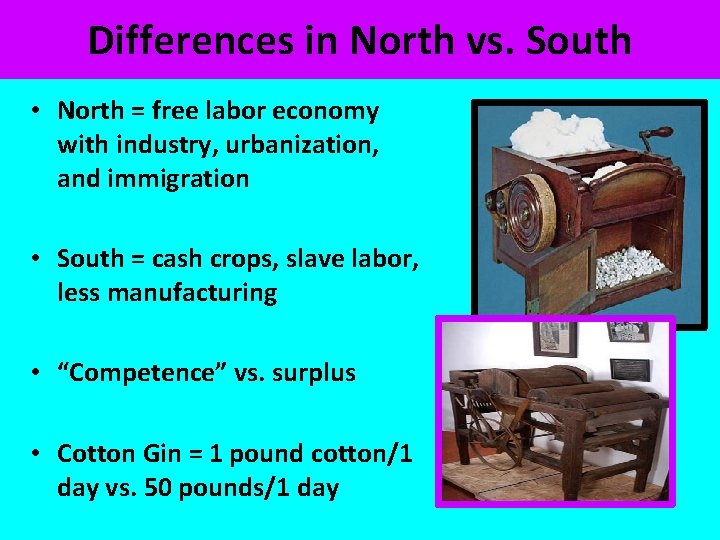
Differences in North vs. South • North = free labor economy with industry, urbanization, and immigration • South = cash crops, slave labor, less manufacturing • “Competence” vs. surplus • Cotton Gin = 1 pound cotton/1 day vs. 50 pounds/1 day
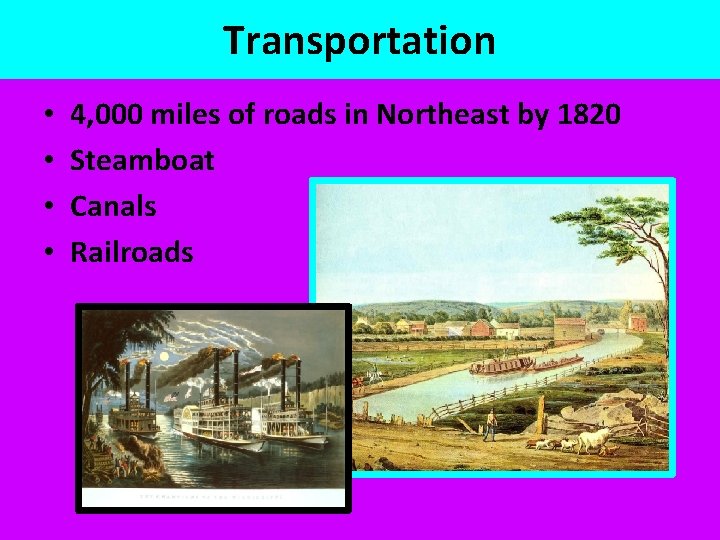
Transportation • • 4, 000 miles of roads in Northeast by 1820 Steamboat Canals Railroads
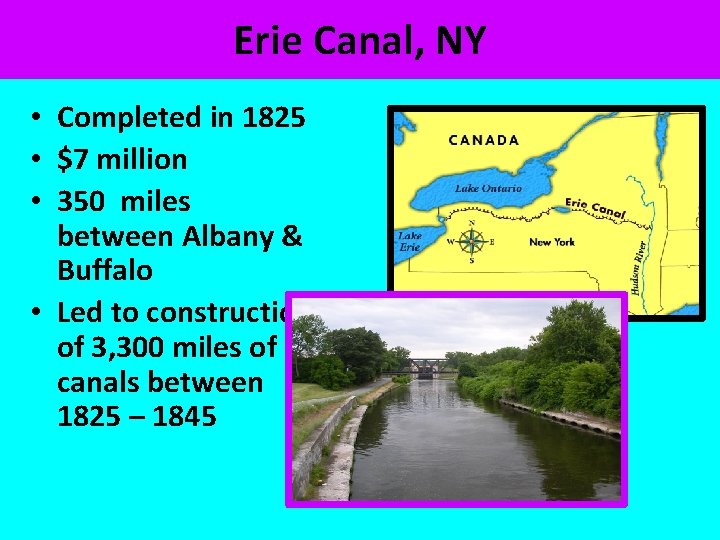
Erie Canal, NY • Completed in 1825 • $7 million • 350 miles between Albany & Buffalo • Led to construction of 3, 300 miles of canals between 1825 – 1845
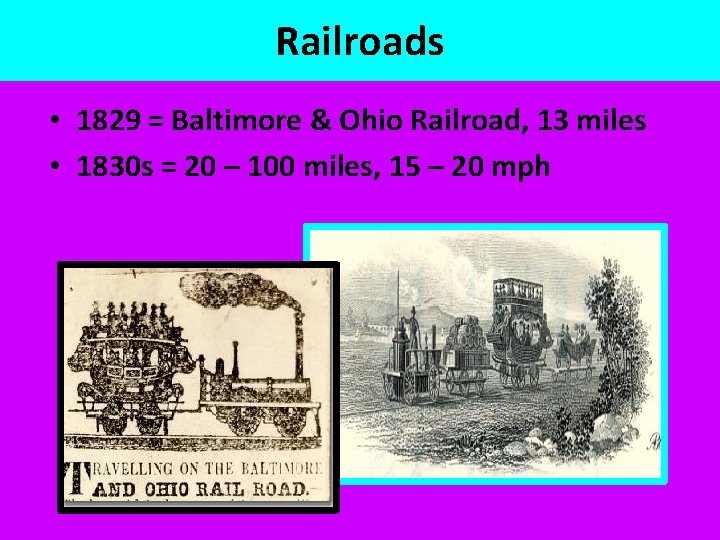
Railroads • 1829 = Baltimore & Ohio Railroad, 13 miles • 1830 s = 20 – 100 miles, 15 – 20 mph
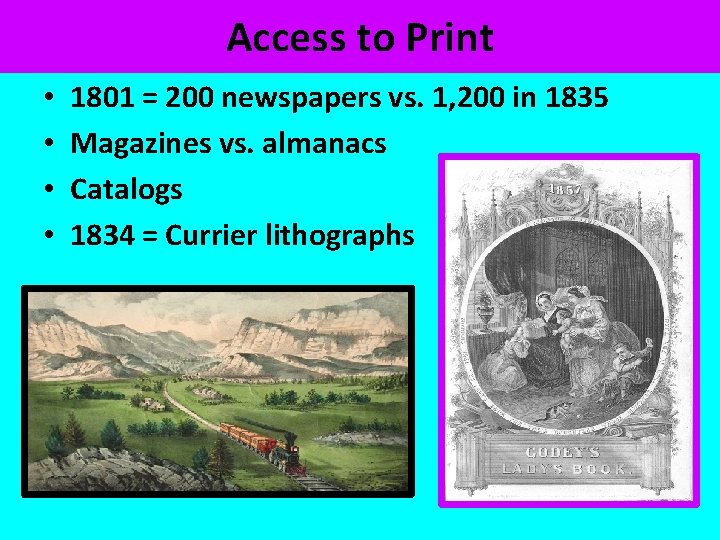
Access to Print • • 1801 = 200 newspapers vs. 1, 200 in 1835 Magazines vs. almanacs Catalogs 1834 = Currier lithographs
Changes in the Meaning of Work • Rise of small factories • De-skilling of production • Women and the “putting out system, ” 60 – 70 hours/week • Owners, managers, wage workers replaced artisans • Workplace discipline & industrial time • North = Wage labor replaced bound labor
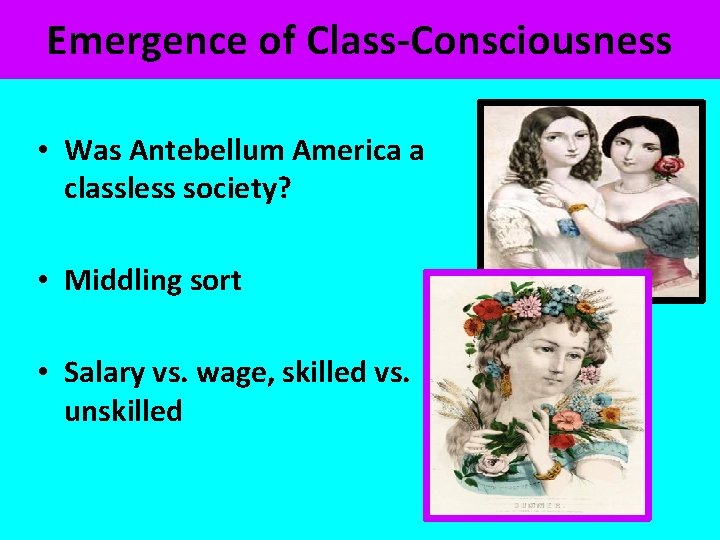
Emergence of Class-Consciousness • Was Antebellum America a classless society? • Middling sort • Salary vs. wage, skilled vs. unskilled
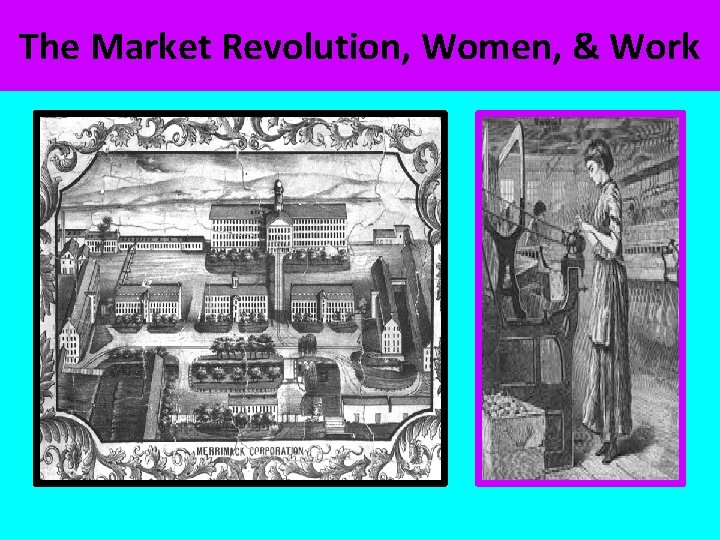
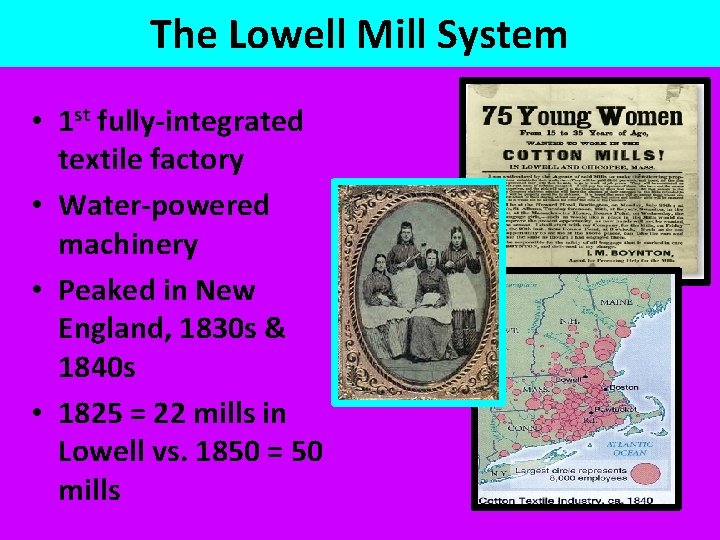
The Lowell Mill System • 1 st fully-integrated textile factory • Water-powered machinery • Peaked in New England, 1830 s & 1840 s • 1825 = 22 mills in Lowell vs. 1850 = 50 mills
Textile Machine
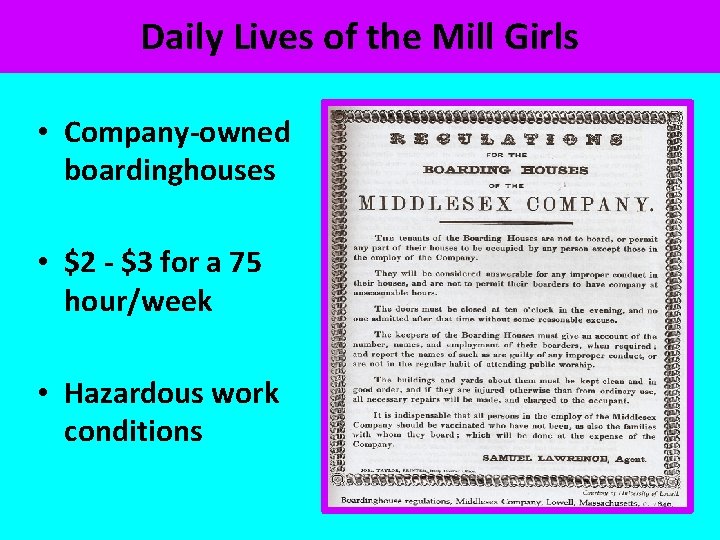
Daily Lives of the Mill Girls • Company-owned boardinghouses • $2 - $3 for a 75 hour/week • Hazardous work conditions
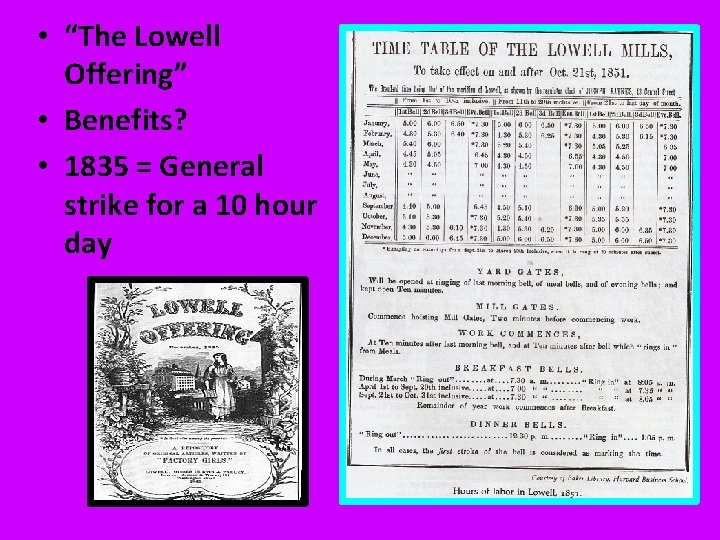
• “The Lowell Offering” • Benefits? • 1835 = General strike for a 10 hour day
Female Academies • Growth of public schools for white children, ages 6 – 11 • 1830 = Male and female literacy rates near equal in North • 1830 = 75 colleges open for men in U. S. , 0 for women • 1790 = 10 female academies vs. 1830 = 200 • 3 years of general education + “feminine subjects”
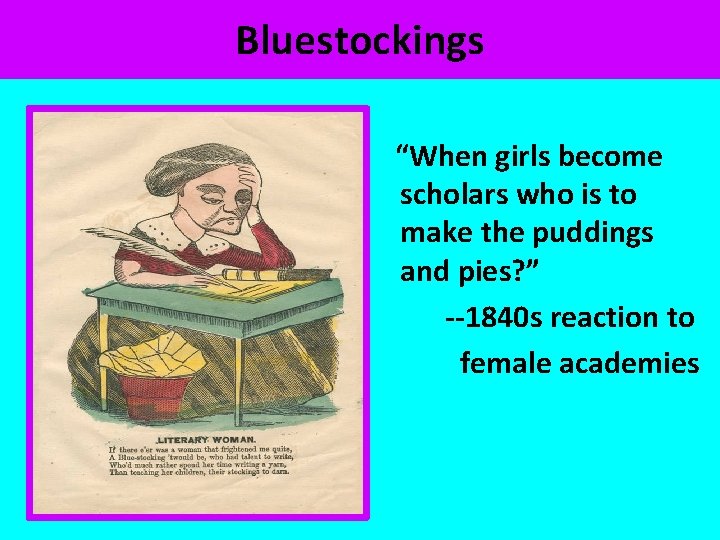
Bluestockings “When girls become scholars who is to make the puddings and pies? ” --1840 s reaction to female academies
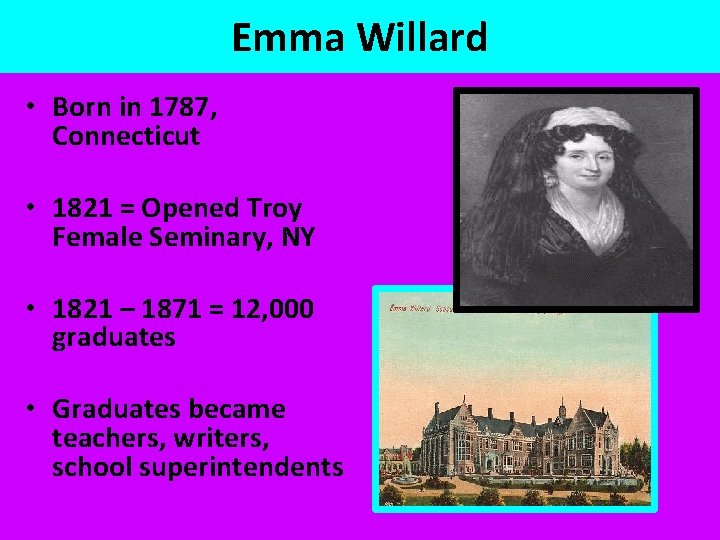
Emma Willard • Born in 1787, Connecticut • 1821 = Opened Troy Female Seminary, NY • 1821 – 1871 = 12, 000 graduates • Graduates became teachers, writers, school superintendents