
The MAORY Laser Guide Star Wavefront Sensor Design

- Slides: 35
The MAORY Laser Guide Star Wavefront Sensor: Design status Laura Schreiber – INAF OABO On behalf of: P. Feautrier, E. Stadler, P. Rabou, J. J. Correia, Z. Hubert, L. Gluck, L. Jocou, S. Rochat, Y. Magnard, T. Moulin, A. Delboulbé, S. Douté, G. Chauvin, E. Moreau, S. Oberti, C. Verinaud & the MAORY consortium
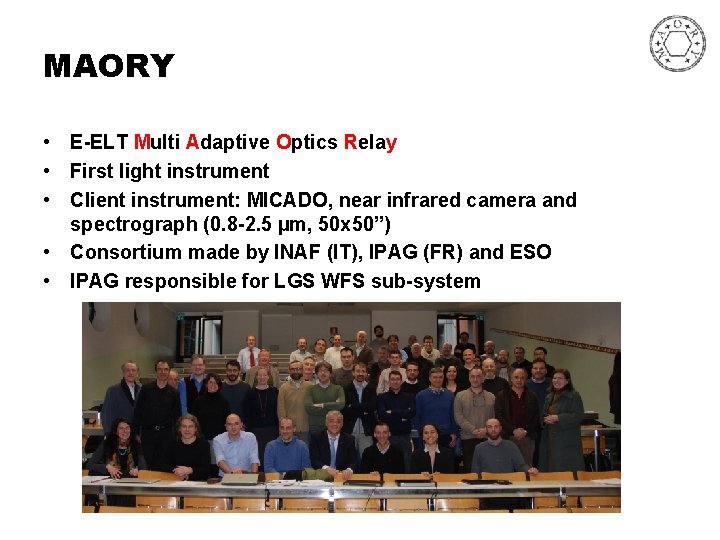
MAORY • E-ELT Multi Adaptive Optics Relay • First light instrument • Client instrument: MICADO, near infrared camera and spectrograph (0. 8 -2. 5 µm, 50 x 50”) • Consortium made by INAF (IT), IPAG (FR) and ESO • IPAG responsible for LGS WFS sub-system
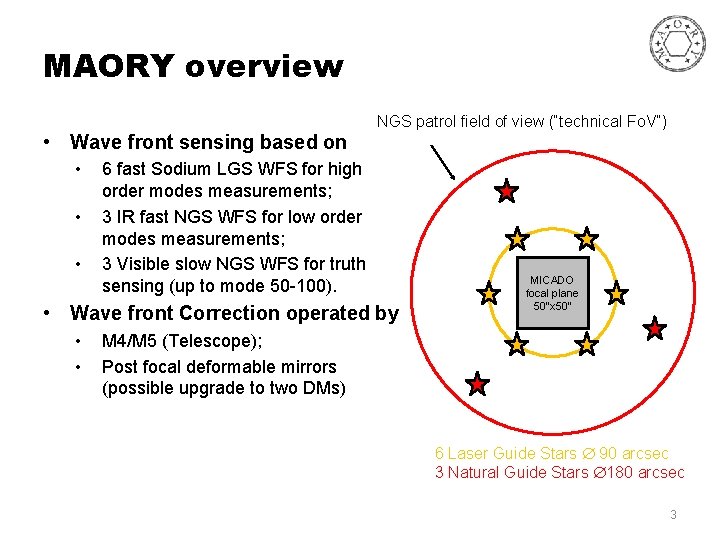
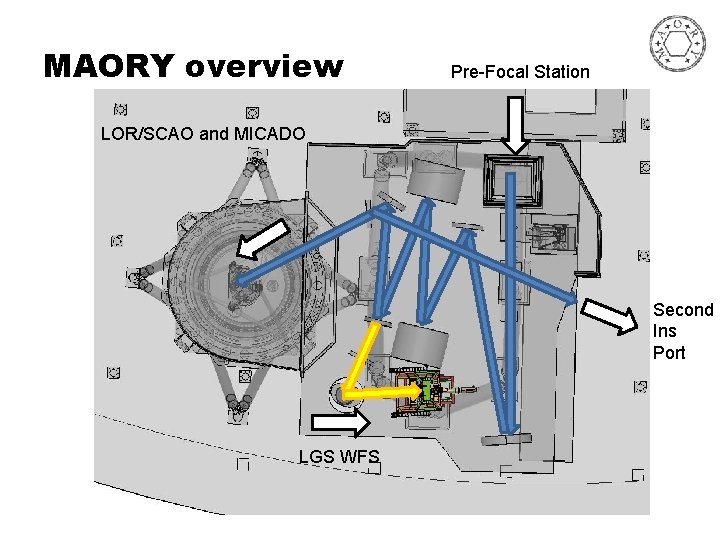
MAORY overview • Wave front sensing based on • • • NGS patrol field of view (“technical Fo. V”) 6 fast Sodium LGS WFS for high order modes measurements; 3 IR fast NGS WFS for low order modes measurements; 3 Visible slow NGS WFS for truth sensing (up to mode 50 -100). • Wave front Correction operated by • • MICADO focal plane 50”x 50” M 4/M 5 (Telescope); Post focal deformable mirrors (possible upgrade to two DMs) 6 Laser Guide Stars 90 arcsec 3 Natural Guide Stars 180 arcsec 3
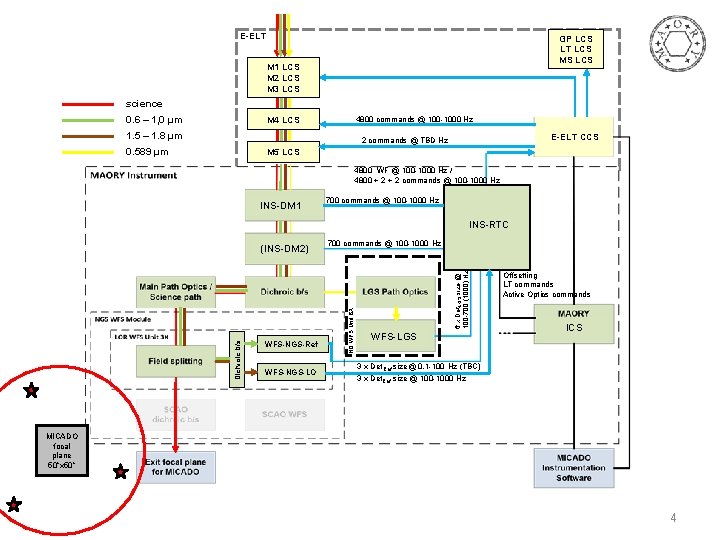
E-ELT GP LCS LT LCS MS LCS M 1 LCS M 2 LCS M 3 LCS science 0. 6 – 1, 0 µm M 4 LCS 4800 commands @ 100 -1000 Hz 1. 5 – 1. 8 µm E-ELT CCS 2 commands @ TBD Hz 0. 589 µm M 5 LCS 4800 WF @ 100 -1000 Hz / 4800 + 2 commands @ 100 -1000 Hz INS-DM 1 700 commands @ 100 -1000 Hz INS-RTC WFS-NGS-Ref WFS-NGS-LO 6 x Det. LGS size @ 100 -700 (1000) Hz 700 commands @ 100 -1000 Hz HO WFS Unit 6 X Dichroic b/s (INS-DM 2) WFS-LGS Offsetting LT commands Active Optics commands ICS 3 x Det. Ref size@ 0. 1 -100 Hz (TBC) 3 x Det. Ref size @ 100 -1000 Hz MICADO focal plane 50”x 50” 4
MAORY overview Pre-Focal Station LOR/SCAO and MICADO Second Ins Port LGS WFS
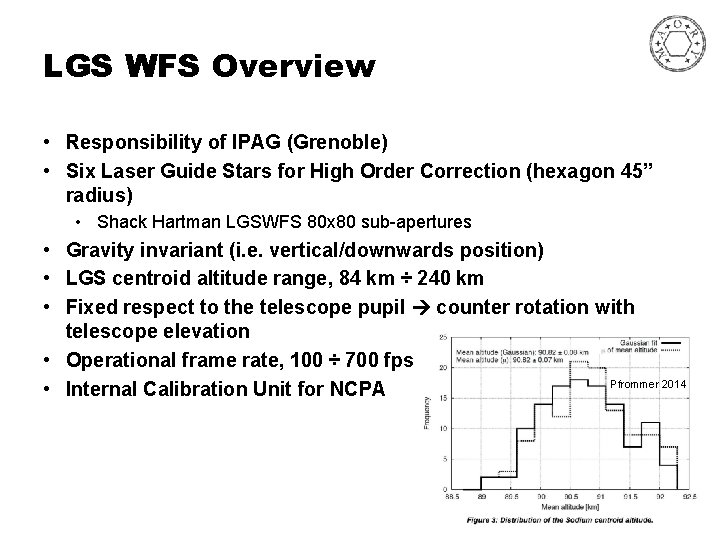
LGS WFS Overview • Responsibility of IPAG (Grenoble) • Six Laser Guide Stars for High Order Correction (hexagon 45” radius) • Shack Hartman LGSWFS 80 x 80 sub-apertures • Gravity invariant (i. e. vertical/downwards position) • LGS centroid altitude range, 84 km ÷ 240 km • Fixed respect to the telescope pupil counter rotation with telescope elevation • Operational frame rate, 100 ÷ 700 fps Pfrommer 2014 • Internal Calibration Unit for NCPA
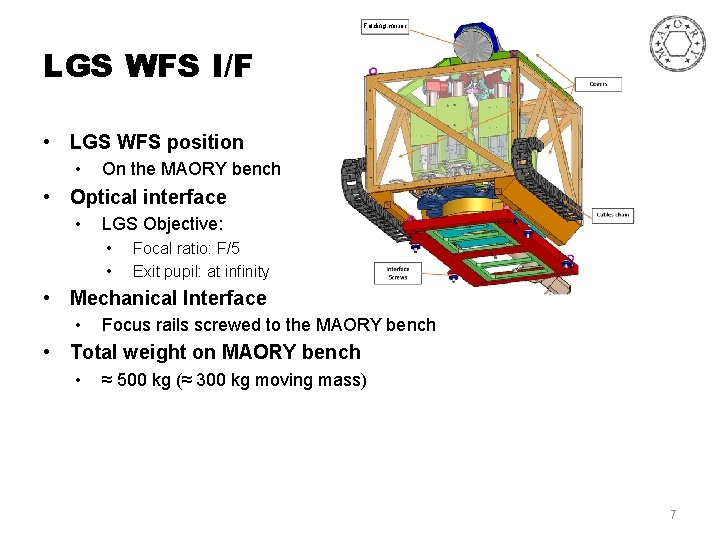
Folding mirror LGS WFS I/F • LGS WFS position • On the MAORY bench • Optical interface • LGS Objective: • • Focal ratio: F/5 Exit pupil: at infinity • Mechanical Interface • Focus rails screwed to the MAORY bench • Total weight on MAORY bench • ≈ 500 kg (≈ 300 kg moving mass) 7
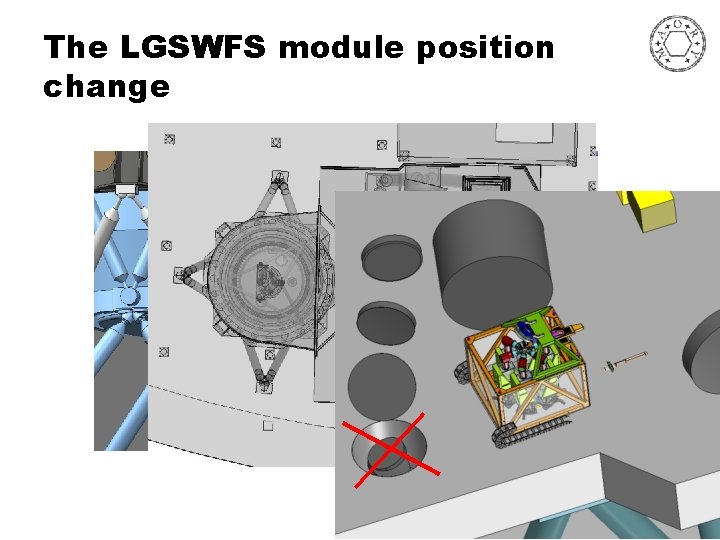
The LGSWFS module position change 8
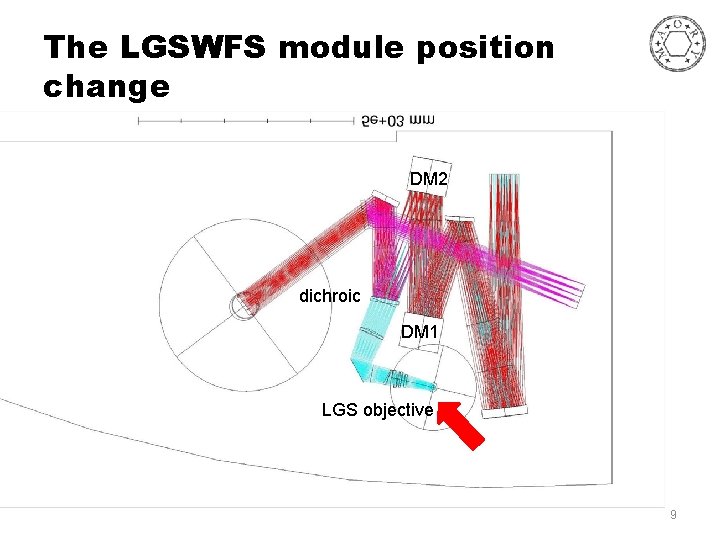
The LGSWFS module position change DM 2 dichroic DM 1 LGS objective 9
The LGSWFS module position change The drivers are installation, accessibility and maintainability • Significant Sub-system mass reduction (almost the half) • Global focus correction and control simplification (actuation forces required easier to obtain with smaller motors. Heat dissipation reduced) • Reduction of cantilever effect (no more on the corner) • Main bench mass reduction (due to mass reduction and change of position) 10
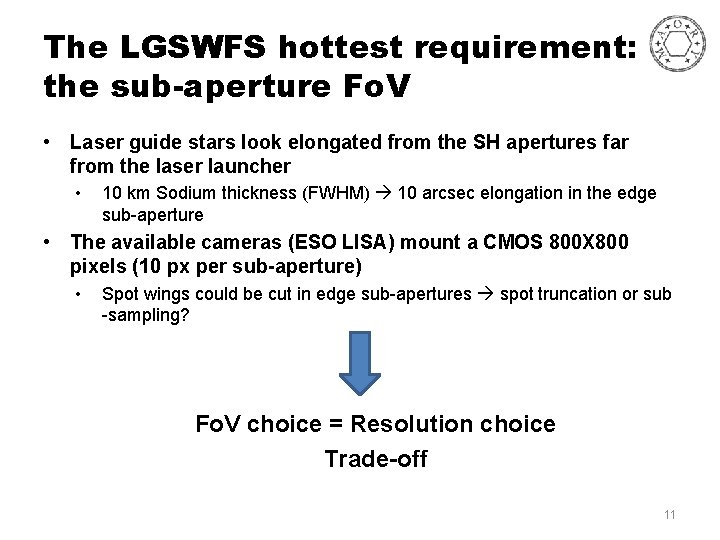
The LGSWFS hottest requirement: the sub-aperture Fo. V • Laser guide stars look elongated from the SH apertures far from the laser launcher • 10 km Sodium thickness (FWHM) 10 arcsec elongation in the edge sub-aperture • The available cameras (ESO LISA) mount a CMOS 800 X 800 pixels (10 px per sub-aperture) • Spot wings could be cut in edge sub-apertures spot truncation or sub -sampling? Fo. V choice = Resolution choice Trade-off 11
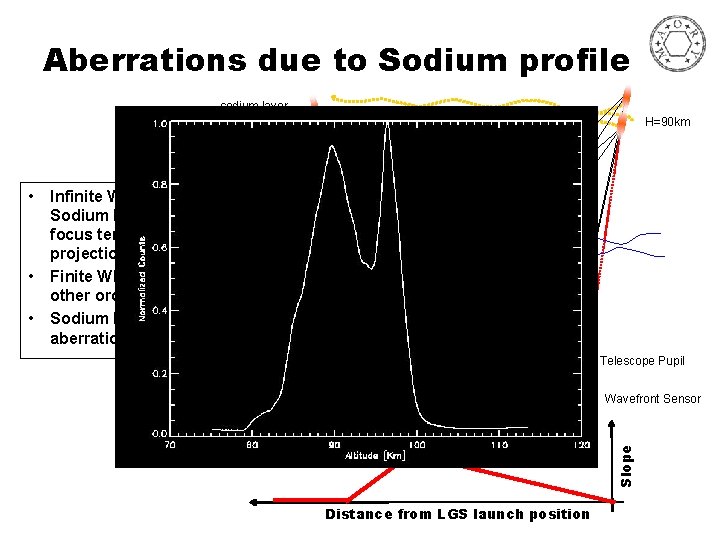
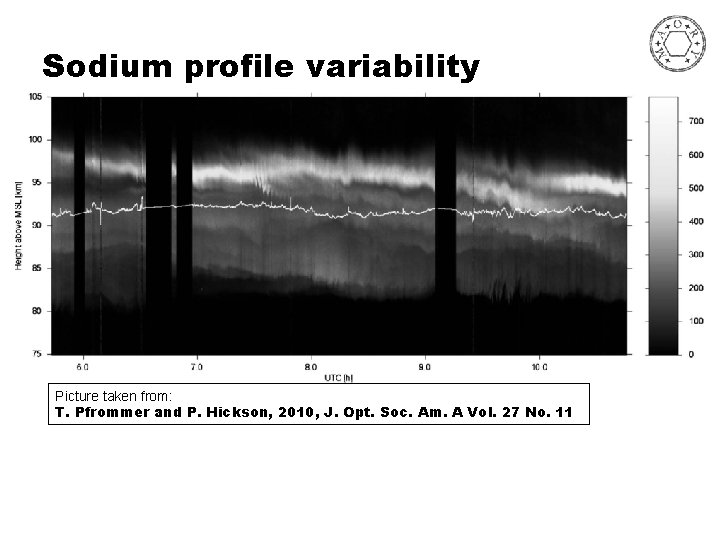
Aberrations due to Sodium profile sodium layer dh = 10 km • • Infinite WFS field of view Sodium layer features produce focus term (+ tip-tilt with edge projection) Finite WFS field of view other orders are excited Sodium layer changes in time aberrations also change Atmosphere Telescope Pupil Wavefront Sensor Slope • H=90 km Distance from LGS launch position
Sodium profile variability Picture taken from: T. Pfrommer and P. Hickson, 2010, J. Opt. Soc. Am. A Vol. 27 No. 11
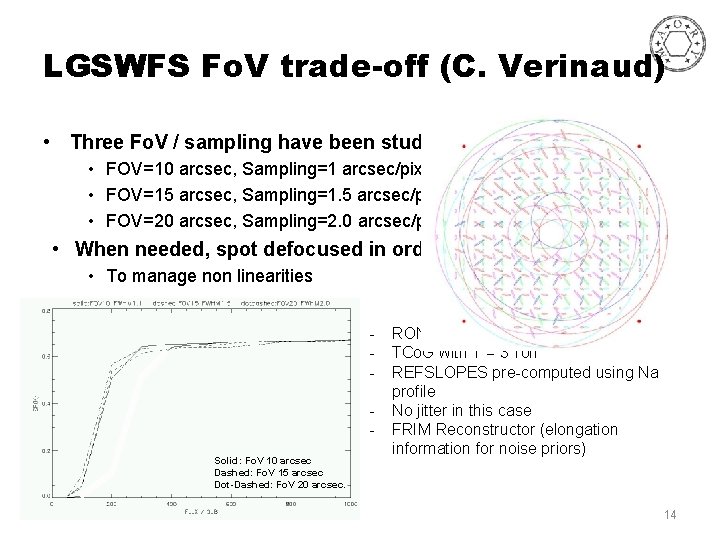
LGSWFS Fo. V trade-off (C. Verinaud) • Three Fo. V / sampling have been studied • FOV=10 arcsec, Sampling=1 arcsec/pix • FOV=15 arcsec, Sampling=1. 5 arcsec/pix • FOV=20 arcsec, Sampling=2. 0 arcsec/pix • When needed, spot defocused in order to have 1 px FWHM • To manage non linearities Solid: Fo. V 10 arcsec Dashed: Fo. V 15 arcsec Dot-Dashed: Fo. V 20 arcsec. RON=3 e. TCo. G with T = 3*ron REFSLOPES pre-computed using Na profile No jitter in this case FRIM Reconstructor (elongation information for noise priors) 14
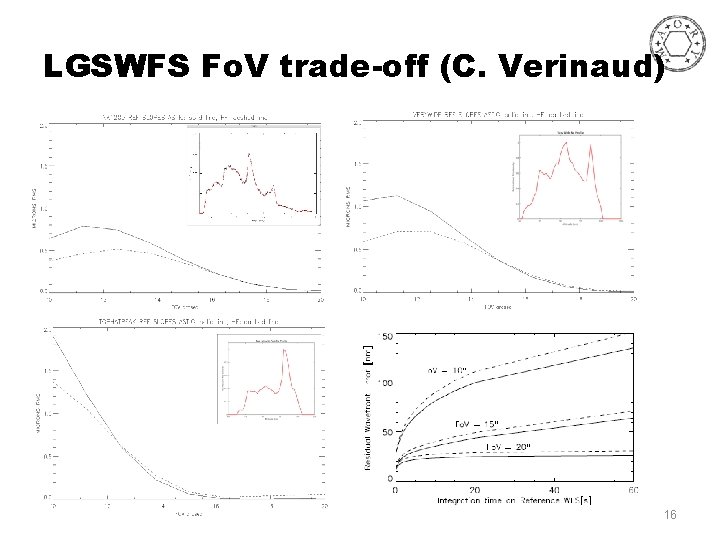
LGSWFS Fo. V trade-off (C. Verinaud) Spurious low order single channel analysis: • Considering different Na profiles, simulated the LGS spots in 4 different cases • • • No truncation 20 arcsec truncated like case 15 arcsec truncated like case 10 arcsec truncated like case Centroid computation with classical Co. G Project Centroids on Zernikes (100 modes) with SCAO-like reconstructor Location, date 15
LGSWFS Fo. V trade-off (C. Verinaud) 16
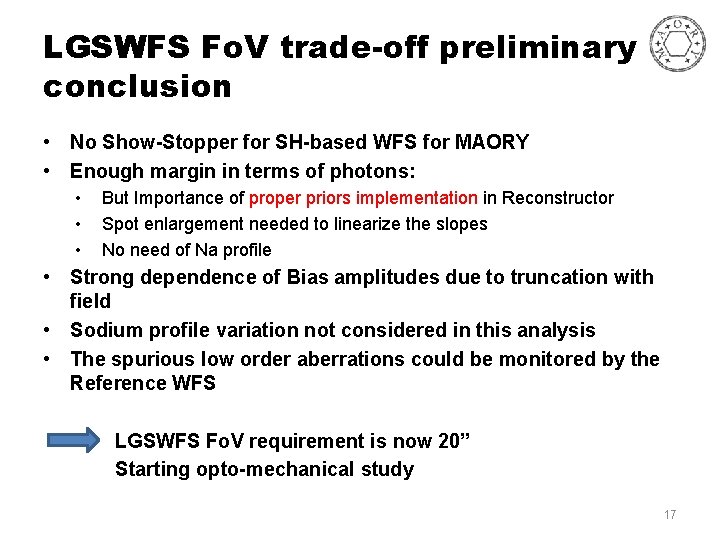
LGSWFS Fo. V trade-off preliminary conclusion • No Show-Stopper for SH-based WFS for MAORY • Enough margin in terms of photons: • • • But Importance of proper priors implementation in Reconstructor Spot enlargement needed to linearize the slopes No need of Na profile • Strong dependence of Bias amplitudes due to truncation with field • Sodium profile variation not considered in this analysis • The spurious low order aberrations could be monitored by the Reference WFS LGSWFS Fo. V requirement is now 20” Starting opto-mechanical study 17
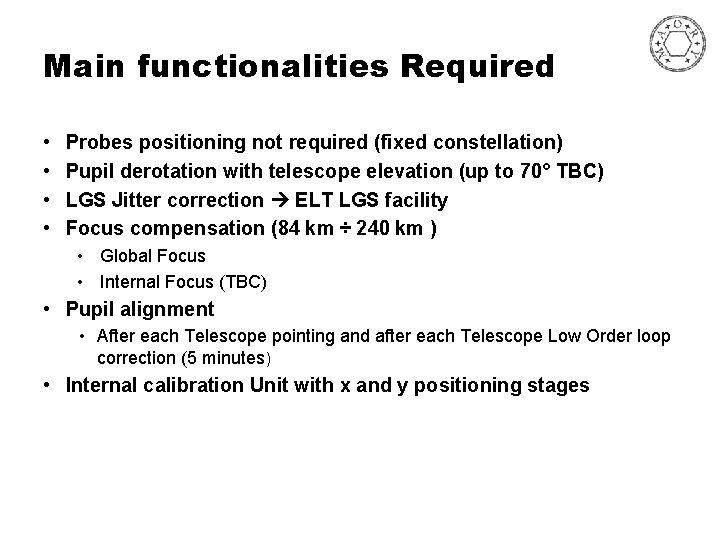
Main functionalities Required • • Probes positioning not required (fixed constellation) Pupil derotation with telescope elevation (up to 70° TBC) LGS Jitter correction ELT LGS facility Focus compensation (84 km ÷ 240 km ) • Global Focus • Internal Focus (TBC) • Pupil alignment • After each Telescope pointing and after each Telescope Low Order loop correction (5 minutes) • Internal calibration Unit with x and y positioning stages
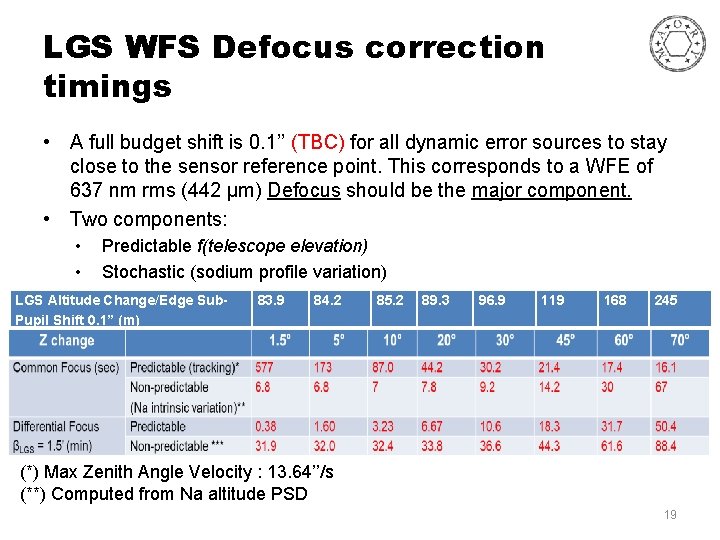
LGS WFS Defocus correction timings • A full budget shift is 0. 1’’ (TBC) for all dynamic error sources to stay close to the sensor reference point. This corresponds to a WFE of 637 nm rms (442 μm) Defocus should be the major component. • Two components: • • Predictable f(telescope elevation) Stochastic (sodium profile variation) LGS Altitude Change/Edge Sub. Pupil Shift 0. 1” (m) 83. 9 84. 2 85. 2 89. 3 96. 9 119 168 245 (*) Max Zenith Angle Velocity : 13. 64’’/s (**) Computed from Na altitude PSD 19
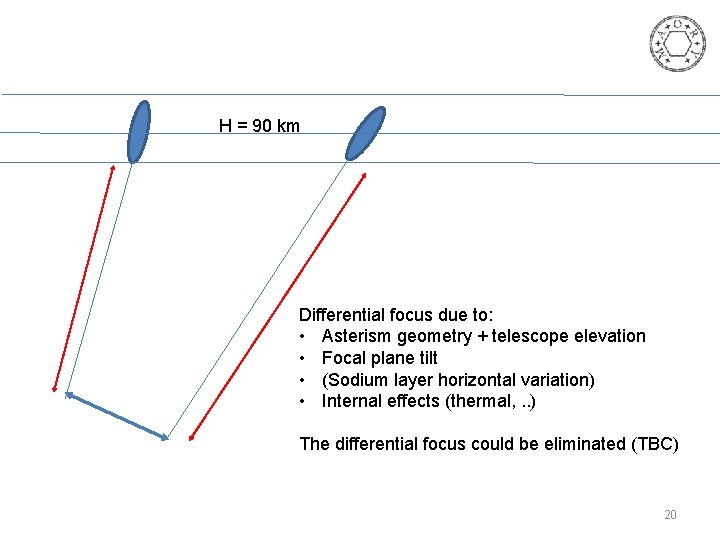
H = 90 km Differential focus due to: • Asterism geometry + telescope elevation • Focal plane tilt • (Sodium layer horizontal variation) • Internal effects (thermal, . . ) The differential focus could be eliminated (TBC) 20
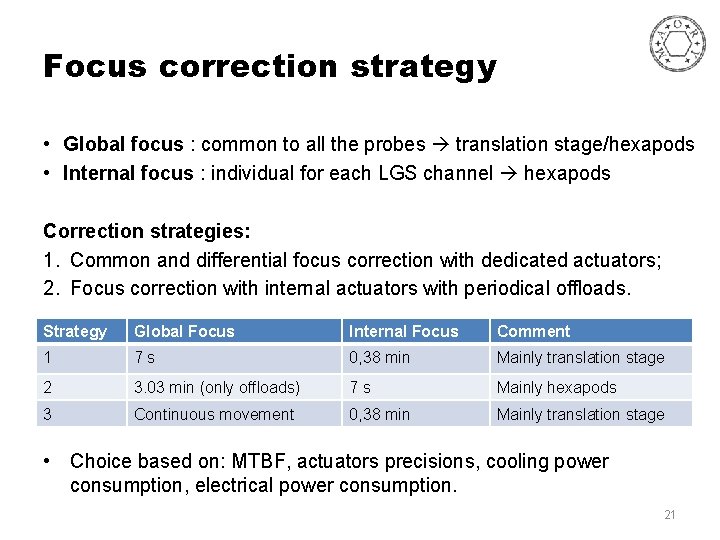
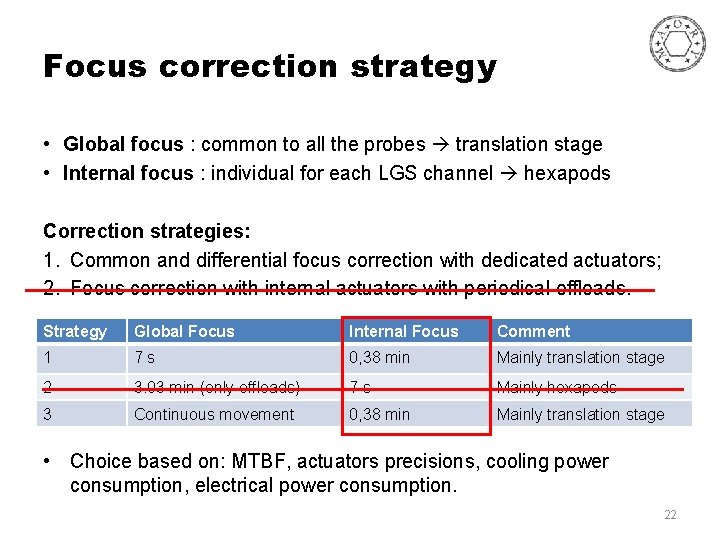
Focus correction strategy • Global focus : common to all the probes translation stage/hexapods • Internal focus : individual for each LGS channel hexapods Correction strategies: 1. Common and differential focus correction with dedicated actuators; 2. Focus correction with internal actuators with periodical offloads. Strategy Global Focus Internal Focus Comment 1 7 s 0, 38 min Mainly translation stage 2 3. 03 min (only offloads) 7 s Mainly hexapods 3 Continuous movement 0, 38 min Mainly translation stage • Choice based on: MTBF, actuators precisions, cooling power consumption, electrical power consumption. 21
Focus correction strategy • Global focus : common to all the probes translation stage • Internal focus : individual for each LGS channel hexapods Correction strategies: 1. Common and differential focus correction with dedicated actuators; 2. Focus correction with internal actuators with periodical offloads. Strategy Global Focus Internal Focus Comment 1 7 s 0, 38 min Mainly translation stage 2 3. 03 min (only offloads) 7 s Mainly hexapods 3 Continuous movement 0, 38 min Mainly translation stage • Choice based on: MTBF, actuators precisions, cooling power consumption, electrical power consumption. 22
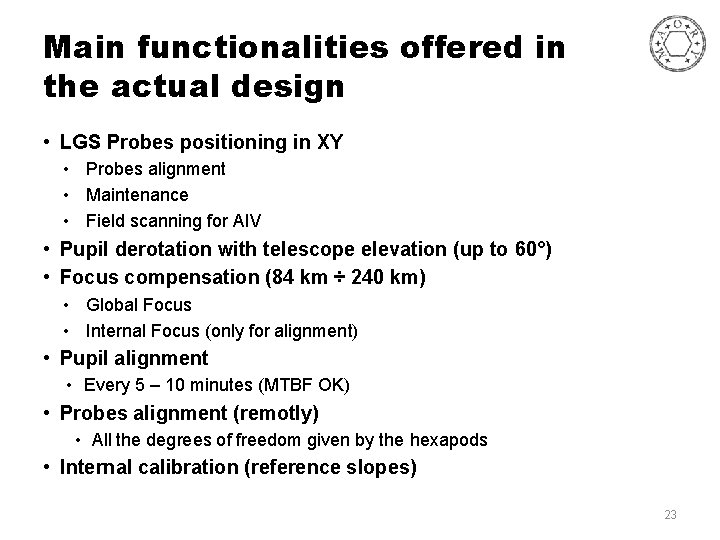
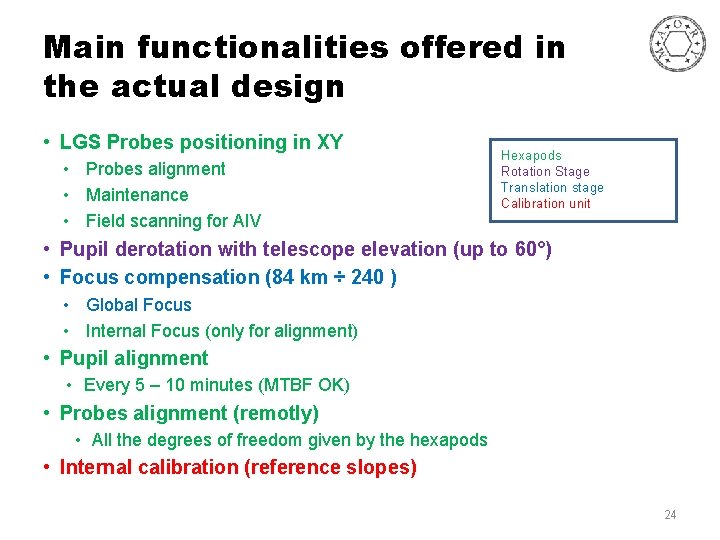
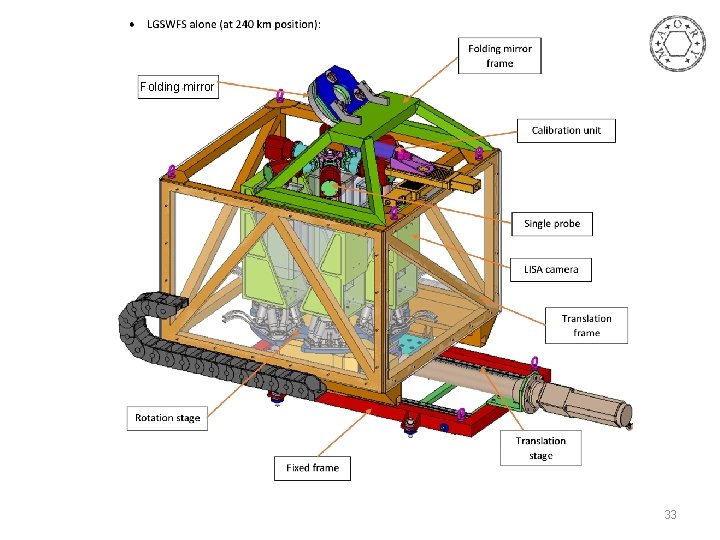
Main functionalities offered in the actual design • LGS Probes positioning in XY • Probes alignment • Maintenance • Field scanning for AIV • Pupil derotation with telescope elevation (up to 60°) • Focus compensation (84 km ÷ 240 km) • Global Focus • Internal Focus (only for alignment) • Pupil alignment • Every 5 – 10 minutes (MTBF OK) • Probes alignment (remotly) • All the degrees of freedom given by the hexapods • Internal calibration (reference slopes) 23
Main functionalities offered in the actual design • LGS Probes positioning in XY • Probes alignment • Maintenance • Field scanning for AIV Hexapods Rotation Stage Translation stage Calibration unit • Pupil derotation with telescope elevation (up to 60°) • Focus compensation (84 km ÷ 240 ) • Global Focus • Internal Focus (only for alignment) • Pupil alignment • Every 5 – 10 minutes (MTBF OK) • Probes alignment (remotly) • All the degrees of freedom given by the hexapods • Internal calibration (reference slopes) 24
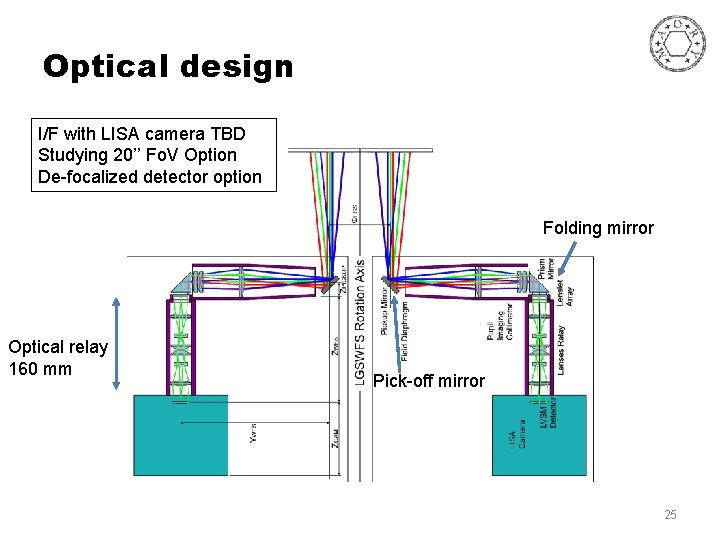
Optical design I/F with LISA camera TBD Studying 20’’ Fo. V Option De-focalized detector option Folding mirror Optical relay 160 mm Pick-off mirror 25
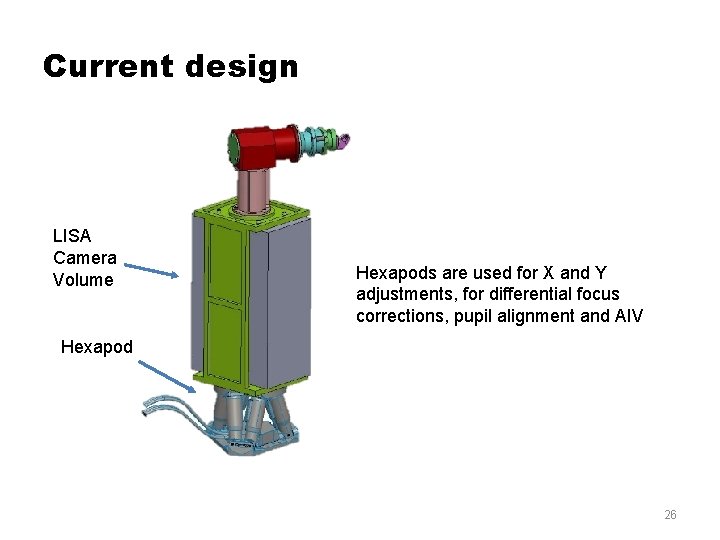
Current design LISA Camera Volume Hexapods are used for X and Y adjustments, for differential focus corrections, pupil alignment and AIV Hexapod 26
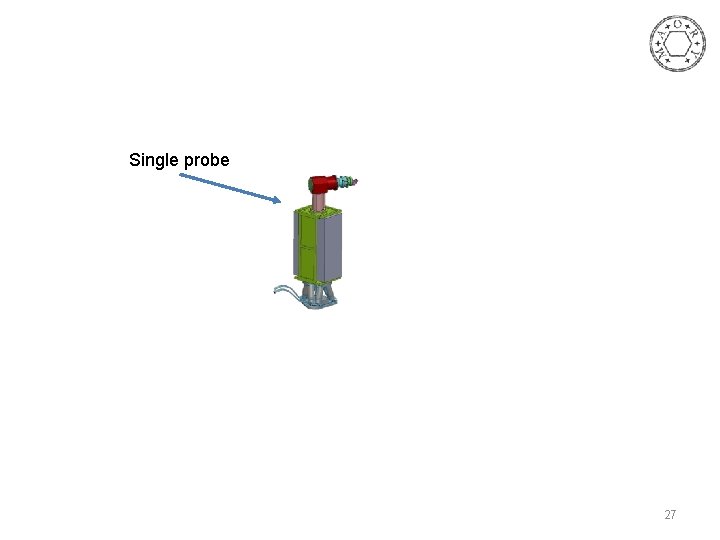
Single probe 27
28
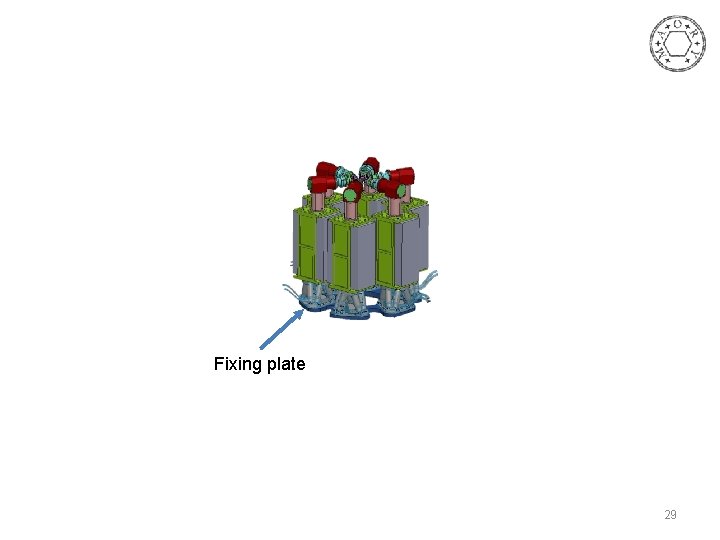
Fixing plate 29
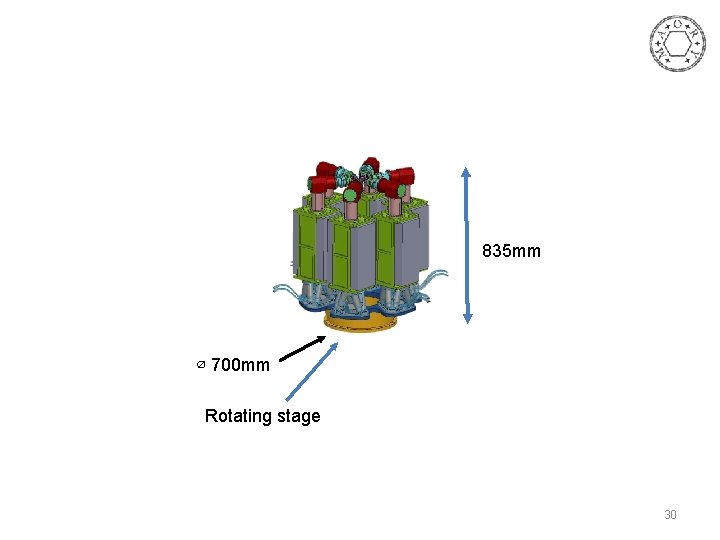
835 mm ∅ 700 mm Rotating stage 30
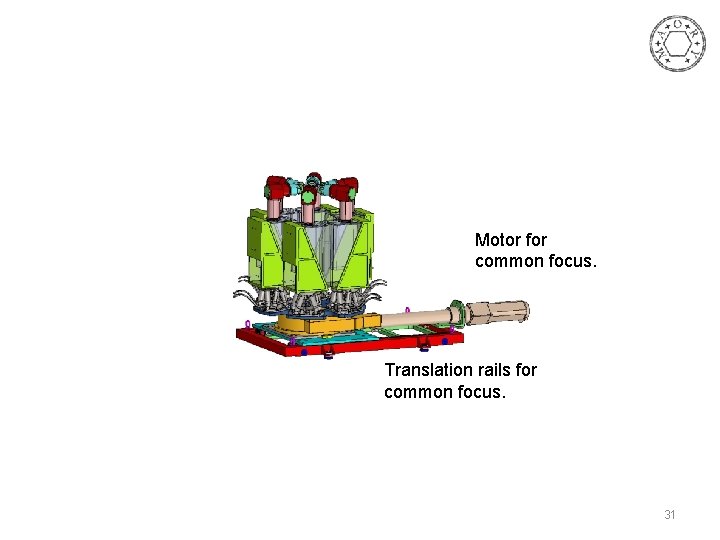
Motor for common focus. Translation rails for common focus. 31
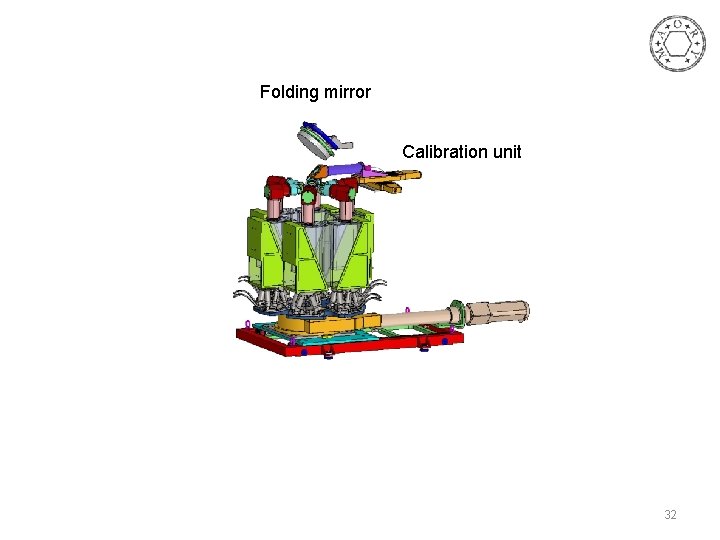
Folding mirror Calibration unit 32
Folding mirror 33
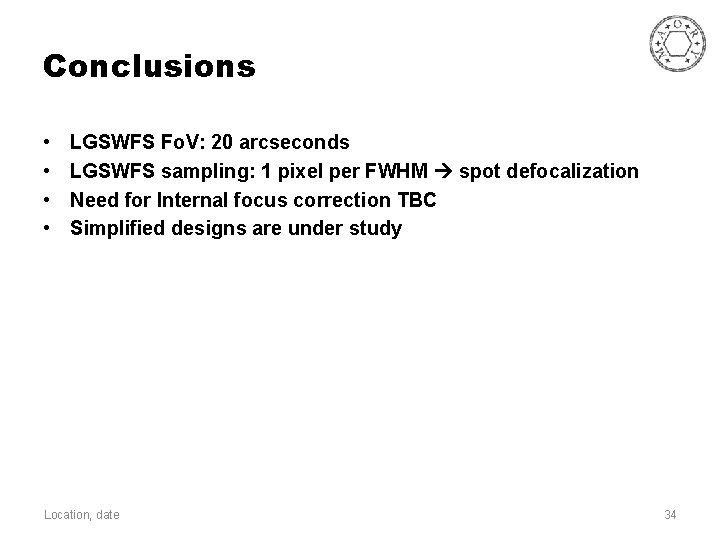
Conclusions • • LGSWFS Fo. V: 20 arcseconds LGSWFS sampling: 1 pixel per FWHM spot defocalization Need for Internal focus correction TBC Simplified designs are under study Location, date 34
Location, date 35