
The Manor System Borrowed from Mrs Valentis World
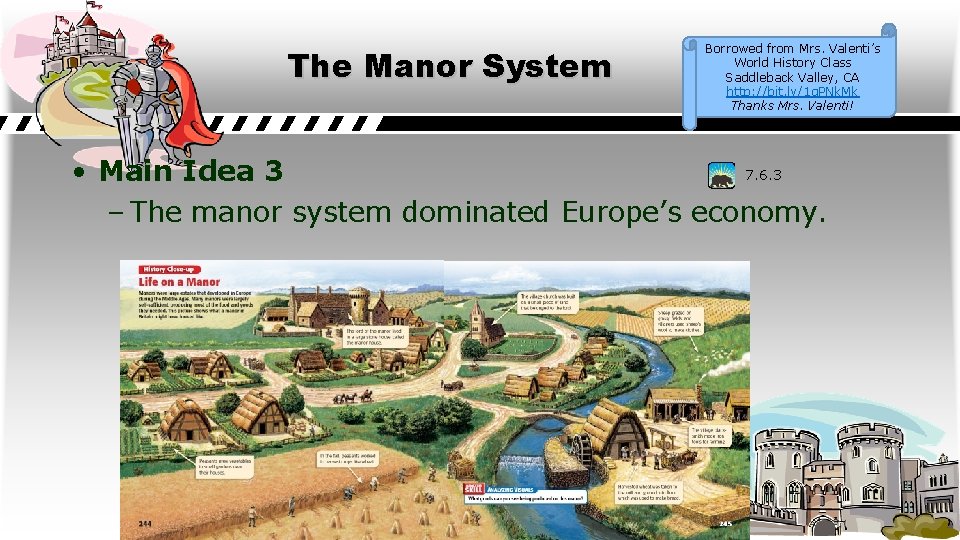
The Manor System Borrowed from Mrs. Valenti’s World History Class Saddleback Valley, CA http: //bit. ly/1 q. PNk. Mk Thanks Mrs. Valenti! 7. 6. 3 • Main Idea 3 – The manor system dominated Europe’s economy.
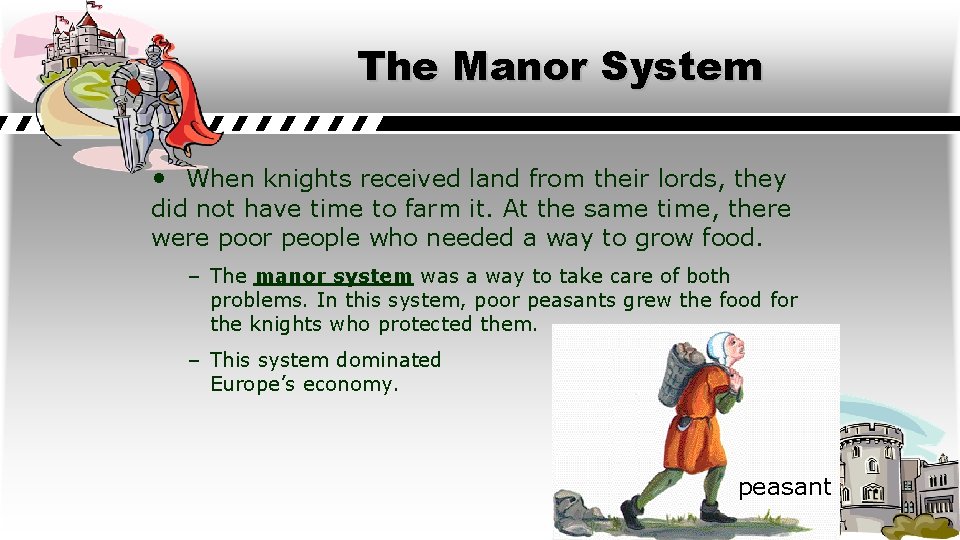
The Manor System • When knights received land from their lords, they did not have time to farm it. At the same time, there were poor people who needed a way to grow food. – The manor system was a way to take care of both problems. In this system, poor peasants grew the food for the knights who protected them. – This system dominated Europe’s economy. peasant
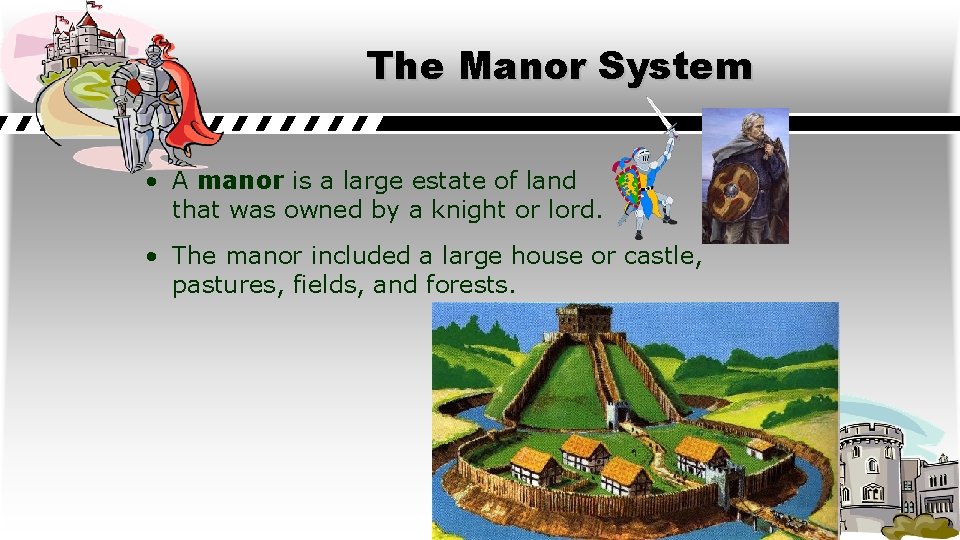
The Manor System • A manor is a large estate of land that was owned by a knight or lord. • The manor included a large house or castle, pastures, fields, and forests.
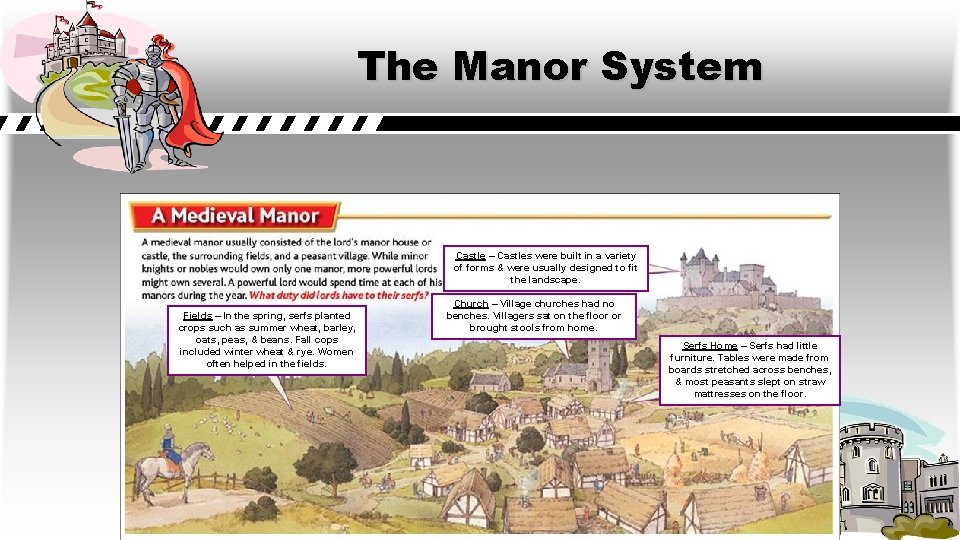
The Manor System Castle – Castles were built in a variety of forms & were usually designed to fit the landscape. Fields – In the spring, serfs planted crops such as summer wheat, barley, oats, peas, & beans. Fall cops included winter wheat & rye. Women often helped in the fields. Church – Village churches had no benches. Villagers sat on the floor or brought stools from home. Serfs Home – Serfs had little furniture. Tables were made from boards stretched across benches, & most peasants slept on straw mattresses on the floor.
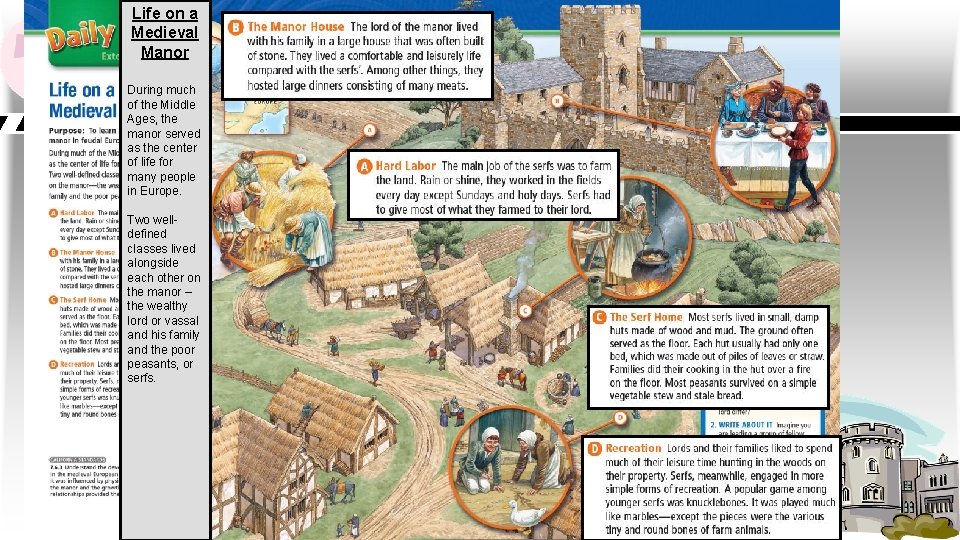
Life on a Medieval Manor During much of the Middle Ages, the manor served as the center of life for many people in Europe. Two welldefined classes lived alongside each other on the manor – the wealthy lord or vassal and his family and the poor peasants, or serfs.
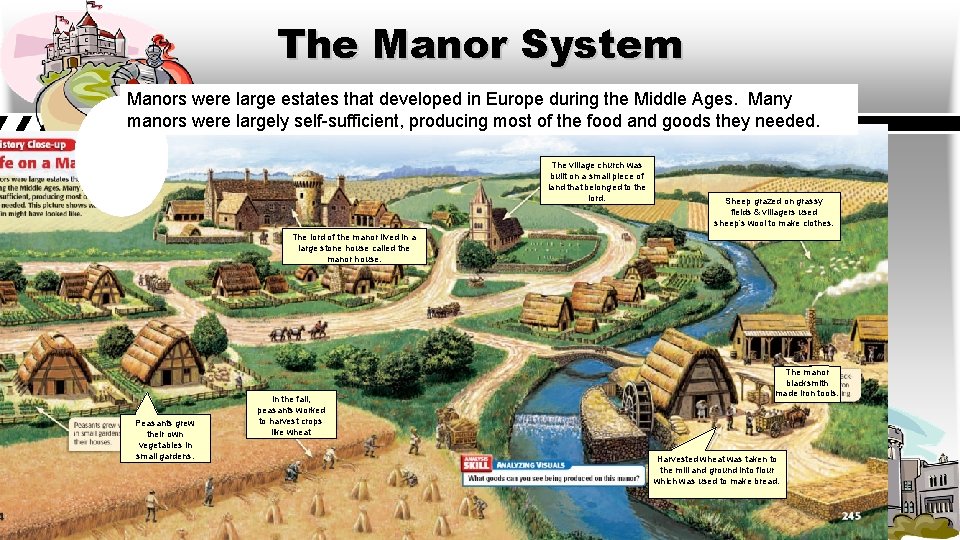
The Manor System Manors were large estates that developed in Europe during the Middle Ages. Many manors were largely self-sufficient, producing most of the food and goods they needed. The village church was built on a small piece of land that belonged to the lord. Sheep grazed on grassy fields & villagers used sheep’s wool to make clothes. The lord of the manor lived in a large stone house called the manor house. Peasants grew their own vegetables in small gardens. In the fall, peasants worked to harvest crops like wheat The manor blacksmith made iron tools. Harvested wheat was taken to the mill and ground into flour which was used to make bread.
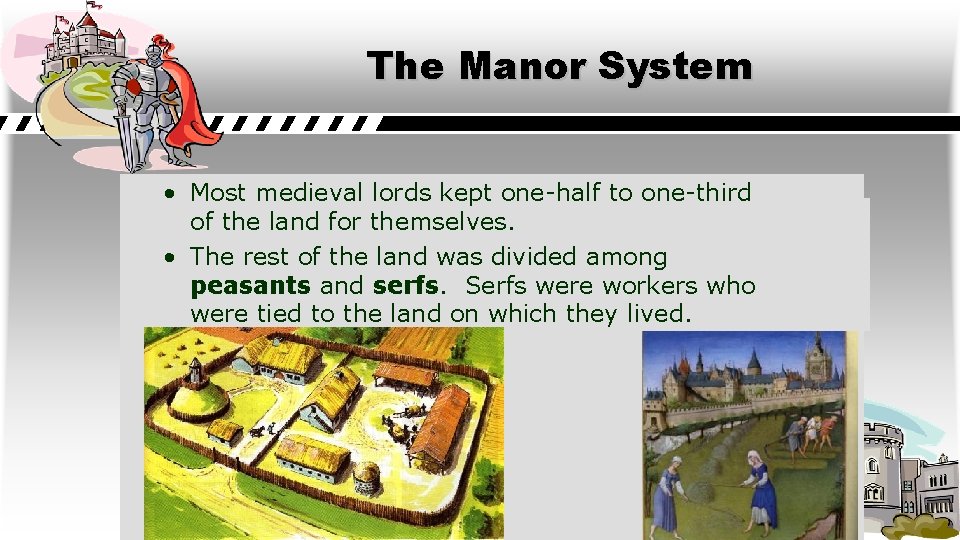
The Manor System • Most medieval lords kept one-half to one-third of the land for themselves. • The rest of the land was divided among peasants and serfs. Serfs were workers who were tied to the land on which they lived.
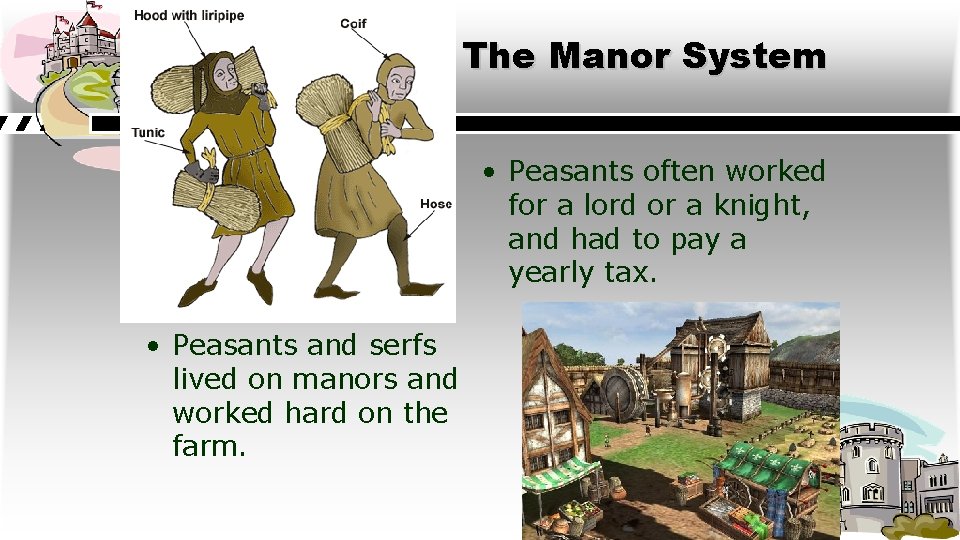
The Manor System • Peasants often worked for a lord or a knight, and had to pay a yearly tax. • Peasants and serfs lived on manors and worked hard on the farm.
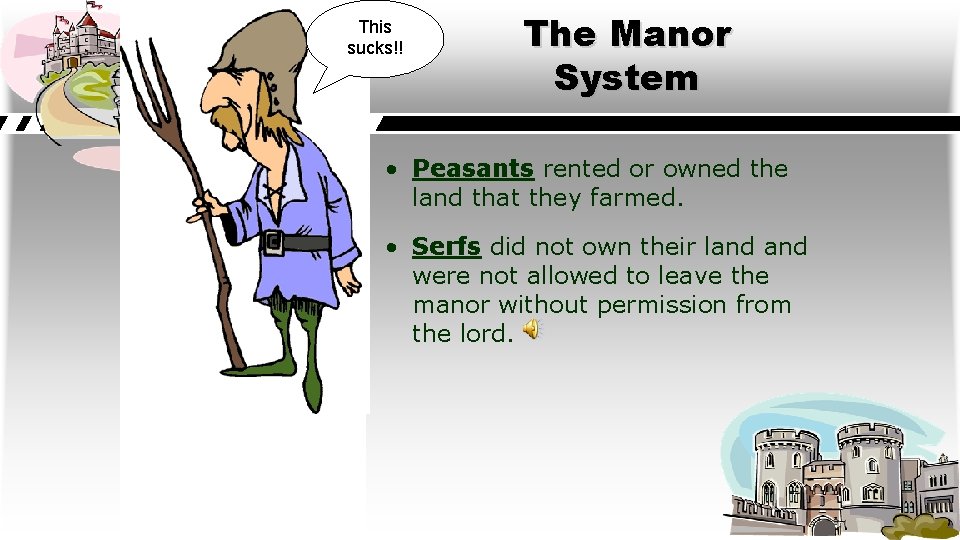
This sucks!! The Manor System • Peasants rented or owned the land that they farmed. • Serfs did not own their land were not allowed to leave the manor without permission from the lord.
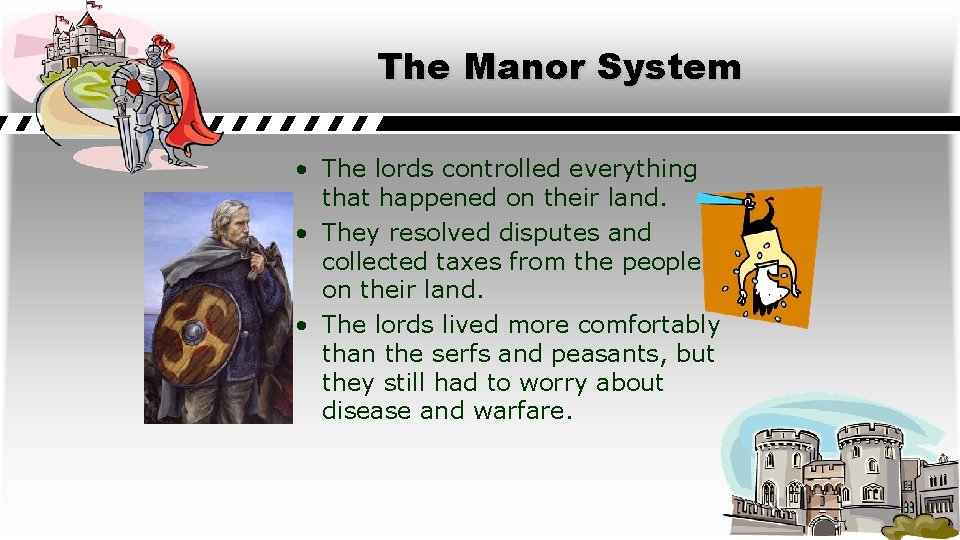
The Manor System • The lords controlled everything that happened on their land. • They resolved disputes and collected taxes from the people on their land. • The lords lived more comfortably than the serfs and peasants, but they still had to worry about disease and warfare.
- Slides: 11