
THE MANGROVE Go back and visit your roots
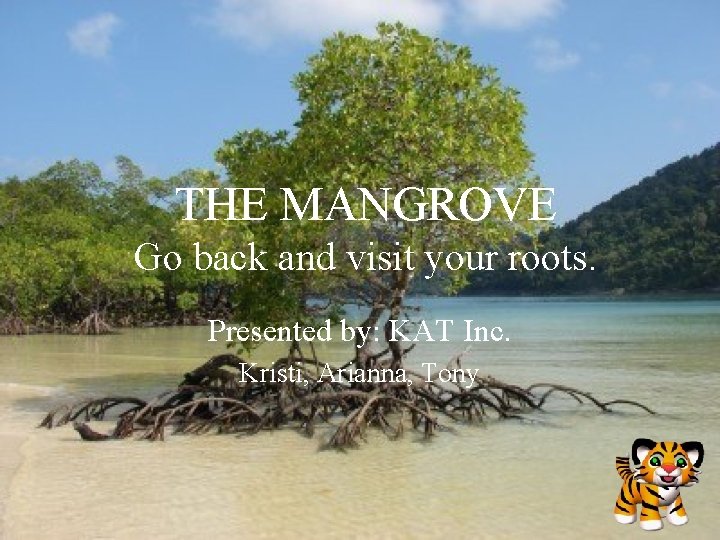
THE MANGROVE Go back and visit your roots. Presented by: KAT Inc. Kristi, Arianna, Tony
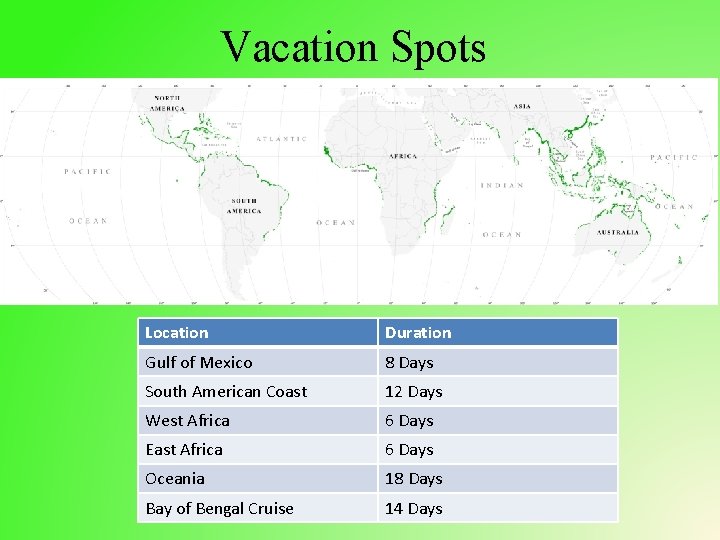
Vacation Spots Location Duration Gulf of Mexico 8 Days South American Coast 12 Days West Africa 6 Days East Africa 6 Days Oceania 18 Days Bay of Bengal Cruise 14 Days
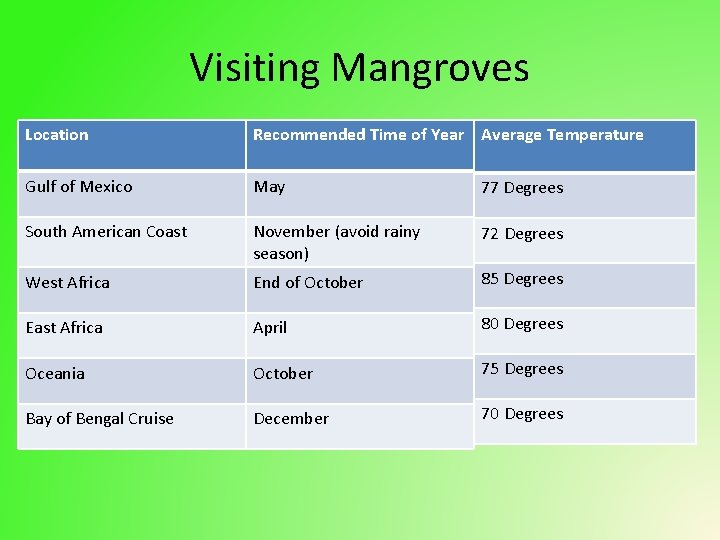
Visiting Mangroves Location Recommended Time of Year Average Temperature Gulf of Mexico May 77 Degrees South American Coast November (avoid rainy season) 72 Degrees West Africa End of October 85 Degrees East Africa April 80 Degrees Oceania October 75 Degrees Bay of Bengal Cruise December 70 Degrees
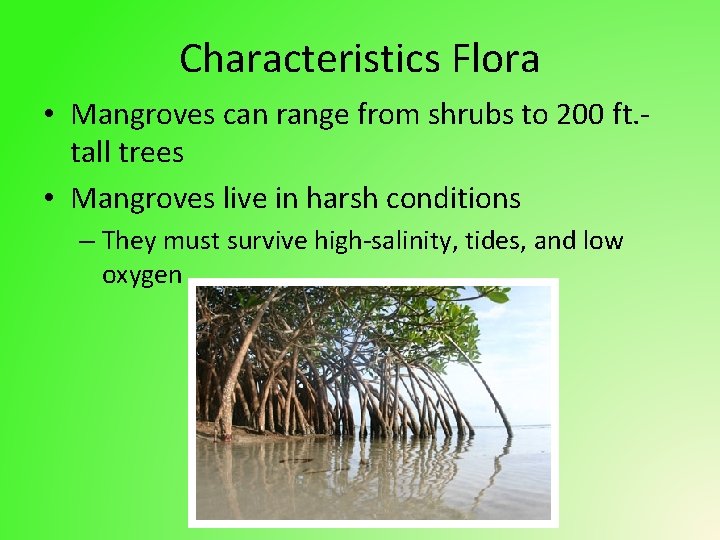
Characteristics Flora • Mangroves can range from shrubs to 200 ft. tall trees • Mangroves live in harsh conditions – They must survive high-salinity, tides, and low oxygen
Characteristics Flora The roots • Some mangroves such as red mangroves have roots that prop them up • Some mangroves such as grey mangroves have pneumatophores, roots that stick out to take in oxygen
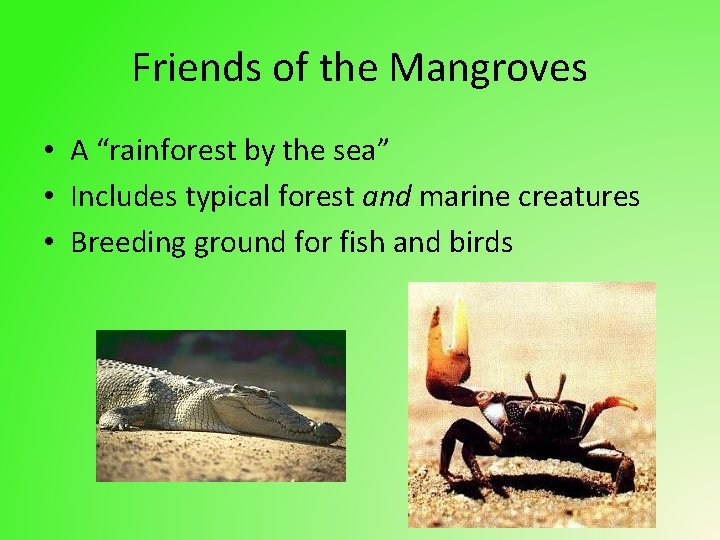
Friends of the Mangroves • A “rainforest by the sea” • Includes typical forest and marine creatures • Breeding ground for fish and birds
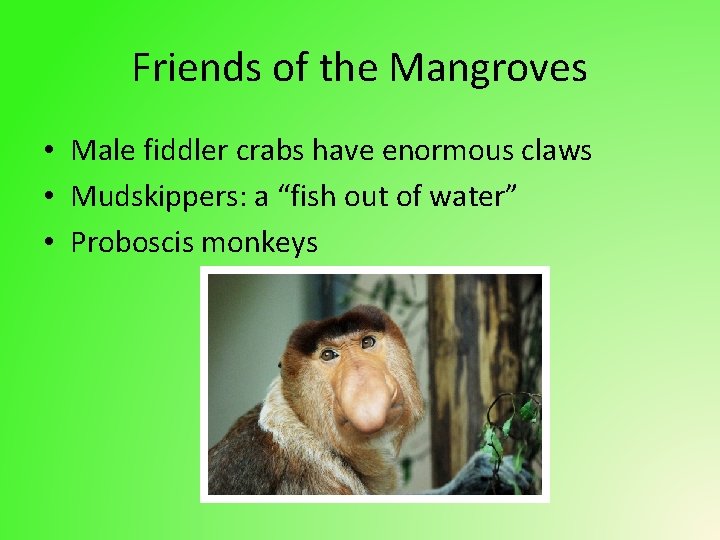
Friends of the Mangroves • Male fiddler crabs have enormous claws • Mudskippers: a “fish out of water” • Proboscis monkeys
Physical Features • Found in tropical and subtropical tidal areas near the equator • 75% exist between 25° North and 25° South • High tides bring in salt water -When tide recedes, solar evaporation of seawater in the soil increases salinity -Return of tide flushes out soils, bringing back to salinity levels of the seawater
Physical Features cont… • • • Houses many types of algae Tree/plant roots are very exposed Mix of fresh/salt water (very saline) Mud has low oxygen levels Mangrove swamps protect coastal areas from erosion – Massive roots are efficient at dissipating wave energy from hurricanes and tsunamis
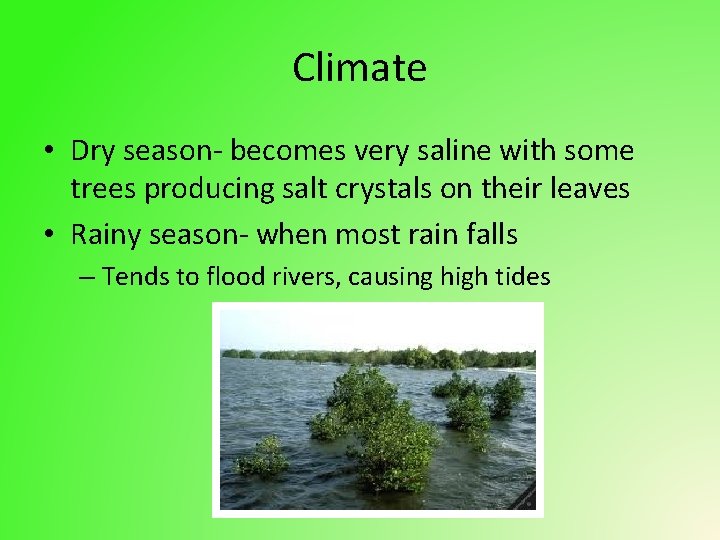
Climate • Dry season- becomes very saline with some trees producing salt crystals on their leaves • Rainy season- when most rain falls – Tends to flood rivers, causing high tides
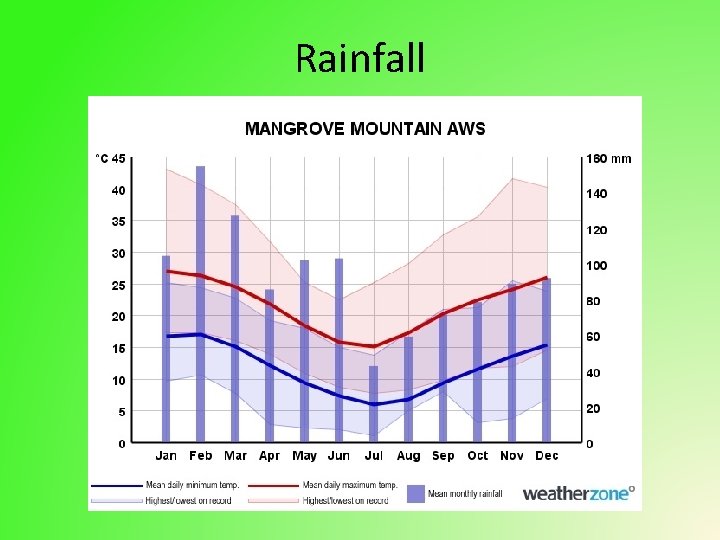
Rainfall
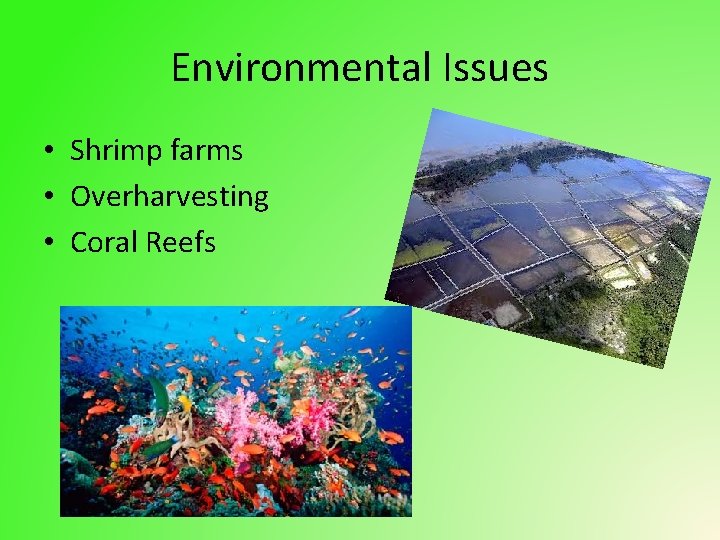
Environmental Issues • Shrimp farms • Overharvesting • Coral Reefs
Unique Features • There are more than 50 species of mangroves throughout the world • They occupy a zone of such high heat, high salt levels, and choking mud that any other plant in the environment would die within hours. • Most mangroves get flooded at least twice a day, but the tangled roots helps it survive.
Bibliography • "Mangrove. " Wikipedia. Wikimedia Foundation, 13 Dec. 2013. Web. 14 Dec. 2013. <http: //en. wikipedia. org/wiki/Mangrove>. • "Mangroves. " Smithsonian Ocean Portal. N. p. , n. d. Web. 15 Dec. 2013. <http: //ocean. si. edu/mangroves>. • "Mangroves. " - National Geographic Magazine. N. p. , n. d. Web. 15 Dec. 2013. <http: //ngm. nationalgeographic. com/2007/02/mangr oves/warne-text>. • "Mangroves. " Smithsonian Ocean Portal. N. p. , n. d. Web. 15 Dec. 2013. <http: //ocean. si. edu/ocean-lifeecosystems/mangrove-forests>.
- Slides: 14