
THE MANAGEMENT OF SPASTICITY AFTER SCI A SYSTEMATIC
- Slides: 53
THE MANAGEMENT OF SPASTICITY AFTER SCI A SYSTEMATIC REVIEW OF THE LITERATURE, 2000 -2010
Systematic Review – Management of Spasticity Compiled by the Shepherd Center Study Group in Atlanta, GA. Innovative Knowledge Dissemination & Utilization Project for Disability & Professional Stakeholder Organizations/ NIDRR Grant # (H 133 A 050006) at Boston University Center for Psychiatric Rehabilitation.
Systematic Review – Management of Spasticity A review was conducted using a system for rating the rigor and meaning of disability research (Farkas, Rogers and Anthony, 2008). The first instrument in this system is: “Standards for Rating Program Evaluation, Policy or Survey Research, Pre-Post and Correlational Human Subjects” (Rogers, Farkas, Anthony & Kash, 2008) and “Standards for Rating the Meaning of Disability Research” (Farkas & Anthony, 2008).
Shepherd Center Systematic Review Group Leadership Team: Lesley Hudson, MS David Apple, MD Deborah Backus, Ph. D, PT Data Coordinator: Rebecca Acevedo Editor: Leslie Van. Hiel, MSPT Reviewers: Jennith Bernstein, PT Amanda Gillot, OT Ashley Kim, PT Elizabeth Sasso, PT Kristen Casperson, PT Anna Berry, PT Liz Randall, SPT
Glossary of Abbreviations General SCI - Spinal cord injury ASIA – American Spinal Injury Association AIS – ASIA Impairment Scale ISNCSCI – International Standards for the Neurological Classification of Spinal Cord Injury Assessment (formerly ASIA exam)
Glossary of Abbreviations Research Studies and Interventions RCT – Randomized control trial LE – Lower extremity ROM – Range of motion TENS – Transcutaneous electrical nerve stimulation r. TMS - Repeated transcranial magnetic stimulation e. SCS - Spinal cord electrical stimulation FES – Functional electrical stimulation WBV – Whole body vibration
Glossary of Abbreviations Outcome Measures for Research Studies AS – Ashworth Scale MAS – Modified Ashworth Scale CSS - Composite spasticity score (based on several AS scores) VAS – Visual Analog Scale MPSFS – Modified Penn Spasm Frequency Scale SCATS – Spinal Cord Assessment Tool for Spastic Reflexes SCI-SET – Spinal Cord Injury Spasticity Evaluation Tool Hmax/Mmax – Electrophysiological ratio measure of neural excitability
Definitions of Spasticity � Involuntary muscle firing � Velocity-dependent � Increase resistance to stretch Abnormal processing of sensory input within networks of neurons in the spinal cord networks. � There are many definitions of spasticity, but the most referenced: Lance, 1980: “Spasticity is a motor disorder characterized by a velocitydependent increase in tonic stretch reflexes (muscle tone) with exaggerated tendon jerks, resulting from hyperexcitability of the stretch reflex, as one component of the upper motor neuron syndrome. ”
Other Definitions � Decq’s definition, 2003 : “…a symptom of the upper motor neuron syndrome characterized by an exaggeration of the stretch reflex secondary to hyperexcitability of spinal reflexes. ” It separates: Intrinsic tonic spasticity: exaggeration of the tonic component of the stretch reflex (hypertonia). Intrinsic phasic spasticity: exaggeration of the phasic component of the stretch reflex (hyper-reflexia, clonus, velocity-dependent resistance). Extrinsic spasticity: exaggeration of extrinsic flexion or extension spinal reflexes (spasms, withdrawal reflex). Adams & Hicks, Spinal Cord, 2005
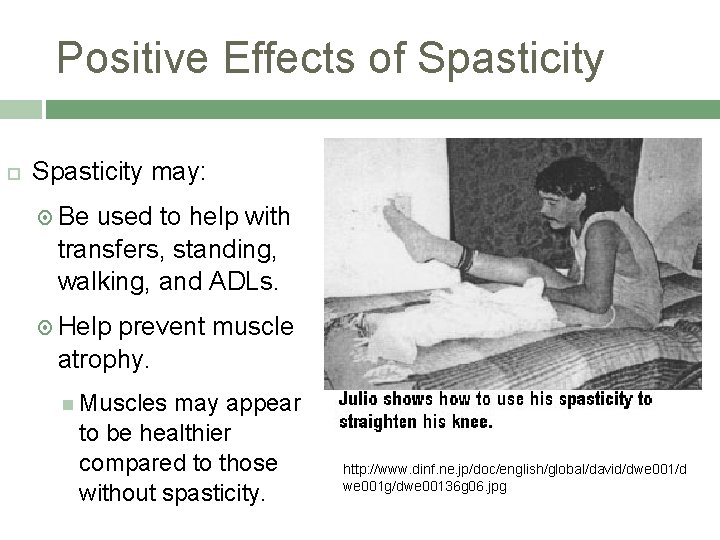
Positive Effects of Spasticity may: Be used to help with transfers, standing, walking, and ADLs. Help prevent muscle atrophy. Muscles may appear to be healthier compared to those without spasticity. http: //www. dinf. ne. jp/doc/english/global/david/dwe 001/d we 001 g/dwe 00136 g 06. jpg
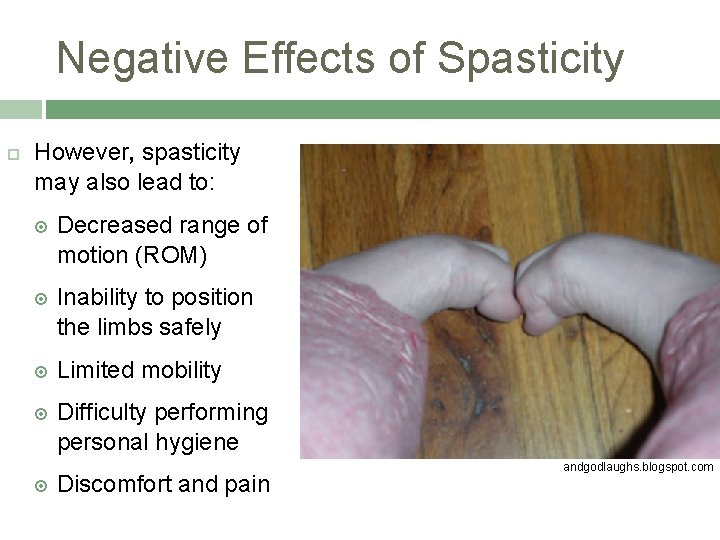
Negative Effects of Spasticity However, spasticity may also lead to: Decreased range of motion (ROM) Inability to position the limbs safely Limited mobility Difficulty performing personal hygiene Discomfort and pain andgodlaughs. blogspot. com
Is Treatment Necessary? If mild, wait and see? Questions to ask: Does it cause pain? Interfere with sleep? Make function unsafe? Cause secondary issues of Poor posture / asymmetric seating? Pressure sores? v Make care difficult? Affect hygiene? Will treatment improve quality of life and safety?
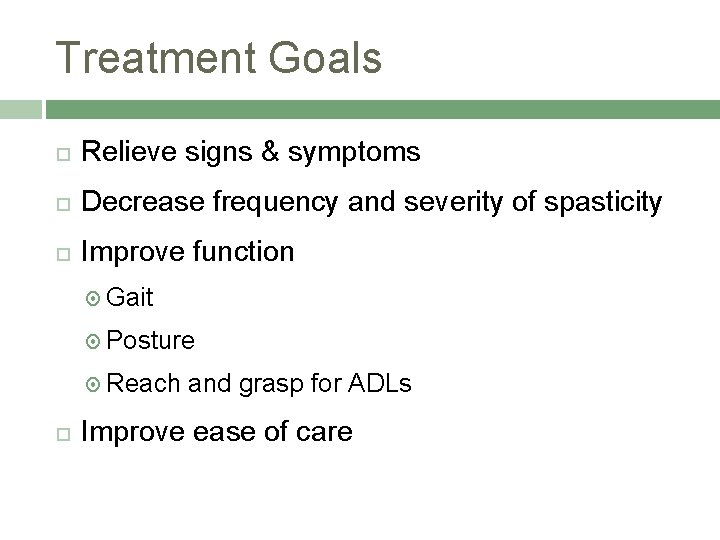
Treatment Goals Relieve signs & symptoms Decrease frequency and severity of spasticity Improve function Gait Posture Reach and grasp for ADLs Improve ease of care
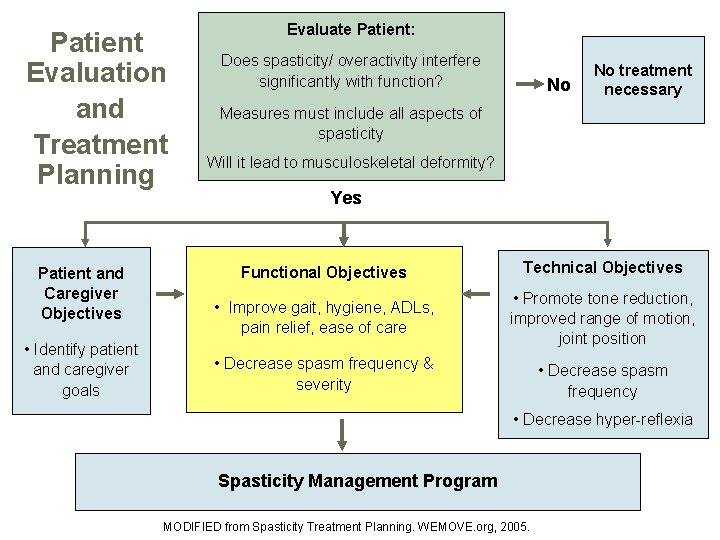
Patient Evaluation and Treatment Planning Patient and Caregiver Objectives • Identify patient and caregiver goals Evaluate Patient: Does spasticity/ overactivity interfere significantly with function? No No treatment necessary Measures must include all aspects of spasticity Will it lead to musculoskeletal deformity? Yes Functional Objectives Technical Objectives • Improve gait, hygiene, ADLs, pain relief, ease of care • Promote tone reduction, improved range of motion, joint position • Decrease spasm frequency & severity • Decrease spasm frequency • Decrease hyper-reflexia Spasticity Management Program MODIFIED from Spasticity Treatment Planning. WEMOVE. org, 2005.
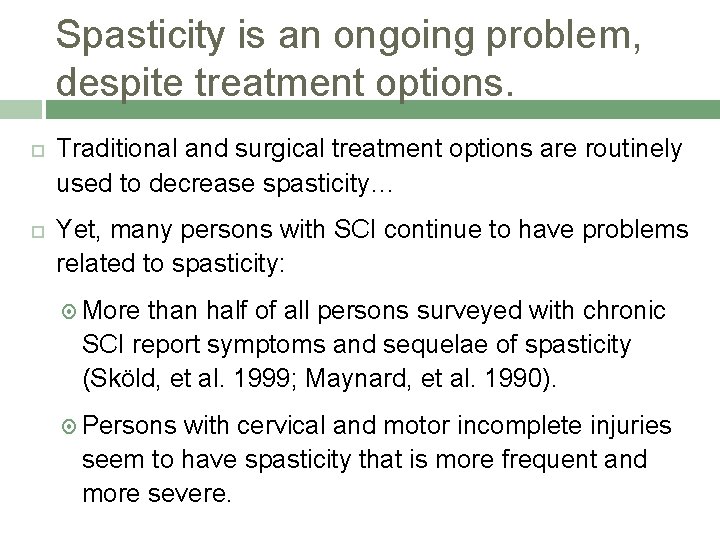
Spasticity is an ongoing problem, despite treatment options. Traditional and surgical treatment options are routinely used to decrease spasticity… Yet, many persons with SCI continue to have problems related to spasticity: More than half of all persons surveyed with chronic SCI report symptoms and sequelae of spasticity (Sköld, et al. 1999; Maynard, et al. 1990). Persons with cervical and motor incomplete injuries seem to have spasticity that is more frequent and more severe.
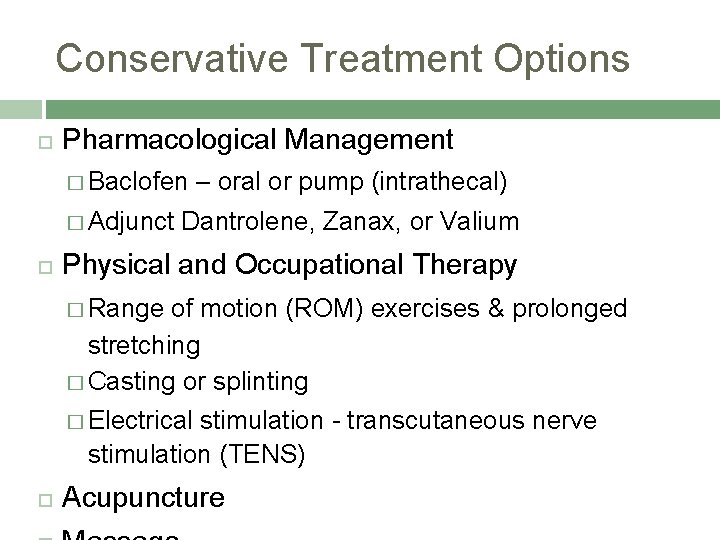
Conservative Treatment Options Pharmacological Management � Baclofen – oral or pump (intrathecal) � Adjunct Dantrolene, Zanax, or Valium Physical and Occupational Therapy � Range of motion (ROM) exercises & prolonged stretching � Casting or splinting � Electrical stimulation - transcutaneous nerve stimulation (TENS) Acupuncture
If other options don’t work… Surgery involves cutting pathways in the nervous system thought to be involved in spasticity. However, forms of electrical stimulation to the spinal cord (epidural spinal cord stimulation) and electromagnetic stimulation to the brain (transcutaneous magnetic stimulation - TMS) may mimic the effects of surgical interventions.
Spasticity and its management in SCI is multi-faceted. Spasticity is no longer just an extremity’s resistance to quick movement. It includes spasms, overall hypertonia, hyper- reflexia, and clonus. The optimal treatment for each of these different aspects of spasticity is not yet clear. The literature related to spasticity has not been evaluated in terms of what is meaningful to persons with SCI.
Purpose of Review To evaluate all published research from the past 10 years related to the management of spasticity after spinal cord injury (SCI) to determine which evidence may be: Meaningful to persons with SCI who have spasticity (e. g. includes level and completeness of injury). Related to any type of spasticity a person may experience (velocity-dependent resistance, spasms, hypertonia, clonus).
Definitions of types of spasticity used in this review Velocity-dependent resistance = phasic (quick and short lasting) spasticity of resistance felt when an extremity is moved quickly Hypertonia = tonic (longer lasting, co-contraction) spasticity of increased resistance to movement throughout range Spasms = phasic spasticity of body movement into a flexor or extensor pattern Clonus = phasic spasticity of repeated movement of a body part when positioned with the muscle stretched Hyper-reflexia = increased reflex response (e. g. the knee reflex response)
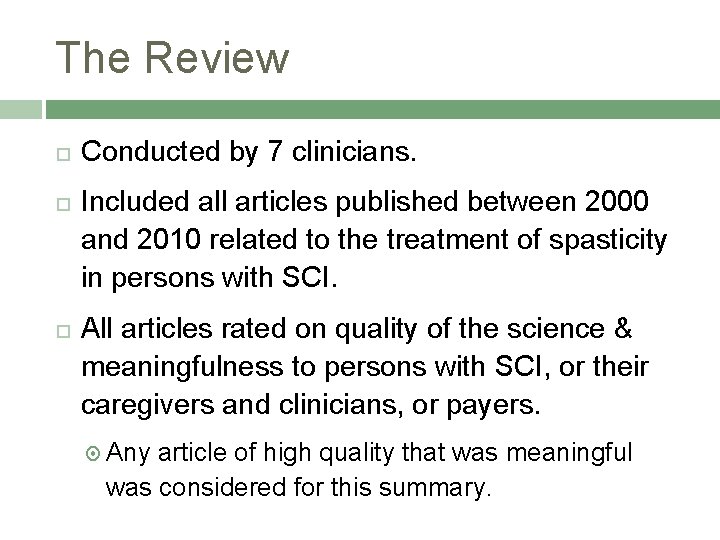
The Review Conducted by 7 clinicians. Included all articles published between 2000 and 2010 related to the treatment of spasticity in persons with SCI. All articles rated on quality of the science & meaningfulness to persons with SCI, or their caregivers and clinicians, or payers. Any article of high quality that was meaningful was considered for this summary.
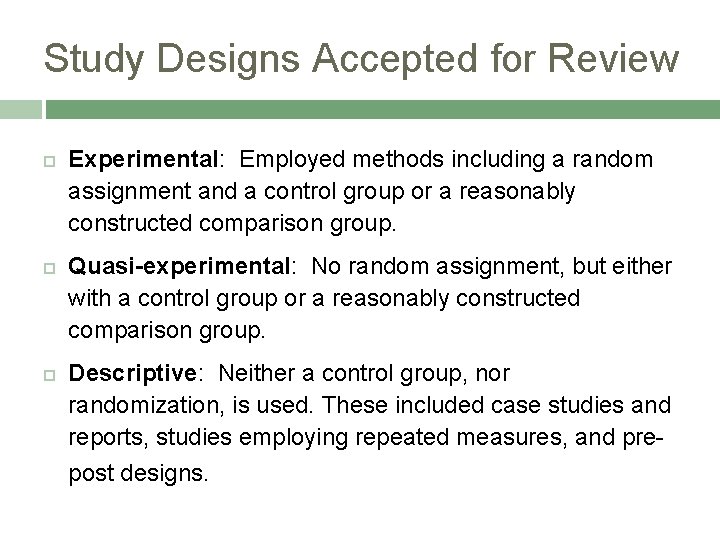
Study Designs Accepted for Review Experimental: Employed methods including a random assignment and a control group or a reasonably constructed comparison group. Quasi-experimental: No random assignment, but either with a control group or a reasonably constructed comparison group. Descriptive: Neither a control group, nor randomization, is used. These included case studies and reports, studies employing repeated measures, and prepost designs.
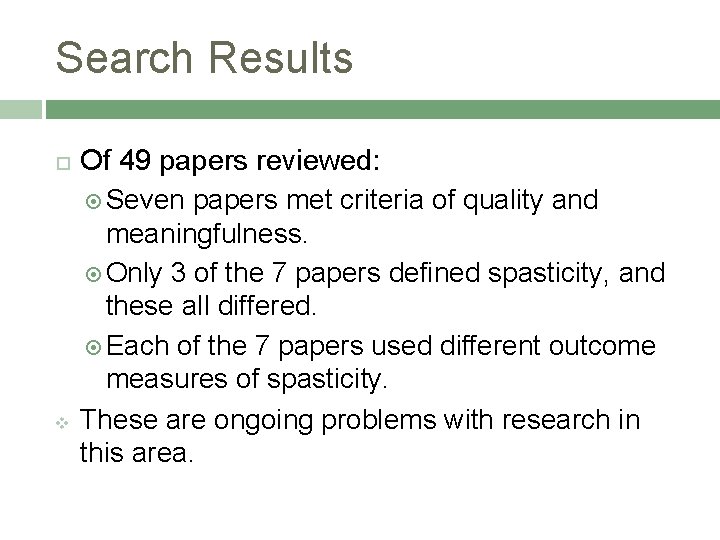
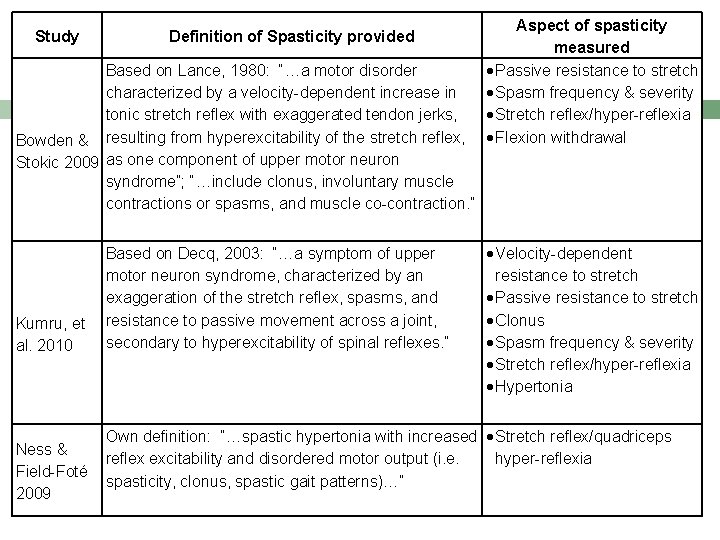
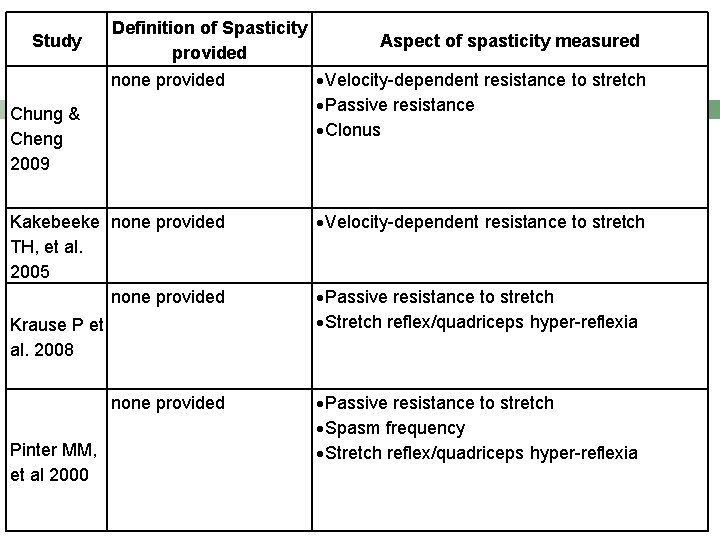
Search Results v Of 49 papers reviewed: Seven papers met criteria of quality and meaningfulness. Only 3 of the 7 papers defined spasticity, and these all differed. Each of the 7 papers used different outcome measures of spasticity. These are ongoing problems with research in this area.
Aspect of spasticity measured Based on Lance, 1980: “…a motor disorder Passive resistance to stretch characterized by a velocity-dependent increase in Spasm frequency & severity tonic stretch reflex with exaggerated tendon jerks, Stretch reflex/hyper-reflexia Bowden & resulting from hyperexcitability of the stretch reflex, Flexion withdrawal Stokic 2009 as one component of upper motor neuron syndrome”; “…include clonus, involuntary muscle contractions or spasms, and muscle co-contraction. ” Study Kumru, et al. 2010 Definition of Spasticity provided Based on Decq, 2003: “…a symptom of upper motor neuron syndrome, characterized by an exaggeration of the stretch reflex, spasms, and resistance to passive movement across a joint, secondary to hyperexcitability of spinal reflexes. ” Velocity-dependent resistance to stretch Passive resistance to stretch Clonus Spasm frequency & severity Stretch reflex/hyper-reflexia Hypertonia Own definition: “…spastic hypertonia with increased Stretch reflex/quadriceps Ness & reflex excitability and disordered motor output (i. e. hyper-reflexia Field-Foté spasticity, clonus, spastic gait patterns)…” 2009
Study Definition of Spasticity provided Aspect of spasticity measured none provided Velocity-dependent resistance to stretch Passive resistance Clonus Kakebeeke none provided TH, et al. 2005 none provided Velocity-dependent resistance to stretch Chung & Cheng 2009 Krause P et al. 2008 none provided Pinter MM, et al 2000 Passive resistance to stretch Stretch reflex/quadriceps hyper-reflexia Passive resistance to stretch Spasm frequency Stretch reflex/quadriceps hyper-reflexia
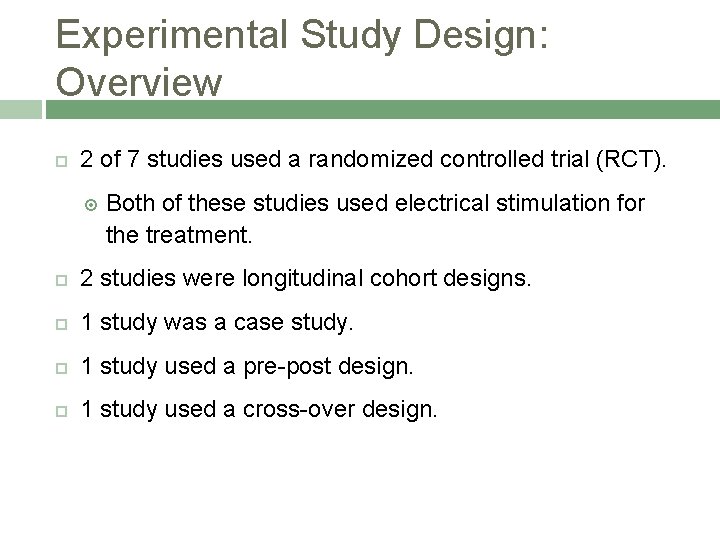
Experimental Study Design: Overview 2 of 7 studies used a randomized controlled trial (RCT). Both of these studies used electrical stimulation for the treatment. 2 studies were longitudinal cohort designs. 1 study was a case study. 1 study used a pre-post design. 1 study used a cross-over design.
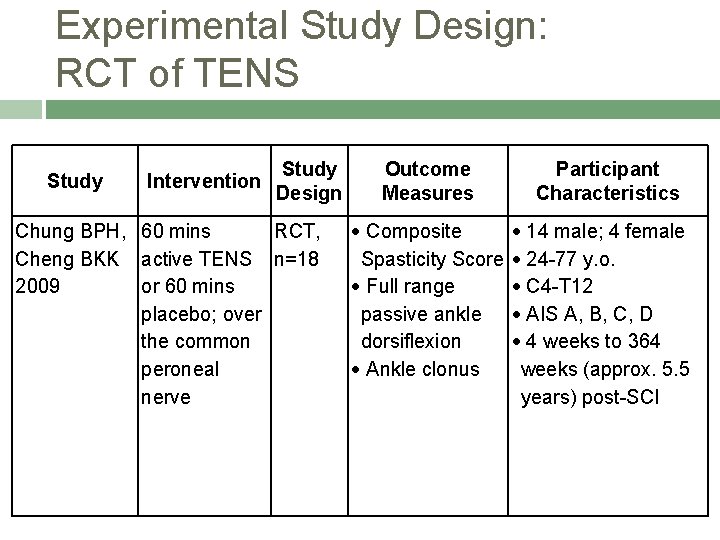
Experimental Study Design: RCT of TENS Study Intervention Study Design Chung BPH, 60 mins RCT, Cheng BKK active TENS n=18 2009 or 60 mins placebo; over the common peroneal nerve Outcome Measures Participant Characteristics Composite Spasticity Score Full range passive ankle dorsiflexion Ankle clonus 14 male; 4 female 24 -77 y. o. C 4 -T 12 AIS A, B, C, D 4 weeks to 364 weeks (approx. 5. 5 years) post-SCI
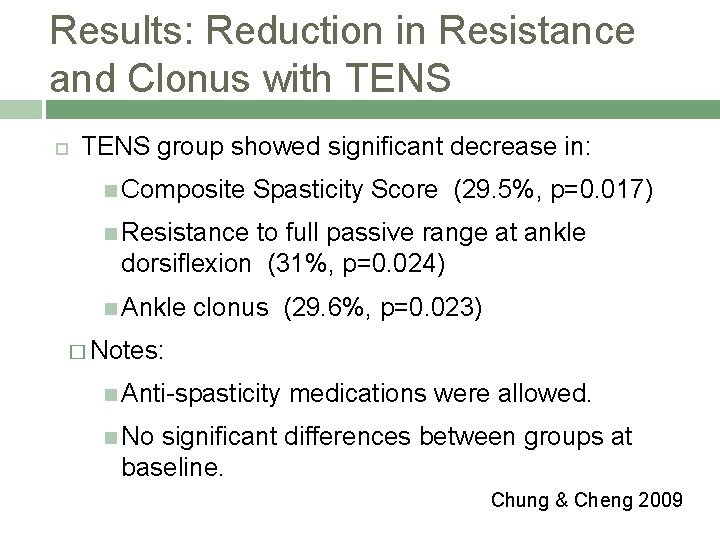
Results: Reduction in Resistance and Clonus with TENS group showed significant decrease in: Composite Spasticity Score (29. 5%, p=0. 017) Resistance to full passive range at ankle dorsiflexion (31%, p=0. 024) Ankle clonus (29. 6%, p=0. 023) � Notes: Anti-spasticity medications were allowed. No significant differences between groups at baseline. Chung & Cheng 2009
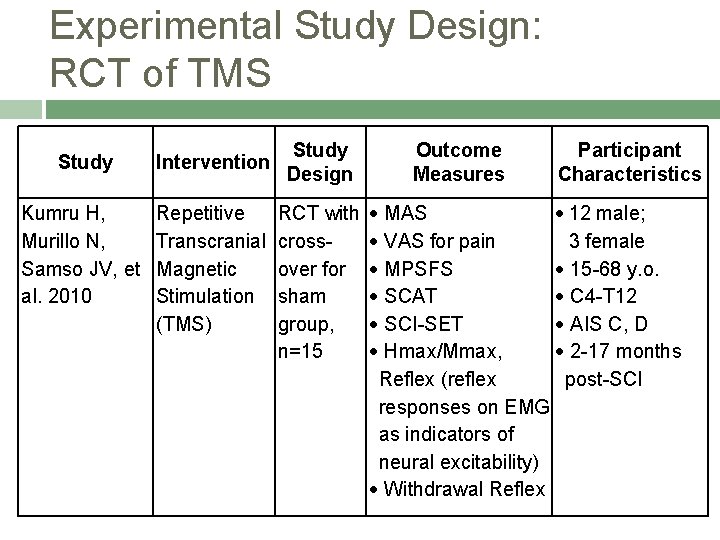
Experimental Study Design: RCT of TMS Study Intervention Kumru H, Murillo N, Samso JV, et al. 2010 Repetitive Transcranial Magnetic Stimulation (TMS) Study Design Outcome Measures Participant Characteristics RCT with MAS 12 male; cross- VAS for pain 3 female over for MPSFS 15 -68 y. o. sham SCAT C 4 -T 12 group, SCI-SET AIS C, D n=15 Hmax/Mmax, 2 -17 months Reflex (reflex post-SCI responses on EMG as indicators of neural excitability) Withdrawal Reflex
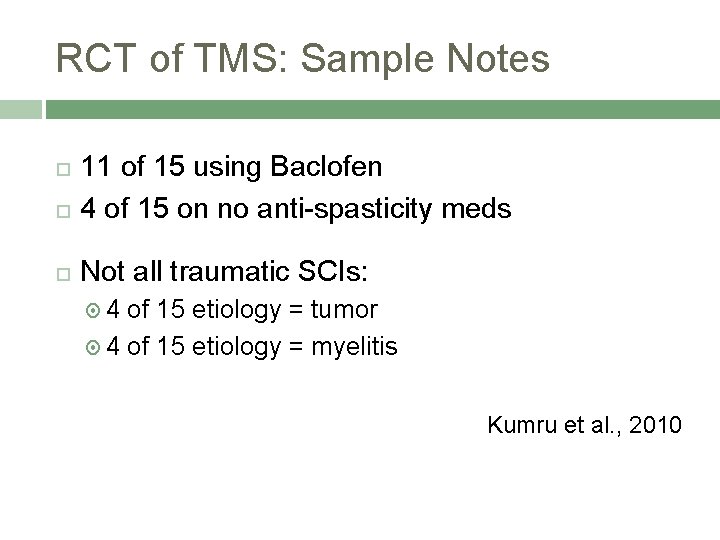
RCT of TMS: Sample Notes 11 of 15 using Baclofen 4 of 15 on no anti-spasticity meds Not all traumatic SCIs: 4 of 15 etiology = tumor 4 of 15 etiology = myelitis Kumru et al. , 2010
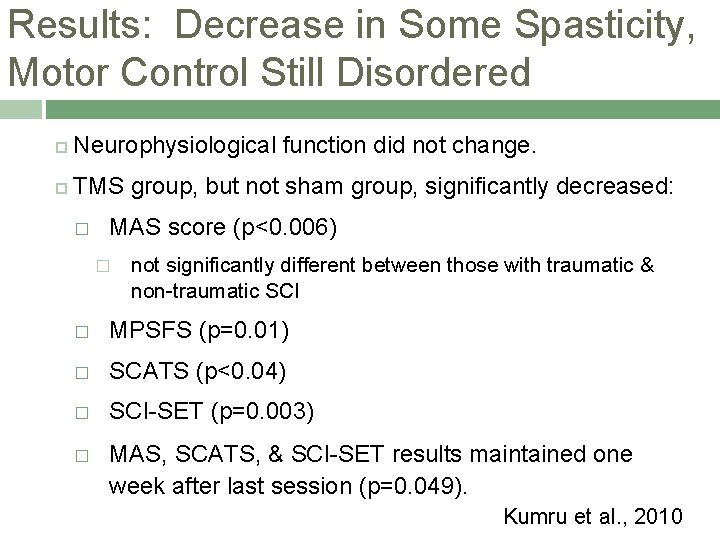
Results: Decrease in Some Spasticity, Motor Control Still Disordered Neurophysiological function did not change. TMS group, but not sham group, significantly decreased: � MAS score (p<0. 006) � not significantly different between those with traumatic & non-traumatic SCI � MPSFS (p=0. 01) � SCATS (p<0. 04) � SCI-SET (p=0. 003) � MAS, SCATS, & SCI-SET results maintained one week after last session (p=0. 049). Kumru et al. , 2010
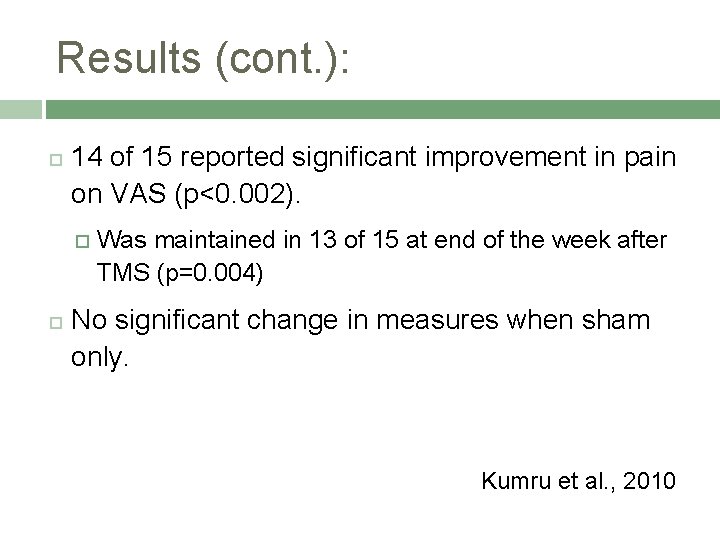
Results (cont. ): 14 of 15 reported significant improvement in pain on VAS (p<0. 002). Was maintained in 13 of 15 at end of the week after TMS (p=0. 004) No significant change in measures when sham only. Kumru et al. , 2010
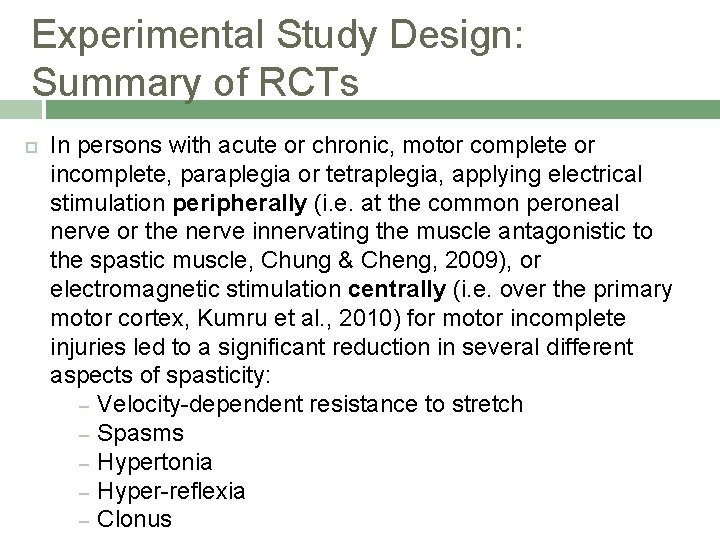
Experimental Study Design: Summary of RCTs In persons with acute or chronic, motor complete or incomplete, paraplegia or tetraplegia, applying electrical stimulation peripherally (i. e. at the common peroneal nerve or the nerve innervating the muscle antagonistic to the spastic muscle, Chung & Cheng, 2009), or electromagnetic stimulation centrally (i. e. over the primary motor cortex, Kumru et al. , 2010) for motor incomplete injuries led to a significant reduction in several different aspects of spasticity: – Velocity-dependent resistance to stretch – Spasms – Hypertonia – Hyper-reflexia – Clonus
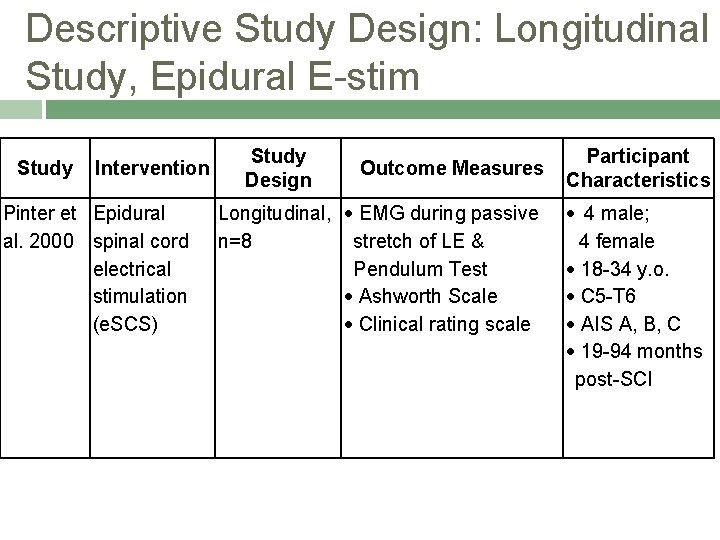
Descriptive Study Design: Longitudinal Study, Epidural E-stim Study Intervention Pinter et Epidural al. 2000 spinal cord electrical stimulation (e. SCS) Study Design Outcome Measures Longitudinal, EMG during passive n=8 stretch of LE & Pendulum Test Ashworth Scale Clinical rating scale Participant Characteristics 4 male; 4 female 18 -34 y. o. C 5 -T 6 AIS A, B, C 19 -94 months post-SCI
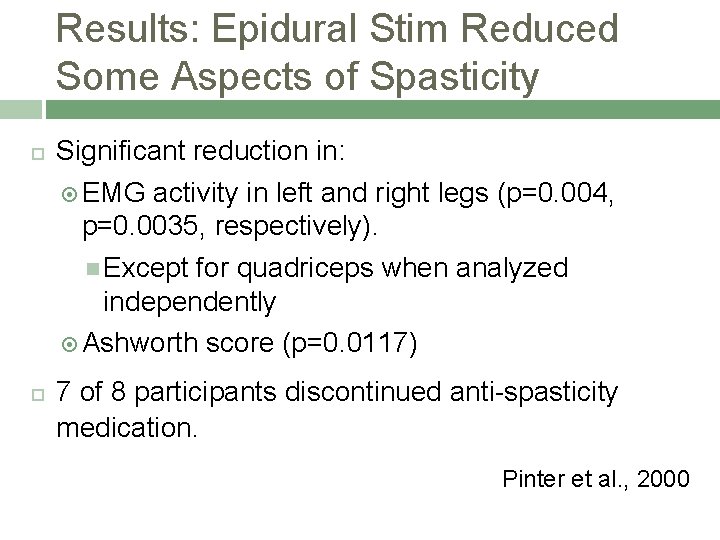
Results: Epidural Stim Reduced Some Aspects of Spasticity Significant reduction in: EMG activity in left and right legs (p=0. 004, p=0. 0035, respectively). Except for quadriceps when analyzed independently Ashworth score (p=0. 0117) 7 of 8 participants discontinued anti-spasticity medication. Pinter et al. , 2000
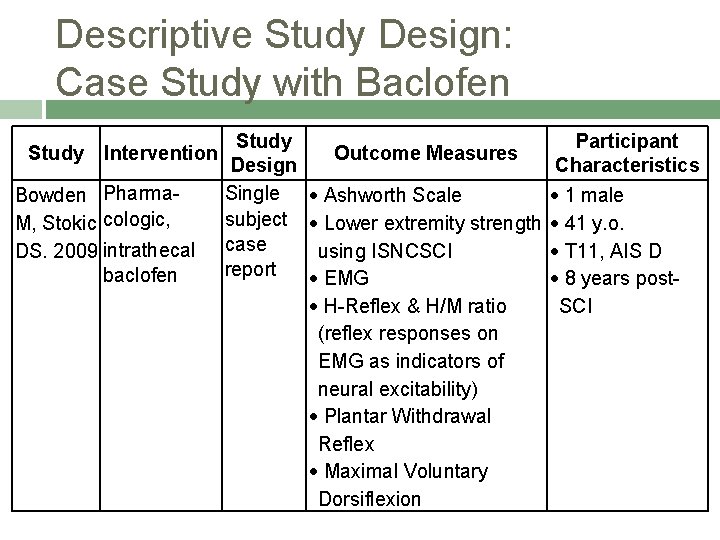
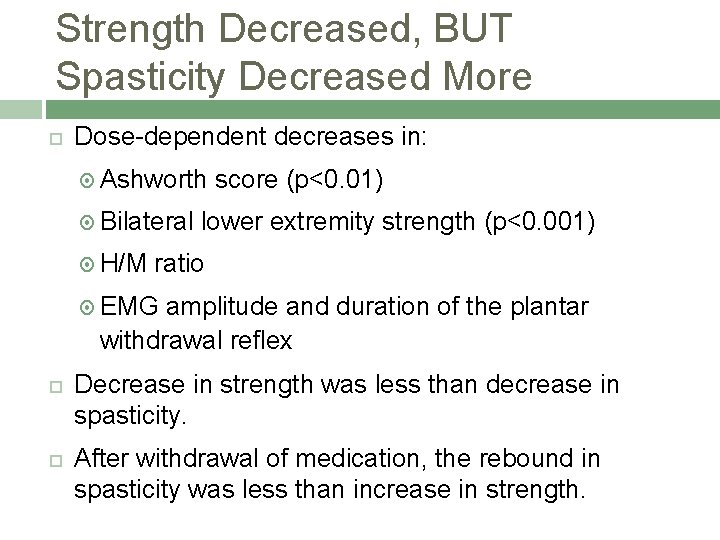
Descriptive Study Design: Case Study with Baclofen Study Intervention Bowden Pharma. M, Stokic cologic, DS. 2009 intrathecal baclofen Study Participant Outcome Measures Design Characteristics Single Ashworth Scale 1 male subject Lower extremity strength 41 y. o. case using ISNCSCI T 11, AIS D report EMG 8 years post H-Reflex & H/M ratio SCI (reflex responses on EMG as indicators of neural excitability) Plantar Withdrawal Reflex Maximal Voluntary Dorsiflexion
Strength Decreased, BUT Spasticity Decreased More Dose-dependent decreases in: Ashworth score (p<0. 01) Bilateral lower extremity strength (p<0. 001) H/M ratio EMG amplitude and duration of the plantar withdrawal reflex Decrease in strength was less than decrease in spasticity. After withdrawal of medication, the rebound in spasticity was less than increase in strength.
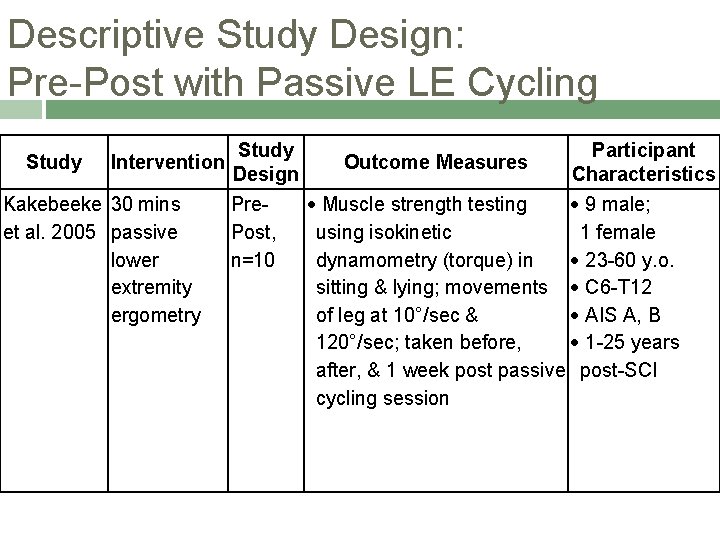
Descriptive Study Design: Pre-Post with Passive LE Cycling Study Intervention Kakebeeke 30 mins et al. 2005 passive lower extremity ergometry Study Participant Outcome Measures Design Characteristics Pre Muscle strength testing 9 male; Post, using isokinetic 1 female n=10 dynamometry (torque) in 23 -60 y. o. sitting & lying; movements C 6 -T 12 of leg at 10°/sec & AIS A, B 120°/sec; taken before, 1 -25 years after, & 1 week post passive post-SCI cycling session
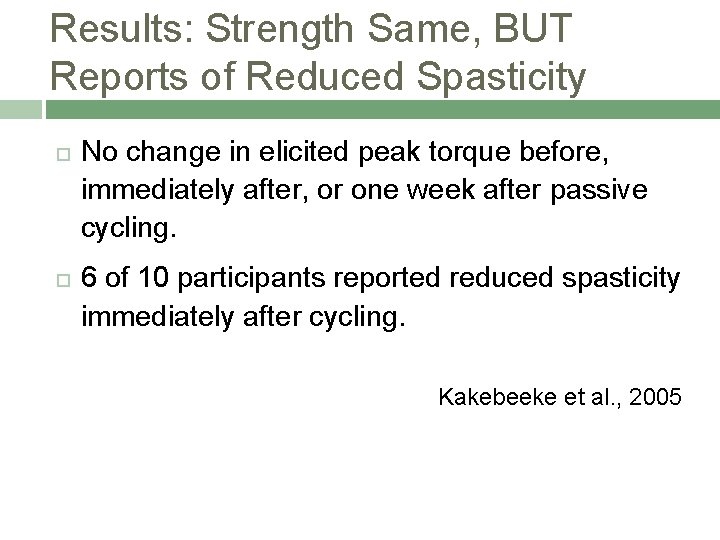
Results: Strength Same, BUT Reports of Reduced Spasticity No change in elicited peak torque before, immediately after, or one week after passive cycling. 6 of 10 participants reported reduced spasticity immediately after cycling. Kakebeeke et al. , 2005
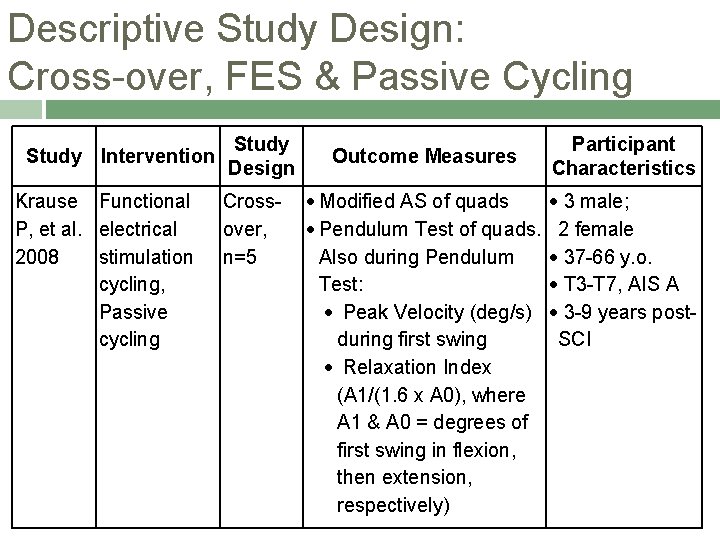
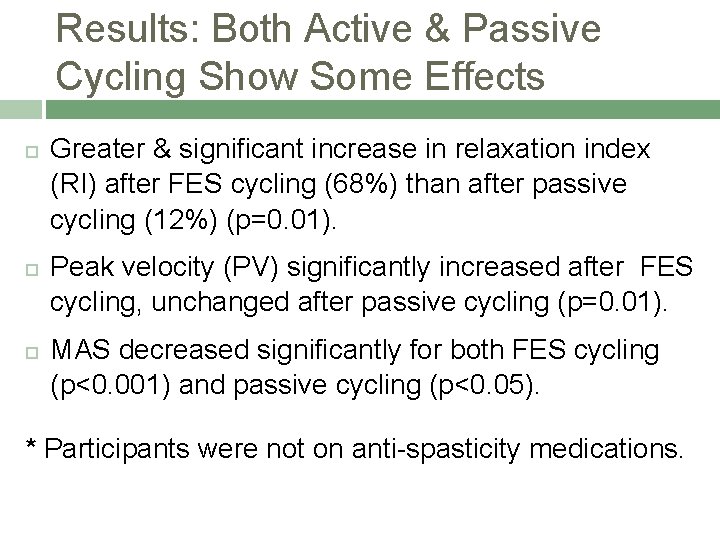
Descriptive Study Design: Cross-over, FES & Passive Cycling Study Intervention Krause Functional P, et al. electrical 2008 stimulation cycling, Passive cycling Study Design Outcome Measures Participant Characteristics Cross- Modified AS of quads 3 male; over, Pendulum Test of quads. 2 female n=5 Also during Pendulum 37 -66 y. o. Test: T 3 -T 7, AIS A Peak Velocity (deg/s) 3 -9 years postduring first swing SCI Relaxation Index (A 1/(1. 6 x A 0), where A 1 & A 0 = degrees of first swing in flexion, then extension, respectively)
Results: Both Active & Passive Cycling Show Some Effects Greater & significant increase in relaxation index (RI) after FES cycling (68%) than after passive cycling (12%) (p=0. 01). Peak velocity (PV) significantly increased after FES cycling, unchanged after passive cycling (p=0. 01). MAS decreased significantly for both FES cycling (p<0. 001) and passive cycling (p<0. 05). * Participants were not on anti-spasticity medications.
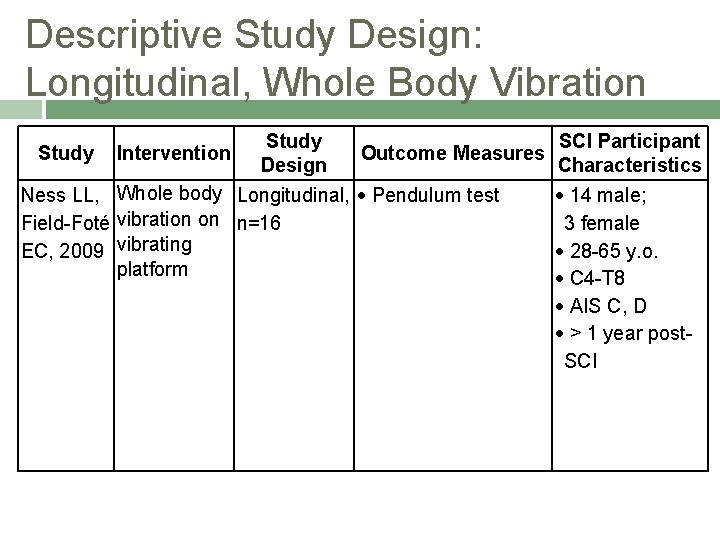
Descriptive Study Design: Longitudinal, Whole Body Vibration Study Outcome Measures Design Ness LL, Whole body Longitudinal, Pendulum test Field-Foté vibration on n=16 EC, 2009 vibrating platform Study Intervention SCI Participant Characteristics 14 male; 3 female 28 -65 y. o. C 4 -T 8 AIS C, D > 1 year post. SCI
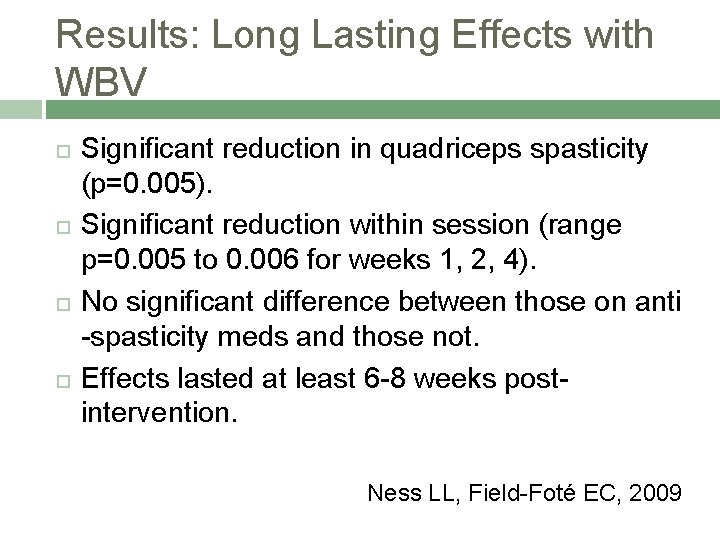
Results: Long Lasting Effects with WBV Significant reduction in quadriceps spasticity (p=0. 005). Significant reduction within session (range p=0. 005 to 0. 006 for weeks 1, 2, 4). No significant difference between those on anti -spasticity meds and those not. Effects lasted at least 6 -8 weeks postintervention. Ness LL, Field-Foté EC, 2009
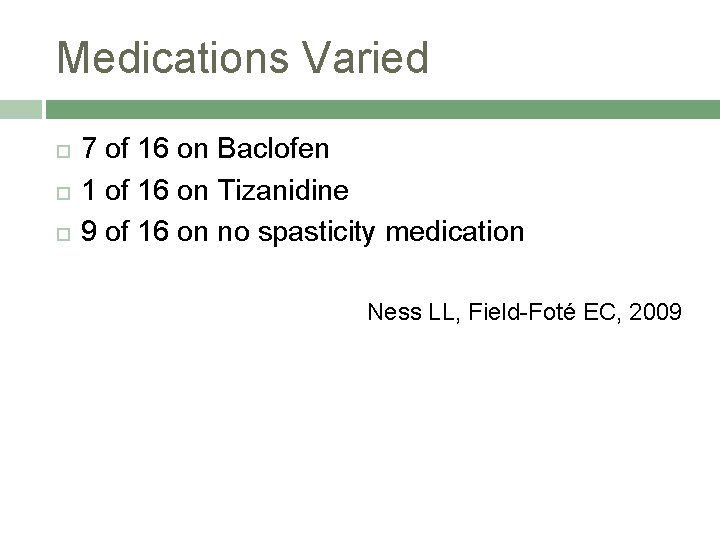
Medications Varied 7 of 16 on Baclofen 1 of 16 on Tizanidine 9 of 16 on no spasticity medication Ness LL, Field-Foté EC, 2009
Descriptive Study Design: Summary of Studies These studies provide further support that: 1. stimulating the nervous system (e. g. electrical stimulation), OR 2. altering the excitability in the nervous system (e. g. Baclofen) can lead to a reduction in spasticity in persons with complete or incomplete tetraplegia or paraplegia.
Methodological Considerations Definitions of spasticity differ: A motor disorder characterized by a velocity-dependent increase in tonic stretch reflex, exaggerated tendon jerks; includes clonus, involuntary muscle contractions or spasms, and muscle co-contraction (Lance, 1980) Includes intrinsic tonic spasticity (i. e. the exaggeration of the tonic component of the stretch reflex, hypertonia), intrinsic phasic spasticity (i. e. the exaggeration of the phasic component of the stretch reflex or hyper-reflexia and clonus), and extrinsic spasticity, (i. e. , the exaggeration of extrinsic flexion or extension spinal reflexes, spasms) (Adams & Hicks, 2005).
Study Limitations Spasticity syndrome may be worse in people with cervical and incomplete injuries than those with thoracic and complete injuries. (Kirshblum, 1999; Maynard et al, 1990; Sköld et al, 1999). Even though studies included persons with complete and incomplete paraplegia and tetraplegia, as well as acute and chronic injuries, results were averaged and reported as a whole. It remains unknown whethere is a differential response to the interventions.
Study Limitations Studies included persons with chronic SCI, who may have musculoskeletal consequences to chronic spasticity. Chronic spasticity has musculoskeletal effects, namely muscle shortening and contractures (Gracies et al. , 1997). Musculoskeletal parameters were not assessed in any of these studies. Improvements may have been neural or musculoskeletal or both. Improving one and not the other may preclude maximal improvements.
Study Limitations There were no functional assessments. Whether reducing spasticity is necessary and sufficient for improving motor control and function remains unclear. There were no studies addressing the costeffectiveness of treatments for spasticity.
Recommendations Any stakeholder interested in the evidence related to the management of spasticity after SCI should consider: Outcome measures differed across all studies. Different aspects of spasticity may be affected by a given intervention. For instance, if spasms are the worse aspect of spasticity, r. TMS, e. SCS, or baclofen (all with evidence of reducing spasms in persons with SCI) may be pursued. Those with velocity-dependent resistance to stretch may choose TENS or r. TMS, but r. TMS may give the best results overall if there are multiple areas related to spasticity.
Recommended Future Research Further study is warranted to determine: the differential responses to interventions in those with varying levels of injury, classifications of injury, and times since injury. the differential effects of interventions on neural and musculoskeletal tissues. the effects of interventions on function. the long-term effects of these interventions. the cost-effectiveness of the various treatments for spasticity.
References 1. Ashworth B, 1964. Preliminary trial of carisoprodol in multiple sclerosis. Practitioner, 192: 540 -542. Bovend'Eerdt TJ, Newman M, Barker K, Dawes H, Minelli C, Wade DT, 2008. The Effects of Stretching in Spasticity: A Systematic Review. Arch Phys Med Rehabil, 89(7): 1395 -1406. 3. Bowden M, Stokic DS, 2009. Clinical and Neurophysiologic Assessment of Strength and Spasticity During Intrathecal Baclofen Titration in Incomplete Spinal Cord Injury: Single - Subject Design. J Spinal Cord Med, 32(2): 183 -90. 4. Chung BPH, Cheng BKK, 2010. Immediate effect of transcutaneous electrical nerve stimulation on spasticity in patients with spinal cord injury. Clinical Rehabilitation, 24(3): 202 -210. 5. Farkas, M. , & Anthony, W. , 2008. Standards for Rating the Meaning of Disability Research. Boston: Boston University, Center for Psychiatric Rehabilitation. 6. Farkas, M. , Rogers, E. , & Anthony, W. , 2008. Systematic review procedures for rating the rigor and the meaning of disability research. Boston: Boston University, Center for Psychiatric Rehabilitation. 7. Gracies, J. -M. , Elovic, E. , Mc. Guire, J. and Simpson, D. 1997. Traditional pharmacological treatments for spasticity part I: Local treatments. Muscle & Nerve, 20: 61– 91. 8. Kakebeeke TH, Lechner HE, Knapp PA, 2005. The effect of passive cycling movements on spasticity after spinal cord injury: preliminary results. Spinal Cord, 43(8): 483 -488. 9. Katz RT, Rovai GP, Brait C, Rymer WZ. 1994. Objective quantification of spastic hypertonia: correlation with clinical findings. Arch Phys Med Rehabil, 73(4): 339 -347. 10. Kirshblum S, 1999. Treatment alternatives for spinal cord injury related spasticity. J Spinal Cord Med. 22(3): 199 -217. 11. Krause P, Szecsi J, and Straube A, 2008. Changes in spastic muscle tone increase in patients with spinal cord injury using functional electrical stimulation and passive leg movement. Clinical Rehabilitation, 22(7): 627 -634. 12. Kumru H, Murillo N, Samso JV, et al, 2010. Reduction of Spasticity with Repetitive Transcranial Magnetic Stimulation in Patients with Spinal Cord Injury. Neurorehabilitation and Neural Repair, 24(5): 435 -441. 13. Lance JW, 1980. Spasticity: disordered motor control (Year Book). In: Feldman R, Young R, Koella W, eds. Symposium Synopsis. Chicago, IL: Medical Publishers, 485 -500.
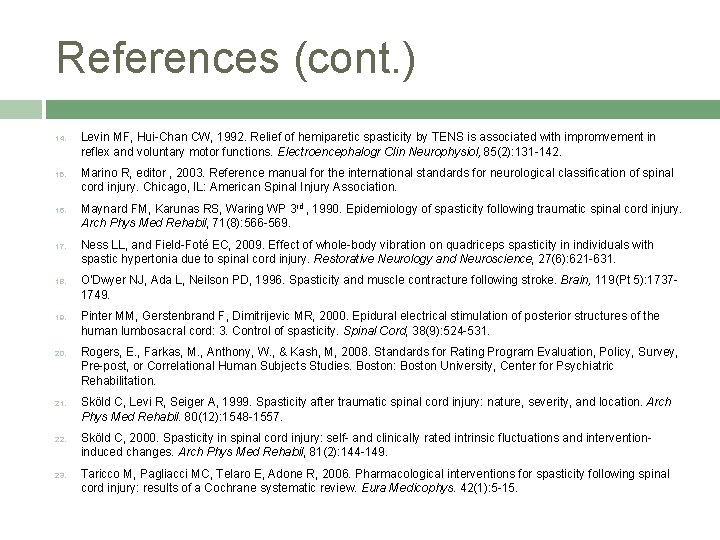
References (cont. ) 14. 15. 16. 17. 18. 19. 20. 21. 22. 23. Levin MF, Hui-Chan CW, 1992. Relief of hemiparetic spasticity by TENS is associated with impromvement in reflex and voluntary motor functions. Electroencephalogr Clin Neurophysiol, 85(2): 131 -142. Marino R, editor , 2003. Reference manual for the international standards for neurological classification of spinal cord injury. Chicago, IL: American Spinal Injury Association. Maynard FM, Karunas RS, Waring WP 3 rd , 1990. Epidemiology of spasticity following traumatic spinal cord injury. Arch Phys Med Rehabil, 71(8): 566 -569. Ness LL, and Field-Foté EC, 2009. Effect of whole-body vibration on quadriceps spasticity in individuals with spastic hypertonia due to spinal cord injury. Restorative Neurology and Neuroscience, 27(6): 621 -631. O'Dwyer NJ, Ada L, Neilson PD, 1996. Spasticity and muscle contracture following stroke. Brain, 119(Pt 5): 17371749. Pinter MM, Gerstenbrand F, Dimitrijevic MR, 2000. Epidural electrical stimulation of posterior structures of the human lumbosacral cord: 3. Control of spasticity. Spinal Cord, 38(9): 524 -531. Rogers, E. , Farkas, M. , Anthony, W. , & Kash, M, 2008. Standards for Rating Program Evaluation, Policy, Survey, Pre-post, or Correlational Human Subjects Studies. Boston: Boston University, Center for Psychiatric Rehabilitation. Sköld C, Levi R, Seiger A, 1999. Spasticity after traumatic spinal cord injury: nature, severity, and location. Arch Phys Med Rehabil. 80(12): 1548 -1557. Sköld C, 2000. Spasticity in spinal cord injury: self- and clinically rated intrinsic fluctuations and interventioninduced changes. Arch Phys Med Rehabil, 81(2): 144 -149. Taricco M, Pagliacci MC, Telaro E, Adone R, 2006. Pharmacological interventions for spasticity following spinal cord injury: results of a Cochrane systematic review. Eura Medicophys. 42(1): 5 -15.