
THE MALE REPRODUCTIVE SYSTEM Exercise 30 AP 233
- Slides: 28
THE MALE REPRODUCTIVE SYSTEM Exercise 30 A&P 233
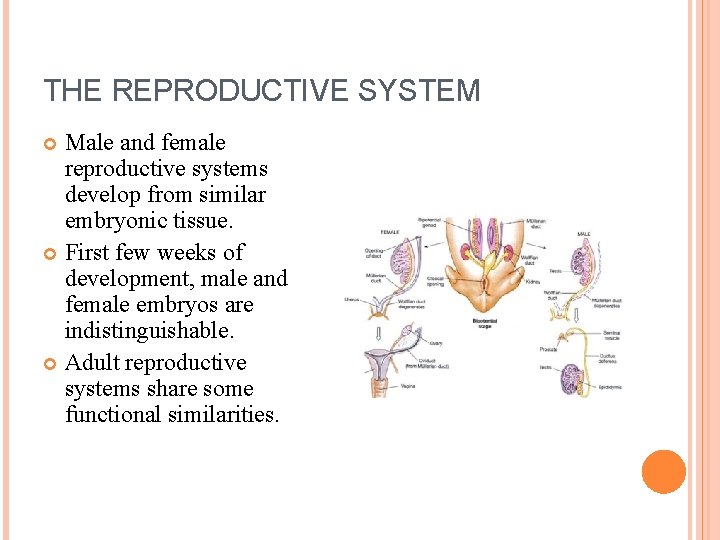
THE REPRODUCTIVE SYSTEM Male and female reproductive systems develop from similar embryonic tissue. First few weeks of development, male and female embryos are indistinguishable. Adult reproductive systems share some functional similarities.
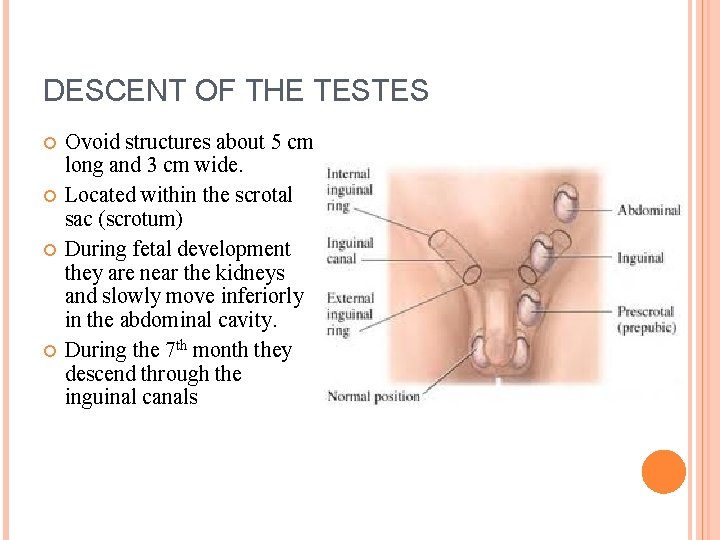
DESCENT OF THE TESTES Ovoid structures about 5 cm long and 3 cm wide. Located within the scrotal sac (scrotum) During fetal development they are near the kidneys and slowly move inferiorly in the abdominal cavity. During the 7 th month they descend through the inguinal canals
SCROTUM Sac of skin and superficial fascia that hangs outside the abdominopelvic cavity at the root of the penis Contains paired testicles separated by a midline septum Its external positioning keeps the testes 3 C lower than core body temperature 4
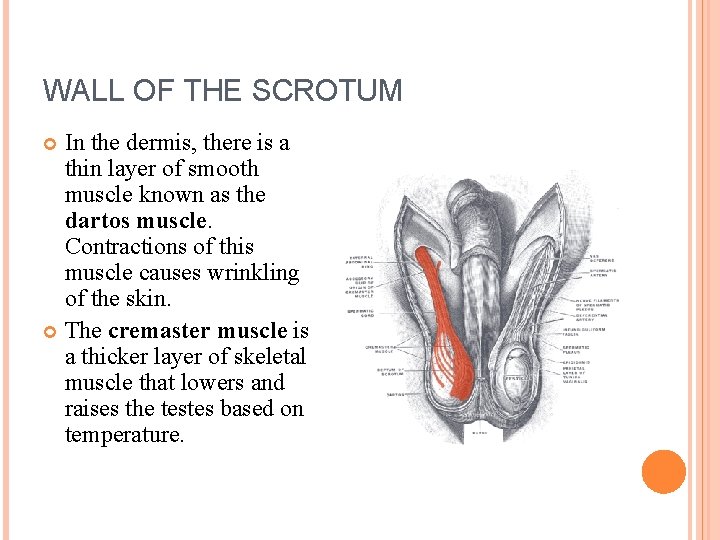
WALL OF THE SCROTUM In the dermis, there is a thin layer of smooth muscle known as the dartos muscle. Contractions of this muscle causes wrinkling of the skin. The cremaster muscle is a thicker layer of skeletal muscle that lowers and raises the testes based on temperature.
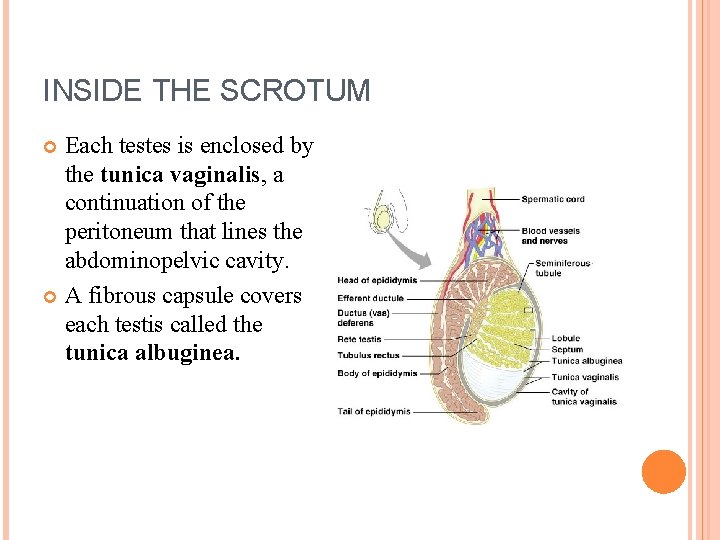
INSIDE THE SCROTUM Each testes is enclosed by the tunica vaginalis, a continuation of the peritoneum that lines the abdominopelvic cavity. A fibrous capsule covers each testis called the tunica albuginea.
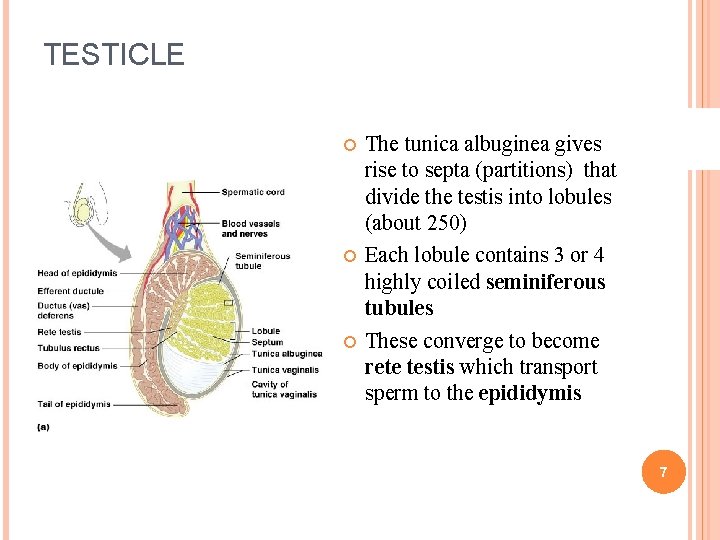
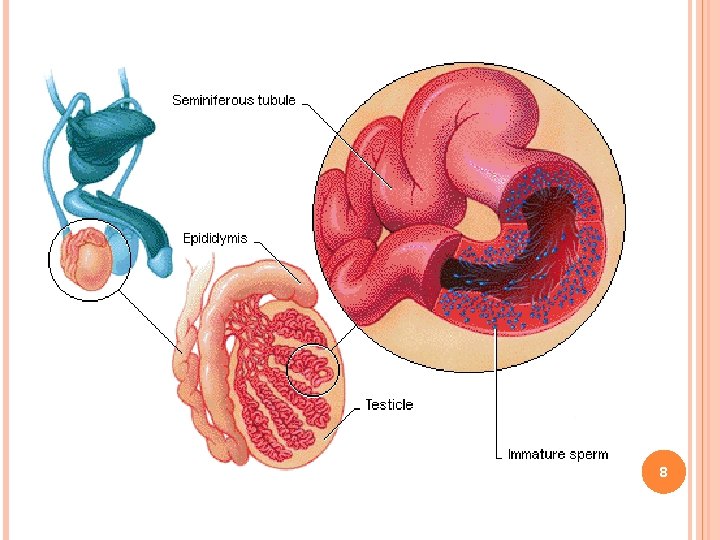
TESTICLE The tunica albuginea gives rise to septa (partitions) that divide the testis into lobules (about 250) Each lobule contains 3 or 4 highly coiled seminiferous tubules These converge to become rete testis which transport sperm to the epididymis 7
8
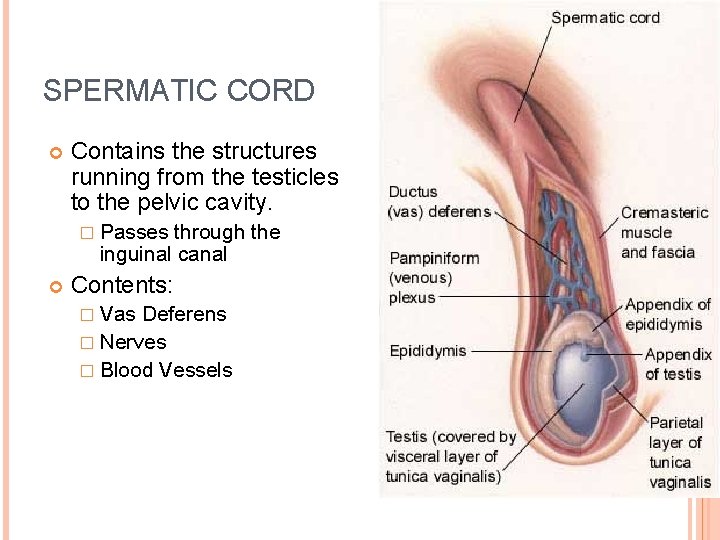
SPERMATIC CORD Contains the structures running from the testicles to the pelvic cavity. � Passes through the inguinal canal Contents: � Vas Deferens � Nerves � Blood Vessels 9
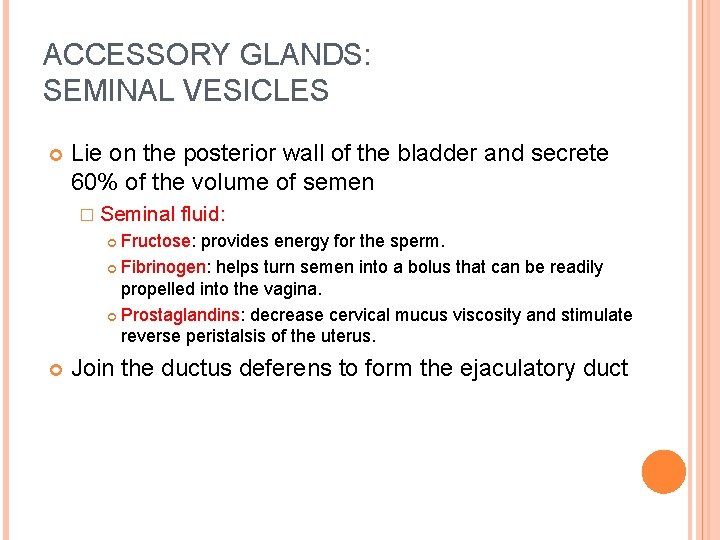
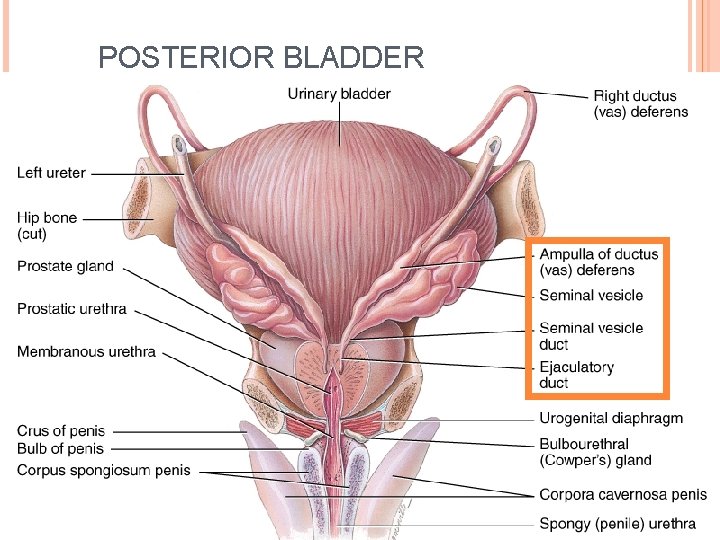
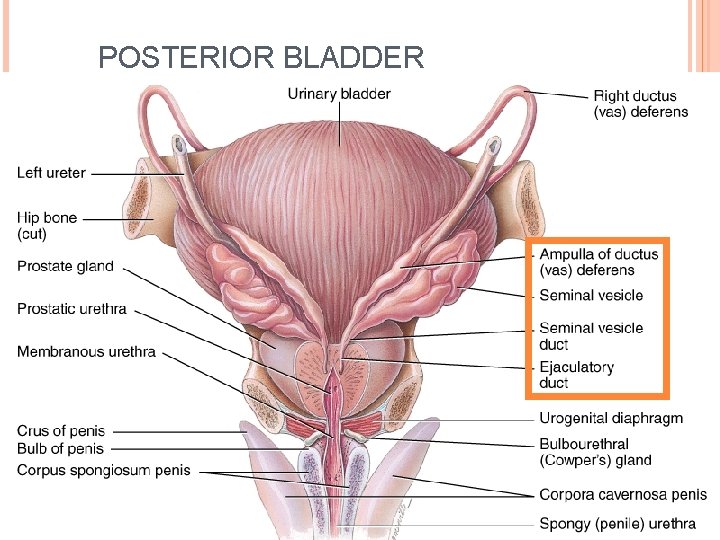
ACCESSORY GLANDS: SEMINAL VESICLES Lie on the posterior wall of the bladder and secrete 60% of the volume of semen � Seminal fluid: Fructose: provides energy for the sperm. Fibrinogen: helps turn semen into a bolus that can be readily propelled into the vagina. Prostaglandins: decrease cervical mucus viscosity and stimulate reverse peristalsis of the uterus. Join the ductus deferens to form the ejaculatory duct 10
POSTERIOR BLADDER 11
POSTERIOR BLADDER 12
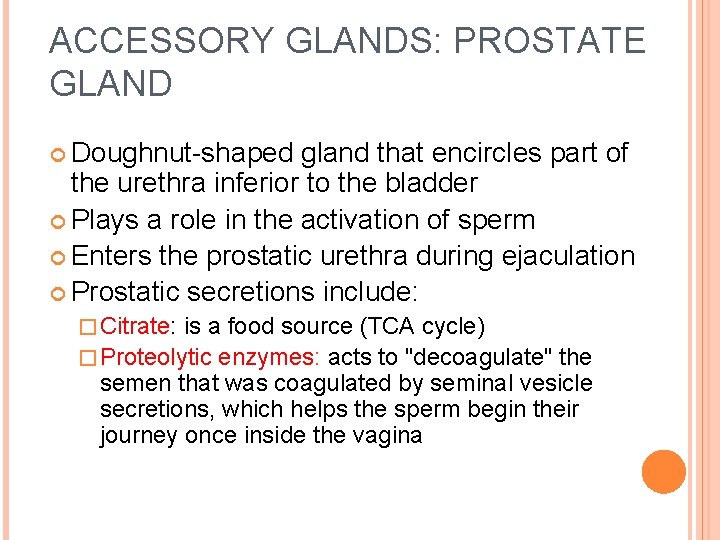
ACCESSORY GLANDS: PROSTATE GLAND Doughnut-shaped gland that encircles part of the urethra inferior to the bladder Plays a role in the activation of sperm Enters the prostatic urethra during ejaculation Prostatic secretions include: � Citrate: is a food source (TCA cycle) � Proteolytic enzymes: acts to "decoagulate" the semen that was coagulated by seminal vesicle secretions, which helps the sperm begin their journey once inside the vagina 13
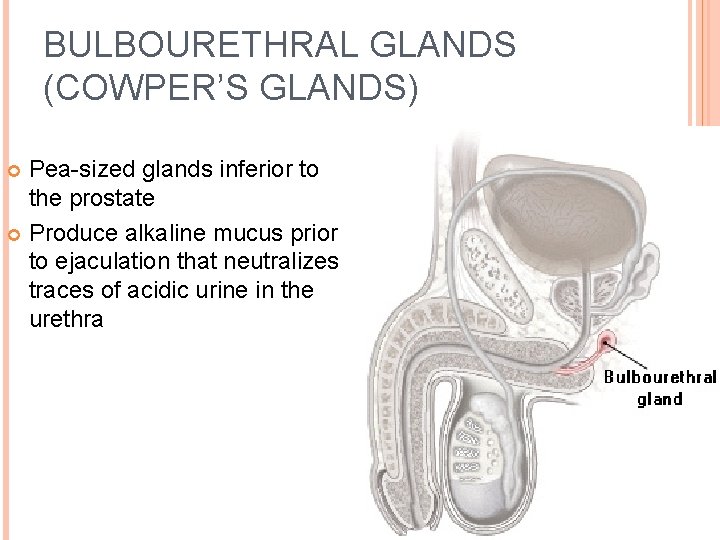
BULBOURETHRAL GLANDS (COWPER’S GLANDS) Pea-sized glands inferior to the prostate Produce alkaline mucus prior to ejaculation that neutralizes traces of acidic urine in the urethra 14
15
16
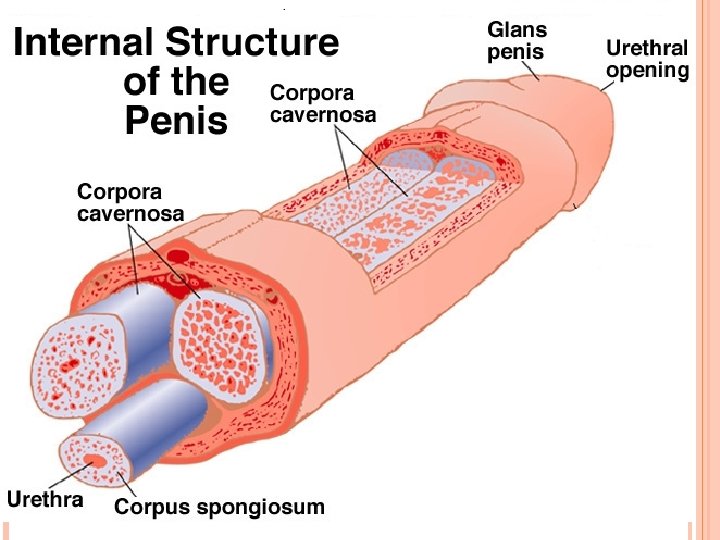
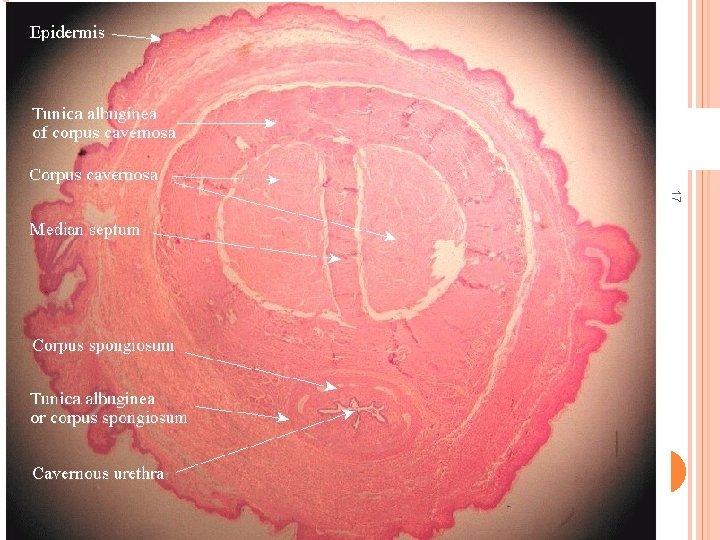
PENIS HISTOLOGY 17
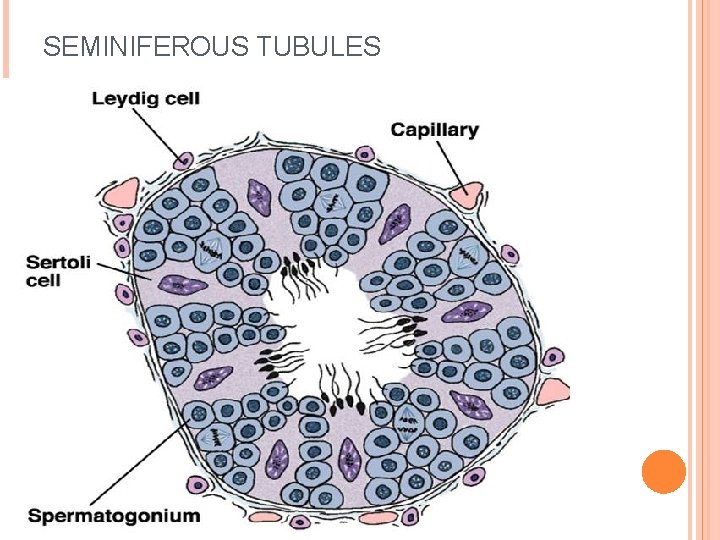
SEMINIFEROUS TUBULES 18
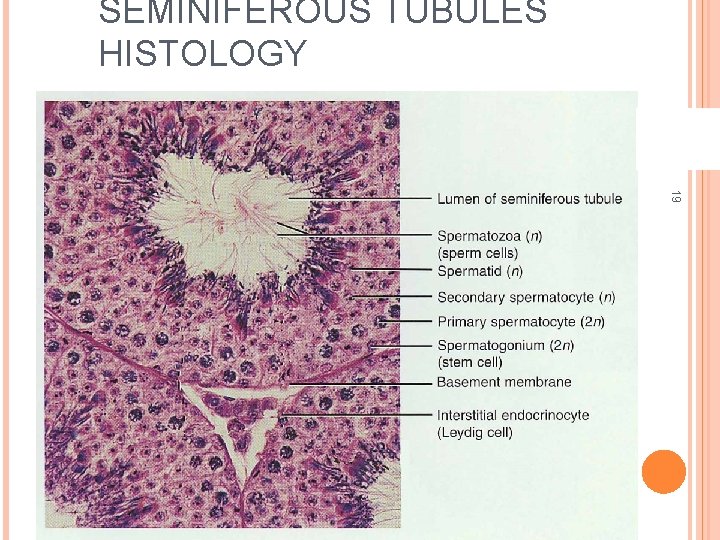
SEMINIFEROUS TUBULES HISTOLOGY 19
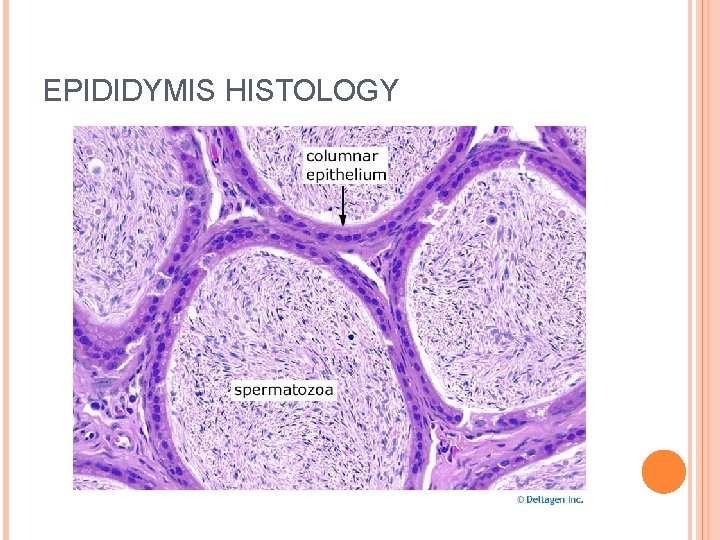
EPIDIDYMIS Epididymis: Storage and maturation area for sperm Its head joins the efferent ductules and caps the superior aspect of the testis The duct of the epididymis has stereocilia that: � Absorb testicular fluid � Pass nutrients to the sperm Nonmotile sperm enter, pass through its tubes and become motile (propelled by peristalsis) Upon ejaculation the epididymis contracts, expelling sperm into the ductus deferens 20
EPIDIDYMIS HISTOLOGY
REVIEW QUESTIONS What is the difference between mitosis and meiosis? What are the results of meiosis?
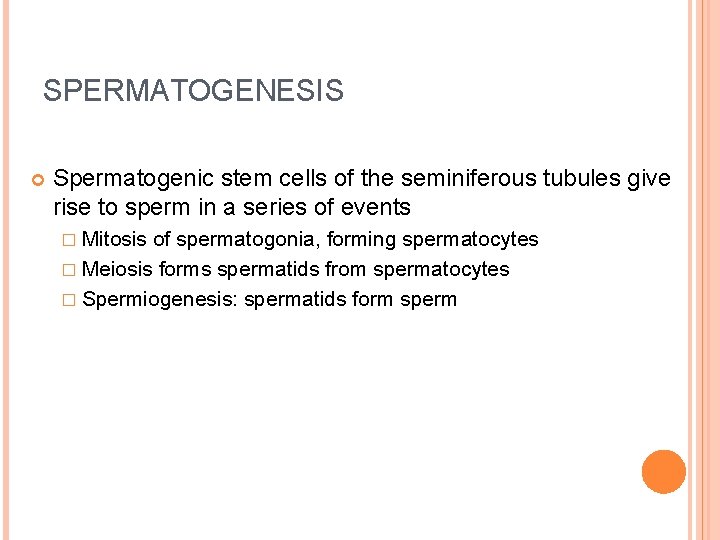
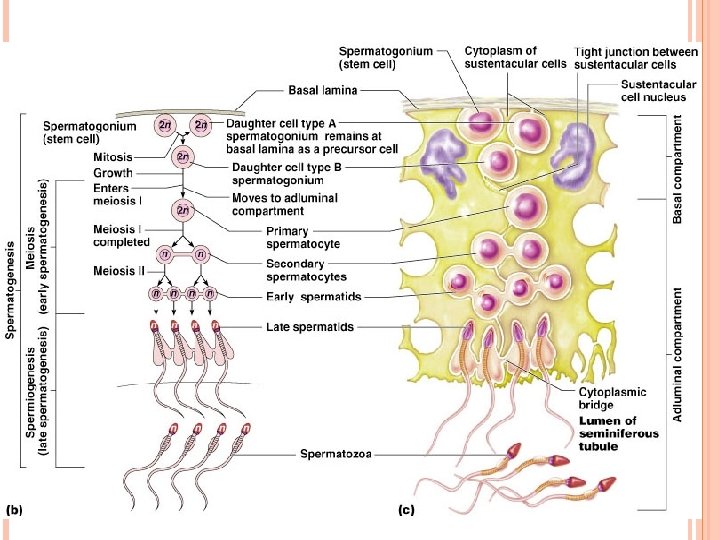
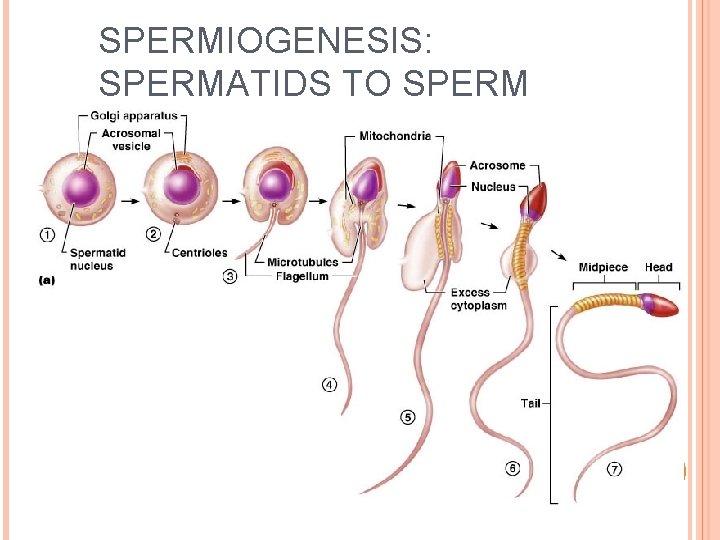
SPERMATOGENESIS Spermatogenic stem cells of the seminiferous tubules give rise to sperm in a series of events � Mitosis of spermatogonia, forming spermatocytes � Meiosis forms spermatids from spermatocytes � Spermiogenesis: spermatids form sperm 23
SPERMATOGENESIS 24
SPERMIOGENESIS: SPERMATIDS TO SPERM 25
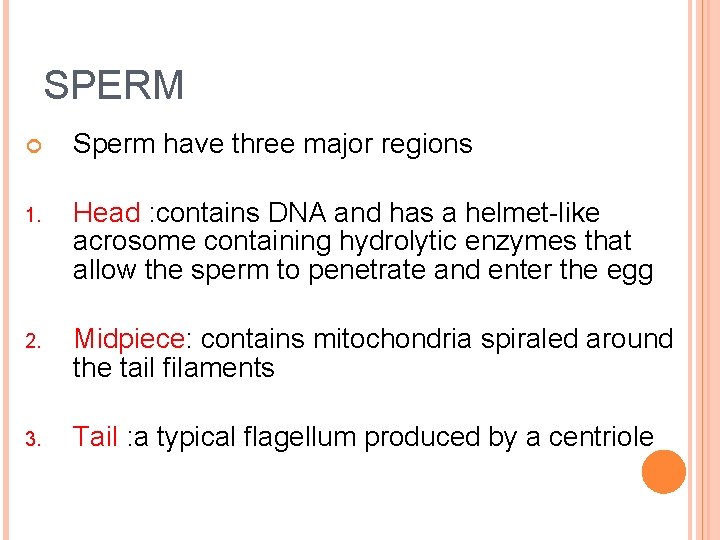
SPERM Sperm have three major regions 1. Head : contains DNA and has a helmet-like acrosome containing hydrolytic enzymes that allow the sperm to penetrate and enter the egg 2. Midpiece: contains mitochondria spiraled around the tail filaments 3. Tail : a typical flagellum produced by a centriole 26
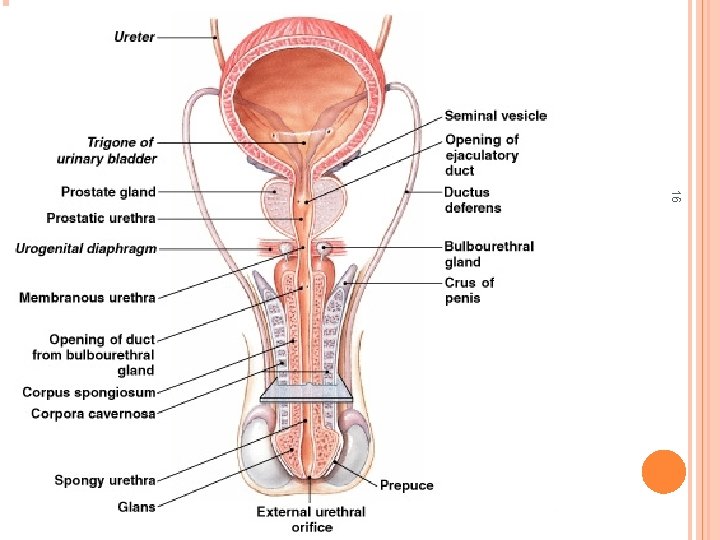
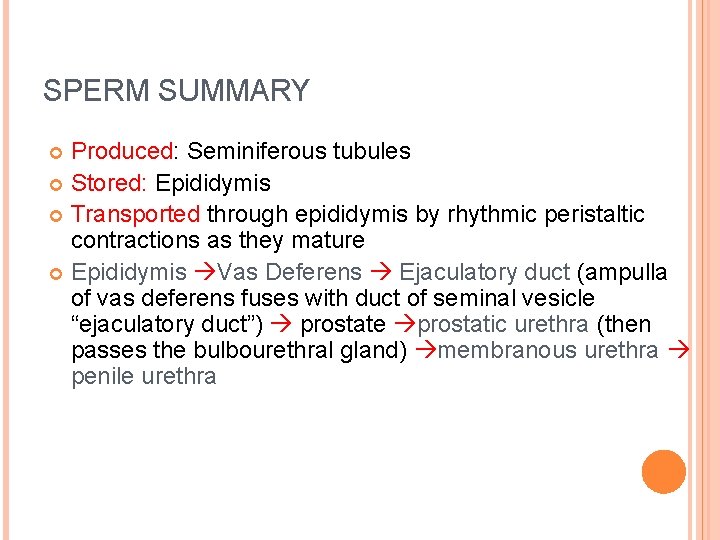
SPERM SUMMARY Produced: Seminiferous tubules Stored: Epididymis Transported through epididymis by rhythmic peristaltic contractions as they mature Epididymis Vas Deferens Ejaculatory duct (ampulla of vas deferens fuses with duct of seminal vesicle “ejaculatory duct”) prostate prostatic urethra (then passes the bulbourethral gland) membranous urethra penile urethra 27
TODAY’S LAB ID structures on the models View slides of testes, penis, sperm