
The major organs involved in the cardiovascular system
- Slides: 9
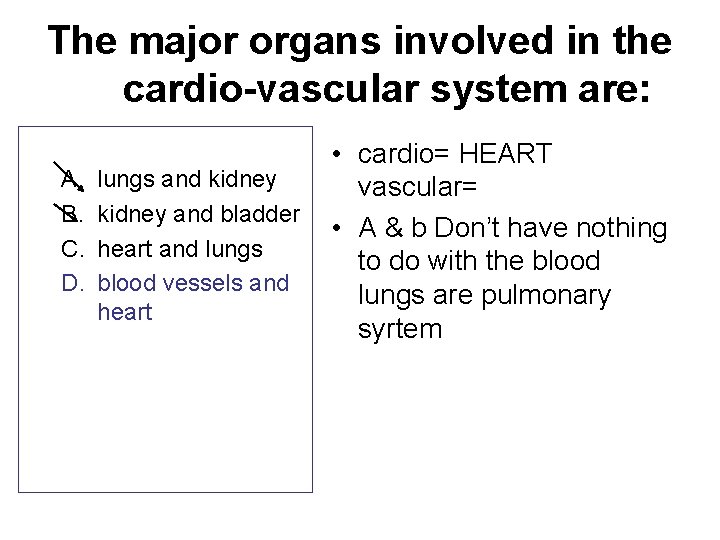
The major organs involved in the cardio-vascular system are: A. B. C. D. lungs and kidney and bladder heart and lungs blood vessels and heart • cardio= HEART vascular= • A & b Don’t have nothing to do with the blood lungs are pulmonary syrtem
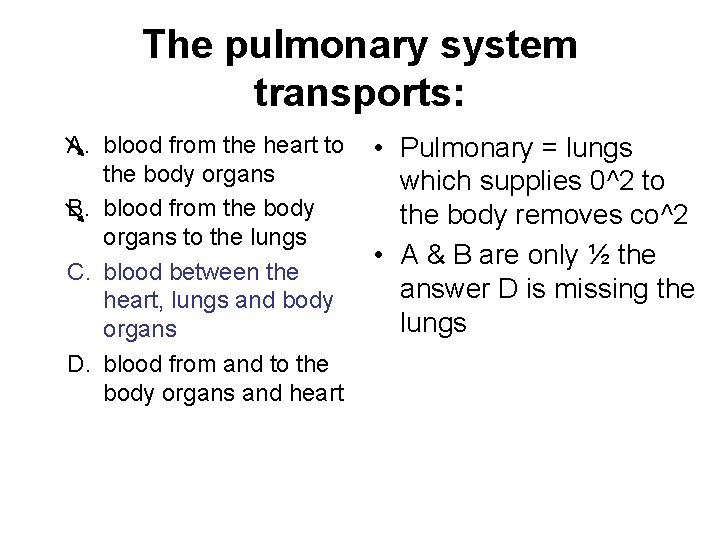
The pulmonary system transports: A. blood from the heart to the body organs B. blood from the body organs to the lungs C. blood between the heart, lungs and body organs D. blood from and to the body organs and heart • Pulmonary = lungs which supplies 0^2 to the body removes co^2 • A & B are only ½ the answer D is missing the lungs
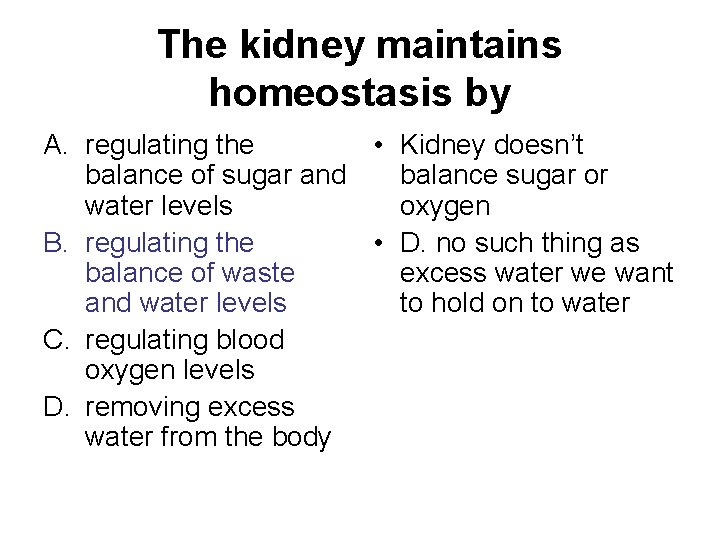
The kidney maintains homeostasis by A. regulating the • Kidney doesn’t balance of sugar and balance sugar or water levels oxygen B. regulating the • D. no such thing as balance of waste excess water we want and water levels to hold on to water C. regulating blood oxygen levels D. removing excess water from the body
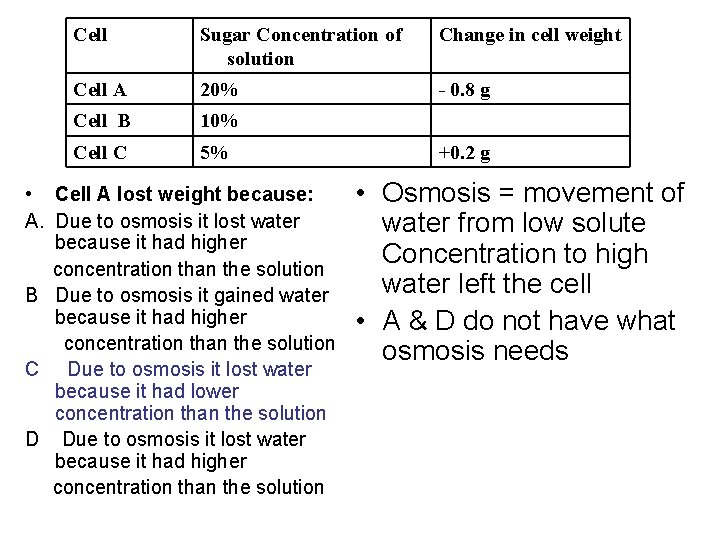
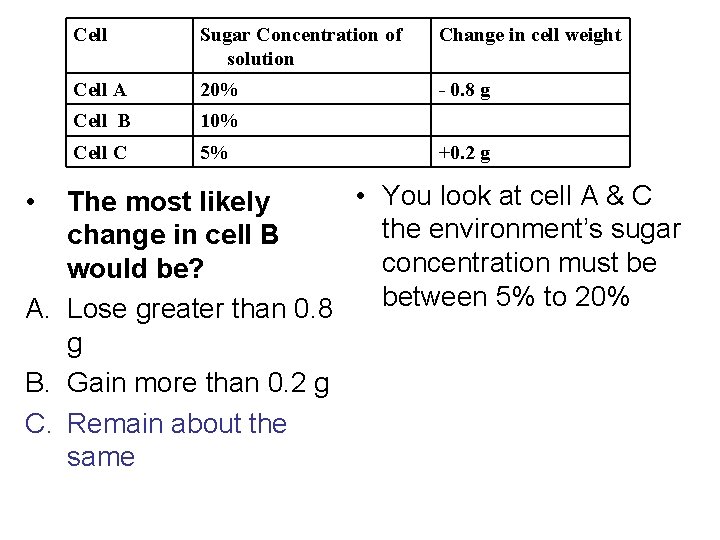
Cell Sugar Concentration of solution Change in cell weight Cell A 20% - 0. 8 g Cell B 10% Cell C 5% • Cell A lost weight because: A. Due to osmosis it lost water because it had higher concentration than the solution B Due to osmosis it gained water because it had higher concentration than the solution C Due to osmosis it lost water because it had lower concentration than the solution D Due to osmosis it lost water because it had higher concentration than the solution +0. 2 g • Osmosis = movement of water from low solute Concentration to high water left the cell • A & D do not have what osmosis needs
Cell Sugar Concentration of solution Change in cell weight Cell A 20% - 0. 8 g Cell B 10% Cell C 5% +0. 2 g • You look at cell A & C The most likely the environment’s sugar change in cell B concentration must be would be? between 5% to 20% A. Lose greater than 0. 8 g B. Gain more than 0. 2 g C. Remain about the same •
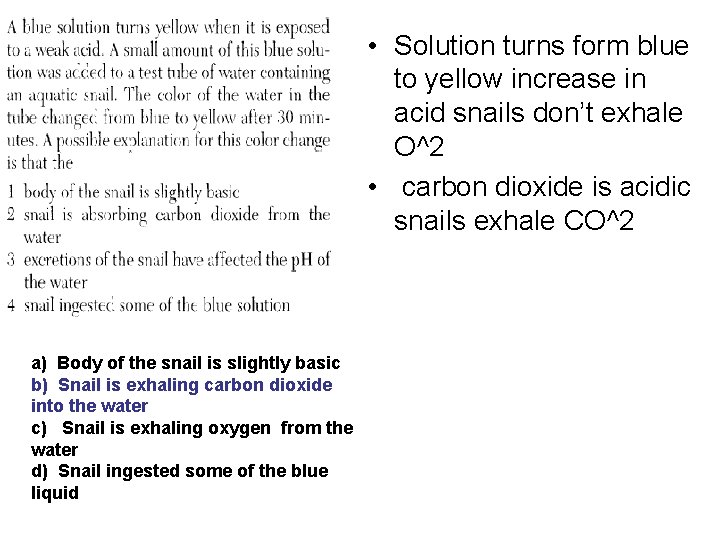
• Solution turns form blue to yellow increase in acid snails don’t exhale O^2 • carbon dioxide is acidic snails exhale CO^2 a) Body of the snail is slightly basic b) Snail is exhaling carbon dioxide into the water c) Snail is exhaling oxygen from the water d) Snail ingested some of the blue liquid
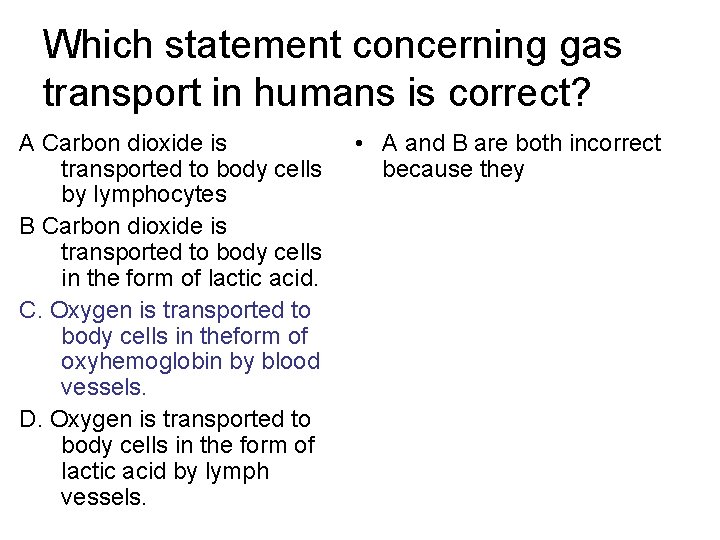
Which statement concerning gas transport in humans is correct? A Carbon dioxide is transported to body cells by lymphocytes B Carbon dioxide is transported to body cells in the form of lactic acid. C. Oxygen is transported to body cells in theform of oxyhemoglobin by blood vessels. D. Oxygen is transported to body cells in the form of lactic acid by lymph vessels. • A and B are both incorrect because they
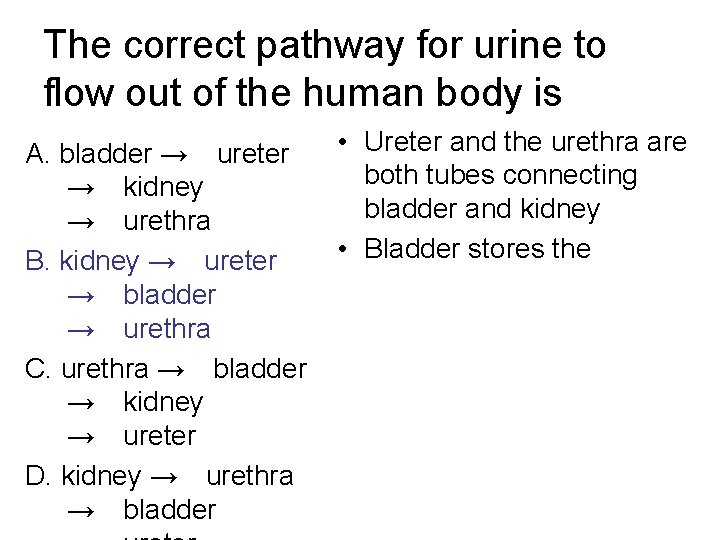
The correct pathway for urine to flow out of the human body is A. bladder → ureter → kidney → urethra B. kidney → ureter → bladder → urethra C. urethra → bladder → kidney → ureter D. kidney → urethra → bladder • Ureter and the urethra are both tubes connecting bladder and kidney • Bladder stores the
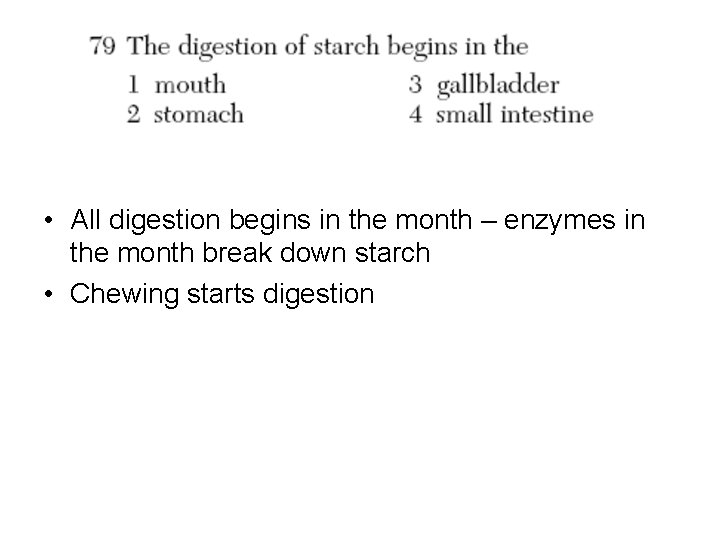
• All digestion begins in the month – enzymes in the month break down starch • Chewing starts digestion