
The Magna Carta n In 1215 the English
- Slides: 10
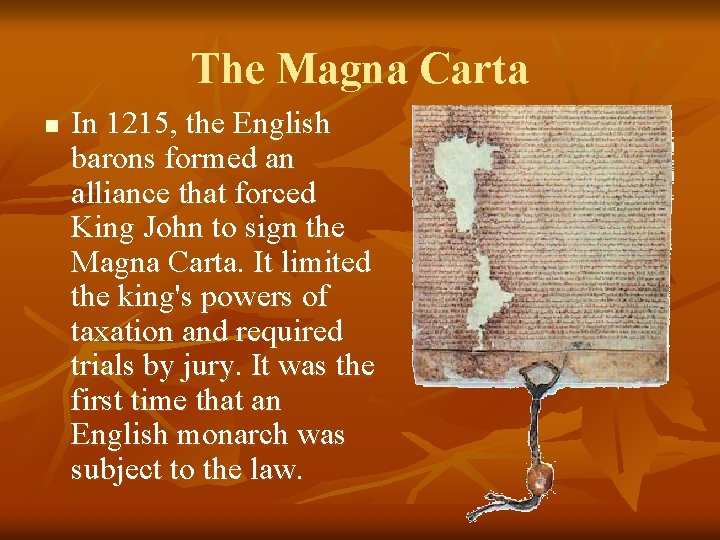
The Magna Carta n In 1215, the English barons formed an alliance that forced King John to sign the Magna Carta. It limited the king's powers of taxation and required trials by jury. It was the first time that an English monarch was subject to the law.
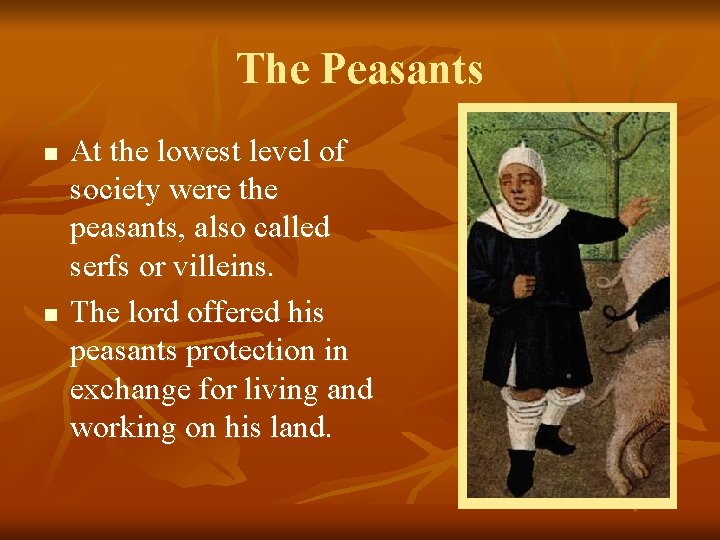
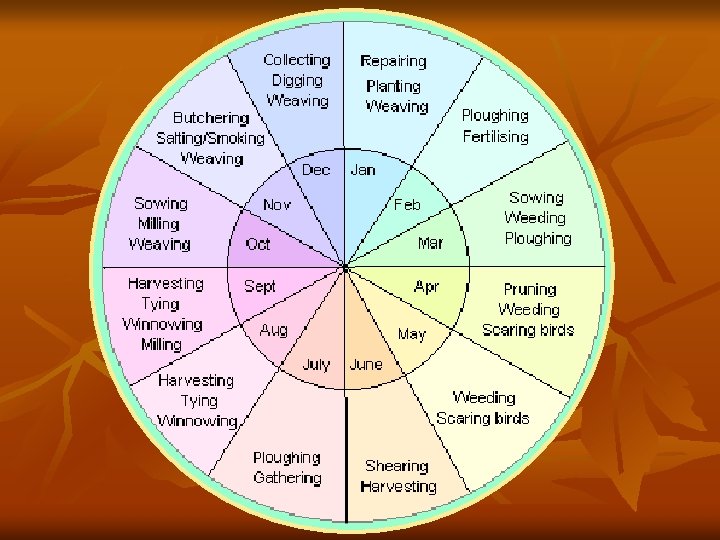
The Peasants n n At the lowest level of society were the peasants, also called serfs or villeins. The lord offered his peasants protection in exchange for living and working on his land.
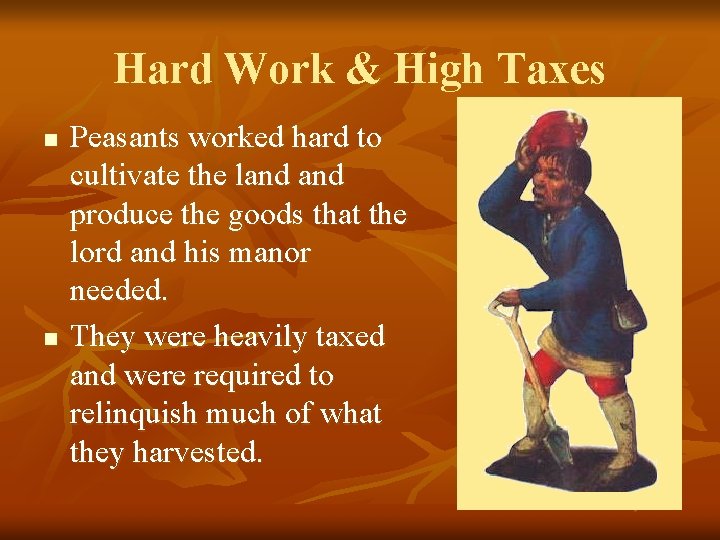
Hard Work & High Taxes n n Peasants worked hard to cultivate the land produce the goods that the lord and his manor needed. They were heavily taxed and were required to relinquish much of what they harvested.
Bound by law and custom… n It is the custom in England, as with other countries, for the nobility to have great power over the common people, who are serfs. This means that they are bound by law and custom to plough the field of their masters, harvest the corn, gather it into barns, and thresh and winnow the grain; they must also mow and carry home the hay, cut and collect wood, and perform all manner of tasks of this kind. -- Jean Froissart, 1395
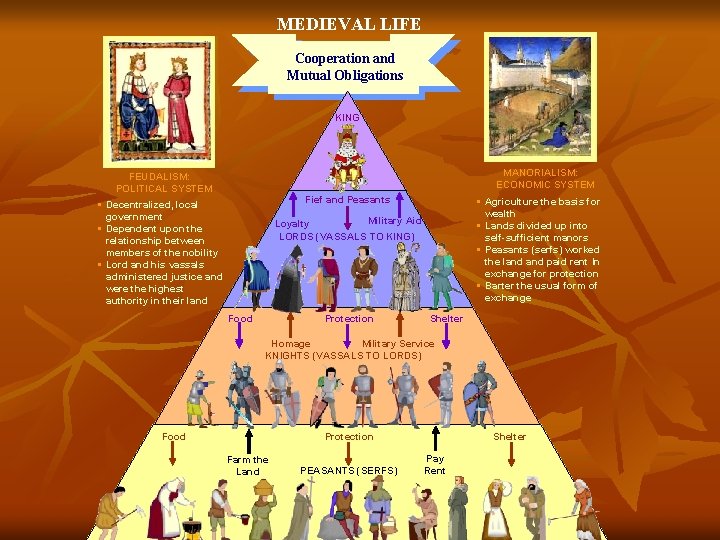
MEDIEVAL LIFE Cooperation and Mutual Obligations KING MANORIALISM: ECONOMIC SYSTEM FEUDALISM: POLITICAL SYSTEM Fief and Peasants § Decentralized, local government § Dependent upon the relationship between members of the nobility § Lord and his vassals administered justice and were the highest authority in their land § Agriculture the basis for wealth § Lands divided up into self-sufficient manors § Peasants (serfs) worked the land paid rent In exchange for protection § Barter the usual form of exchange Military Aid Loyalty LORDS (VASSALS TO KING) Food Protection Shelter Military Service Homage KNIGHTS (VASSALS TO LORDS) Food Protection Farm the Land PEASANTS (SERFS) Shelter Pay Rent
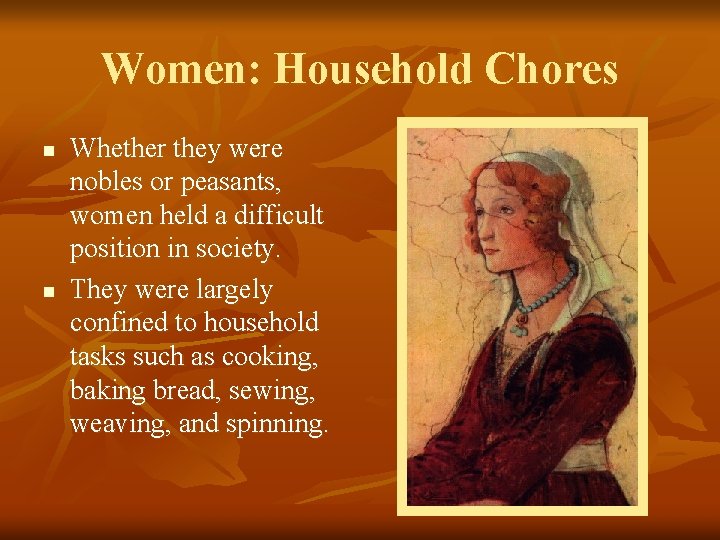
Women: Household Chores n n Whether they were nobles or peasants, women held a difficult position in society. They were largely confined to household tasks such as cooking, baking bread, sewing, weaving, and spinning.
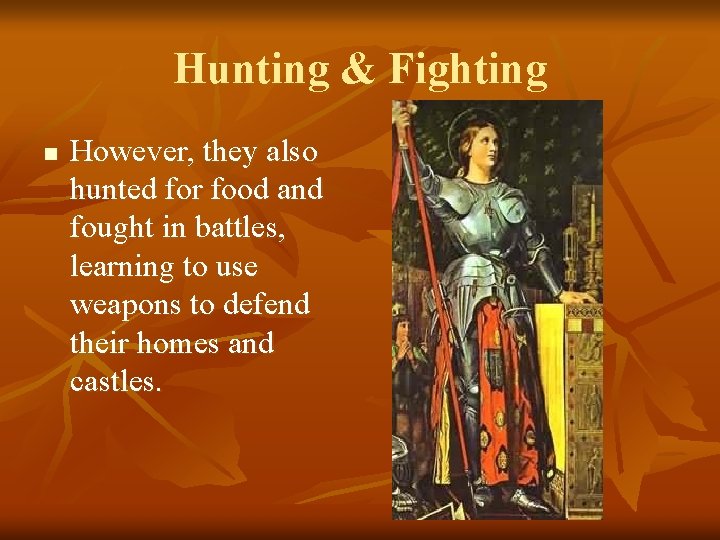
Hunting & Fighting n However, they also hunted for food and fought in battles, learning to use weapons to defend their homes and castles.
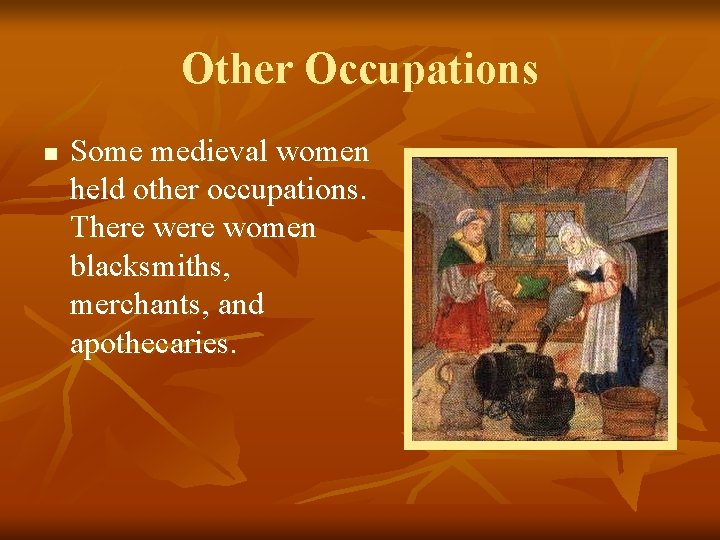
Other Occupations n Some medieval women held other occupations. There women blacksmiths, merchants, and apothecaries.
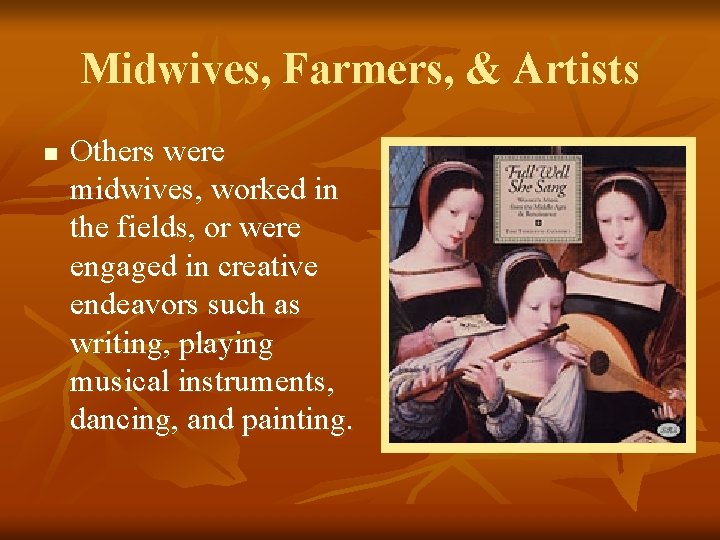
Midwives, Farmers, & Artists n Others were midwives, worked in the fields, or were engaged in creative endeavors such as writing, playing musical instruments, dancing, and painting.