
The MAGIC5 lung CAD system Roberto Bellotti on
The MAGIC-5 lung CAD system Roberto Bellotti on behalf of the MAGIC-5 Collaboration (Università di Bari & INFN - Italy) PHYSICS FOR HEALTH IN EUROPE WORKSHOP Towards a European roadmap for using physics tools in the development of diagnostics techniques and new cancer therapies 2 - 4 February 2010
The MAGIC-5 Project* Main research activities Developing models and algorithms for the analysis of biomedical images: To support the medical diagnosis with Computer-Aided Detection (CAD) systems; To allow large-scale image analyses. Analysis of Medical Images Mammographic images for the early diagnosis of breast cancer (2001 -2005) Computed Tomography images for the early diagnosis of lung cancer (2004 present) Brain MRI for the early diagnosis of the Alzheimer’s disease (2006 -present) (*) Medical Application on a Grid Infrastracture Connection

The MAGIC-5 Project MAGIC-5 6 Research Groups ~ 40 Researchers The Project is conducted by INFN - the Italian National Institute of Nuclear Physics in close collaboration with italian hospitals and the academic world.
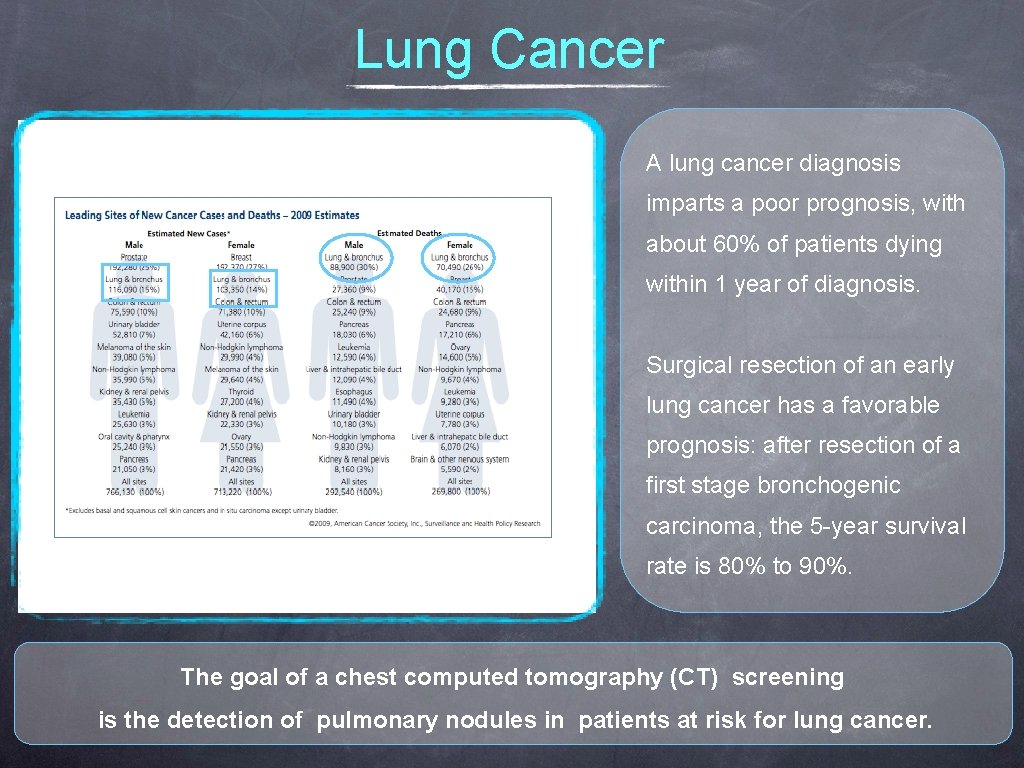
Lung Cancer A lung cancer diagnosis imparts a poor prognosis, with about 60% of patients dying within 1 year of diagnosis. Surgical resection of an early lung cancer has a favorable prognosis: after resection of a first stage bronchogenic carcinoma, the 5 -year survival rate is 80% to 90%. The goal of a chest computed tomography (CT) screening is the detection of pulmonary nodules in patients at risk for lung cancer.
LUNG SCREENING PROGRAMMES International Early Lung Cancer Action Program (I-ELCAP) 31000 individuals, mortality reduction: 8% (14%) in 5 (10) years of screening. Henschke et al. , N Engl J Med (2006) Bach 3210 individuals, no mortality reduction Bach et al. , JAMA (2007) Mayo Clinic Experience 1520 individuals, mortality reduction: 28% (15%) in 6 (15) years of screening. Mc. Mahon et al. , Radiology (2009) National Lung Screening Trial (NLST) about 50. 000 current or former smokers, results expected in 2010 -11
![Lung CAD “Our data indicate that the introduction of CAD and […] accumulation of](http://slidetodoc.com/presentation_image_h2/7de222ad64a1e73305963085e2262bca/image-6.jpg "Lung CAD “Our data indicate that the introduction of CAD and […] accumulation of")
Lung CAD “Our data indicate that the introduction of CAD and […] accumulation of experience of our multidisciplinary nodule management team will further improve the diagnosis accuracy of the protocol. ” G. Veronesi et al. , The Journal of Thoracic and Cardiovascular Surgery, (2008)
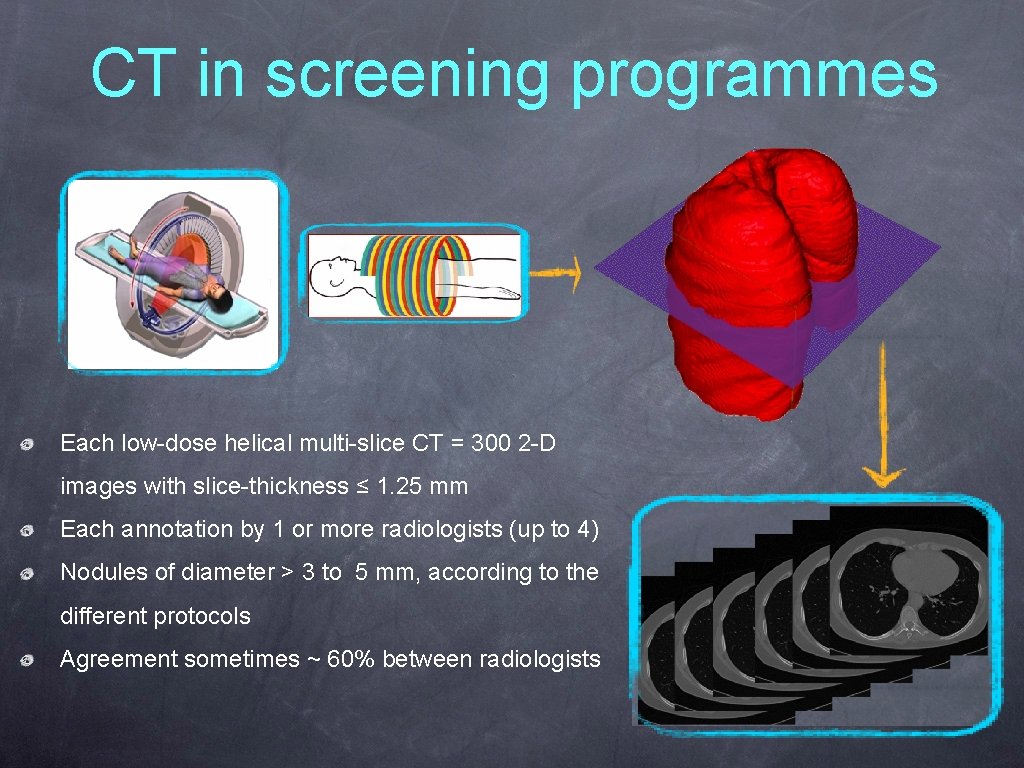
CT in screening programmes Each low-dose helical multi-slice CT = 300 2 -D images with slice-thickness ≤ 1. 25 mm Each annotation by 1 or more radiologists (up to 4) Nodules of diameter > 3 to 5 mm, according to the different protocols Agreement sometimes ~ 60% between radiologists
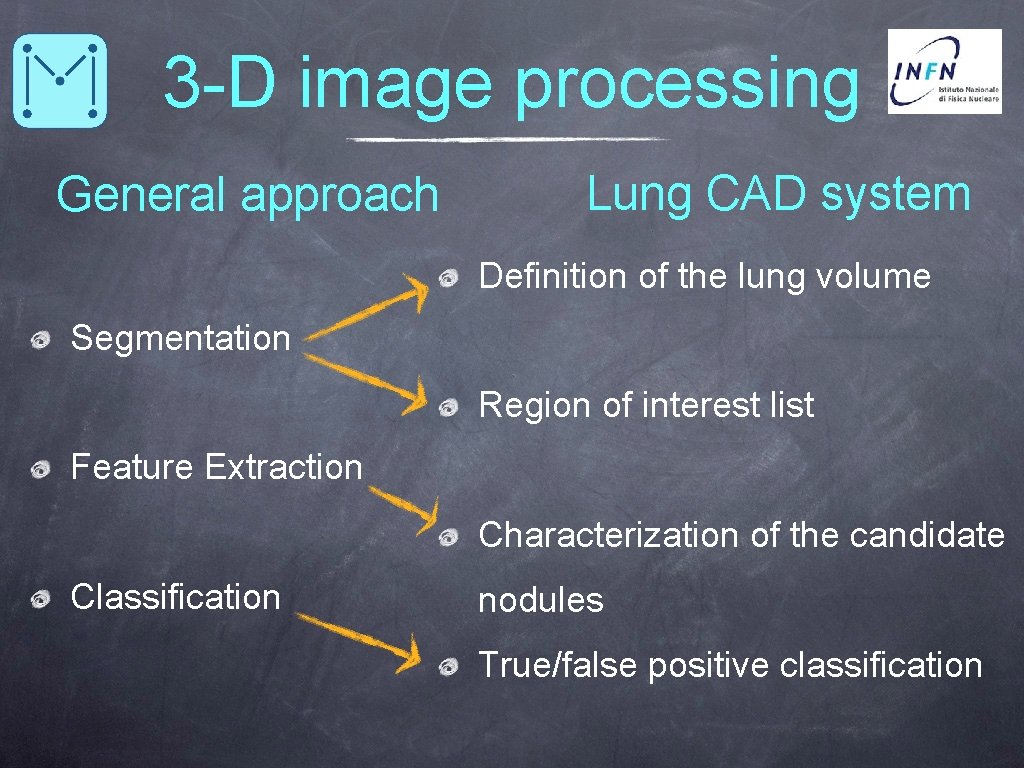
3 -D image processing General approach Lung CAD system Definition of the lung volume Segmentation Region of interest list Feature Extraction Characterization of the candidate Classification nodules True/false positive classification

The MAGIC-5 CADs Parallel approach: three different lung CADs are implemented in the same software framework; Some algorithms/procedures in common; The data analysis is performed in cross validation (i. e. blinded); The CAD systems were validated with three different databases.
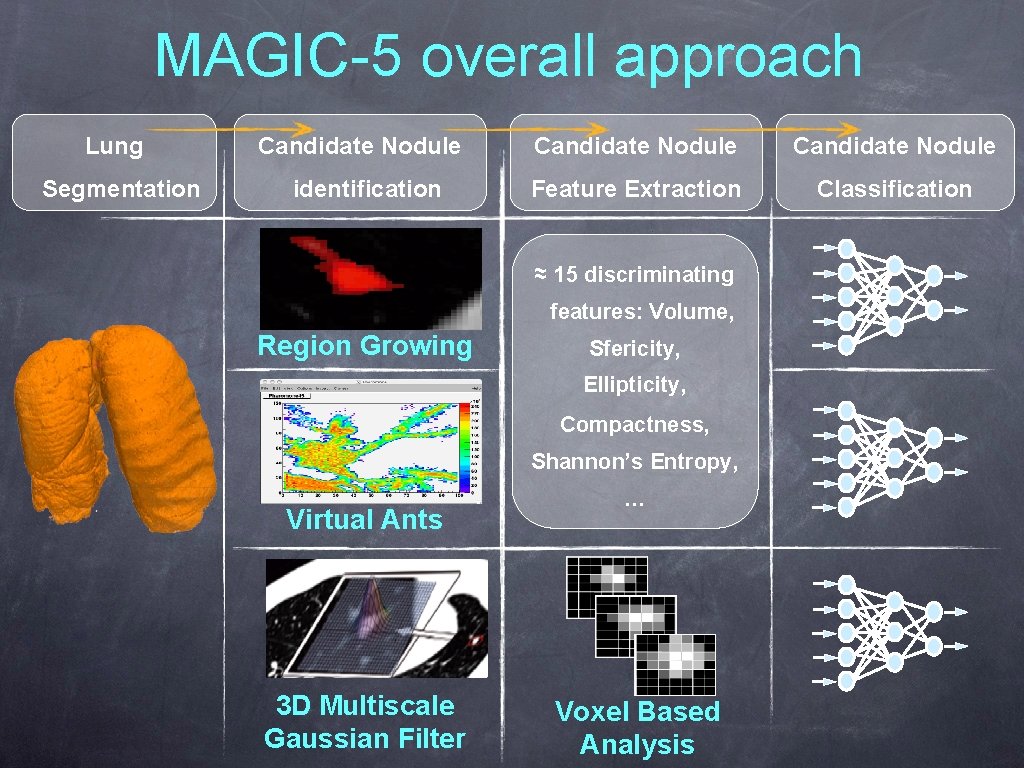
MAGIC-5 overall approach Lung Segmentation Candidate Nodule identification Candidate Nodule Feature Extraction Classification ≈ 15 discriminating features: Volume, Region Growing Sfericity, Ellipticity, Compactness, Shannon’s Entropy, Virtual Ants 3 D Multiscale Gaussian Filter … Voxel Based Analysis
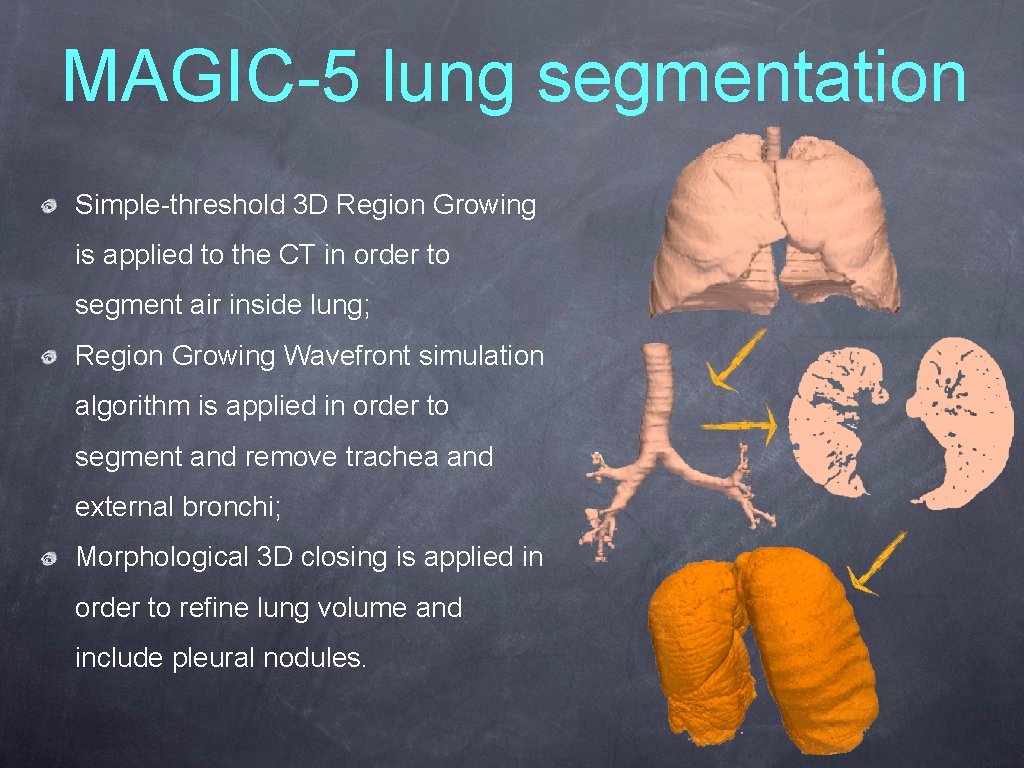
MAGIC-5 lung segmentation Simple-threshold 3 D Region Growing is applied to the CT in order to segment air inside lung; Region Growing Wavefront simulation algorithm is applied in order to segment and remove trachea and external bronchi; Morphological 3 D closing is applied in order to refine lung volume and include pleural nodules.
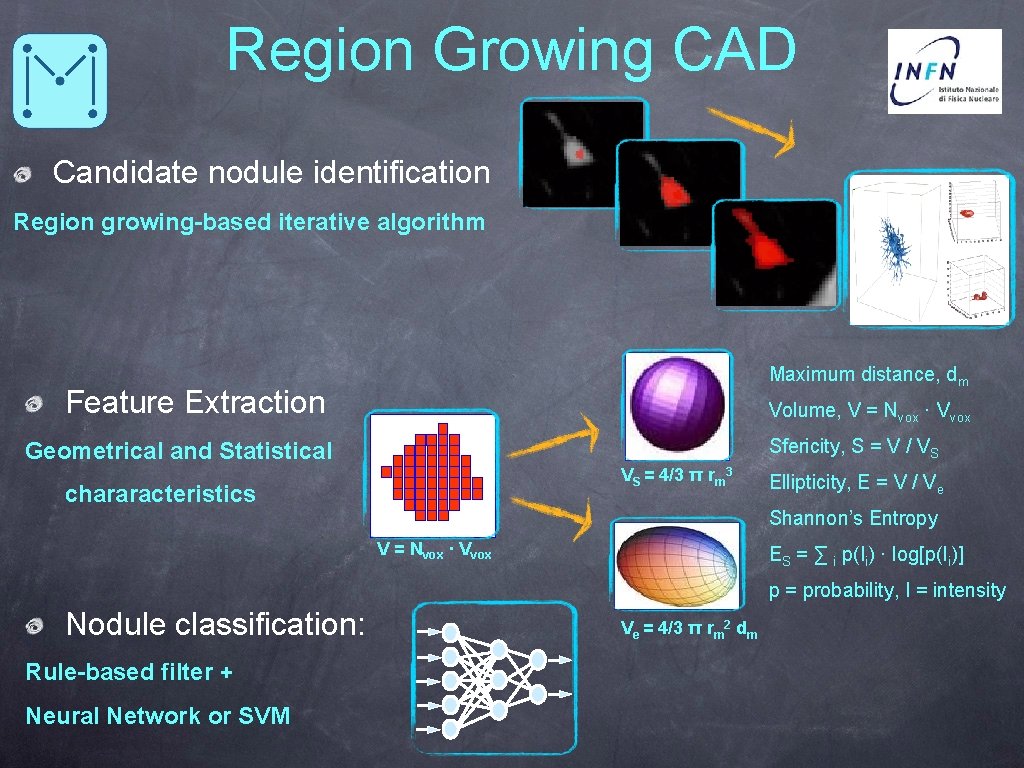
Region Growing CAD Candidate nodule identification Region growing-based iterative algorithm Maximum distance, dm Feature Extraction Volume, V = Nvox · Vvox Sfericity, S = V / VS Geometrical and Statistical VS = 4/3 π rm 3 chararacteristics Ellipticity, E = V / Ve Shannon’s Entropy V = Nvox · Vvox ES = ∑ i p(Ii) · log[p(Ii)] p = probability, I = intensity Nodule classification: Rule-based filter + Neural Network or SVM Ve = 4/3 π rm 2 dm
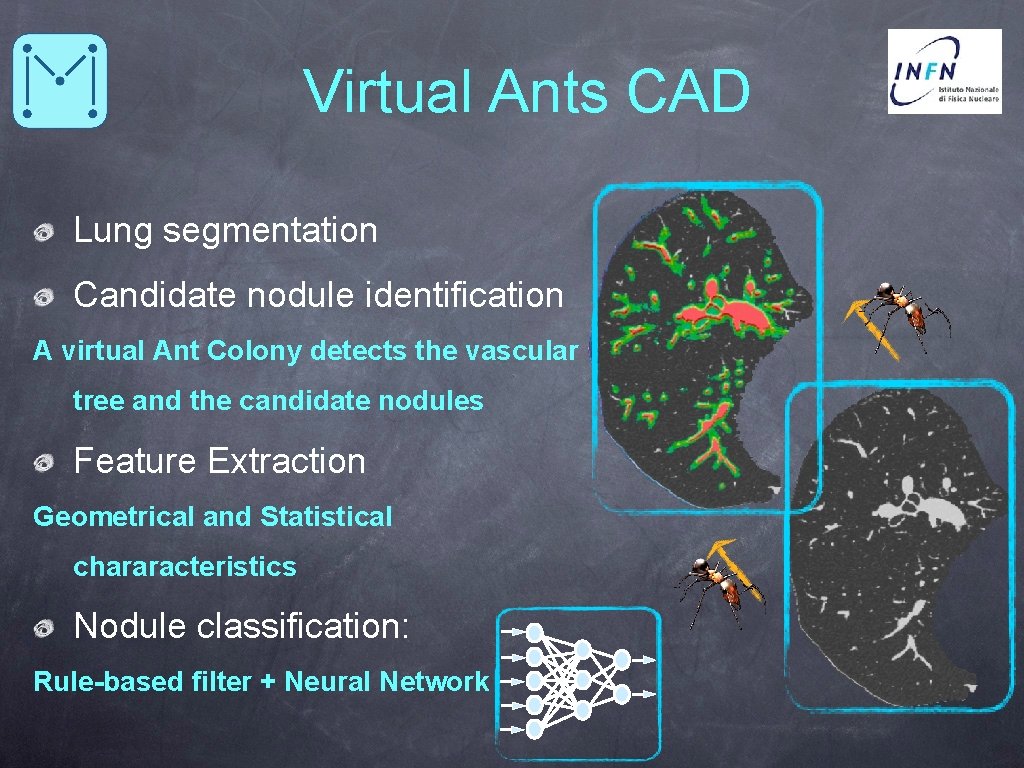
Virtual Ants CAD Lung segmentation Candidate nodule identification A virtual Ant Colony detects the vascular tree and the candidate nodules Feature Extraction Geometrical and Statistical chararacteristics Nodule classification: Rule-based filter + Neural Network
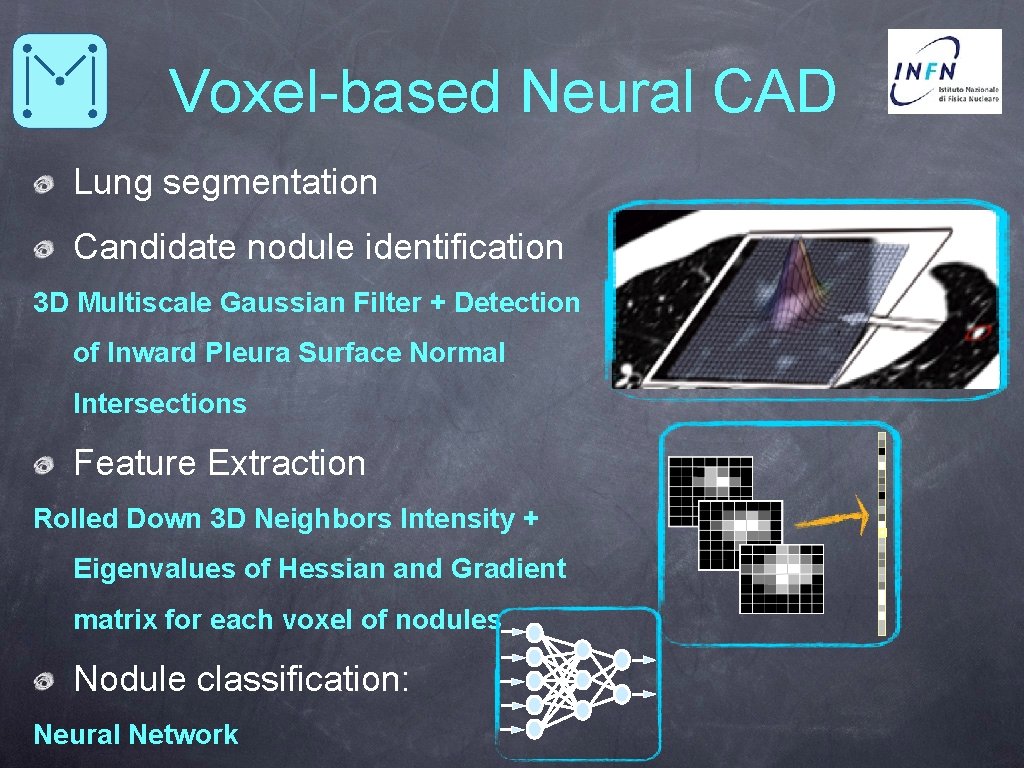
Voxel-based Neural CAD Lung segmentation Candidate nodule identification 3 D Multiscale Gaussian Filter + Detection of Inward Pleura Surface Normal Intersections Feature Extraction Rolled Down 3 D Neighbors Intensity + Eigenvalues of Hessian and Gradient matrix for each voxel of nodules Nodule classification: Neural Network
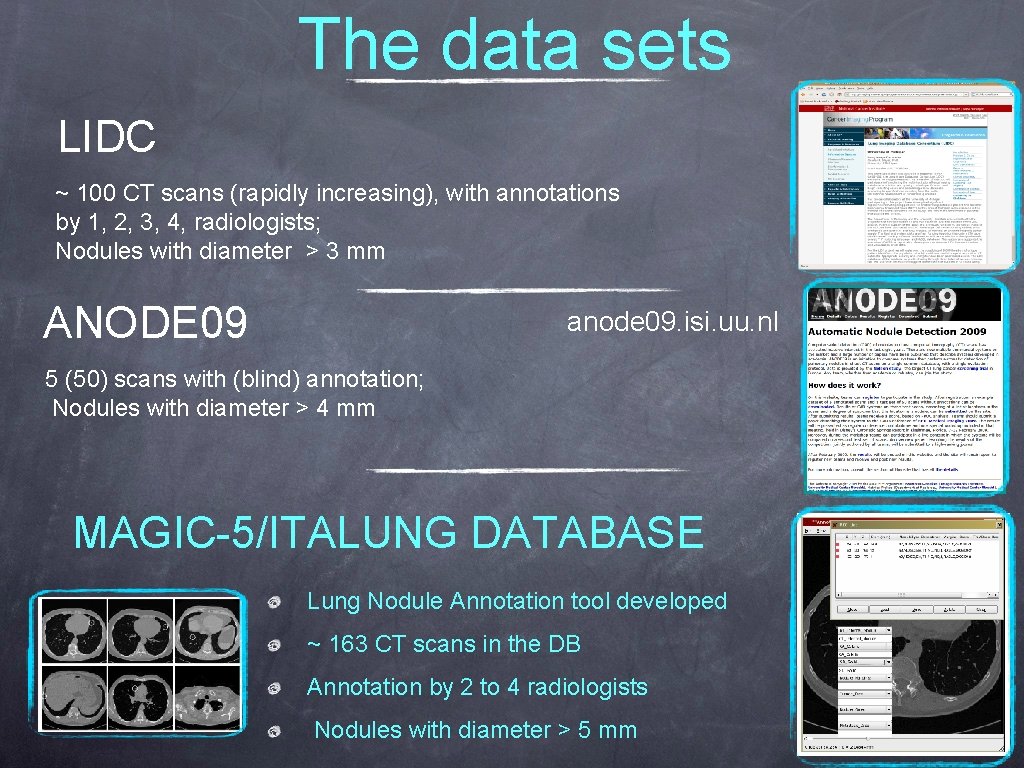
The data sets LIDC ~ 100 CT scans (rapidly increasing), with annotations by 1, 2, 3, 4, radiologists; Nodules with diameter > 3 mm ANODE 09 anode 09. isi. uu. nl 5 (50) scans with (blind) annotation; Nodules with diameter > 4 mm MAGIC-5/ITALUNG DATABASE Lung Nodule Annotation tool developed ~ 163 CT scans in the DB Annotation by 2 to 4 radiologists Nodules with diameter > 5 mm
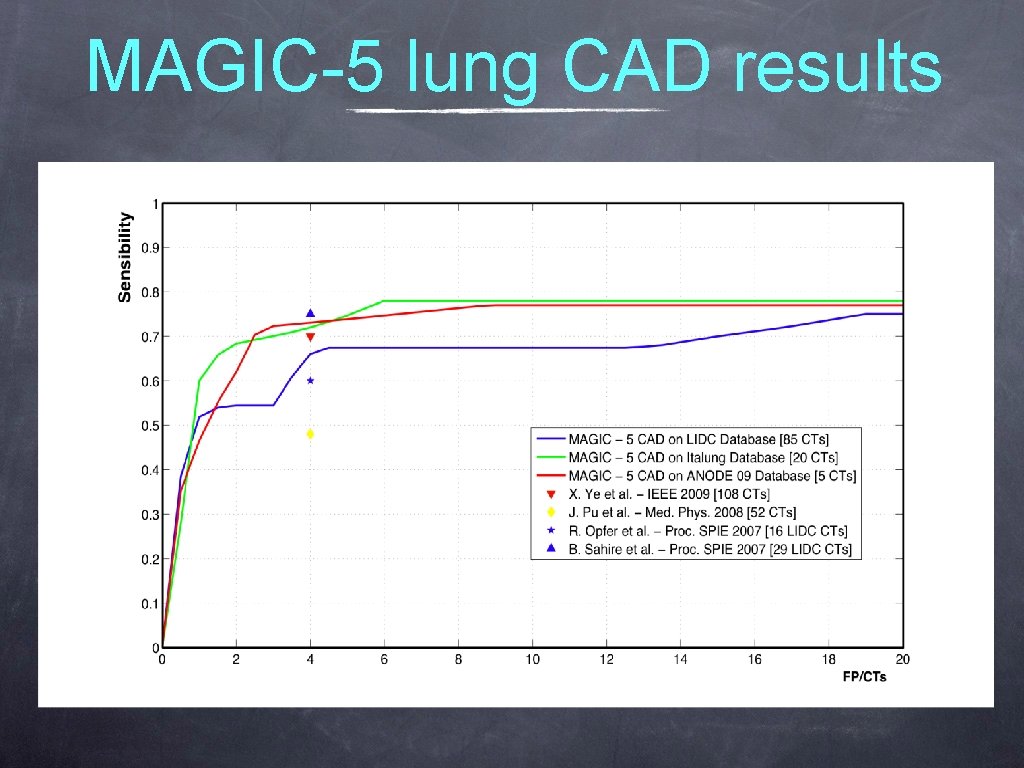
MAGIC-5 lung CAD results
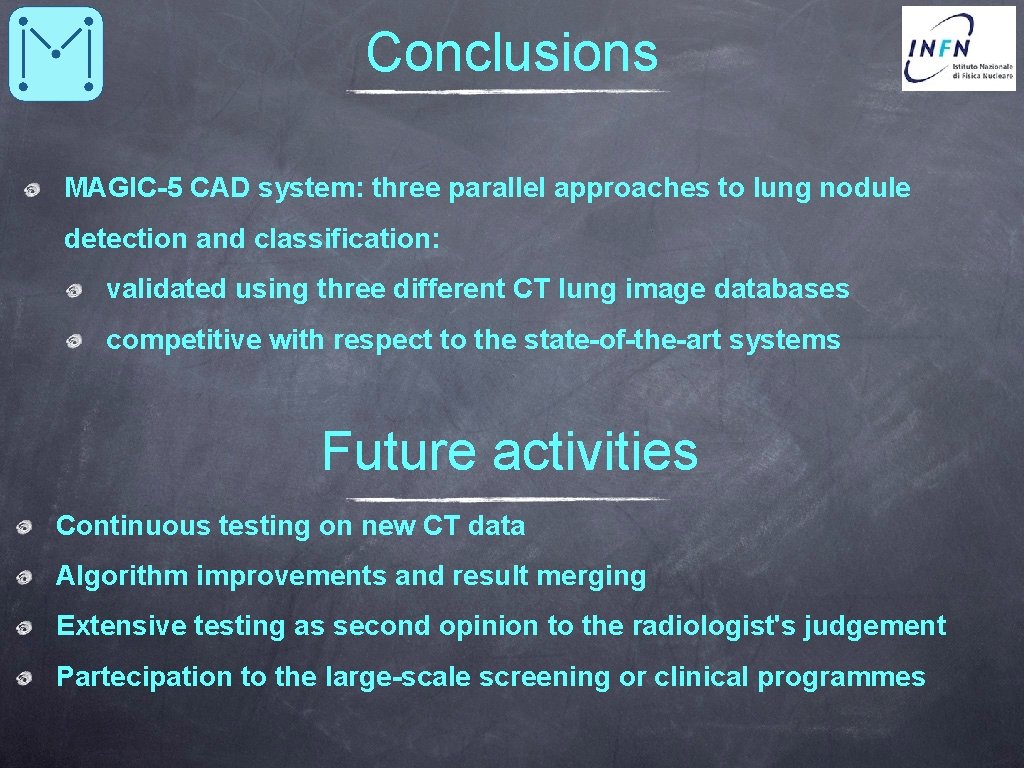
Conclusions MAGIC-5 CAD system: three parallel approaches to lung nodule detection and classification: validated using three different CT lung image databases competitive with respect to the state-of-the-art systems Future activities Continuous testing on new CT data Algorithm improvements and result merging Extensive testing as second opinion to the radiologist's judgement Partecipation to the large-scale screening or clinical programmes
![Publications [1] Lung nodule detection in low-dose and thin-slice computed tomography, COMPUTERS IN BIOLOGY](http://slidetodoc.com/presentation_image_h2/7de222ad64a1e73305963085e2262bca/image-18.jpg "Publications [1] Lung nodule detection in low-dose and thin-slice computed tomography, COMPUTERS IN BIOLOGY")
Publications [1] Lung nodule detection in low-dose and thin-slice computed tomography, COMPUTERS IN BIOLOGY AND MEDICINE; [2] A CAD system for nodule detection in low-dose lung CTs based on region growing and a new active contour model, MEDICAL PHYSICS [3] Multi-scale analysis of lung computed tomography images, JOURNAL OF INSTRUMENTATION; [4] Automatic lung segmentation in CT images with accurate handling of the hilar region, JOURNAL OF DIGITAL IMAGING; [5] 3 -D Object Segmentation using Ant Colonies, PATTERN RECOGNITION; [6] Pleural nodule identification in low-dose and thin-slice lung computed tomography, COMPUTERS IN BIOLOGY AND MEDICINE; [7] Performance of a CAD system for lung nodules identification in baseline CT examinations of a lung cancer screening trial, INTERNATIONAL JOURNAL OF IMAGING; [8] A novel multi-threshold surface-triangulation method for nodule detection in lung CT, MEDICAL PHYSICS.

Thank you for your attention! I am grateful to all the members of the MAGIC-5 Collaboration for their contribution Contacts: ROBERTO. BELLOTTI@BA. INFN. IT PIERGIO. CERELLO@TO. INFN. IT
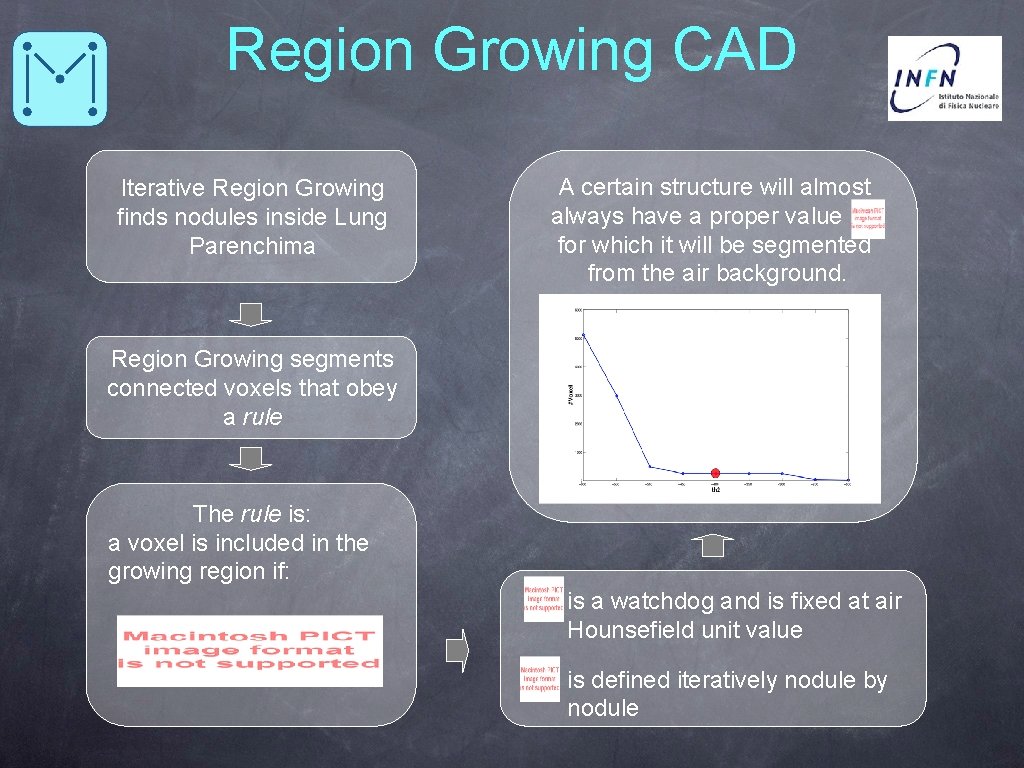
Region Growing CAD Iterative Region Growing finds nodules inside Lung Parenchima A certain structure will almost always have a proper value for which it will be segmented from the air background. Region Growing segments connected voxels that obey a rule The rule is: a voxel is included in the growing region if: is a watchdog and is fixed at air Hounsefield unit value is defined iteratively nodule by nodule
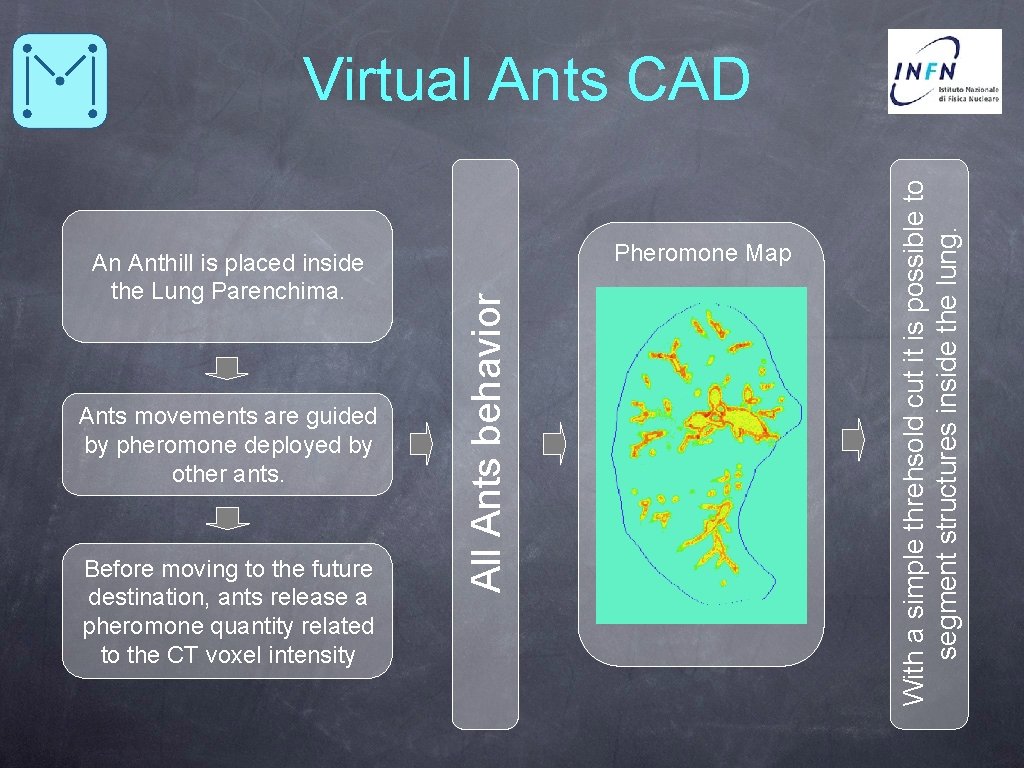
Ants movements are guided by pheromone deployed by other ants. Before moving to the future destination, ants release a pheromone quantity related to the CT voxel intensity Pheromone Map All Ants behavior An Anthill is placed inside the Lung Parenchima. With a simple threhsold cut it is possible to segment structures inside the lung. Virtual Ants CAD
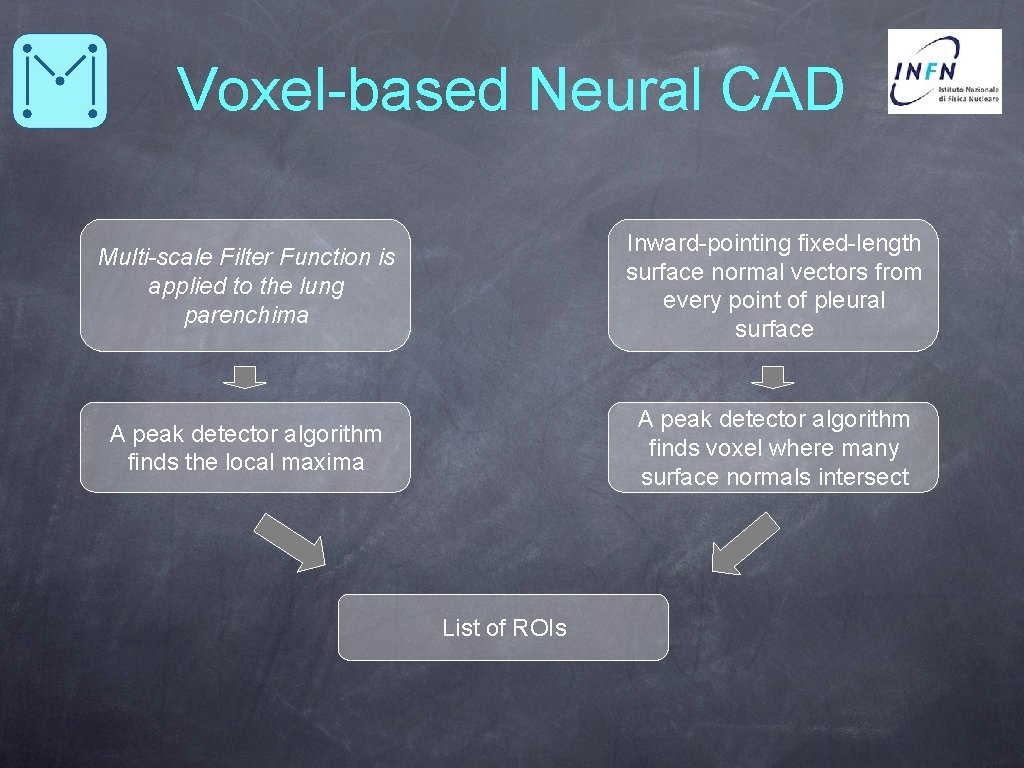
Voxel-based Neural CAD Multi-scale Filter Function is applied to the lung parenchima Inward-pointing fixed-length surface normal vectors from every point of pleural surface A peak detector algorithm finds the local maxima A peak detector algorithm finds voxel where many surface normals intersect List of ROIs
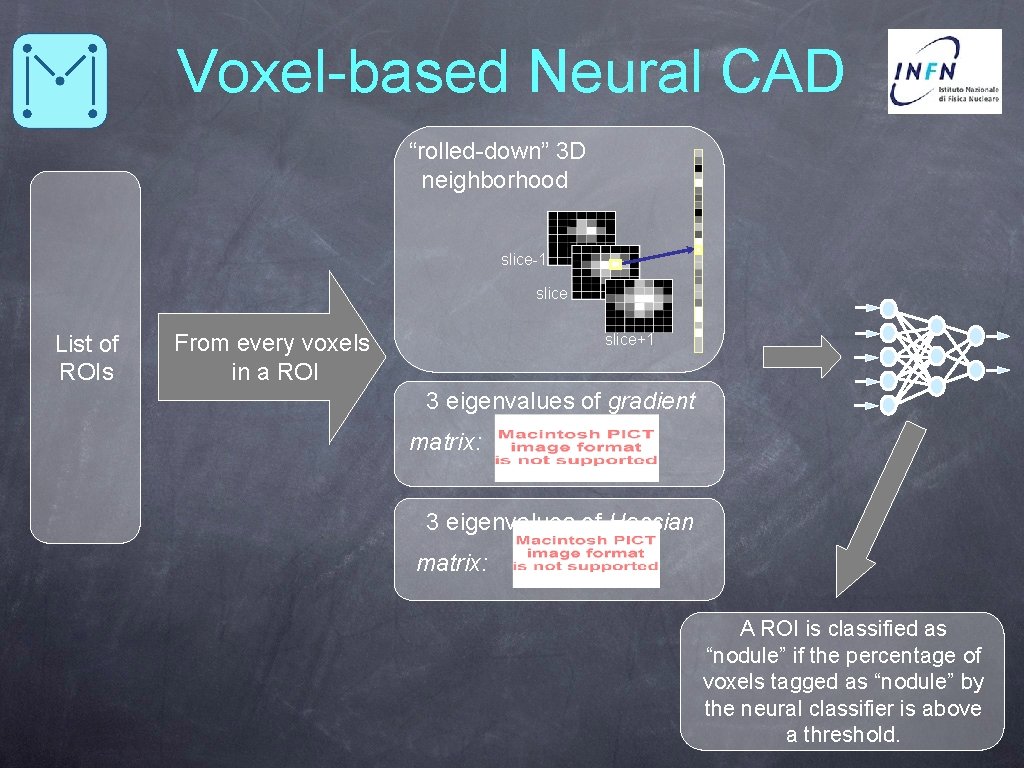
Voxel-based Neural CAD “rolled-down” 3 D neighborhood slice-1 slice List of ROIs From every voxels in a ROI slice+1 3 eigenvalues of gradient matrix: 3 eigenvalues of Hessian matrix: A ROI is classified as “nodule” if the percentage of voxels tagged as “nodule” by the neural classifier is above a threshold.
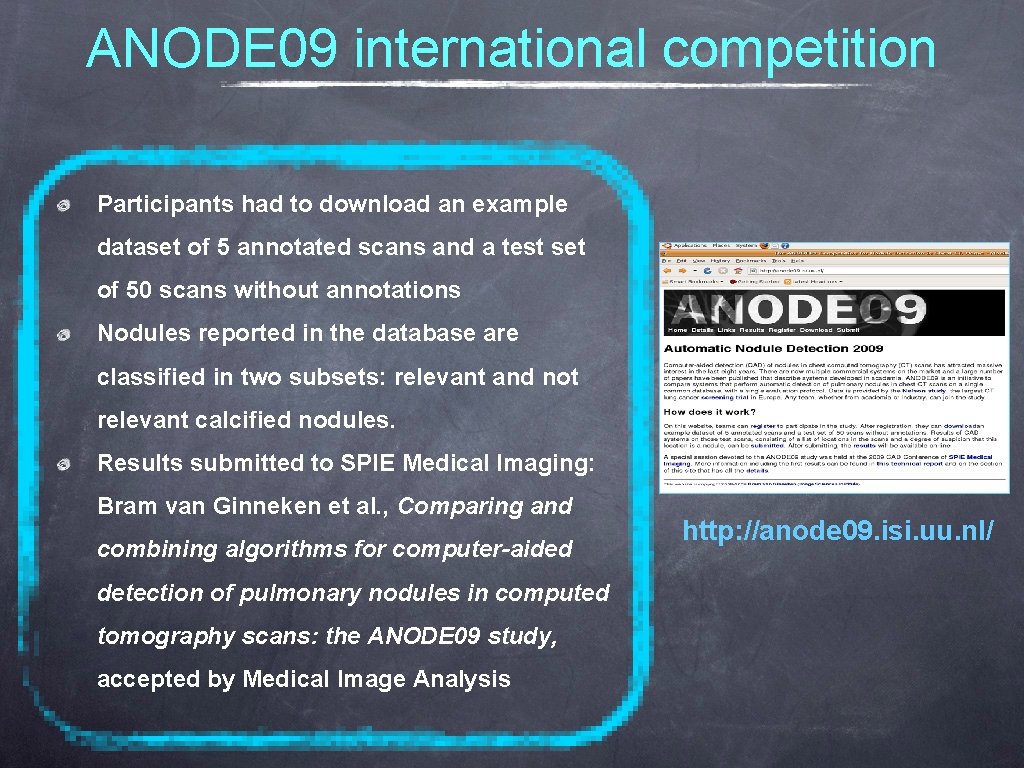
ANODE 09 international competition Participants had to download an example dataset of 5 annotated scans and a test set of 50 scans without annotations Nodules reported in the database are classified in two subsets: relevant and not relevant calcified nodules. Results submitted to SPIE Medical Imaging: Bram van Ginneken et al. , Comparing and combining algorithms for computer-aided detection of pulmonary nodules in computed tomography scans: the ANODE 09 study, accepted by Medical Image Analysis http: //anode 09. isi. uu. nl/
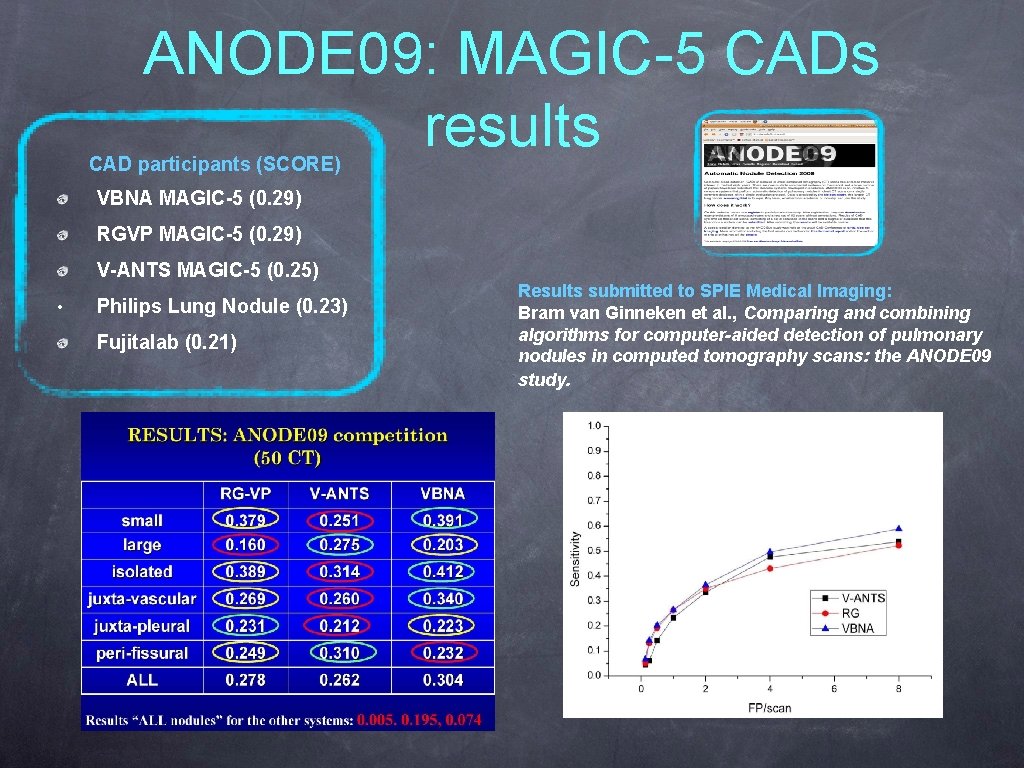
ANODE 09: MAGIC-5 CADs results CAD participants (SCORE) VBNA MAGIC-5 (0. 29) RGVP MAGIC-5 (0. 29) V-ANTS MAGIC-5 (0. 25) • Philips Lung Nodule (0. 23) Fujitalab (0. 21) Results submitted to SPIE Medical Imaging: Bram van Ginneken et al. , Comparing and combining algorithms for computer-aided detection of pulmonary nodules in computed tomography scans: the ANODE 09 study.
- Slides: 25