
THE MAGAZINE INDUSTRY 1960 s magazine ownership Curran

- Slides: 16
THE MAGAZINE INDUSTRY
1960 s magazine ownership: Curran and Seaton ‘power and profit’ British magazine publishing industry dominated by a small number of major publishers (an oligopoly) Woman’s Realm published in 60 s by major company IPC (owned over 100 consumer magazine titles, many trade mags, four newspapers and also published books) The print marketplace was less crowded and of course no digital competition, so: ■ Woman’s Realm sold 1. 2 m copies per week, targeting audiences with: • • • Genre pleasures (“comfortable reassurance” of repeated conventions) Aspiration (how we would like to be and how to achieve this) Uses and gratifications include identification (reflecting how we are) U&G: information (fashion, beauty, health, relationship advice) U&G: entertainment diversion and relaxation (‘luxury’, fiction)
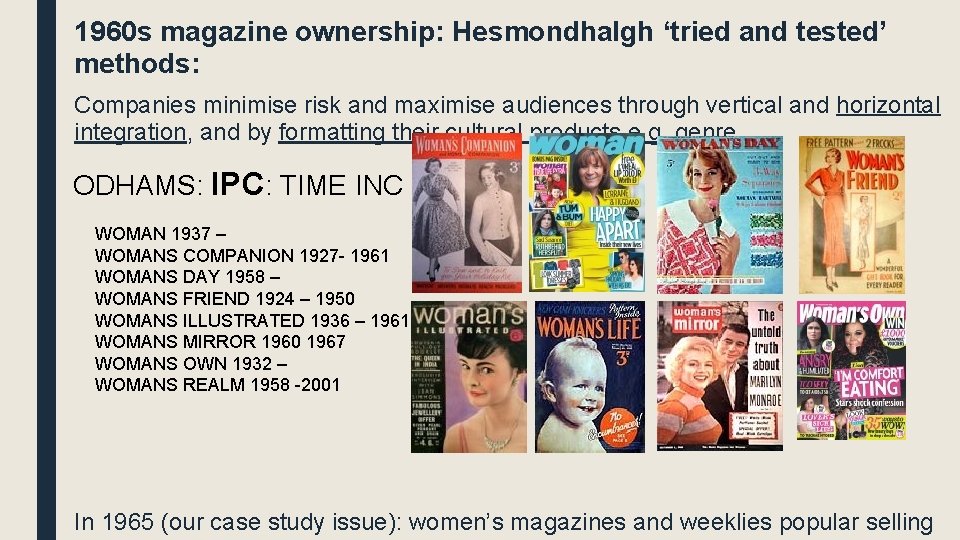
1960 s magazine ownership: Hesmondhalgh ‘tried and tested’ methods: Companies minimise risk and maximise audiences through vertical and horizontal integration, and by formatting their cultural products e. g. genre. ODHAMS: IPC: TIME INC WOMAN 1937 – WOMANS COMPANION 1927 - 1961 WOMANS DAY 1958 – WOMANS FRIEND 1924 – 1950 WOMANS ILLUSTRATED 1936 – 1961 WOMANS MIRROR 1960 1967 WOMANS OWN 1932 – WOMANS REALM 1958 -2001 In 1965 (our case study issue): women’s magazines and weeklies popular selling
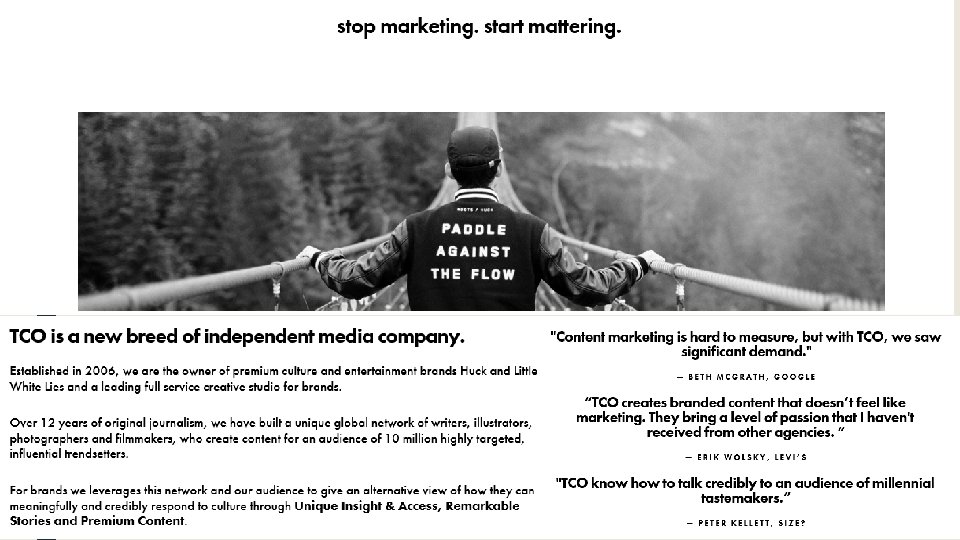
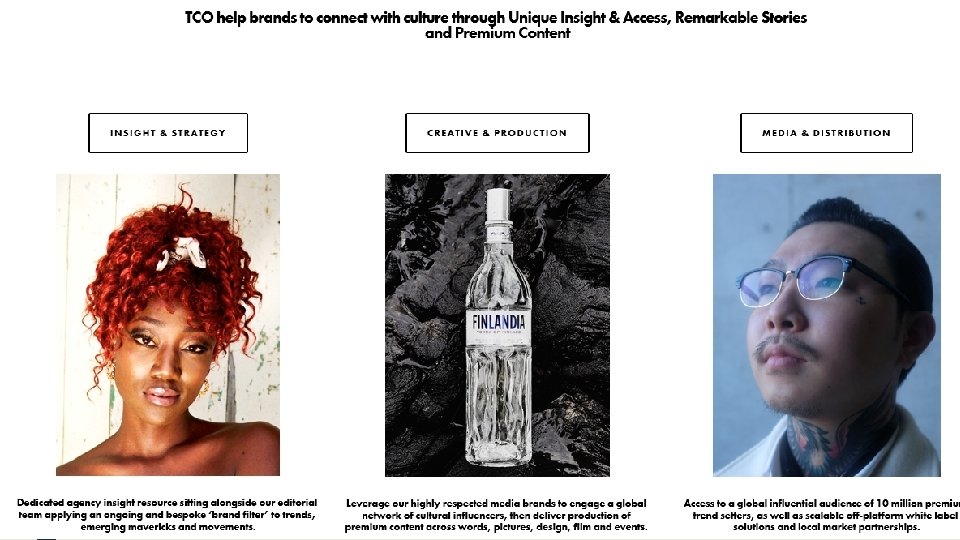
The digital revolution: In 1980 s mags like The Face (stylish, younger audience) and 1990 s more niche and technology mags e. g. Wired (1993) and Play. Station (1995) were launched. THEN THE INTERNET ARRIVED From ‘dial-up’ connection in 1990 s to more than 50% of UK with broadband in 2007 Industry Digital advantages: Lower production costs Lower distribution costs Larger audience reach Direct distribution Broader content Audience interaction Free issues Media synergy These advantages of digital technology also enables the rise of smaller niche magazine companies (like TCO) It also enables independent distribution with the rise of third party subscription companies (Zinio, Readly, Magzter, Stack) with a monthly fee (£ 7. 99) with one month free.
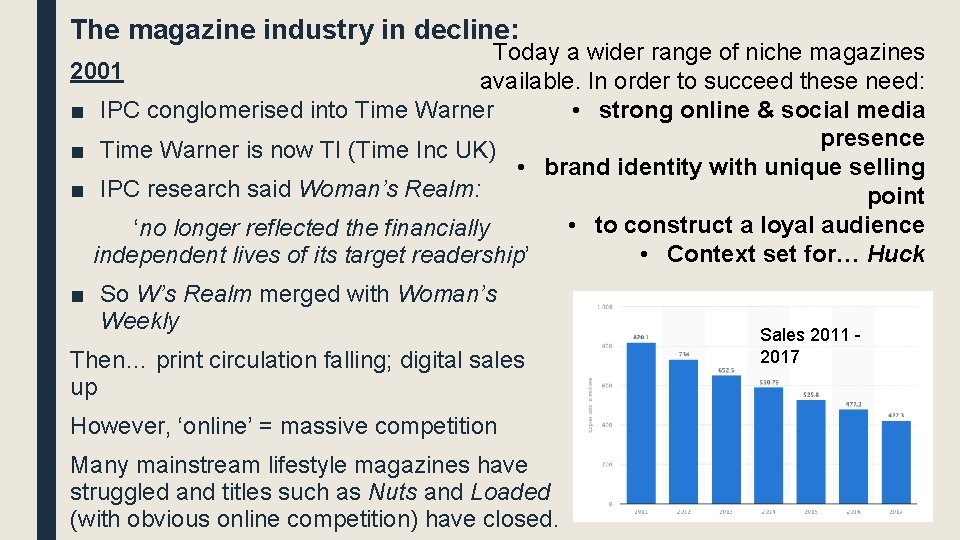
The magazine industry in decline: Today a wider range of niche magazines 2001 available. In order to succeed these need: • strong online & social media ■ IPC conglomerised into Time Warner presence ■ Time Warner is now TI (Time Inc UK) • brand identity with unique selling ■ IPC research said Woman’s Realm: point • to construct a loyal audience ‘no longer reflected the financially • Context set for… Huck independent lives of its target readership’ ■ So W’s Realm merged with Woman’s Weekly Then… print circulation falling; digital sales up However, ‘online’ = massive competition Many mainstream lifestyle magazines have struggled and titles such as Nuts and Loaded (with obvious online competition) have closed. Sales 2011 2017
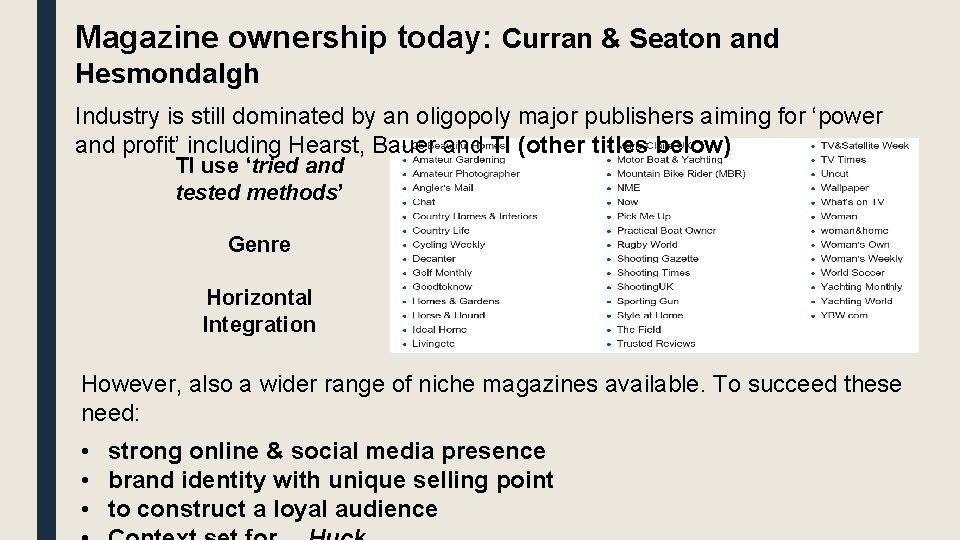
Magazine ownership today: Curran & Seaton and Hesmondalgh Industry is still dominated by an oligopoly major publishers aiming for ‘power and profit’ including Hearst, Bauer and TI (other titles below) TI use ‘tried and tested methods’ Genre Horizontal Integration However, also a wider range of niche magazines available. To succeed these need: • strong online & social media presence • brand identity with unique selling point • to construct a loyal audience
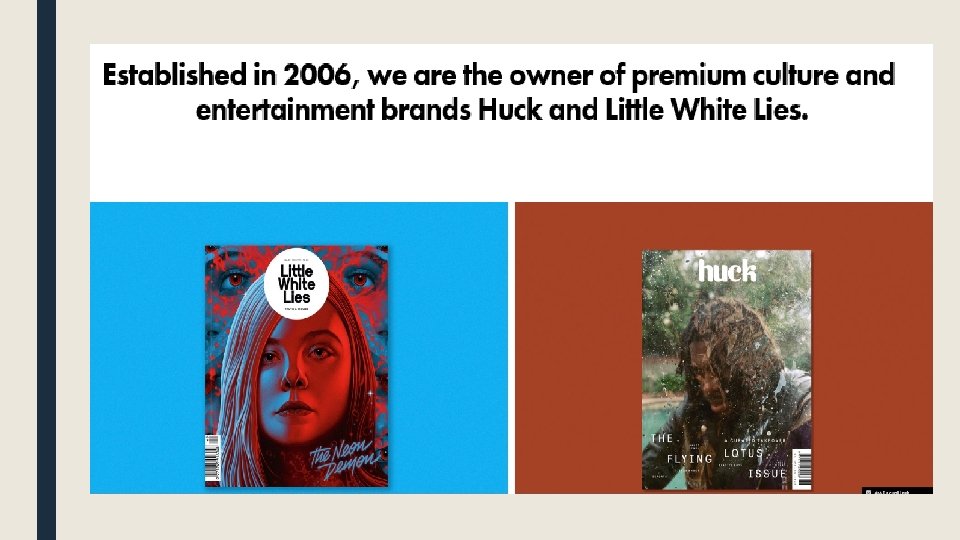
HUCK production and target audience Published bi-monthly in London, 2006 to present (Set edition: Feb/March 2016) Price: £ 6 (so £ 36 p. a. for 6 mags) Woman’s Weekly is on offer £ 51 p. a. for 52 mags 60, 000 print readership (Huck website Apr 2017) Genre: independent youth culture and arts (began as skating / surfing magazine). Named after the ‘rebellious’ Huckleberry Finn in Mark Twain’s novel. ‘Huck celebrates independence: people and movements that paddle against the flow. ’ Tagline: ‘Radical Culture’ : Counter-cultural and Do It Yourself ethos to challenge and campaign against mainstream ideology. Editor Andrea Kurland explained the ethos in 2014 as "punk, skateboarding, surfing, activism, hip-hop, outsider art, indie publishing”. Editor TCO London Publisher Vince Medeiros: "Our readers will be part of the tribe of surf, skate & snowboard culture, but will appreciate there are other things in life.
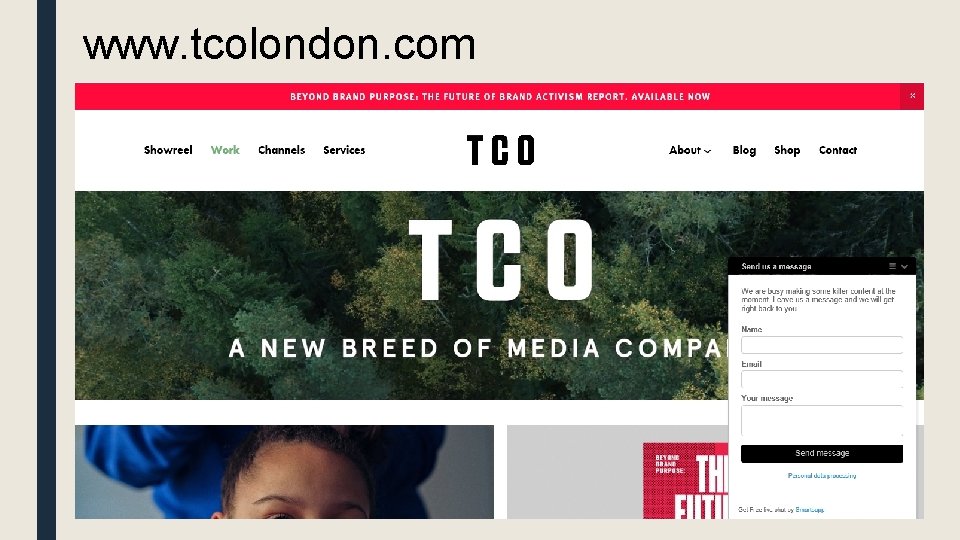
www. tcolondon. com
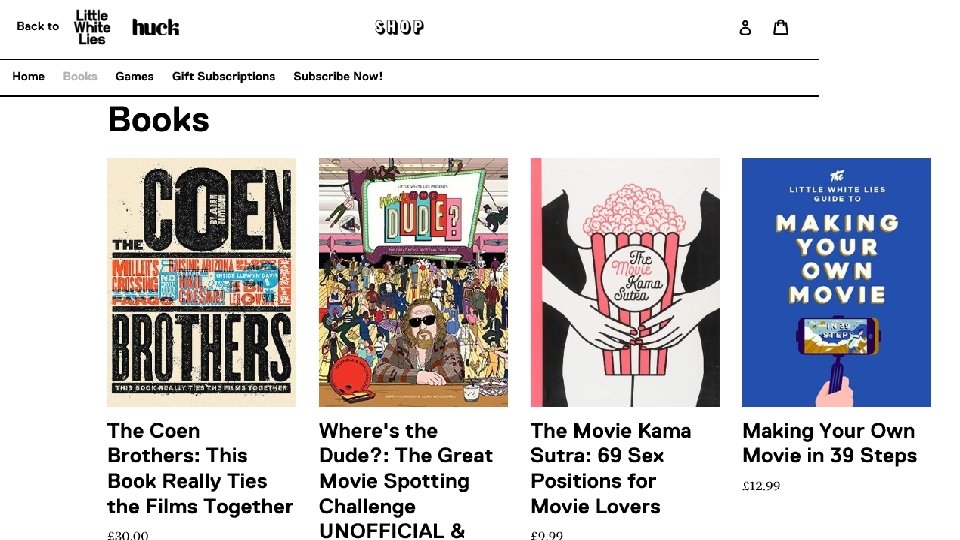
HUCK Distribution A key issue for independent print magazines like Huck is distribution. Not enough issues are produced to have profitable relationships with high street outlets, and if they did their alternative target audience may not use them (uncool, unethical? ) Need to construct direct distribution by subscribing to the website Need to create a buzz and word of mouth, building brand identity: Promo video for HUCK magazine's pop up gallery at Old Street Station, London.
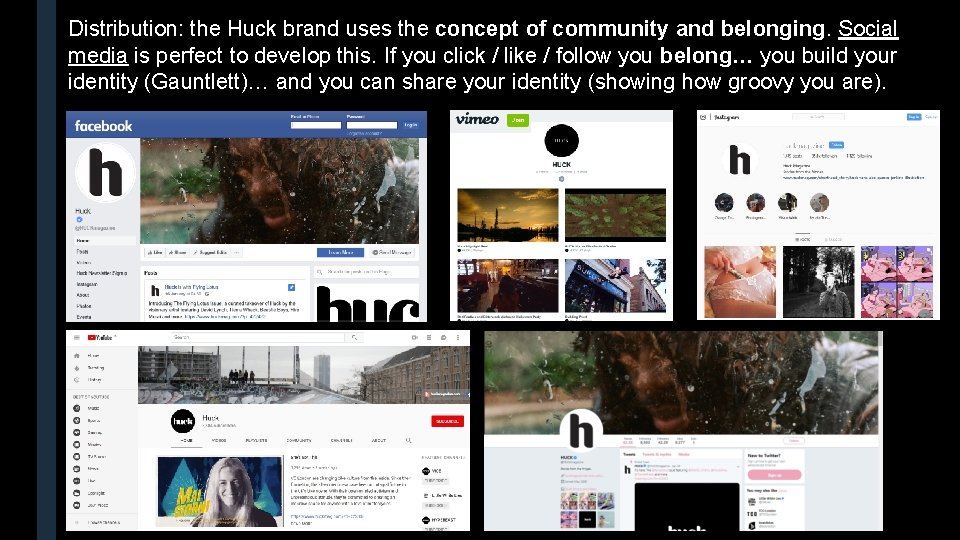
Distribution: the Huck brand uses the concept of community and belonging. Social media is perfect to develop this. If you click / like / follow you belong… you build your identity (Gauntlett)… and you can share your identity (showing how groovy you are).
HUCK Distribution For new markets magazines can use distribution partnerships. Huck constructs independent print distribution the third party subscription company Stack For a monthly fee (£ 7. 99 with one month free) you access to a range of titles: Stack review / promo video for HUCK Can also access back issues (each has a focus), promo codes and social networks
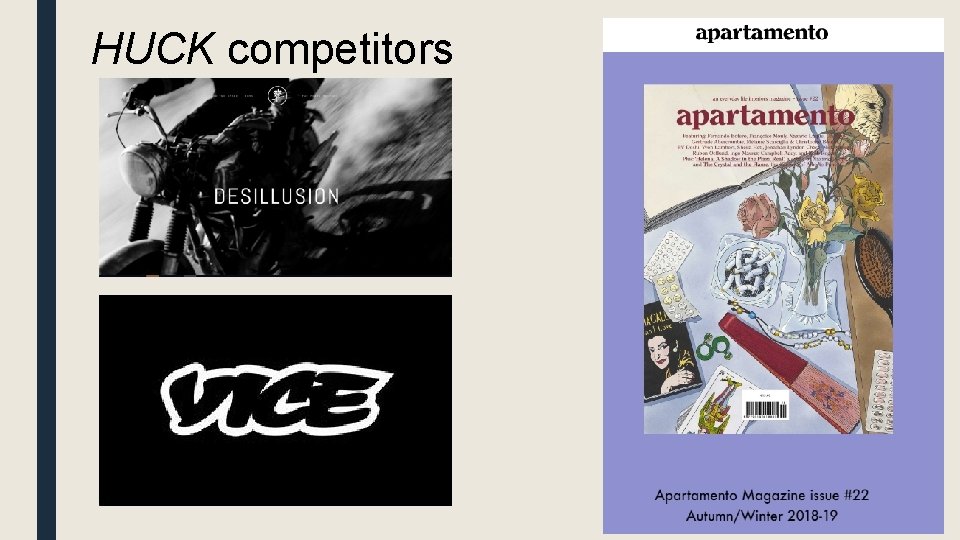
HUCK competitors