
The Macpherson Constitution 1951 Named after Sir John

- Slides: 6
The Macpherson Constitution, 1951 Named after Sir John Macpherson, this new constitution sought to rectify some of the anomalies discovered in the Richards Constitution. Unlike Governor Richards who was accused of imposing a constitution, his successor, John Macpherson actually decided to involve Nigerians, and therefore sought their views in the processes that led to the contents of the 1951 constitution.
• Questions were raised to be addressed by Nigerians at all levels so that their views and sentiments would be adequately captured in the new document. Other people also submitted written memoranda which were considered as well. Nigerians were asked to determine whether they preferred a unitary or a federal system of government, and this question was widely debated in the Northern, Western, and Eastern Provinces as well as in the Colony of Lagos.
After exhaustive debates, the common position of the three Provinces and Lagos was in favour of a federal arrangement for Nigeria. They recommended that there should be a central legislature for the whole country and regional legislatures to make laws for the respective regions. In short, Governor Macpherson can be credited with starting the process of making the views of Nigerians count and instituting popular involvement in constitution making in the history of Nigeria.
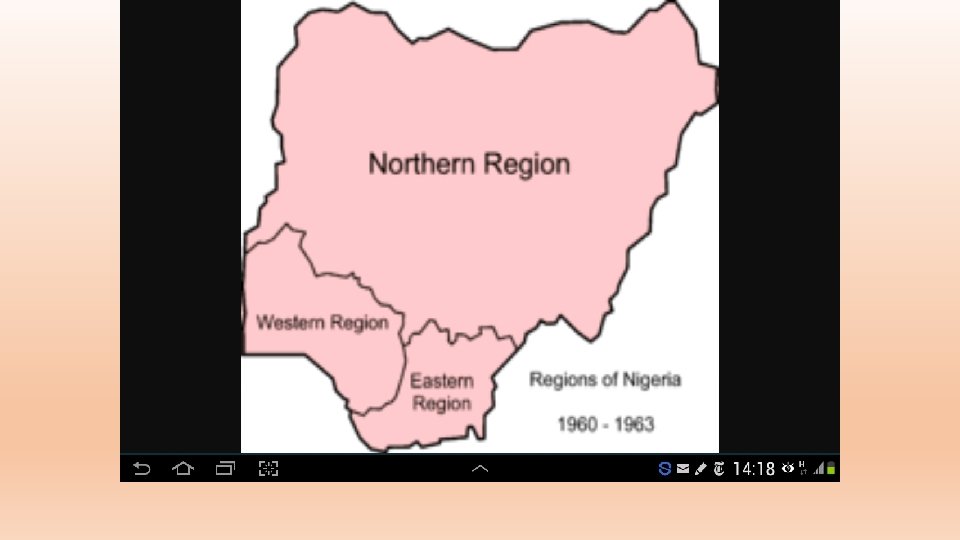
The main features of the Macpherson constitution include: - adopting a federal system for Nigeria - Converting the Provinces to Regions, hence the creation of the Northern Region, Western Region and Eastern Region, with Lagos retaining its status as a separate municipality. - Devolution of real powers to the regions for the first time
- Creating a central legislature known as the House of Representatives and a House of Assembly for each Region. The Regional Houses of Assembly had power to legislate on matters concerning the regions as were listed in the constitution. - Creation of a central executive council known as the Council of Ministers and an Executive Council for each Region.