
The Lymphatic Immune System Biology Unit 8 Powerpoint
+ The Lymphatic / Immune System Biology Unit 8 Powerpoint #7
+ Lymphatic System: Purpose: n. Transports a watery fluid called lymph. n. This fluid distributes immune cells throughout the body. n. It drains fluid from cells and tissues
+ Lymphatic System: Functions: n. Collect and return fluids, including blood plasma, to the blood, maintaining fluid homeostasis. n. Defends the body against disease by producing lymphocytes. n. Absorbs lipids from the intestine, and transports them to the blood.
+ Why do we need the Lymphatic System? n. Every 24 hours the circulatory system slowly leaks 3 liters of blood. n Average adult has ~100, 000 miles of blood vessels if you were to stretch them out in a line! n The earth’s Circumference is 25, 000 miles long!
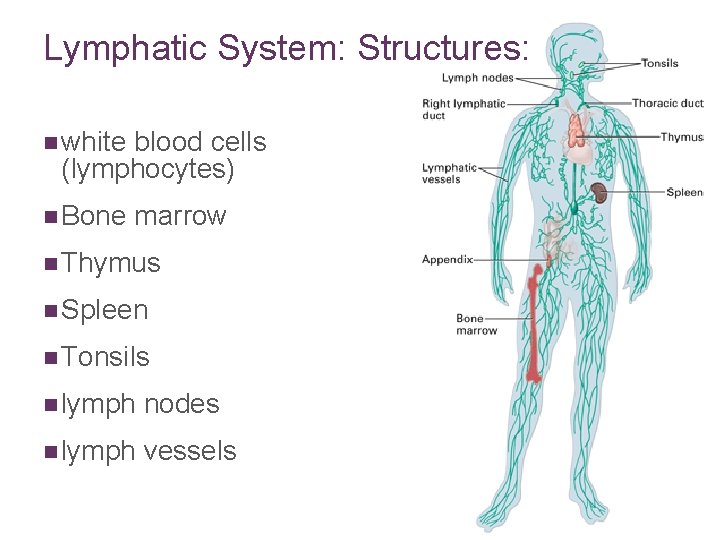
Lymphatic System: Structures: n white blood cells (lymphocytes) n Bone marrow n Thymus n Spleen n Tonsils n lymph nodes n lymph vessels
+ Lymph / Lymph Vessels n. Lymph: fluid and protein that has been squeezed out of the blood (blood plasma). n. Vessels: A network of permeable capillaries and vessels that lymph drains into.
+ Lymph Vessels n. The lymph system is one-way, draining lymph from tissue, back to the blood. n. Lymph movement depends on smooth muscle action, and skeletal system movement.
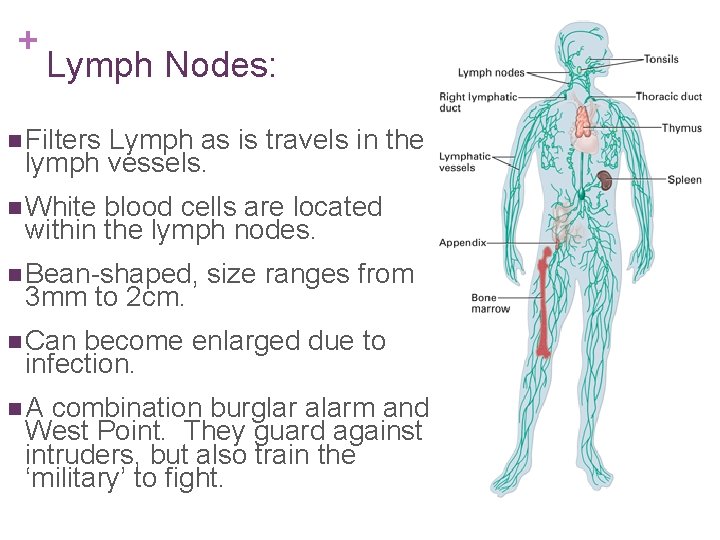
+ Lymph Nodes: n Filters Lymph as is travels in the lymph vessels. n White blood cells are located within the lymph nodes. n Bean-shaped, 3 mm to 2 cm. size ranges from n Can become enlarged due to infection. n. A combination burglar alarm and West Point. They guard against intruders, but also train the ‘military’ to fight.
+ White Blood Cells n. Bone marrow produces lymphocytes n. Normally in blood, but can be found at any location. n. Re-enter vessels. n. Fight blood circulation through lymph foreign invaders (microorganisms) n. Some last 2 -5 days, others last for years.
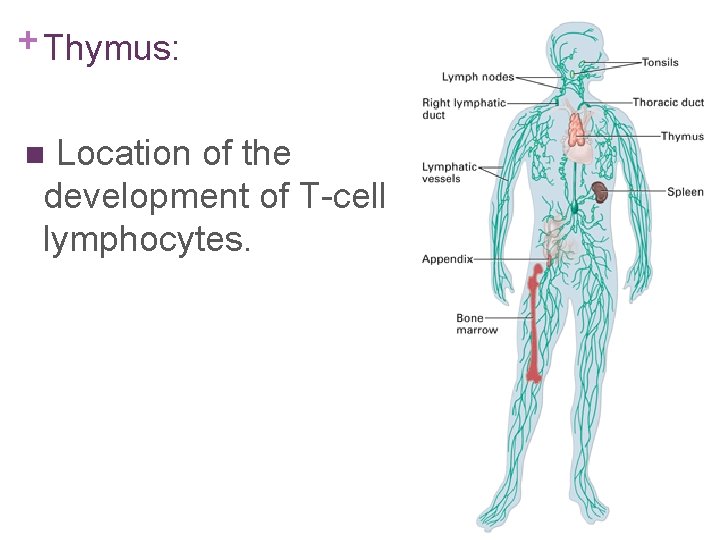
+ Thymus: Location of the development of T-cell lymphocytes. n
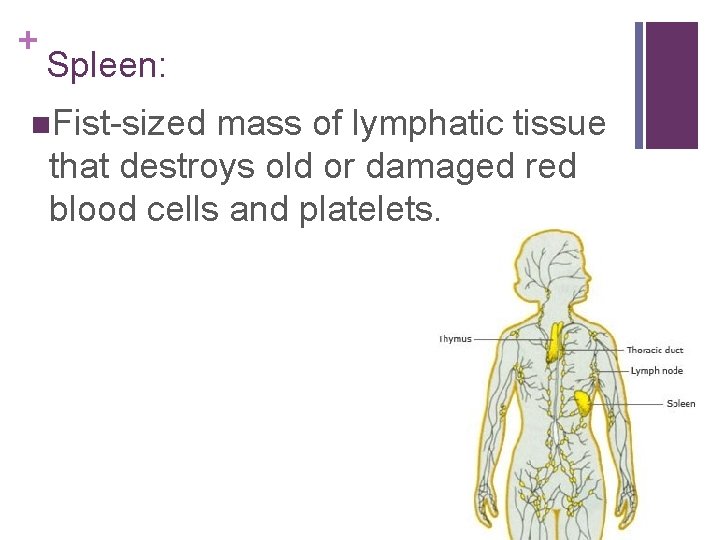
+ Spleen: n. Fist-sized mass of lymphatic tissue that destroys old or damaged red blood cells and platelets.
+ Immune System & Disease • Disease- any change that disrupts normal body functions (other than injury) • Causes- n Bacteria n viruses n fungi n environmental n genetically factors (smoke, lead, pesticides) inherited (hemophilia, Down's Syndrome)
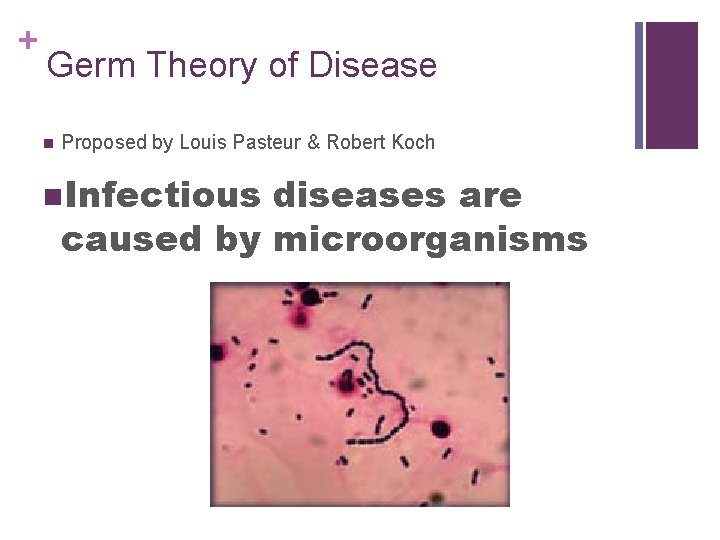
+ Germ Theory of Disease n Proposed by Louis Pasteur & Robert Koch n. Infectious diseases are caused by microorganisms
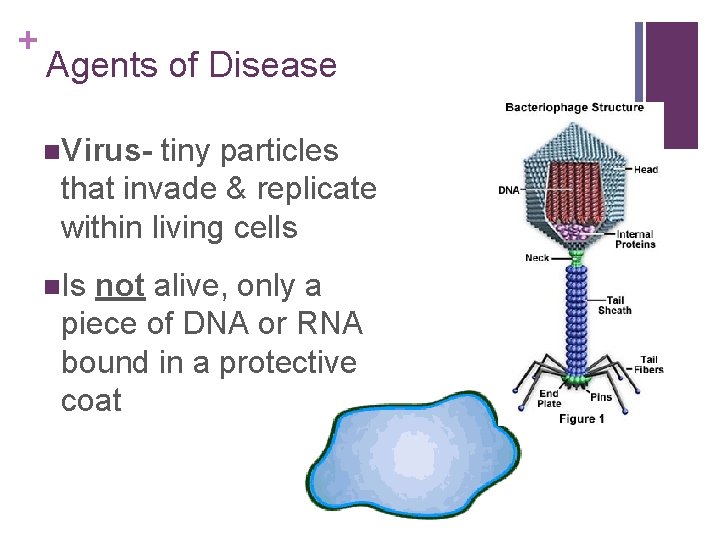
+ Agents of Disease n. Virus- tiny particles that invade & replicate within living cells n. Is not alive, only a piece of DNA or RNA bound in a protective coat
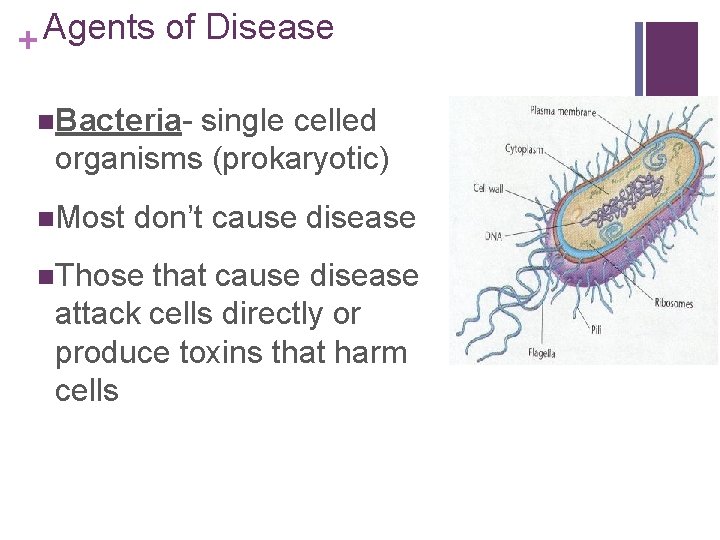
Agents of Disease + n. Bacteria- single celled organisms (prokaryotic) n. Most don’t cause disease n. Those that cause disease attack cells directly or produce toxins that harm cells
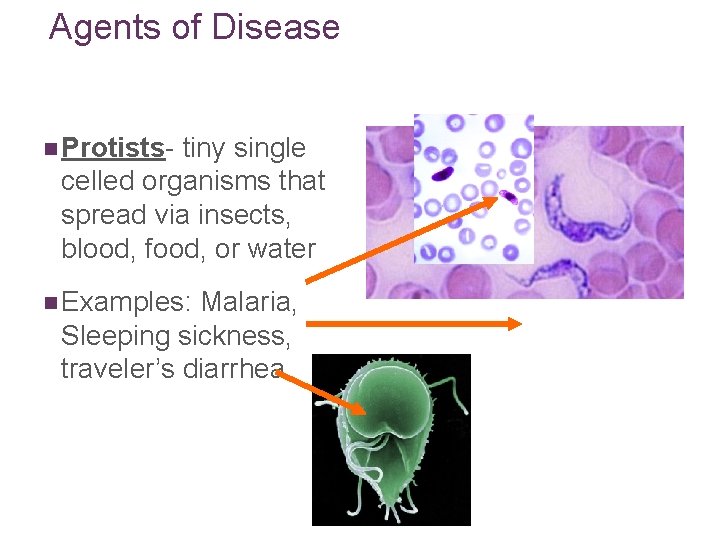
Agents of Disease n Protists- tiny single celled organisms that spread via insects, blood, food, or water n Examples: Malaria, Sleeping sickness, traveler’s diarrhea
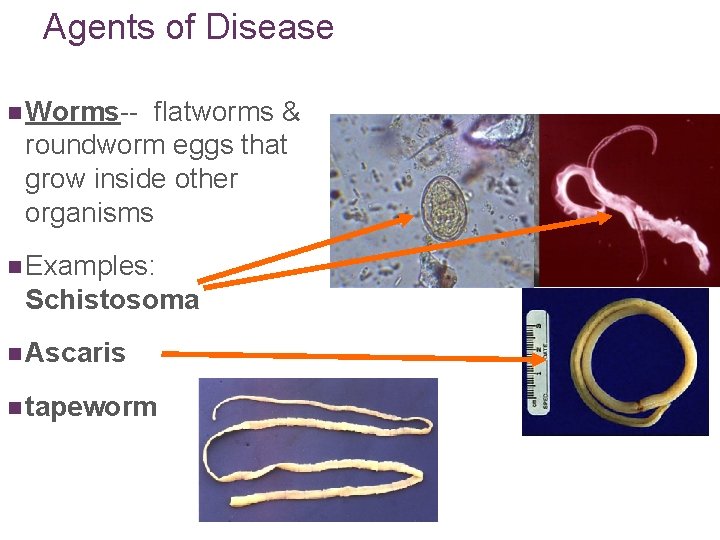
Agents of Disease n Worms-- flatworms & roundworm eggs that grow inside other organisms n Examples: Schistosoma n Ascaris n tapeworm
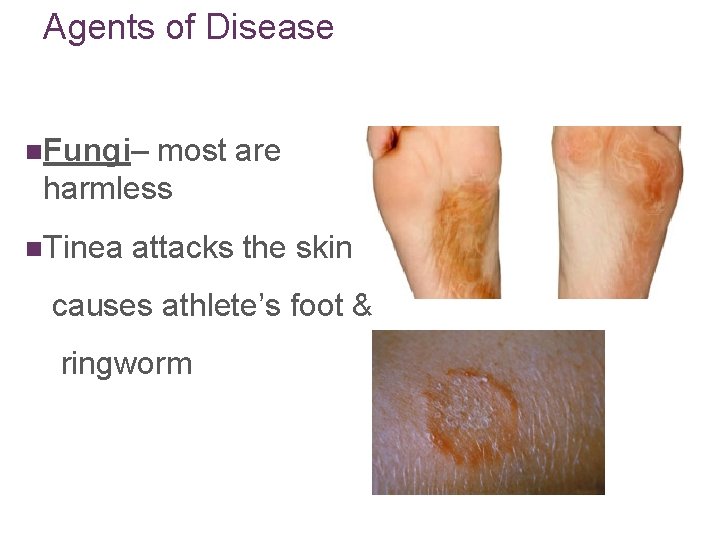
Agents of Disease n. Fungi– most are harmless n. Tinea attacks the skin causes athlete’s foot & ringworm
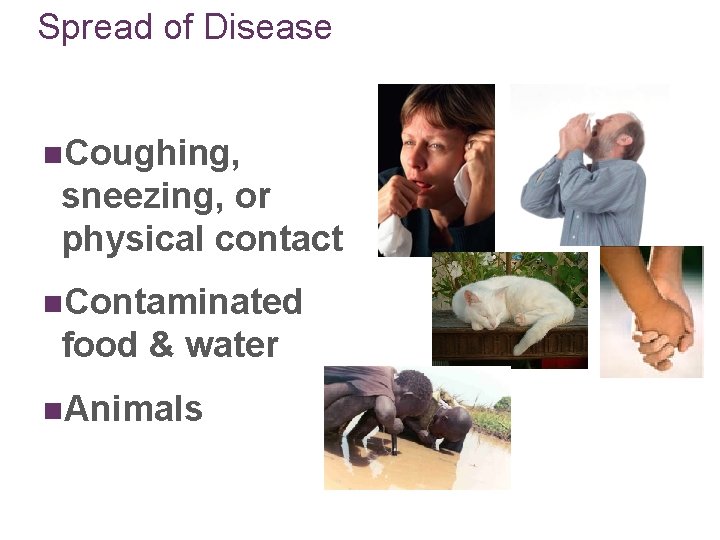
Spread of Disease n. Coughing, sneezing, or physical contact n. Contaminated food & water n. Animals
+ Fighting Infectious Disease 1. Antibiotics– compounds that kill bacteria without harming host cells n Many are produced naturally by organisms (like mold creates penicillin) discovered by Alexander Fleming 2. Antiviral drugs– inhibit their ability to invade cells 3. Rest & fluids so your own immune system can work well!
+ The Immune System n Immunity- fighting off disease before it actually makes you ill n 2 categories: 1. Specific- targeted for 1 disease 2. Nonspecific- general line of defense against anything
Defense + A. First line of defense 1. 2. 3. 4. Skin a. Layers of dead cells are hard to penetrate b. Oil and sweat acidic environment kills many bacteria Mucus: traps dirt and pathogens Stomach acid: destroys pathogens Secretions (tears, sweat): lysozyme breaks down cell walls of bacteria
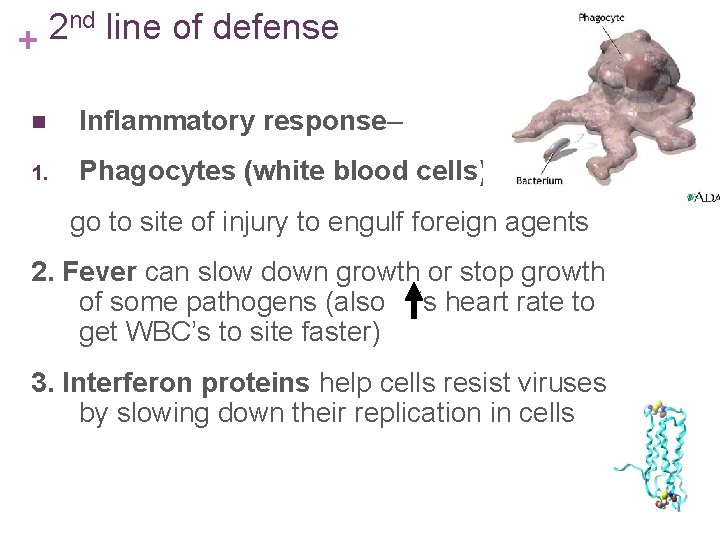
nd line of defense 2 + n Inflammatory response– 1. Phagocytes (white blood cells) go to site of injury to engulf foreign agents 2. Fever can slow down growth or stop growth of some pathogens (also ‘s heart rate to get WBC’s to site faster) 3. Interferon proteins help cells resist viruses by slowing down their replication in cells
+ II. Specific Defenses Humoral Immunity 1. 2. 3. 4. Antigen: molecule on the surface of foreign cells that causes an immune response Antibody: protein that binds to antigens to mark pathogens for destruction Macrophage: large white blood cell that engulfs foreign cells Phagocyte: white blood cell that engulfs foreign cells
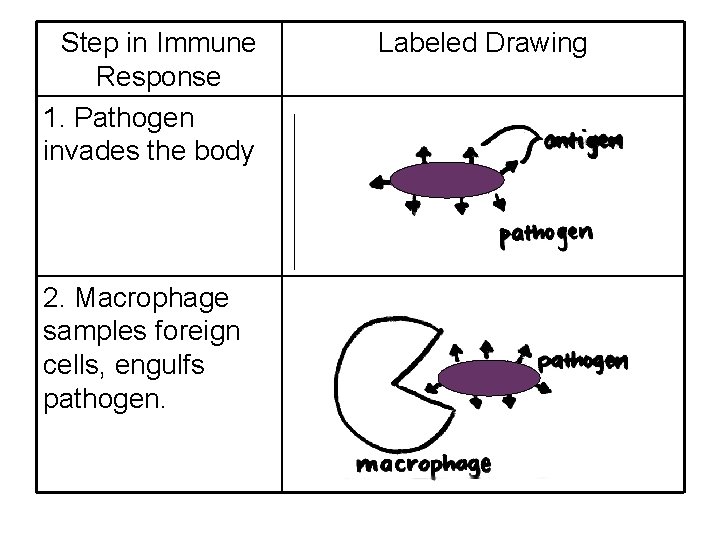
Step in Immune Response 1. Pathogen invades the body 2. Macrophage samples foreign cells, engulfs pathogen. Labeled Drawing
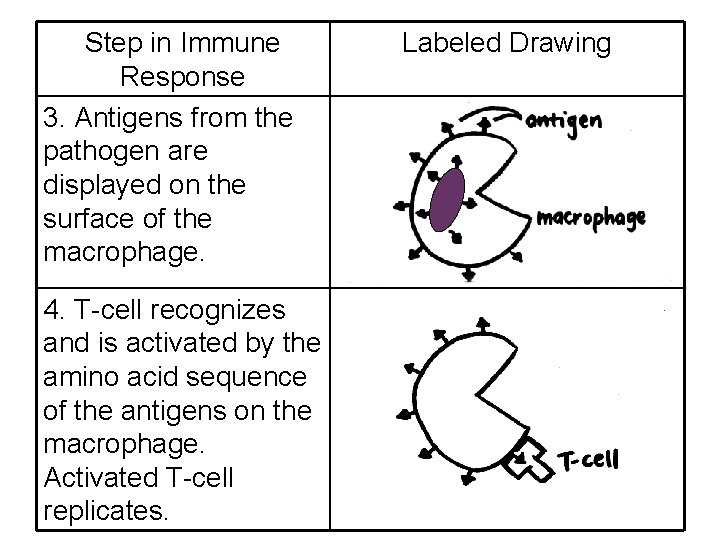
Step in Immune Response 3. Antigens from the pathogen are displayed on the surface of the macrophage. 4. T-cell recognizes and is activated by the amino acid sequence of the antigens on the macrophage. Activated T-cell replicates. Labeled Drawing
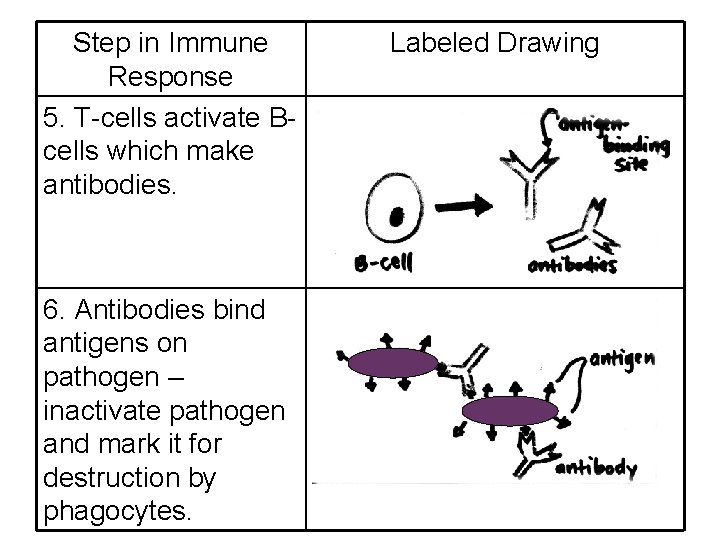
Step in Immune Response 5. T-cells activate Bcells which make antibodies. 6. Antibodies bind antigens on pathogen – inactivate pathogen and mark it for destruction by phagocytes. Labeled Drawing
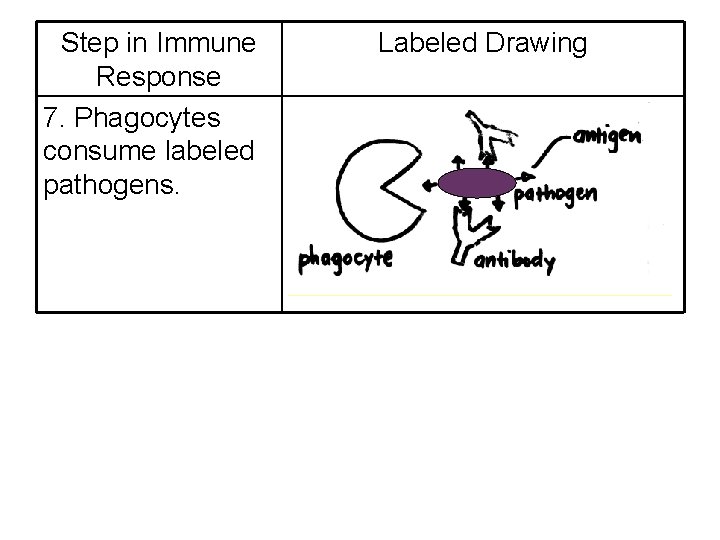
Step in Immune Response 7. Phagocytes consume labeled pathogens. Labeled Drawing
+ II. Specific Defenses Permanent Immunity: once the body has been exposed to a specific pathogen, memory B and T cells remain capable of producing antibodies to that pathogen
+ II. Specific Defenses C. Vaccination: injection of a weakened form of a pathogen to produce immunity 1. active immunity: produced by vaccine; body is capable of producing antibodies to a pathogen 2. passive immunity: antibodies produced by another organism are injected; recipient is immune as long as antibodies remain in circulation 3. maternal immunity: antibodies are passed from mother to fetus or infant; similar to passive immunity
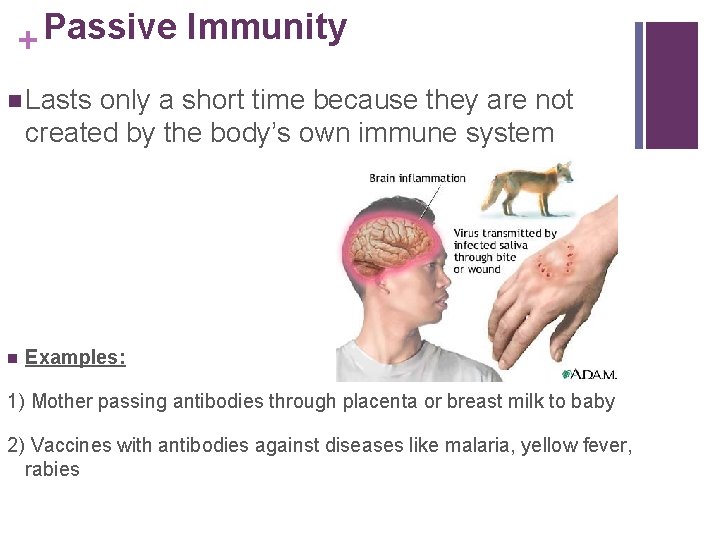
Passive Immunity + n Lasts only a short time because they are not created by the body’s own immune system n Examples: 1) Mother passing antibodies through placenta or breast milk to baby 2) Vaccines with antibodies against diseases like malaria, yellow fever, rabies
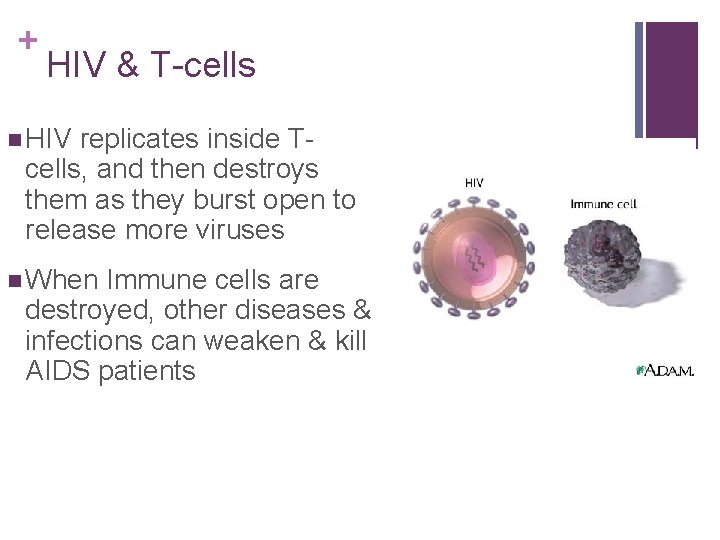
+ HIV & T-cells n HIV replicates inside Tcells, and then destroys them as they burst open to release more viruses n When Immune cells are destroyed, other diseases & infections can weaken & kill AIDS patients
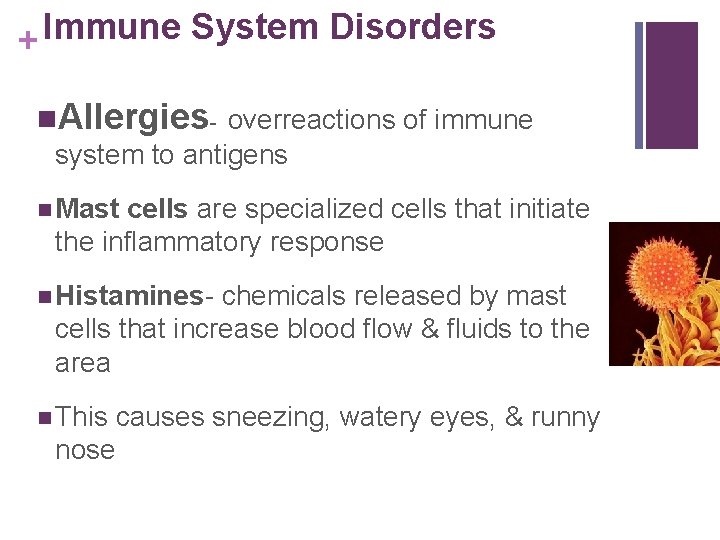
Immune System Disorders + n. Allergies- overreactions of immune system to antigens n Mast cells are specialized cells that initiate the inflammatory response n Histamines- chemicals released by mast cells that increase blood flow & fluids to the area n This causes sneezing, watery eyes, & runny nose
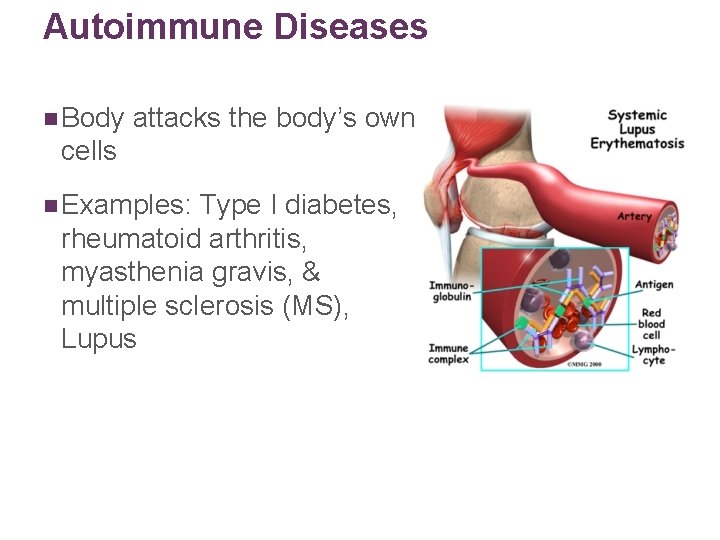
Autoimmune Diseases n Body attacks the body’s own cells n Examples: Type I diabetes, rheumatoid arthritis, myasthenia gravis, & multiple sclerosis (MS), Lupus
- Slides: 34