
The Lower Courts The Federal Court System consists
- Slides: 10
The Lower Courts • The Federal Court System consists of 2 parts – The Lower Courts – The Supreme Court
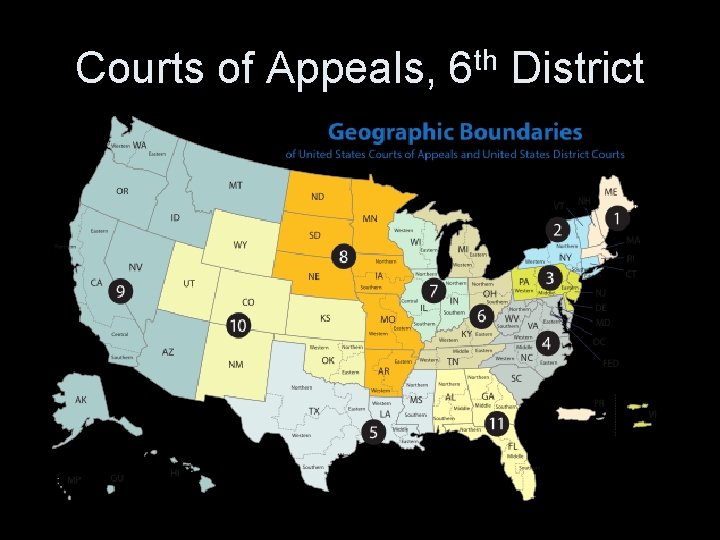
Structure of the Lower Courts • Local level – Usually a county level for larger cities • Summit County Common Pleas Court • District Court – Trial courts used for appeals from local level • Akron Federal District Court • Courts of Appeals – Cover a large judicial district called a circuit • Circuit = area that includes multiple district courts – We are in the 6 th district Courts of Appeals • No trial, just briefs given to panel of judges. – Briefs = written legal arguments given by both plaintiff and defendant. • Supreme Court of United States – Highest level of court in America
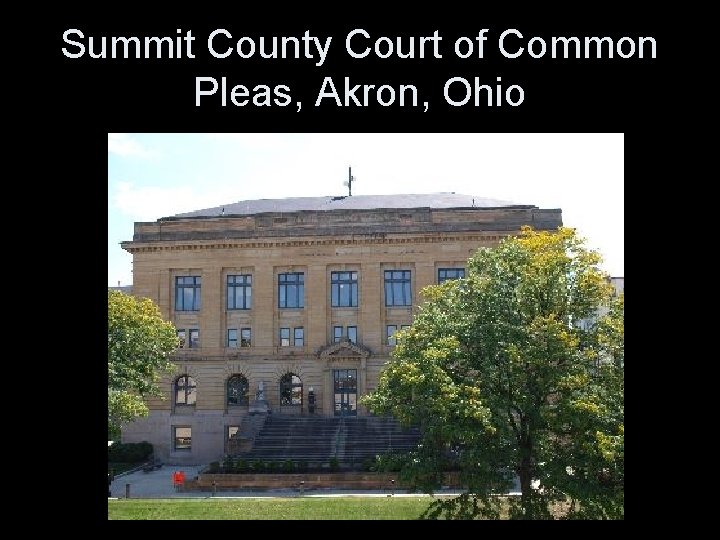
Summit County Court of Common Pleas, Akron, Ohio
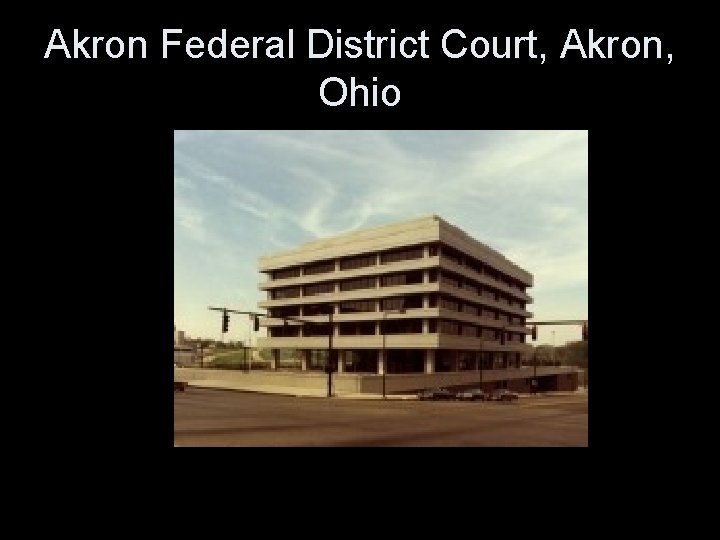
Akron Federal District Court, Akron, Ohio
Courts of Appeals, 6 th District
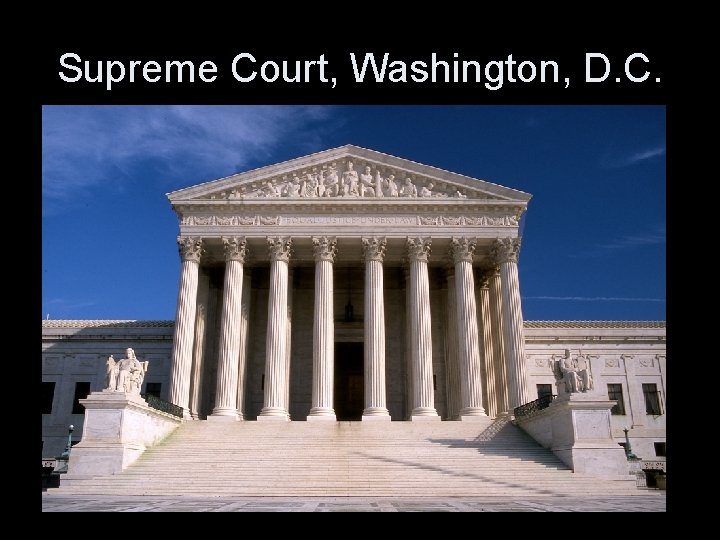
Supreme Court, Washington, D. C.
The Role of the Lower Courts 1. Resolving Disputes 2. Setting Precedents 3. Interpreting Laws
Resolving Disputes • Judges at lower courts hear cases dealing with disputes between private individuals – Important!! • ONLY PEOPLE WHO HAVE SUFFERED AN INJURY CAN BRING SUIT IN A COURT OF LAW. – Physical – Mental – Chattel
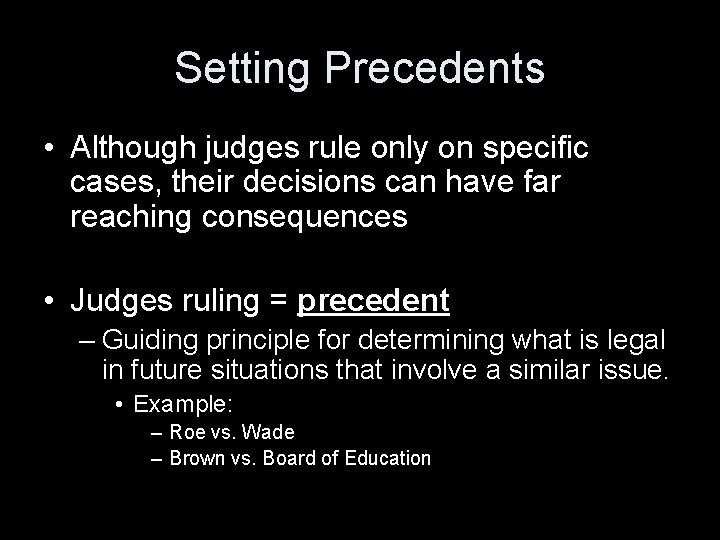
Setting Precedents • Although judges rule only on specific cases, their decisions can have far reaching consequences • Judges ruling = precedent – Guiding principle for determining what is legal in future situations that involve a similar issue. • Example: – Roe vs. Wade – Brown vs. Board of Education
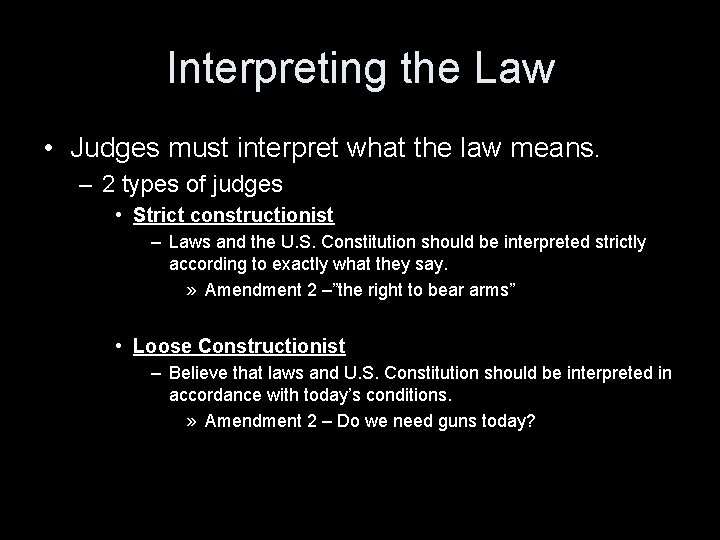
Interpreting the Law • Judges must interpret what the law means. – 2 types of judges • Strict constructionist – Laws and the U. S. Constitution should be interpreted strictly according to exactly what they say. » Amendment 2 –”the right to bear arms” • Loose Constructionist – Believe that laws and U. S. Constitution should be interpreted in accordance with today’s conditions. » Amendment 2 – Do we need guns today?