
The Logic of Statistical Analysis Population A Population
- Slides: 16
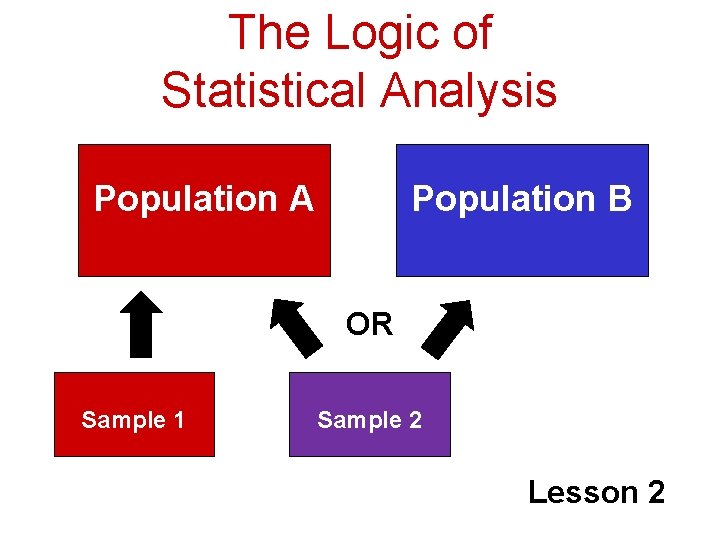
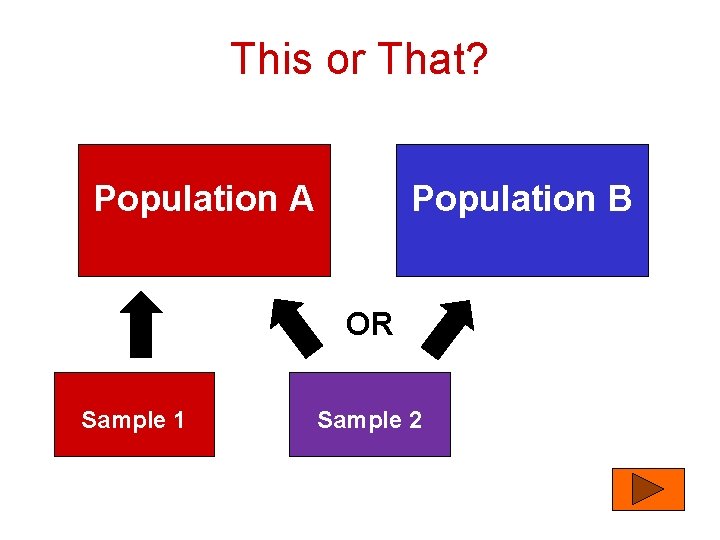
The Logic of Statistical Analysis Population A Population B OR Sample 1 Sample 2 Lesson 2
Mysteries of Life We have questions l Why do people behave that way? l Is global warming occurring? l Will my cancer come back? n To get answers, we need… l Information Data l Explanation analysis & interpretation ~ n
Theories & Statistical Models Theories l Describe, explain, & predict realworld events/objects n Models l Replicas of real-world events/objects l Can test predictions ~ n
Models & Fit Model not exact replica l Smaller, simulated n Sample l Model of population l Introduces error n Fit l How well does model represent population? l Amount of error in model l Good fit more useful ~ n
Models in Psychology My research model l Domestic chicks l Effects of pre-/postnatal drug use l Addiction & its consequences n Who/What do most psychologists study? l Rats, pigeons, intro. psych. students n External validity l Good fit with real-world populations? ~ n
The General Linear Model n Relationship b/n predictor & outcome variables form straight line l Correlation, regression, analysis of variance l Other more complex models ~
Populations & Samples Population l The whole group of interest l parameter l population mean = m n Samples l A portion of population l statistic l sample mean = ~ n
Populations & Samples Research goals l Learn about population l Characteristics that widely apply l Impossible/impractical to directly study n Research methods l Study representative sample l Introduce sampling error l ~ n
Analyzing Data Descriptive Statistics l Quantitative descriptions of characteristics l Mean & standard error n Inferential Statistics l Statistical tests l Use sample descriptive statistics l Draw conclusions about population parameters ~ n
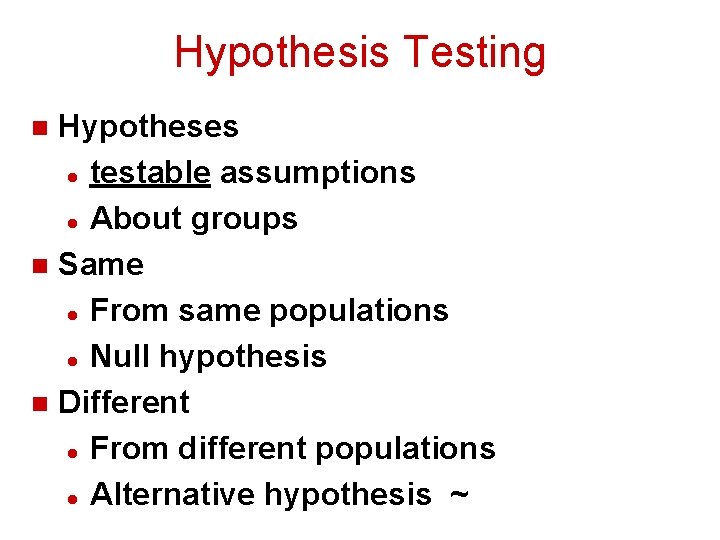
Hypothesis Testing Hypotheses l testable assumptions l About groups n Same l From same populations l Null hypothesis n Different l From different populations l Alternative hypothesis ~ n
This or That? Population A Population B OR Sample 1 Sample 2
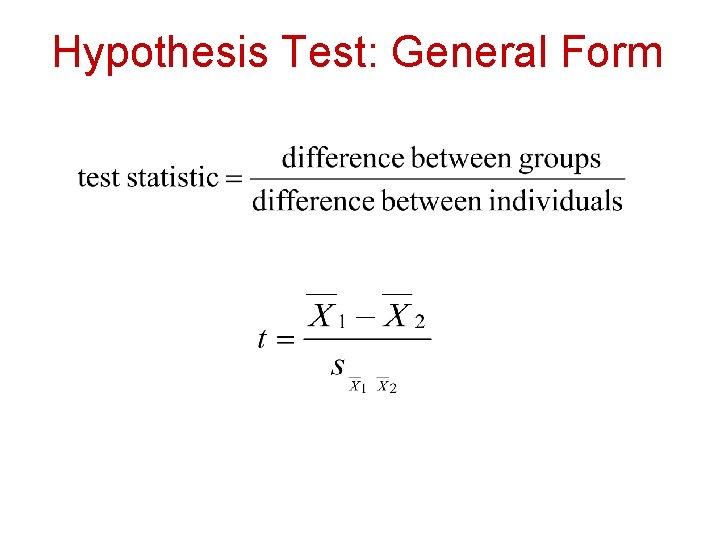
Hypothesis Test: General Form
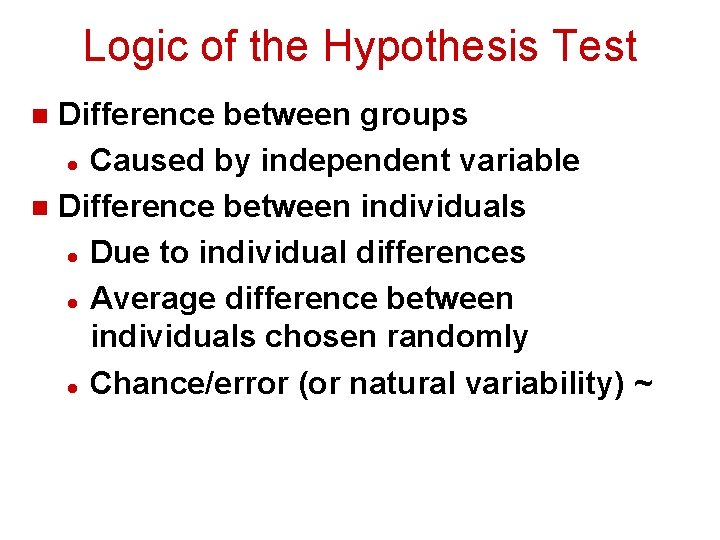
Logic of the Hypothesis Test Difference between groups l Caused by independent variable n Difference between individuals l Due to individual differences l Average difference between individuals chosen randomly l Chance/error (or natural variability) ~ n
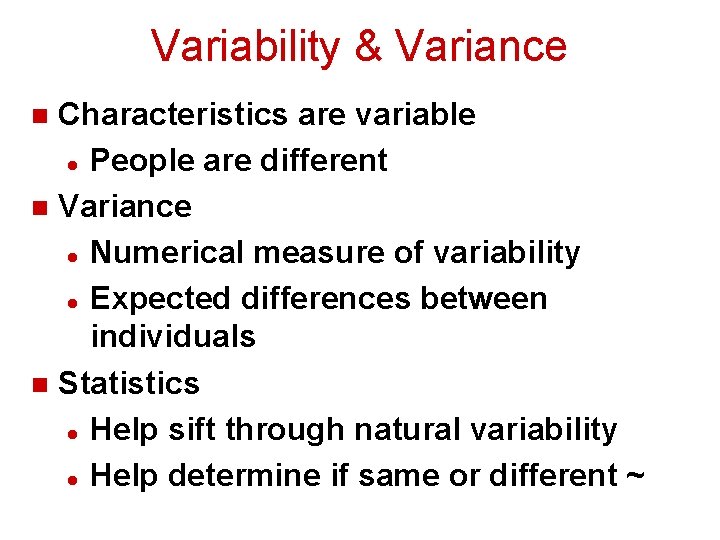
Variability & Variance Characteristics are variable l People are different n Variance l Numerical measure of variability l Expected differences between individuals n Statistics l Help sift through natural variability l Help determine if same or different ~ n
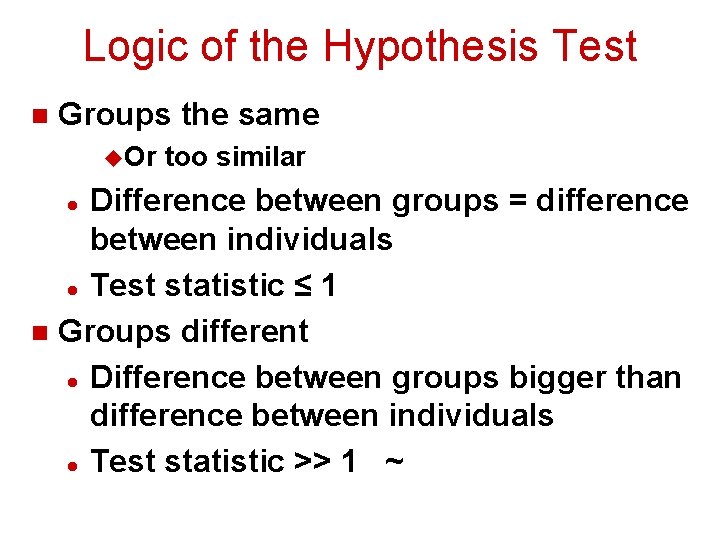
Logic of the Hypothesis Test n Groups the same u. Or too similar Difference between groups = difference between individuals l Test statistic ≤ 1 n Groups different l Difference between groups bigger than difference between individuals l Test statistic >> 1 ~ l
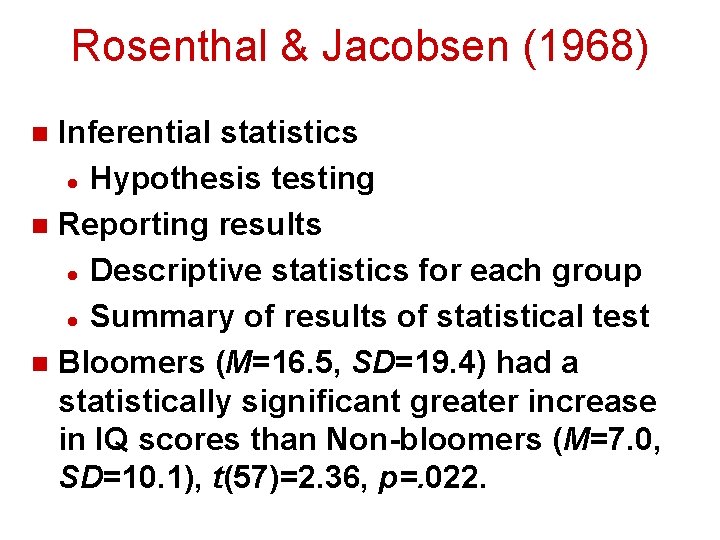
Rosenthal & Jacobsen (1968) Inferential statistics l Hypothesis testing n Reporting results l Descriptive statistics for each group l Summary of results of statistical test n Bloomers (M=16. 5, SD=19. 4) had a statistically significant greater increase in IQ scores than Non-bloomers (M=7. 0, SD=10. 1), t(57)=2. 36, p=. 022. n