
The Local Pivotal Method and its Application on

- Slides: 17
The Local Pivotal Method and its Application on Stat. Village Data Diana Sokurova University of Tartu National Institute for Health Development
What is the Survey Sampling? The aim of a probabilistic survey sampling is to find out sampling strategy and the estimator that leads to the best estimate of a population parameter under interest.
Well-known sampling methods • Simple Random Sampling • Stratified simple random sampling • Systematic stratified sampling
What is Pivotal Method? • Was introduced in 1998 by Deville, J. -C. & Tillé, Y. “Unequal probability sampling without replacement through a splitting method” • The special case of splitting method • Repetition • Simplification
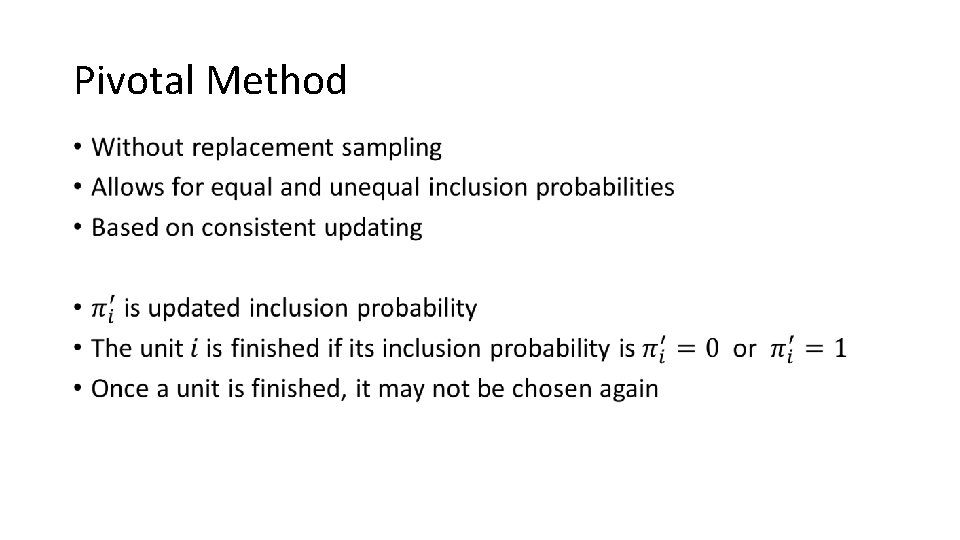
Pivotal Method
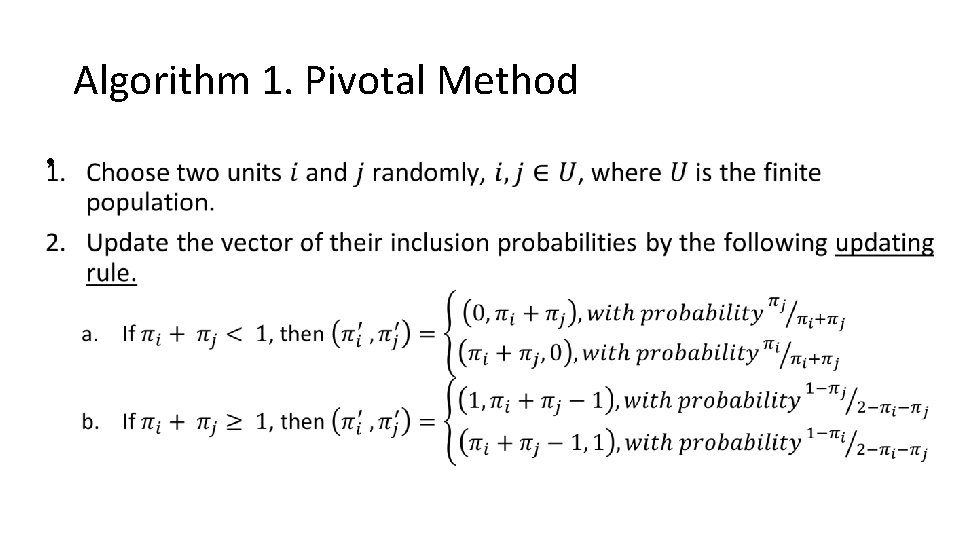
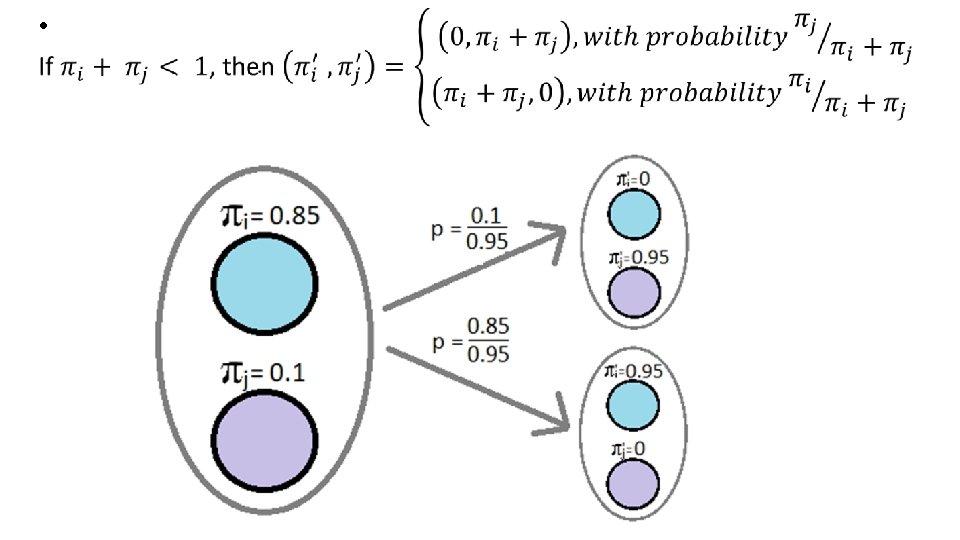
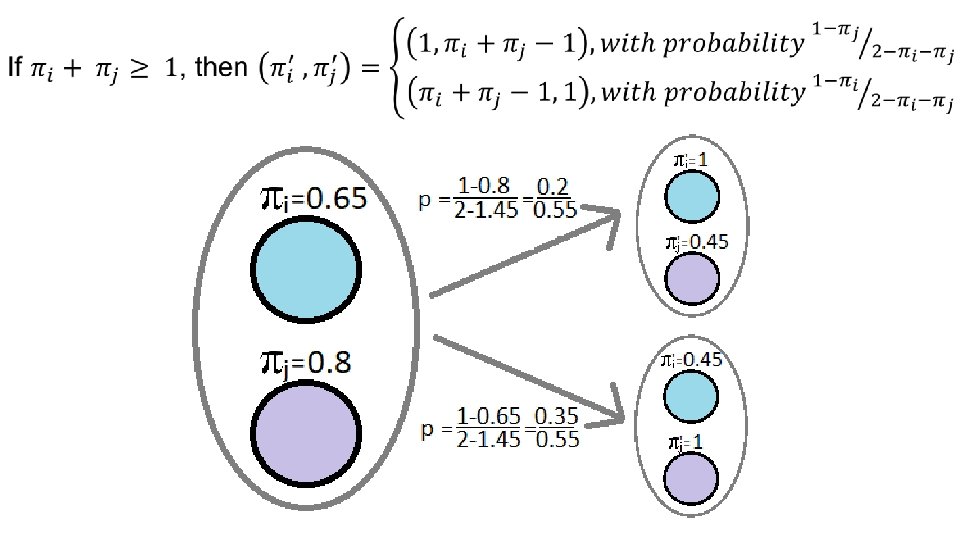
Algorithm 1. Pivotal Method •
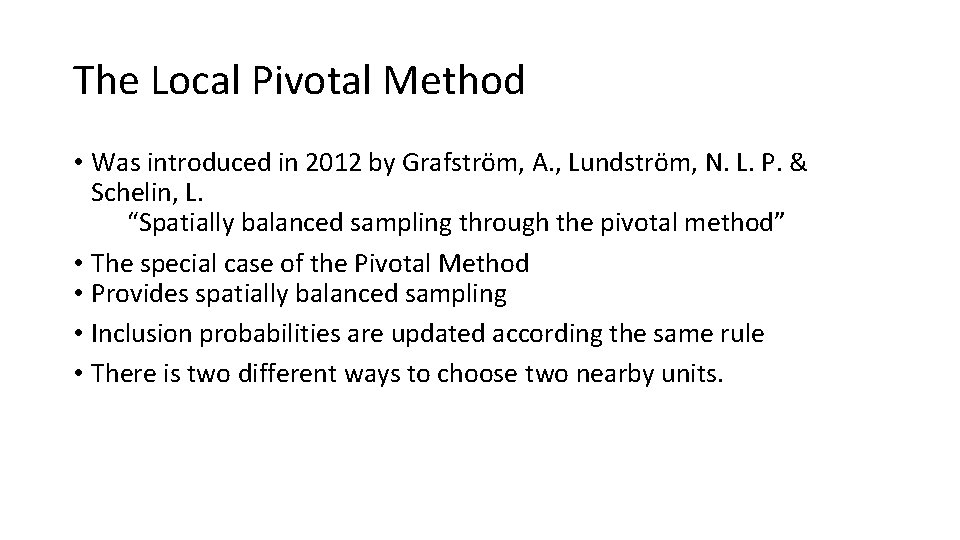
The Local Pivotal Method • Was introduced in 2012 by Grafström, A. , Lundström, N. L. P. & Schelin, L. “Spatially balanced sampling through the pivotal method” • The special case of the Pivotal Method • Provides spatially balanced sampling • Inclusion probabilities are updated according the same rule • There is two different ways to choose two nearby units.
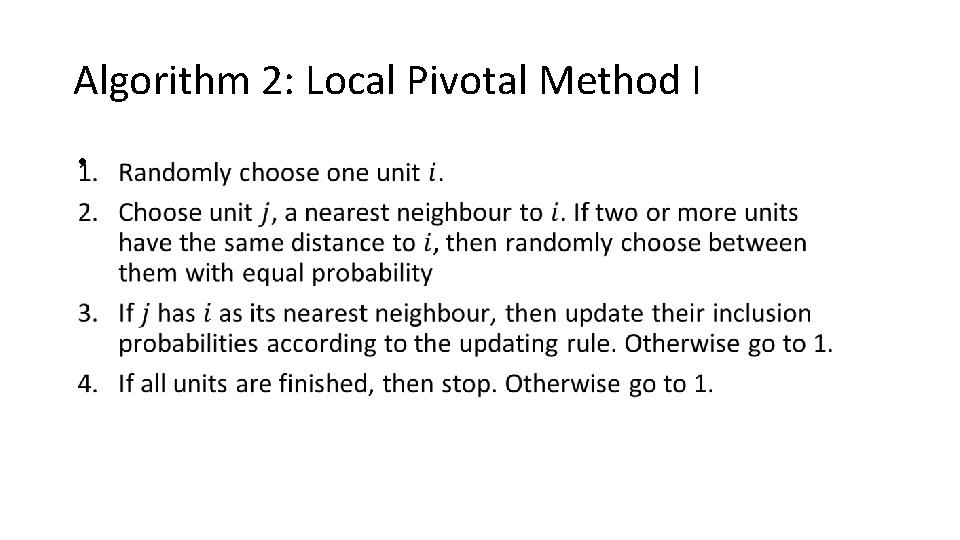
Algorithm 2: Local Pivotal Method I •
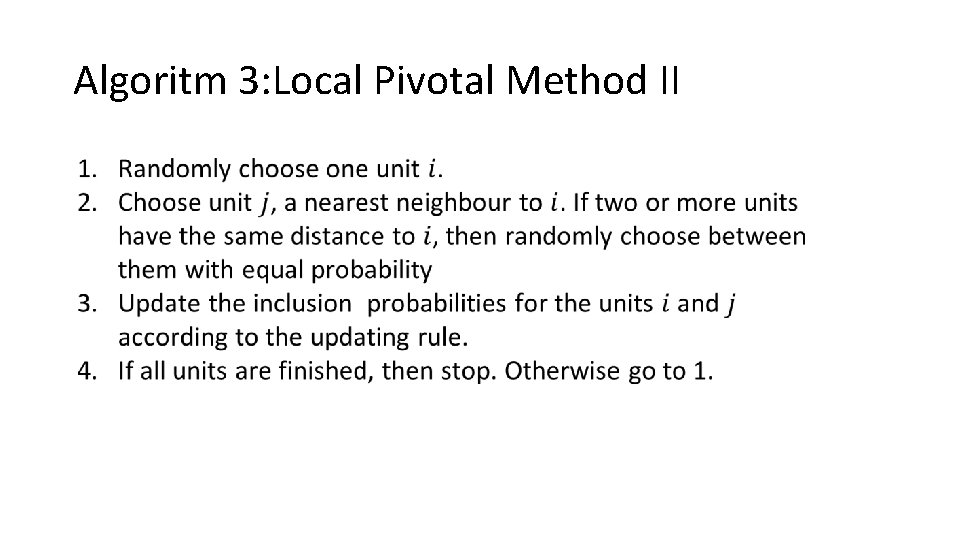
Algoritm 3: Local Pivotal Method II
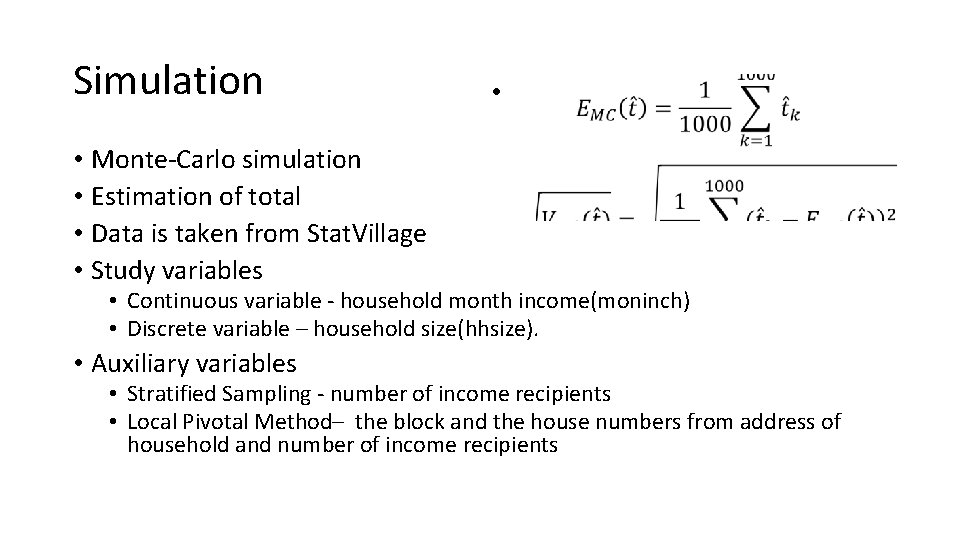
Simulation • • Monte-Carlo simulation • Estimation of total • Data is taken from Stat. Village • Study variables • Continuous variable - household month income(moninch) • Discrete variable – household size(hhsize). • Auxiliary variables • Stratified Sampling - number of income recipients • Local Pivotal Method– the block and the house numbers from address of household and number of income recipients
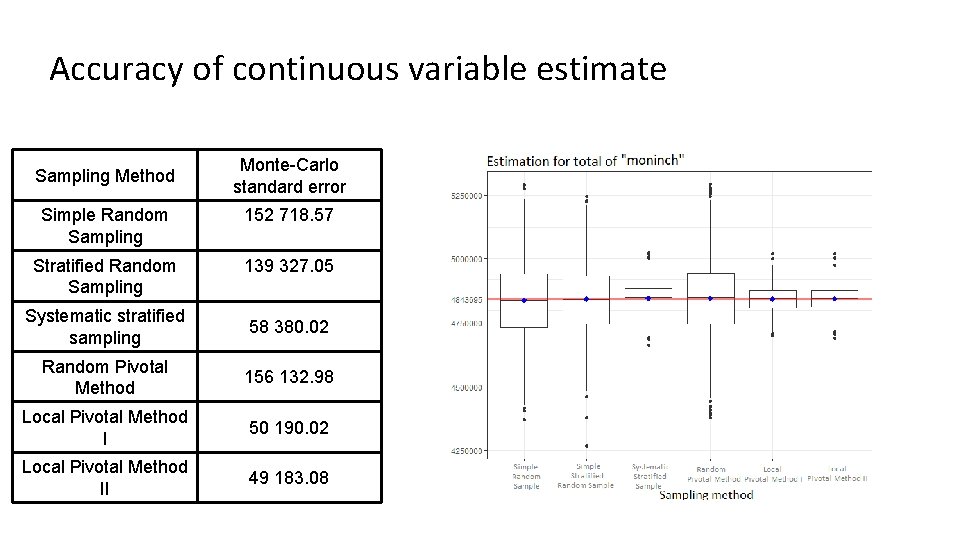
Accuracy of continuous variable estimate Sampling Method Monte-Carlo standard error Simple Random Sampling 152 718. 57 Stratified Random Sampling 139 327. 05 Systematic stratified sampling 58 380. 02 Random Pivotal Method 156 132. 98 Local Pivotal Method I 50 190. 02 Local Pivotal Method II 49 183. 08
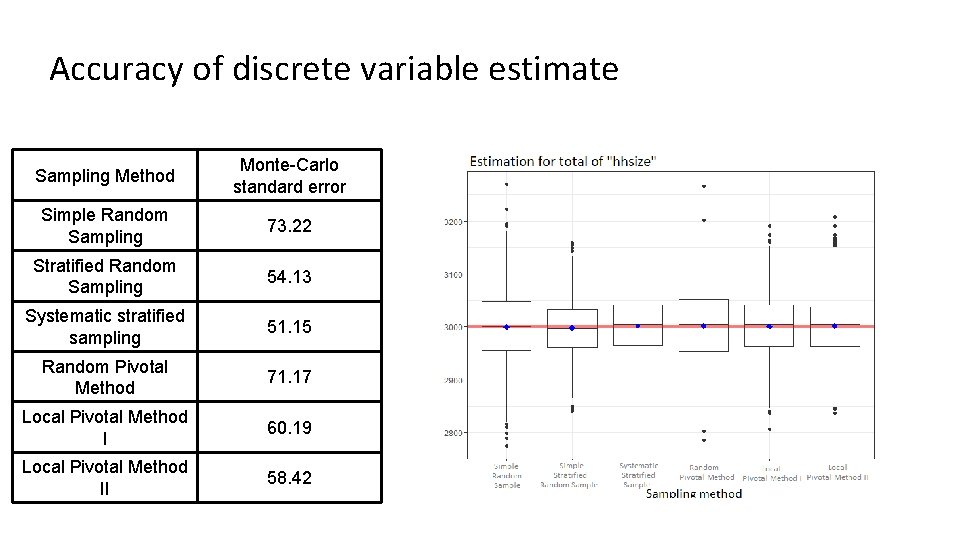
Accuracy of discrete variable estimate Sampling Method Monte-Carlo standard error Simple Random Sampling 73. 22 Stratified Random Sampling 54. 13 Systematic stratified sampling 51. 15 Random Pivotal Method 71. 17 Local Pivotal Method I 60. 19 Local Pivotal Method II 58. 42
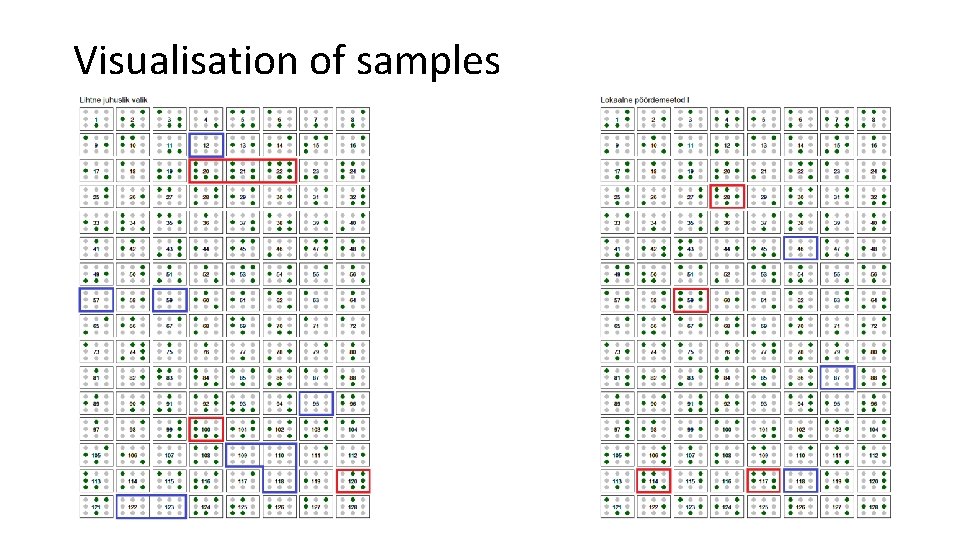
Visualisation of samples
Conclusion • In the case of a continuous variable, both local pivotal methods provide more accurate estimates, and in this case, it is recommended to use local pivotal method II because it is more accurate and faster in execution. • In the case of a discrete variable, each of the local pivotal methods did not provide any better estimates, and in this case, it is advisable to use a systematic stratified selection.
Thank you!