
THE LIVING WORLD ECOSYSTEMS Solar radiation The Sun

- Slides: 12
THE LIVING WORLD: ECOSYSTEMS
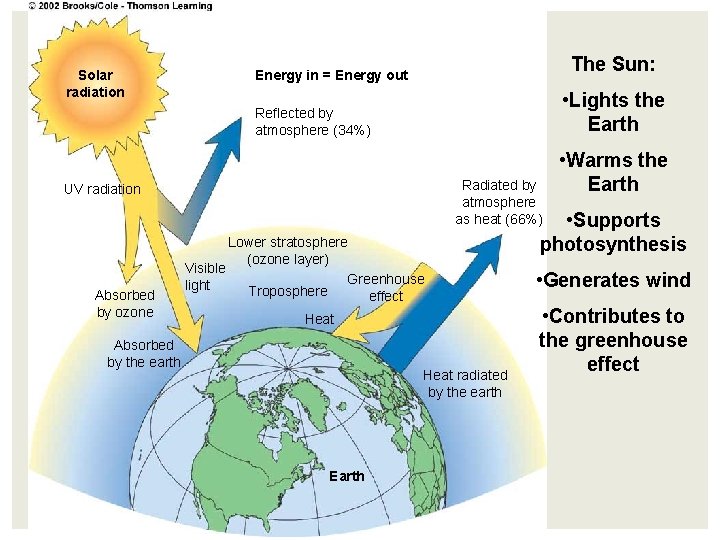
Solar radiation The Sun: Energy in = Energy out • Lights the Earth Reflected by atmosphere (34%) Radiated by atmosphere as heat (66%) UV radiation Absorbed by ozone Lower stratosphere (ozone layer) Visible Greenhouse light Troposphere effect Heat Absorbed by the earth Heat radiated by the earth Earth • Warms the Earth • Supports photosynthesis • Generates wind • Contributes to the greenhouse effect
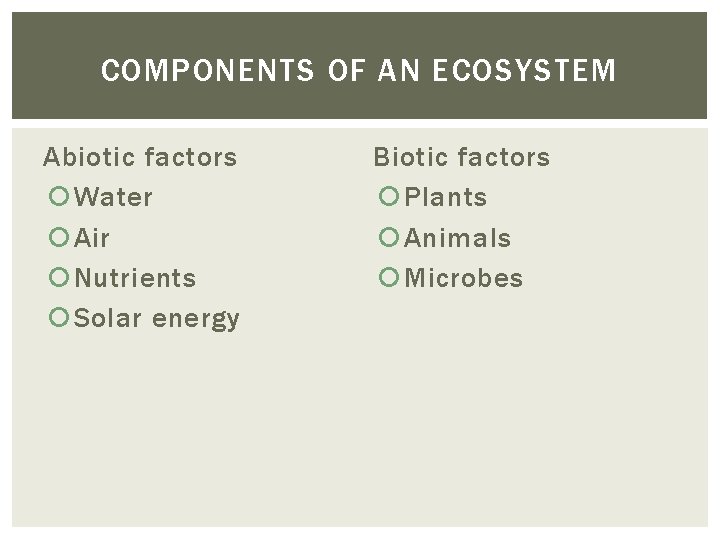
COMPONENTS OF AN ECOSYSTEM Abiotic factors Water Air Nutrients Solar energy Biotic factors Plants Animals Microbes
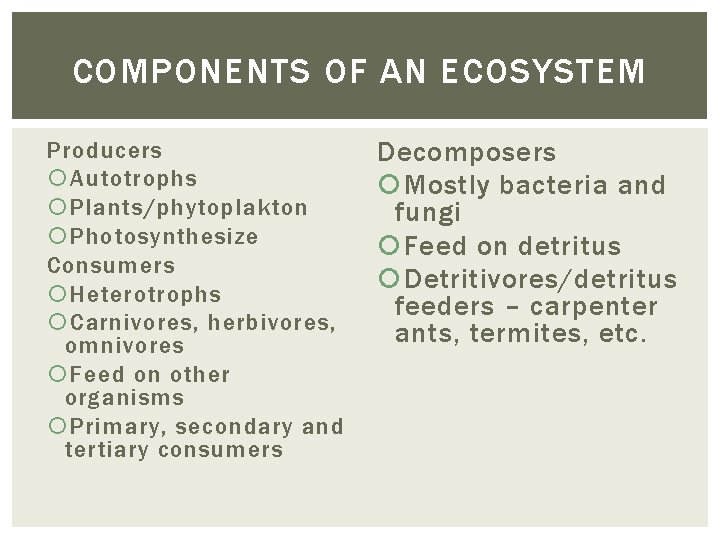
COMPONENTS OF AN ECOSYSTEM Producers Autotrophs Plants/phytoplakton Photosynthesize Consumers Heterotrophs Carnivores, herbivores, omnivores Feed on other organisms Primary, secondary and tertiary consumers Decomposers Mostly bacteria and fungi Feed on detritus Detritivores/detritus feeders – carpenter ants, termites, etc.
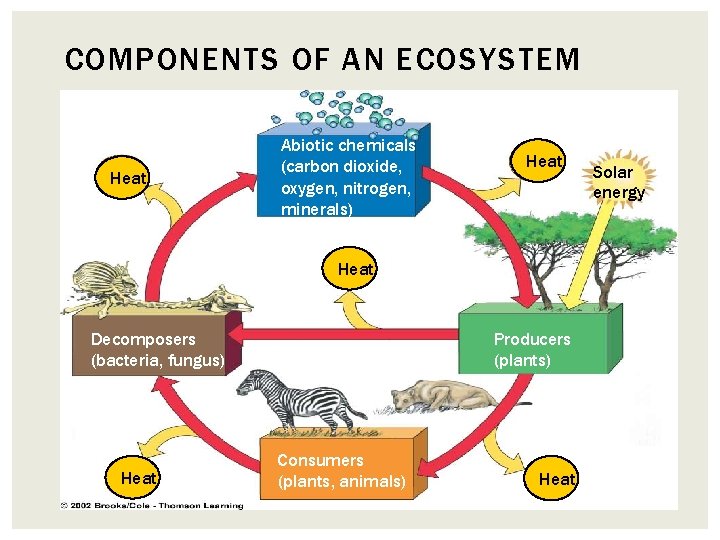
COMPONENTS OF AN ECOSYSTEM Heat Abiotic chemicals (carbon dioxide, oxygen, nitrogen, minerals) Heat Decomposers (bacteria, fungus) Heat Producers (plants) Consumers (plants, animals) Heat Solar energy
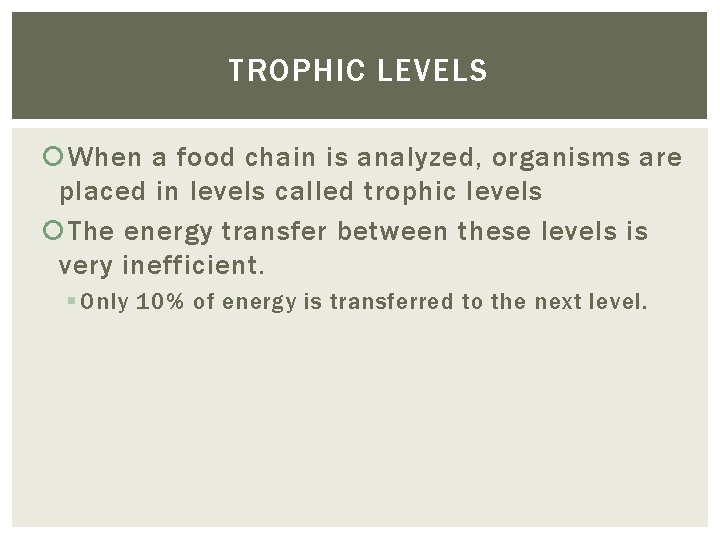
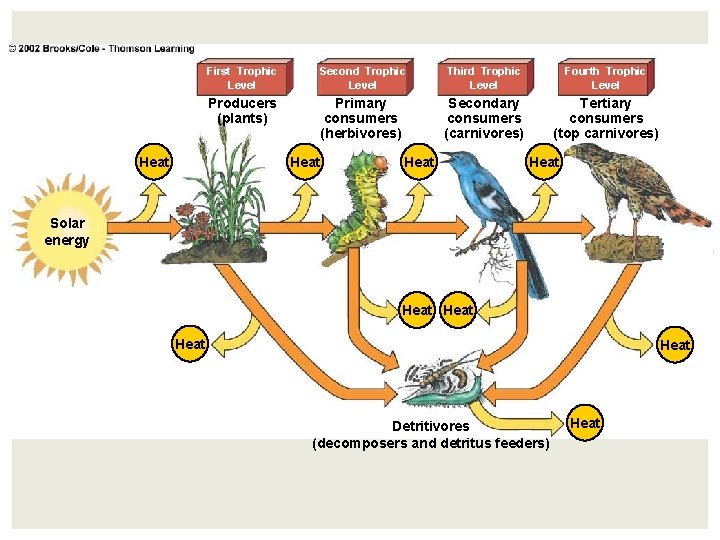
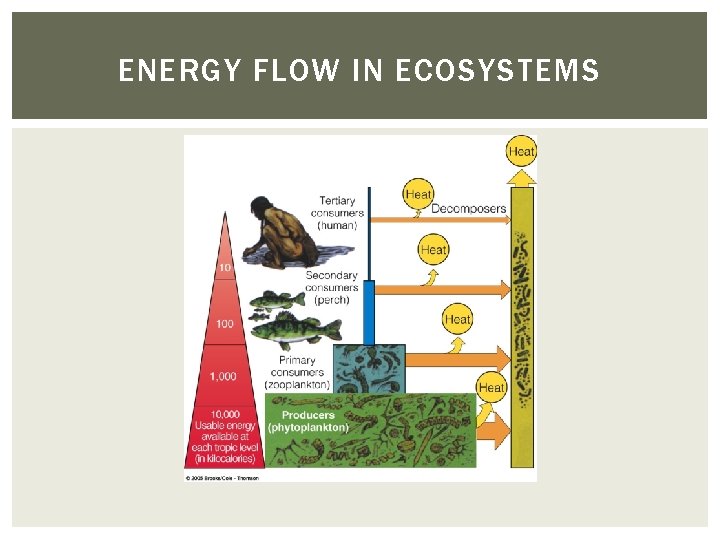
TROPHIC LEVELS When a food chain is analyzed, organisms are placed in levels called trophic levels The energy transfer between these levels is very inefficient. § Only 10% of energy is transferred to the next level.
Heat First Trophic Level Second Trophic Level Third Trophic Level Fourth Trophic Level Producers (plants) Primary consumers (herbivores) Secondary consumers (carnivores) Tertiary consumers (top carnivores) Heat Solar energy Heat Detritivores (decomposers and detritus feeders) Heat
ENERGY FLOW IN ECOSYSTEMS
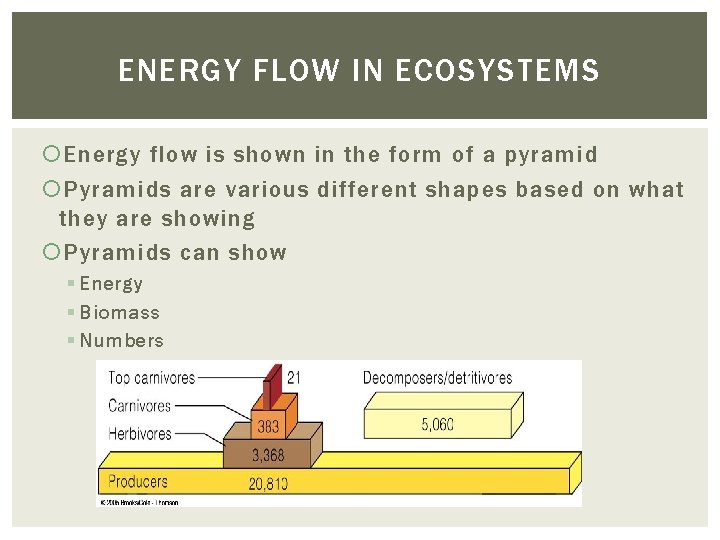
ENERGY FLOW IN ECOSYSTEMS Energy flow is shown in the form of a pyramid Pyramids are various different shapes based on what they are showing Pyramids can show § Energy § Biomass § Numbers
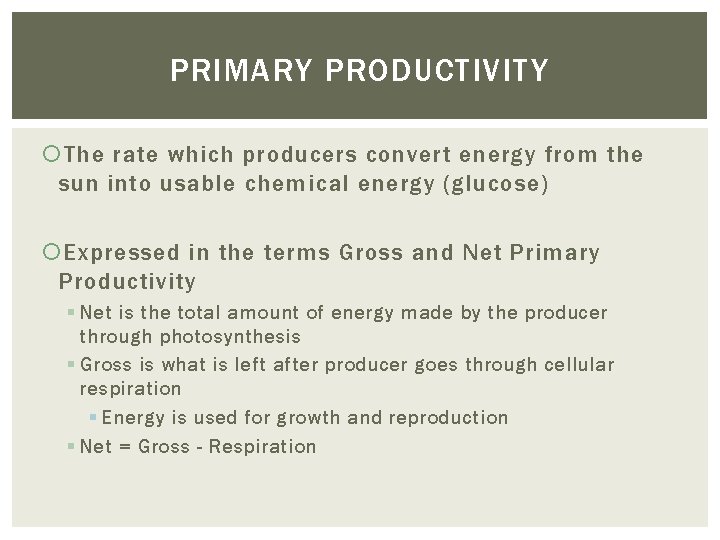
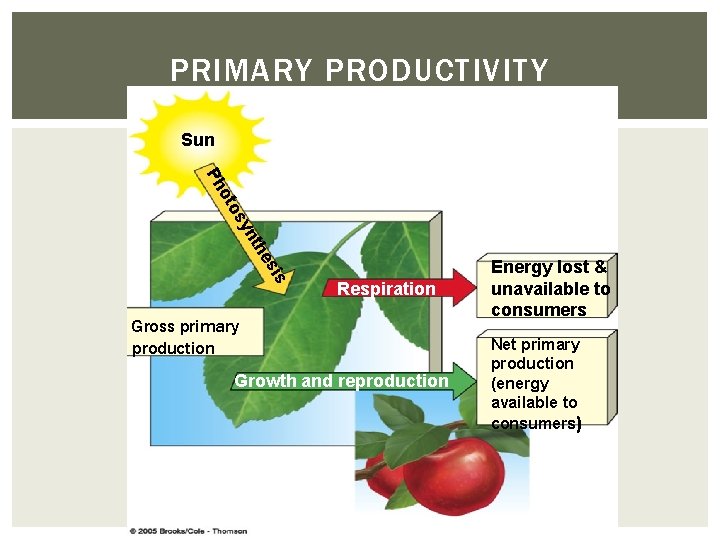
PRIMARY PRODUCTIVITY The rate which producers convert energy from the sun into usable chemical energy (glucose) Expressed in the terms Gross and Net Primary Productivity § Net is the total amount of energy made by the producer through photosynthesis § Gross is what is left after producer goes through cellular respiration § Energy is used for growth and reproduction § Net = Gross - Respiration
PRIMARY PRODUCTIVITY Sun t yn os ot Ph is s he Respiration Gross primary production Growth and reproduction Energy lost & unavailable to consumers Net primary production (energy available to consumers)
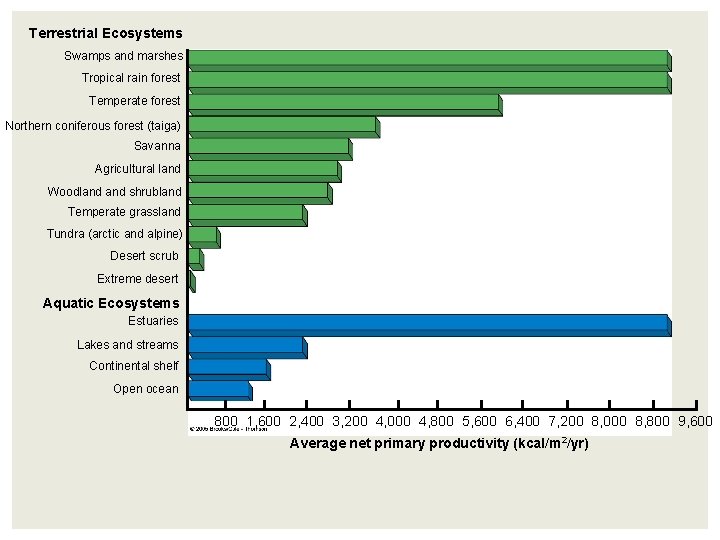
Terrestrial Ecosystems Swamps and marshes Tropical rain forest Temperate forest Northern coniferous forest (taiga) Savanna Agricultural land Woodland shrubland Temperate grassland Tundra (arctic and alpine) Desert scrub Extreme desert Aquatic Ecosystems Estuaries Lakes and streams Continental shelf Open ocean 800 1, 600 2, 400 3, 200 4, 000 4, 800 5, 600 6, 400 7, 200 8, 000 8, 800 9, 600 Average net primary productivity (kcal/m 2/yr)