
The lives of the ancient Maya centred around
- Slides: 18
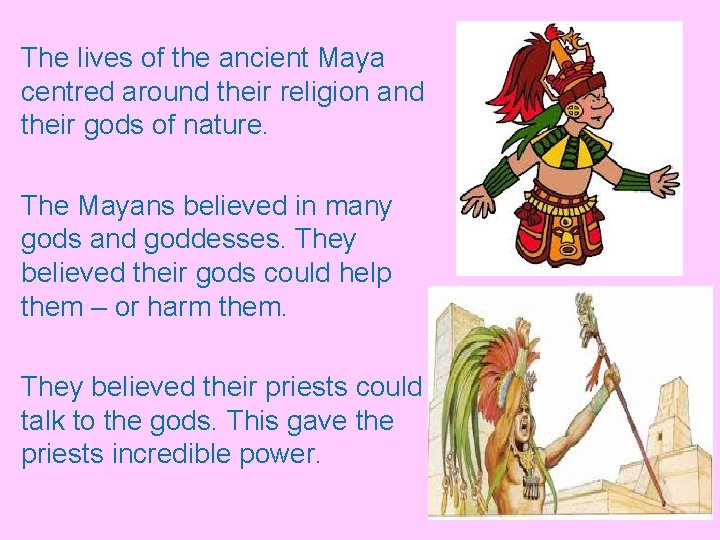
The lives of the ancient Maya centred around their religion and their gods of nature. The Mayans believed in many gods and goddesses. They believed their gods could help them – or harm them. They believed their priests could talk to the gods. This gave the priests incredible power.
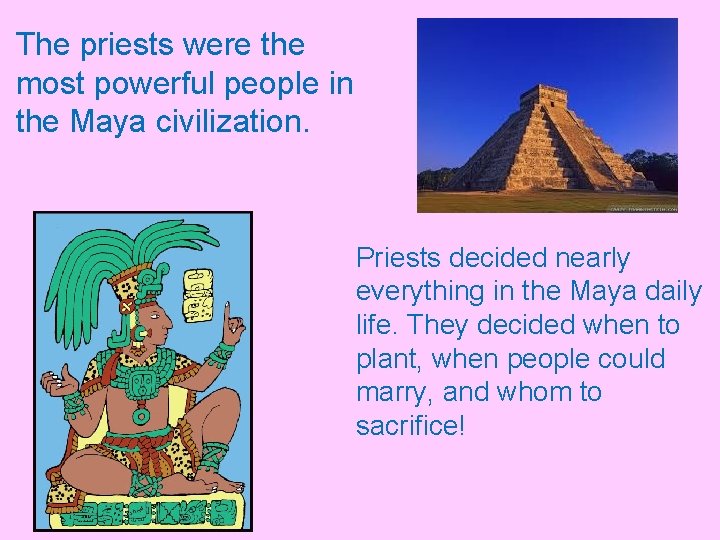
The priests were the most powerful people in the Maya civilization. Priests decided nearly everything in the Maya daily life. They decided when to plant, when people could marry, and whom to sacrifice!
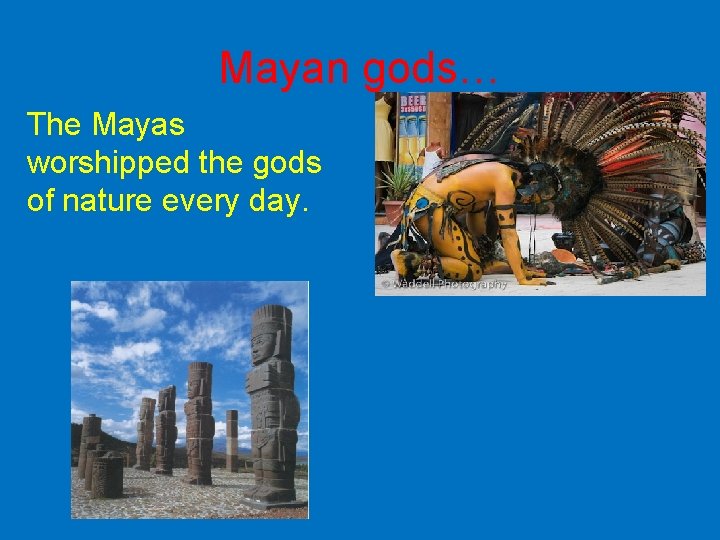
Mayan gods… The Mayas worshipped the gods of nature every day.
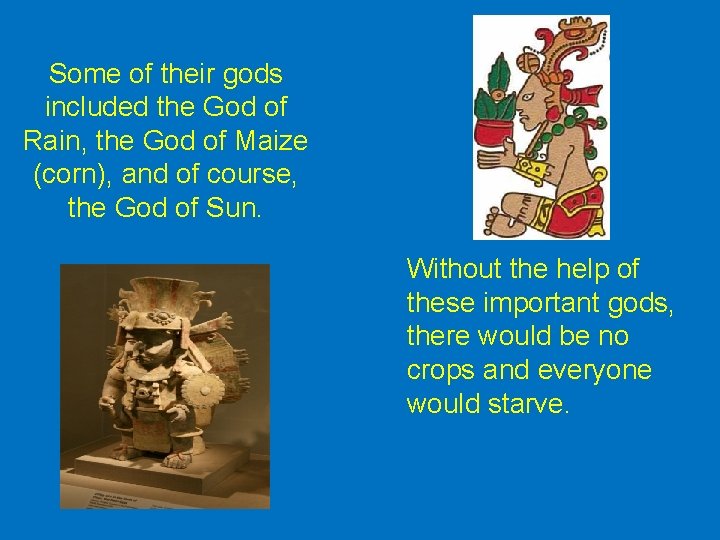
Some of their gods included the God of Rain, the God of Maize (corn), and of course, the God of Sun. Without the help of these important gods, there would be no crops and everyone would starve.
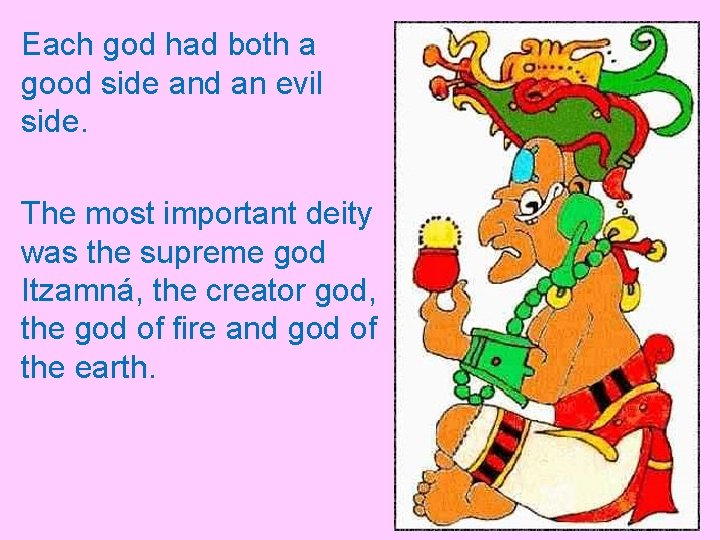
Each god had both a good side and an evil side. The most important deity was the supreme god Itzamná, the creator god, the god of fire and god of the earth.
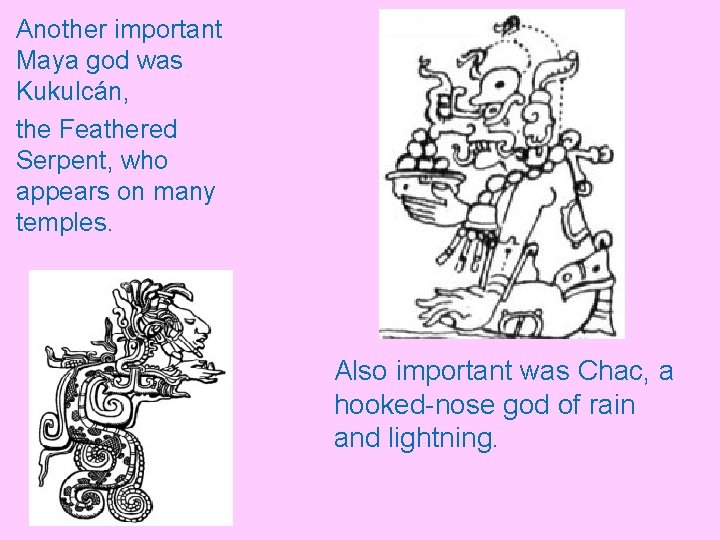
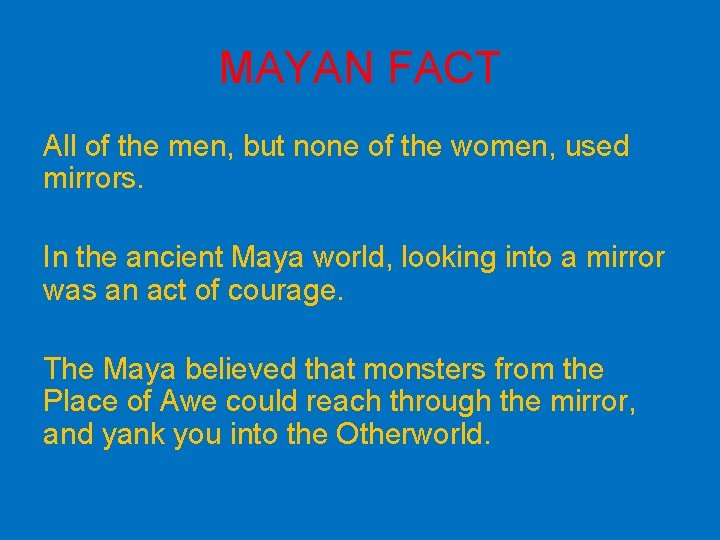
Another important Maya god was Kukulcán, the Feathered Serpent, who appears on many temples. Also important was Chac, a hooked-nose god of rain and lightning.
MAYAN FACT All of the men, but none of the women, used mirrors. In the ancient Maya world, looking into a mirror was an act of courage. The Maya believed that monsters from the Place of Awe could reach through the mirror, and yank you into the Otherworld.
The afterlife… The Mayas believed in an afterlife. Nobles were buried in tombs while commoners buried their dead inside their homes, under the floor. That way, they could live with their ancestors and keep their ancestors easily informed about their daily life.
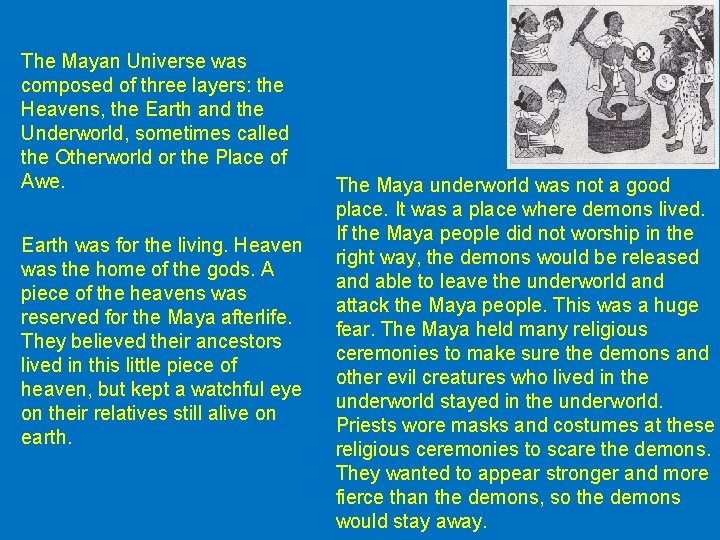
The Mayan Universe was composed of three layers: the Heavens, the Earth and the Underworld, sometimes called the Otherworld or the Place of Awe. Earth was for the living. Heaven was the home of the gods. A piece of the heavens was reserved for the Maya afterlife. They believed their ancestors lived in this little piece of heaven, but kept a watchful eye on their relatives still alive on earth. The Maya underworld was not a good place. It was a place where demons lived. If the Maya people did not worship in the right way, the demons would be released and able to leave the underworld and attack the Maya people. This was a huge fear. The Maya held many religious ceremonies to make sure the demons and other evil creatures who lived in the underworld stayed in the underworld. Priests wore masks and costumes at these religious ceremonies to scare the demons. They wanted to appear stronger and more fierce than the demons, so the demons would stay away.
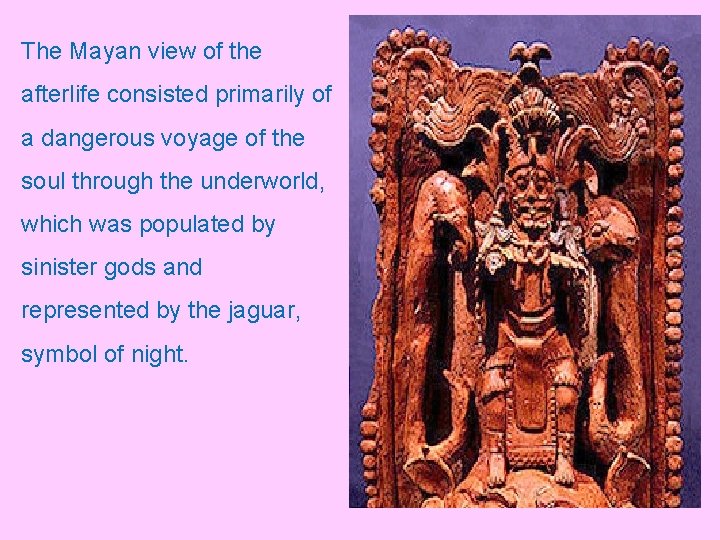
The Mayan view of the afterlife consisted primarily of a dangerous voyage of the soul through the underworld, which was populated by sinister gods and represented by the jaguar, symbol of night.
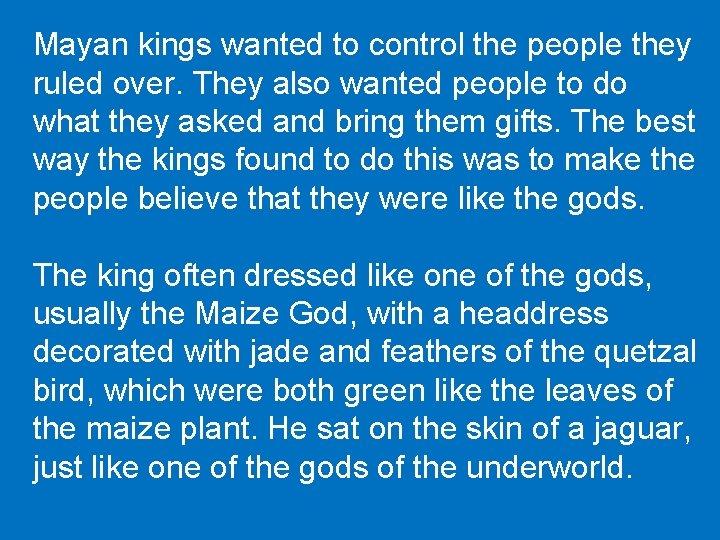
Mayan kings wanted to control the people they ruled over. They also wanted people to do what they asked and bring them gifts. The best way the kings found to do this was to make the people believe that they were like the gods. The king often dressed like one of the gods, usually the Maize God, with a headdress decorated with jade and feathers of the quetzal bird, which were both green like the leaves of the maize plant. He sat on the skin of a jaguar, just like one of the gods of the underworld.
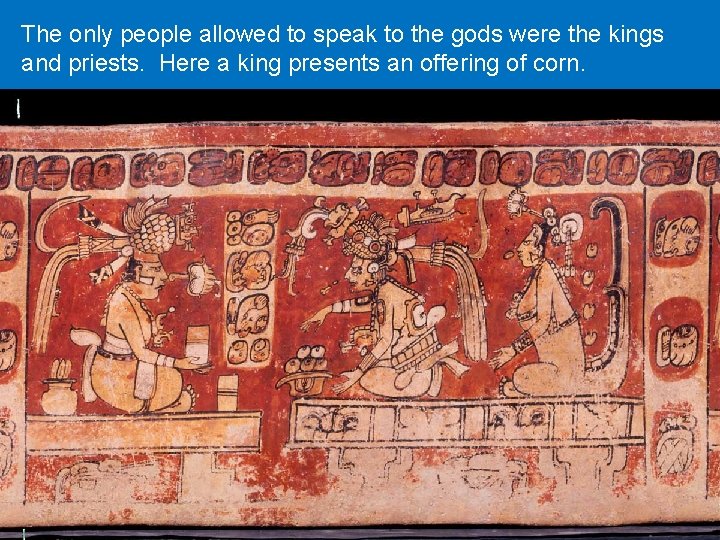
The only people allowed to speak to the gods were the kings and priests. Here a king presents an offering of corn.
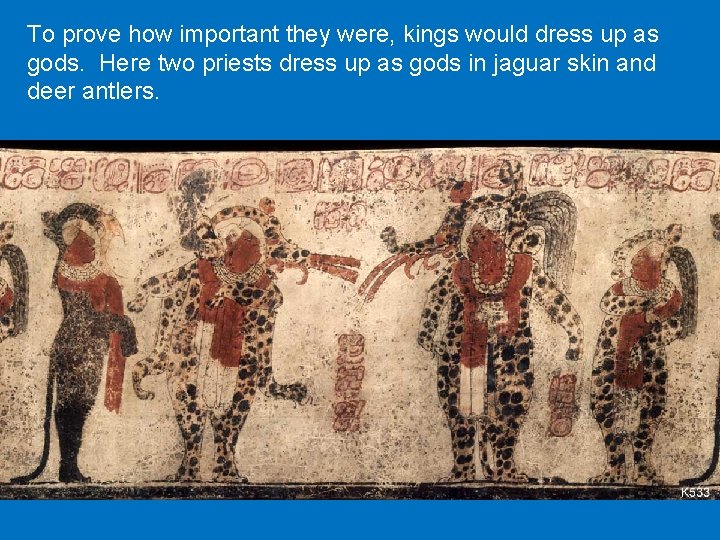
To prove how important they were, kings would dress up as gods. Here two priests dress up as gods in jaguar skin and deer antlers.
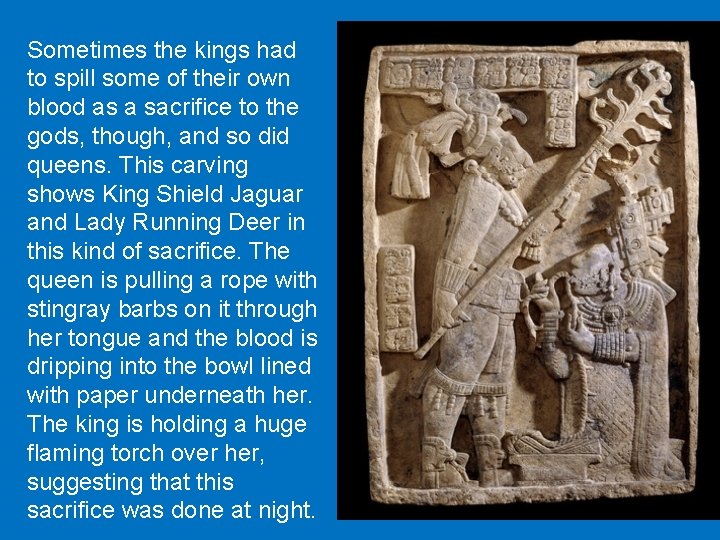
Sometimes the kings had to spill some of their own blood as a sacrifice to the gods, though, and so did queens. This carving shows King Shield Jaguar and Lady Running Deer in this kind of sacrifice. The queen is pulling a rope with stingray barbs on it through her tongue and the blood is dripping into the bowl lined with paper underneath her. The king is holding a huge flaming torch over her, suggesting that this sacrifice was done at night.
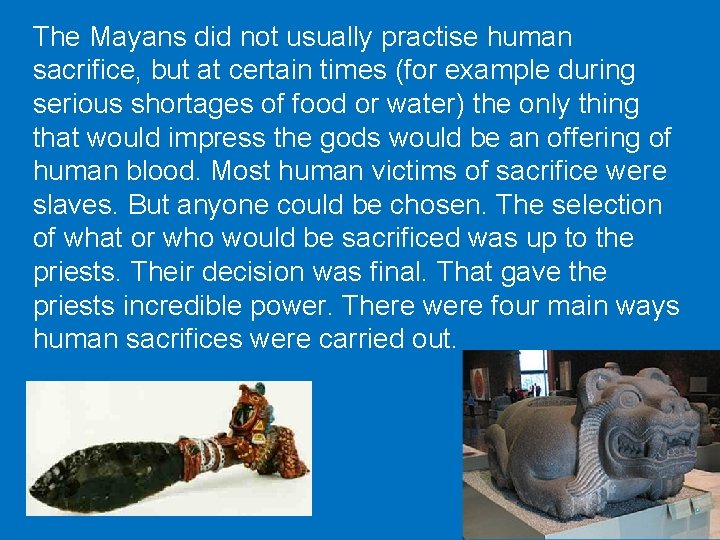
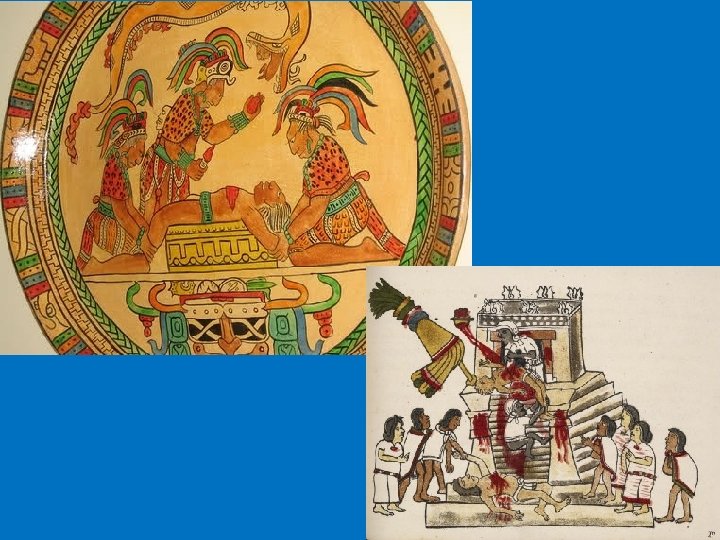
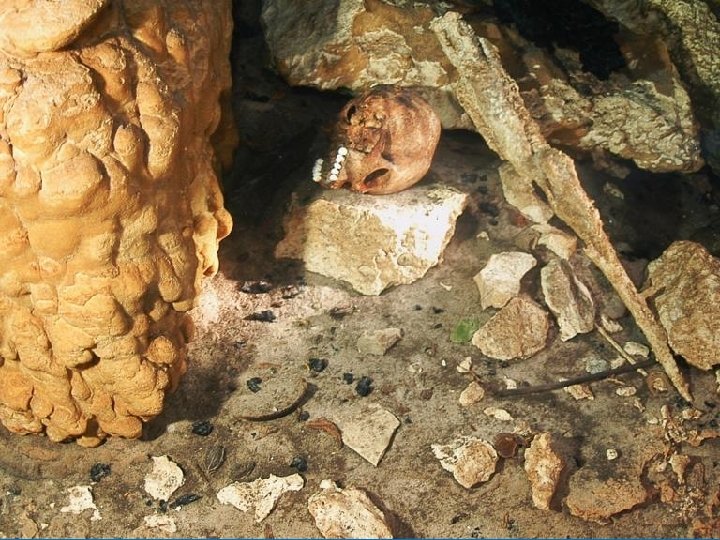
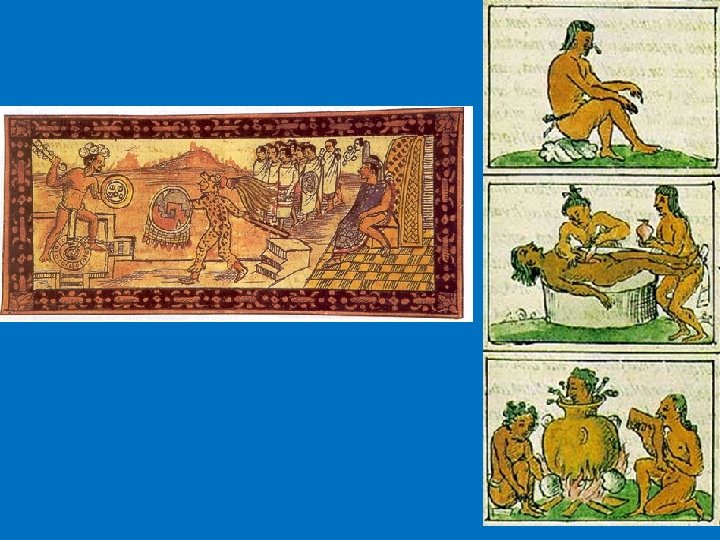
The Mayans did not usually practise human sacrifice, but at certain times (for example during serious shortages of food or water) the only thing that would impress the gods would be an offering of human blood. Most human victims of sacrifice were slaves. But anyone could be chosen. The selection of what or who would be sacrificed was up to the priests. Their decision was final. That gave the priests incredible power. There were four main ways human sacrifices were carried out.