
The Lithosphere Introduction to the Land Unit Earths
- Slides: 12
The Lithosphere: Introduction to the Land Unit
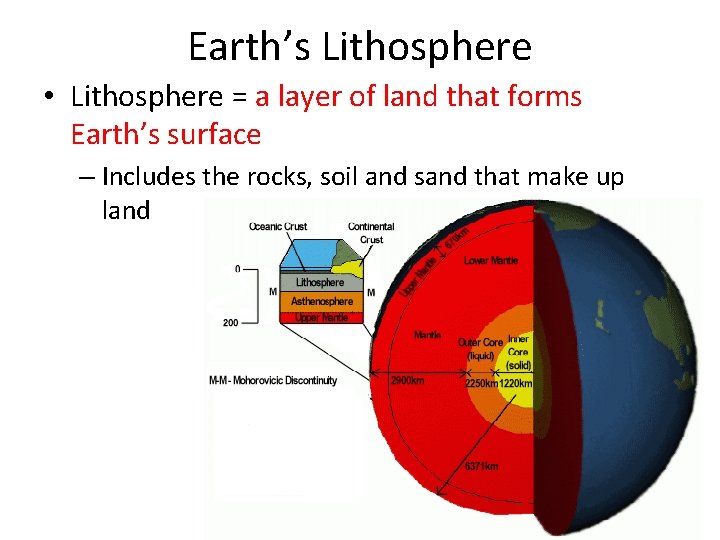
Earth’s Lithosphere • Lithosphere = a layer of land that forms Earth’s surface – Includes the rocks, soil and sand that make up land
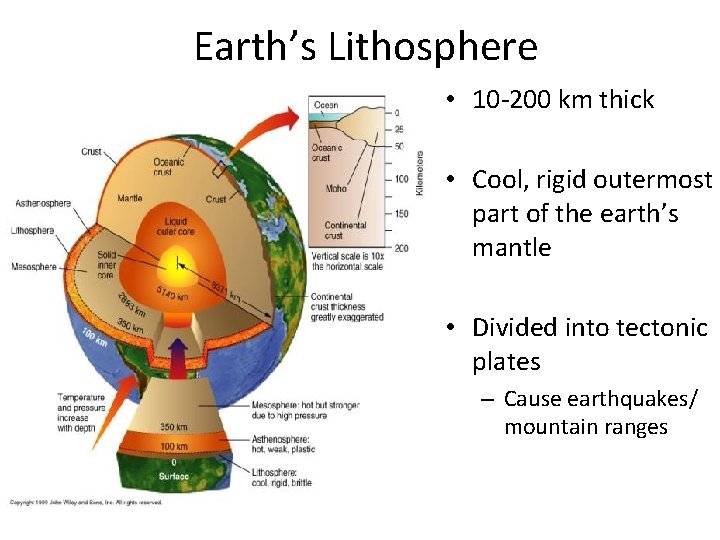
Earth’s Lithosphere • 10 -200 km thick • Cool, rigid outermost part of the earth’s mantle • Divided into tectonic plates – Cause earthquakes/ mountain ranges
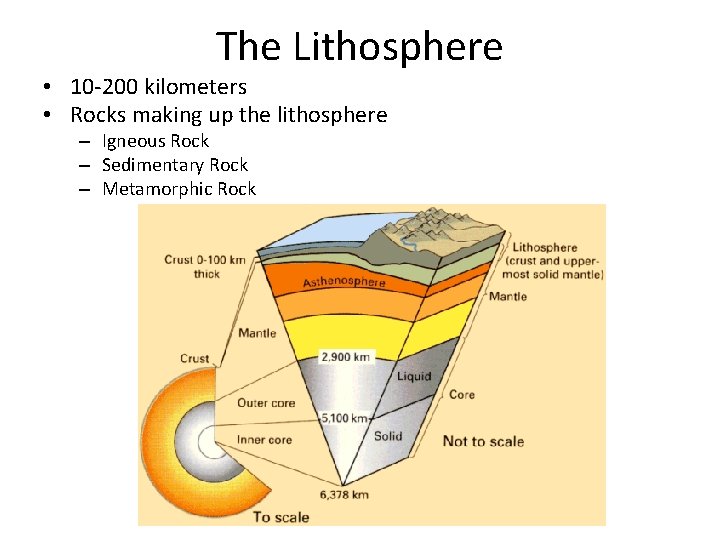
The Lithosphere • 10 -200 kilometers • Rocks making up the lithosphere – Igneous Rock – Sedimentary Rock – Metamorphic Rock
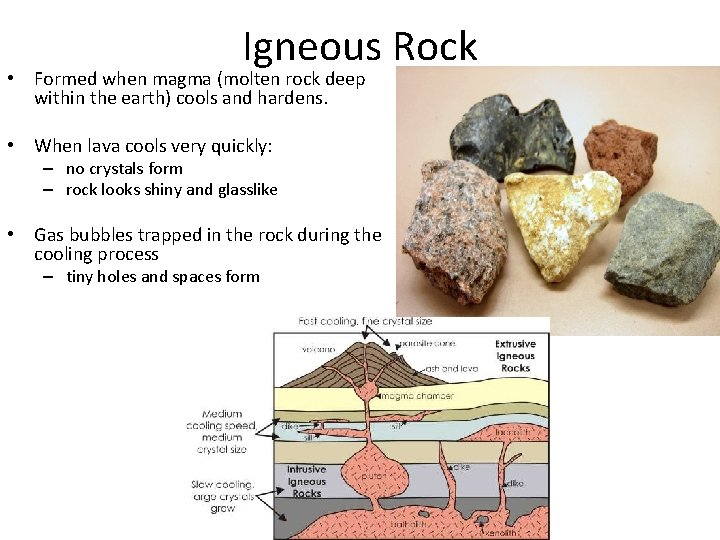
Igneous Rock • Formed when magma (molten rock deep within the earth) cools and hardens. • When lava cools very quickly: – no crystals form – rock looks shiny and glasslike • Gas bubbles trapped in the rock during the cooling process – tiny holes and spaces form
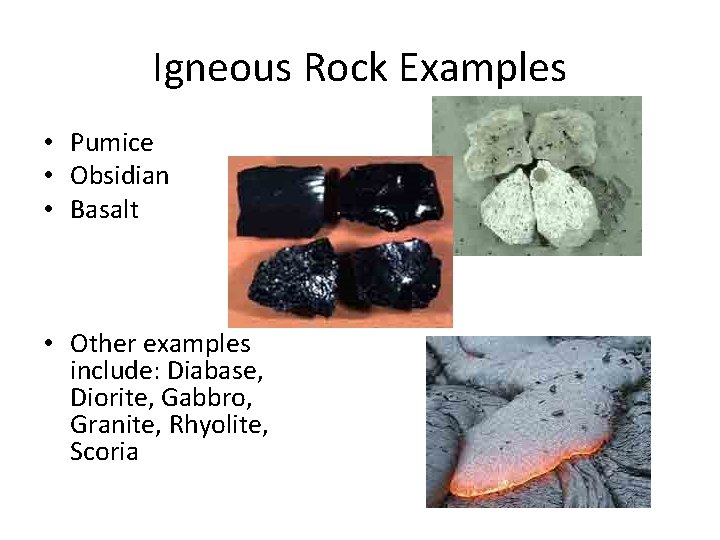
Igneous Rock Examples • Pumice • Obsidian • Basalt • Other examples include: Diabase, Diorite, Gabbro, Granite, Rhyolite, Scoria
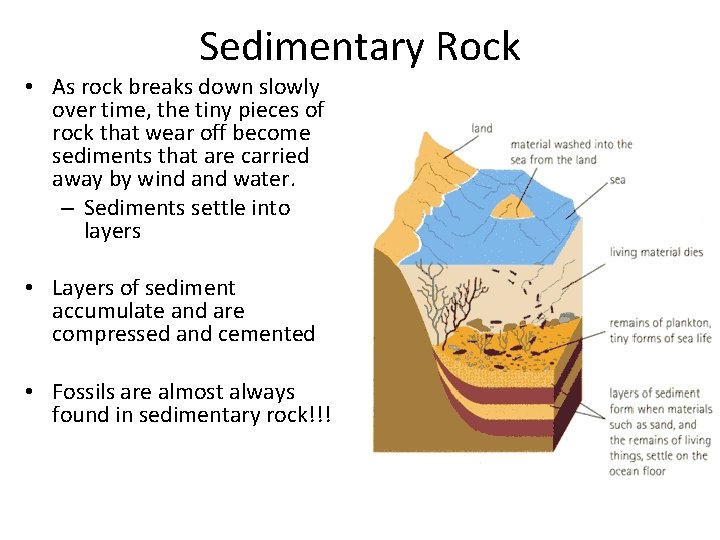
Sedimentary Rock • As rock breaks down slowly over time, the tiny pieces of rock that wear off become sediments that are carried away by wind and water. – Sediments settle into layers • Layers of sediment accumulate and are compressed and cemented • Fossils are almost always found in sedimentary rock!!!
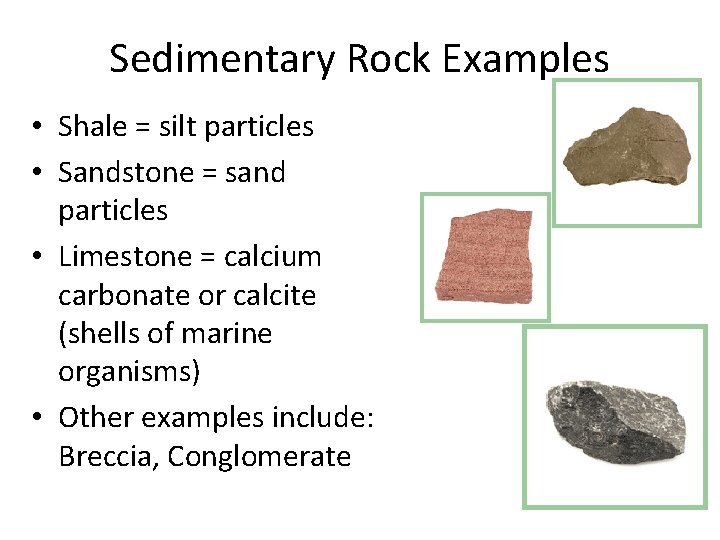
Sedimentary Rock Examples • Shale = silt particles • Sandstone = sand particles • Limestone = calcium carbonate or calcite (shells of marine organisms) • Other examples include: Breccia, Conglomerate
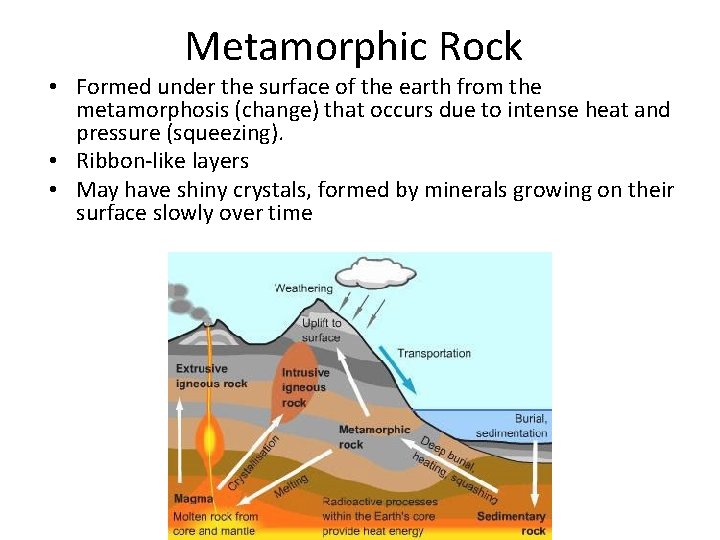
Metamorphic Rock • Formed under the surface of the earth from the metamorphosis (change) that occurs due to intense heat and pressure (squeezing). • Ribbon-like layers • May have shiny crystals, formed by minerals growing on their surface slowly over time
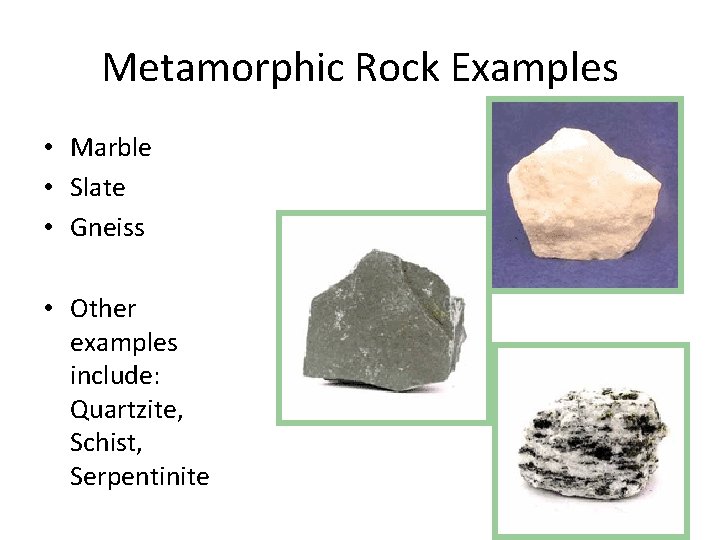
Metamorphic Rock Examples • Marble • Slate • Gneiss • Other examples include: Quartzite, Schist, Serpentinite
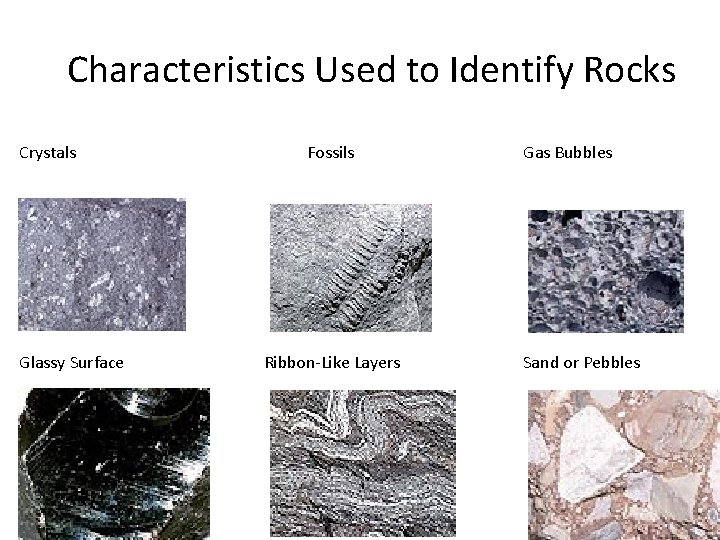
Characteristics Used to Identify Rocks Crystals Glassy Surface Fossils Ribbon-Like Layers Gas Bubbles Sand or Pebbles
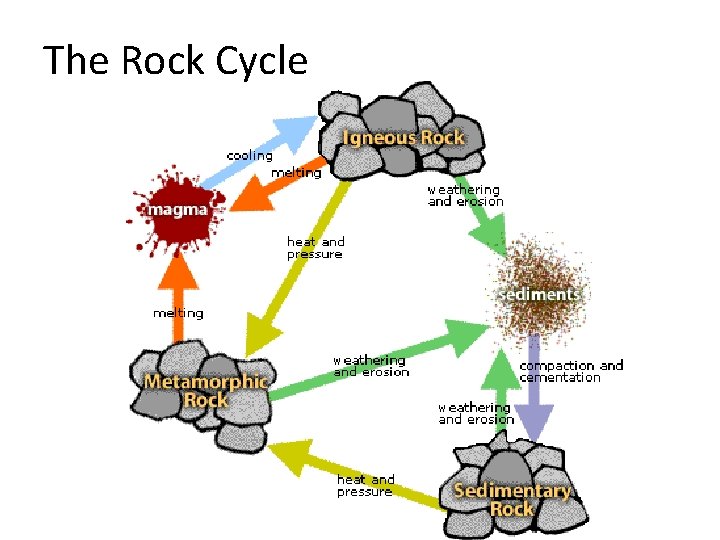
The Rock Cycle