
The Life of Prophet Muhammad Lesson 1 The


- Slides: 25
The Life of Prophet Muhammad Lesson 1
The Significance of the Seerah • Studying the life of the Prophet is important for both Muslims and non-Muslims alike. • 1. For non-Muslims: he is the founder of one of the world’s major religions with over 1. 5 billion adherents. • Michael Hart has a book titled “The 100: A ranking of the most influential persons in history” in which he writes: “My choice of Muhammad to lead the list of the world's most influential persons may surprise some readers and may be questioned by others, but he was the only man in history who was supremely successful on both the religious and secular levels…”
The Significance of the Seerah • He continues: “Of humble origins, Muhammad founded and promulgated one of the world's great religions, and became an immensely effective political leader. Today, thirteen centuries after his death, his influence is still powerful and pervasive. The majority of the persons in this book had the advantage of being born and raised in centers of civilization, highly cultured or politically pivotal nations. Muhammad, however, was born in the year 570, in the city of Mecca, in southern Arabia, at that time a backward area of the world, far from the centers of trade, art, and learning. ”
The Significance of the Seerah • Mahatma Gandhi said of the Prophet: “I became more than ever convinced that it was not the sword that won a place for Islam in those days in the scheme of life. It was the rigid simplicity, the utter self-effacement of the Prophet, the scrupulous regard for pledges, his intense devotion to his friends and followers, his intrepidity, his fearlessness, his absolute trust in God and in his own mission. These and not the sword carried everything before them and surmounted every obstacle. ”
The Significance of the Seerah • Edward Gibbon, the British historian writes: “The greatest success of Muhammad’s life was affected by sheer moral force without the stroke of a sword. ”
The Significance of the Seerah • 2. For Muslims: Studying the life of the Prophet is an essential pre-requisite to understanding the message of the Quran because the Prophet is the primary addressee of revelation. • The seerah gives the Quran context; it serves as the colorful backdrop of the Quranic narrative. • For Muslims, studying the life of the Prophet is to study the life of the most beloved servant of God; a man who was the embodiment of human perfection. • There are over 50 verses in the Quran where God commands us to follow the example of the Prophet.
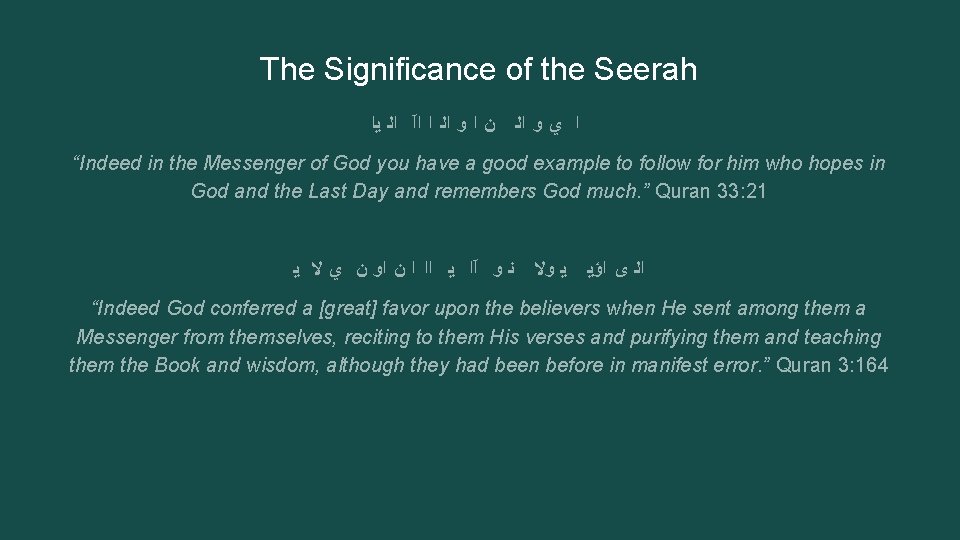
The Significance of the Seerah ﻳﺍ ﺍﻟ ﺍآ ﺍ ﺍﻟ ﻭ ﺍ ﻥ ﺍﻟ ﻭ ﻱ ﺍ “Indeed in the Messenger of God you have a good example to follow for him who hopes in God and the Last Day and remembers God much. ” Quran 33: 21 ﻳ ﻻ ﻱ ﻥ ﺍﻭ ﻥ ﺍ ﺍﺍ ﻳ آﺍ ﻭ ﻧ ﻭﻻ ﻳ ﺍﺅﻳ ﻯ ﺍﻟ “Indeed God conferred a [great] favor upon the believers when He sent among them a Messenger from themselves, reciting to them His verses and purifying them and teaching them the Book and wisdom, although they had been before in manifest error. ” Quran 3: 164
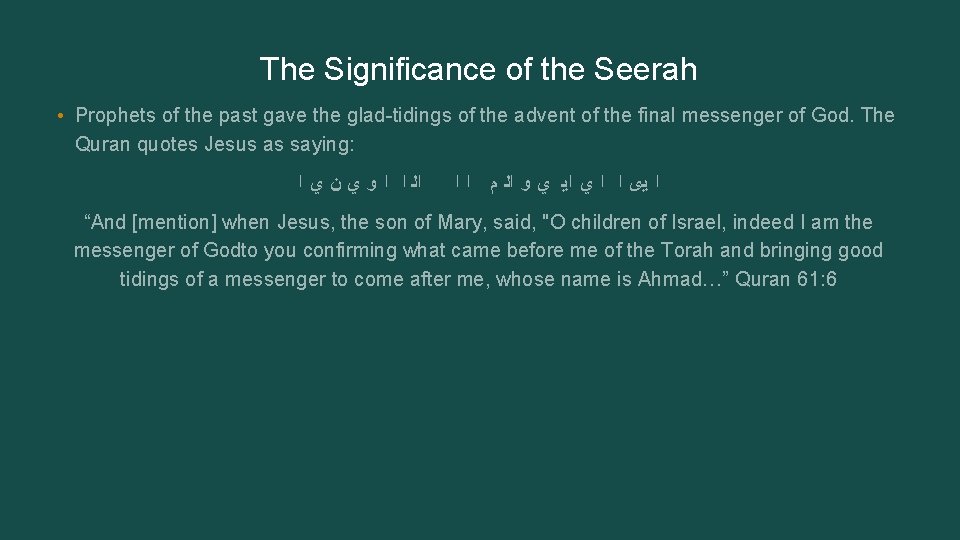
The Significance of the Seerah • Prophets of the past gave the glad-tidings of the advent of the final messenger of God. The Quran quotes Jesus as saying: ﺍ ﻱ ﻥ ﻱ ﻭ ﺍ ﺍ ﺍﻟ ﺍ ﺍ ﻡ ﺍﻟ ﻭ ﻱ ﺍﻳ ﻱ ﺍ ﺍ ﻳﻯ ﺍ “And [mention] when Jesus, the son of Mary, said, "O children of Israel, indeed I am the messenger of Godto you confirming what came before me of the Torah and bringing good tidings of a messenger to come after me, whose name is Ahmad…” Quran 61: 6
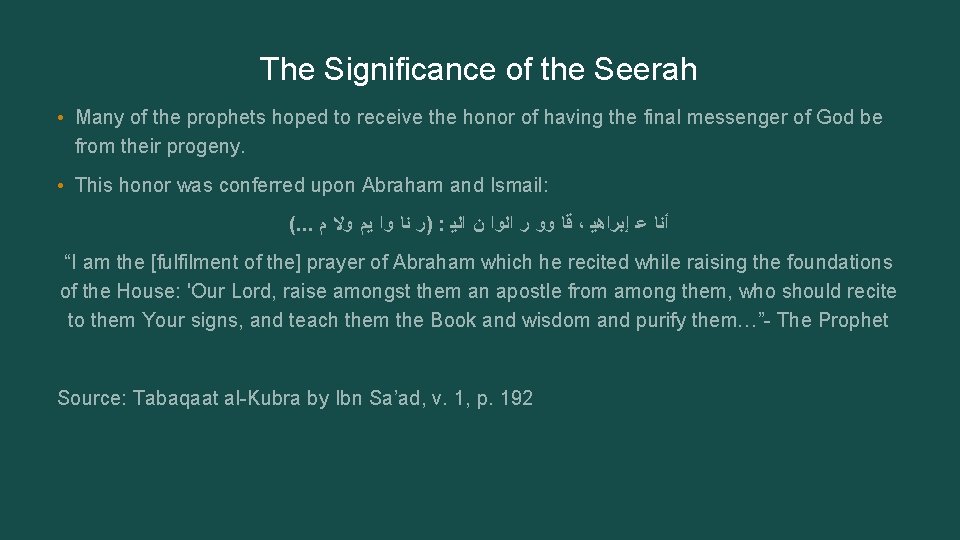
The Significance of the Seerah • Many of the prophets hoped to receive the honor of having the final messenger of God be from their progeny. • This honor was conferred upon Abraham and Ismail: (. . . ﻡ ﻭﻻ ﻳﻡ ﻭﺍ ﻧﺎ )ﺭ : ﺍﻟﻳ ﻥ ﺍﻟﻭﺍ ﺭ ﻭﻭ ﻗﺎ ، ﺇﺑﺮﺍﻫﻴ ﻋ ﺃﻨﺎ “I am the [fulfilment of the] prayer of Abraham which he recited while raising the foundations of the House: 'Our Lord, raise amongst them an apostle from among them, who should recite to them Your signs, and teach them the Book and wisdom and purify them…”- The Prophet Source: Tabaqaat al-Kubra by Ibn Sa’ad, v. 1, p. 192
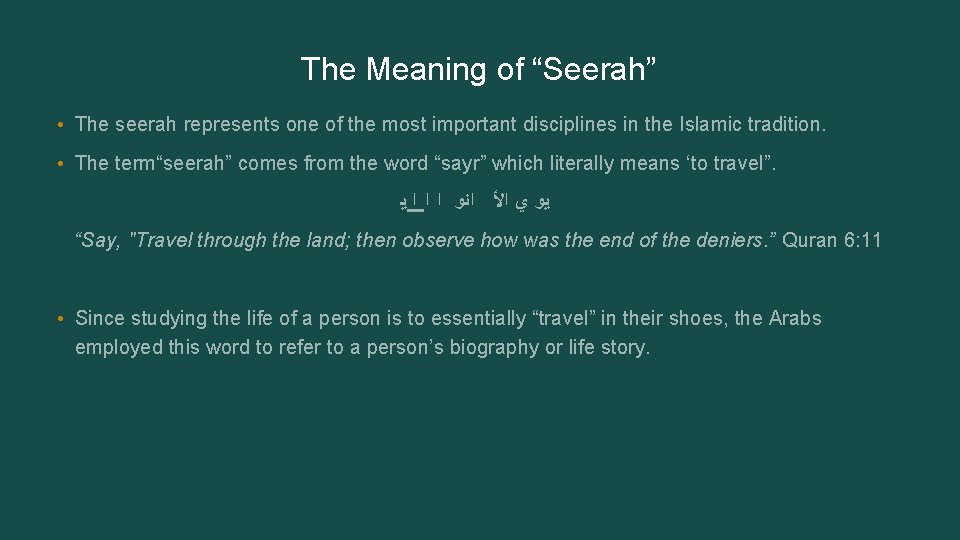
The Meaning of “Seerah” • The seerah represents one of the most important disciplines in the Islamic tradition. • The term“seerah” comes from the word “sayr” which literally means ‘to travel”. ﻳ ﺍ ﺍﻧﻭ ﺍﻷ ﻱ ﻳﻭ “Say, "Travel through the land; then observe how was the end of the deniers. ” Quran 6: 11 • Since studying the life of a person is to essentially “travel” in their shoes, the Arabs employed this word to refer to a person’s biography or life story.
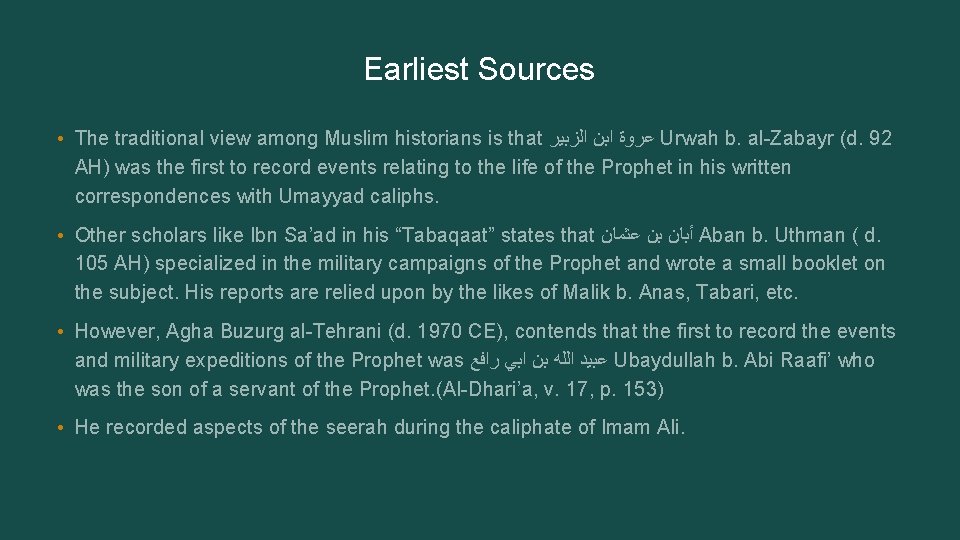
Earliest Sources • The traditional view among Muslim historians is that ﺍﻟﺰﺑﻴﺮ ﺍﺑﻦ ﻋﺮﻭﺓ Urwah b. al-Zabayr (d. 92 AH) was the first to record events relating to the life of the Prophet in his written correspondences with Umayyad caliphs. • Other scholars like Ibn Sa’ad in his “Tabaqaat” states that ﻋﺜﻤﺎﻥ ﺑﻦ ﺃﺒﺎﻥ Aban b. Uthman ( d. 105 AH) specialized in the military campaigns of the Prophet and wrote a small booklet on the subject. His reports are relied upon by the likes of Malik b. Anas, Tabari, etc. • However, Agha Buzurg al-Tehrani (d. 1970 CE), contends that the first to record the events and military expeditions of the Prophet was ﺭﺍﻓﻊ ﺍﺑﻲ ﺑﻦ ﺍﻟﻠﻪ ﻋﺒﻴﺪ Ubaydullah b. Abi Raafi’ who was the son of a servant of the Prophet. (Al-Dhari’a, v. 17, p. 153) • He recorded aspects of the seerah during the caliphate of Imam Ali.
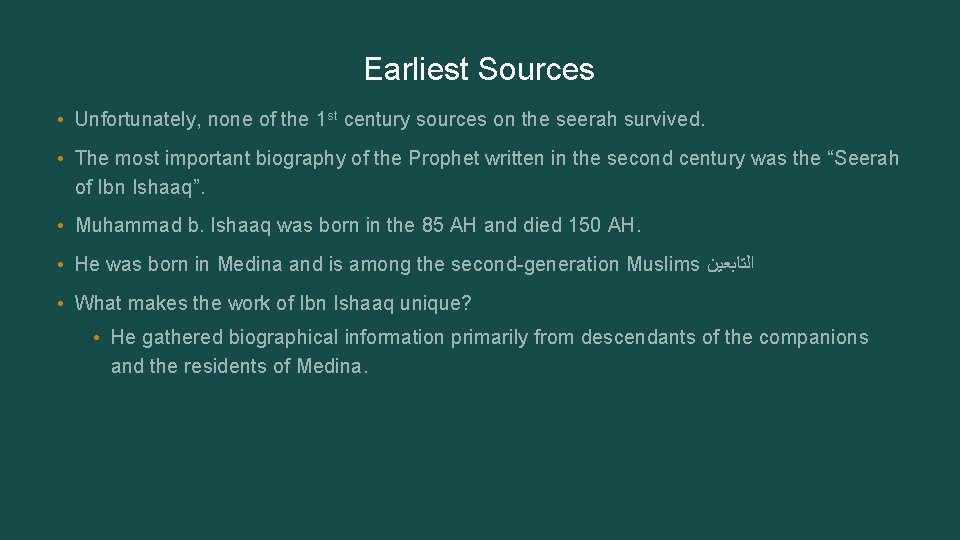
Earliest Sources • Unfortunately, none of the 1 st century sources on the seerah survived. • The most important biography of the Prophet written in the second century was the “Seerah of Ibn Ishaaq”. • Muhammad b. Ishaaq was born in the 85 AH and died 150 AH. • He was born in Medina and is among the second-generation Muslims ﺍﻟﺘﺎﺑﻌﻴﻦ • What makes the work of Ibn Ishaaq unique? • He gathered biographical information primarily from descendants of the companions and the residents of Medina.
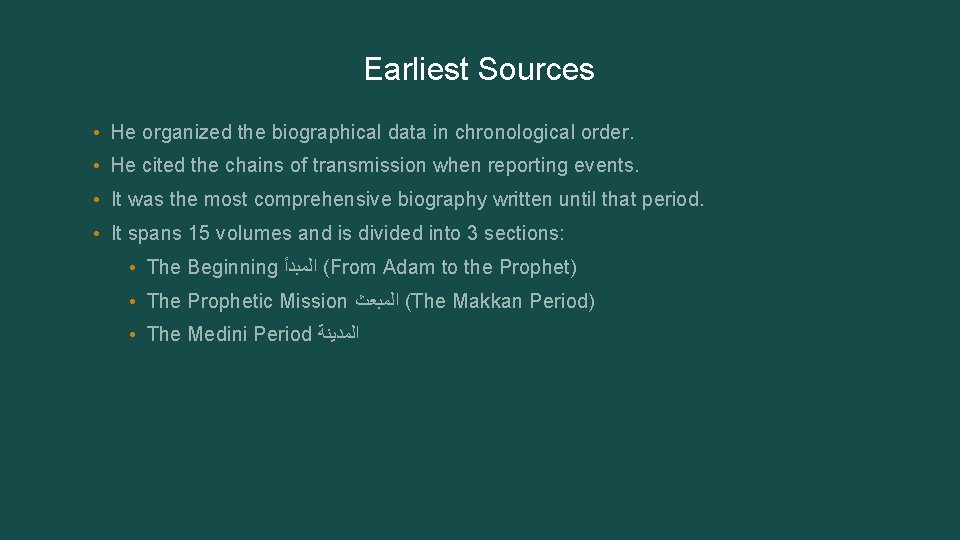
Earliest Sources • He organized the biographical data in chronological order. • He cited the chains of transmission when reporting events. • It was the most comprehensive biography written until that period. • It spans 15 volumes and is divided into 3 sections: • The Beginning ﺍﻟﻤﺒﺪﺃ (From Adam to the Prophet) • The Prophetic Mission ﺍﻟﻤﺒﻌﺚ (The Makkan Period) • The Medini Period ﺍﻟﻤﺪﻳﻨﺔ
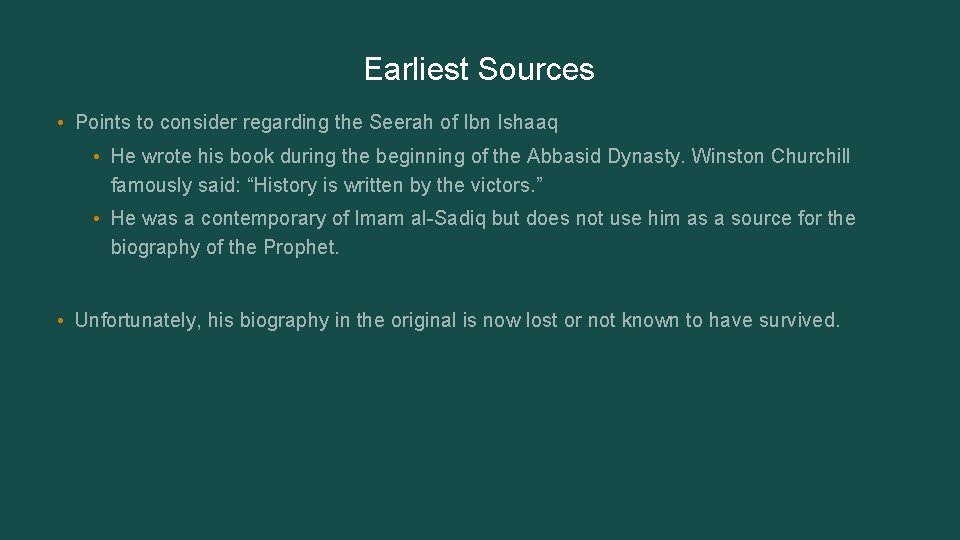
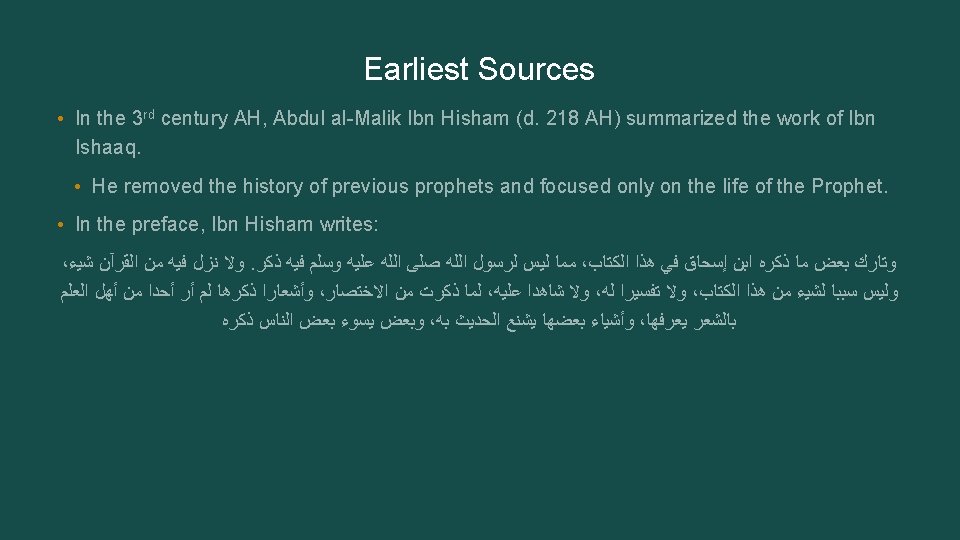
Earliest Sources • Points to consider regarding the Seerah of Ibn Ishaaq • He wrote his book during the beginning of the Abbasid Dynasty. Winston Churchill famously said: “History is written by the victors. ” • He was a contemporary of Imam al-Sadiq but does not use him as a source for the biography of the Prophet. • Unfortunately, his biography in the original is now lost or not known to have survived.
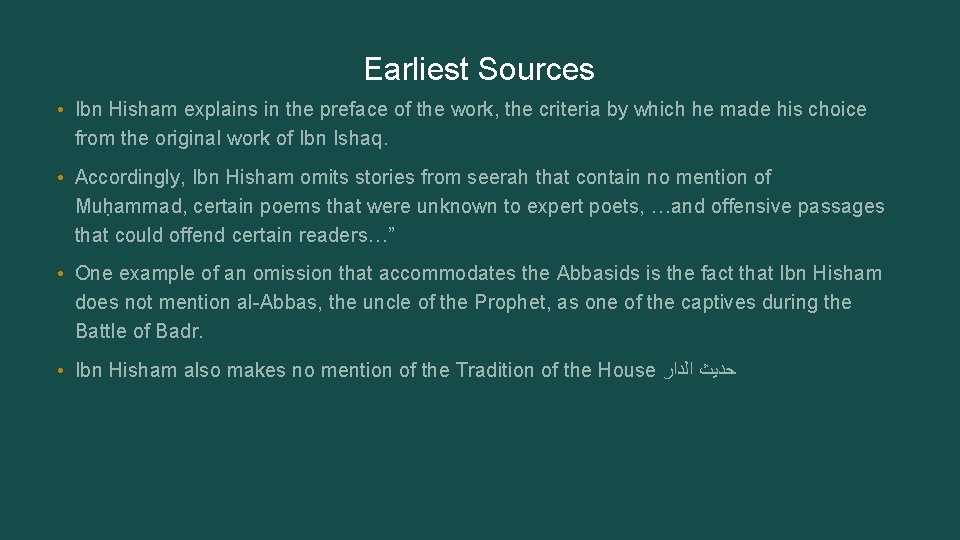
Earliest Sources • Ibn Hisham explains in the preface of the work, the criteria by which he made his choice from the original work of Ibn Ishaq. • Accordingly, Ibn Hisham omits stories from seerah that contain no mention of Muḥammad, certain poems that were unknown to expert poets, …and offensive passages that could offend certain readers…” • One example of an omission that accommodates the Abbasids is the fact that Ibn Hisham does not mention al-Abbas, the uncle of the Prophet, as one of the captives during the Battle of Badr. • Ibn Hisham also makes no mention of the Tradition of the House ﺍﻟﺪﺍﺭ ﺣﺪﻳﺚ
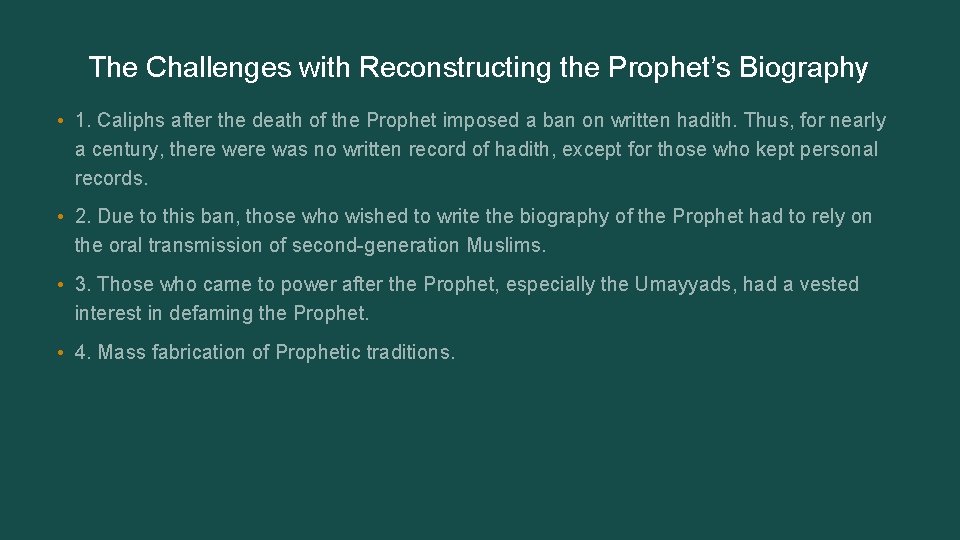
The Challenges with Reconstructing the Prophet’s Biography • 1. Caliphs after the death of the Prophet imposed a ban on written hadith. Thus, for nearly a century, there was no written record of hadith, except for those who kept personal records. • 2. Due to this ban, those who wished to write the biography of the Prophet had to rely on the oral transmission of second-generation Muslims. • 3. Those who came to power after the Prophet, especially the Umayyads, had a vested interest in defaming the Prophet. • 4. Mass fabrication of Prophetic traditions.
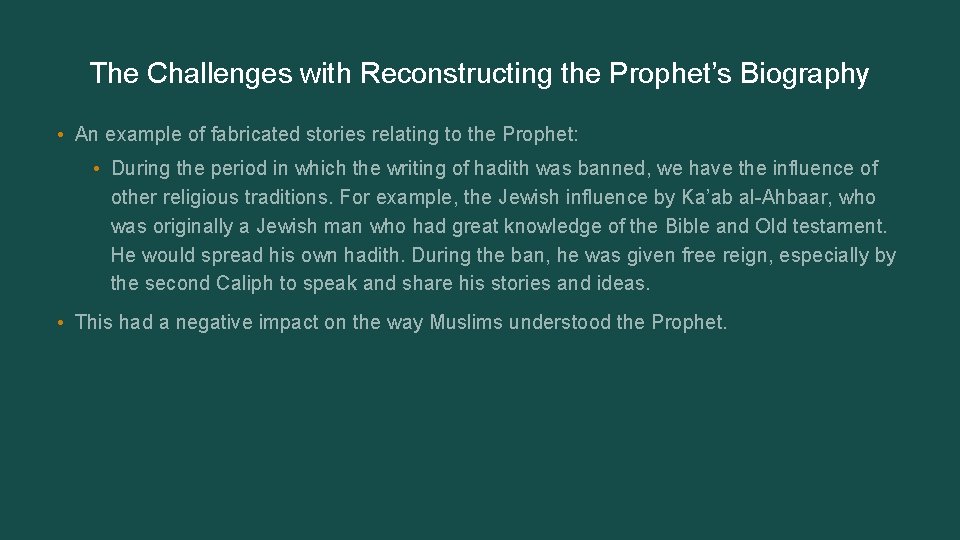
The Challenges with Reconstructing the Prophet’s Biography • An example of fabricated stories relating to the Prophet: • During the period in which the writing of hadith was banned, we have the influence of other religious traditions. For example, the Jewish influence by Ka’ab al-Ahbaar, who was originally a Jewish man who had great knowledge of the Bible and Old testament. He would spread his own hadith. During the ban, he was given free reign, especially by the second Caliph to speak and share his stories and ideas. • This had a negative impact on the way Muslims understood the Prophet.
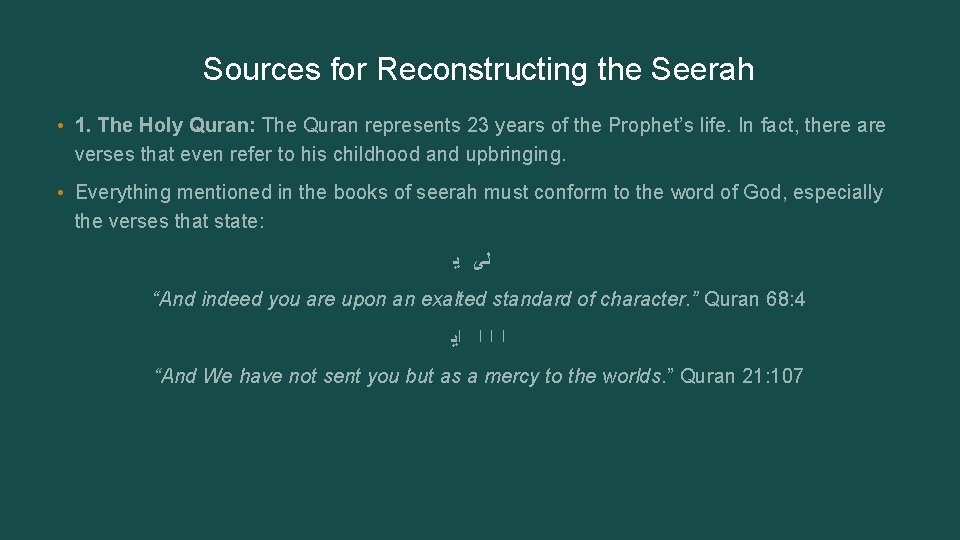
Sources for Reconstructing the Seerah • 1. The Holy Quran: The Quran represents 23 years of the Prophet’s life. In fact, there are verses that even refer to his childhood and upbringing. • Everything mentioned in the books of seerah must conform to the word of God, especially the verses that state: ﻳ ﻟﻰ “And indeed you are upon an exalted standard of character. ” Quran 68: 4 ﺍﻳ ﺍ ﺍ ﺍ “And We have not sent you but as a mercy to the worlds. ” Quran 21: 107
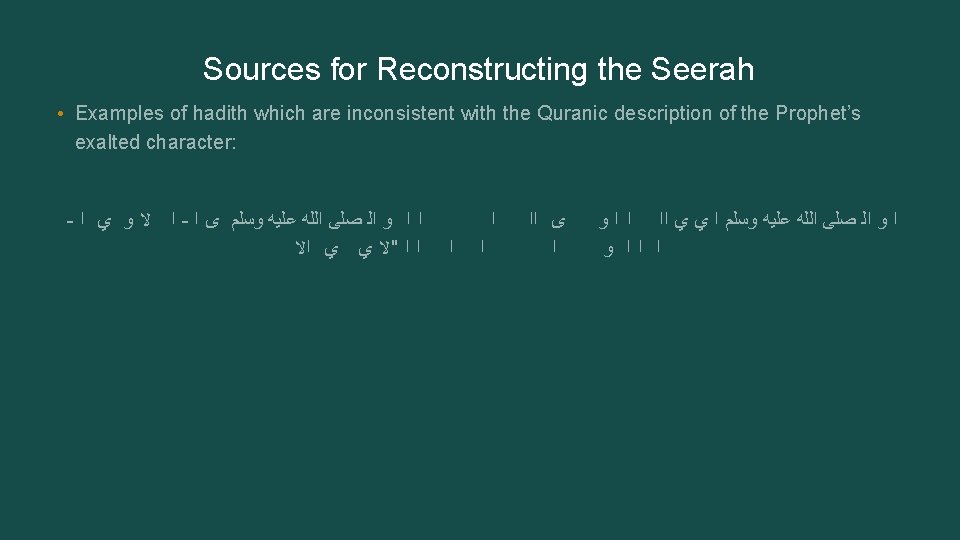
Sources for Reconstructing the Seerah “God’s Messenger was lying in the bed in my apartment with his thigh uncovered and Abu Bakr sought permission to enter. It was given to him and he conversed in the same very state (the Prophet's thigh uncovered). Then Umar sought permission for entering and it was given to him and he conversed in that very state. Then Uthman sought permission to enter; God’s Messenger sat down and he set right his clothes. Muhammad (one of the narrators) said: I do not say that it happened on the same day. He (Uthman) then entered and conversed and as he went out, Aisha said: Abu Bakr entered and you did not stir and did not observe much care (in arranging your clothes), then Umar entered and you did not stir and did not arrange your clothes, then Uthman entered and you got up and set your clothes right, so he said: Should I not show modesty to one whom even the Angels show modesty. ” Source: Sahih Muslim
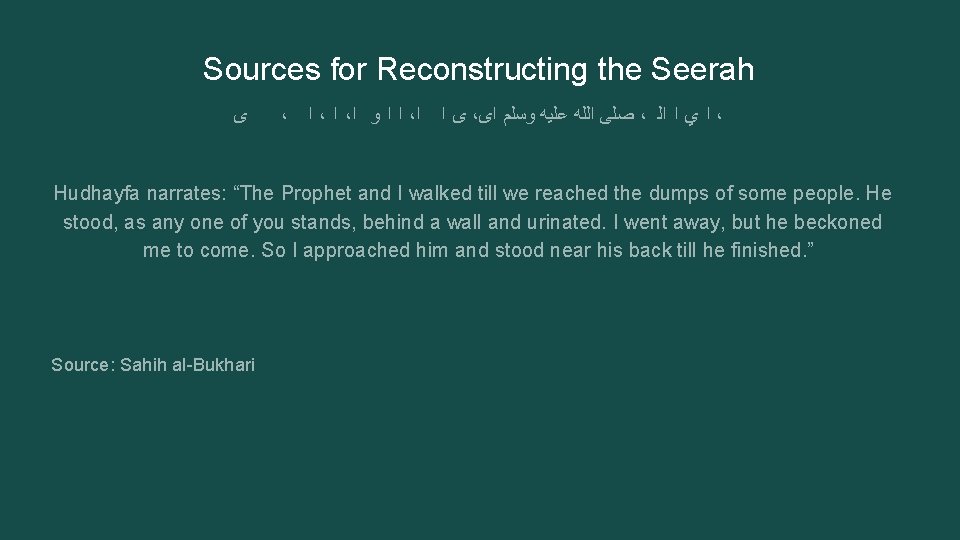
Sources for Reconstructing the Seerah ﻯ ، ﺍ ، ﺍ ﻭ ﺍ ﺍ ، ﺍ ﺍ ﻯ ، ﺍﻯ ﻭﺳﻠﻢ ﻋﻠﻴﻪ ﺍﻟﻠﻪ ﺻﻠﻰ ، ﺍﻟ ﺍ ﻱ ﺍ ، Hudhayfa narrates: “The Prophet and I walked till we reached the dumps of some people. He stood, as any one of you stands, behind a wall and urinated. I went away, but he beckoned me to come. So I approached him and stood near his back till he finished. ” Source: Sahih al-Bukhari
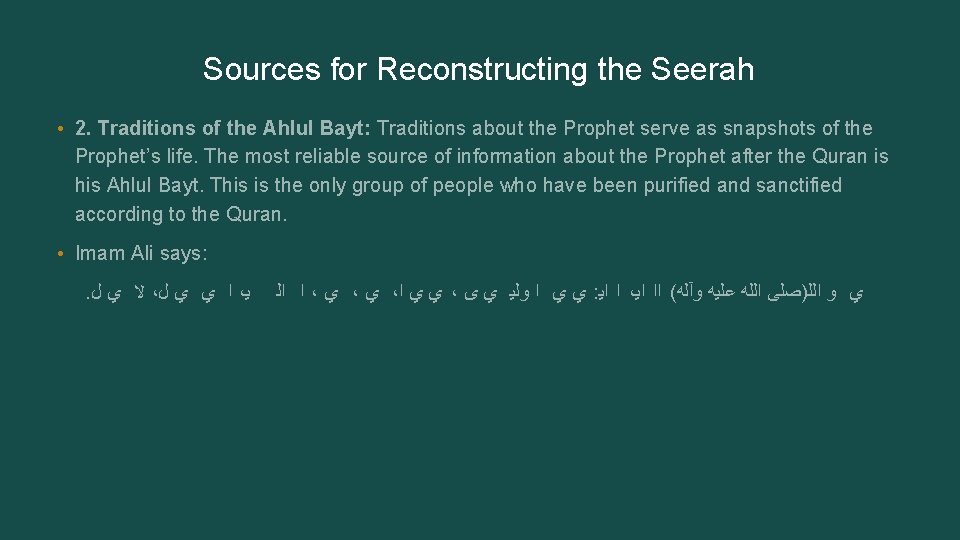
Sources for Reconstructing the Seerah • 2. Traditions of the Ahlul Bayt: Traditions about the Prophet serve as snapshots of the Prophet’s life. The most reliable source of information about the Prophet after the Quran is his Ahlul Bayt. This is the only group of people who have been purified and sanctified according to the Quran. • Imam Ali says: . ﻝ ﻱ ﻻ ، ﻝ ﻱ ﻱ ﺍ ، ﻳ ﺍﻟ ﺍ ، ﻱ ، ﺍ ﻱ ﻱ ، ﻯ ﻱ ﻭﻟﻴ ﺍ ﻱ ﻱ : ﺍﻳ ﺍ ، ﺍﻳ ﺍﺍ ( ﻭآﻠﻪ ﻋﻠﻴﻪ ﺍﻟﻠ)ﺻﻠﻰ ﻭ ﻱ
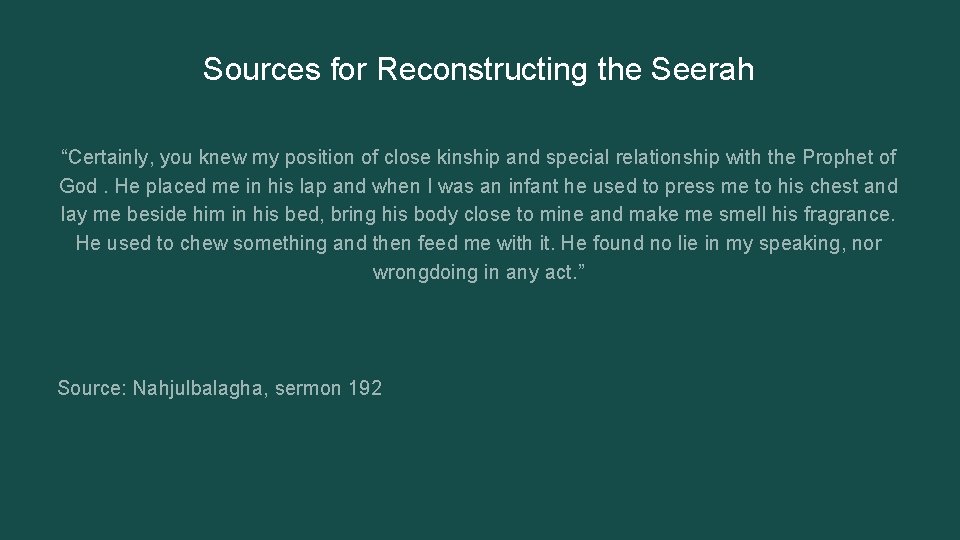
Sources for Reconstructing the Seerah “Certainly, you knew my position of close kinship and special relationship with the Prophet of God. He placed me in his lap and when I was an infant he used to press me to his chest and lay me beside him in his bed, bring his body close to mine and make me smell his fragrance. He used to chew something and then feed me with it. He found no lie in my speaking, nor wrongdoing in any act. ” Source: Nahjulbalagha, sermon 192
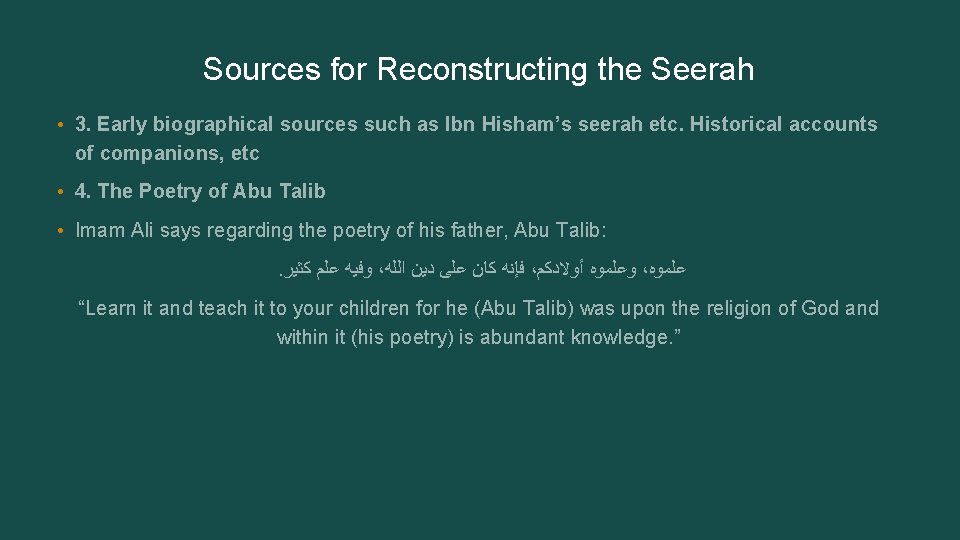
Sources for Reconstructing the Seerah • 3. Early biographical sources such as Ibn Hisham’s seerah etc. Historical accounts of companions, etc • 4. The Poetry of Abu Talib • Imam Ali says regarding the poetry of his father, Abu Talib: . ﻛﺜﻴﺮ ﻋﻠﻢ ﻭﻓﻴﻪ ، ﺍﻟﻠﻪ ﺩﻳﻦ ﻋﻠﻰ ﻛﺎﻥ ﻓﺈﻧﻪ ، ﺃﻮﻻﺩﻛﻢ ﻭﻋﻠﻤﻮﻩ ، ﻋﻠﻤﻮﻩ “Learn it and teach it to your children for he (Abu Talib) was upon the religion of God and within it (his poetry) is abundant knowledge. ”