
The Life of Jesus Born in Bethlehem raised
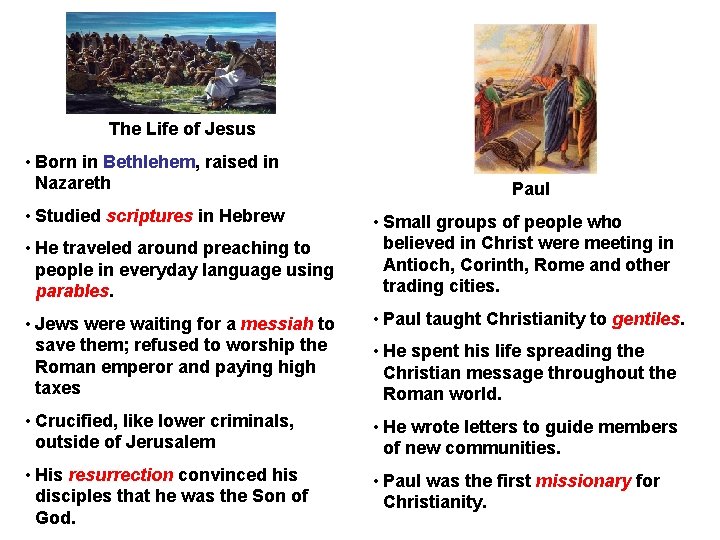
The Life of Jesus • Born in Bethlehem, raised in Nazareth • Studied scriptures in Hebrew • He traveled around preaching to people in everyday language using parables. Paul • Small groups of people who believed in Christ were meeting in Antioch, Corinth, Rome and other trading cities. • Jews were waiting for a messiah to save them; refused to worship the Roman emperor and paying high taxes • Paul taught Christianity to gentiles. • Crucified, like lower criminals, outside of Jerusalem • He wrote letters to guide members of new communities. • His resurrection convinced his disciples that he was the Son of God. • Paul was the first missionary for Christianity. • He spent his life spreading the Christian message throughout the Roman world.
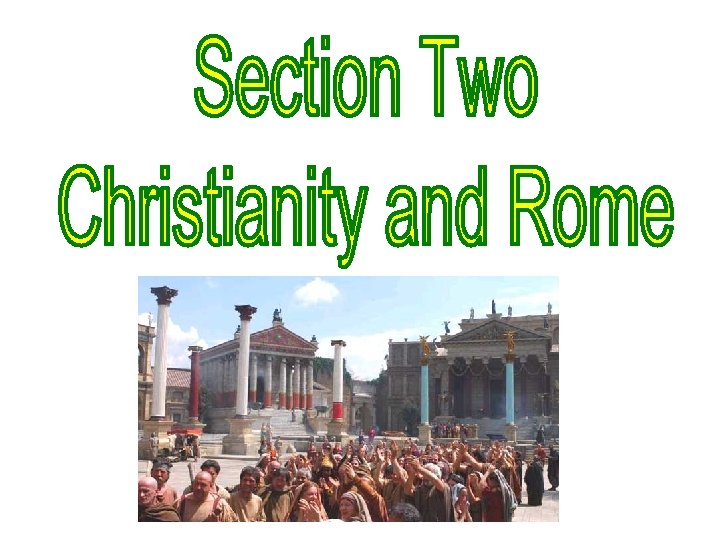
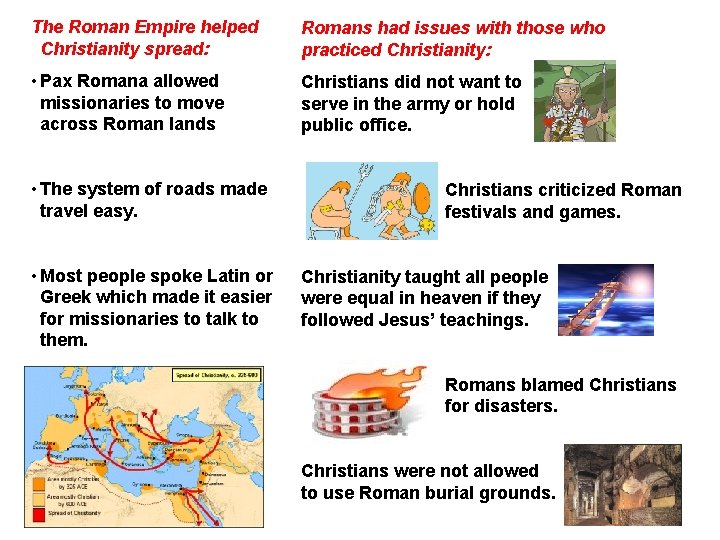
The Roman Empire helped Christianity spread: Romans had issues with those who practiced Christianity: • Pax Romana allowed missionaries to move across Roman lands Christians did not want to serve in the army or hold public office. • The system of roads made travel easy. • Most people spoke Latin or Greek which made it easier for missionaries to talk to them. Christians criticized Roman festivals and games. Christianity taught all people were equal in heaven if they followed Jesus’ teachings. Romans blamed Christians for disasters. Christians were not allowed to use Roman burial grounds.
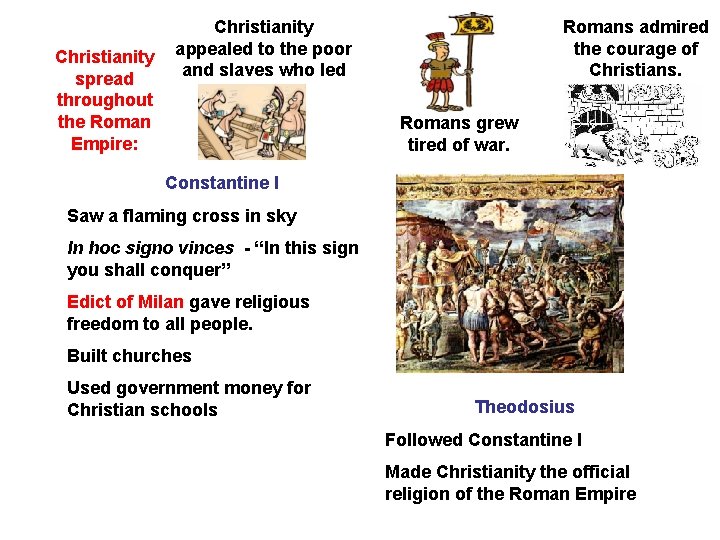
Christianity spread throughout the Roman Empire: Christianity appealed to the poor and slaves who led bad lives. Romans admired the courage of Christians. Romans grew tired of war. Constantine I Saw a flaming cross in sky In hoc signo vinces - “In this sign you shall conquer” Edict of Milan gave religious freedom to all people. Built churches Used government money for Christian schools Theodosius Followed Constantine I Made Christianity the official religion of the Roman Empire
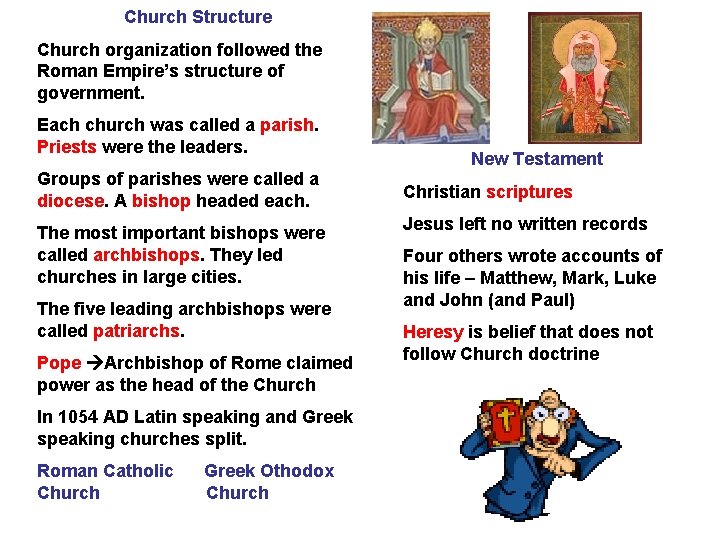
Church Structure Church organization followed the Roman Empire’s structure of government. Each church was called a parish. Priests were the leaders. Groups of parishes were called a diocese. A bishop headed each. The most important bishops were called archbishops. They led churches in large cities. The five leading archbishops were called patriarchs. Pope Archbishop of Rome claimed power as the head of the Church In 1054 AD Latin speaking and Greek speaking churches split. Roman Catholic Church Greek Othodox Church New Testament Christian scriptures Jesus left no written records Four others wrote accounts of his life – Matthew, Mark, Luke and John (and Paul) Heresy is belief that does not follow Church doctrine
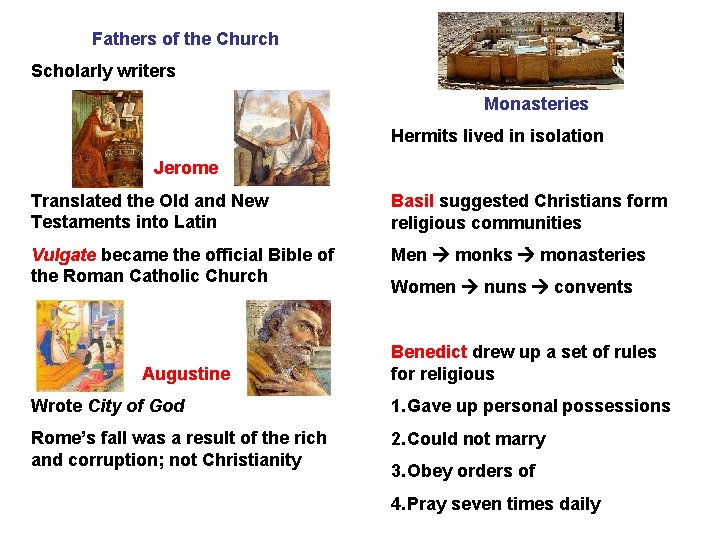
Fathers of the Church Scholarly writers Monasteries Hermits lived in isolation Jerome Translated the Old and New Testaments into Latin Basil suggested Christians form religious communities Vulgate became the official Bible of the Roman Catholic Church Men monks monasteries Augustine Women nuns convents Benedict drew up a set of rules for religious Wrote City of God 1. Gave up personal possessions Rome’s fall was a result of the rich and corruption; not Christianity 2. Could not marry 3. Obey orders of 4. Pray seven times daily
- Slides: 9