
The Life of a Star The Life of


- Slides: 12
The Life of a Star The Life of a Star
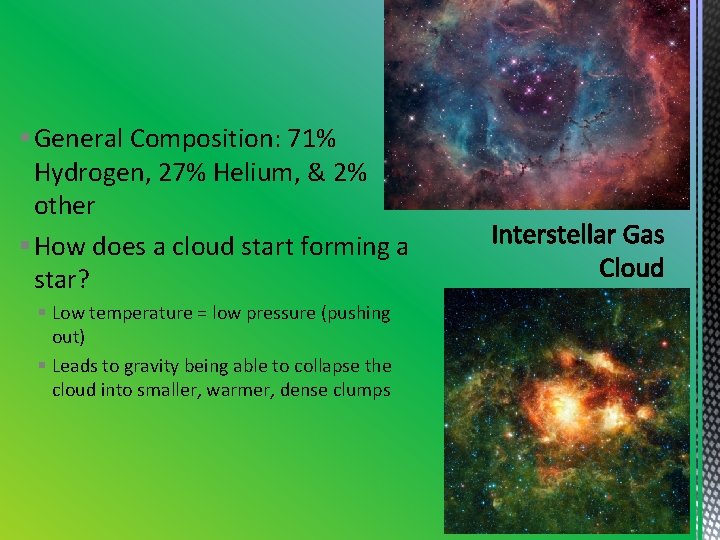
§ General Composition: 71% Hydrogen, 27% Helium, & 2% other § How does a cloud start forming a star? § Low temperature = low pressure (pushing out) § Leads to gravity being able to collapse the cloud into smaller, warmer, dense clumps
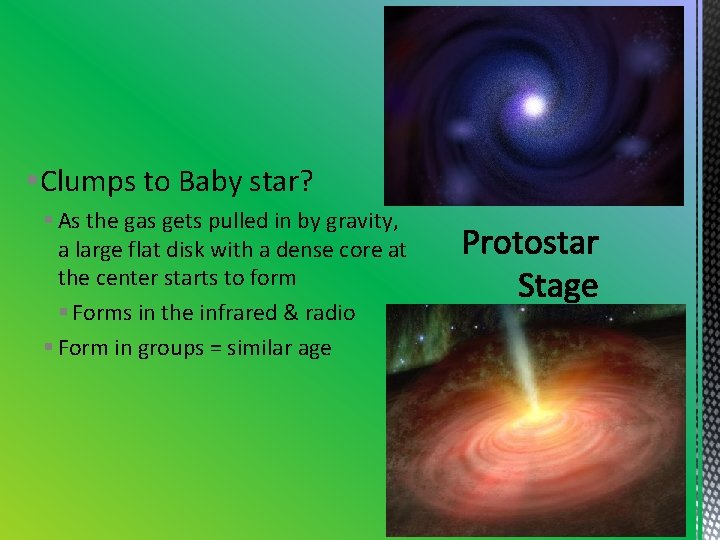
§Clumps to Baby star? § As the gas gets pulled in by gravity, a large flat disk with a dense core at the center starts to form § Forms in the infrared & radio § Form in groups = similar age
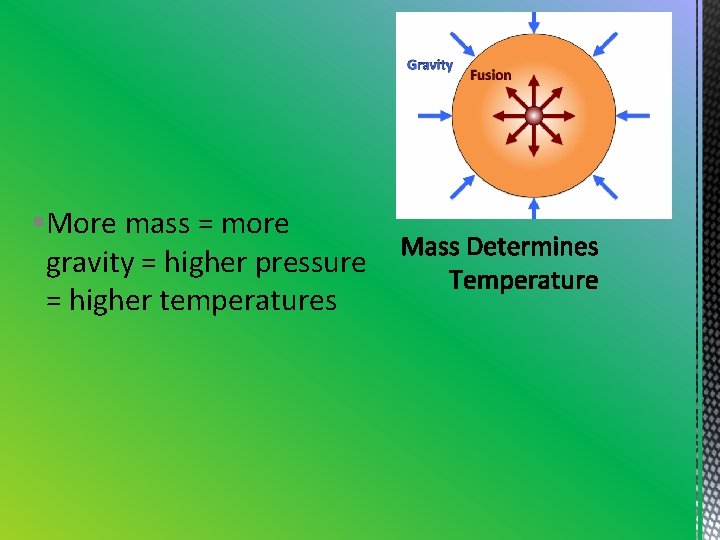
§More mass = more gravity = higher pressure = higher temperatures
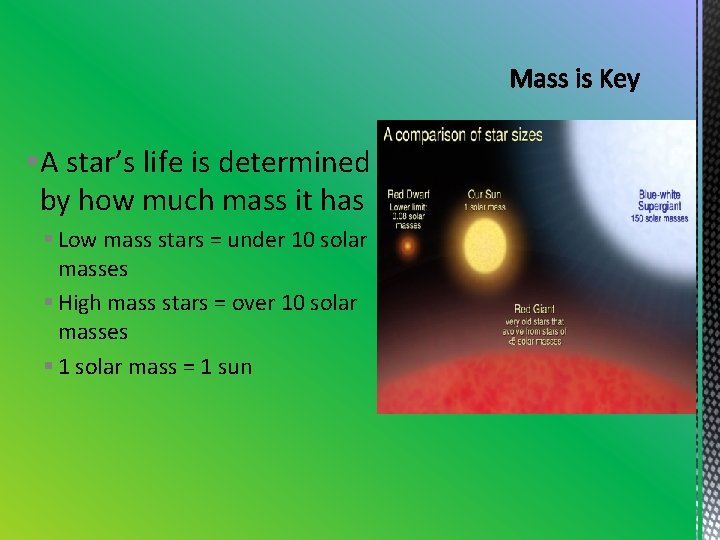
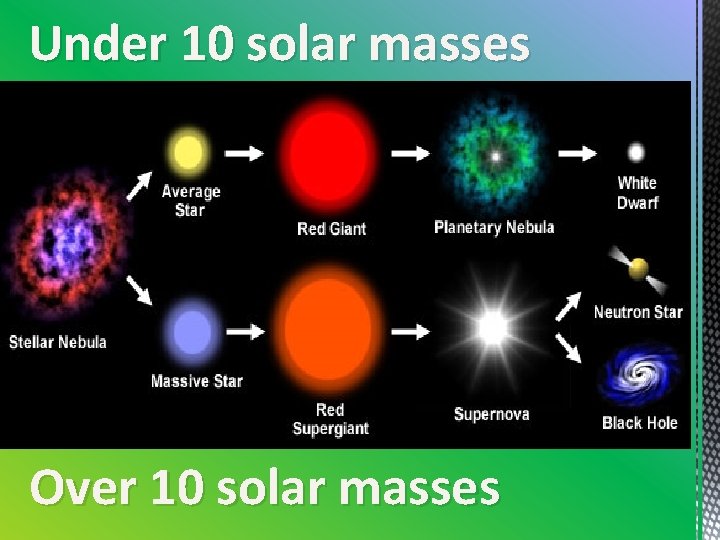
§A star’s life is determined by how much mass it has § Low mass stars = under 10 solar masses § High mass stars = over 10 solar masses § 1 solar mass = 1 sun
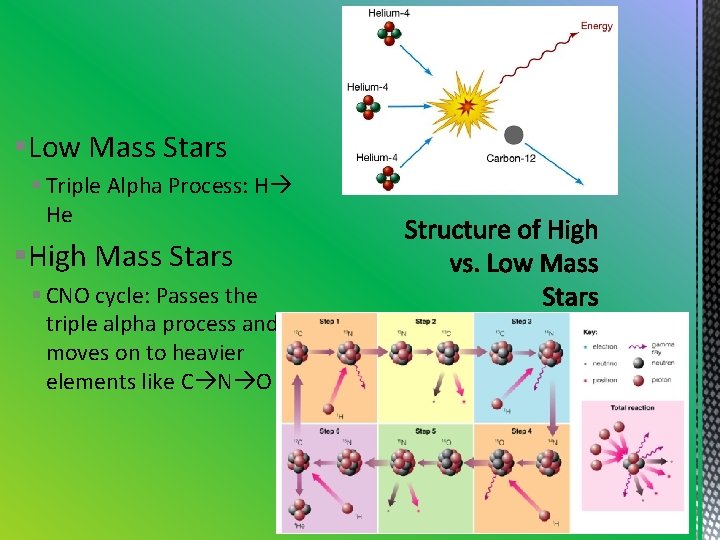
§Low Mass Stars § Triple Alpha Process: H He §High Mass Stars § CNO cycle: Passes the triple alpha process and moves on to heavier elements like C N O
§You need: 1 cup with 6 marshmallows, a napkin, and 5 pasta noodles
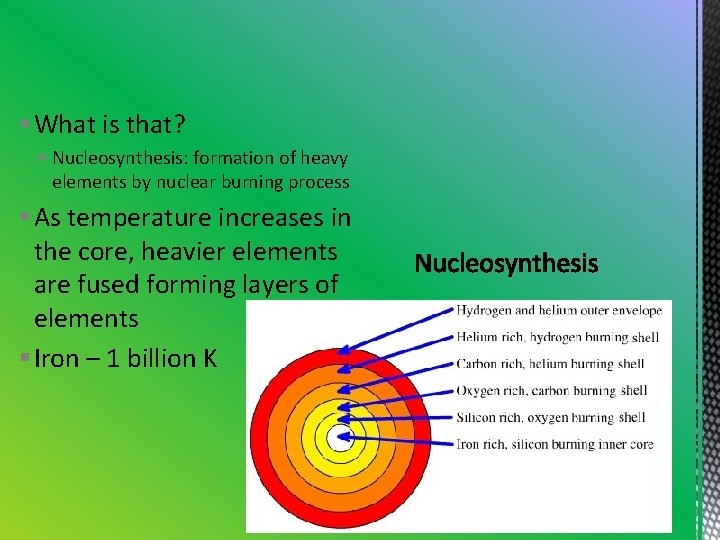
§ What is that? § Nucleosynthesis: formation of heavy elements by nuclear burning process § As temperature increases in the core, heavier elements are fused forming layers of elements § Iron – 1 billion K
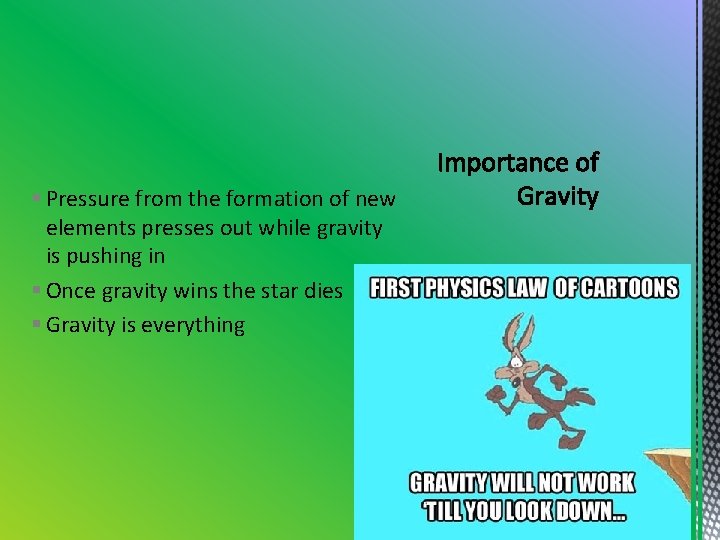
§ Pressure from the formation of new elements presses out while gravity is pushing in § Once gravity wins the star dies § Gravity is everything
§ Once the protostar (baby star) develops H & He fuse forming a main sequence star (yellow dwarf) – like our sun § Once most of the H is fused – gravity wins – the star contracts (gets smaller), increasing the temperature, allowing the star to fuse more He – increasing the pressure – making the star expand to a much larger, cooler size – a red giant § Once that He is used – fuel runs out – star dissolves into space forming a planetary nebula § This leaves behind the bare core – a white dwarf
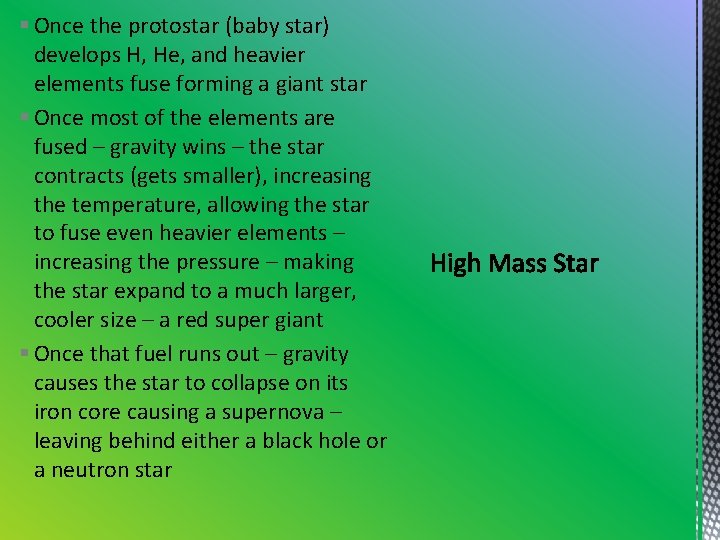
§ Once the protostar (baby star) develops H, He, and heavier elements fuse forming a giant star § Once most of the elements are fused – gravity wins – the star contracts (gets smaller), increasing the temperature, allowing the star to fuse even heavier elements – increasing the pressure – making the star expand to a much larger, cooler size – a red super giant § Once that fuel runs out – gravity causes the star to collapse on its iron core causing a supernova – leaving behind either a black hole or a neutron star
Under 10 solar masses Over 10 solar masses