
The Life of a honey bee Scott Davis
The Life of a honey bee Scott Davis – Buncombe County Beekeepers
What is a honey bee? hon·ey·bee ˈhənēˌbē/ noun: honeybee; plural noun: honeybees; noun: hive bee; plural noun: hive bees a stinging winged insect that collects nectar and pollen, produces wax and honey, and lives in large communities. It was domesticated for its honey around the end of the Neolithic period and is usually kept in hives. Important to pollination of food crops
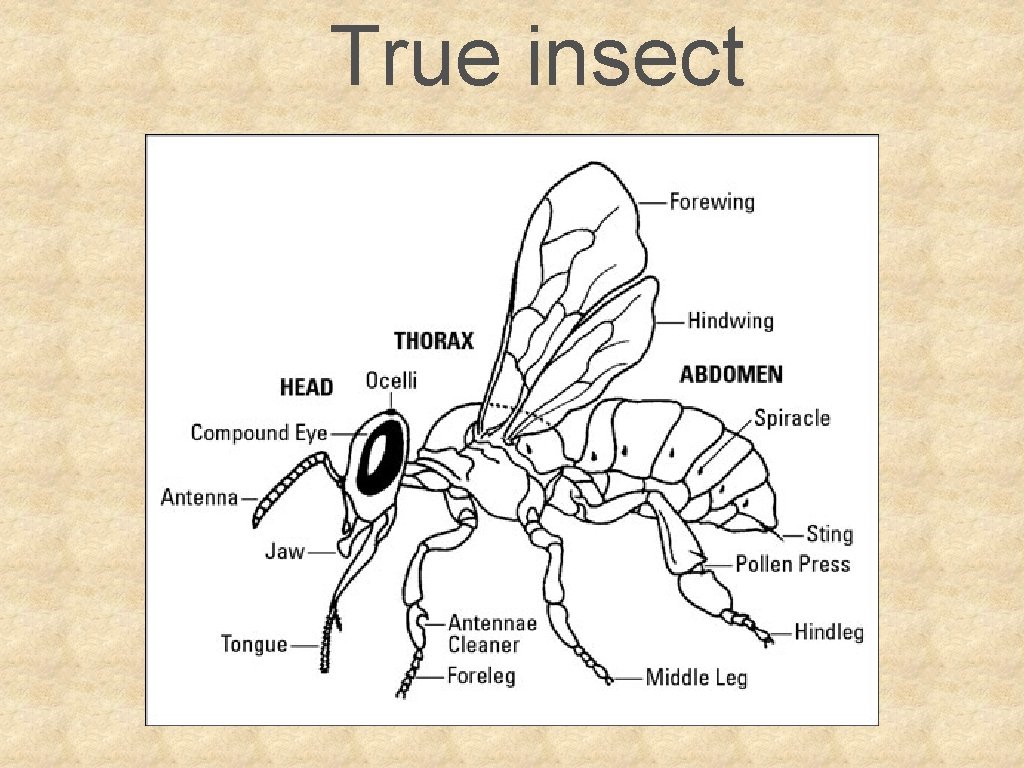
True insect
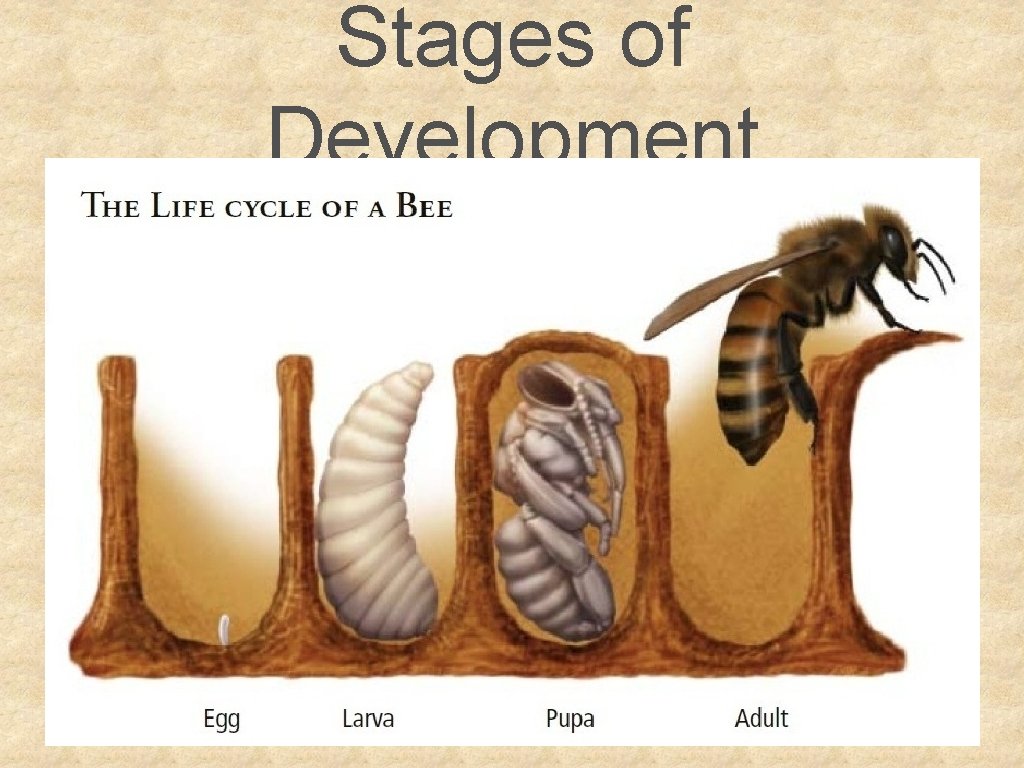
Stages of Development
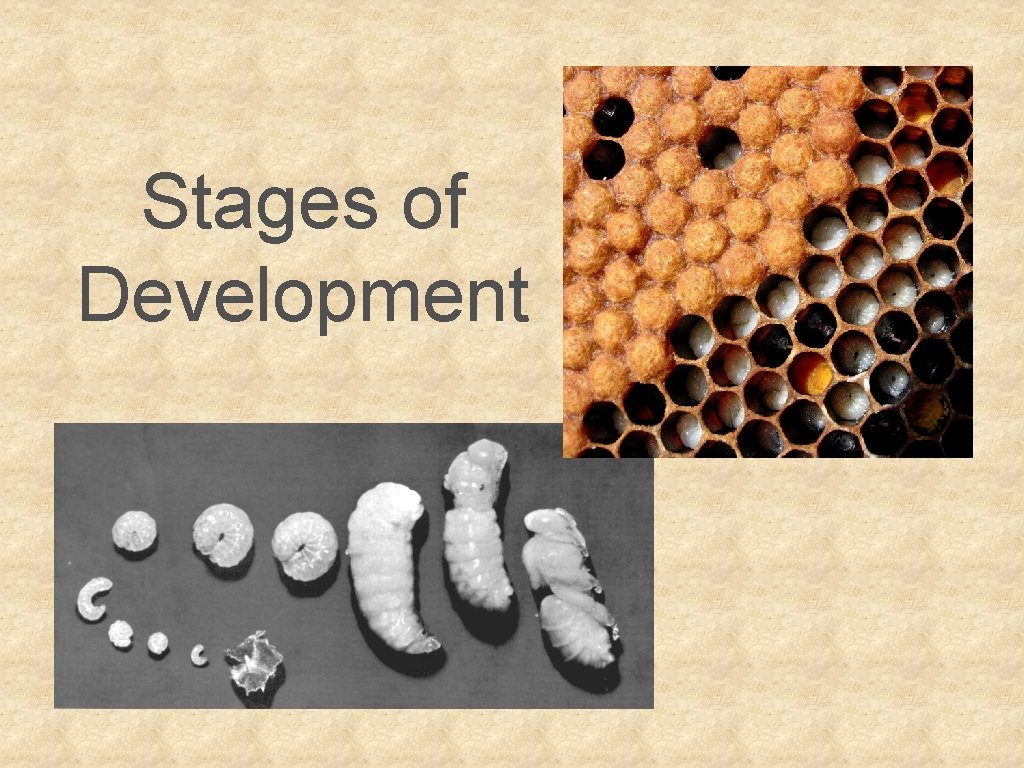
Stages of Development

Eggs & Larvae
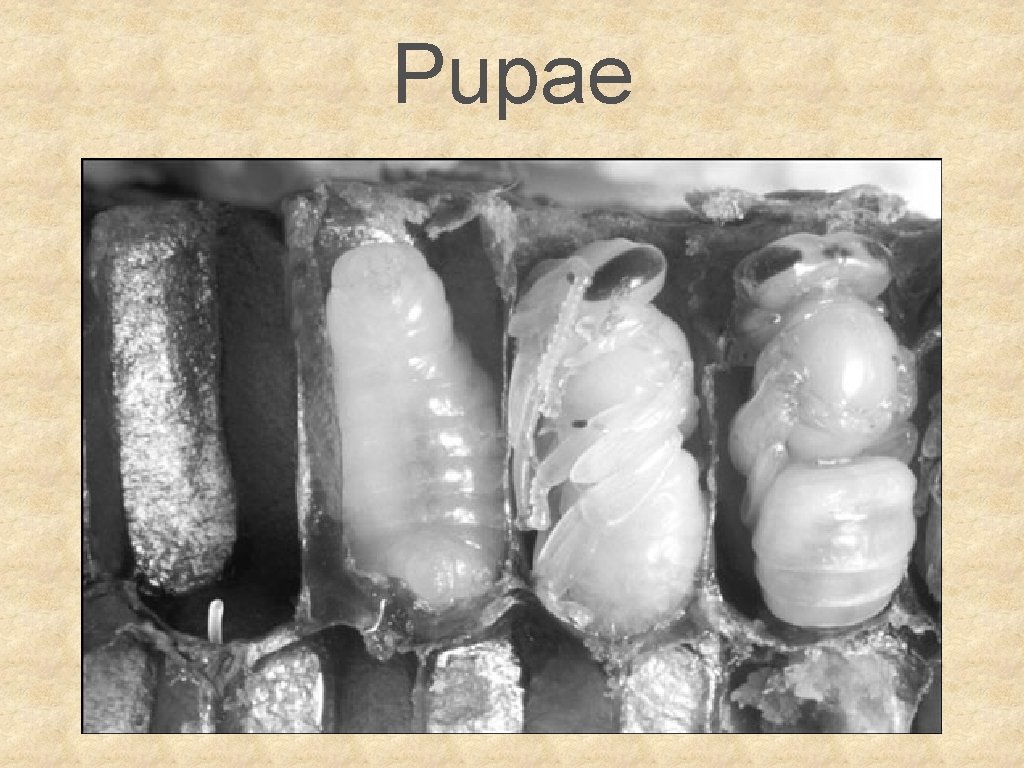
Pupae
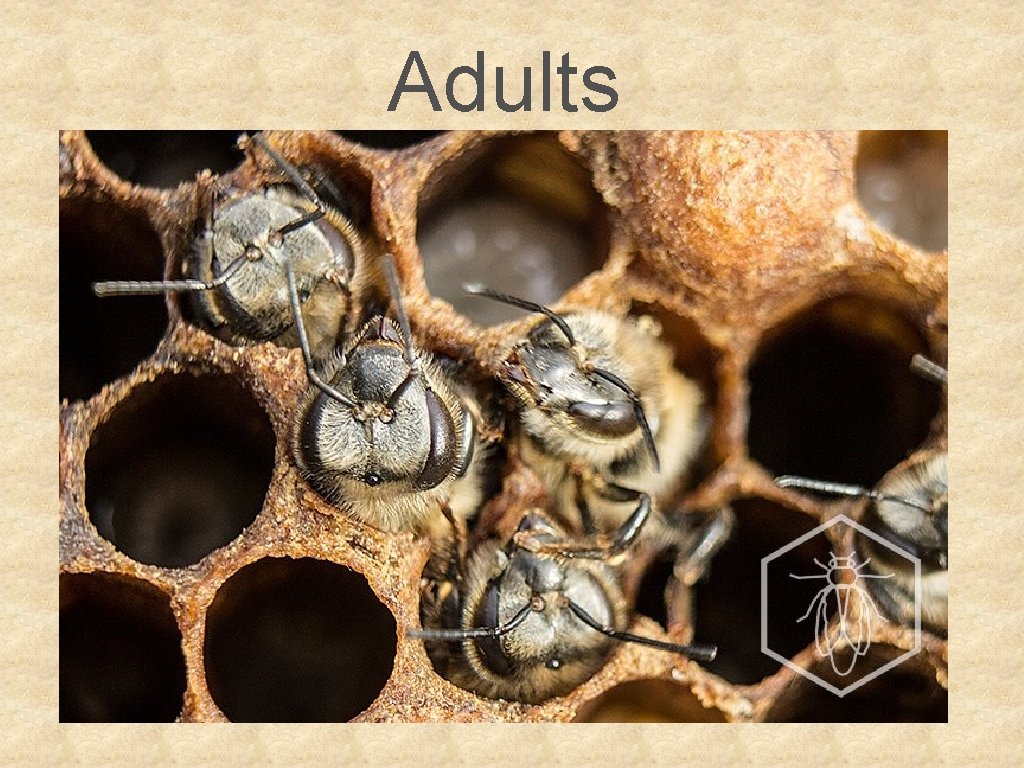
Adults
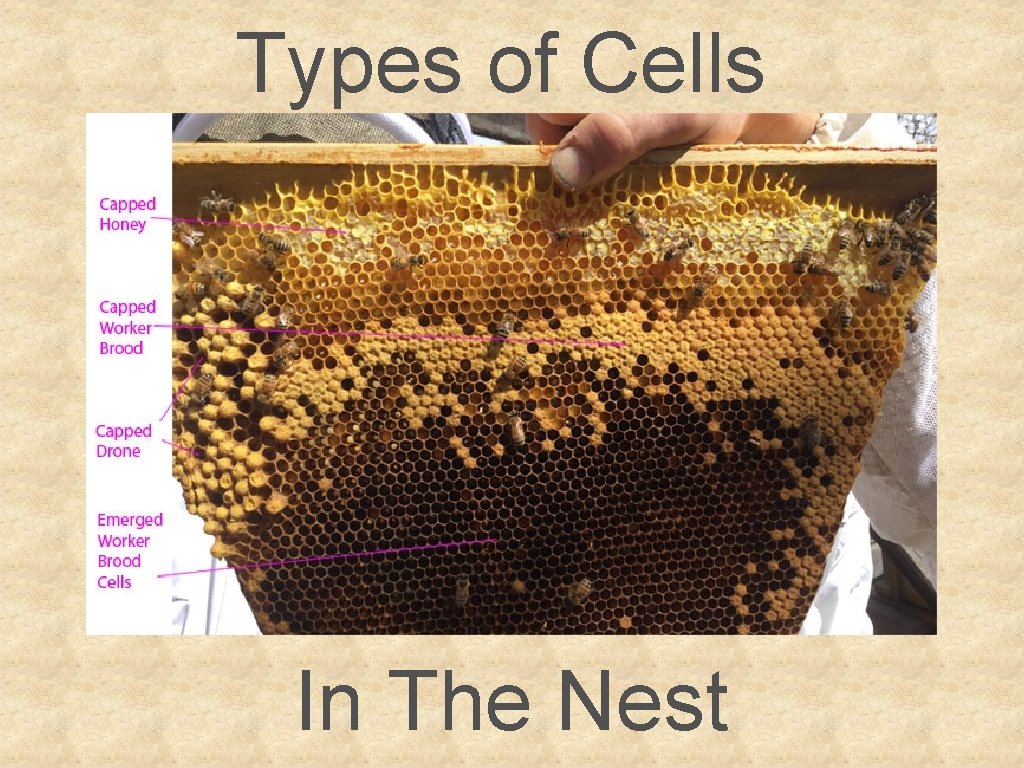
Types of Cells In The Nest
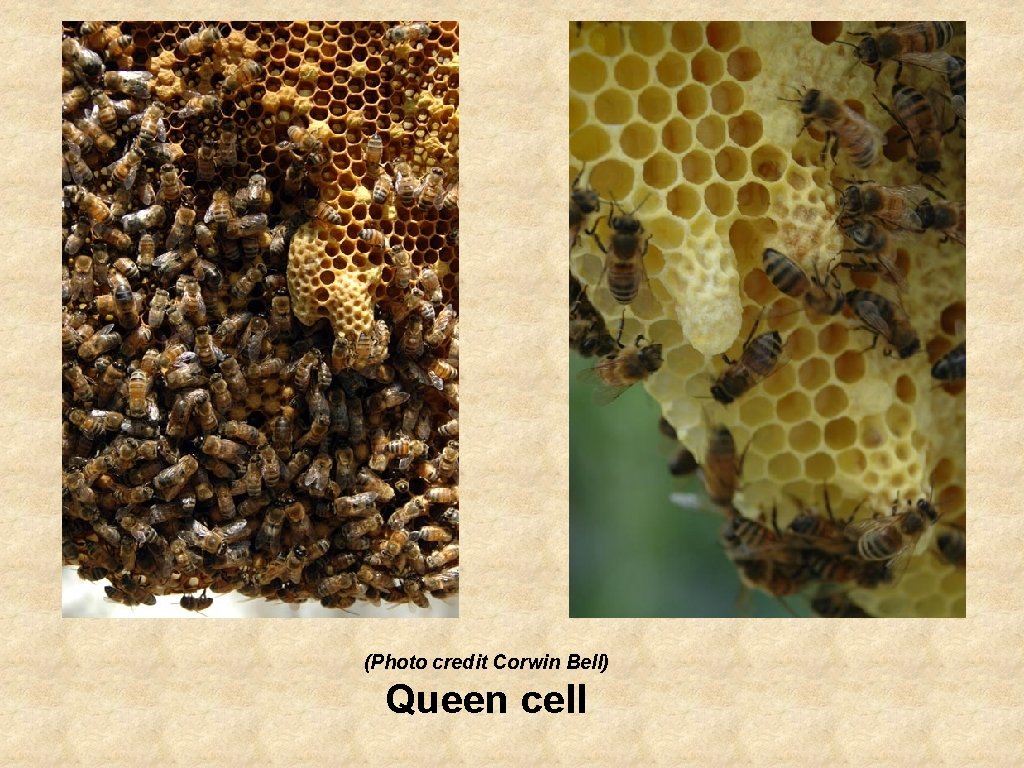
(Photo credit Corwin Bell) Queen cell
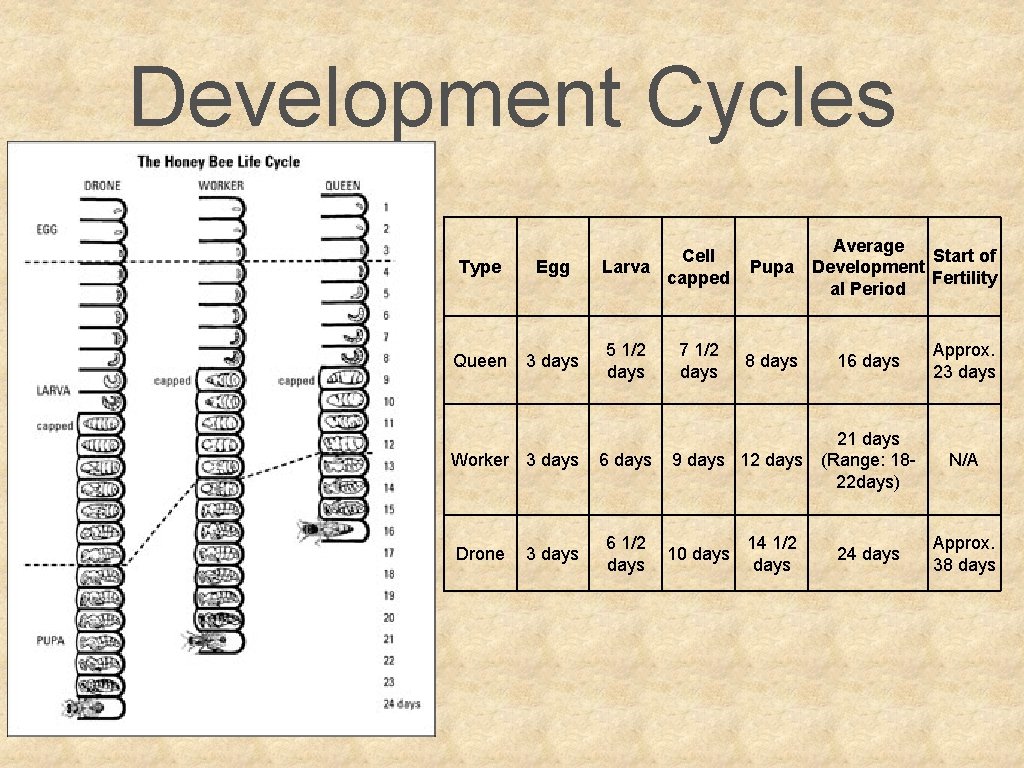
Development Cycles Type Egg Queen 3 days Worker 3 days Drone 3 days Cell Larva capped Average Start of Pupa Development Fertility al Period 5 1/2 days 8 days 6 1/2 days 7 1/2 days 16 days 21 days 9 days 12 days (Range: 1822 days) 10 days 14 1/2 days 24 days Approx. 23 days N/A Approx. 38 days
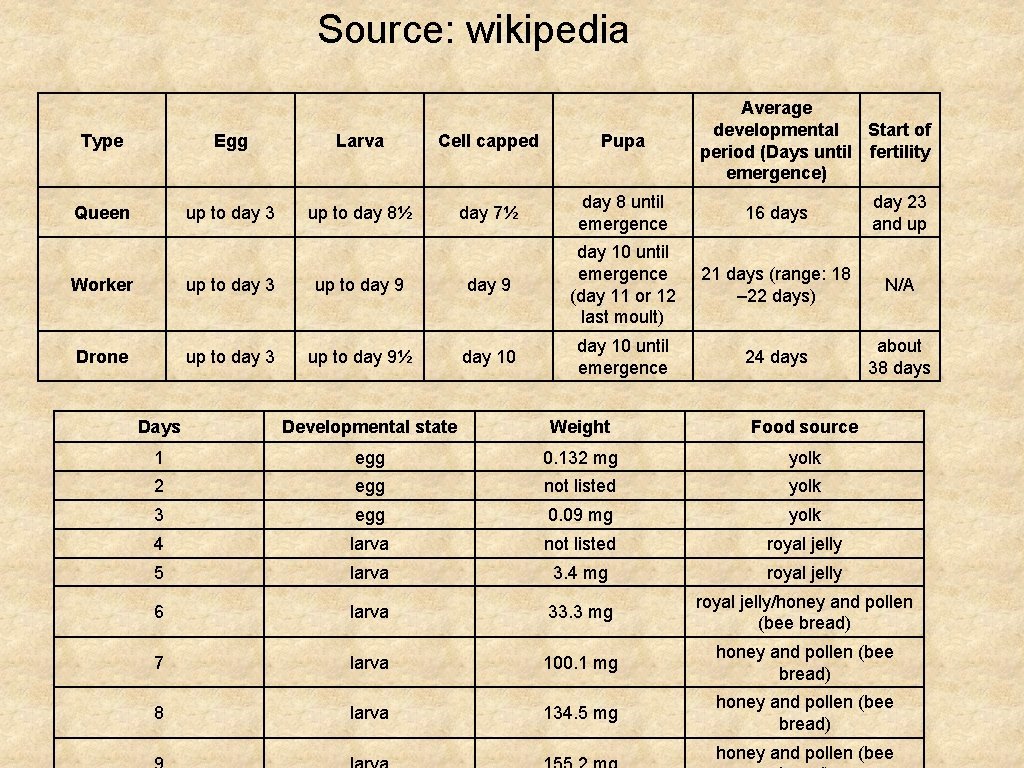
Source: wikipedia Average developmental Start of period (Days until fertility emergence) Type Egg Larva Cell capped Pupa Queen up to day 3 up to day 8½ day 7½ day 8 until emergence 16 days day 23 and up 21 days (range: 18 – 22 days) N/A 24 days about 38 days Worker up to day 3 up to day 9 day 10 until emergence (day 11 or 12 last moult) Drone up to day 3 up to day 9½ day 10 until emergence Days Developmental state Weight Food source 1 egg 0. 132 mg yolk 2 egg not listed yolk 3 egg 0. 09 mg yolk 4 larva not listed royal jelly 5 larva 3. 4 mg royal jelly 6 larva 33. 3 mg royal jelly/honey and pollen (bee bread) 7 larva 100. 1 mg honey and pollen (bee bread) 8 larva 134. 5 mg honey and pollen (bee bread) honey and pollen (bee
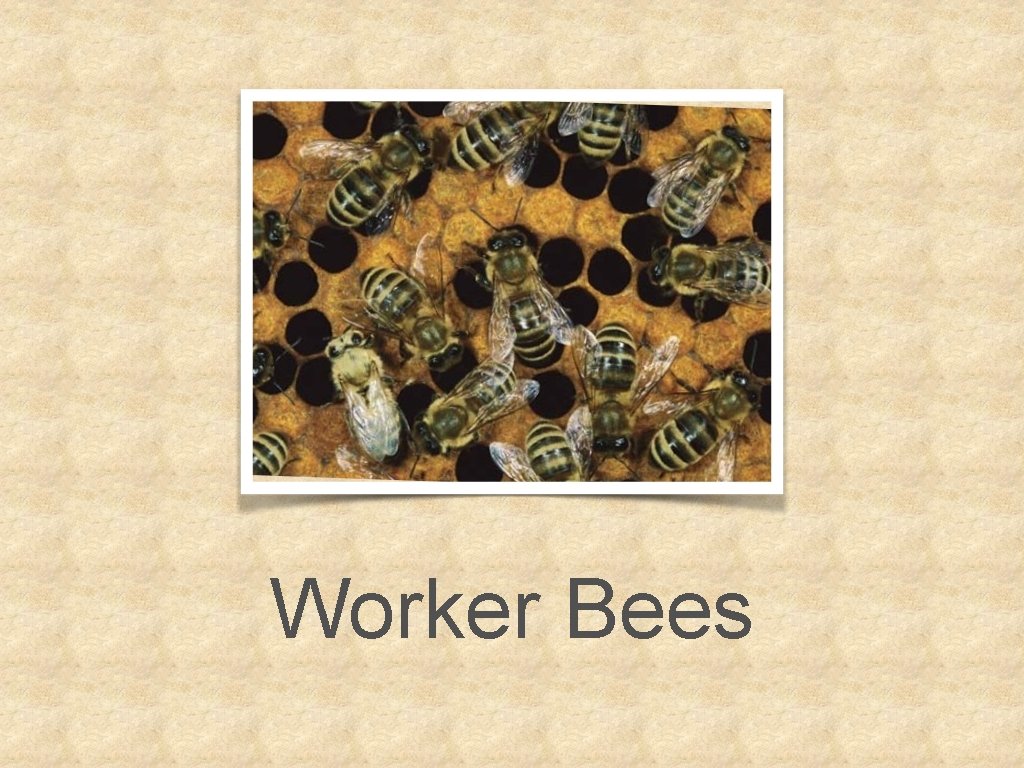
Worker Bees
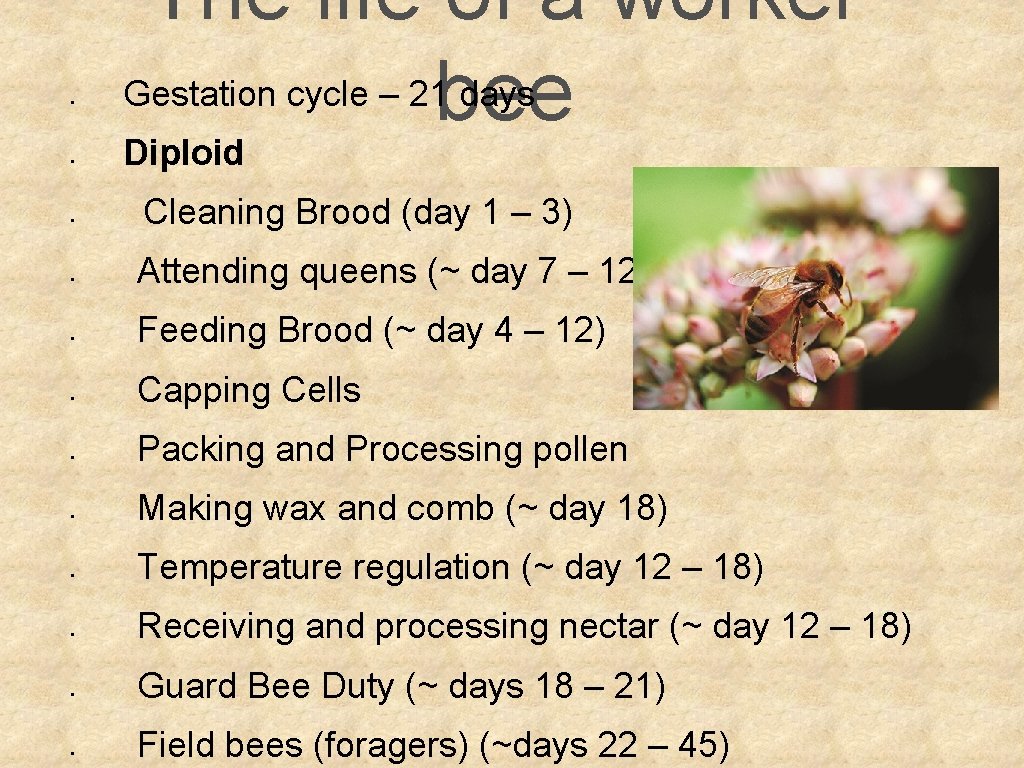
§ § § The life of a worker Gestation cycle – 21 bee days Diploid Cleaning Brood (day 1 – 3) Attending queens (~ day 7 – 12) Feeding Brood (~ day 4 – 12) Capping Cells Packing and Processing pollen Making wax and comb (~ day 18) Temperature regulation (~ day 12 – 18) Receiving and processing nectar (~ day 12 – 18) Guard Bee Duty (~ days 18 – 21) Field bees (foragers) (~days 22 – 45)
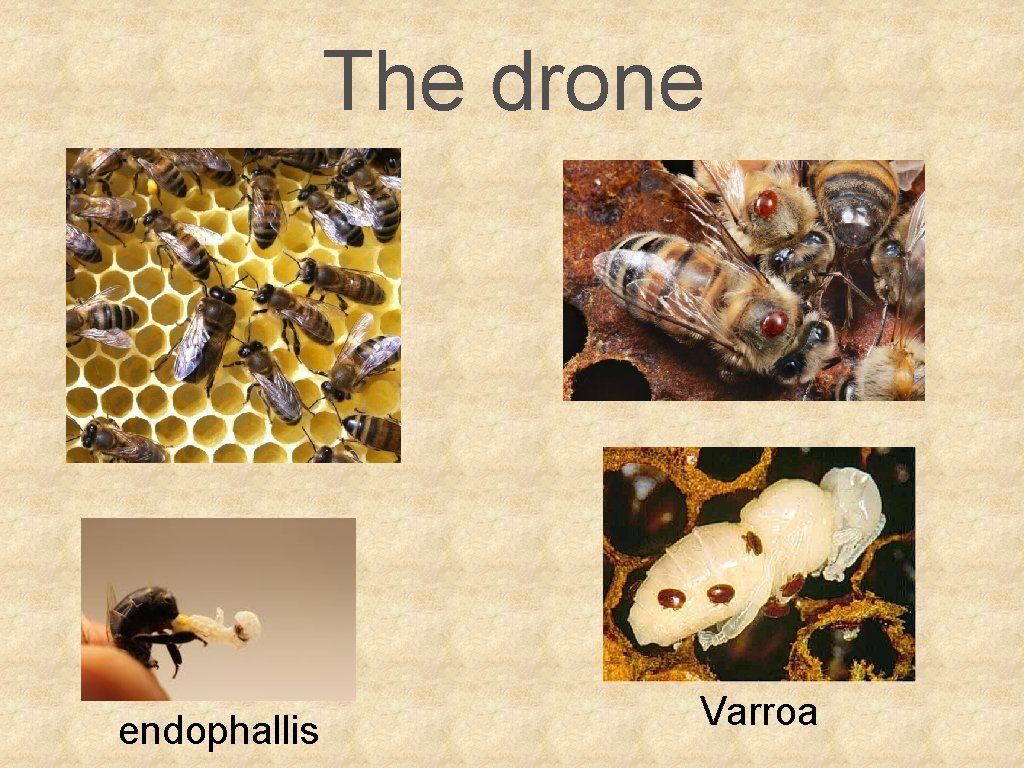
The drone endophallis Varroa
• • • The life of a drone Gestation – 24 days – HAPLOID Male Life span ~ 58 days PREFERED BY VARROA Confined to hive until ~ 12 days old Cant feed himself No purpose in the hive Sexually mature at ~ 2 weeks old Generally accepted in ANY hives Goes to Drone Congregation areas on warm afternoons • DCA – Queen Mating Areas • Mating lasts up to 5 seconds
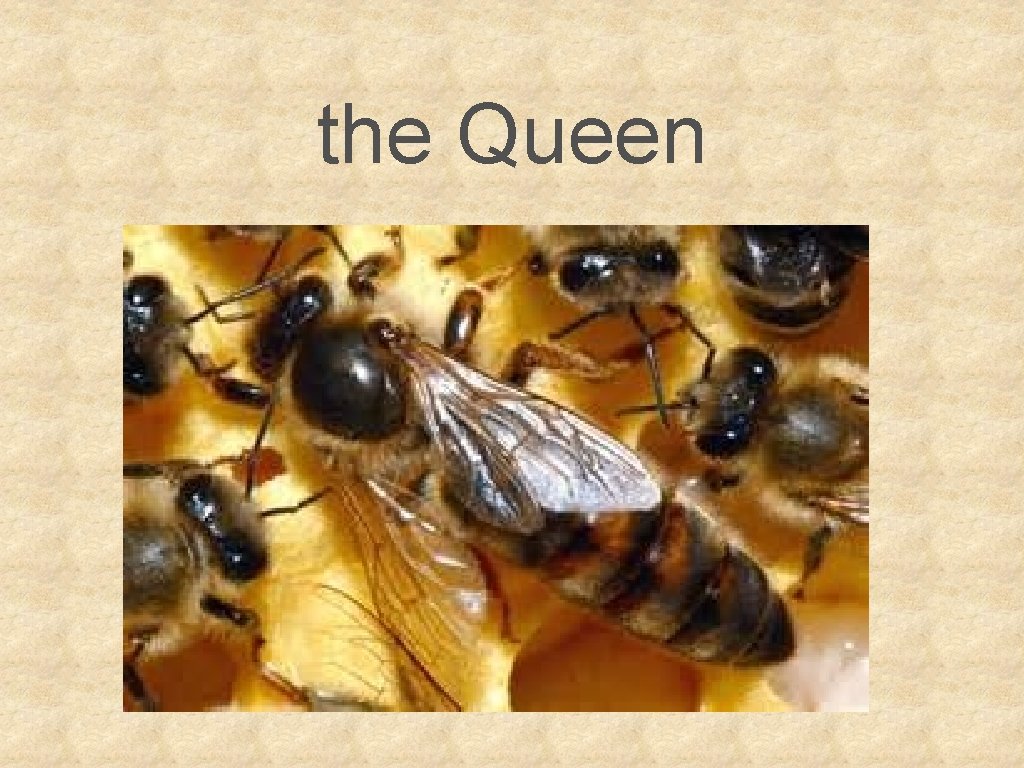
the Queen
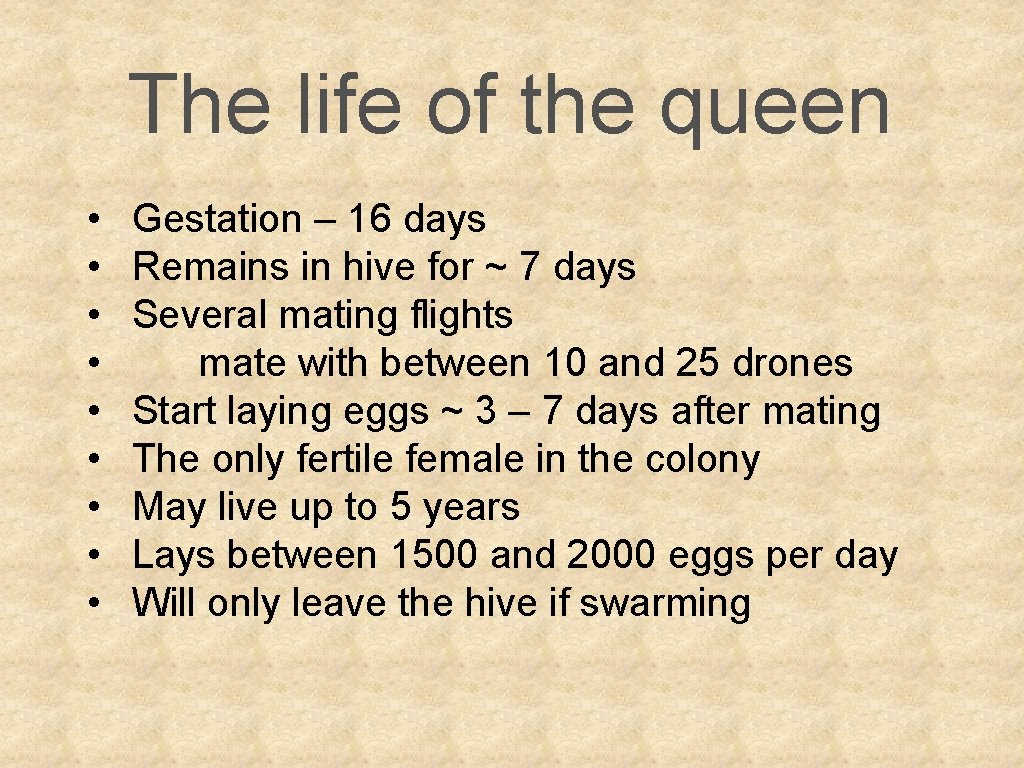
The life of the queen • • • Gestation – 16 days Remains in hive for ~ 7 days Several mating flights mate with between 10 and 25 drones Start laying eggs ~ 3 – 7 days after mating The only fertile female in the colony May live up to 5 years Lays between 1500 and 2000 eggs per day Will only leave the hive if swarming
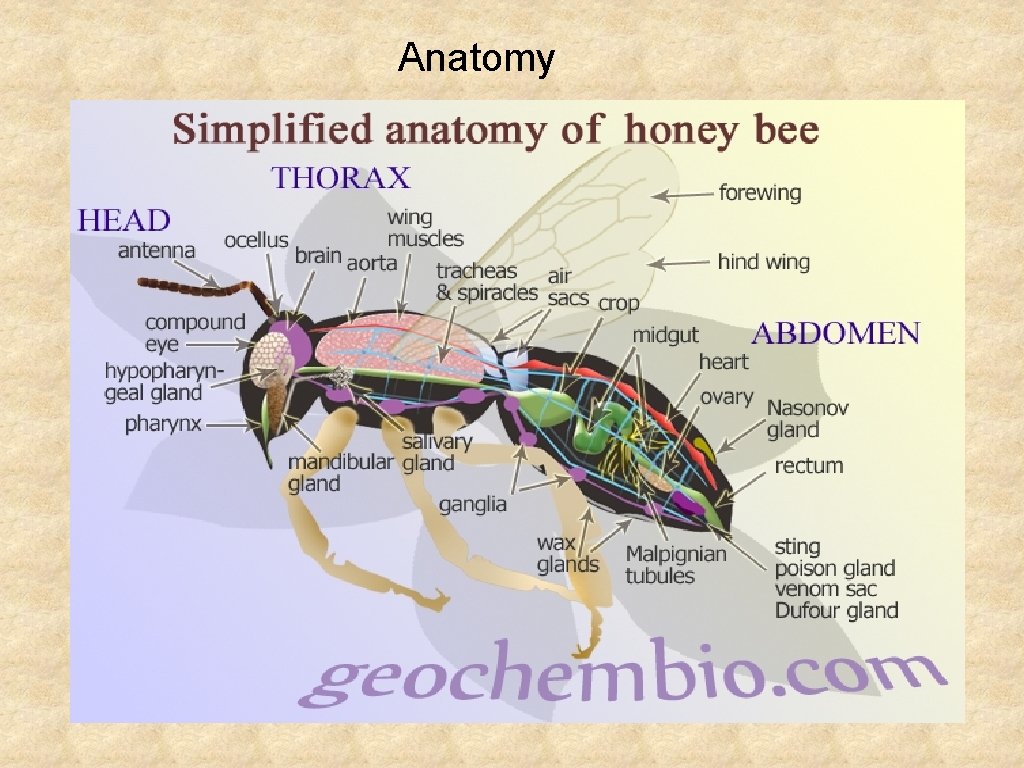
Anatomy
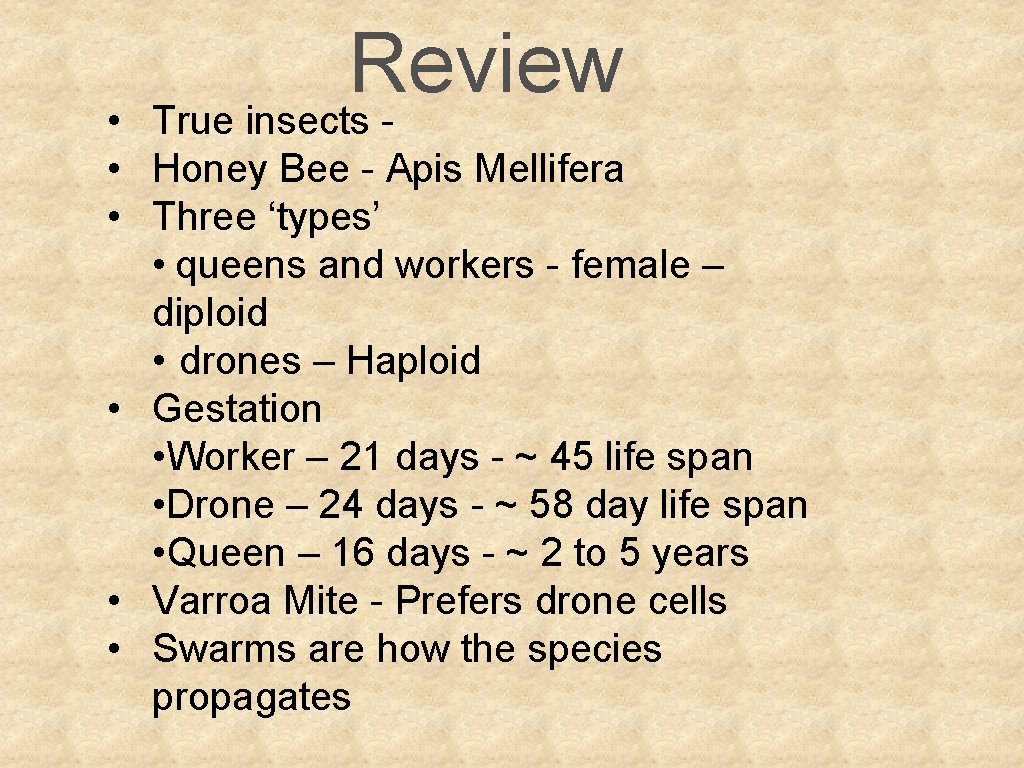
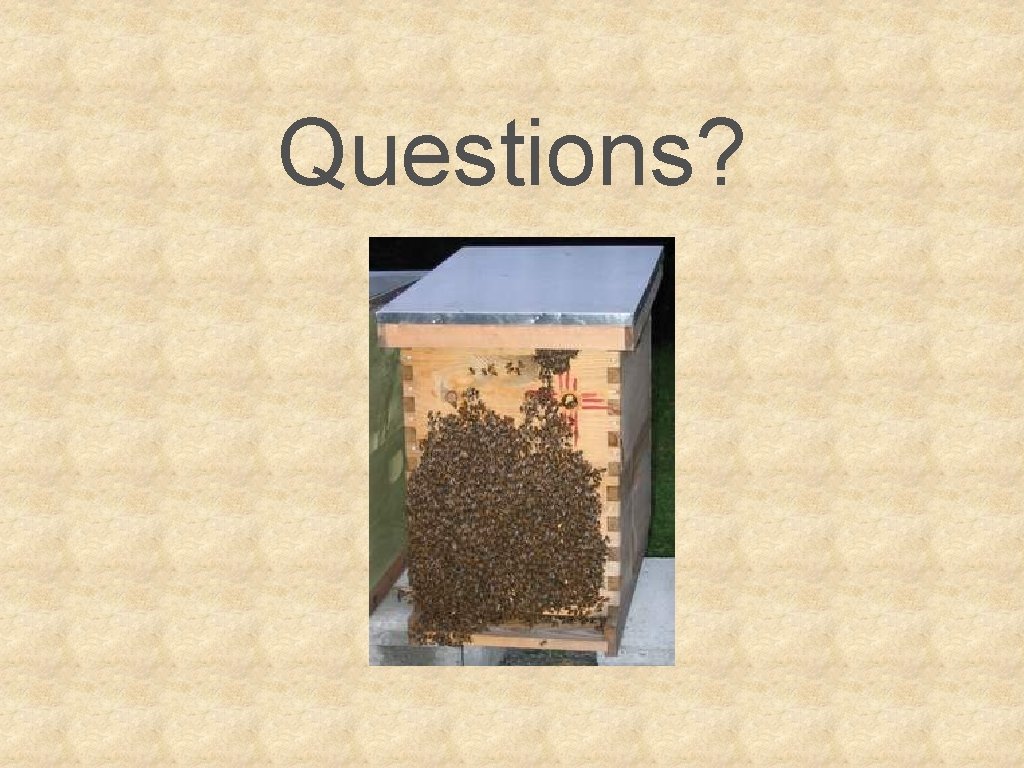
Review • True insects • Honey Bee - Apis Mellifera • Three ‘types’ • queens and workers - female – diploid • drones – Haploid • Gestation • Worker – 21 days - ~ 45 life span • Drone – 24 days - ~ 58 day life span • Queen – 16 days - ~ 2 to 5 years • Varroa Mite - Prefers drone cells • Swarms are how the species propagates
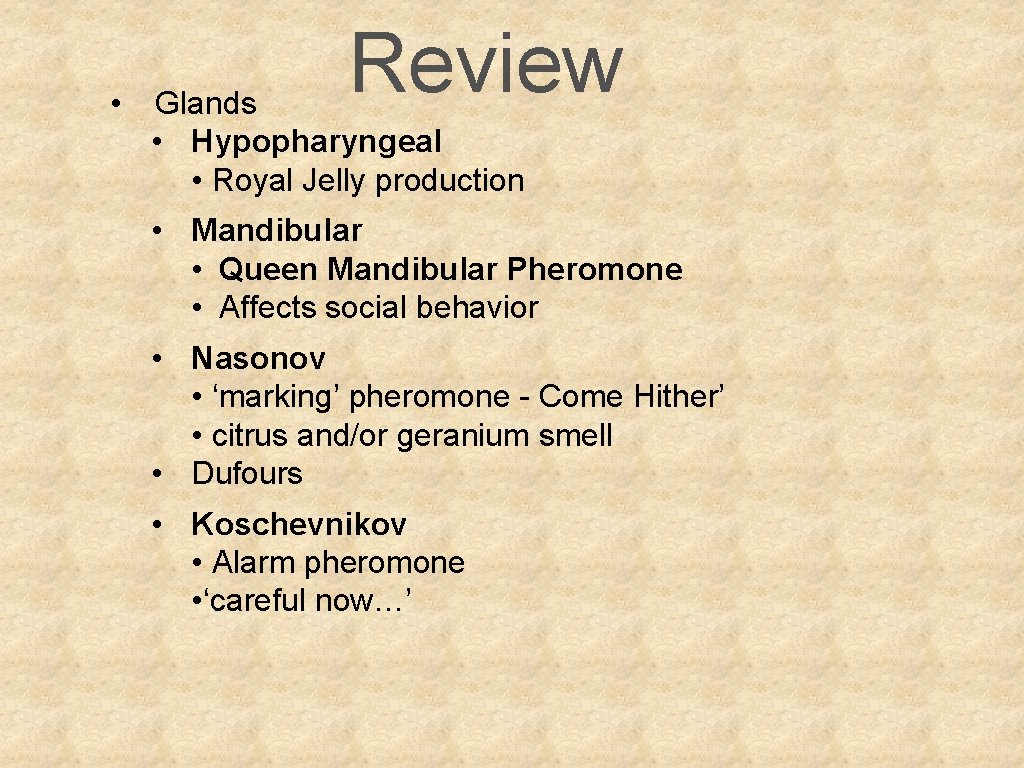
• Review Glands • Hypopharyngeal • Royal Jelly production • Mandibular • Queen Mandibular Pheromone • Affects social behavior • Nasonov • ‘marking’ pheromone - Come Hither’ • citrus and/or geranium smell • Dufours • Koschevnikov • Alarm pheromone • ‘careful now…’
Questions?
- Slides: 22