
The Life Cycle of a Star By Katie
The Life Cycle of a Star By: Katie Huber & Bonnie King
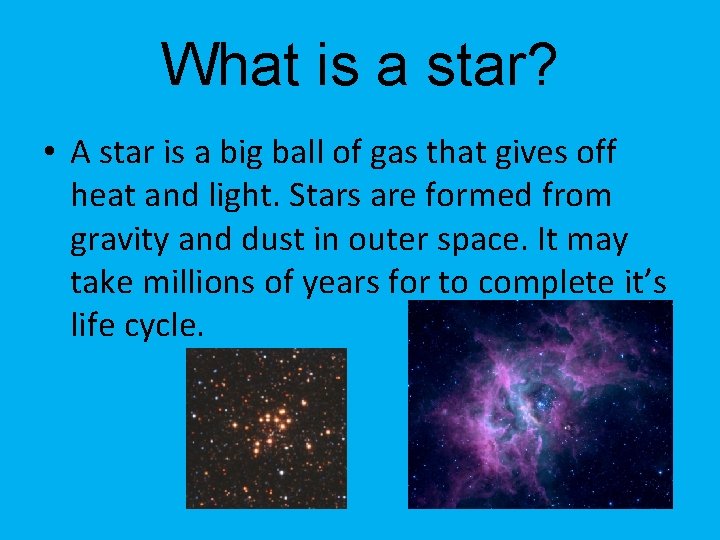
What is a star? • A star is a big ball of gas that gives off heat and light. Stars are formed from gravity and dust in outer space. It may take millions of years for to complete it’s life cycle.
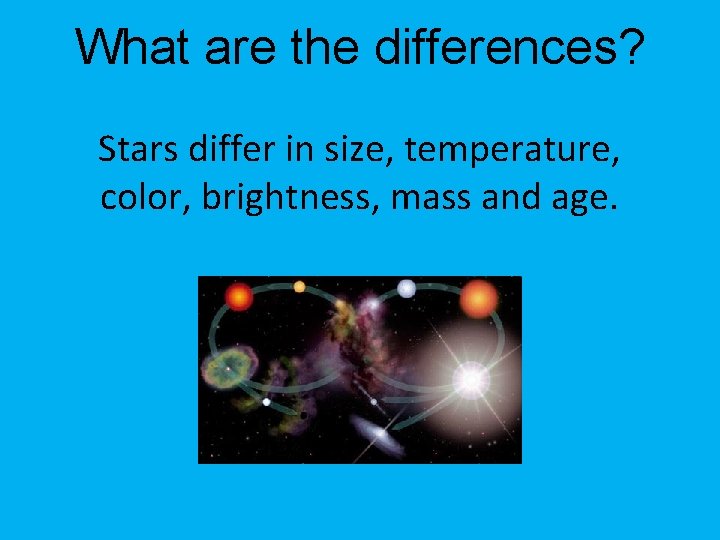
What are the differences? Stars differ in size, temperature, color, brightness, mass and age.
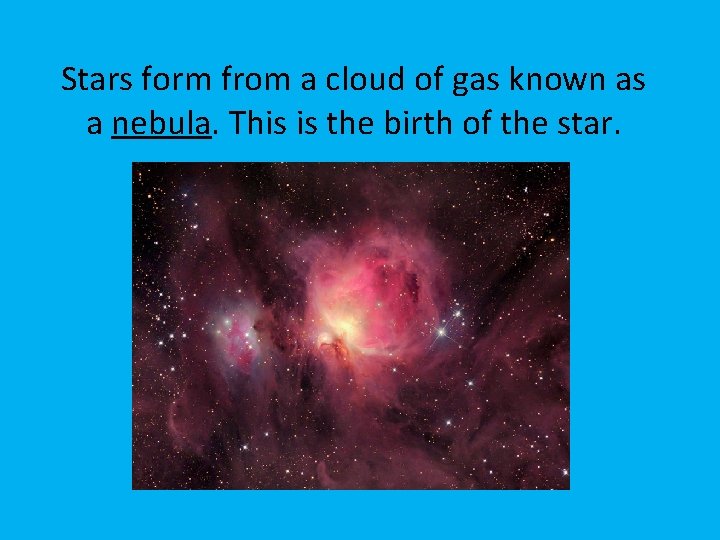
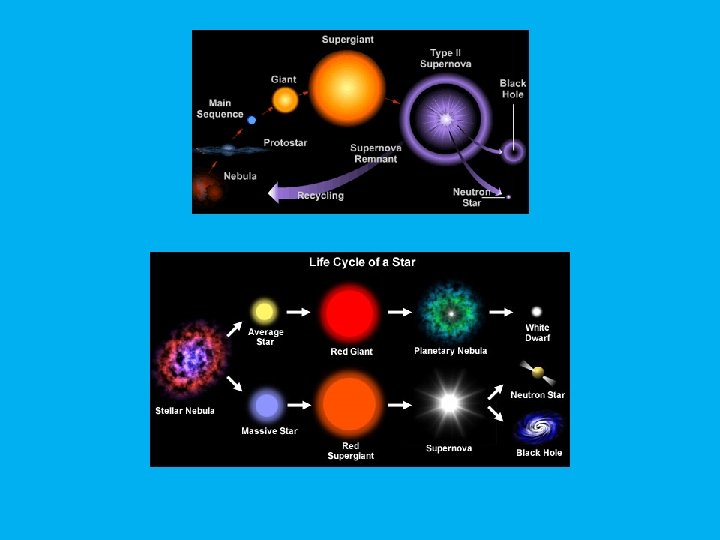
Stars form from a cloud of gas known as a nebula. This is the birth of the star.
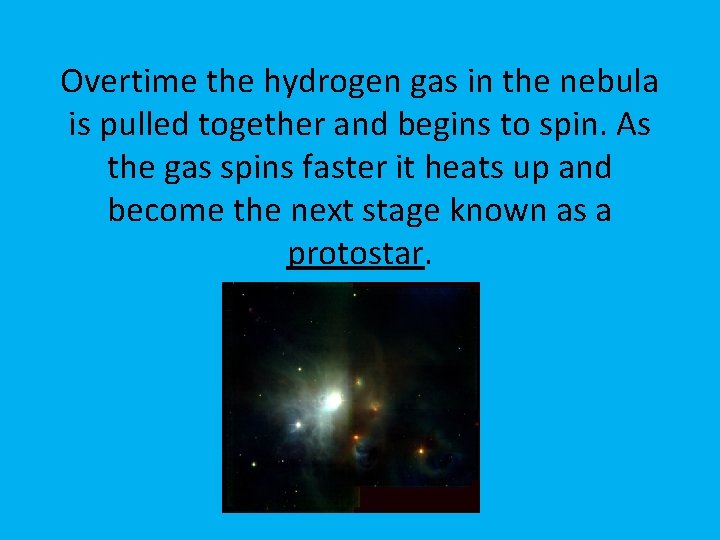
Overtime the hydrogen gas in the nebula is pulled together and begins to spin. As the gas spins faster it heats up and become the next stage known as a protostar.
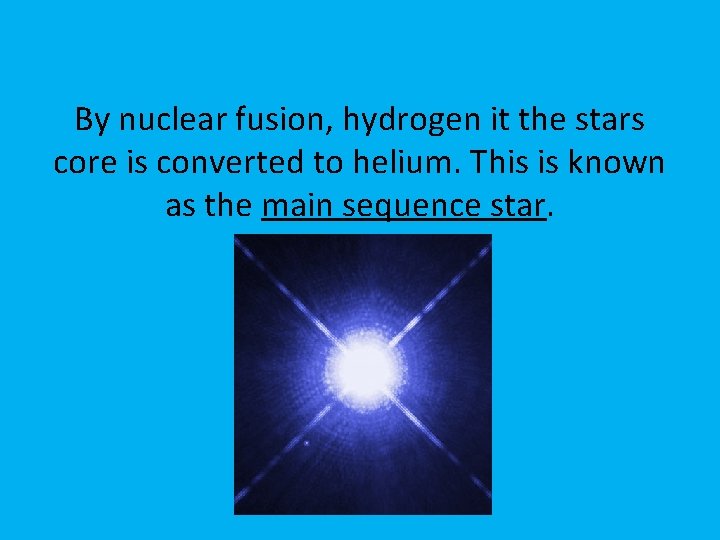
By nuclear fusion, hydrogen it the stars core is converted to helium. This is known as the main sequence star.
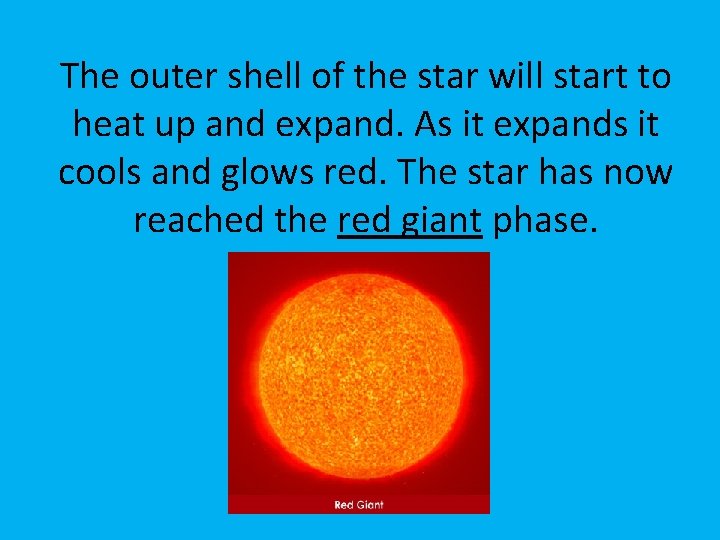
The outer shell of the star will start to heat up and expand. As it expands it cools and glows red. The star has now reached the red giant phase.
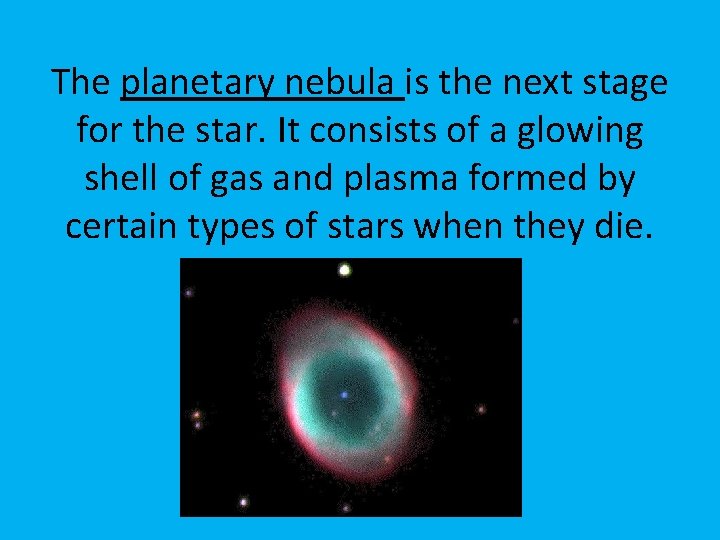
The planetary nebula is the next stage for the star. It consists of a glowing shell of gas and plasma formed by certain types of stars when they die.
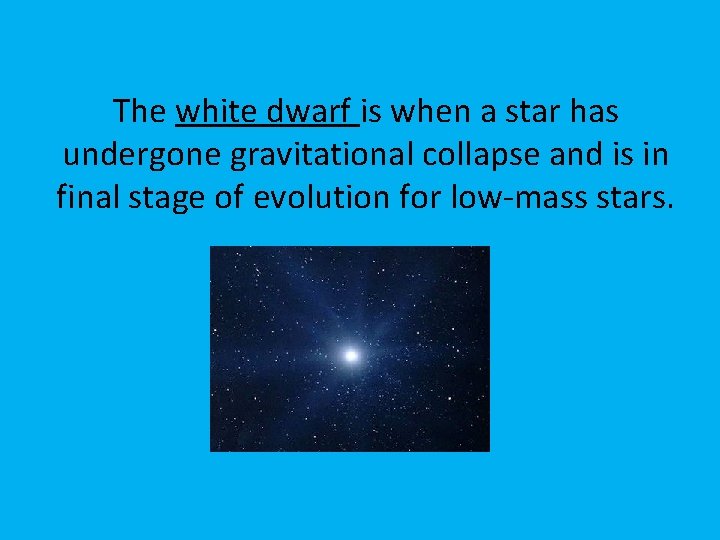
The white dwarf is when a star has undergone gravitational collapse and is in final stage of evolution for low-mass stars.
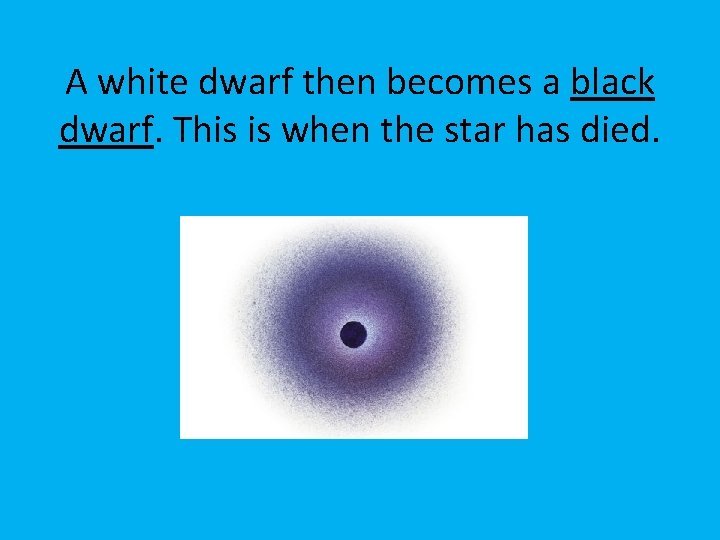
A white dwarf then becomes a black dwarf. This is when the star has died.
Why do stars seem to flicker? • Because the atmosphere acts like a prism when you look at the stars. Why do stars appear to change color? Because the earth’s atmosphere has ripples in it which distorts the picture of stars.
Works Cited “Exploring Stars. ” 2008. Discovery Education http: //school. discoveryeducation. com/lessonplans/programs/exploringstars/. “Star Life Cycle- Zoom Astronomy. ” 2001. Enchanted Learning. http: //www. enchantedlearning. com/permissions/ “NASA’s Imagine The Universe. ” 1997. 27 September 2004. http: //imagine. gsfc. nasa. gov/docs/teachers/lessons/xray_spectra/background. “Seeing in the Dark. ” 2007. March 2008. http: //www. pbs. org/seeinginthedark/astronomy-topics/lives-of-stars. html
- Slides: 13