
THE LIFE CYCLE OF A ROUNDWORM STEP ONE
- Slides: 1
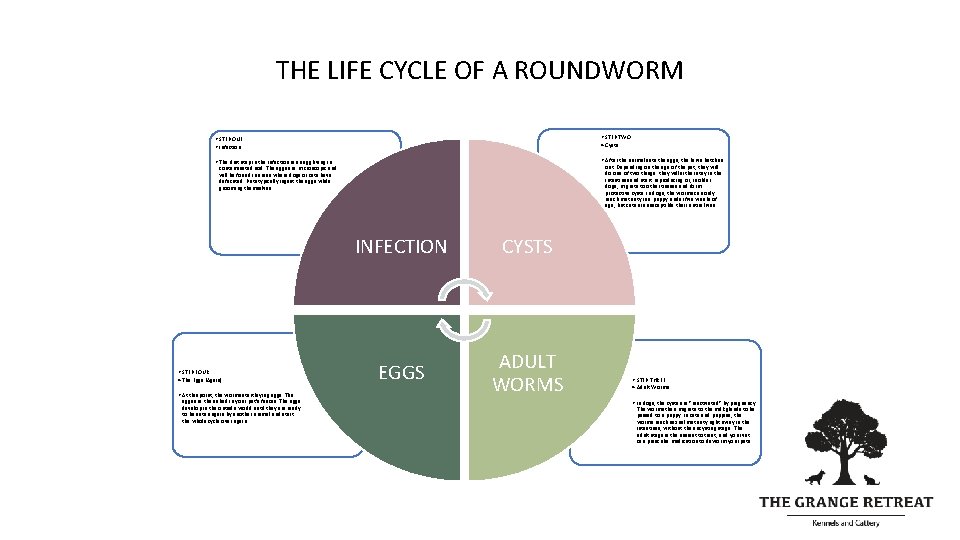
THE LIFE CYCLE OF A ROUNDWORM • STEP ONE: • Infection • STEP TWO: Cysts • The first step in the infection is an egg living in • After the animal eats the eggs, the larva hatches out. Depending on the age of the pet, they will do one of two things: they will either stay in the intestines and start reproducing or, in older dogs, migrate to other tissues and form protective cysts. In dogs, the worms can only reach maturity in a puppy under five weeks of age, but cats are susceptible their entire lives. contaminated soil. The eggs are microscopic and will be found in areas where dogs or cats have defecated. Pets typically ingest the eggs while grooming themselves. • STEP FOUR: The Eggs (Again) • At this point, the worms start laying eggs. The eggs are then shed in your pet's faeces. The eggs develop in the outside world until they are ready to be eaten again by another animal and start the whole cycle over again. INFECTION CYSTS EGGS ADULT WORMS • STEP THREE: Adult Worms • In dogs, the cysts are "reactivated" by pregnancy. The worms then migrate to the milk glands to be passed to a puppy. In cats and puppies, the worms reach sexual maturity right away in the intestines, without the encysting stage. The adult stage is the easiest to treat, and your vet can prescribe medication to deworm your pets.